标签: Antigua and Barbuda

安提瓜和巴布达

  • Caridocs to Host Jamaica Documents Day for Jamaican Nationals in Antigua

    Caridocs to Host Jamaica Documents Day for Jamaican Nationals in Antigua

    For Jamaican citizens building lives in Antigua and Barbuda, securing and processing official home-country documents has long been a source of mounting frustration. Exorbitant processing fees, weeks and even months of unexplained delays, and widespread confusion over mandatory eligibility requirements have thrown critical life processes into chaos, blocking progress on immigration applications, residency approvals, job offers, and other key legal proceedings.

    To tackle this widespread, underreported issue, Caribbean-founded document facilitation and immigration support firm Caridocs has launched a targeted new program aimed at cutting red tape, clarifying rules, and speeding up access to properly processed official documents for Jamaican nationals living across Antigua and Barbuda.

    Operating strictly as an intermediary support service rather than a replacement for government agencies, Caridocs fills a long-unaddressed gap: it bridges broken communication lines and procedural mismatches between applicants living abroad and the official Jamaican institutions that handle document requests. The organization’s core role is to guide clients through preparing and submitting documents that meet all standards for international use, ensuring compliance with official rules from start to finish.

    Nevoy Morrison, Principal Consultant at Caridocs, explained that the crisis stems from two overlapping root causes: crippling financial burdens for low and middle-income applicants, and a total lack of accessible, clear guidance on proper authentication protocols. “Too often, applicants submit documents without the required legal authentication for international use, and they don’t even realize they’ve made a mistake until their application gets rejected,” Morrison noted. “That sets off a chain reaction: more delays, more fees, and a months-long setback to whatever goal they’re trying to achieve.”

    One critical step that is consistently overlooked by applicants navigating the process independently is the apostille or legalization certification, a mandatory step that must be processed through Jamaica’s Ministry of Foreign Affairs and Foreign Trade for any Jamaican document to receive official recognition outside the country. “Most people have no idea that an apostille is required before they submit their documents abroad,” Morrison added. “They end up having to scrap their entire application and start from scratch, which brings unnecessary stress, wasted time, and extra costs that many can’t afford.”

    Caridocs’ solution is a streamlined, low-cost system built to help applicants get every requirement right on their first submission, cutting down on avoidable processing errors while improving transparency and communication between applicants and official bodies. The firm reiterates that it never issues official government documents itself; instead, it acts solely as a facilitator to ensure every application aligns with official regulations and procedural standards before submission.

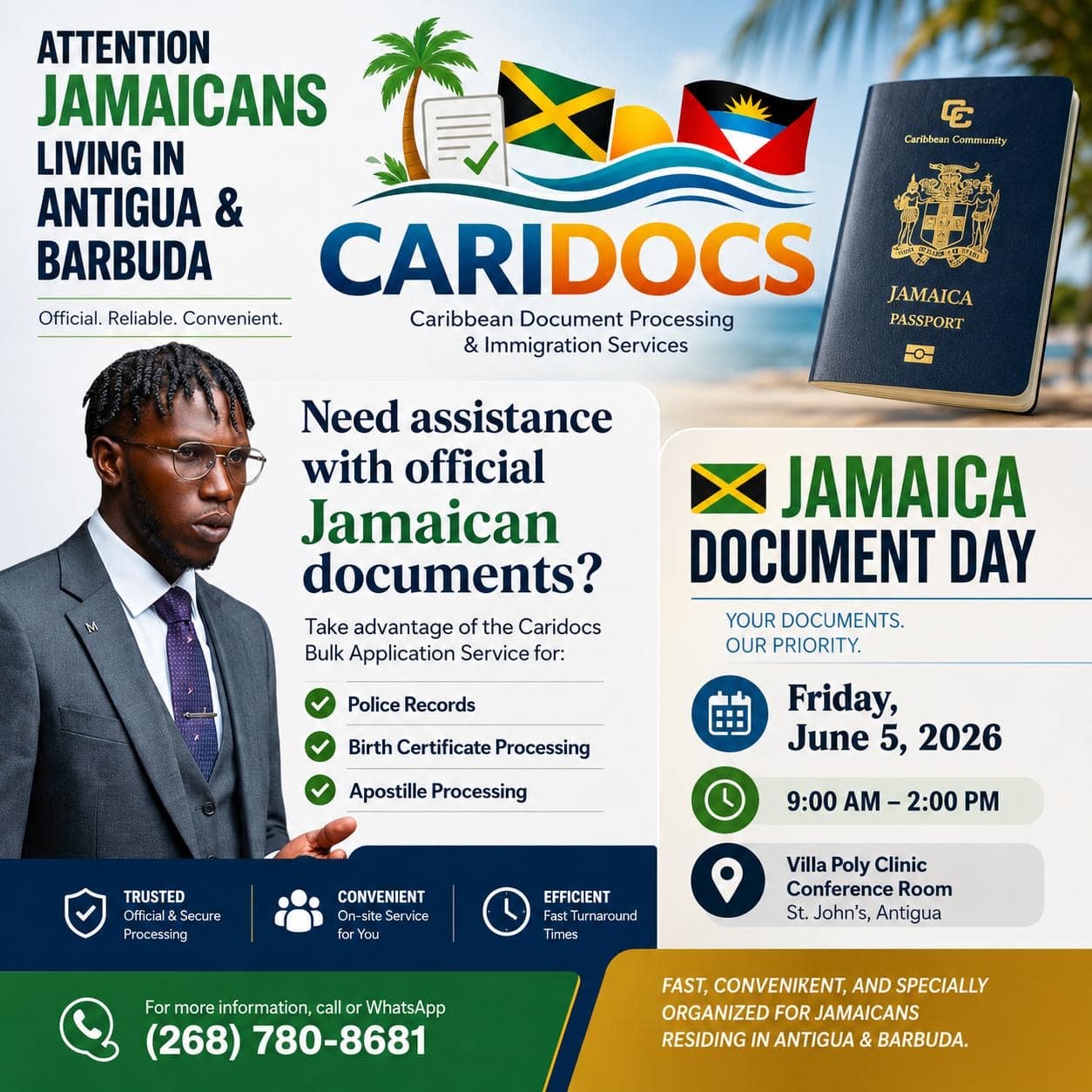
    As the kickoff for this new initiative, Caridocs will host a dedicated Jamaica Document Day on Friday, June 5, 2026, running from 9:00 AM to 2:00 PM at the Villa Polyclinic Conference Room in St. John’s, Antigua. This in-person event is tailored exclusively to Jamaican residents of Antigua and Barbuda who need hands-on support with document processing, step-by-step application guidance, and clarification of confusing official requirements. Attendees will be able to access on-site support for three of the most commonly requested document services: police record applications, birth certificate processing, and apostille authentication processing.

    In addition to launching its support initiative, Caridocs is issuing a urgent public warning about unregulated “back-door” services that market themselves as fast-track solutions for document requests. The organization warns that these unlicensed operations are almost always fraudulent, working outside all official protocols and exposing applicants to severe legal risks including rejected applications, identity fraud, and criminal penalties. Any legitimate official document for international use must always go through authorized official channels and complete the required authentication process to be valid.

  • Rotary Club of Antigua Sundown Autism Walk Draws Strong Community Support

    Rotary Club of Antigua Sundown Autism Walk Draws Strong Community Support

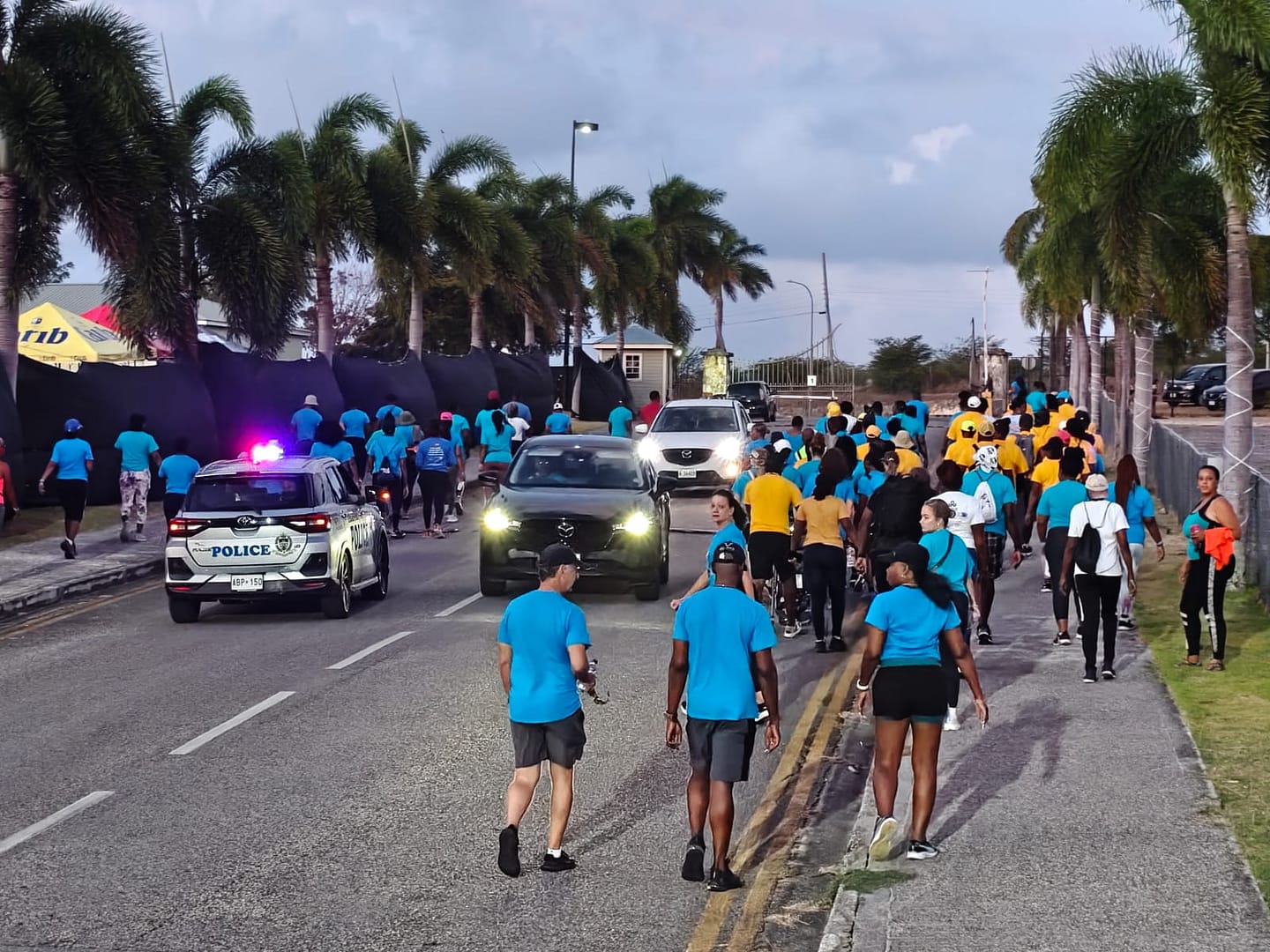
    A recent Autism Awareness Walk hosted by the Rotary Club of Antigua Sundown (RCAS) at Sir Vivian Richards Stadium has drawn overwhelming cross-sector support from individuals, local businesses, nonprofits and government agencies across Antigua and Barbuda, cementing the event’s role as a cornerstone for advancing autism acceptance and neurodiversity understanding in the twin-island nation.

    The gathering brought together a diverse cross-section of participants: autistic individuals and their families, autism advocacy leaders, local community associations and casual supporters unified by a single mission. Beyond simply staging a public walk, the event worked to shift public attitudes, break down long-standing social stigmas surrounding autism, and build a more inclusive culture that celebrates neurodiversity across Antigua and Barbuda.

    RCAS has publicly highlighted the critical contributions of the event’s roster of corporate and private sponsors, whose generous donations and in-kind contributions turned the planned gathering into a reality. Key sponsors include Yao, Frank B. Armstrong, Antigua Concrete Services, Kayinks, INET, Takumi Media, Go To Enterprise and DiWater Story.

    The club also extended special recognition to official institutional partners that ensured the walk proceeded without safety issues or disruption. Emergency Medical Services (EMS), the management team of Sir Vivian Richards Stadium, and the Royal Police Force of Antigua and Barbuda all provided on-the-ground coordination and support that kept the event running smoothly and safely for all attendees.

    Additional gratitude went to Caroline Hopton and the Blue Dragonfly Foundation, a local organization focused on neurodiversity advocacy, which played a key role in spreading the word about the walk and amplifying the core messages of autism awareness and inclusion. RCAS also emphasized the importance of participation from grassroots community groups, whose show of solidarity underscored how collective action can drive meaningful social change.

    Speaking after the event, RCAS President Nicole Stevens emphasized that collaborative community effort is the foundation of meaningful progress in autism advocacy and acceptance. “Events such as these remind us that awareness, acceptance and advocacy are strengthened when communities come together,” Stevens said. “Every participant, sponsor and supporter played an important role in helping to shine a light on autism awareness.”

    For the Rotary Club of Antigua Sundown, the successful walk aligns with its long-standing organizational commitment to advancing public health, accessible education, social inclusion and equitable community development across Antigua and Barbuda. The club has confirmed it will continue building cross-sector partnerships to deliver initiatives that create tangible, positive change for local communities in the years ahead.

  • Antiguan Janice Nix found guilty of Killing 5-year-old girl in London back in 1978

    Antiguan Janice Nix found guilty of Killing 5-year-old girl in London back in 1978

    Almost half a century after a 5-year-old girl’s death was officially recorded as an accident, a London jury has delivered a landmark guilty verdict against her stepmother, who forced the child into a scalding hot bath as punishment in 1978.

    Sixty-seven-year-old Janice Nix was found guilty of manslaughter on Tuesday, closing a cold case that stretched across 48 years. The killing took place in the family’s home in Thornton Heath, south London, where Andrea Bernard suffered third-degree burns covering 50% of her small body and ultimately died in hospital weeks after the brutal attack.

    The breakthrough that cracked this decades-old mystery came in 2022, when Andrea’s older brother, Desmond Bernard, reached out to investigators to share a new, unredacted account of what unfolded inside their family home. Desmond told the court that he had previously corroborated the false story of a tragic accident because he lived in constant fear of further abuse at the hands of Nix, who had terrorized him for years.

    During his testimony, Desmond recounted the sequence of events that led to his sister’s death. He told jurors that Nix flew into a violent rage after Andrea defied her order to stay home and assist with cleaning the house. Not long after the confrontation, he heard the sound of running water, followed by Andrea’s terrified sobs as she cried that the bath water was far too hot. Moments later, screams echoed through the entire house.

    When Desmond rushed into the bathroom, he told the court he found Andrea limp and unresponsive in Nix’s arms, her skin already peeling away from her burned body. He also detailed the years of abuse he endured himself at Nix’s hands, including regular beatings, burns, and repeated cruel punishments that he was forced to hide from the outside world.

    Medical experts who testified during the trial confirmed that the pattern of Andrea’s injuries matched the claim that she had been forcibly held in extremely hot water. They noted that a child would instinctively fight to escape scalding water, resulting in the specific pattern of burns Andrea suffered, contradicting the original claim that the injury was accidental.

    Throughout the trial, Nix consistently denied the charges against her, which included both manslaughter and child cruelty. She did, however, admit that she lied under oath during the original 1978 inquest, when she claimed Andrea had bathed alone and collapsed after accidentally running the water too hot. Nix claimed during the trial that she had panicked after the incident and lied because she had failed to properly supervise Andrea, but the jury rejected this explanation.

    Nix was ultimately taken into custody in February 2025, when she was arrested at London’s Heathrow Airport after disembarking a flight from Antigua, where she had been living in recent years. Prosecutors emphasized after the verdict that this conviction would never have been possible without Desmond Bernard’s decision to finally come forward and tell the truth more than four decades after his sister’s death, ending a long wait for justice for Andrea.

  • Canadian Woman Accused of Importing EC$536K in Cannabis Has Charges Dropped on Medical Grounds

    Canadian Woman Accused of Importing EC$536K in Cannabis Has Charges Dropped on Medical Grounds

    In a surprising development from Antigua’s V.C. Bird International Airport, all drug trafficking charges against a Canadian woman caught with 67 pounds of cannabis have been formally withdrawn by legal authorities, with the Director of Public Prosecutions (DPP) citing unspecified medical factors as the core reason for the decision. The case, which drew attention due to the unusually large seizure of controlled substance, has come to an abrupt end following the DPP’s formal instruction to prosecuting teams to discontinue all legal action against the defendant, identified only as Crisostomo.

    Crisostomo had arrived at the Caribbean island’s main international gateway on an Air Canada flight originating from Toronto, and had previously signaled her intent to enter a guilty plea to the charges brought against her. Given the substantial volume of cannabis recovered by law enforcement, legal officials had initially scheduled the matter for expedited committal proceedings, designed to move high-stakes drug cases quickly through the court system.

    Law enforcement estimates placed the total street value of the seized cannabis at approximately 536,000 Eastern Caribbean dollars, marking one of the larger drug seizures processed through the airport’s customs and policing units in recent months. No additional details about the specific medical circumstances that prompted the DPP’s decision have been released to the public, leaving court observers and local law enforcement stakeholders with little additional context for the abrupt end to the prosecution.

  • Statement from the Vice-Chancellor of The UWI Professor Sir Hilary Beckles on the passing of Sir Aziz Hadeed

    Statement from the Vice-Chancellor of The UWI Professor Sir Hilary Beckles on the passing of Sir Aziz Hadeed

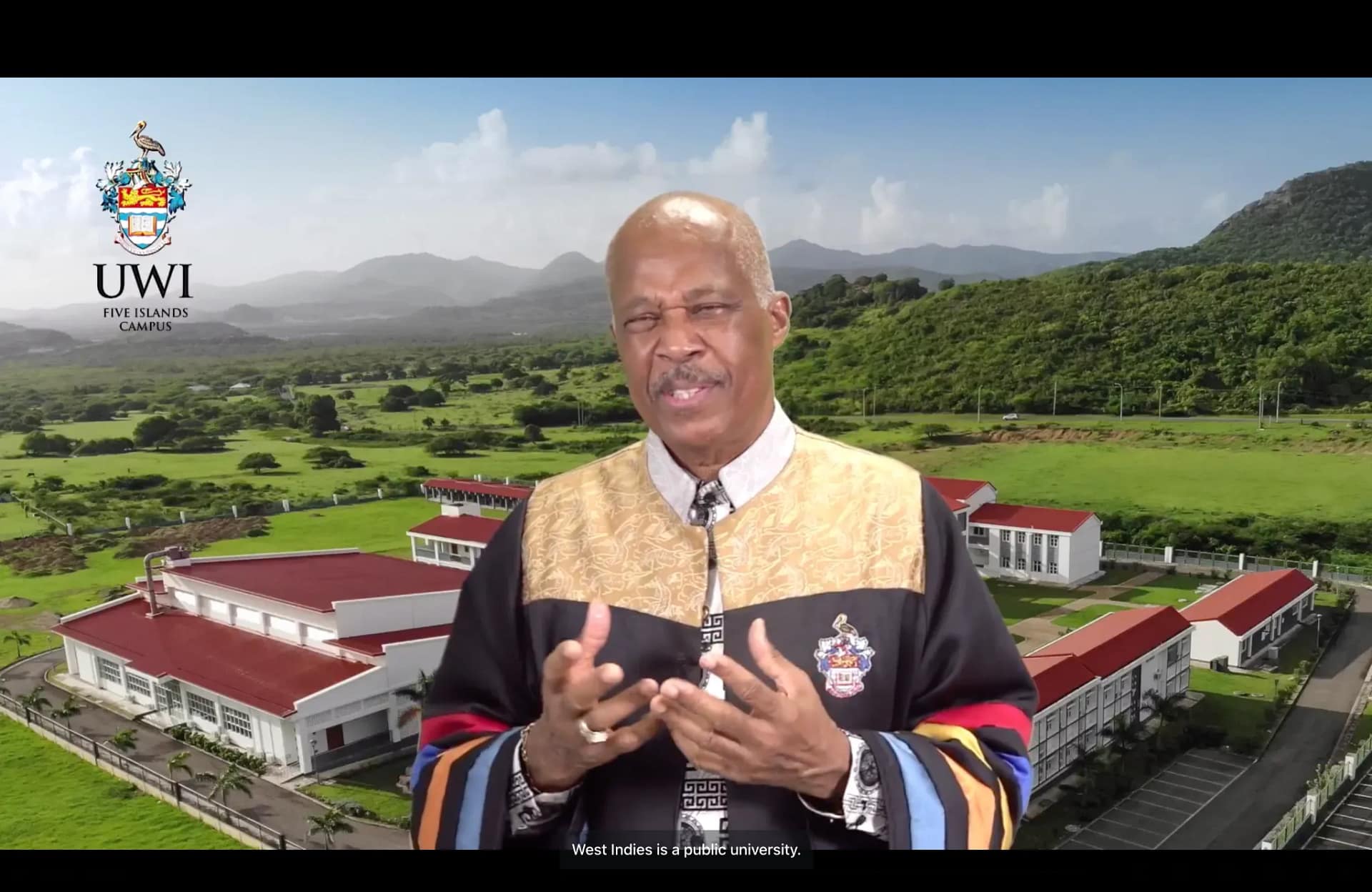
    KINGSTON, Jamaica – May 27, 2026 – The University of the West Indies (The UWI) has announced the passing of one of its most dedicated regional leaders, Sir Aziz Hadeed, KCMG, CBE, who served as Chairman of The UWI Five Islands Campus Council. In an official statement released from The UWI Regional Headquarters on Wednesday, Vice-Chancellor Professor Sir Hilary Beckles paid tribute to the legacy of the late campus governance leader.

    Though Sir Aziz’s tenure at the helm of the Five Islands Campus Council covered only a few graduation cycles, his imprint on the institution’s presence in Antigua and Barbuda and across the wider Caribbean region will endure for decades. From the moment he assumed the chairmanship, he prioritized building robust operational frameworks that have allowed the campus’s governing body to carry out its core responsibilities with consistency and efficiency.

    As the campus’s senior governance leader, Sir Aziz brought sharp, strategic focus to every decision and initiative the council undertook. Beyond his structural contributions, he leaves behind a legacy of dignified leadership that has shaped how the council approaches its work today.

    Professor Beckles, alongside Pro Vice-Chancellor and Campus Principal Professor C. Justin Robinson, developed deep respect for Sir Aziz over the course of their collaboration, remembering him first as a devoted advocate for education who took immense joy from nurturing the academic growth of young Caribbean people. Beyond academia, those who worked with him admired his unwavering commitment to advancing social justice and his lifelong dedication to philanthropic work that lifted up vulnerable communities across the region.

    Sir Aziz’s influence extended far beyond formal council meetings, leaving a profound mark on the broader institutional culture of The UWI. Every member of the university community had the opportunity to benefit from his sharp wisdom and warm friendship. His thoughtful perspective and calm, steadying presence will be deeply missed by all who knew him.

    On behalf of the entire global UWI family, Vice-Chancellor Beckles extended heartfelt condolences to Sir Aziz’s loved ones, friends, and colleagues. The university community will come together in the coming days to honor his extraordinary life and the lasting contributions he made to higher education in the Caribbean. May his soul rest in eternal peace.

  • Government Targets 14 Million Gallons of Potable Water Daily by End of 2026

    Government Targets 14 Million Gallons of Potable Water Daily by End of 2026

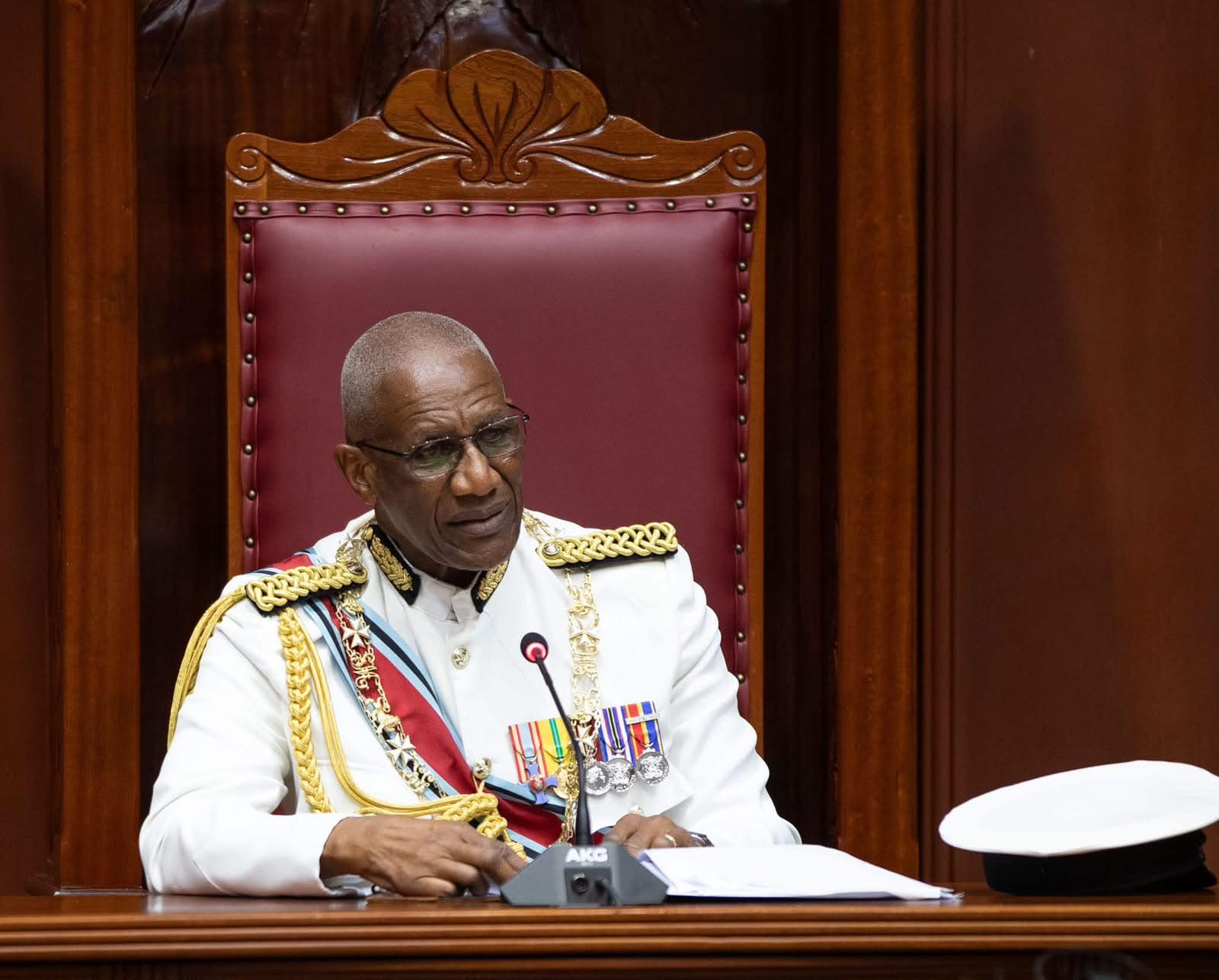
    Small island developing nations have long grappled with systemic access to reliable fresh drinking water, and Antigua and Barbuda is no exception. On Tuesday, during the formal ceremonial opening of the country’s Parliament, Governor-General Sir Rodney Williams outlined an ambitious national timeline to boost potable water output to 14 million gallons per day by the close of 2026, as the administration continues to tackle decades-long water scarcity across the twin-island nation.

    In his 2026 Throne Speech, Sir Rodney detailed the substantial progress the current government has made since it first took office in 2014, highlighting a more than three-fold increase in national water production over the past 12 years. When the administration assumed power, the Antigua Public Utilities Authority (APUA) delivered just 3.5 million gallons of potable water to residents and businesses daily. Through the installation of four new reverse osmosis desalination plants, that production capacity has now climbed to 11 million gallons per day, laying the groundwork for the next phase of expansion.

    “Before the end of this calendar year, my Government will be providing 14 million gallons of potable water daily,” Sir Rodney confirmed, cementing the policy target as a core priority for the administration in 2026. The Governor-General emphasized that expanding access to safe drinking water remains one of the most pressing challenges for small island developing states, a burden that has grown heavier amid intensifying climate change-driven drought, shifting weather patterns, and rising demand from three key sectors: residential households, the country’s dominant tourism industry, and agricultural operations.

    “One of the most daunting tasks faced by the Government of any small island developing-State is the provision of potable water for its inhabitants,” Sir Rodney noted, acknowledging the unique geographic and environmental vulnerabilities that make consistent water access a persistent policy hurdle. The Throne Speech singled out Public Utilities Minister Melford Nicholas for praise, crediting his leadership in steering the national water expansion initiative and navigating the increasingly complex competing demands placed on the country’s water infrastructure system.

    Even as the government celebrates gains in production capacity, it has openly acknowledged that significant hurdles remain in delivering that expanded water supply to end users. The root of the ongoing delivery challenges lies in decades-old, deteriorating underground pipe infrastructure that has outlived its functional lifespan across much of the country. “While the level of production of potable water has been satisfactory, the delivery of that water has proven problematic in several communities,” Sir Rodney admitted.

    Planned pipe replacement works are currently underway across the capital city of St. John’s and multiple rural villages, a necessary project that has created unavoidable disruptions for local communities. Excavation work to replace corroded old pipes buried beneath public roads often leaves behind uneven surfaces, potholes, and muddy or dusty conditions that draw frustration from both motorists and local residents. “Residents and motorists who need potable water delivered to their homes and businesses decry the dusty or muddy, uneven or potholed street surfaces that result, when new pipes are being buried,” Sir Rodney said.

    To address this public frustration, the Governor-General made a formal appeal for patience as the government carries out long-overdue infrastructure upgrades, framing the temporary disruptions as a necessary step toward long-term water security. Drawing on a relatable agricultural metaphor to illustrate the point, he noted: “Every farmer knows, if you wish to plant crops, you must first plow the earth. My Government can only seek your patience while the Minister and his experts do their job.”

  • Government Links Global Wars to Rising Fuel, Shipping and Consumer Costs in Antigua and Barbuda

    Government Links Global Wars to Rising Fuel, Shipping and Consumer Costs in Antigua and Barbuda

    In the ceremonial opening of the country’s Parliament on Tuesday, Governor-General Sir Rodney Williams used the annual Throne Speech to shine a stark spotlight on a growing inequity in the global geopolitical landscape: small developing island nations like Antigua and Barbuda are being forced to shoulder crippling economic costs from international conflicts they had no part in starting or shaping.

    Sir Rodney outlined how multiple ongoing flashpoints across the globe, from the Russia-Ukraine war to rising tensions between Iran, Israel and the United States, have sent shockwaves through global supply chains and energy markets that hit vulnerable small economies the hardest. “There are two wars being waged by the strongest nations on earth, resulting in deaths in those affected countries and significant burdens being borne by small countries like ours,” he told assembled parliamentarians.

    Breaking down the specific pathways of economic spillover, the Throne Speech linked the Russia-Ukraine conflict directly to soaring global fossil fuel prices. Sanctions imposed on the Russian Federation, one of the world’s top energy exporters, have cut its global energy sales, creating a supply shortage that has pushed up oil and gas costs worldwide. That impact ripples across every sector of small island economies, from transportation to consumer goods.

    Beyond energy markets, escalating tensions involving Iran and Israel have disrupted critical global shipping infrastructure, Sir Rodney noted. When recent strikes by the U.S. and Iran prompted closures to a key Persian Gulf sea lane that carries roughly 20% of the world’s global oil supply, the disruption triggered simultaneous spikes in shipping rates, maritime insurance premiums, and end-consumer costs across every continent.

    This pattern, the Antigua and Barbuda government emphasized, is an injustice that repeatedly targets small developing states. “Small states have played no role in starting these conflicts that have generated tough economic choices for the people of Antigua and Barbuda, the Caribbean, and the people of these two large states,” Sir Rodney said.

    In addition to highlighting this unfair burden, the speech laid out the government’s long-standing foreign policy priorities, reaffirming its unwavering support for multilateral cooperation and coordinated regional action through the Caribbean Community (CARICOM). The Governor-General also extended formal praise to Foreign Affairs Minister E.P. Chet Greene, crediting him with deft and skillful navigation of the country’s foreign relations amid a period of unprecedented global geopolitical instability.

  • Air Peace Says It Does Not Fly to Ebola-Affected Countries Amid Caribbean Health Concerns

    Air Peace Says It Does Not Fly to Ebola-Affected Countries Amid Caribbean Health Concerns

    As global health authorities ramp up monitoring of a renewed Ebola outbreak that has sparked alarm across the Caribbean region, Nigerian commercial airline Air Peace has moved quickly to reassure the public and travelers that it currently maintains no flight routes to any countries grappling with active Ebola transmission. This public clarification comes at a time when international health organizations have issued updated alerts, urging cross-border travel and transportation operators to strengthen screening protocols and communicate transparently about their route networks to prevent the accidental importation of the virus into new regions.

    Air Peace’s statement addresses growing public anxiety that has emerged in recent weeks, as scattered Ebola cases in several West and Central African countries have rippled out to stoke concerns among Caribbean communities and travel industry stakeholders, who still remember the devastating 2014-2016 Ebola epidemic that claimed thousands of lives and disrupted global travel across the African continent and beyond. The carrier emphasized that it has proactively reviewed its entire international route map to confirm that no scheduled or charter services connect its operational network to Ebola-affected jurisdictions, and it noted that it is working closely with global and local public health agencies to maintain strict health screening protocols for all incoming and outgoing passengers, even for routes that do not pass through outbreak zones.

    Travel industry analysts note that this kind of proactive communication is critical for maintaining public confidence in air travel, particularly amid emerging infectious disease outbreaks, where misinformation can spread quickly and cause unnecessary disruption to airline operations and regional tourism. Caribbean public health officials have already stepped up entry screening at major international airports across the region, and have urged all air carriers to provide clear, up-to-date information about their route networks to help authorities coordinate effective outbreak response measures.

  • Cement Shortage Nearing End, Government Says

    Cement Shortage Nearing End, Government Says

    In the ceremonial opening of Antigua and Barbuda’s Parliament for the 2026 legislative session, Governor-General Sir Rodney Williams delivered a widely anticipated Throne Speech on Tuesday that addressed one of the country’s most pressing construction sector headaches: persistent cement shortages that have slowed public and private building work across the twin-island nation. Sir Rodney confirmed that the ongoing supply crunches, which have hampered the government’s flagship infrastructure expansion and road rehabilitation agenda, are on track to be resolved imminently as dredging work on the navigation channel leading to the national cement silos at Crabbes enters its final phase.

    “A shortage of cement has been a challenge; however, as the dredging of the channel leading to the silos at Crabbes nears completion, that scarcity of cement will be of the past,” Sir Rodney told assembled lawmakers and guests. The update comes after months of regional supply chain disruptions and shipping delays that have driven cement shortages across multiple Caribbean nations, grinding construction projects to a halt in several territories. For Antigua and Barbuda, the bottleneck has been compounded by limited access to the Crabbes silos, which prevents large delivery vessels from offloading sufficient cement stock to meet growing demand from large-scale public works.

    The Throne Speech dedicated a significant segment to outlining the current state of the country’s multi-year infrastructure overhaul, revealing that work is advancing across dozens of primary and secondary road corridors. Several major arterial routes have already wrapped up rehabilitation work, including the Sir George Walter Highway, Friars Hill Road, and Sir Sidney Walling Highway. Upgrades are also actively progressing on the Valley Road connecting Golden Grove to Old Road, the Parham to Willikies Highway, and the heavily trafficked All Saints Road. In tandem with work on major highways, paving crews have been deployed to resurface secondary local roads across rural villages and urban communities island-wide.

    To sustain this ambitious infrastructure push, the government announced a landmark financing agreement: a consortium of local financial institutions has committed EC$150 million in funding for ongoing road rehabilitation, to be repaid through a structured vehicle user-fee mechanism. The arrangement clears the way for continued investment in transportation infrastructure, which the government has identified as a core driver of long-term economic growth and tourism competitiveness.

    Sir Rodney also used the speech to recognize the leadership of Works Minister Maria Browne and the entire team at the Ministry of Works for their handling of the expansive infrastructure program amid ongoing supply headwinds. “My Government expresses its sincerest thanks to the Minister of Works, the Honourable Maria Browne, for her management of a workforce that has performed admirably,” he said. Moving forward, officials expect the completion of the Crabbes dredging project to streamline cement delivery and storage operations, eliminating the supply bottleneck that has slowed progress for months.

  • Governor-General Says CARICOM Remains Essential to Antigua and Barbuda’s Stability and Prosperity

    Governor-General Says CARICOM Remains Essential to Antigua and Barbuda’s Stability and Prosperity

    Against a backdrop of mounting global geopolitical tension, Antigua and Barbuda has used its annual ceremonial opening of Parliament to underscore its long-standing dedication to Caribbean regional unity, framing the Caribbean Community (CARICOM) as an indispensable pillar of the nation’s ongoing stability and future prosperity. In his traditional Throne Speech delivered Tuesday, Governor-General Sir Rodney Williams tied the country’s modern regional identity to nearly 80 years of incremental political and economic collaboration across the Caribbean, tracing the evolution of integration through key historical milestones that laid the groundwork for today’s collective framework.

    Williams outlined the clear position of the Antigua and Barbuda government, stating, “My Government views the CARICOM as essential to our island-nation’s stability and prosperity.” In a walk through regional history, he tracked integration’s earliest local roots back to the 1946 manifesto released by the Antigua Trades and Labour Union Political Committee, before moving to the 1958 formation of the West Indies Federation, an initiative Williams noted “embodied the hopes and aspirations of a single Caribbean State.” He went on to highlight the 1965 launch of the Caribbean Free Trade Association and the 1973 establishment of CARICOM itself as defining turning points that advanced the region’s shared push for collective progress and cross-border cooperation.

    Beyond historical context, Williams emphasized that CARICOM’s multilateral institutions remain a critical lifeline for small island developing states navigating overlapping economic and geopolitical headwinds. “The several multilateral institutions created to meet the collective and individual needs of the CARICOM member-States, form a protective blanket that allows for collaboration and far-ranging security building measures,” he explained.

    The remarks on regional integration came as part of a broader section of the speech focused on foreign policy and growing global instability. Williams drew explicit attention to the cascading economic costs that distant conflicts impose on small, developing Caribbean nations, pointing specifically to the ongoing Russia-Ukraine war and escalating tensions between Iran, Israel, and the United States. Even though the Caribbean region bears no responsibility for these crises, Williams said the resulting spikes in fuel, shipping, and insurance costs have created significant, unfair economic burdens that ripple through local economies across the bloc.

    To close his remarks on foreign affairs, Williams offered high praise for Antigua and Barbuda’s Foreign Affairs Minister E.P. Chet Greene, lauding him as a “very skillful Minister” whose adept stewardship of the nation’s foreign portfolio has helped the country navigate the increasingly choppy geopolitical conditions defining the current global landscape.