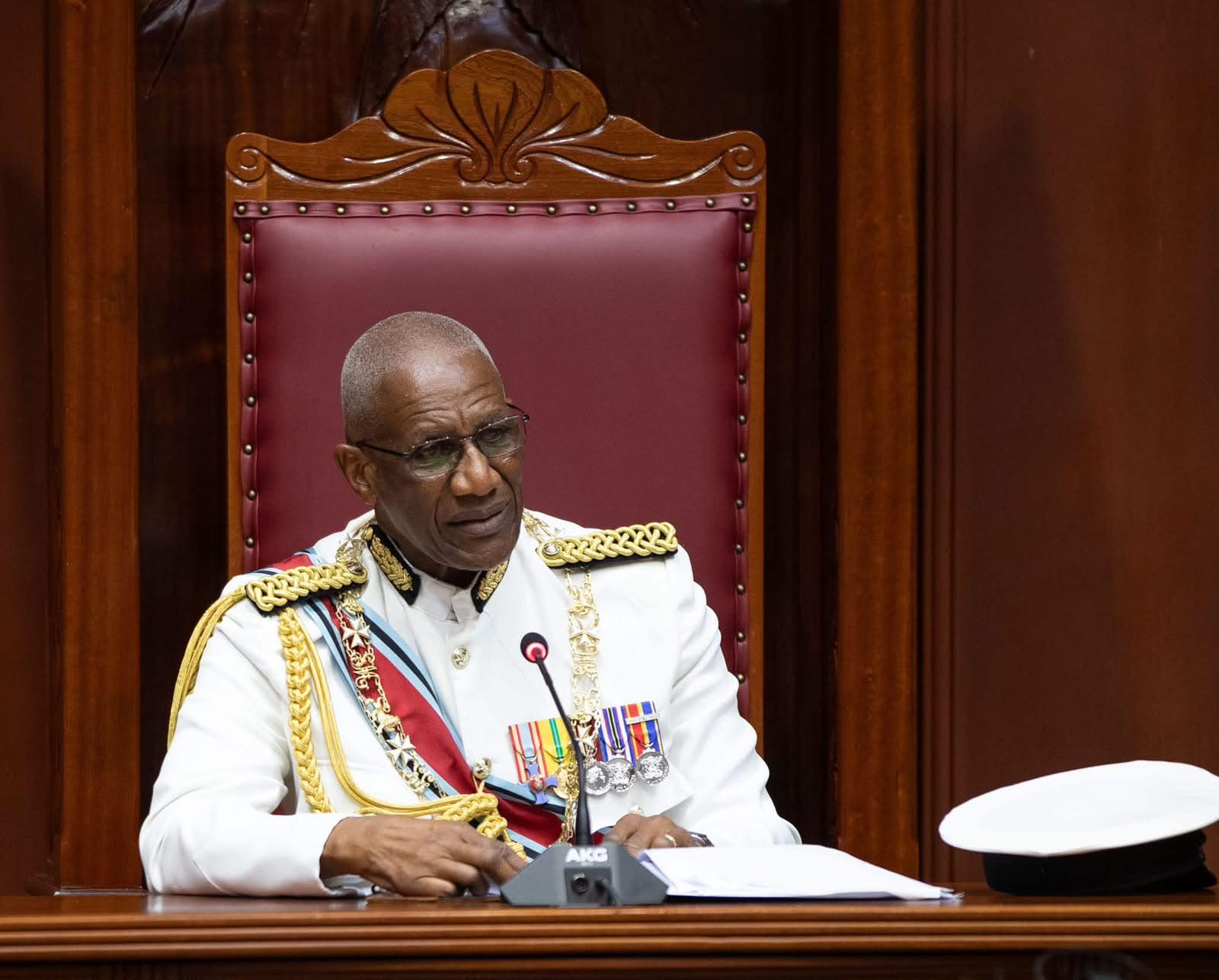
Against a backdrop of mounting global geopolitical tension, Antigua and Barbuda has used its annual ceremonial opening of Parliament to underscore its long-standing dedication to Caribbean regional unity, framing the Caribbean Community (CARICOM) as an indispensable pillar of the nation’s ongoing stability and future prosperity. In his traditional Throne Speech delivered Tuesday, Governor-General Sir Rodney Williams tied the country’s modern regional identity to nearly 80 years of incremental political and economic collaboration across the Caribbean, tracing the evolution of integration through key historical milestones that laid the groundwork for today’s collective framework.
Williams outlined the clear position of the Antigua and Barbuda government, stating, “My Government views the CARICOM as essential to our island-nation’s stability and prosperity.” In a walk through regional history, he tracked integration’s earliest local roots back to the 1946 manifesto released by the Antigua Trades and Labour Union Political Committee, before moving to the 1958 formation of the West Indies Federation, an initiative Williams noted “embodied the hopes and aspirations of a single Caribbean State.” He went on to highlight the 1965 launch of the Caribbean Free Trade Association and the 1973 establishment of CARICOM itself as defining turning points that advanced the region’s shared push for collective progress and cross-border cooperation.
Beyond historical context, Williams emphasized that CARICOM’s multilateral institutions remain a critical lifeline for small island developing states navigating overlapping economic and geopolitical headwinds. “The several multilateral institutions created to meet the collective and individual needs of the CARICOM member-States, form a protective blanket that allows for collaboration and far-ranging security building measures,” he explained.
The remarks on regional integration came as part of a broader section of the speech focused on foreign policy and growing global instability. Williams drew explicit attention to the cascading economic costs that distant conflicts impose on small, developing Caribbean nations, pointing specifically to the ongoing Russia-Ukraine war and escalating tensions between Iran, Israel, and the United States. Even though the Caribbean region bears no responsibility for these crises, Williams said the resulting spikes in fuel, shipping, and insurance costs have created significant, unfair economic burdens that ripple through local economies across the bloc.
To close his remarks on foreign affairs, Williams offered high praise for Antigua and Barbuda’s Foreign Affairs Minister E.P. Chet Greene, lauding him as a “very skillful Minister” whose adept stewardship of the nation’s foreign portfolio has helped the country navigate the increasingly choppy geopolitical conditions defining the current global landscape.