标签: Antigua and Barbuda

安提瓜和巴布达

  • St. Joseph’s Academy Retains CUB Inter-secondary Debate Championship Over Sir Novelle Richards Academy

    St. Joseph’s Academy Retains CUB Inter-secondary Debate Championship Over Sir Novelle Richards Academy

    On Tuesday, the Caribbean Union Bank Inter-secondary School Debate Championship concluded at the University of the West Indies Five Islands Campus, with St. Joseph’s Academy making history by retaining its coveted championship title. The year’s final showdown, organized by the Education Broadcasting Unit under Antigua and Barbuda’s Ministry of Education, drew widespread attention as two top-tier secondary school teams went head-to-head for the regional crown. St. Joseph’s Academy edged out runner-up Sir Novelle Richards Academy in a tightly contested exchange of arguments centered on a timely regional policy question.

    This year’s final debate centered on a provocative moot tailored to spark critical engagement with Caribbean regional integration: “CARICOM offers the best option for Member States to maintain their sovereignty.” Sir Novelle Richards Academy took the stage first to advocate for the proposition, making the case that collective governance and economic coordination through the Caribbean Community provide small island nations with the collective bargaining power and institutional stability to protect their sovereign autonomy in an increasingly polarized global landscape. Opposing the motion, St. Joseph’s Academy put forward a nuanced argument highlighting structural limitations of the current CARICOM framework that can constrain national policy flexibility, ultimately convincing the panel of adjudicators of their position to secure the win.

    In an official statement released shortly after the final results were announced, competition organizers extended formal congratulations to St. Joseph’s Academy for its successful title defense, a rare achievement that underscores the school’s consistent investment in debate and critical thinking education. Organizers also made a point to commend Sir Novelle Richards Academy for what they described as “outstanding performance throughout the season and in today’s finals,” noting that the team’s preparation and rhetorical skill made the final one of the most competitive in recent years. The Ministry of Education echoed this praise, highlighting that both finalist teams displayed the core values of the competition: “excellence, discipline, and the true spirit of debate.”

    Now in its annual cycle, the Inter-secondary School Debate Championship fills a unique niche in Caribbean secondary education. Beyond the thrill of competition, the event was designed to foster core transferable skills that benefit students long after they leave the debate stage: rigorous critical thinking, structured research, confident public speaking, and the ability to engage respectfully with opposing viewpoints. Equally importantly, the competition intentionally centers topical regional and civic issues in its moot selection, encouraging a new generation of young Caribbean people to think deeply about the policy choices that will shape the future of their region.

    This repeat win cements St. Joseph’s Academy’s reputation as a dominant force in regional secondary school debate, and organizers have already signaled that next year’s competition will expand participation to include more schools across the Caribbean, continuing the event’s mission of building capacity for civic engagement among young people.

  • Pringle says he attended Parliament because the president summoned him to do so

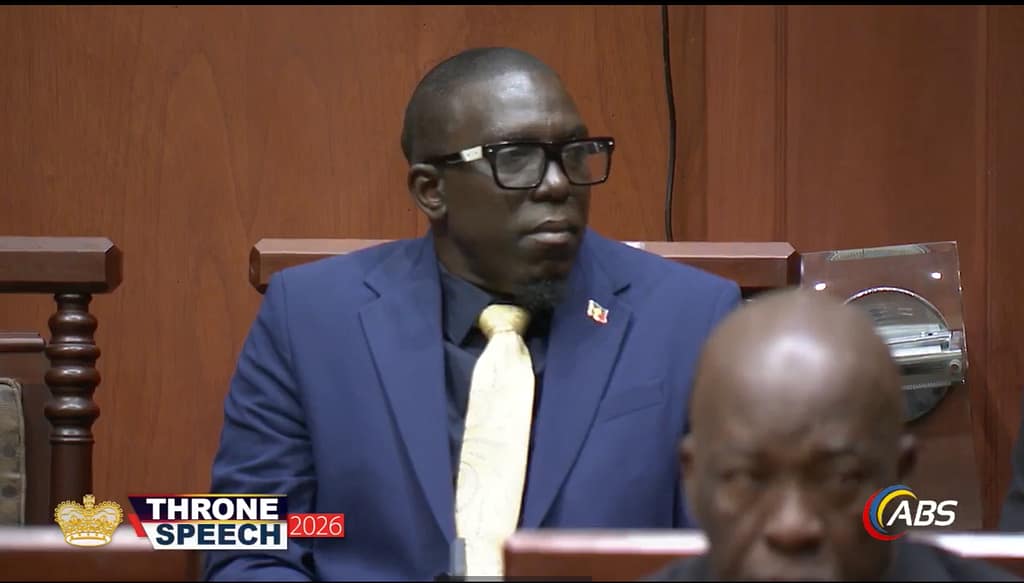
    Pringle says he attended Parliament because the president summoned him to do so

    A political controversy has erupted in Antigua and Barbuda after opposition leader Jamale Pringle was ordered to leave Parliament just hours before the opening of a new legislative session, despite receiving a formal summons to attend and be sworn in. The incident triggered an immediate walkout by all opposition members of parliament and senators, who left the chamber in protest of the unexpected snub to their leader.

    In an interview with Observer Radio just hours after the chaotic scenes, Pringle laid out the sequence of events that led to the confrontation, calling for transparency over why parliamentary authorities blocked him from taking his oath of allegiance. He stressed that his aim is not to stoke unnecessary division among opposition lawmakers, but to unpack the confusing sequence of events that left him locked out of the official sitting.

    Pringle explained that his absence from an earlier planned swearing-in session was entirely justified: he traveled out of the country with his daughter to receive urgent medical care, and submitted formal advance notification of his absence to parliamentary officials. After returning, he received a second official summons dated May 14, ordering him to attend the opening of Parliament’s first session on May 26 at 9 a.m., with an instruction to arrive 15 minutes early “for the dispatch of such business as may be necessary.”

    Based on the wording of this correspondence, Pringle said he reasonably assumed the pre-session gathering would be used to administer his oath of allegiance, bringing him into formal membership of the new Parliament. He arrived at the legislative chamber at 8:25 a.m., almost 20 minutes ahead of the scheduled pre-session meeting, and took a seat that had already been set up with his name displayed. He waited in the chamber for nearly an hour before the Sergeant-at-Arms approached him and requested he leave to meet with Senate President Alincia Williams-Grant.

    During that private meeting, Pringle said the Senate President informed him he could not take a seat in the chamber because he had not completed the required oath of allegiance. In response, Pringle proposed that the oath be administered publicly on the floor of Parliament, a procedural step he argued would have been quick, transparent, and fully in line with parliamentary rules. He emphasized that he holds the institution of Parliament in high regard and makes every effort to attend all scheduled sittings, noting that the oath is an extremely brief procedure that could easily have been completed before the formal Throne Speech got underway.

    When asked if he believed the oversight was a deliberate attempt to embarrass the opposition and disrupt the opening of the first parliamentary session, Pringle said he believed that was likely. Adding to his confusion, he noted that parliamentary staff had already prepared a name-plated seat for him in the chamber, confirming that organizers expected his attendance. Pringle has yet to receive a clear explanation from parliamentary officials for why he was summoned if he was not going to be allowed to complete the required swearing-in process, leaving key questions about the incident unresolved.

  • Antigua and Barbuda To Enact Laws Targeting Food Safety, Nursing Homes, Mental Health and Medical Labs

    Antigua and Barbuda To Enact Laws Targeting Food Safety, Nursing Homes, Mental Health and Medical Labs

    At the formal opening of the new parliamentary session on Tuesday, the government of Antigua and Barbuda unveiled a sweeping legislative package that places healthcare system improvement at the core of its 2026–2031 policy agenda, with a slate of new laws and regulatory reforms targeting five critical health-related sectors: food safety, mental health services, pharmacy operations, medical laboratories, and nursing homes.

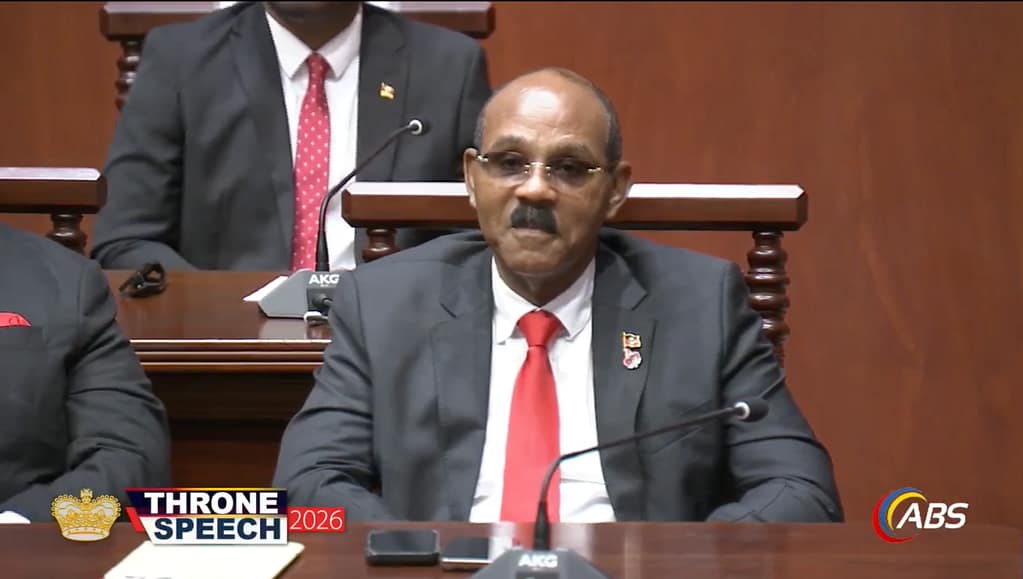
    The full set of proposals was laid out by Governor-General Sir Rodney Williams during the annual Throne Speech, which outlines the incoming administration’s policy priorities following the April 30 general election. Sir Rodney emphasized that the upcoming regulatory updates are designed to reinforce oversight across the healthcare landscape and raise public safety standards for all residents of the twin-island nation.

    “Other laws that impact food safety, mental health, pharmacy regulation, and the operation of medical laboratories and nursing homes, will come before this Parliament in the interest of ensuring better treatment of the sick, and improved safety standards for all,” Sir Rodney told assembled lawmakers during the ceremonial address.

    While the government confirmed the broad scope of the healthcare-focused legislative package, it has not yet released specific timelines for parliamentary review or granular details of the proposed regulatory changes. The proposal marks just one component of a broader, five-year legislative reform agenda that also encompasses overhauls of electronic crime legislation, new protections for workers against workplace harassment, updates to border security protocols, and structural changes to police and forensic services.

    In a nod to continuity in health governance, the speech opened with formal recognition of former Health Minister Sir Molwyn Joseph, honoring his decades of cross-sector service in health, wellness, environmental policy, and civil administration. The administration also formally welcomed newly appointed Health Minister Michael Joseph, who will lead the rollout of the government’s health policy priorities.

    “The health and well-being of the people of Antigua and Barbuda continue to remain a priority for my Government, for we believe that a healthy nation is a wealthy nation,” the Governor-General affirmed, cementing the administration’s commitment to centering public health in its term. Addressing growing global concerns about transboundary disease spread, the speech also expressed full confidence in the Ministry of Health and the nation’s medical professionals to maintain robust protections for the population and mitigate emerging public health risks.

  • Royal Police Force Congratulates Corporal Lynroy Durand on Master’s Degree in Cybersecurity

    Royal Police Force Congratulates Corporal Lynroy Durand on Master’s Degree in Cybersecurity

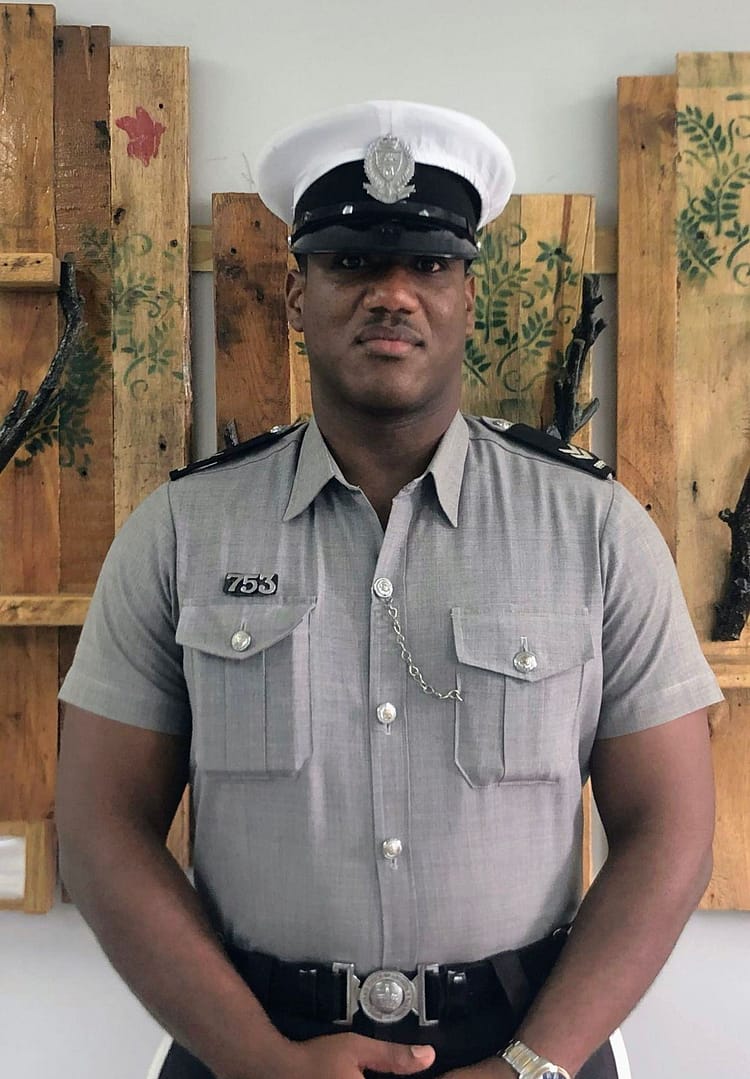
    The Royal Police Force of Antigua and Barbuda has publicly celebrated a key professional milestone for one of its corporals, Lynroy Durand (badge number 753), who has recently completed his postgraduate studies and earned a Master of Science degree in Cybersecurity.

    Durand’s academic achievement came after he was selected as one of just two Antiguan recipients for a partial scholarship funded by the Organization of American States (OAS), a regional intergovernmental organization that promotes cooperation across the Americas. The scholarship allowed him to pursue his advanced degree through a collaborative academic program offered by Universidad Da Vinci de Guatemala and Structuralia, a global education and training provider for infrastructure and digital sectors.

    Over the course of the rigorous program, Durand built out advanced specialized skills that directly align with growing global law enforcement priorities: threat mitigation for information systems, proactive cybercrime prevention, and modern digital infrastructure protection protocols. These capabilities fill a growing skills gap for small island nations, which face rising risks of cyberattacks on public and private sector systems.

    Looking ahead, Durand plans to integrate his new expertise directly into his daily work with the Royal Police Force, with a focus on three core priority areas: improving the force’s cybercrime investigative workflows, advancing local capacity for digital forensics analysis, and hardening critical government and law enforcement information systems against unauthorized access and breaches.

    In an official statement announcing the achievement, the Royal Police Force framed Durand’s graduation as far more than a personal win: it is a clear demonstration of the sustained commitment that frontline law enforcement personnel in Antigua and Barbuda hold for continuous professional growth, lifelong learning, and the modernization of policing through intentional adoption of new technology and innovative practices. The force closed its statement by extending well wishes for Durand’s continued success in his service to the people of Antigua and Barbuda.

  • LISTEN: Senator Chester Hughes Says Standing Orders Allow Pringle to Be Sworn In During Any Sitting

    LISTEN: Senator Chester Hughes Says Standing Orders Allow Pringle to Be Sworn In During Any Sitting

    A heated political dispute has erupted in Antigua and Barbuda’s Parliament following the government’s decision to bar Opposition Leader Jamale Pringle from taking his oath of office during a recent sitting, drawing sharp accusations of democratic erosion from opposition lawmakers. Senate Minority Leader Chester Hughes has publicly defended Pringle, arguing that longstanding parliamentary standing orders explicitly permitted the oath of allegiance to be administered mid-session following Pringle’s re-election via by-election.

    In an interview with Observer Radio conducted after all opposition members staged a mass walkout from the chamber ahead of the annual Throne Speech delivered by the Governor General, Hughes outlined the legal and procedural case for the opposition’s position. He clarified that while the national Constitution requires all elected members to complete the oath before participating in parliamentary proceedings, the specific timing of this step is governed by standing orders, not the foundational legal document.

    Hughes pointed specifically to Standing Order 15, contained within Chapter 4 of Parliament’s procedural rules. This provision sets the standard order of business for every parliamentary sitting, and explicitly lists “the oath of allegiance of a new member” as a routine agenda item. This inclusion, Hughes argued, was intentionally designed to accommodate special circumstances such as by-elections, where newly elected members join the legislature mid-session and require swearing-in after a parliamentary term has already begun.

    “Standing orders explicitly allow new members to be admitted at any sitting — that is exactly why the oath item is permanently on the agenda for every session,” Hughes stated.

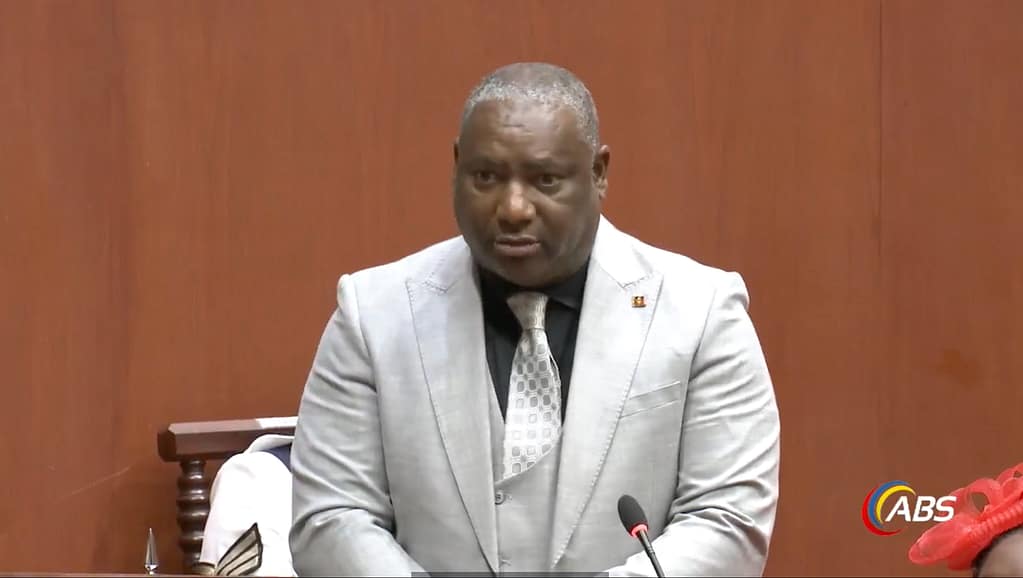
    The controversy unfolded Tuesday, when parliamentary officials ordered Pringle to leave the joint sitting before the Throne Speech after confirming he had not yet completed his oath following re-election. In response, all opposition lawmakers walked out of the chamber in coordinated protest. Hughes told reporters that opposition members smelled trouble before official proceedings even began, after noting closed-door consultations between Prime Minister Gaston Browne, Attorney General Sir Steadroy Benjamin, and other senior government officials inside the chamber. He added that government officials were seen making frantic calls to external advisers moments before the Sergeant-at-Arms approached Pringle to remove him.

    Hughes also flagged a separate procedural red flag ahead of the sitting: key parliamentary documents were never distributed to opposition members in advance, a break from standard protocol. When Hughes attempted to raise the issue of Pringle’s swearing-in once the sitting began, he was denied permission to speak on the opposition leader’s behalf. He questioned why the government refused to accommodate the straightforward step of administering the oath, asking: “What damage would it have done to simply follow procedure and swear Pringle in alongside other new members?”

    A core point of contention for Hughes is the government’s repeated reliance on the constitutional requirement for oaths while ignoring the standing orders that govern timing. He also launched a direct critique of Senate President Alincia Williams-Grant, accusing her of bias in allowing the Attorney General to speak at length on the dispute while barring him, the elected Senate minority leader, from addressing the chamber to defend Pringle.

    “She let the Attorney General rise and speak on this matter, but refused to let me, as the leader of the minority, come to the defense of the leader of the opposition,” Hughes said.

    Closing his remarks, Hughes issued a stark warning about the long-term implications of the government’s actions, arguing that this procedural overreach poses a tangible threat to the country’s democratic foundations: “All democracies are under threat when a government behaves this way.”

  • GG Praises PM for Rejecting Second IMF Programme and Repaying EC$320 Million Debt

    GG Praises PM for Rejecting Second IMF Programme and Repaying EC$320 Million Debt

    During the ceremonial opening of the country’s new parliamentary term on Tuesday, Governor-General Sir Rodney Williams used the annual Throne Speech to spotlight a landmark 2014 decision by Prime Minister Gaston Browne’s administration that officials now frame as the turning point for Antigua and Barbuda’s economic resurgence.

    Shortly after the Antigua and Barbuda Labour Party (ABLP) won the June 2014 general election, Browne – who also holds the finance portfolio – was confronted with an unexpected demand from the International Monetary Fund. A representative from the global lending body reached out to the newly sworn-in government to demand repayment on a defaulted existing loan. When the administration requested a repayment moratorium to ease the strain on national finances, the IMF offered a second structured economic program instead of granting the extension. Drawing on his background as a former banker, Browne made the controversial call to turn down the IMF’s offer, committing instead to clearing the entire EC$320 million outstanding debt within a four-year window.

    Against early expectations, the Browne administration delivered on that promise, fully settling the obligation to the IMF by 2018. In Tuesday’s address, Sir Rodney framed this achievement as proof of the sitting government’s strong fiscal stewardship and decisive leadership, noting that extricating the nation from long-term dependence on IMF programs was one of the greatest early challenges for the new administration back in 2014.

    This milestone is positioned as a foundational step in the government’s decade-long strategic vision, which aims to reposition Antigua and Barbuda as a regional “economic powerhouse” and a leading “lifestyle superpower” for both citizens and residents. The Throne Speech repeatedly lauded the ABLP’s governance over the past 12 years, crediting consistent “superb leadership” for the country’s current economic trajectory.

    Tuesday’s address capped off the official transition to the new parliamentary term, coming two months after the ABLP secured its fourth consecutive general election victory on April 30, where it earned a fresh mandate to continue its policy agenda for the Caribbean nation.

  • Hopeful Hearts Foundation Donates Examination Kits to Pares Primary Grade 6 Students

    Hopeful Hearts Foundation Donates Examination Kits to Pares Primary Grade 6 Students

    A community-focused charitable organization, Hopeful Hearts Foundation, has launched a new initiative to support graduating elementary students at Pares Primary by donating specially prepared examination kits to all Grade 6 learners. The contribution comes ahead of critical national standardized assessments that will shape students’ next steps in their academic journey, addressing a gap where many low-income families struggle to afford necessary testing supplies.

    Local education representatives have praised the foundation’s effort, noting that the donation does more than just provide physical materials: it also boosts students’ confidence and reduces financial stress for working-class households enrolled at the school. Foundation organizers shared that they developed the project after hearing from Pares Primary teachers about the unmet needs of Grade 6 families, and they hope to expand similar support programs to other neighboring primary schools in the coming academic year.

  • Wins, Gaps and the Road Ahead for Healthy Food Policy in the Caribbean

    Wins, Gaps and the Road Ahead for Healthy Food Policy in the Caribbean

    Across the Caribbean region, efforts to build more equitable, nutrition-focused food systems have yielded measurable progress in recent years, yet deep-rooted gaps continue to undermine public health outcomes and leave vulnerable communities underserved. For decades, Caribbean nations have grappled with a dual burden of malnutrition: widespread diet-related noncommunicable diseases (NCDs) such as diabetes, hypertension, and obesity, coexisting with persistent food insecurity in low-income coastal and rural communities. These challenges have spurred regional bodies and national governments to roll out targeted healthy food policies aimed at reshaping food environments and improving access to nutrient-dense, local produce.

    Notable policy wins have already transformed regional food landscapes in meaningful ways. Several Caribbean states have implemented mandatory front-of-package warning labels for processed foods high in sugar, salt, and saturated fat, giving consumers clear, accessible information to make informed purchasing decisions. Some governments have also introduced fiscal measures, including taxes on sugary beverages and processed snacks, while offering subsidies to small-scale local farmers growing fruits, vegetables, and legumes. These initiatives have cut consumption of unhealthy products in multiple markets, and boosted demand for locally grown nutrient-dense foods, supporting both public health and smallholder livelihoods. Regional collaborative bodies, such as the Caribbean Public Health Agency (CARPHA), have also streamlined knowledge sharing between nations, helping smaller states adopt evidence-based policies without starting from scratch.

    Despite these advances, significant gaps remain that block widespread, equitable impact. Many policies suffer from weak enforcement, particularly in informal markets where unlabeled processed food is widely sold, and tax loopholes allow vendors to avoid price adjustments that would discourage unhealthy purchases. Infrastructure barriers also persist: inadequate cold storage and transportation networks leave small farmers unable to get fresh produce to urban markets at affordable prices, eroding the impact of agricultural subsidies. Additionally, policy design often fails to center the needs of marginalized groups, including Indigenous communities, low-income households, and remote island populations, who face the highest rates of diet-related illness but are rarely included in the policy development process. The powerful influence of transnational processed food corporations, which invest heavily in marketing unhealthy products across the region, also creates political and economic headwinds that slow policy progress.

    Looking ahead, stakeholders across the region agree that closing these gaps will require coordinated, multi-sector action that prioritizes equity and community leadership. Experts argue that strengthening enforcement capacity, investing in food distribution infrastructure, and increasing community participation in policy design will be critical to expanding the impact of existing initiatives. Moving forward, regional cooperation will also be key: pooling resources for research, supporting small island states with limited administrative capacity, and advocating collectively against industry interference can help Caribbean nations build food systems that deliver better health for all residents. While the road ahead includes significant challenges, the early policy wins across the region provide a strong foundation for future progress.

  • Magnitude 4.3 Earthquake Recorded Northeast of Antigua

    Magnitude 4.3 Earthquake Recorded Northeast of Antigua

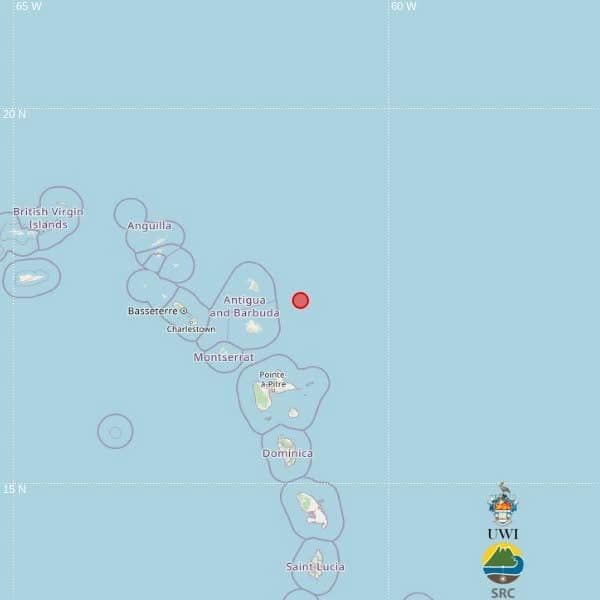
    A moderate 4.3-magnitude earthquake has been detected in waters northeast of the Caribbean nation Antigua and Barbuda, according to an initial automatic alert released by the University of the West Indies Seismic Research Centre.

    The seismic event unfolded around 9:41 p.m. local time Tuesday, which translates to 01:41 UTC on Wednesday, per the center’s preliminary assessment. Geospatial data pins the earthquake’s coordinates at 17.44 degrees north latitude and 61.18 degrees west longitude, with the hypocenter sitting roughly 39 kilometers below the ocean floor.

    Calculations place the epicenter approximately 82 kilometers northeast of St. John’s, Antigua and Barbuda’s capital, 135 kilometers northeast of Brades, the administrative center of Montserrat, and 138 kilometers north-northeast of Point-à-Pitre, the largest city on the French Caribbean island of Guadeloupe.

    In the immediate hours after the tremor was recorded, no reports of structural damage or human harm have emerged across the region. The Seismic Research Centre has emphasized that the current geographic and magnitude data is fully automated, generated by computer processing algorithms. Officials noted that final parameters will be updated after manual review and further analysis by the center’s team of professional seismologists.

  • Olympic-size swimming pool soon to be completed at the grounds adjacent to the ABICE

    Olympic-size swimming pool soon to be completed at the grounds adjacent to the ABICE

    Every year, national economic performance metrics command the bulk of public and policy attention, leaving the full scope of Antigua and Barbuda’s untapped potential as a competitive sporting nation largely unassessed and underdiscussed. Against this backdrop, the country’s government has laid out a bold, comprehensive agenda to nurture young athletic talent, build critical infrastructure, and position the small island nation as a formidable competitor across regional, continental, and international sporting stages.

    For half a century, Antigua and Barbuda’s cricketers have already carved out a strong global reputation, proving that athletes from the small nation can match and outperform competitors from far larger countries. Building on this existing legacy of success, the administration has set a clear, aspirational goal: to produce Antigua and Barbuda’s first Olympic medalists in track and field, whether competing at the regional CARIFTA Games, continental championships across the Americas, or the global Olympic stage. This ambition lies at the heart of the government’s vision to establish Antigua and Barbuda as a “lifestyle superpower” that punches far above its weight in athletic excellence.

    Spanning the country’s total 170 square miles of land, the plan aims to drive excellence across every segment of the national sports ecosystem, leaving no discipline or athlete behind. Long disadvantaged by a lack of dedicated training facilities, swimmers and water sports athletes will soon see a major upgrade to their resources: an Olympic-sized swimming pool is nearing completion on grounds adjacent to the Antigua Barbuda Institute of Continuing Education (ABICE), giving local athletes the specialized space they need to hone their skills and compete at the highest levels.

    Even for baseball, a sport more traditionally associated with neighboring Spanish-speaking Caribbean nations, the government is committing full support to help local teams build competitive capacity and succeed in regional, Pan-American, and global tournaments. To lead this renewed push for national sports growth, the portfolio has been entrusted to the Honourable Dwayne George, head of the newly invigorated Ministry of Sports and Creative Industries. George himself is a decorated former athlete with a proven track record of competition across multiple platforms, and his well-documented drive for success—both in public life and competitive arenas—positions him to deliver on the government’s ambitious agenda and put Antigua and Barbuda on the global sports map.