博客

  • PM vindicated in ‘unspent’ hurricane relief funds, says Montague

    PM vindicated in ‘unspent’ hurricane relief funds, says Montague

    KINGSTON, Jamaica — In a recent address to the country’s House of Representatives during the annual Sectoral Debate last week, Robert Montague, Jamaica’s Minister of Land and Settlements, has pushed back against widespread public criticism of the government’s management of Hurricane Melissa disaster relief donations, arguing that the Auditor General’s independent report vindicates the Prime Minister’s earlier decision to launch the audit.

    The controversy ignited after a real-time audit tabled in Parliament on May 12 revealed a stark gap in fund disbursement: by February 23, 2026, Jamaica’s Office of Disaster Preparedness and Emergency Management (ODPEM) had only spent $26.2 million of the $1.44 billion in donated relief funds collected for survivors of Hurricane Melissa — a mere 1.8% of the total pledged. The catastrophic storm left thousands displaced, destroyed critical agricultural infrastructure, and triggered prolonged shortages of food and basic public services across hard-hit regions of the island.

    Speaking during his scheduled policy presentation on June 9, Montague pushed back against claims of mismanagement, emphasizing that the audit never raised red flags over missing or misappropriated funds. He acknowledged that disbursement has progressed slower than initially projected, attributing the delay to untested new protocols and the unprecedented scale of the disaster that left Jamaican officials navigating uncharted operational territory.

    Crucially, Montague stressed that every dollar of donations from Jamaican citizens, international partners, foreign donors, private companies, and aid agencies has been fully accounted for, a outcome he says reflects well on the country’s governance. “This is a proud moment in our journey as a young nation,” Montague told lawmakers. “Even in the wake of the most devastating weather event we have faced in recent memory, we can stand tall and confirm that no irregularities have been found in the management of these public donations.”

    Montague went on to praise the Prime Minister directly, saying the audit’s findings confirm the wisdom of the leadership’s decision to support the transparent review. The minister added that beyond clearing the government of wrongdoing, the audit also identified structural gaps and procedural weaknesses in disaster relief fund management — changes the Prime Minister has already moved to implement, per Montague.

    Montague framed the report as a watershed moment for public accountability across all Jamaican institutions, noting that the audit’s transparency sets a standard not just for government agencies, but for the private charities and non-governmental organizations that also received disaster relief funds. He called on all entities that accepted donations to publish full breakdowns of how much they have received, spent, and still hold, as well as clear plans for remaining funds, arguing that accountability is a shared responsibility for all groups working in the public interest. “The report is good for Jamaica,” Montague insisted. “It proves that the government can account for money donated to help its people, and it lights the path for all other organizations to follow.”


  • Jamaican-born pilot Beth Powell wins at Cannes Film Festival for Bessie Coleman documentary

    Jamaican-born pilot Beth Powell wins at Cannes Film Festival for Bessie Coleman documentary

    A documentary chronicling the trailblazing life of aviation pioneer Bessie Coleman has earned a prestigious industry accolade, cementing its place as a standout work of inclusive historical storytelling. *Discovering Bessie Coleman*, created by Jamaican-born pilot and filmmaker Beth Powell, took home the award for Best Documentary in the Short Film Showcase at the 2026 Diversity in Cannes Film Festival Showcase.

    Coleman made history as the first woman of both African American and Native American descent to earn a commercial pilot license, breaking racial and gender barriers in early aviation that had long excluded women and people of color. The 2024 documentary, directed by Powell and produced by veteran producer Lorna Chin, centers on preserving Coleman’s legacy and highlighting her lasting impact on underrepresented groups in aviation and beyond.

    In a celebratory Instagram post following the Cannes win, Chin shared the backstory of how the project came to life. She recalled that Powell first approached her with the concept for a Coleman-focused documentary in 2023, kicking off a 12-month collaborative process to shape the narrative. “We developed the story over the course of a year, eventually deciding to lean into a Jamaican storytelling style,” Chin explained in her post, noting that the creative direction helped bring a unique, intimate perspective to Coleman’s story.

    Beyond its Cannes recognition, the documentary has already reached a global audience through a major in-flight entertainment partnership. It is currently featured as part of the American Black Film Festival showcase on American Airlines’ in-flight entertainment platform, introducing Coleman’s extraordinary journey to millions of air travelers across the world.

    The Cannes event also brought a second honor for Powell: she was awarded the esteemed Better World Award, in recognition of her commitment to creating purpose-driven film that advances social impact and elevates under-told stories. The dual recognition underscores the growing demand for inclusive historical content that re-centers figures long overlooked by mainstream historical narratives.

  • Hamilton claims his first Ferrari win at Barcelona Grand Prix

    Hamilton claims his first Ferrari win at Barcelona Grand Prix

    The Circuit de Barcelona-Catalunya played host to a dramatic, history-making turn in the 2025 Formula One season on Sunday, as seven-time world champion Lewis Hamilton claimed his maiden victory since joining Ferrari, snapping championship leader Kimi Antonelli’s dominant five-race winning run in the process.

    Forty-one-year-old Hamilton, who had not stood atop an F1 podium for nearly two years, delivered a masterclass in control and speed across the 66-lap race, crossing the finish line with a comfortable 19-second gap over second-place George Russell of Mercedes. Lando Norris of McLaren rounded out the results to secure an all-British top three, a rare and celebrated outcome for British motorsport fans.

    Antonelli, the young Italian who had dominated the preceding five Grands Prix to build a sizeable lead in the Drivers’ Championship, saw his race unravel in the final stages. A sudden, unexpected technical failure forced him to retire from the event before he could cross the finish line, a devastating end to what had shaped up to be another strong showing for the teenager.

    The retirement drastically reshaped the championship standings. Hamilton’s win cuts Antonelli’s overall lead to just 41 points with multiple races remaining on the calendar, opening the title fight back up for the veteran contender. For Russell, the pre-season favorite to claim this year’s crown, the result brought a mix of relief and renewed motivation. The Mercedes driver had arrived in Montmeló openly lamenting a string of bad luck that had derailed his recent form, and he benefited from Antonelli’s misfortune to close the gap to the young Italian to 53 points.

    In an emotional post-race message over team radio, Hamilton paid tribute to the Ferrari squad and the legions of fans that have stood by him through his two-year dry spell. “You have helped me so much to achieve this dream, I cannot thank you enough,” Hamilton said. “To the fans, thank you for reminding me who I am. I couldn’t have done this without you.”

    Russell offered a measured take on his second-place finish, acknowledging the step forward for his team while conceding that Ferrari’s pace was unmatched on Sunday. “Good to be back on the podium and have a clean race, but Ferrari were mighty today so we need to keep pushing,” Russell told reporters. “The last stints were difficult, but it’s good to be back here. The pace today was insane from Lewis, they are coming I think.”

    The result marks a pivotal turning point in the season, proving that the 41-year-old Hamilton remains a force to be reckoned with at the pinnacle of motorsport, and setting up a tense title battle for the remaining races.

  • Today marks 67 years after June 14: the feat that broke the dictatorship from within

    Today marks 67 years after June 14: the feat that broke the dictatorship from within

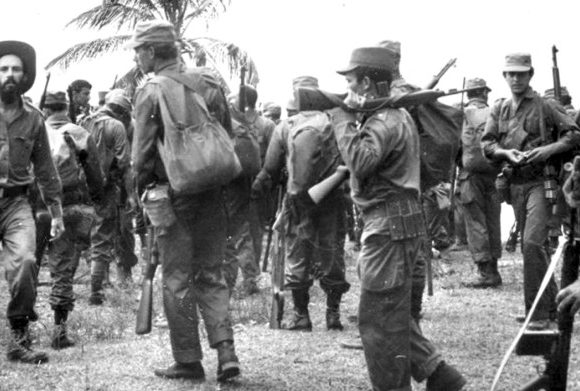
    Sixty-seven years after the landmark Constanza, Maimón, and Estero Hondo expedition touched Dominican soil, this defining moment in the nation’s fight for democratic rule remains a cornerstone of the country’s modern political history. What began as a coordinated armed incursion against the long-standing authoritarian regime of Rafael Leonidas Trujillo ultimately failed as a direct military operation, but its legacy sparked the popular opposition that would topple Trujillo’s decades-long dictatorship years later.

    Decades after the event, historians and storytellers have preserved the memory of the expeditionaries’ patriotic mission through published histories, oral anecdotes, and investigative journalistic work, cementing the uprising’s role as the catalyst that restored Dominican democracy. On the afternoon of June 14, 1959, a modified Curtiss C-46 cargo plane rolled down a runway in El Aguacate, Cuba, carrying 54 armed fighters toward the Dominican Republic. To evade detection by Trujillo’s border forces, the aircraft had been repainted to match the colors and official insignia of the Dominican Air Force, with Captain Juan de Dios Ventura Simón – a defector from Trujillo’s own Air Force – at the controls.

    Leading the ground operation was Dominican commander Enrique Jiménez Moya, at the head of a multinational coalition of volunteers committed to ending Trujillo’s 29-year authoritarian rule. Fighters from Cuba, Venezuela, Puerto Rico, Spain, the United States, and Guatemala joined Dominican rebels, uniting disparate ideological backgrounds and personal circumstances around a single shared goal of ousting the dictator. The airborne insertion was only one part of a far larger coordinated plan: two speedboats, the *Carmen Elsa* and *Tinima*, had departed a day earlier from La Chiva dock in Nipe Bay, Cuba, carrying 144 additional expeditionaries scheduled to land on June 14 at two northern Dominican coastal sites, Maimón and Estero Hondo. However, a combination of internal sabotage and severe bad weather delayed the boats’ arrival by six full days, forcing them to miss the planned coordinated landing.

    Despite the setback to the full plan, the C-46 touched down on schedule at a small remote airstrip outside Constanza. Trujillo’s garrison soldiers stationed nearby had no advance warning of the incoming flight, and the initial confusion among defending forces played into the rebels’ hands. After a brief firefight with a local patrol that left several soldiers and one officer dead, the expeditionaries unloaded their gear and slipped off the airstrip as the plane returned to Cuba. Back in the capital of Santo Domingo, Trujillo moved quickly to crush the incursion, deploying nearly 3,000 ground troops supported by truck convoys and air support. By dawn on June 15, Constanza had been turned into a war zone, with regime aircraft carrying out continuous bombing runs; the rebels were forced to retreat into the surrounding mountains to evade the assault.

    Six days behind schedule, the two expeditionary speedboats finally reached Dominican shores. The *Carmen Elsa* landed at Maimón under the command of José Horacio Rodríguez, while the *Tinima* put ashore at Estero Hondo led by José Antonio Campos Navarro. Trujillo’s military had already prepared for the delayed landing, and an additional 3,000 troops backed by air and ground fire repelled the incursion, leaving no survivors from the maritime expeditionary force. After suppressing the uprising, the Trujillo regime launched a deliberate propaganda campaign claiming that the invasion had been defeated not by its professional military, but by ordinary Dominican peasants armed only with machetes, clubs, and hand-thrown stones. The regime built this narrative into a massive public relations push, producing heroic folk songs, merengues, poetry, public rallies and competitions to celebrate the supposed popular victory over the rebels. But the truth of the aftermath was far grimmer: dozens of captured expeditionaries were secretly taken to Trujillo’s torture facilities and extrajudicially executed.

    Only a tiny handful of rebels survived the crackdown: three Dominican fighters, Poncio Pou Saleta, Mayobanex Vargas, and Francisco Medardo Germán, along with two Cuban volunteers – Delio Gómez Ochoa, a veteran of the Cuban Sierra Maestra insurgency, and teenage fighter Pablito Mirabal. While the 1959 expedition was a total military defeat, it reshaped the future of Dominican opposition politics as a powerful symbolic spark. The brutal, indiscriminate repression the regime unleashed against the uprising and its sympathizers generated widespread national outrage, amplifying deep existing discontent with Trujillo’s authoritarian rule.

    In the months following the incursion, a small group of young Dominican opponents began organizing secretly, inspired by the expeditionaries’ sacrifice. Led by Manolo Tavárez Justo and Minerva Mirabal, the group named itself after the June 14 uprising, founding the 14 June Revolutionary Movement (1J4). Within just a few years, the movement grew into one of the most powerful anti-regime political forces in the country, playing a critical role in the eventual collapse of Trujillo’s dictatorship. To honor the expeditionaries’ legacy, the Dominican government passed Law 264-97, which officially designated June 14 as the Day of the Immortal Race, and a mausoleum at the Center of Heroes in Santo Domingo now holds the remains of the fallen fighters, preserving their memory for future generations.

  • Woman dies after safety cord left off in Brazil rope jump

    Woman dies after safety cord left off in Brazil rope jump

    A fatal rope jumping accident in southeastern Brazil has left a young woman dead and three men in police custody, after extreme sports enthusiasts failed to secure a safety line before launching the victim off a 40-meter high bridge, local law enforcement confirmed Sunday.

    The tragedy unfolded Saturday on the Skeleton Bridge, located in the inland region of Sao Paulo state. Graphic video footage of the incident, which has since spread widely across social media platforms, captures the disturbing sequence of events: two men hoist 21-year-old Maria Eduarda Rodrigues de Freitas above their shoulders and push her off the bridge span, while nearby spectators spot the missing safety gear and scream out a frantic warning: “Guys, the cord!”

    In an official statement provided to AFP, police confirmed that critical safety equipment was never properly attached to de Freitas before the jump, and the victim did not survive the nearly 131-foot fall. Authorities have taken three men into custody on charges of “homicide with dolus eventualis,” a legal classification indicating the suspects were fully aware their actions carried a high risk of death but chose to proceed with the activity regardless.

    Investigations remain ongoing, with police working to document all contributing circumstances of the accident and assign full legal liability. Local Brazilian media has confirmed the victim’s identity, and reports indicate de Freitas shared a lighthearted pre-accident post to her Instagram account shortly before the jump, captioning a photo of the bridge site: “Who was the crazy person who let me come jump off a bridge???”

    Prior footage of rope jumping activities organized on the Skeleton Bridge by local adventure group Entre Cordas shows all participants wearing thick, secured safety cords around their waists before being launched, highlighting the fatal deviation from standard safety protocols in this incident.

    Rope jumping, the extreme sport involved in the accident, is distinct from the more widely known bungee jumping: it uses a far less elastic cord, designed to let participants swing back and forth below the jump point rather than bouncing upward after the initial fall. The sport was pioneered by American adventurer Dan Osman, who himself died in a 1998 rope jumping accident at the age of 35.

  • 22 killed in 22 fatal crashes in May – ITA

    22 killed in 22 fatal crashes in May – ITA

    New monthly traffic safety data published by the Island Traffic Authority (ITA) has revealed that 22 people lost their lives across 22 separate fatal road crashes across the island during the month of May 2026.

    When broken down by parish, the western parish of St James logged the highest death toll at four fatalities. Neighboring Westmoreland followed closely behind with three road-related deaths over the 30-day period. Five parishes — Hanover, Manchester, Clarendon, St Catherine and St Mary — each recorded two fatalities each. Single fatal incidents were reported in Trelawny, St Elizabeth, St Ann, Kingston and St Thomas. Notably, two parishes, St Andrew and Portland, finished the month with zero road fatalities.

    Against the May 2025 crash statistics, the ITA’s data shows a promising downward trend in road deaths: overall fatalities have dropped by 29% compared to the same period last year, while the total number of fatal crashes has fallen by 27% year-on-year.

    A breakdown of victim demographics shows that motorcyclists made up the largest single share of May 2026 fatalities, accounting for 32% of all deaths, equal to seven lives lost. Pedestrians were the second most affected group, responsible for 27% of fatalities (six deaths in total). Both private motor vehicle drivers and passengers each accounted for 18% of the month’s death toll, with four fatalities recorded in each group.

    In an additional observation, the ITA confirmed that no multi-vehicle collision incidents resulted in fatalities during the entire month of May 2026.

  • Airlines warn new tax on air tickets will affect the country’s competitiveness

    Airlines warn new tax on air tickets will affect the country’s competitiveness

    As the Dominican government rolls out new policy measures to counteract global economic shocks driven by skyrocketing oil prices, strained supply chains and rising cargo transport costs, the nation’s leading airline industry body has publicly voiced significant concern over one key proposal: an extra $10 levy on all commercial airline tickets.

    The Dominican Association of Airlines (ADLA), which represents the country’s commercial aviation sector, has pushed for careful re-evaluation of the surcharge, warning that the additional cost could create far-reaching ripple effects that undermine three pillars of the Dominican economy: air connectivity, tourism and national competitiveness. In a formal statement shared by ADLA President Omar Chahín, the association acknowledged the government’s urgent need to stabilize macroeconomic conditions amid a turbulent global economic landscape, but stressed that raising air travel costs demands rigorous, targeted analysis of its potential downsides.

    “While we recognize the government’s work to shield the Dominican economy from this challenging international context, we cannot overlook that an additional tax on airfare would harm key growth sectors for our nation, most notably tourism, connectivity and commercial aviation itself,” Chahín explained.

    Chahín outlined that the Dominican Republic operates in a highly competitive regional market, going head-to-head with other Caribbean and Central American destinations to attract tourist arrivals, foreign direct investment and new commercial air routes. Even a modest $10 increase in ticket prices, he argued, could erode the country’s competitive edge in this crowded market.

    He emphasized that the burden of the new charge would not fall solely on airlines: when travel to the Dominican Republic becomes more costly, the negative impact ripples through the entire connected value chain, affecting passengers, hotels, local businesses, and every industry that relies on air access to the country.

    ADLA also noted that commercial airfare already carries a heavy load of existing taxes, fees and operational charges. Adding another levy, the association argued, would likely dampen consumer demand for air travel, slowing growth in the sector and derailing the Dominican Republic’s ongoing efforts to establish itself as the leading regional aviation hub.

    Despite its opposition to the current proposal, ADLA has reaffirmed its commitment to working alongside government authorities to identify alternative solutions that meet the state’s fiscal goals without weakening the aviation sector’s competitiveness. Chahín highlighted that the industry is open to constructive dialogue and joint problem-solving, proposing the creation of a cross-stakeholder technical working group that includes government representatives, aeronautical regulators, tourism industry leaders and airport operators. This working group would explore alternative policies that support national economic stability without holding back the growth of Dominican aviation.

    Two core proposals from ADLA are already on the table: a full, comprehensive review of the entire cost structure that impacts commercial air activity, including aviation fuel pricing, airport user fees and other operational charges, alongside targeted reforms to strengthen frameworks that boost the competitiveness of domestic airlines.

    The association stressed that commercial aviation is far more than a transportation service—it functions as a strategic economic infrastructure that drives growth, draws in foreign investment, fuels the tourism and trade sectors, and maintains critical connections between the Dominican diaspora and their home country.

    Concluding his statement, Chahín reinforced ADLA’s alignment with the government’s goal of preserving the Dominican Republic’s macroeconomic stability and social peace. “It is precisely because we share this priority that we believe any measure affecting air connectivity must undergo broad, technical, consensus-driven evaluation that protects both public finances and the country’s long-term competitiveness,” he said.

  • A new date has been set to launch the Santiago monorail.

    A new date has been set to launch the Santiago monorail.

    On a recent Friday, the Dominican executive branch announced a revised timeline for the long-awaited Santiago Monorail project, confirming that passenger trial operations, branded as a “white run test”, will launch this coming December. The announcement lands amid soaring public anticipation in the region, and follows a years-long pattern of rescheduled delivery dates for the transformative transit megaproject, which aims to overhaul mobility in the capital of the Cibao region.

    During an on-site inspection of the monorail’s maintenance workshops and the underground terminal in the city’s monumental district, President Luis Abinader verified that the project has reached 92.6% overall completion, just over four years after construction first kicked off. Abinader also walked through the capabilities of the project’s central Maintenance and Control Center, noting that the facility is almost fully finished with only minor finishing touches remaining, and will be able to accommodate and service up to 15 trains overnight when fully operational.

    Jhael Isa Tavárez, executive director of the Mass Transit System Development Trust (Fitram), the public body overseeing the project, laid out the step-by-step roadmap moving forward: all core civil construction will wrap up in August, paving the way for dynamic empty-train testing between stations E1 and E11 in the final quarter of the year. Additional train units will arrive ahead of the December start date for the public trial run.

    This latest announcement marks the fourth formal timeline set by authorities, after three previous deadlines were missed. When the initial groundbreaking was held in March 2022, the government originally pledged a full inauguration by the end of 2024. The schedule was later adjusted to open the first commercial segment from Cienfuegos to Las Antillas between February and March 2025, when non-passenger movement tests were completed but public access did not launch. Most recently, the official target for first-phase completion was set for 2025, a date that has now been pushed to December 2026. Fitram has cited unforeseen urban adjustments and community-requested changes to the original route, particularly in the Reparto Universitario sector, as key factors contributing to the repeated delays.

    Beyond the monorail inspection, President Abinader packed his working trip to Santiago with a full slate of additional government announcements and project inaugurations. He held a working lunch with students from local polytechnic institutes, where he distributed new laptops and issued a directive to the Ministry of Higher Education, Science and Technology (MESCyT): the agency will begin evaluating scholarship applications while students are still in their fifth year of secondary school, eliminating gaps that force many graduates to lose an academic year while waiting for approval. Abinader also revealed plans to build a new regional campus of the Instituto Tecnológico de las Américas (ITLA) in Santiago Province.

    The president also formally opened the expanded and renovated Dr. Antonio Fernández Municipal Hospital in Monte Adentro, a project that received more than RD$103.9 million in public investment. The upgrade brings the total number of renovated healthcare facilities overseen by the National Health Service (SNS) across the country to 113. At the inauguration, Abinader confirmed that the Licey al Medio Municipal Hospital is on track to be completed next September.

    Abinader’s busy day ended with two more community-focused events: the inauguration of the quasi-Parish of San Benito Abad, and an inspection of the ongoing construction of the new headquarters for the Santiago Fire Department. He also reviewed progress on a new fire station in the El Dorado neighborhood, which the city mayor’s office confirms is currently moving forward as planned.

    Per the official public schedule, the government’s working visit to Santiago will continue into Saturday, with additional project inaugurations and scheduled meetings with regional business and community leaders.

  • INACIF Report: The discovery of carbon monoxide gives a new direction to the investigation into the deaths of mother and son in Piantini.

    INACIF Report: The discovery of carbon monoxide gives a new direction to the investigation into the deaths of mother and son in Piantini.

    A high-profile double death case in the Dominican Republic’s capital has taken a critical turn, after official toxicology results from the National Institute of Forensic Sciences (INACIF) have upended initial assumptions about what killed the two victims. The case centers on Raysa Juliza Serrano Guzmán and her minor son Jadin Nael Cornelio, whose bodies were discovered inside a residential apartment in the Arpel 07 tower of Santo Domingo’s upscale Piantini neighborhood, in the National District. After conducting specialized testing via the Conway microdiffusion method, INACIF’s Forensic Toxicology Department confirmed that carbon monoxide was present in blood samples taken from both Guzmán and Cornelio, according to two official reports released by the institute. This toxicological finding marks a breakthrough piece of evidence for the ongoing probe being carried out by the Dominican National Police and the Public Prosecutor’s Office, which has been working to pin down the exact circumstances that led to the pair’s deaths. While the official reports definitively verify carbon monoxide exposure in the victims’ systems, investigating authorities have not yet resolved a key outstanding question: where the toxic gas originated from. The incident left a third person injured: 22-year-old Carolín Milagros Pérez, who was Jadin Nael Cornelio’s romantic partner. Pérez was rushed to a private local medical facility in serious condition immediately after the incident was discovered, but she made an unexpectedly strong recovery and was eventually discharged from care. Prior to the release of INACIF’s toxicology findings, investigators’ leading working hypothesis was that the deaths were caused by food poisoning. That theory has now been formally ruled out, redirecting the entire investigation to the new line of inquiry centered on carbon monoxide exposure.

  • Tufton’s CARE Agenda gets underway

    Tufton’s CARE Agenda gets underway

    Less than one month after unveiling the initiative during his parliamentary Sectoral Debate Presentation, Jamaica’s Minister of Health and Wellness Dr Christopher Tufton kicked off his ambitious, community-centered CARE Agenda last week, opening with targeted programming for the nation’s fast-expanding older adult population.

    The launch of the agenda’s first component took place at the Chinese Benevolent Association Centre on the Mona campus of the University of the West Indies, where Tufton presided over the inaugural Training of Trainers workshop focused on home-based geriatric care for older adults.

    The CARE Agenda, short for Community Arranged Response Efforts, is a sweeping public health framework designed to strengthen grassroots healthcare across Jamaica and boost quality of life for all residents. Beyond specialized training for elderly home care – a cornerstone of the initiative’s healthy aging priority – the agenda includes a diverse slate of additional programs spanning social media literacy for children, community support networks for individuals navigating menopause and andropause, specialized lifestyle clinics, public education on fertility and responsible parenting, targeted interventions to address period poverty and improve adolescent health, expanded fitness opportunities through the existing Jamaica Moves initiative, community-centered mental health support, and expanded substance abuse outreach and care.

    At the core of the entire agenda is a shift toward community-rooted care models that meet populations where they are, rather than relying solely on facility-based treatment. Speaking at the workshop launch, Tufton emphasized that healthy aging extends far beyond just treating acute and chronic illness.

    “It is about ensuring that older Jamaicans remain active, independent and connected to their families and communities for as long as possible,” he explained.

    Tufton drew particular attention to the underrecognized, critical work of unpaid family and community caregivers, who shoulder the vast majority of long-term care responsibilities for older Jamaicans. Like many nations around the globe, Jamaica’s informal care network provides most support for the country’s aging population, a demographic that is growing faster than any other age segment.

    “International estimates suggest that almost 75 per cent of long-term care is provided by family members and community caregivers, quietly and selflessly supporting their loved ones every day. With an estimate of 100,000 to 150,000, these caregivers do far more than assist with medical needs. They prepare meals, purchase food and medication, provide transportation to clinics, help with bathing, dressing, feeding and mobility, manage appointments, and offer the emotional support and companionship that protects [overall well-being],” Tufton said, praising the uncompensated work these individuals contribute to the nation’s health system.

    Currently, Jamaica counts roughly 375,000 residents aged 60 and older, a number projected to climb to 400,000 by 2030. Tufton framed this rapid growth as both a milestone of improved public health outcomes and increased life expectancy, and a pressing call to reimagine how the country supports its aging population.

    Repeating his core framing of the initiative, Tufton noted: “Healthy ageing is about much more than treating disease. It is about enabling older people to remain active, independent, and connected to their families and communities for as long as possible. It is also about recognising that quality care begins long before someone enters a hospital or clinic. That is why the Ministry of Health & Wellness is advancing a community-based model of geriatric care that brings services closer to the people who need them most. Our approach is built on a simple principle: strong families and strong communities create healthier older adults.”

    To deliver on this vision, the Ministry has laid out six core strategic priorities for the healthy aging component of the CARE Agenda. First, the ministry will launch pilot specialized geriatric clinics in the parishes of St Ann and St Catherine, designed to deliver comprehensive health assessments and targeted specialized care for older adults. Second, it will expand home-based care services through structured, regular home visits led by community health aides and overseen by public health nursing teams.

    Third, the initiative includes ongoing training for both professional healthcare workers and informal caregivers to help them identify early warning signs of acute illness, age-related functional decline, caregiver burnout, and social isolation – all common issues that can harm the health of older adults. Fourth, the ministry will strengthen cross-sector partnerships with the Ministry of Labour & Social Security, the National Council for Senior Citizens, local government authorities, faith-based organizations, and local community groups to build a fully integrated, coordinated support network for aging Jamaicans.

    Fifth, the agenda prioritizes “ageing in place,” a model that empowers older Jamaicans to continue living safely, independently, and with dignity in their own homes and local communities for as long as they are able. Finally, the initiative will fund local community action through the dedicated CARE Fund, which works to strengthen family support systems, encourage widespread adoption of healthier lifestyles, and expand support infrastructure for vulnerable populations across the country.

    “As we prepare for the future, our success will not be measured only by the number of clinics we build or the programmes we launch, but by whether our older citizens are able to age with dignity, independence, and the support of families and communities that care,” Tufton concluded.