博客

  • Caribische ontwikkelingsbank onderzoekt regionale effectenbeurs voor Caricom

    Caribische ontwikkelingsbank onderzoekt regionale effectenbeurs voor Caricom

    The Caribbean Development Bank (CDB) has launched a landmark initiative to advance economic integration across the Caribbean Community (Caricom), committing $100,000 to fund a feasibility assessment for establishing a regional securities exchange under the Caricom Single Market and Economy (CSME) framework.

    The assessment will be carried out by the Caricom Private Sector Organization (CPSO), which has been tasked with mapping out the technical, legal, and economic viability of a unified regional exchange. Beyond core viability checks, the study will also evaluate which operating model best aligns with the unique needs of individual member states and their existing domestic financial markets.

    CDB officials emphasize that deepening and expanding accessible regional capital markets is a critical prerequisite to boosting entrepreneurship, accelerating innovation, and attracting sustained investment across the Caribbean. “Long-term growth across the Caribbean depends on our ability to build financial systems that give businesses streamlined access to the capital they need to expand,” explained Lisa Harding, head of CDB’s Private Sector Division.

    This feasibility study marks the official first phase of a broader project aimed at advancing deeper financial integration across Caricom. Over the course of the assessment, researchers will examine regional demand for capital market services, opportunities to harmonize cross-border financial regulations, successful global case studies of regional exchanges, and priorities from both member state governments and private sector stakeholders.

    A unified regional exchange would deliver widespread benefits across the bloc: it would give domestic firms from small member states far easier access to capital from regional investors, while simultaneously offering local investors exposure to a far broader pool of assets than the tiny, fragmented national exchanges currently operating across most of the Caribbean.

    For small economies like Suriname, the initiative carries particularly high stakes. Suriname’s domestic capital market is currently very small, with only a limited number of listed domestic companies. Access to a regional exchange would remove key barriers to growth for Surinamese firms, making it far simpler to secure financing for expansion and large-scale investment projects. Beyond individual national benefits, an integrated capital market would also boost cross-border investment flows across Caricom and strengthen overall economic cooperation between member states.

    The concept of a regional Caribbean securities exchange is not a new one: discussions around building an integrated capital market as a core pillar of the CSME have been ongoing for decades. A unified exchange has long been framed as a critical infrastructure to enable the free movement of capital across the bloc and better connect the region’s fragmented financial systems. With CDB’s new funding for the feasibility study, the long-discussed initiative has finally received tangible new momentum. The study’s final findings will clarify whether the region is prepared to move forward with the project, and outline what regulatory and institutional steps will be required to turn the plan into a working reality.


  • Police Investigating People who use Stolen Credit Cards to buy fete Tickets

    Police Investigating People who use Stolen Credit Cards to buy fete Tickets

    A major ticketing service has teamed up with law enforcement to crack down on a coordinated credit and debit card fraud scheme that illegally generated Carnival event tickets, in a move that signals a hardening stance against recurring ticketing fraud in the lead-up to popular seasonal celebrations.

    TickeTing, the regional ticketing platform at the center of the probe, confirmed Friday that it is collaborating with the local Criminal Investigation Department (CID) to unpack an alleged operation where bad actors have been leveraging stolen payment card data to purchase tickets for personal use, distribution to loved ones, and illegal resale.

    According to the company’s official public statement, investigators have spent weeks quietly tracking suspicious transaction patterns connected to specific individuals tied to the scheme. While past incidents of this nature have historically been resolved through internal, private actions that avoided formal law enforcement involvement, TickTing officials say the scale of this current operation warrants a full criminal inquiry. In a clear warning to anyone connected to the fraudulent activity, the platform emphasized that all tickets linked to the illegal scheme will be seized permanently.

    The penalties extend even to users who unknowingly obtained the illicit tickets: anyone who received tickets from the individuals under investigation, whether they paid for the entries or got them as a gift, will face immediate account blocks and confiscation of all associated tickets. While the blocks are in place, affected users will lose access to core account functions, including logging into their profiles, resetting passwords, transferring tickets to other users, or redeeming any existing tickets for event entry. Blocks will remain active until every individual case undergoes a full, personalized review to clarify the user’s level of involvement.

    TickeTing has issued an urgent call for any users who suspect they may have inadvertently received fraudulent Carnival tickets to reach out to the platform’s customer support team directly, or contact local CID investigators to report their situation. The platform also took the opportunity to remind the general public that payment card fraud is a serious criminal offense with lasting legal consequences, noting that modern digital tools and mobile tracking technologies allow law enforcement to trace suspects even when they attempt to hide their identity or physical location.

    Closing its statement, TickeTing wished attendees a safe and enjoyable conclusion to the 202X Carnival season, urging the public to remain vigilant against fraudulent ticketing scams amid the rush for event entry.

  • Minister Nicholas Welcomes Mr. Girvan Piggott as Director of Energy

    Minister Nicholas Welcomes Mr. Girvan Piggott as Director of Energy

    Antigua and Barbuda’s Ministry of Information Communication Technologies (ICTs), Utilities and Energy has announced a key leadership appointment to guide the nation’s evolving energy agenda. In an official statement, the Honourable Melford Nicholas, minister overseeing the portfolio, confirmed that Girvan Piggott will assume the role of Director of Energy starting August 1, 2026.

    Piggott enters the senior leadership post with an extensive professional background spanning more than two decades in the regional energy and utilities industry. He previously held a project engineering position at the Antigua Public Utilities Authority (APUA), where he built a reputation for delivering strong results on complex initiatives. Over the course of his career, Piggott has played a central role in the planning, rollout, and ongoing management of multiple high-priority energy infrastructure projects, each of which has helped reinforce the foundation of Antigua and Barbuda’s entire energy sector.

    During an internal welcoming meeting with the Ministry’s Energy Unit, Nicholas formally introduced the incoming director and outlined the expectations for the role going forward. A core focus of the ministry’s current work is aligning cross-team collaboration to advance the country’s established national energy priorities, a point Nicholas emphasized in his remarks.

    “Girvan Piggott’s combination of deep technical knowledge, proven leadership acumen, and longstanding dedication to public service makes him an outstanding fit for this leadership role on our team,” Nicholas said. He added that the appointment arrives at a pivotal juncture for the country, as officials continue pushing forward with expanded renewable energy development, enhanced energy security frameworks, and broad sustainable development goals across Antigua and Barbuda.

    Looking ahead, the Ministry of ICTs, Utilities and Energy has expressed confidence that Piggott’s leadership will drive meaningful progress as the sector continues its modernization journey. The ministry’s overarching goal remains delivering energy solutions that are reliable, accessible in terms of cost, and sustainable for all residents of the nation, and officials anticipate Piggott will be a key contributor to achieving that mission.

  • King Young Destroyer Captures 2026 Calypso Monarch Crown

    King Young Destroyer Captures 2026 Calypso Monarch Crown

    One of the most anticipated premier competitions of Antigua’s annual Carnival celebration has wrapped up, with King Young Destroyer taking home the top honor as the 2026 Cavalier Rum Calypso Monarch.

    Following Friday night’s tightly contested live performance showcase, the Antigua Carnival Festivals Commission published official results confirming the final rankings behind the new champion. Dr. Solo earned a strong second-place finish to secure first runner-up, while Lyrical Reds rounded out the top three as second runner-up.

    Beyond the main ranking positions, the event also included a series of special awards highlighting the unique strengths of competing calypsonians. Dr. Solo added additional recognition to his night by receiving the prestigious Philbert Mason Award, which honors outstanding work in social commentary through calypso. Melypnostick took home the Most Humorous Award for his lively performance of the track “Tek De Money”, while Dr. Paul was celebrated with the Most Improved Award for his growth and standout showing in this year’s competition.

    In a statement released after the event, the Antigua Carnival Festivals Commission extended formal congratulations to every artist that stepped onto the competition stage. The commission praised all competitors for sustaining the longstanding cultural spirit of calypso, delivering powerful, high-energy performances marked by exceptional lyrical craft. Officials also thanked the participants for helping craft what organizers call “another unforgettable night of Antigua Carnival”, cementing the competition’s reputation as a core highlight of the island nation’s annual cultural celebration.

  • Party’s wealth exceeds income

    Party’s wealth exceeds income

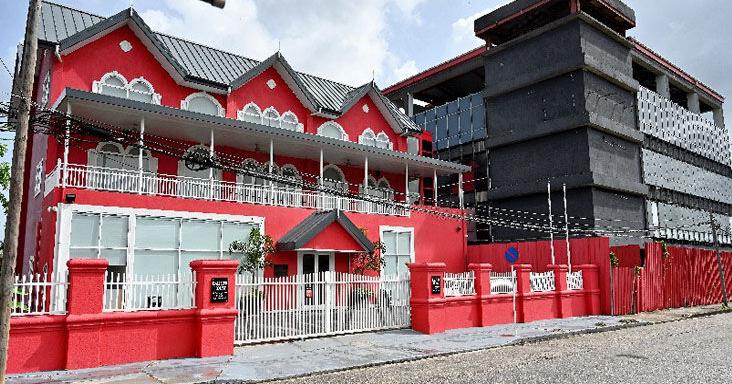
    In a landmark legal ruling that marks the first major use of Trinidad and Tobago’s 2019 asset recovery legislation, High Court Justice Margaret Mohammed has publicly released her detailed written reasoning for granting a preliminary Unexplained Wealth Order (UWO) against the People’s National Movement (PNM) and its board of trustees. The order compels the opposition political party to disclose the full origin of funds used to redevelop its Port of Spain headquarters, Balisier House.

    The release of the judgment followed a formal request from PNM’s legal team, who sought clarity on the court’s decision to greenlight the preliminary order. In her explanation, Justice Mohammed emphasized that this ruling does not pre-judge whether any criminal offense has been committed. Instead, the court’s only role at this procedural stage is to determine whether enough evidence exists to meet the statutory threshold for forcing the party to account for its assets.

    The proceedings originated from an ex-parte application submitted to the court on behalf of Police Commissioner Allister Guevarro by Assistant Superintendent of Police Ramdath Phillip, who acted under formal delegated authority granted by the 2019 Civil Asset Recovery and Management and Unexplained Wealth Act. Justice Mohammed also noted that a follow-up order issued July 17 authorized substituted service of court documents after law enforcement officers were unable to serve PNM trustees personally. The court directed that all legal documents be sent via registered mail to PNM political leader Pennelope Beckles at the Office of the Opposition in Port of Spain.

    Investigators anchored their case on the PNM’s own constitution, which explicitly states the party’s lawful income comes exclusively from four sources: membership dues, subscription payments, public donations, and mandatory levies imposed on the party’s elected public officials. In his sworn affidavit, Phillip calculated that levies collected from the party’s 22 Members of Parliament and 16 senators during the 2020-2025 parliamentary term generated approximately TT$532,782 in annual revenue for the party.

    To support the claim of unaccounted wealth, investigators also relied on a independent forensic audit conducted by UK-based Berkeley Research Group Ltd. The audit estimated that the full redevelopment of Balisier House would cost roughly TT$118.4 million, with already completed construction works valued at approximately TT$73.27 million – a sum that far outpaces the party’s documented annual lawful income. After reviewing this evidence, Justice Mohammed concluded that there were reasonable grounds to suspect the total value of the project substantially exceeded the PNM’s confirmed lawfully obtained income, meeting all statutory requirements to grant the preliminary UWO.

    Phillip’s affidavit laid out additional suspicious context around the project. It alleges that construction on the new headquarters halted immediately after the PNM lost the April 28, 2025 general election, a timeline that investigators argue supports their suspicion that corruptly linked funding dried up once the party left office.

    The affidavit also raises questions around connected government contracts awarded to the construction firm that won the Balisier House bid. Woodgreen Construction Services Ltd initially secured the headquarters contract for TT$68.3 million, later renegotiating the sum down to TT$59 million. After winning the PNM headquarters contract, the firm went on to receive multiple large contracts from the state-owned Housing Development Corporation (HDC), including a TT$170 million housing project that was awarded even though another bidder submitted a lower-priced offer. Investigators further allege that an investigation into the improper contract award launched by the Office of Procurement Regulation (OPR) was stalled for the duration of the PNM’s time in office, before the contract was ultimately suspended.

    ASP Phillip also notes that a large share of payments for the Balisier House project came from third-party entities including Amalgamated Security Services Ltd and Kall Co Ltd, as well as through the PNM’s off-balance sheet Tranquility Fund and unrecorded cash payments. These unconventional financing routes have added to scrutiny over the project’s funding sources. The affidavit also examines earlier renovations to the original Balisier House building, alleging the work was carried out by companies connected to former PNM government minister Foster Cummings. It references TT$15.6 million in HDC contract extensions granted to firms linked to Cummings shortly before the 2025 general election, as well as multiple payments made by the state-owned Urban Development Corporation of Trinidad and Tobago (UDeCOTT) to Cummings-connected companies between 2010 and 2022.

    In justifying her decision, Justice Mohammed referenced a binding precedent set by the Privy Council in the case of Richard Taylor v Natalie Spring, which clarified that the legal standard for a preliminary UWO is reasonable suspicion – a lower evidentiary threshold than the higher standard of reasonable belief.

    Under the terms of the preliminary order, PNM and its trustees are now required to file formal asset declarations and appear before the High Court to answer questions under oath about the origin of the project’s funding. After this process is complete, the court will rule on whether to grant a final Unexplained Wealth Order.

    Reached for comment on the ruling, Attorney General John Jeremie welcomed the court’s decision. “This is the first step in a process that will allow for the establishment of the source of funding for this project,” Jeremie said. “I agree with the decision of the respected judge, and I support the courageous action taken by the Police Service.”

    Local media outlet The Express also contacted incumbent Prime Minister Kamla Persad-Bissessar for comment, who responded via WhatsApp: “It’s a court matter so I prefer not to comment specifically about the court proceedings. However my opinions on the funding for construction of Balisier House are well known.”

  • ‘Africans an endangered species’

    ‘Africans an endangered species’

    In a provocative, unflinching address to mark Emancipation Day, Homeland Security Minister Roger Alexander has drawn widespread attention by declaring that people of African descent have become “an endangered species” — blaming internal cycles of violence, criminality and intergenerational neglect for the community’s ongoing stagnation nearly two centuries after the formal abolition of slavery.

    Delivering his remarks in a virtual presentation titled for his hard-hitting thesis, Alexander challenged the value of annual Emancipation Day observances, questioning whether the popular celebrations have translated to tangible, meaningful progress for African communities globally. He argued that far too many people remain trapped in what he described as a slave-era mentality that continues to hold the community back generations after emancipation.

    “ I have more questions than answers because why after so long we are celebrating Emancipation but still mentally we are still on that slave ship making that same trip,” Alexander told his online audience. He pressed community leaders and members to examine their own inaction, asking: “What are we doing differently to change the hearts and minds of our people, to richly educate them, prepare young men to be adults, to be fathers and women to be able to manage their career and their family at the same time? What are we doing?”

    Alexander pointed out a stark disconnect in how African identity is practiced: while communities proudly showcase their culture, heritage, traditional clothing, distinctive hairstyles and unique talents during Emancipation events, these values are rarely upheld consistently through the rest of the year. He also leveled criticism at individuals and organizations that he says only lean into public African identity when pursuing grants or financial backing, all while ignoring the deep-rooted structural and social issues eroding the community from within.

    Acknowledging that his blunt assessment would likely stir controversy and alienate some listeners, Alexander insisted that uncomfortable, honest dialogue is a necessary first step to drive change. “I know some of us will not be impressed with what I say because most African males do not have the testicular fortitude to say it. We are endangered species, not just young men but Africans on a whole whether we like it or not. And who is doing all of this? We. We are doing it to each other. So what really changed?”

    To illustrate the ongoing crisis facing young people in the community, Alexander shared a recent anecdote: he recently spoke with a 30-year-old man who had managed to secure stable employment, yet still saw his life derailed by addiction to drugs and exposure to gang violence — a case, he says, that proves systemic problems within the community continue to undermine individual progress.

  • A hard-won victory

    A hard-won victory

    On the annual observance of African Emancipation Day, Trinidad and Tobago President Christine Kangaloo delivered a nationally broadcast address framing the historic occasion as a lasting testament to the resilience of the human spirit and a reminder of unfinished work to advance true freedom across the nation.

    Kangaloo opened her message by emphasizing that this year’s commemoration carries unique urgency, coming against the backdrop of months of emergency public safety measures implemented across the country. The emergency period, she argued, offers a critical opportunity to reaffirm a core truth: public safety and individual liberty are not competing goals, but interconnected responsibilities that societies must uphold in tandem.

    Recounting the brutal history of chattel slavery, Kangaloo paid tribute to generations of enslaved Africans who resisted systemic dehumanization. Torn from their home continents, trafficked across the Atlantic Ocean, and reduced to property to be bought and sold, enslaved people were systematically stripped of their names, cultural traditions, family ties, and basic human dignity. Yet every attempt to break their collective spirit failed: through persistent resistance, enormous sacrifice, and unwavering hope, they challenged the exploitative system that oppressed them, ultimately forcing the end of legal slavery with the 1834 Emancipation declaration, followed by full emancipation in 1838.

    This hard-won victory, Kangaloo stressed, is not only a milestone for the African diaspora—it is a universal win for all of humanity. “Slavery was an offence against the entire human family, and Emancipation proved that no people can be permanently denied their inherent dignity,” she said. “Its message belongs to every citizen, regardless of faith, ancestral background, or cultural identity. All of us inherit both its promise and the responsibility to uphold it.”

    Beyond the physical end of chattel slavery, the president argued, true emancipation requires intellectual and cultural liberation. Invisible chains, she noted, persist in harmful inherited prejudices, biased patterns of thought, and the language used to marginalize groups. Racial slurs, for example, reinforce the dangerous falsehood that ancestry determines an individual’s worth, loyalty, or place in society—harming not just targeted groups but the entire nation by eroding shared trust and solidarity.

    Kangaloo pushed back against the idea that prejudice can be countered with reciprocal bias, warning that responding to hate with hate only validates the core falsehood that race defines a person’s character. Resentment may offer short-term emotional reward, but it ultimately undermines the collective social fabric that binds all citizens together.

    Mental emancipation, she explained, demands the rejection of all forms of racism, exclusion, and hatred, and a refusal to use race as a metric of merit or belonging. She pointed to everyday examples of cultural marginalization: a society that is truly free will never force Black children to feel ashamed of their natural hair texture or traditional African cultural practices, nor will it require citizens to downplay their African identity in clothing or appearance to gain acceptance in schools or workplaces.

    “While standards of discipline and public decorum have a legitimate role, they become harmful when they perpetuate inherited discomfort with African features, clothing, and culture,” Kangaloo said. “We cannot meaningfully celebrate African heritage in formal ceremonies while treating its visible, everyday expressions as something that needs to be corrected or hidden.”

    Returning to the ongoing state of emergency, the president reaffirmed that when temporary restrictions on freedom are required for public safety, those measures must always be implemented with intentional gravity and restraint. They must never weaken the nation’s core commitment to liberty or erode public vigilance in defending individual freedoms.

    Kangaloo concluded by noting that the work of emancipation remains unfinished, requiring ongoing effort across every sphere of national life: from the laws legislatures uphold, to the public institutions that communities strengthen, to the language individuals choose, to the daily choices that either expand or restrict the freedom of others.

    “Our ancestors broke chains that were visible to all, but the chains we must resist today are often hidden,” she said. “Even so, our duty to identify and oppose them is just as urgent. On this Emancipation Day, may we work together to build a Trinidad and Tobago where freedom is not just a historic memory, but a way of life that all citizens get to live fully.”

  • Message from the CARICOM Reparations Commission

    Message from the CARICOM Reparations Commission

    On 1 August 2026, Emancipation Day, the Caribbean Community (CARICOM) Reparations Commission has issued a formal message honoring the legacy of enslaved African ancestors who fought against chattel slavery, while marking a historic turning point in the global movement for reparatory justice.

    The commission opened its message by paying tribute to the courage, relentless resistance and unwavering determination of generations of enslaved people who overthrew one of the most cruel and long-standing systems of racial oppression in modern history. As communities across the Caribbean, Africa, and the global African diaspora gather to celebrate the hard-won emancipation from chattel slavery, the commission emphasized that the broader struggle for full justice, human dignity, and racial equality remains incomplete.

    This year’s Emancipation observance carries unique global significance, coming less than five months after the United Nations General Assembly adopted a landmark declaration on 25 March 2026 that formally classifies the transatlantic trafficking of enslaved Africans and the system of racialized chattel slavery as the gravest crime against humanity. This unprecedented international recognition validates a position that descendant communities, academic researchers, and racial justice advocates have advanced for decades: that the transatlantic slave trade and chattel slavery were not merely exploitative labor systems, but brutal, dehumanizing crimes whose intergenerational harm continues to shape the social, economic, political, and developmental outcomes of Caribbean nations and African diaspora communities around the world. The UN resolution strengthens the moral and political foundation for demands of reparatory justice, representing a critical milestone in the international community’s formal acknowledgment of historical truth.

    The 2026 Emancipation Day also coincides with preparations for the 25th anniversary of the Durban Declaration and Programme of Action, the landmark framework adopted at the 2001 World Conference Against Racism, Racial Discrimination, Xenophobia and Related Intolerance. To date, the Durban Declaration remains the most comprehensive international agreement designed to address the persistent legacies of slavery, colonialism, and systemic racism. Ahead of the official anniversary commemorations, the CARICOM Reparations Commission issued a call for all United Nations member states to reaffirm their commitment to full implementation of the Durban framework, and to push back against efforts to undermine its ongoing relevance to global racial justice efforts.

    For CARICOM, Emancipation Day is intrinsically tied to the ongoing movement for reparatory justice. While political independence was secured decades ago, it has not erased the deep structural inequalities created by centuries of systematic exploitation of enslaved African people. The enormous wealth extracted from the forced labor of enslaved Africans funded the industrial and imperial development of European colonial powers, while leaving Caribbean nations grappling with persistent underdevelopment, structural economic dependency, and ongoing racial disparities. These unresolved historical injustices continue to block sustainable, equitable development across the region, making meaningful redress an urgent moral and political priority.

    In response to this moment, the CARICOM Reparations Commission has formally relaunched the expanded CARICOM Ten Point Plan for Reparatory Justice: A Manifesto for the Coming Enlightenment. The plan serves as a collaborative framework for former colonial powers, private multinational corporations, academic institutions, religious bodies, civil society organizations, and all people of goodwill to engage in honest dialogue about historical harm, acknowledge formal responsibility for past injustice, and embrace reparatory justice as a core pillar of global reconciliation, shared human progress, and a more just future.

    In closing, the commission reiterated its core mission: drawing inspiration from the vision of freedom rooted in justice, dignity, and equality that guided enslaved resistors, the global movement will continue building inclusive societies free from racism, discrimination, and exclusion. “Together, let us transform remembrance into resolve and justice into reality for present and future generations,” the statement read.

  • AC crowned Pic-O-De-Crop Calypso Monarch

    AC crowned Pic-O-De-Crop Calypso Monarch

    In a sold-out, five-hour finale held at Barbados’ National Botanical Gardens that drew thousands of calypso music fans, Adrian AC Clarke etched his name deeper into the history of the iconic competition Saturday by securing the 2026 Courtesy Garage Pic-O-De-Crop Calypso Monarch title. Outperforming 17 fellow competitors with his compelling original track “Legends From The Grave”, Clarke walked away with his fourth championship crown, cementing his status as one of the genre’s most decorated modern performers. As part of his top prize, the winning artist has been offered the choice between a $100 000 lump sum cash award and a brand-new 2026 GAC EMKOO Elite GX motor vehicle, which comes with a complimentary one-year insurance package valued at $5 000. Clarke also took home the official championship trophy and a suite of additional secondary prizes. In a post-victory interview with Barbados TODAY, Clarke shared that he is currently leaning toward selecting the vehicle as his prize. Rounding out the top three positions, competitor Kid Site claimed second place with his entry “Talk Like Mia”, while i-Web secured the third spot with “Colour in B”. Last year’s titleholder, defending monarch Mr Blood, placed fourth with his performance of “Ain’t Leaving”. The high-energy competition drew a capacity crowd, with thousands of patrons packing the grounds of the National Botanical Gardens to watch the final round of performances, which stretched across more than five hours of live music.

  • VN: Krachtige El Niño versterkt hitte op een ‘planeet die al in brand staat’

    VN: Krachtige El Niño versterkt hitte op een ‘planeet die al in brand staat’

    The World Meteorological Organization (WMO), a United Nations specialized agency for climate and weather, has issued an urgent warning that a rapidly strengthening El Niño event will dominate global weather patterns over the coming months and drive widespread extreme weather conditions across the planet.

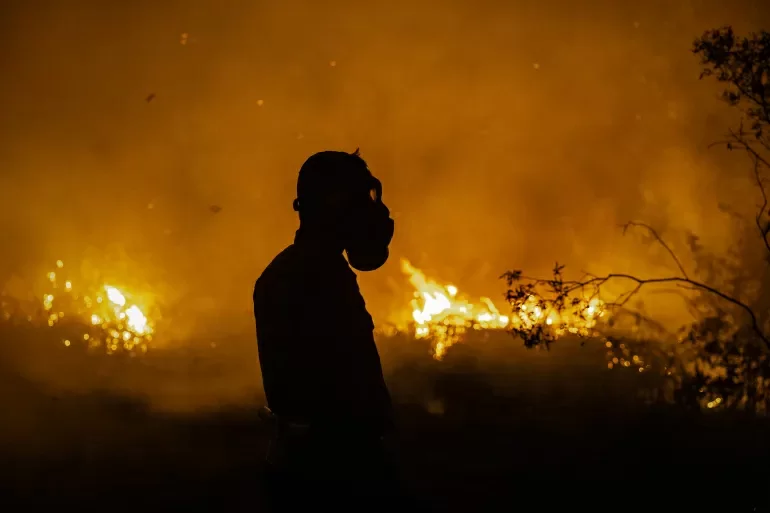
    Published on Friday, the WMO’s latest climate update confirms that this recurring climate phenomenon, driven by abnormal warm water buildup in the central Pacific Ocean, has already elevated the global risk of catastrophic heatwaves, prolonged droughts, and severe flooding. The alert comes at a time when vulnerable regions are already reeling from climate-related disasters: massive wildfires are tearing through parts of Africa and Europe, while unusually heavy monsoon rains in South Asia have caused widespread disruption and displacement.

    “El Niño is not just on our doorstep — it is already here, and it is turning up the heat,” United Nations Secretary-General António Guterres stated in response to the update. “This is just a warm-up. El Niño is growing stronger, and it is adding fuel to a planet that is already on fire.”

    Forecasters project that sea surface temperatures in the central Pacific Ocean will rise to more than 2.9 degrees Celsius above long-term historical averages. This extreme ocean warming disrupts established global weather systems and pushes overall planetary temperatures even higher, compounding the decades-long trend of human-caused global warming.

    Guterres has called on national governments to drastically accelerate climate action, noting that the impacts of El Niño are intersecting with human-induced climate change to create an unprecedented climate emergency. He specifically identified the continued expansion of fossil fuel production as the core driver worsening the crisis, and called for an immediate halt to all new coal, oil, and gas development projects.

    Per the WMO forecast, nearly all global land areas will see well-above-average temperatures through the duration of the event. The most severe heatwaves are expected to hit regions across Africa, Southern Europe, the Indian subcontinent, East Asia, and South America.

    WMO Secretary-General Celeste Saulo emphasized that while El Niño is being closely monitored by scientific agencies worldwide, early warning forecasts must translate into immediate, concrete action from governments and humanitarian organizations to protect the most vulnerable communities. “Forecasts cannot prevent hazards — people do,” Saulo said. “The decisions we make today will determine the impact we face tomorrow.”

    Right now, Southern Europe is already battling multiple large-scale wildfires, amplified by ongoing heatwaves that have dried out vegetation and drastically increased wildfire risk. Spain, Portugal, and Greece have reported record numbers of blazes this season, which have destroyed thousands of hectares of natural land and forced thousands of residents to evacuate their homes.

    Beyond wildfires, El Niño is triggering severe drought in other regions across the globe. In parts of East Africa, the phenomenon has led to failed rainy seasons, leaving millions facing acute food insecurity and severe water scarcity. South American nations including Peru and Brazil are also grappling with persistent drought that threatens agricultural output and access to clean drinking water for local populations.

    Climate scientists warn that this El Niño event could reach record strength by the second half of 2026, further increasing the likelihood of extreme, destructive weather events across the globe. While there remain minor uncertainties in climate computer models, the overarching conclusion is clear: the combination of a powerful El Niño and long-term human-caused climate change is placing unprecedented pressure on the planet’s ecosystems and human communities.