博客

  • UNDP and UEH sign an agreement to strengthen the psychosocial well-being of displaced persons

    UNDP and UEH sign an agreement to strengthen the psychosocial well-being of displaced persons

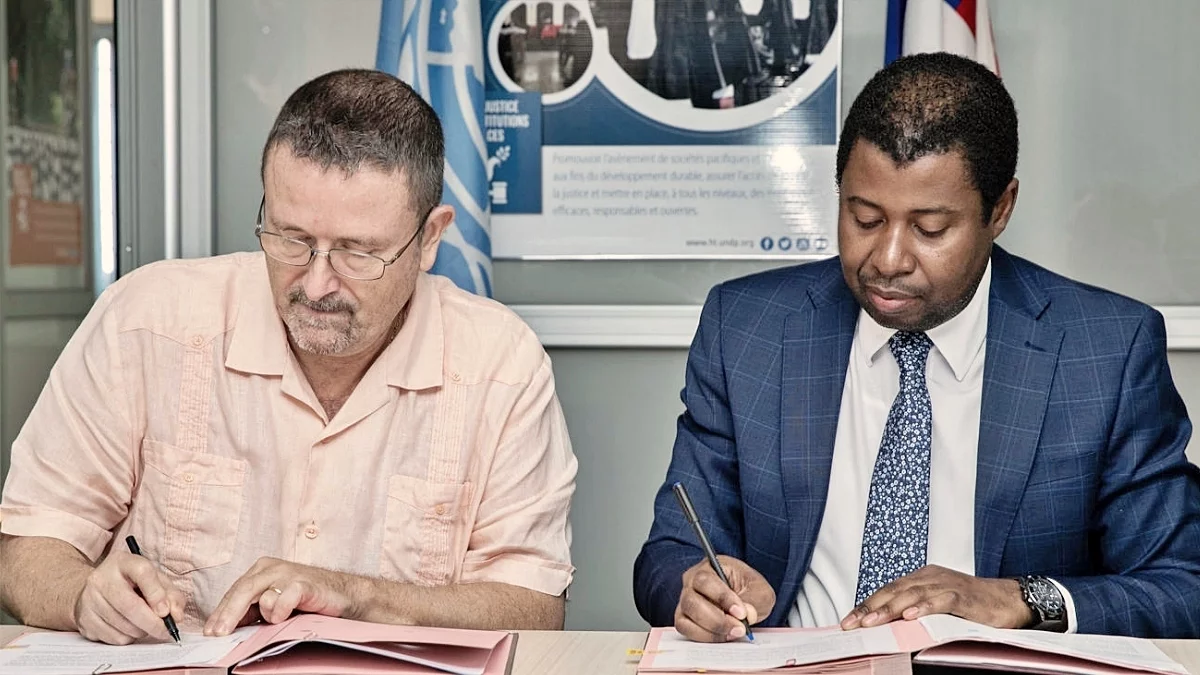
    Against a backdrop of surging armed violence that has displaced hundreds of thousands of Haitians and left deep trauma across affected communities, the United Nations Development Programme (UNDP) and Haiti’s State University (UEH) formalized a new partnership on July 31, 2026, to expand critical mental health and psychosocial support for displaced people and host communities in the Port-au-Prince metropolitan area. The two institutions signed a formal Memorandum of Understanding (MoU) to launch the initiative, which operates under the umbrella of the South Korea-funded Rekonekte project.

    Decades of escalating gang violence in Haiti has turned everyday life upside down for millions of residents, forcing more than 300,000 people to abandon their homes to seek safety in displacement camps or informal host communities across the Port-au-Prince region. While international attention has often focused on addressing immediate material needs like food, shelter, and medical care, leaders from both institutions note that unaddressed psychosocial trauma from violence and forced displacement has emerged as a silent crisis affecting all demographics, from young children to older adults.

    Under the terms of the new partnership, UEH will leverage its decades of academic expertise in psychology, social work, and community engagement to design and deliver locally rooted support services, while also building long-term national capacity for mental health care across the country. Ronald Jean-Jacques, the initiative’s coordinator at UEH, outlined the project’s scope during a virtual presentation, explaining that all programming will follow a evidence-based protocol already tested and proven effective by UEH teams across Haiti. Services will be delivered by a trained team of psychologists, social workers, and on-the-ground field supervisors, with direct outreach to displacement camps in the Port-au-Prince metropolitan area.

    Jean-Jacques emphasized that the project’s core mission goes beyond traditional clinical care: it aims to create safe, welcoming spaces where displaced people can process their trauma, rebuild a sense of self-worth, and kickstart personal and collective healing. Programming will take diverse, accessible forms to meet communities where they are, including peer discussion groups, targeted trauma rehabilitation sessions, creative sociocultural activities that leverage storytelling, art, music, dance, and nature connection, all designed to help survivors understand their trauma and build practical coping skills for long-term mental well-being. “When we went into the field, the people clearly shared their needs with us,” Jean-Jacques said. “Beyond material assistance, they expressed the urgent need for psychosocial support to cope with the trauma caused by violence and forced displacement.”

    Xavier Michon, UNDP’s Resident Representative in Haiti, framed the partnership as a deliberate rejection of fatalism about Haiti’s crisis, rooted in the organization’s core belief that progress is possible even amid unprecedented challenges. “We refuse to accept this as inevitable. We refuse to believe that there is no way out for Haiti. We are convinced that, despite the challenges, it is possible to move forward,” Michon said.

    He also highlighted the unique dual value of the university-led partnership: the model gives emerging psychology students at UEH the chance to gain hands-on field experience serving their own communities, while building a sustainable local workforce for future mental health programming. For UNDP, the initiative will also serve as a critical learning opportunity to inform larger-scale recovery and reintegration programs for violence-affected populations across Haiti. Michon stressed that the project is just a first, vital step rather than a full solution to Haiti’s overlapping crises, noting “It is only a beginning, but it is an important one. We will dedicate our full commitment to it as an organization, and I know that we will do it together.”

    UEH Rector Dieuseul Prédélus reaffirmed the university’s longstanding commitment to placing academic expertise and research at the service of Haiti’s most pressing national development challenges. He extended gratitude to partners including the Haitian Psychological Association, UEH’s Faculty of Ethnology, Faculty of Humanities, and all university staff who continue to deliver public-facing programming under extremely difficult security and operational conditions. Through this new partnership, Prédélus noted, UEH is reaffirming its mission to connect science, education, and community service to support Haitian people amid ongoing crisis.

  • Chief Drug Inspector Alfred Athill Participates in Global Regulatory Summit

    Chief Drug Inspector Alfred Athill Participates in Global Regulatory Summit

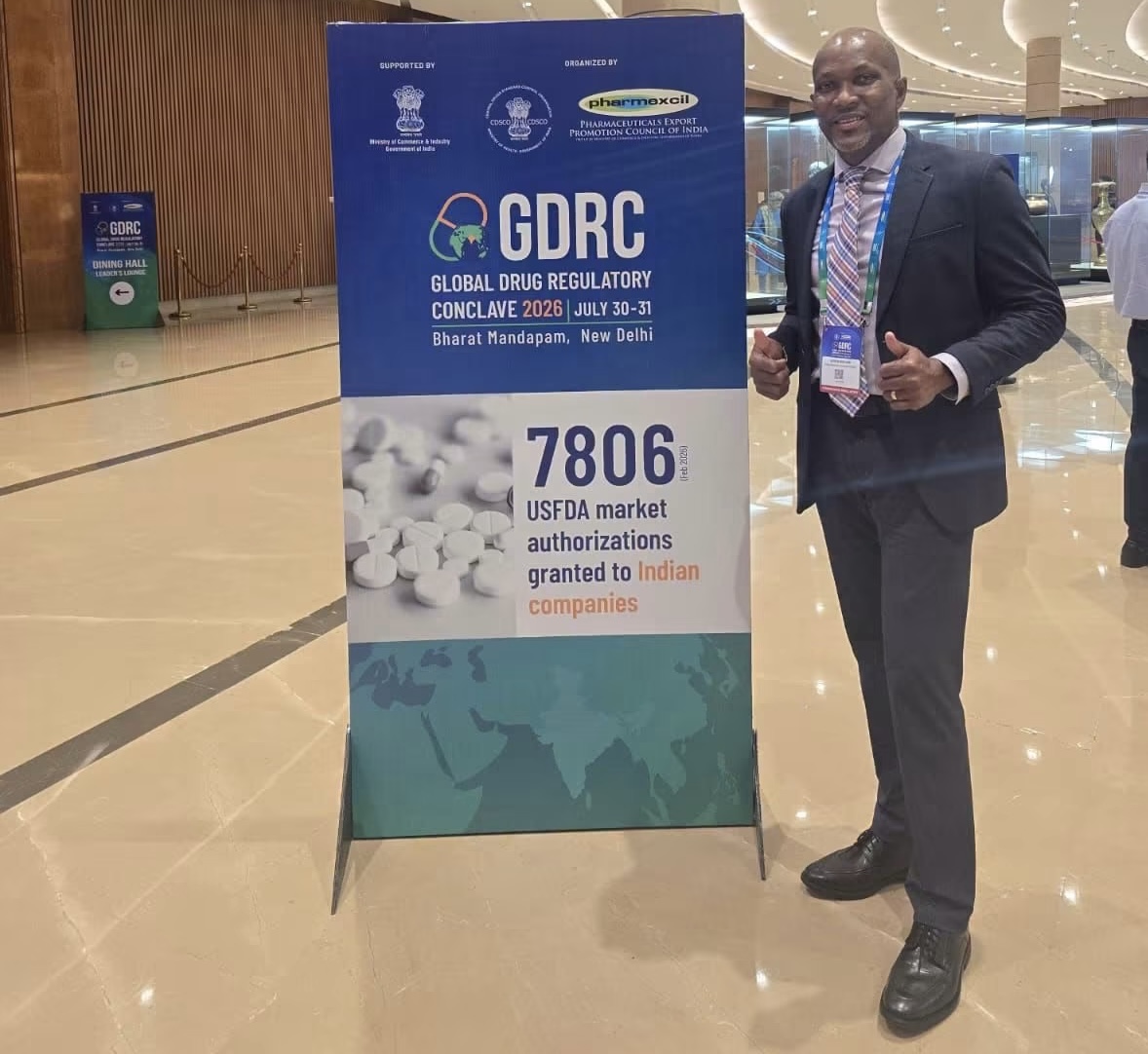
    The global landscape of pharmaceutical regulation is shifting rapidly as new treatments, drug manufacturing supply chains, and public health threats continue to emerge. Against this backdrop, one of the leading voices in drug safety oversight has joined a high-profile gathering of regulators from around the world. Chief Drug Inspector Alfred Athill is among the hundreds of senior regulatory officials, pharmaceutical industry leaders, and public health experts gathered for the annual Global Regulatory Summit, a landmark event focused on aligning standards and strengthening cross-border cooperation to protect global public health.

    The summit comes at a critical juncture for drug regulation worldwide. In recent years, the rapid expansion of generic drug manufacturing, the rise of novel biologic therapies, and ongoing challenges related to counterfeit medications entering global supply chains have highlighted gaps in international coordination. Regulators have also been grappling with how to speed up the approval process for life-saving new treatments without compromising safety standards, a debate that gained urgency during the global COVID-19 pandemic.

    Athill, who brings decades of experience in drug safety inspection and regulatory enforcement to his role, is expected to lead a working group focused on improving shared inspection protocols across major drug manufacturing hubs. His participation underscores the commitment of his home regulatory body to fostering international collaboration, as even the most robust national regulatory systems cannot address cross-border challenges alone. Attendees at the summit will also discuss emerging topics including the regulation of cannabis-derived medical products, gene therapies, and the impact of artificial intelligence on drug development and safety monitoring.

    Participants in the summit note that coordinated global action on drug regulation not only improves public safety but also facilitates timely access to high-quality medications for patients in every region, from low-income nations to the world’s largest developed economies. The event is scheduled to run for three days, with attendees set to issue a joint statement outlining shared priorities and collaborative action plans by the closing ceremony.

  • Insecurity : A true national tragedy

    Insecurity : A true national tragedy

    Six months of relentless violence across Haiti has left the nation grappling with what human rights advocates are calling a full-blown national tragedy, with new casualty data laying bare the catastrophic scale of the country’s ongoing insecurity crisis. The Order of Human Rights Defenders (ORDEDH) published the grim findings in an official press release, compiling statistics collected between January 1 and June 30, 2026 that confirm at least 1,305 people have been killed in violent incidents across the country in that window.

    This figure translates to an average of nearly 218 violent deaths per month, or more than seven people killed every day, a death toll that human rights defenders describe as morally and socially unbearable. ORDEDH’s records also document 408 major security incidents across the six-month period. While violent unrest has penetrated every region of Haiti, the organization notes that two departments are bearing the brunt of the terror: the West Department and the Artibonite Department, where daily life has been brought to a standstill by pervasive insecurity.

    In response to the escalating crisis, ORDEDH has put forward urgent structural demands to address the failure of current security governance. The group is calling for the immediate establishment of a special restructuring commission for the Haitian National Police (PNH), to replace the existing acting Director General. This proposed independent body would be tasked with hearing the concerns of rank-and-file police officers, addressing their legitimate grievances and workplace complaints, while also responding to public criticism and expectations for improved police performance.

    ORDEDH emphasizes that the PNH cannot reverse the crisis on its own. To deliver tangible security improvements and rebuild public trust, the organization says coordinated collaboration must be rapidly established between the PNH, the Armed Forces of Haiti, and the FRG (Gendarmerie Reform Force). Only through aligned strategy, combined operational capacity and shared tactical intelligence, the group argues, can Haitian authorities reclaim control of territory from armed groups.

    The spiraling crisis has unfolded under the 20-month tenure of de facto Prime Minister Alix Didier Fils-Aimé, who took office with a core mandate to restore domestic peace and organize long-delayed general elections. Last week, Haiti’s Provisional Electoral Council released an official electoral timeline scheduling the first round of voting for December 13, 2026. But ORDEDH and observers agree that no free, fair, or even logistically feasible election can be held if the government does not urgently restore basic security and guarantee the right to life across Haiti before voting begins.

  • AFC recommends captains refuse to operate ferries if faulty

    AFC recommends captains refuse to operate ferries if faulty

    ### Updated: Friday, 31 July 2026, 21:25 By Denis Chabrol

    Weeks after the fatal July 19 capsizing of the MV Barima killed more than 100 passengers and crew off Guyana’s coast, political opposition and civil society activists escalated public pressure on the Guyanese government during a 100-person protest outside the Office of the President on Friday. The demonstration centers on demands for full accountability, immediate salvage of the sunken vessel, and broader safety reforms for the country’s state-operated ferry network.

    Addressing protesters from the picket line, David Patterson, leader of the opposition Alliance For Change (AFC), issued a direct warning to captains and senior crew of all ferries run by the state’s Transport and Harbours Department (T&HD): refuse to sail any vessel that you deem unfit for service. He reminded crews that three of their colleagues already face unprecedented murder charges over the MV Barima disaster, a stark departure from the negligence charges that typically follow maritime accidents.

    The three charged crew members—40-year-old captain Kevin “KP” Price from Melanie Damishana, 42-year-old chief mate Rondell Dwayne Roberts from Grove Public Road, and 33-year-old goods superintendent Delon Granderson from Fellowship—all face the same severe criminal charges. Patterson stressed that captains who choose to operate a known defective vessel put themselves at equal legal risk. “If you take a boat that you know is defective, sail it, and a tragedy happens, authorities will frame the incident as if you intentionally meant to harm people,” he said. “You won’t just face negligence charges—you’ll be charged with murder, just like your three colleagues.”

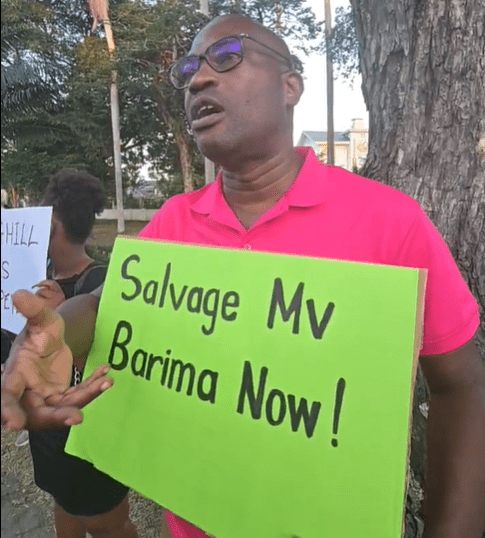
    Beyond his warning, Patterson shared practical guidance for ferry crews to protect themselves: formally document all safety concerns about vessel conditions in writing to senior officials, including the Minister of Public Works, and require all orders to sail in unsafe conditions to be provided in writing. “If something goes wrong, you will have clear proof that you followed official instructions,” he explained. Holding a protest placard reading “Salvage MV Barima”, Patterson also revealed he has already been in contact with a marine salvage firm based in the United Kingdom, which has outlined a salvage plan that would cost far less than the Guyana government’s current US$8 million estimated price tag.

    Patterson also pushed back against any suggestions that political leadership had previously pressured crews to cut safety corners, noting that when he served as Minister of Public Infrastructure, he never ordered any captain to overrule their own safety concerns or force vessels to carry excess cargo beyond safe limits.

    The call for salvage has gained broad support across Guyanese civil society, including from prominent Guyanese international environmental activist Janet Bulkan, who joined Friday’s protest. Bulkan emphasized that the sunken ferry itself is critical evidence for the ongoing investigation, calling it the “murder weapon” at the center of the criminal case against the three crew members. “If authorities are pressing murder charges against these men, we need the vessel raised to get the full truth,” she told Demerara Waves Online News. She added that recovering the ferry would also give closure to the families of the over 100 victims, allowing them to bury their loved ones properly. Bulkan also noted that the investigation must follow the formal requirements laid out in Guyana’s Shipping Act and the international Safety Of Life At Sea (SOLAS) Convention.

    In response to recent comments from Prime Minister Mark Phillips that the government would only salvage the vessel if victim families request it, Bulkan pushed back, arguing that such a major decision should not be left solely to grieving families. Instead, she said, it should be made by a multi-stakeholder group including investigators, legal representatives, civil society leaders and family advocates.

    One young protester at Friday’s demonstration carried a placard calling for the resignation of Public Works Minister Juan Edghill, and defended that demand in an interview. “The Ministry of Public Works has a legal and moral responsibility to provide safe, reliable public transportation for every Guyanese citizen,” she said. “Over 100 people died simply trying to travel to their destinations. This is the result of gross negligence, incompetence and complacency. If Minister Edghill truly considers himself an honorable person, the only honorable step he can take right now is to resign.”

    In response to growing public outcry, President Irfaan Ali has approved a formal Commission of Inquiry to conduct a full, wide-ranging probe into the MV Barima tragedy. On Friday, Ali appointed three experts to lead the inquiry’s review of maritime safety compliance: Dr. Ivor English, former Director-General of the Maritime Administration Department (MARAD); Colonel Julius Skeete of the Guyana Defense Force; and Captain Joseph Lewis, a veteran marine officer and ship surveyor. The commission’s mandate includes examining whether existing maritime safety rules were followed, and making actionable recommendations to strengthen regulatory oversight, improve enforcement, and bring Guyana’s vessel operations, operator protocols and regulatory systems up to the highest achievable international standards for safety and accountability.

  • PM Blames Red Tape for Defense Ministry Payments

    PM Blames Red Tape for Defense Ministry Payments

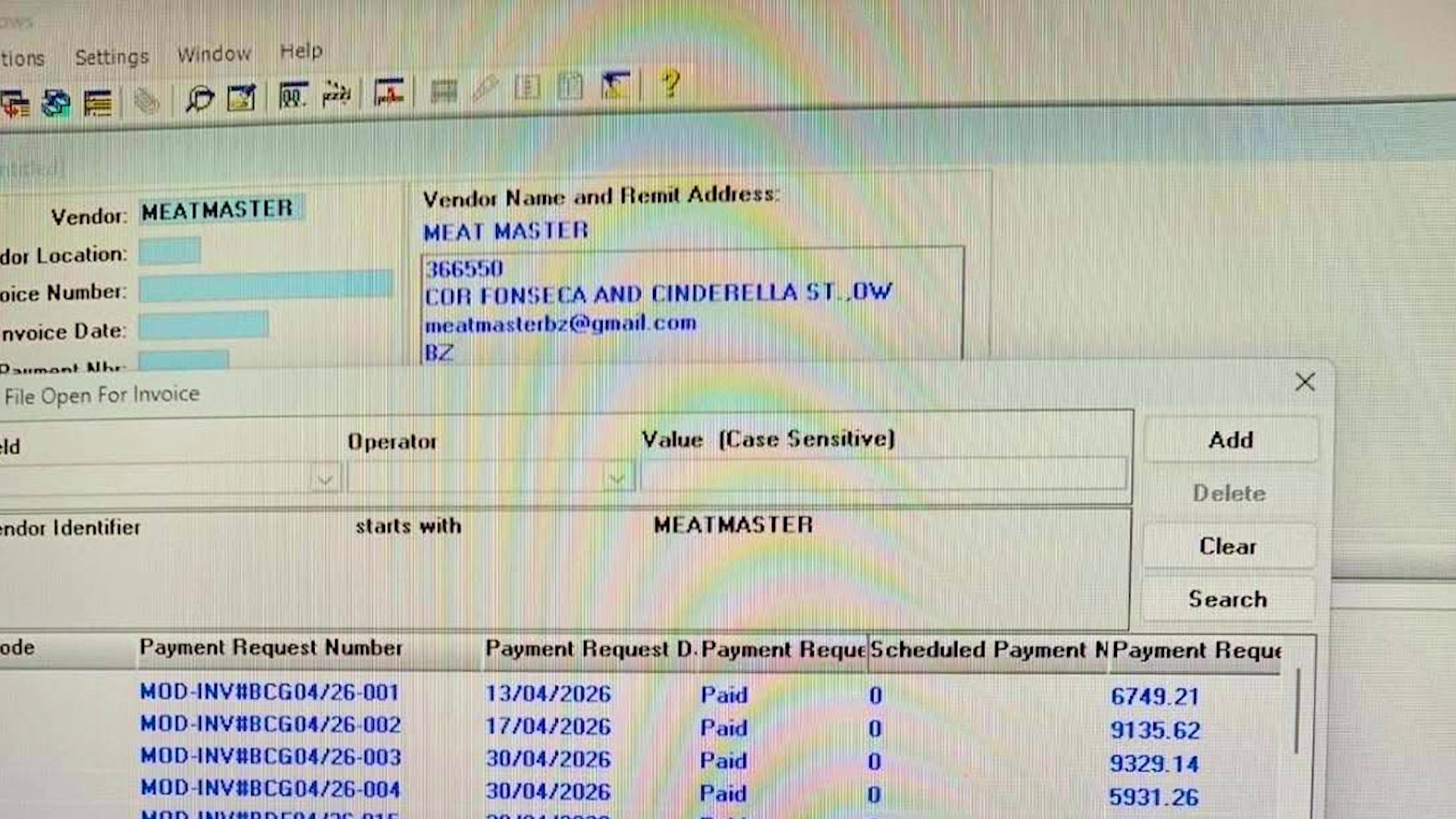
    In a press briefing aired on the evening of July 31, 2026, Belizean Prime Minister John Briceño pushed back against growing scrutiny over a series of controversial low-value payments issued by the nation’s Ministry of Defense to third-party suppliers. Each of the processed payments was intentionally set just below the $10,000 threshold that triggers formal, multi-agency procurement oversight, a pattern that critics have slammed as a deliberate effort to bypass standard regulatory checks.

    Briceño has rejected these allegations, framing the repeated use of sub-threshold transactions not as an attempt to avoid accountability, but as a necessary emergency measure to keep the Belize Defense Force (BDF) supplied with critical daily provisions including food. According to the prime minister, lengthy processing delays from two oversight bodies — the Office of the Contractor General and the Ministry of Finance — left defense officials with no other option to meet urgent operational needs.

    Addressing claims that the practice constitutes circumvention of official procurement rules, Briceño clarified that the Ministry of Defense had followed all required preliminary steps for formal contracting: department leadership submitted bid recommendations to the relevant oversight agencies 13 times in pursuit of full regulatory approval, and the prime minister acknowledged that the Contractor General’s office had extended consistent cooperative support throughout the process. The bottleneck, he argues, emerged at the Ministry of Finance, which took an excessive amount of time to issue formal responses to pending requests.

    With the BDF requiring daily food supplies to maintain operations, defense officials turned to repeated sub-$10,000 transactions as a stopgap solution, Briceño explained. He noted that the practice of using sub-threshold payments for urgent provisions is not a new scheme, but a long-standing operational workaround that has continued into 2026. When pressed on whether the arrangement violates formal procurement protocols, Briceño acknowledged that systemic gaps have created the current predicament, arguing that blame for the broken process is shared across multiple government agencies. He emphasized that the priority moving forward is not to point fingers, but to redesign the approval system to deliver greater speed and efficiency without sacrificing oversight.

    Briceño added that any questions about the specific vendors selected for the contracts fall within the remit of the Contractor General’s office, and that his own intervention was only to clarify the operational context that led to the repeated use of sub-threshold payments. This report is a transcribed adaptation of an evening television news broadcast.

  • PM Downplays CabSec Leslie’s Link to Defense Supplier

    PM Downplays CabSec Leslie’s Link to Defense Supplier

    A brewing controversy over undisclosed ties between Belize’s top civil service official and a defense ministry contractor has put the country’s highest office under growing pressure for stricter transparency rules, following comments from Prime Minister John Briceño that frame the unreported connection as a minor learning misstep rather than a serious breach of ethics.

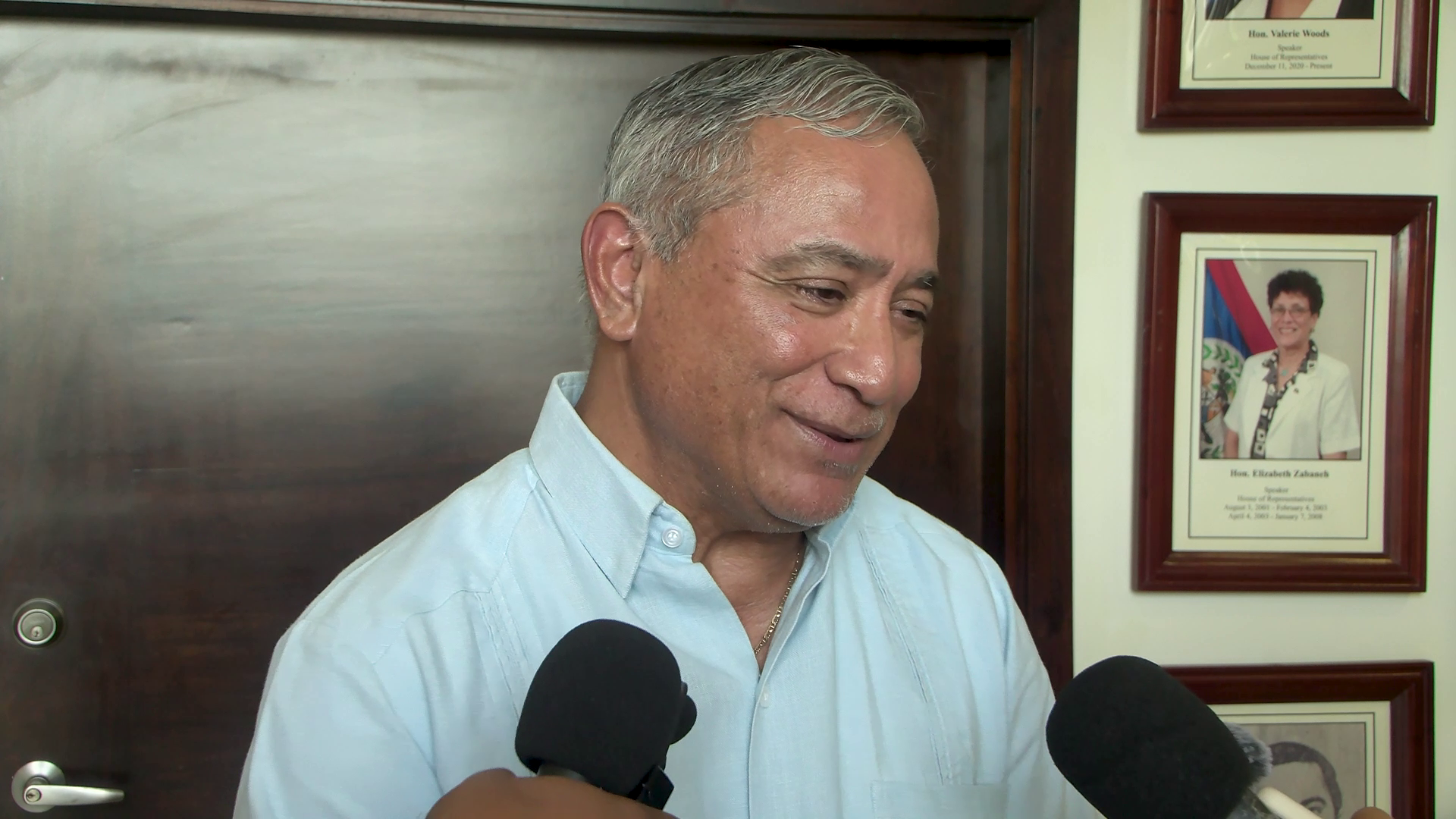
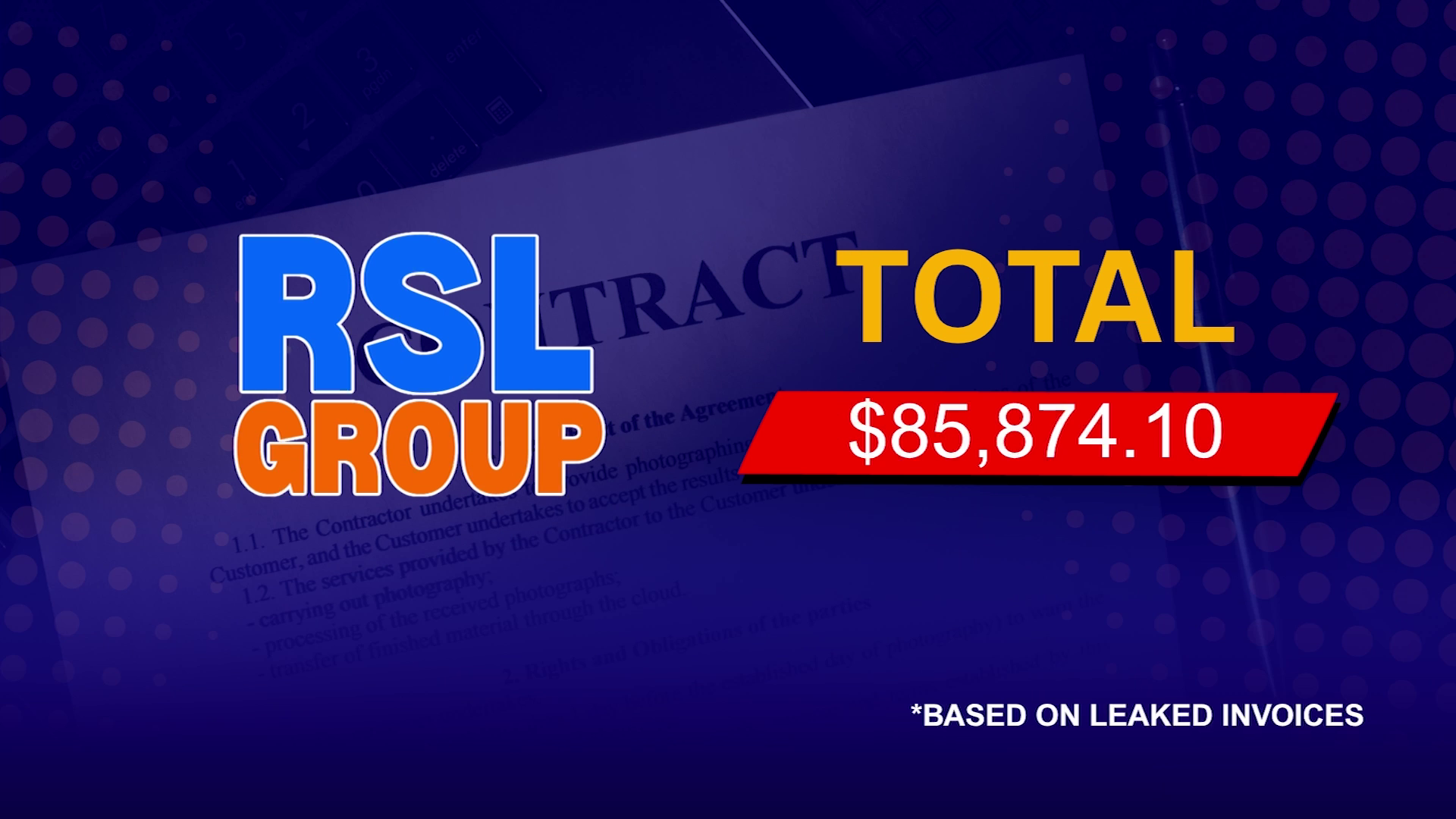
    The controversy centers on Stuart Leslie, Cabinet Secretary — the highest-ranking non-elected official in the national government — who held an unreported directorship at RSL Group Limited, a firm that secured supply contracts with the Ministry of National Defense. When pressed by reporters on the unfolding story July 31, 2026, Briceño told journalists he had no prior knowledge of Leslie’s role at the firm.

    When reporters asked if the arrangement amounted to self-dealing, a clear violation of government conflict of interest rules, Briceño pushed back on the characterization, saying Leslie had only taken on the director role to assist a family friend. Briceño added that Leslie himself has acknowledged the decision was poorly thought out, telling the prime minister in hindsight he would have declined the position.

    Leslie has also strenuously denied ever lobbying or pressuring defense ministry officials to secure contracts or special treatment for RSL Group, Briceño said. Records show all payments to the firm from the defense ministry came in at amounts below $10,000, and the company accounted for only a tiny fraction of the ministry’s total supply spending. There is no evidence to date that the firm received preferential treatment in the bidding process, Briceño argued.

    “Sometimes we don’t think things through and then you look back and say shux, I could have done it better, different. So, it is a learning process for everybody,” Briceño told reporters, adding that he could not recall the full scope of goods RSL Group supplied beyond condiments.

    Despite Briceño’s effort to frame the incident as an innocent oversight, the prime minister’s response has already opened new lines of questioning about conflict of interest disclosure rules, government oversight, and how potential ethical violations are handled among the most senior members of the administration. Good governance advocates have already called for a formal review of existing disclosure requirements to prevent similar unreported connections from going undetected in the future.

  • What’s in the Defense Audit That the PM Wants to Review First?

    What’s in the Defense Audit That the PM Wants to Review First?

    As an ongoing financial audit of Belize’s Ministry of Defense nears completion, questions surrounding transparency and public access to the document have moved to the center of political discourse, after Prime Minister John Briceño declined to guarantee an immediate release of the Auditor General’s final findings to the general public.

    In a press exchange this week, reporters pressed Briceño on whether the completed audit would be published for public consumption as soon as it was finalized, a query that failed to draw a clear affirmative response from the prime minister. Briceño clarified that under existing government protocol, the completed audit will first be delivered to the financial secretary, and as the country’s finance minister, he will receive a copy for personal review before any further steps are taken.

    When pressed repeatedly on why he requires advance access to the report before the public can view its contents — especially given that the audit will be submitted to the National Assembly unchanged for formal tabling — Briceño stood by the established process, noting that he cannot commit to an immediate release. He emphasized that he needs time to review the document’s findings to determine the optimal approach for disclosure, though he maintained that the full report will be made public eventually.

    Alongside the debate over audit transparency, Briceño confirmed that two senior officials, Florencio Marin and Oscar Mira, will remain on administrative leave pending his review of the Auditor General’s final results. No final decision on their status will be issued until he has assessed the audit’s conclusions.

    This report is a transcribed adaptation of an evening television newscast, with all Creole-language statements transcribed using a standardized spelling system for accuracy.

  • ABEA to Host Annual Prayer-Cade on Emancipation Day

    ABEA to Host Annual Prayer-Cade on Emancipation Day

    As communities across Antigua and Barbuda prepare to mark Emancipation Day 2024, the Antigua Barbuda Evangelical Alliance (ABEA) has finalized plans for its signature annual observance: the Prayer-Cade, a faith-focused procession that blends public worship with national reflection. This year’s gathering will kick off at 3:30 p.m. on Sunday, August 2, with participants assembling at the iconic Old Parliament Building before setting off on a cross-island motorcade.

    Unlike standard parades or processions, the Prayer-Cade is designed to bring intercommunal prayer to every corner of the nation. Organizers have planned multiple stops at neighborhoods and population centers across the island, where participants will lead collective prayers for the people, institutions, and future prosperity of Antigua and Barbuda. Rooted in the annual commemoration of Emancipation Day, the event carries dual meaning: honoring the historical legacy of emancipation while uniting people of faith across the country in a shared mission of spiritual support.

    ABEA has issued an open invitation to all segments of local society, encouraging congregations from every church, family groups, and individual members of the public to join the procession. Event organizers note that the Prayer-Cade fills a unique role in the nation’s Emancipation Day calendar, providing an opportunity for people to express their faith publicly while lifting up the needs of local communities across the island. For anyone seeking additional details about registration, route information, or participation guidelines, organizers can be reached directly at two contact numbers: (268) 781-2899 and (268) 725-0282.

  • Auditors Follow Paper Trail at Ministry of Defense

    Auditors Follow Paper Trail at Ministry of Defense

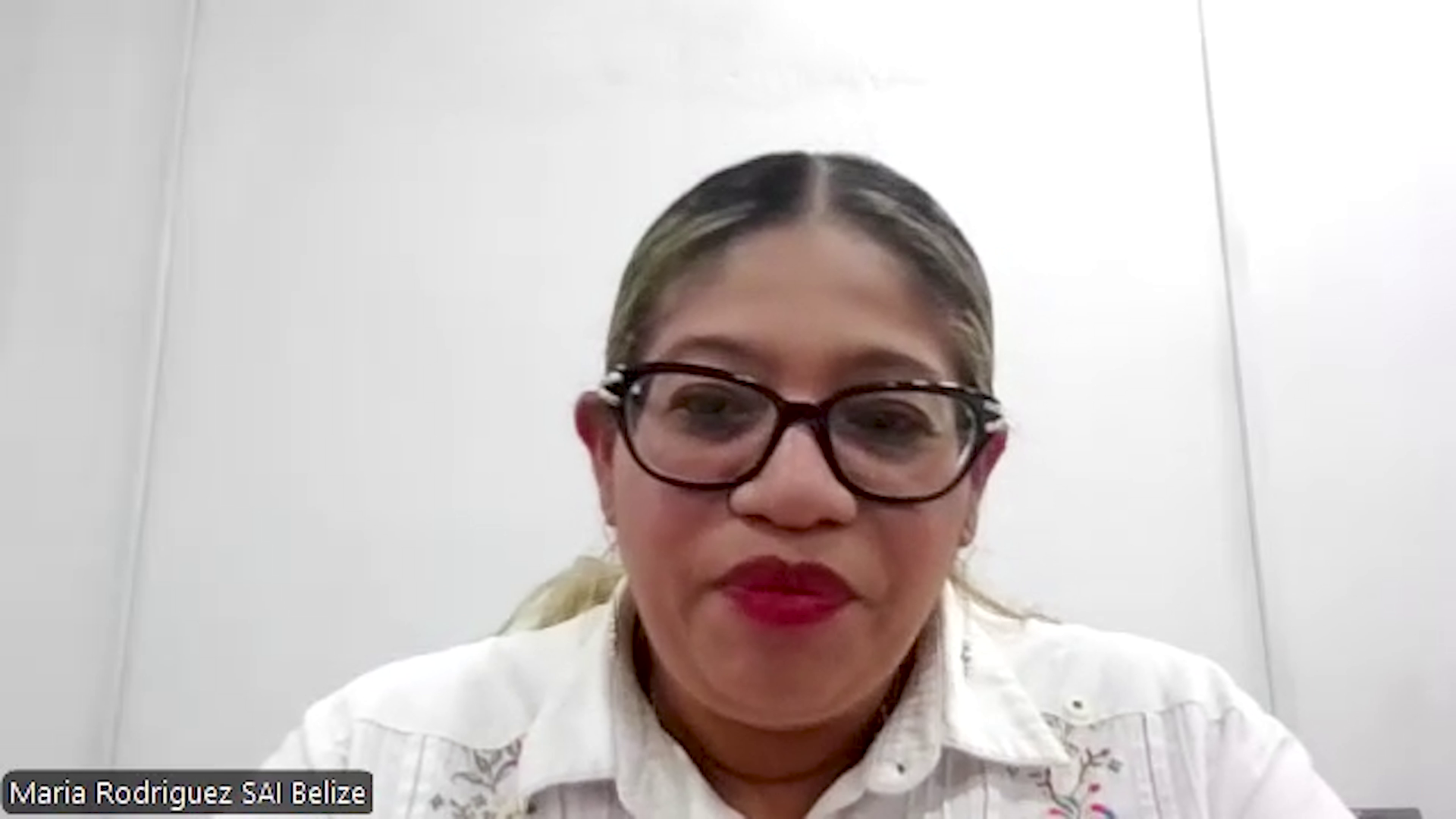
    In a wide-ranging probe into government spending accountability, the Office of the Auditor General has launched a comprehensive audit of the Belize Ministry of Defense, examining far more than the alleged supplier conflicts of interest that first sparked public outcry. Ordered by Prime Minister John Briceño, the investigation will eventually trace procurement and operational practices back to 2015, but Auditor General Maria Rodriguez says her team is first focusing on the most recent transactions that triggered widespread public concern.

    Speaking in an interview with journalist Paul Lopez, Rodriguez clarified that the audit is built around three core lines of inquiry, countering widespread public assumptions that the probe is limited to potential conflicts of interest. “I think some people are going with just the conflict of interest audit. We’re not just doing the conflict of interest, the alleged conflict of interest,” Rodriguez explained. “We are focusing on three lines of inquiry: which is how the bidding process happened, the purchasing situation on, as you all have displayed, those short payments that have been occurring and as well we’re looking at the management of stores.”

    The scope of the audit is far larger than initial public reporting indicated, requiring the audit team to interview dozens of stakeholders and key players across the procurement and supply chain. When asked about interviews as part of the probe, Rodriguez confirmed: “Yes, it’s part of the audit process. We meet with different persons. We meet with different stakeholders, key players in all this process. So the list is getting big.”

    While the Prime Minister formally requested the audit extend back to 2015, the team has deprioritized the review of older records to complete the examination of recent activity first. Rodriguez noted that she received the formal request through the Financial Secretary and has no objection to expanding the timeline to cover 2015 and 2016 records, but that work will only begin after the core review of recent transactions wraps up. Retrospective review of records from before 2020 is specifically targeted at uncovering potential misconduct that occurred during the previous UDP administration.

    This report is a transcribed excerpt from an evening television newscast, with Creole language statements transcribed using a standardized spelling system for accuracy.

  • Caribbean Airlines Cargo Flight Declares Emergency, Lands Safely in Jamaica

    Caribbean Airlines Cargo Flight Declares Emergency, Lands Safely in Jamaica

    A cargo flight operating under the banner of Caribbean Airlines has successfully completed an emergency landing at Norman Manley International Airport in Kingston, Jamaica, after the flight crew issued an emergency declaration mid-flight between Miami and the Jamaican capital, the regional carrier confirmed this week.

    The flight, designated BW 8045, was being operated by global air freight provider Atlas Air under a wet-lease agreement with Caribbean Airlines when the emergency was triggered on July 30. As soon as the emergency alert was issued, regional aviation regulators were alerted immediately, and Atlas Air kicked into action its pre-planned aviation security and emergency response frameworks, protocols that have been repeatedly tested to handle in-flight contingencies.

    Following the alert, the flight diverted smoothly to its intended destination of Kingston, where first responders, airport operations teams and national security officials were already standing by to meet the aircraft in line with International Civil Aviation Organization standard safety protocols. No injuries to any on-board personnel have been hinted at in the carrier’s official statement, and the aircraft has been voluntarily withdrawn from active service to undergo mandatory full maintenance inspections to identify and resolve the root cause of the emergency.

    Caribbean Airlines has confirmed that it has already reached out directly to every customer whose cargo was being transported on the flight, providing real-time updates on the status of their shipments and arranging alternative logistics where necessary to minimize delivery delays. At the time of publication, neither Caribbean Airlines nor Atlas Air had released any further details on the specific nature of the emergency, nor had they confirmed whether any structural damage to the aircraft was sustained during the incident.