博客

  • Minister Samuda to attend 11th Our Ocean Conference in Kenya

    Minister Samuda to attend 11th Our Ocean Conference in Kenya

    In a move that underscores Jamaica’s longstanding dedication to global ocean protection and climate action, Jamaica’s Minister of Water, Environment and Climate Change Matthew Samuda will embark on a trip to coastal Kenya next month to take part in a landmark global environmental summit. From June 16 to 18, Samuda will join hundreds of international leaders and stakeholders in Mombasa and Kilifi counties for the 11th iteration of the Our Ocean Conference (OOC11), the first time this critical global gathering will be hosted on African soil.

    Organized around the unifying theme “Our Ocean, Our Heritage, Our Future,” this year’s conference brings together heads of state, senior policymakers, leading marine scientists, and private and civil society stakeholders from across the globe. The core mission of the three-day event is to accelerate tangible, actionable progress on three interconnected priorities: protecting vulnerable ocean ecosystems, boosting coastal communities’ ability to withstand climate change impacts, and building an inclusive, sustainable blue economy that benefits both people and the planet.

    In an official statement released by Jamaica’s Ministry of Water, Environment and Climate Change, the department outlined that Samuda’s attendance is far more than a diplomatic gesture—it is a clear reflection of Jamaica’s unwavering commitment to environmental stewardship and cross-border cooperation on global climate and ocean challenges. As a Small Island Developing State (SIDS) on the frontlines of climate change and sea-level rise, Jamaica has long emerged as a leading voice for stronger global collaboration and increased targeted investment in marine protection. The country has consistently pushed for frameworks that not only safeguard critical ocean habitats but also generate equitable, long-term economic opportunities for the coastal communities that depend on healthy marine ecosystems for their livelihoods.

    During his time at the conference, Samuda is scheduled to take part in a series of high-level plenary discussions focused on global ocean governance, as well as hold bilateral meetings with other ministers and stakeholder representatives. These engagements will center on strengthening international collaborative frameworks and showcasing the progress Jamaica has already made in advancing effective ocean governance and innovative environmental management practices.

    The statement reaffirmed that the Jamaican government remains fully committed to advancing domestic policies that protect the country’s rich natural resources, while continuing to contribute meaningfully to global collective efforts to tackle the climate crisis and preserve the long-term health of the world’s shared oceans.

  • Trump insists Iran deal ‘hours’ away, despite Israeli strike on Beirut

    Trump insists Iran deal ‘hours’ away, despite Israeli strike on Beirut

    On a Sunday that marked his 80th birthday, former U.S. President Donald Trump once again asserted that a historic agreement to end the ongoing Middle East conflict was mere hours from being finalized — but he lashed out angrily at Israel, blaming an unexpected airstrike on a Hezbollah stronghold in southern Beirut for throwing the diplomatic process off schedule. The attack has already drawn stark warnings of immediate retaliation from Iran, leaving a fragile push for peace hanging in the balance.

  • ‘WATCH: You’re delusional’, Jess tells Chuck over no human rights abuse claim

    ‘WATCH: You’re delusional’, Jess tells Chuck over no human rights abuse claim

    KINGSTON, Jamaica — A sharp political clash has erupted over the state of human rights in Jamaica, after Justice Minister Delroy Chuck’s controversial denial of a national human rights issue prompted scathing criticism from opposition justice spokesperson Zuleika Jess, who labeled the minister’s remarks “delusional” in light of a recent spate of deadly police violence.

    Chuck first made the striking declaration during his scheduled address to the Sectoral Debate in Jamaica’s House of Representatives last Wednesday. In his comments, the minister asserted that Jamaica “does not, and I hope will never have, a human rights problem.” He defended his position by noting the existence of the Office of the Public Defender, a body empowered to investigate and prosecute violations of human rights, arguing that any aggrieved citizen could seek redress through the institution.

    The opposition pushed back just one day later, when Jess spoke at a groundbreaking event for a major water infrastructure project in St Elizabeth. The $148 million Santa Cruz By-pass Mains Replacement initiative marks the latest phase of the larger Santa Cruz Water Supply Improvement Programme, a public works effort aimed at upgrading access to reliable water for local communities. It was at this public gathering that Jess delivered her forceful response to Chuck’s remarks.

    Jess, who also serves as Member of Parliament for St Elizabeth North Eastern, argued that Chuck’s claim was indefensible in the wake of a devastating recent incident: 11 fatal police shootings carried out across the country in a single 24-hour period. “For a country that is experiencing 11 brutal police fatalities in 24 hours and to have a Minister of Justice state that there is no human rights issue, we find that to be almost delusional on the part of the Minister of Justice,” Jess stated.

    She expanded on her criticism, framing Chuck’s comments as more than just a misstatement. Jess argued that the declaration amounts to an alarming disconnect from on-the-ground realities, and an insult to thousands of Jamaican families who have demanded justice for loved ones killed under suspicious circumstances. “It is a dismissal of the lived realities that so many people here in Jamaica continue to face,” she added.

    The opposition spokesperson closed by calling on Chuck to reverse his position: she urged the minister to reconsider his remarks, retract the controversial statement, and realign his public views with the actual conditions facing Jamaican citizens. “The reality is that the people of Jamaica need justice and we need a government that doesn’t turn a blind eye to the realities on the ground,” Jess emphasized.

  • Real Madrid to sign Chelsea’s Cucurella—reports

    Real Madrid to sign Chelsea’s Cucurella—reports

    MADRID, Spain – Leading European football club Real Madrid has reached a transfer agreement with England’s Chelsea to acquire Spanish full-back Marc Cucurella in a deal valued at €55 million (equivalent to roughly $63 million), multiple football industry sources confirm. The transfer is slated to be finalized following the conclusion of the upcoming World Cup.

  • Amber Highway: the project that will change the economic map of Santiago and Puerto Plata

    Amber Highway: the project that will change the economic map of Santiago and Puerto Plata

    For the Dominican Republic’s northern corridor, the Amber Highway is far more than an uncompleted public works project tucked into a list of pending initiatives. This long-planned infrastructure venture stands as a transformative strategic link that, if delivered to the promised technical specifications, has the potential to reshape connectivity, trade, tourism, and long-term economic growth across Santiago, Puerto Plata and the entire North Coast for generations to come. The project has recently reemerged at the center of public debate, driven by advancing bidding processes, ongoing evaluation of technical proposals, and mounting expectations from communities across the region, including Santiago, Puerto Plata, Montellano, Sosúa, Cabarete, the Gregorio Luperón International Airport and the wider North Coast tourism corridor. While most public discussion frames the highway as a simple solution to cut travel time between Santiago and Puerto Plata, its purpose extends far beyond reduced commute times: it will directly connect Cibao’s primary economic heartland to a major tourist province that is actively working to reposition itself through new hotels, large-scale real estate developments, expanded airport infrastructure and commercial growth projects. According to official data reviewed by local outlet InfoENN – El Nuevo Norte, the completed highway will stretch between 32 and 32.7 kilometers, featuring four total lanes (two in each direction) and a designed operating speed of 100 kilometers per hour. Its core goal is to establish a modern, more direct and far safer connection between the existing Santiago Northern Bypass and the Puerto Plata–Sosúa highway. A critical detail that has gone largely undiscussed in public discourse is the highway’s alignment: rather than terminating directly in central Puerto Plata, it will route to the Montellano area, linking to the Puerto Plata–Sosúa corridor near the existing transport axis that connects Puerto Plata city, Gran Parada, Gregorio Luperón Airport, Sosúa and Cabarete. This routing fundamentally changes the project’s impact, repositioning Montellano from a forgotten transit town to a strategic hub for road transport, tourism, logistics and real estate development. From this new hub, vehicles departing Santiago will be able to access Puerto Plata, Sosúa, Cabarete, Playa Dorada, Maimón, the airport, Punta Bergantín and other key North Coast destinations without being forced onto crowded, outdated traditional routes. Traversing a rugged mountainous region, the Amber Highway breaks from the pattern of narrow, slow, curve-heavy mountain roads common to the area. Available technical plans outline a mixed engineering approach that incorporates open roadway sections, terrain cuts, embankments, retaining walls, bridges, viaducts, interchanges, overpasses and two purpose-built tunnels. The tunnels stand as one of the project’s most defining features: one will measure approximately 1.8 kilometers long, while the second will span roughly 0.7 kilometers, engineered to cut through mountain barriers, minimize sharp curves and steep grades, and reduce overall driving hazards. This modern design sets the new highway apart from the existing Gregorio Luperón Tourist Highway, a long-serving but notoriously challenging route marked by tight curves, steep slopes and elevated driving risks. The new corridor is designed to deliver a smoother, faster and safer route for passenger vehicles, tourist shuttles, intercity buses, commercial trade, cargo transport, business services and airport connections. The project’s greatest potential impact lies in broad regional economic development, rather than just improved transport. It promises to deliver direct, lasting benefits to the economies of both Santiago and Puerto Plata: Santiago acts as the commercial and industrial core of the Cibao region, while Puerto Plata ranks among the Dominican Republic’s top tourist destinations, with world-class beaches, established hotel infrastructure, commercial ports, an international airport, growing real estate development and a coastal corridor with massive untapped expansion potential. A high-speed link between the two provinces will boost domestic visitor flows, streamline freight transport, ease commutes for workers, cut overall logistics costs, and lift land and property values across corridor-adjacent areas. In Puerto Plata, growth will likely be concentrated in Montellano, Gran Parada, Sosúa, Cabarete, the zone surrounding Gregorio Luperón International Airport and developments tied to the Punta Bergantín project. A wide range of local stakeholders stand to benefit, including suppliers, construction firms, tour operators, transport companies, investors, merchants, hoteliers, restaurateurs and residential real estate developers that rely on improved connectivity to Santiago and the rest of the country. One largely underreported aspect of the project is how the Amber Highway aligns with Puerto Plata’s planned new regional tourism map. Punta Bergantín has been positioned as one of the most ambitious projects to revitalize tourism across the North Coast, and large-scale success for the development hinges on reliable, high-speed land connectivity. A modern highway from Santiago will streamline access for investors, visitors, employees, suppliers, construction contractors and supporting service providers heading to the development, while also strengthening Gregorio Luperón International Airport’s position as a more convenient travel terminal for residents and visitors across the Cibao region. If the airport can establish an effective high-speed link to Santiago, Puerto Plata will be able to compete far more effectively as a combined air and tourism gateway for much of the Dominican Republic’s northern territory. The project is being advanced by the Dominican Ministry of Public Works and Communications through the RD Vial Trust. The national public tender, identified as FIDEICOMISO-CCC-LPN-2025-0010, aims to award a contract for both the design and construction of the full highway. Initially, the deadline for proposal submission was set for March 2026, but officials extended the deadline to May to encourage broader participation and strengthen competition among interested construction groups. Following the extension, RD Vial confirmed that it had received and opened technical proposals (Envelope A of the bidding process) from three competing consortia: Consorcio Autopista del Ámbar, Consorcio AutoAmbar, and Consorcio Ruta del Ámbar. To ensure transparency, the bid opening stage included oversight from a Citizen Oversight Commission, public notaries, bidder representatives and members of the Purchasing and Contracting Committee. As of the latest update, no final award has been announced. The process has advanced to evaluation of the submitted technical proposals, with opening of financial bids from qualified participants and the final contract award still pending. The total estimated cost of the Amber Highway project exceeds RD$32 billion, making it one of the largest and most impactful road infrastructure investments in the Dominican Republic’s recent history. However, the project’s value extends far beyond its construction price tag. Its true significance lies in its potential to reshape economic development across the North, integrate two of the country’s most important provinces, and unlock tourism growth in a region rich with natural, cultural and real estate assets. For Santiago, the highway delivers a long-sought direct route to the Atlantic coast. For Puerto Plata, it creates a far stronger connection to the Cibao region’s economic engine. For Sosúa, Cabarete and Montellano, it could open the door to an entirely new era of growth and development. Even as regional stakeholders express enthusiasm for the project, success will require proactive planning to address emerging challenges. A project of this scale will bring transformative development, but also complex new pressures. Municipalities across Montellano, Gran Parada, Sosúa and Cabarete will need to update land use planning, enforce zoning controls, upgrade drainage infrastructure, expand road safety measures, regulate new access points, strengthen environmental protections and expand public services to accommodate incoming growth. As connectivity improves, pressure from real estate, commercial and tourism development will rise. When managed strategically, this growth can deliver a once-in-a-generation economic boost, but unplanned growth can lead to urban disorder if local governments are not prepared to accommodate new development. The Amber Highway has the potential to redraw the Dominican Republic’s northern economic map, but its long-term success will depend on far more than just asphalt. It will require intentional planning, sustained transparency, high-quality construction, and collaborative effort to help local communities integrate new development opportunities effectively.


  • Six killed as helicopters collide in Rio de Janeiro

    Six killed as helicopters collide in Rio de Janeiro

    RIO DE JANEIRO, Brazil — A devastating mid-air collision between two helicopters left at least six people dead Sunday in Rio de Janeiro’s western suburb of Recreio dos Bandeirantes, local fire department officials confirmed. Both aircraft plummeted into the open-air parking lot of a local electric vehicle dealership after the crash, triggering an intense blaze that consumed at least 20 parked cars.

    Early official statements from Rio’s fire department confirm all six fatalities were crew members on board the two collided helicopters. Rio de Janeiro Mayor Eduardo Cavaliere also confirmed that one of the aircraft carried foreign nationals, though he declined to release additional details including nationalities or identities of those on board as of Sunday afternoon.

    Speaking to reporters on the scene, fire service spokesperson Lieutenant Colonel Fabio Contreiras noted that investigators still lack a clear timeline of how the accident unfolded. “Aircraft debris is scattered across hundreds of meters of the surrounding area, so all details we have at this moment remain preliminary,” Contreiras explained. “To piece together an accurate account of what led to the collision, we need to recover on-board flight recordings and review witness footage captured at the scene.”

    Search and recovery teams documented one helicopter, carrying five crew members, that came to rest among the dealership’s electric vehicles and was immediately engulfed in flames; all five people on board were pronounced dead at the scene. The second helicopter, which crashed roughly 100 meters from the dealership lot, carried only a pilot, who also did not survive the impact.

    Local media published images from the crash site within hours, showing a thick column of black smoke billowing hundreds of meters above the dealership, as multiple vehicles burned continuously through the initial response effort.

    In a surprising silver lining, Contreiras emphasized that the crash location, an open parking lot away from crowded residential areas, prevented a far deadlier outcome. “Given the density of surrounding homes in this part of the suburb, the accident could have resulted in far greater loss of life on the ground,” he said.

    First responders faced unique challenges tackling the blaze, Contreiras added, due to the large number of electric vehicles that caught fire. Lithium-ion batteries that power most electric vehicles create unusual hazards for fire crews: when ignited, they release toxic fumes, drive up blaze temperatures far faster than traditional fuel fires, and require vastly more water to fully extinguish. “Putting out a single electric vehicle battery fire requires three to four times the water needed for a conventional gasoline car fire,” Contreiras noted.

    This collision marks the latest in a string of aviation accidents in Brazil, a continental-sized nation that ranks as the world’s fifth largest by geographic area, where small aircraft are a common mode of transit across vast distances. Just one month prior, a small fixed-wing plane crashed into a residential building in the southeastern Brazilian city of Belo Horizonte, killing both the pilot and co-pilot on board.

    Preliminary data from Brazil’s Center for Investigation and Prevention of Aeronautical Accidents (CENIPA) shows that 84 aviation accidents have been recorded across the country in 2026 prior to Sunday’s collision, with 25 total fatalities recorded in those incidents.

  • Ripton opens US$15.5 million Rogers Commercial Centre on Lady Musgrave Road

    Ripton opens US$15.5 million Rogers Commercial Centre on Lady Musgrave Road

    KINGSTON, Jamaica — A landmark new mixed-use business hub has officially launched in the heart of Jamaica’s capital, representing one of the largest injections of private capital into Kingston’s commercial landscape in recent memory. Ripton International Capital Holdings Limited has opened the doors to the Rogers Commercial Centre, a $15.5 million development located at 56–58 Lady Musgrave Road, drawing a high-profile gathering of top government officials, business leaders, and civic stakeholders to mark the occasion.

    Among the attendees in attendance for the opening ceremony were Aubyn Hill, Jamaica’s Minister of Industry, Investment and Commerce; Delano Seivright, State Minister in the same ministry; Andrew Swaby, Mayor of Kingston; Commissioner of Police Dr Kevin Blake; and prominent local businessman Norman Horne, Founder and Executive Chairman of ARC Manufacturing Limited. Popular media figure Khadine “Miss Kitty” Wilkinson led the event as master of ceremonies.

    The finished project is the brainchild and property of Jamaican entrepreneur Fritzwarien “Ripton” Rogers, who developed the centre over approximately two years. Local financial institution JMMB provided the project financing, while ARC Manufacturing Limited supplied all core building materials for the construction phase.

    Speaking on behalf of the Kingston and St Andrew Municipal Corporation, Mayor Andrew Swaby opened his remarks by extending congratulations to the entire project team, framing the new development as clear proof that Kingston continues to draw strong interest from domestic and international investors. “Today marks more than the unveiling of a new building,” Swaby told the gathered crowd. “It represents vision, determination, confidence and a firm belief in the future of our city.”

    The Mayor highlighted the project’s far-reaching economic benefits beyond its physical footprint: during the two-year construction period, the development created work for more than 600 local workers, and it will sustain ongoing new employment through its diverse roster of tenants, which span retail, food and beverage, healthcare, wellness, automotive services, and professional consulting. Swaby added that the modern development is a standout addition to the bustling Lady Musgrave Road commercial corridor, and emphasized that “Kingston is open for business.”

    Minister Hill also praised the project, positioning it as a powerful example of what Jamaican entrepreneurs can deliver when given access to the right support. He used the platform to issue a call to other local contractors, urging them to scale up their operations to be able to compete for larger national infrastructure and development projects. Hill noted that billions in new financing is currently flowing into Jamaica from multilateral development partners including the World Bank, the Inter-American Development Bank, and the Development Bank of Latin America and the Caribbean, and a significant portion of these funds must be allocated to private sector organizations. For smaller contractors that lack the capacity to take on large projects on their own, Hill encouraged collaborative partnerships to help them meet qualification requirements. “Ripton, you can be in the game, and other contractors like Ripton can be in the game,” he emphasized.

    Norman Horne, whose ARC Manufacturing supplied building materials for the project and who has counted Rogers as a close personal friend for decades, told the audience that the centre’s significance reaches far beyond its 300,000 total square feet of space. “Rogers Commercial Centre is a statement,” Horne said. “A statement that Jamaican business can create world-class development. A statement of confidence in Jamaica.”

    Like both Rogers and Hill, Horne hails from Jamaica’s parish of St Elizabeth, and he noted that the successful partnership behind the project was built on decades of mutual trust, respect, and integrity. “Jamaica needs more people like Ripton who are willing to dream big, invest big and build big,” Horne added.

    For developer Ripton Rogers, the official opening marked the fulfillment of a personal and professional dream that he first conceived two and a half years ago. Born in Jamaica and raised in Canada, Rogers explained that he chose to return to his home country to invest and contribute to local economic growth. “I wanted to show the little boy from St Elizabeth that you could come this far and achieve anything,” he shared. “It doesn’t matter where you’re from, it doesn’t matter what your background is. If you put your mind to it and work hard, you can achieve anything.”

    Rogers explained that naming the development after his family was a deliberate choice, intended to honor the long commercial history of the Lady Musgrave Road corridor, a connection that both he and Minister Hill highlighted during the ceremony. He extended heartfelt gratitude to all of his partners, financial advisors, financers, and family members who supported the project through its entire development cycle, saving special recognition for his father for his ongoing encouragement.

    Spread across 56 individual commercial units, the Rogers Commercial Centre offers 100,000 square feet of leasable space and a total of 300,000 square feet including basement parking and supporting infrastructure. Remarkably, the development hit 99% occupancy even before its official opening, and once all tenants are fully operational, it is projected to support approximately 400 permanent full-time jobs. Rogers shared his vision for the hub to grow into one of Kingston’s top destinations for entertainment, wellness, and modern lifestyle offerings, saying “I want it to be the hip strip for Kingston.”

    Looking ahead, Rogers has an aggressive pipeline of new development projects planned across Jamaica: he is set to expand into the hospitality sector with new projects in the popular resort town of Ocho Rios, and roughly half a dozen additional new developments are on track to be completed over the next two years.

  • Dreams Dominicus: “La Romana is experiencing a historic level of occupancy”

    Dreams Dominicus: “La Romana is experiencing a historic level of occupancy”

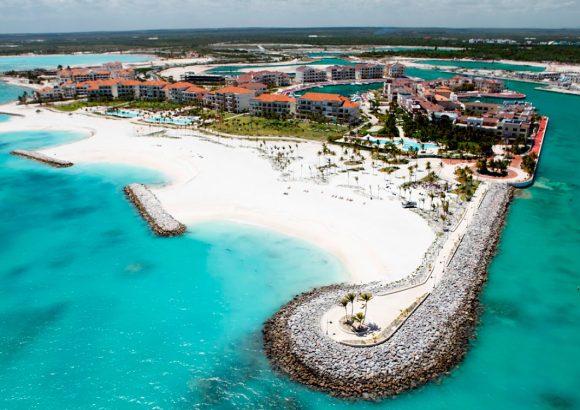
    The Caribbean tourism hub of La Romana-Bayahibe is enjoying an unprecedented boom in its hospitality sector, with industry leaders reporting some of the strongest performance in the destination’s modern history. Amando Pozo, general manager of the prominent Dreams Dominicus La Romana resort, says the region’s hotel industry is reaping the benefits of shifting global travel patterns paired with unique natural advantages that set it apart from competing Caribbean getaways.

    According to Pozo, post-pandemic traveler mindsets have reshaped international vacation demand, driving the impressive surge in occupancy. “Since the pandemic passed it seems that worldwide everyone has reflected that they have to enjoy themselves, travel, have a good time and not be stingy on their vacations,” he explained in an interview with areca.com. This shift in consumer priorities has delivered widespread economic gains to the Dominican Republic’s tourism sector, amplified by external socio-political and environmental developments impacting neighboring destination rivals.

    Unusual environmental challenges in parts of coastal Mexico, which has struggled with widespread sargassum blooms on popular beaches, along with ongoing socio-political uncertainty in Cuba, have redirected growing volumes of international travelers to the Dominican Republic’s La Romana region. Pozo emphasized that these external factors, combined with the area’s pristine natural offerings, have pushed occupancy to all-time highs that outperform every pre-pandemic season on record.

    At Pozo’s own property, a 488-room resort belonging to Inclusive Collection, part of World Hyatt, current occupancy sits at a robust 92%. That strong figure comes in large part from the destination’s biggest selling point: untouched, sargassum-free shorelines. “La Romana is indeed very popular because we are grateful to have clean beaches, there is no sargassum, no seaweed and this benefits us greatly,” Pozo noted.

    Beyond its natural advantages, the resort offers convenient access to key travel infrastructure, located just 20 minutes from La Romana International Airport. It also features a purpose-built pier that can host private events ranging from weddings to birthday gatherings, accommodating up to 50 guests for standing events or 30 guests for seated occasions. With occupancy rates holding steadily above 90% and demand continuing to climb, La Romana-Bayahibe is cementing its status as one of the most sought-after tourist destinations in the entire Caribbean, with the hospitality sector positioned for sustained growth into coming travel seasons.

  • Two French tourists killed and five others injured in traffic accident in Samaná

    Two French tourists killed and five others injured in traffic accident in Samaná

    A devastating head-on traffic collision in the Dominican Republic’s Samaná Province has claimed the lives of two French citizens and left multiple people with injuries, according to official preliminary accounts of the incident. The crash unfolded Saturday night on the key Sánchez–Samaná highway in the El Catey community, a stretch of road that links the province’s most popular tourism hubs, when a tourist minibus carrying passengers collided directly with a pickup truck.

    Local authorities have formally identified the two deceased victims as Jean Phillippe Champeaux and Severine Yvette Claudette Leuk. Medical examiners’ reports detail the fatal injuries each sustained: Champeaux died from extensive blunt force trauma to his closed skull and abdomen, while Leuk passed away due to catastrophic head damage, including a basal skull fracture.

    Multiple other people were hurt in the impact, including the driver of the tourist minibus, Jorge Thomas Dishmey Amparo. Two other casualties include Victoriana Altagracia and her 14-year-old daughter, who were riding a motorcycle near the collision site when the crash occurred and also suffered injuries. Additionally, two Haitian nationals are among those wounded, though their full identities remain unknown as of Monday, as neither individual carried official identification at the time of the incident.

    Preliminary investigations into the crash point to reckless driving as the likely cause: authorities say the pickup truck attempted an unsafe overtaking maneuver that put it directly in the path of the oncoming tourist minibus, triggering the fatal collision. Formal investigations are still ongoing to confirm all contributing factors and the full sequence of events leading to the tragedy.

    Following the fatal crash, regional observers and community leaders have renewed longstanding concerns about inadequate road safety protocols on Dominican highways, especially along corridors that see heavy traffic from tourists visiting popular coastal and scenic destinations across the country.

  • Audrey Marks reacquires Digicel’s 80 per cent stake in Paymaster parent

    Audrey Marks reacquires Digicel’s 80 per cent stake in Paymaster parent

    KINGSTON, Jamaica — In a landmark deal reshaping Jamaica’s fintech landscape, Audrey Marks, founder of leading Jamaican payment services provider Paymaster, has bought back Digicel’s 80 percent controlling stake in APM Holdings Limited, the parent company of Paymaster. The transaction hands full ownership control back to the firm’s original founder nearly three decades after Marks first launched the business.

    Specific financial details of the acquisition have not been made public per the terms of the deal.

    Company representatives confirmed the transaction concludes negotiations that first kicked off in 2024, preceding Marks’ appointment to her current dual roles as Jamaica’s Minister of Efficiency, Innovation and Digital Transformation, and Member of Parliament for Manchester North Eastern.

    Marks first founded Paymaster back in 1997, building the business from its early days to become a cornerstone of Jamaica’s transaction services ecosystem. Today, the company delivers a wide range of services including bill payment processing and general transaction solutions for individual consumers, private businesses and government agencies across the island, operating via a sprawling network of physical locations spanning every major region of Jamaica.

    In an official statement following the deal’s closure, Marks noted that the acquisition puts the company in a position to leverage its decades-long market presence as it pursues new expansion opportunities in the fast-evolving, technology-first global payments industry. “This transaction allows the company to build on its strong foundation while positioning for future growth opportunities in an increasingly technology-driven environment,” Marks said.

    To accommodate Marks’ ongoing public sector responsibilities, Paymaster announced it will onboard dedicated strategic management support to oversee company operations. This new governance framework is designed to deliver robust operational oversight, strengthen corporate governance standards, and guide the company’s upcoming modernization initiative.

    The firm has moved to reassure stakeholders that day-to-day business operations will continue without any disruption throughout the ownership transition. Customers, billing partners, agent networks and other third-party partners can expect no changes to existing service offerings in the coming months.

    Paymaster also issued a public note of gratitude to Digicel for its years of collaboration and partnership during its time as majority shareholder. As of the latest announcement, the company has not released further details regarding planned capital investments, updated long-term management structure, or a concrete timeline for the proposed modernization process.