博客

  • The bottom line

    The bottom line

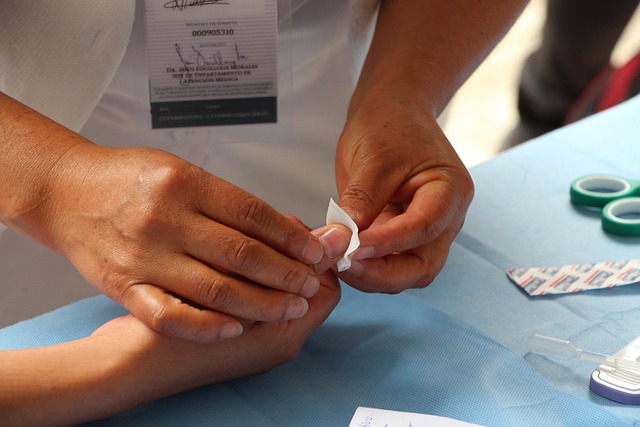
    Perspective-altering epiphanies often emerge in the most unexpected learning environments, and for Dr. Ishma Harford, a Commonwealth Scholar studying Health Analysis, Policy and Management, that life-changing insight came during a routine lecture on stakeholder engagement. The session’s core goal was straightforward: unpack how diverse actors interact within healthcare structures, how each party shapes institutional decisions, and how those same decisions ripple out to impact every group involved. What Dr. Harford walked away with, however, was an unplanned, deeply unsettling observation about the fundamental imbalance at the heart of modern care systems.

    The analytical framework at the center of the lesson was the stakeholder map, a long-used strategic visualization that sorts actors along two core axes: a stakeholder’s level of power to shape organizational decisions, and their level of vested interest in the final outcome. In simple terms, the tool is designed to align which groups have the capacity to drive change against which groups care most deeply about the results of that change. What this exercise laid bare for Dr. Harford was a glaring paradox: the patient – the very person for whom the entire healthcare system exists – ranks extremely high on interest but shockingly low on decision-making power.

    For any patient, the stakes of healthcare decisions could not be higher: outcomes shape personal well-being, long-term health, and even survival, with ripple effects that extend to entire families and social circles. Yet when plotted on the stakeholder map, patients hold almost no formal influence over the systemic decisions that structure their care. This contradiction left Dr. Harford deeply troubled, sparking a passionate debate with his professor that upended the final lecture of the course. How could the entire system, built to serve patients, relegate the people it exists to help to the position of least power, even as they stand to lose the most from bad decisions?

    Despite the uncomfortable nature of the conclusion, the underlying logic held up to scrutiny. Citizens fund public healthcare systems through their tax contributions, but they have no direct input into the major policy and operational decisions that govern those systems. Over time, societies have consciously and unconsciously delegated all decision-making authority to small groups of institutional leaders, operating under the assumption that these actors will act in the best interest of the public. But this delegation does not just hand over choice – it surrenders all meaningful power, leaving patients in the weakest possible position on the stakeholder map. Too often, patients are left facing a slow, unresponsive institution that fails to address individual concerns and ignores the lived realities of the people it serves.

    This visceral disappointment pushed Dr. Harford to ask a critical question: is there a structural way to center the patient voice in healthcare decision-making? After digging into existing models and global examples, he confirmed that change is possible, even if it requires dismantling long-standing institutional patterns that were never designed to prioritize patient input.

    Dr. Harford argues that patient input should not just be added as an afterthought at the final stage of decision-making – it should be the foundational premise that guides every single choice. Every policy, every operational adjustment, every systemic change should be evaluated first and foremost by whether it serves the actual best interests of patients, moving beyond the generic, hollow claims of patient-centered care that permeate most institutional rhetoric today.

    There are already proven pathways to integrate meaningful patient participation across the entire decision-making spectrum. At the micro level, care delivery can be completely reshaped by simply asking patients what support they actually need, rather than imposing one-size-fits-all frameworks that fail to address individual circumstances. At the macro policy level, countries like Thailand have already implemented large-scale community consultation processes that give ordinary citizens direct input into major national healthcare decisions.

    These opportunities already exist; what is missing in most healthcare systems is the political and institutional will to open space for patient participation, to actually listen to what patients have to say, and to keep patient well-being as the unwavering central focus of the entire system. Real change requires breaking the cycle of institutional stagnation, and reorienting healthcare to make both patient needs and patient voices the non-negotiable top priority and bottom line of all decision-making.

    This analysis comes from Dr. Ishma Harford, a practicing medical doctor and Commonwealth Scholar completing a master’s degree in Health Analysis, Policy and Management. *The Health Imperative* is a politically neutral educational column focused on health systems, health policy, and their broader social impacts. NOW Grenada notes that it is not responsible for the opinions and statements shared by contributing authors, and provides a channel for readers to report any abusive content.
  • SVGBF host youth basketball camps in August

    SVGBF host youth basketball camps in August

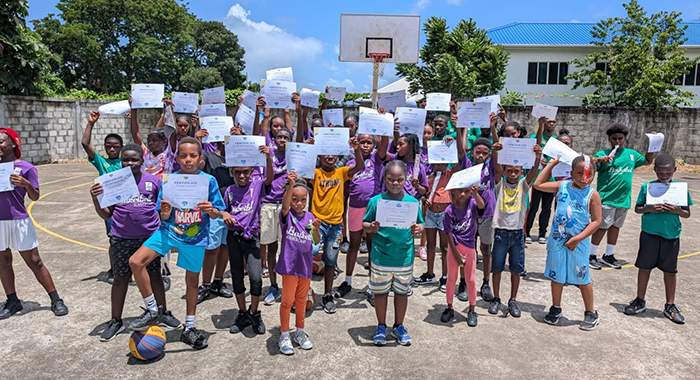
    Basketball development for young talent in St. Vincent and the Grenadines is set to get a major boost this August, after the national basketball governing body announced a full slate of free community-focused youth camps designed to nurture the next generation of players both on and off the hardwood.

    The initiative kicks off this week with a special girls-only opening session, welcoming athletes aged 7 and older. The opening program will run from 9:30 a.m. to 12 p.m. at the New Montrose Hard Court, giving young female participants a one-of-a-kind chance to train under elite-level guidance. Leading the opening camp are Vasha Adams, a coach certified by the International Basketball Federation (FIBA), and Sancho Lyttle, a native Vincentian who previously competed in the Women’s National Basketball Association (WNBA) — the most prestigious professional women’s basketball league in the world. Lyttle’s decades of experience competing at the sport’s highest peak is expected to bring invaluable insight and motivation to the next generation of local female players.

    Following the opening girls-focused session, the federation will roll out two back-to-back one-week co-ed camps, open to all boys and girls aged 7 and older. The first co-ed camp will take place August 10 to 14 at the New Montrose Hard Court. The series will then move to the Chili Hard Court in Georgetown for the second camp, held August 17 to 21, a geographic shift designed to expand access and ensure young athletes from communities across the entire country get the chance to participate, regardless of their location.

    All daily camp sessions follow the same 9:30 a.m. to noon schedule, and participating youth will receive complimentary event T-shirts and light refreshments during activities. In an official press statement announcing the program, the St. Vincent and the Grenadines Basketball Federation (SVGBF) emphasized that these youth camps are a core component of the organization’s long-term strategic plan to grow basketball and build a strong pipeline of homegrown talent.

    Beyond teaching core basketball fundamentals — including dribbling technique, passing accuracy, shooting form, defensive positioning, and in-game decision making — the program prioritizes building critical life skills that extend far beyond the court. Organizers have placed intentional focus on fostering discipline, collaborative teamwork, respectful sportsmanship, youth safeguarding, and strong self-esteem among all participants. The SVGBF’s ultimate goal is to use basketball as a vehicle to equip young people with the confidence and transferable life tools they need to thrive not just as athletes, but as active members of their local communities.

    Parents and guardians interested in registering their children for the camps can access application forms through the federation’s official social media channels. Forms are posted on the SVGBF’s Instagram account (@svg_basketball) and Facebook page (@SVGBasketball). For additional questions or more information about the program, interested parties can contact the SVGBF directly by phone at +1 (784) 498-2919.

  • Dodelijke aardbevingen in Venezuela eisen meer dan 6.000 levens

    Dodelijke aardbevingen in Venezuela eisen meer dan 6.000 levens

    More than a month after two powerful back-to-back earthquakes struck coastal Venezuela, the official death toll from the disaster has climbed to 6,125, the head of Venezuela’s National Assembly, Jorge Rodriguez, announced publicly Monday via a messaging post on Telegram. Alongside the rising fatalities, Rodriguez confirmed that more than 61,000 injured people have received medical treatment at hospitals across the affected regions since the quakes struck.

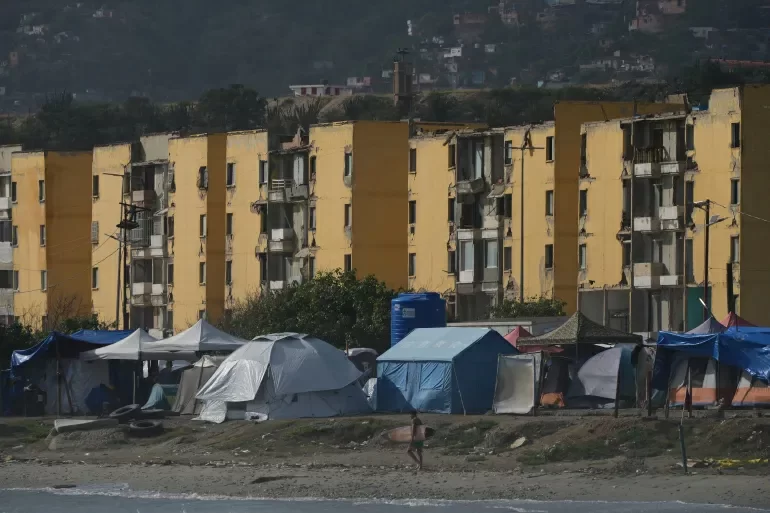
    The two seismic events, registering magnitudes 7.2 and 7.5, hit central Venezuela on June 24, causing catastrophic damage primarily in the coastal state of La Guaira and the capital city of Caracas. As of early August, only 16.5 percent of rubble and collapsed structures from the quakes have been cleared, and widespread public anger has erupted over the slow and insufficient response from the interim government led by President Delcy Rodriguez.

    Local residents continue to dig through debris searching for missing loved ones, and many have openly voiced frustration over what they describe as failures of government and military emergency services to deliver timely aid in the disaster’s aftermath. The World Bank has estimated total physical damage from the quakes at nearly $20 billion, a staggering sum for a country already grappling with years of economic and political instability.

    While the international community has promised support for recovery efforts, the flow of desperately needed funding remains blocked by ongoing political sanctions. Since January, the United States has enforced strict economic controls on Venezuela, imposed after the military detention of sitting president Nicolás Maduro, and multiple sweeping sanctions remain in full effect. Advocacy groups and humanitarian organizations are now calling for these sanctions to be relaxed or fully lifted to clear the way for aid and reconstruction funding to enter the country.

    Despite the political and economic barriers, multiple global humanitarian organizations have moved quickly to deliver life-saving support to impacted communities. On June 30, UNICEF deployed a 47-ton shipment of emergency supplies including medical kits and water purification equipment, enough to meet the basic needs of more than 100,000 children and family members displaced by the disaster. The UN High Commissioner for Refugees (UNHCR) has scaled up emergency relief and protection services in the hardest-hit areas, while also completing a rapid needs assessment to target future aid distribution.

    Caritas Venezuela reported that it received and distributed nearly 14,700 tons of emergency supplies including medical equipment and pharmaceuticals between June 25 and July 6. The Dutch Refugee Foundation has allocated €275,000 in immediate funding for acute medical care and psychosocial support for survivors who lost family members or their homes. CARE Netherlands has deployed health kits and mental health support services, while ADRA Netherlands is delivering clean drinking water, hygiene products, and emergency food rations to displaced populations living in temporary tent camps. Additionally, member states of the Caribbean Community have also contributed shipments of humanitarian aid to the Venezuelan government to boost ongoing relief efforts.

  • High Court rules president acted unconstitutionally in Opposition Leader appointment dispute

    High Court rules president acted unconstitutionally in Opposition Leader appointment dispute

    In a historic judgment that reaffirms constitutional guardrails for democratic governance in the Commonwealth of Dominica, former opposition leader Lennox Linton has won a high-profile constitutional challenge against the country’s Attorney General. The High Court has ruled that the Dominican President violated constitutional principles by failing to account for opposition senators’ support when appointing a new Leader of the Opposition.

    The dispute stretches back to June 20, 2024, when Jesma Paul-Victor stepped down from the position of Leader of the Opposition. For 18 months following her resignation, the President refused to recognize the backing that four opposition senators extended to Linton for the vacant post, triggering the legal battle. In her official ruling, Justice Zainab Jawara-Alami delivered a decisive rebuke of the executive branch’s interpretation of constitutional authority.

    During proceedings, legal representatives for the Attorney General advanced two core arguments. First, they claimed that appointed senators hold no constitutional role in shaping the Leader of the Opposition appointment process, and the President was under no obligation to consider their preferences. Second, they maintained that courts should only intervene in presidential appointments if a decision is proven irrational or unreasonable, arguing the President was within her rights to decline making an appointment for an extended period. The Attorney General also challenged Linton’s legal standing to bring the case, dismissing his action as “meddlesome interloping” that lacked legitimate, specific public interest.

    After the case was launched, Paul-Victor was ultimately appointed to the post in January 2026, prompting the Attorney General to request the court dismiss the suit as a now-moot academic issue. Justice Jawara-Alami rejected this motion, emphasizing that the underlying constitutional questions raised were of profound public importance and required formal resolution.

    In her ruling, Justice Jawara-Alami struck down every key argument put forward by the Attorney General. She confirmed that once appointed, senators are full voting members of the House of Assembly, entitled to the same constitutional rights and responsibilities as elected representatives, unless the constitution explicitly states otherwise. This means the four opposition senators’ support for Linton was constitutionally relevant and should have been factored into the President’s decision. The judge also clarified that when a candidate meets all requirements laid out in Section 66(2) of the Dominican constitution, appointing a Leader of the Opposition is a mandatory duty for the President, not a discretionary power. Finally, the court upheld Linton’s standing to bring the public interest challenge, noting that constitutional law permits individuals to pursue relief on behalf of the public good.

    Central to the court’s reasoning was the fundamental role of the Leader of the Opposition in Dominica’s democratic system. “The office of leader of the opposition is an essential part of the constitutional and democratic framework of the country and serves an important role in ensuring accountability within a democracy,” the court wrote in its official judgment.

    Responding to the ruling, Linton framed the outcome as a victory far beyond his individual legal claim. “This victory belongs to every Dominican who believes that public power must be exercised lawfully; that the Opposition has an indispensable role in our democracy; and that the Constitution must remain superior to political convenience, executive preference and partisan maneuvering,” he said. “Today, the Constitution won. Democracy won. Accountability won.”

    Linton’s legal team was led by Senior Counsel Anand Ramlogan, alongside Jared Jagroo and Vishaal Siewsaran from Trinidad-based Freedom Law Chambers, instructed by local Dominican attorney Ronald Charles. The Attorney General was represented by Anthony Astaphan SC, Jason Lawrence, Tameka Burton and Levi Peter. The full judgment is publicly available under case number DOMHCV2025-0131.

  • Wage increase for Windward Island Gases employees

    Wage increase for Windward Island Gases employees

    After weeks of closed-door negotiations between senior management of Windward Island Gases Limited and representatives from the National Workers Union (NWU), a landmark multi-year collective agreement has been reached, delivering tangible financial benefits to hundreds of the firm’s technical and clerical employees. The cornerstone of the new deal is a broad-based general wage increase, with a cumulative 9% raise set to be rolled out in equal annual increments over three years. Beyond base salary adjustments, the revised employment package expands a range of supplementary benefits for staff, bringing in an updated structured compensation framework for workers taking on temporary acting positions, as well as higher monetary allowances for both early-morning breakfast coverage and on-call standby shifts. In a key provision that addresses prior wage gaps, the agreement stipulates that all eligible employees will receive retroactive pay for roughly 12 months of service, with the provision set to take effect starting July 1, 2025. As part of the negotiated understanding, company leadership has also committed to the NWU to refine and upgrade core internal operational processes. This planned operational overhaul is projected to drive higher overall productivity at the firm, creating mutually positive outcomes that will boost satisfaction for workers, the company itself, and its broader client base. The Jamaican Department of Labour is now on track to formally review and finalize the industrial agreement in the near term, bringing the negotiation cycle to a formal close.

  • Nicholas, Japanese State Minister Discuss Technology and Bilateral Cooperation

    Nicholas, Japanese State Minister Discuss Technology and Bilateral Cooperation

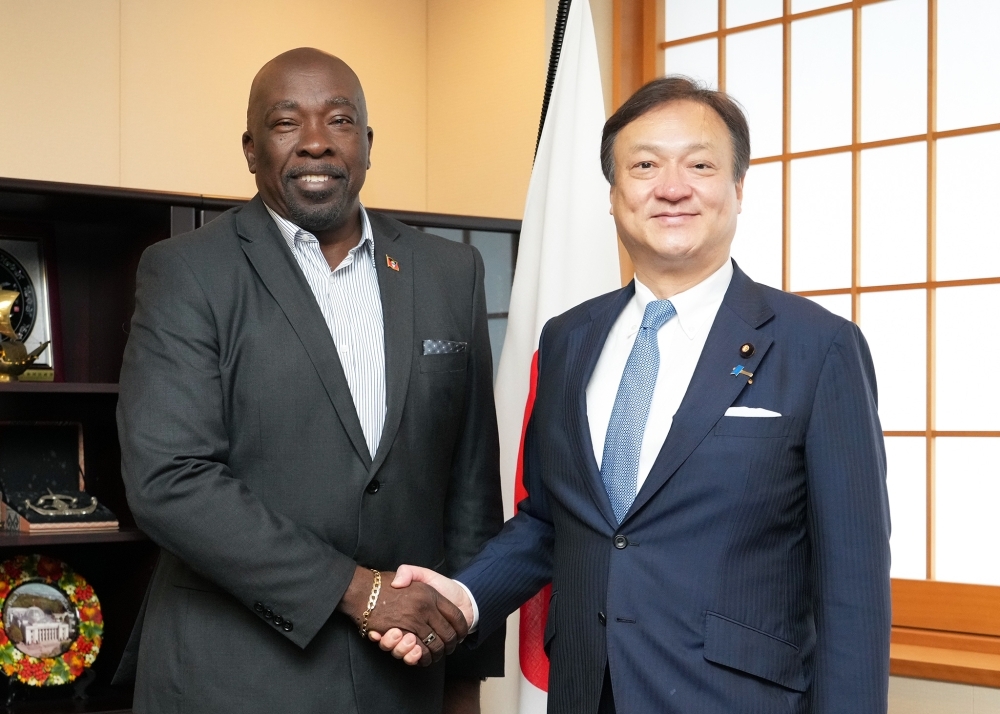
    High-level diplomatic talks between the Caribbean nation of Antigua and Barbuda and Japan have closed with a shared pledge to expand bilateral cooperation, centered on leveraging Japanese technological innovation and private sector knowledge to drive mutual progress. The meeting, held Monday in Japan, brought together Melford Nicholas, Antigua and Barbuda’s Minister of Information, Communication Technologies, Utilities and Energy, and Iwao Horii, Japan’s State Minister for Foreign Affairs, for roughly 50 minutes of focused discussion.

    Opening the talks, Horii extended a formal welcome to Nicholas, noting that bilateral ties have gained steady momentum since the Japan-CARICOM Ministerial-Level Conference held two years prior, which opened new doors for increased high-level exchanges between the two sides. Against this backdrop, Horii emphasized Japan’s clear intention to build on this momentum and forge a deeper, more interconnected relationship with Antigua and Barbuda.

    In response, Nicholas expressed gratitude for the long-standing support Japan has extended to Antigua and Barbuda across multiple critical sectors, highlighting past assistance in water resource management and disaster risk reduction — two areas of vital importance for the small island nation that faces regular climate-related challenges.

    Beyond bilateral collaboration, the two ministers also exchanged views on evolving regional geopolitical and socioeconomic developments, as well as opportunities for aligned cooperation in multilateral international forums. By the end of the meeting, both parties reached a consensus to continue advancing closer working ties, building on Japan’s strengths in advanced technology, specialized industry expertise, and private sector capacity to deliver shared benefits for both countries.

  • Ghana’s President Mahama, UWI Vice Chancellor Beckles to Hold High-Level Reparations Dialogue

    Ghana’s President Mahama, UWI Vice Chancellor Beckles to Hold High-Level Reparations Dialogue

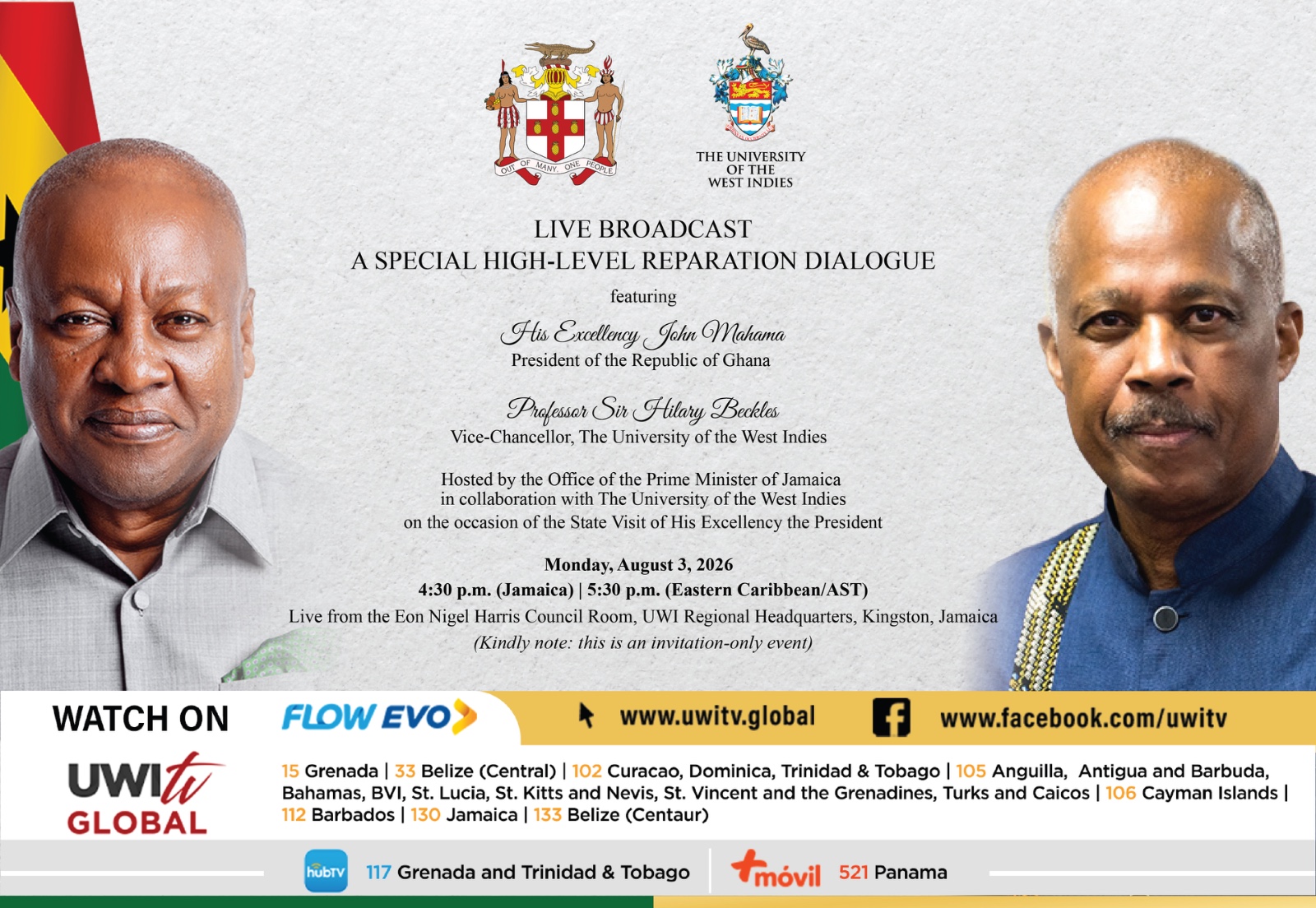
    KINGSTON, Jamaica — July 31, 2026 — The University of the West Indies (The UWI), partnering with the Office of the Prime Minister of Jamaica, is set to host a historic high-level conversation on reparatory justice during an official visit by Ghana President John Dramani Mahama to the Caribbean island nation.

    The Special High-Level Reparation Dialogue, scheduled for Monday, August 3 at 4:30 p.m. Jamaica local time (5:30 p.m. Atlantic Standard Time for the Eastern Caribbean), will be held in the Eon Nigel Harris Council Room at The UWI’s Regional Headquarters in Jamaica. To expand access for regional and global audiences, the entire conversation will be streamed live via UWI tv across multiple platforms.

    This one-on-one dialogue between President Mahama and The UWI Vice-Chancellor, Professor Sir Hilary Beckles, is rooted in the Ghanaian leader’s state visit to Jamaica, extended at the invitation of the Jamaican government. The event carries both timely relevance and deep symbolic weight, coming as the global movement for reparatory justice gains unprecedented momentum. It also reinforces The UWI’s long-standing position as the Caribbean’s leading intellectual hub and a key convener of critical discourse that shapes both regional policy and global advocacy efforts.

    Unlike many general discussions on the topic, the exchange will directly connect historical documentation of transatlantic chattel slavery to modern policy frameworks. Attendees and viewers will explore the evolving global reparations agenda, map out legal and moral responsibilities of individual states, and examine the unique role academic and public institutions can play in advancing global equity and restorative justice.

    The event’s full programme opens with introductory remarks from Professor Sonjah Stanley Niaah, Director of The UWI’s Centre for Reparation Research. Following the opening, President Mahama and Vice-Chancellor Beckles will deliver their prepared remarks before moving into the structured dialogue. A live question-and-answer session with in-person audience members will follow the core conversation, before a representative from Jamaica’s Ministry of Culture, Gender, Entertainment and Sport delivers closing remarks that highlight the dialogue’s importance for both Jamaica and the wider Caribbean region.

    Both working journalists and members of the general public are invited to access the free live stream through multiple channels, including UWI tv’s official website at www.uwitv.global, the platform’s social media accounts, and UWI tv’s dedicated Flow television channels across the Caribbean.

  • Antigua and Barbuda’s Zaine Fredrick Makes History With Miss Caribbean Culture Queen 2026 Victory

    Antigua and Barbuda’s Zaine Fredrick Makes History With Miss Caribbean Culture Queen 2026 Victory

    In a groundbreaking moment that has made national waves across Antigua and Barbuda, Queen Zaine has etched her name into the history books of the Miss Caribbean Culture Queen pageant, becoming the first competitor from the twin-island nation to claim the prestigious 2026 title in the competition’s two-decade existence.

    Zaine delivered a standout performance throughout the event, securing a total score of 1,425 points to outpace her fellow contestants from across the Caribbean region. Her winning run did not end with the overall crown: she also took home two additional subsidiary awards, recognizing her exceptional performance in the talent category and her stunning presentation in the evening gown segment.

    Following Zaine in the final rankings was Tresjeur Dedier, representing St. Kitts, who claimed the first runner-up position with a total score of 1,409 points. Rounding out the top three placements was Miriam Alexander of Guyana, who earned 1,396 points to finish as second runner-up.

    This landmark victory marks another feather in the cap for Zaine, who already holds the national title of Antigua and Barbuda’s Queen of Carnival. The regional win adds a new milestone to her pageantry career and cements Antigua and Barbuda’s growing presence in Caribbean cultural pageantry, ending a 20-year wait for the nation to claim the coveted title.

  • Summit Duurzaam Suriname moet basis leggen voor nationale ontwikkelingsvisie

    Summit Duurzaam Suriname moet basis leggen voor nationale ontwikkelingsvisie

    As Suriname prepares to tap into projected oil and gas revenues that are set to reshape its national economy, top government leaders and cross-sector stakeholders have opened a landmark three-day summit to map a inclusive, sustainable long-term development strategy that avoids the pitfalls of overreliance on energy extraction.

    The Summit Duurzaam Suriname 3.0, which kicked off on Monday at Paramaribo’s Hotel Torarica, brings together representatives from the national government, private business sector, civil society organizations, and academic and research institutions to co-design a shared development vision for the country spanning 2040 to 2050. This gathering marks the official launch of a broader national planning process aligned with the existing Roadmap Suriname initiative.

    In her opening address to attendees, President Jennifer Simons emphasized that the oil and gas sector alone cannot deliver broad-based shared prosperity for Suriname’s population. While the energy industry will generate substantial revenue, it is inherently capital-intensive and will create far too few quality jobs to lift large segments of the population out of economic hardship. “The oil sector is defined by high revenues and very low employment,” Simons told the summit. “It is the surrounding supporting sectors that must deliver high-quality work opportunities for our people.” To ensure oil and gas gains benefit all of Suriname society rather than a narrow group, Simons argued that the government must direct a large share of energy revenues toward investments in other diverse economic sectors.

    Patrick Brunings, Suriname’s Minister of Oil, Gas and Environment, echoed that caution, warning that overconcentration on the energy sector risks eroding the country’s existing economic base. If policymakers focus solely on building local workforce capacity for oil and gas, Brunings explained, skilled labor will drain away from other critical domestic sectors, leaving those industries hollowed out and unable to contribute to long-term economic stability.

    Brunings laid out the country’s core goal: building “a green, healthy and sustainable Suriname” that leverages energy revenues rather than being dominated by the oil and gas sector. He also pushed for a stable, cross-party development agenda that will retain its direction even after changes in government leadership, noting that enshrining the national roadmap in legislation would provide the strongest guarantee of long-term policy consistency. President Simons endorsed this position, stressing that the national development vision must enjoy broad public support and transcend individual government administrations.

    The summit is structured around 10 key strategic development focus areas, called Strategic Lanes. Over three days of discussion, participants will draw on national data, sector-specific analysis, on-the-ground practical experience, and global best practices to identify the country’s top development priorities for the coming decades.

    Karl Eckhorst, chair of the National Development Platform (NOP), the organizing body behind the summit, noted that Suriname is on the cusp of profound economic transformation driven by new oil and gas production, making this a critical moment to make intentional, far-sighted policy choices. “We stand on the eve of major development,” Eckhorst said. “That is why it is important to hold these discussions now, and also take concrete action to prepare ourselves for what comes next.”

    Eckhorst clarified that the NOP will not draft a binding national development plan on its own. Instead, the platform will work to gather the building blocks needed to create a broadly supported long-term vision, with active engagement from all segments of Suriname society from the earliest stages of the process. This inclusive approach, he said, will ensure the final development agenda enjoys wide public backing and can provide consistent guidance for future governments regardless of political changes.

  • Security for communities

    Security for communities

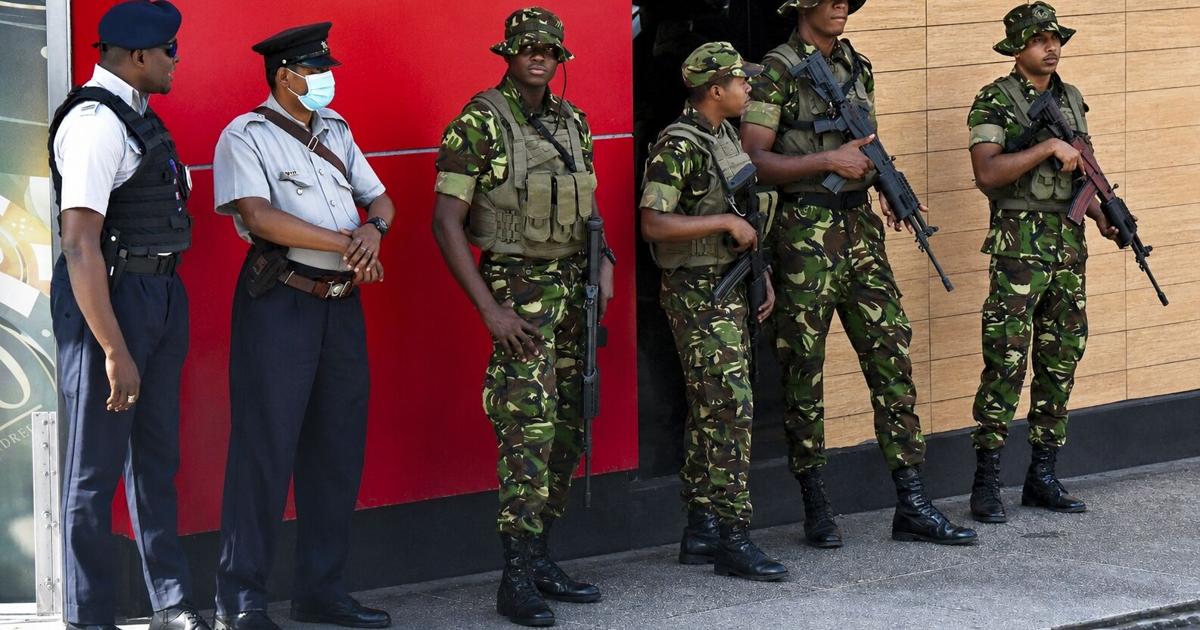
    As the country’s existing state of emergency approaches its scheduled September 17 end, Prime Minister Kamla Persad-Bissessar of Trinidad and Tobago has announced a major new expansion of the government’s national anti-crime campaign: the rollout of 30 joint army-police posts across high-traffic intersections, major highways and key community hubs over the next four months.

    This new security initiative marks the administration’s next step in crime mitigation, coming after two successive states of emergency implemented since the United National Congress (UNC) government assumed office in May 2025. In an official statement shared to her Facebook platform, the Prime Minister framed the joint posts as a core addition to the government’s updated national security strategy, designed to boost the visible presence of law enforcement and reclaim public spaces that have fallen under the control of criminal groups.

    Persad-Bissessar emphasized that the new deployment directly answers years of repeated calls from local residents for increased security coverage across their neighborhoods. The initiative, she noted, embodies the current government’s pledge to tackle rising crime through deeper integrated collaboration between the nation’s different protective service branches.

    “I am pleased to inform citizens that in the upcoming four months 30 joint army-police posts will be placed in communities across the country. Many communities have for years requested increased security presence and the protective services and Government is moving aggressively to provide such,” the Prime Minister stated. She added that the permanent posts will not only deter criminal activity but also restore a sense of safety for residents, enabling communities to once again make full use of public areas that have been abandoned due to persistent violence and criminal activity.

    Twenty-four locations for the first phase of the program have already been finalized, with an additional six sites set to be confirmed in the coming weeks. To ensure the initiative delivers long-term results, Persad-Bissessar has issued a public call for civil society organizations and private sector groups to partner with law enforcement. “I encourage NGOs, business chambers, community groups and councils to adopt and support these posts and work with the security services,” she said.

    The Prime Minister also used the announcement to reaffirm the government’s full confidence in the nation’s top security leadership. She extended formal gratitude to Commissioner of Police Allister Guevarro, SSA Director Alicia Henry, Chief of Defence Staff Commodore Don Polo, Prison Superintendent Elvin Scanterbury, and all rank-and-file officers for their ongoing work to curb criminal activity across the country. “On behalf of all law-abiding citizens I again express sincere gratitude to … all their colleagues and reaffirm our confidence in them, and their shared vision of ending the grip of crime on our nation,” she said.

    Homeland Security Minister Roger Alexander expanded on the details of the initiative in an interview with the Express, confirming that the program will be delivered via a coordinated partnership between his ministry, the Trinidad and Tobago Police Service (TTPS) and the Trinidad and Tobago Defence Force. Alexander described the joint posts as a key component of the government’s holistic, cross-agency approach to dismantling criminal networks in high-risk areas.

    Unlike intermittent mobile patrols, Alexander explained that uniformed officers will staff permanent, fixed posts at these strategic locations to enable continuous monitoring of key zones. “This is part of our anti-crime initiatives which is holistic. We have put together this particular action to tackle crime and criminality in particular areas. One of the things we try to do is monitor; and I said this when I was a police officer—we control the streets—we are going to control the state of crime,” he said.

    The fixed deployment will allow joint patrol teams to respond faster to emergency calls and prevent fleeing offenders from escaping through major transit routes. “So if someone steals a car and the information comes, he must not be able to get away. Persons committing offences must not get away. When communities call, we listen; and coming from a law enforcement background, there are things I could not have done as a police officer, but now this role gives me the advantage to assist the Commissioner of Police and police officers in implementing their anti-crime strategies effectively,” Alexander added.

    Beyond the new joint posts, the government is moving forward with widespread manpower expansion across all public security branches. Alexander confirmed that 233 new police officers will complete training and deploy by early September, with a second cohort of recruits already in training. Active recruitment drives are also underway for the Prison Service, Defence Force and Fire Service to boost overall staffing.

    As additional personnel come on board, Alexander announced that the government will finally implement the long-unenforced hard labour provision for convicted prisoners. Under the new policy, inmate labor will be leveraged to carry out community cleanup projects across the country. “We have over 400 or more free labour in the prisons; it’s about time we implement it,” he said.