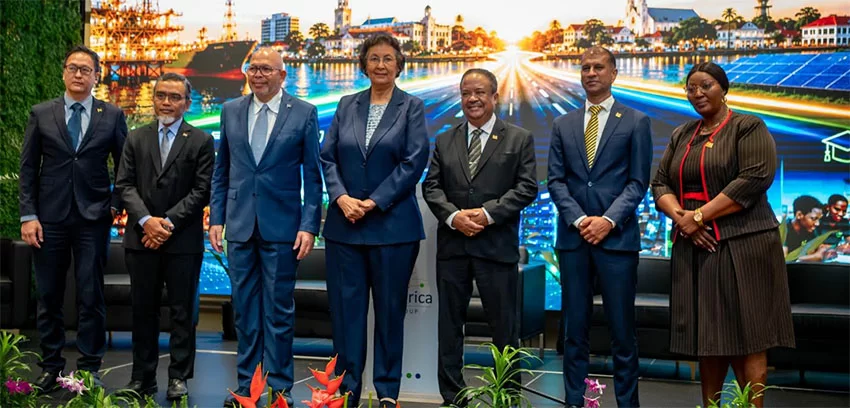
As Suriname prepares to tap into projected oil and gas revenues that are set to reshape its national economy, top government leaders and cross-sector stakeholders have opened a landmark three-day summit to map a inclusive, sustainable long-term development strategy that avoids the pitfalls of overreliance on energy extraction.
The Summit Duurzaam Suriname 3.0, which kicked off on Monday at Paramaribo’s Hotel Torarica, brings together representatives from the national government, private business sector, civil society organizations, and academic and research institutions to co-design a shared development vision for the country spanning 2040 to 2050. This gathering marks the official launch of a broader national planning process aligned with the existing Roadmap Suriname initiative.
In her opening address to attendees, President Jennifer Simons emphasized that the oil and gas sector alone cannot deliver broad-based shared prosperity for Suriname’s population. While the energy industry will generate substantial revenue, it is inherently capital-intensive and will create far too few quality jobs to lift large segments of the population out of economic hardship. “The oil sector is defined by high revenues and very low employment,” Simons told the summit. “It is the surrounding supporting sectors that must deliver high-quality work opportunities for our people.” To ensure oil and gas gains benefit all of Suriname society rather than a narrow group, Simons argued that the government must direct a large share of energy revenues toward investments in other diverse economic sectors.
Patrick Brunings, Suriname’s Minister of Oil, Gas and Environment, echoed that caution, warning that overconcentration on the energy sector risks eroding the country’s existing economic base. If policymakers focus solely on building local workforce capacity for oil and gas, Brunings explained, skilled labor will drain away from other critical domestic sectors, leaving those industries hollowed out and unable to contribute to long-term economic stability.
Brunings laid out the country’s core goal: building “a green, healthy and sustainable Suriname” that leverages energy revenues rather than being dominated by the oil and gas sector. He also pushed for a stable, cross-party development agenda that will retain its direction even after changes in government leadership, noting that enshrining the national roadmap in legislation would provide the strongest guarantee of long-term policy consistency. President Simons endorsed this position, stressing that the national development vision must enjoy broad public support and transcend individual government administrations.
The summit is structured around 10 key strategic development focus areas, called Strategic Lanes. Over three days of discussion, participants will draw on national data, sector-specific analysis, on-the-ground practical experience, and global best practices to identify the country’s top development priorities for the coming decades.
Karl Eckhorst, chair of the National Development Platform (NOP), the organizing body behind the summit, noted that Suriname is on the cusp of profound economic transformation driven by new oil and gas production, making this a critical moment to make intentional, far-sighted policy choices. “We stand on the eve of major development,” Eckhorst said. “That is why it is important to hold these discussions now, and also take concrete action to prepare ourselves for what comes next.”
Eckhorst clarified that the NOP will not draft a binding national development plan on its own. Instead, the platform will work to gather the building blocks needed to create a broadly supported long-term vision, with active engagement from all segments of Suriname society from the earliest stages of the process. This inclusive approach, he said, will ensure the final development agenda enjoys wide public backing and can provide consistent guidance for future governments regardless of political changes.