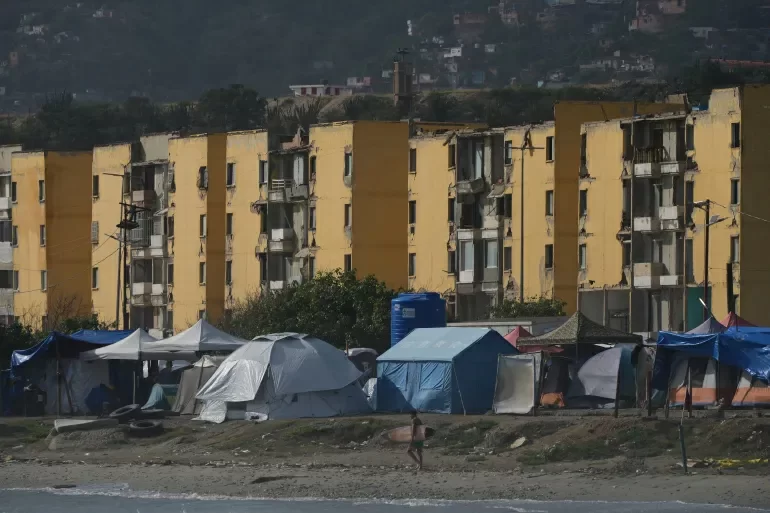
More than a month after two powerful back-to-back earthquakes struck coastal Venezuela, the official death toll from the disaster has climbed to 6,125, the head of Venezuela’s National Assembly, Jorge Rodriguez, announced publicly Monday via a messaging post on Telegram. Alongside the rising fatalities, Rodriguez confirmed that more than 61,000 injured people have received medical treatment at hospitals across the affected regions since the quakes struck.
The two seismic events, registering magnitudes 7.2 and 7.5, hit central Venezuela on June 24, causing catastrophic damage primarily in the coastal state of La Guaira and the capital city of Caracas. As of early August, only 16.5 percent of rubble and collapsed structures from the quakes have been cleared, and widespread public anger has erupted over the slow and insufficient response from the interim government led by President Delcy Rodriguez.
Local residents continue to dig through debris searching for missing loved ones, and many have openly voiced frustration over what they describe as failures of government and military emergency services to deliver timely aid in the disaster’s aftermath. The World Bank has estimated total physical damage from the quakes at nearly $20 billion, a staggering sum for a country already grappling with years of economic and political instability.
While the international community has promised support for recovery efforts, the flow of desperately needed funding remains blocked by ongoing political sanctions. Since January, the United States has enforced strict economic controls on Venezuela, imposed after the military detention of sitting president Nicolás Maduro, and multiple sweeping sanctions remain in full effect. Advocacy groups and humanitarian organizations are now calling for these sanctions to be relaxed or fully lifted to clear the way for aid and reconstruction funding to enter the country.
Despite the political and economic barriers, multiple global humanitarian organizations have moved quickly to deliver life-saving support to impacted communities. On June 30, UNICEF deployed a 47-ton shipment of emergency supplies including medical kits and water purification equipment, enough to meet the basic needs of more than 100,000 children and family members displaced by the disaster. The UN High Commissioner for Refugees (UNHCR) has scaled up emergency relief and protection services in the hardest-hit areas, while also completing a rapid needs assessment to target future aid distribution.
Caritas Venezuela reported that it received and distributed nearly 14,700 tons of emergency supplies including medical equipment and pharmaceuticals between June 25 and July 6. The Dutch Refugee Foundation has allocated €275,000 in immediate funding for acute medical care and psychosocial support for survivors who lost family members or their homes. CARE Netherlands has deployed health kits and mental health support services, while ADRA Netherlands is delivering clean drinking water, hygiene products, and emergency food rations to displaced populations living in temporary tent camps. Additionally, member states of the Caribbean Community have also contributed shipments of humanitarian aid to the Venezuelan government to boost ongoing relief efforts.