博客

  • Mbappe double fires France to opening win over Senegal

    Mbappe double fires France to opening win over Senegal

    In a sun-drenched World Cup Group I clash played in front of 80,545 spectators with Manhattan’s iconic skyline glinting in the distance, two-time World Cup champions France kicked off their quest for a third global title with a hard-fought 3-1 victory over 2021 Africa Cup of Nations winners Senegal on Tuesday.

    The match carried echoes of 22 years ago, when a heavily-favored French side suffered a humiliating opening-round defeat to Senegal at the 2002 World Cup that sent them crashing out in the group stage without a single goal. This time, Senegal looked set to repeat history after dominating the opening 45 minutes, but a half-time tactical adjustment from France head coach Didier Deschamps unlocked the game, turning the tide in the European side’s favor.

    Senegal, led by veteran star Sadio Mane and fielding four starting players born in France, entered the clash fresh off a controversial end to their Africa Cup of Nations title defense. Pape Thiaw’s side lifted the AFCON trophy in extra time earlier this year, only to be stripped of the title after a player walk-off protest mid-match; an appeal against the decision remains pending, and the side showed little rust in their first competitive match since the final.

    The African side dominated the first half, coming inches from taking the lead just 25 minutes in. Nicolas Jackson broke clear on a counter-attack, fired a shot that crashed off the post, and the deflection bounced off French goalkeeper Mike Maignan before rolling narrowly wide of the goal. Ismaila Sarr then wasted a golden chance to open the scoring in first-half stoppage time, sending a clear effort over the crossbar – misses that would come back to haunt Senegal later.

    Deschamps’ critical half-time switch saw Michael Olise shift infield from the right wing, swapping positions with Ousmane Dembele, and the tactical change immediately transformed France’s performance. The reigning champions burst into life after the break, with Olise testing Senegal keeper Edouard Mendy before setting up Kylian Mbappe for a close-range attempt that was turned away. A potential penalty on the hour mark, when Mbappe went down under a challenge from Mane, was waved away by referee Alireza Faghani after a VAR review, but France would not be denied.

    In the 66th minute, Olise slid a pinpoint pass across the penalty area, and Mbappe darted into space to convert the opening goal, breaking the deadlock in a tightly-contested contest. Les Bleus doubled their lead late when Paris Saint-Germain winger Bradley Barcola, brought on as a second-half substitute, ran onto a through ball from Adrien Rabiot to slot home France’s second. Senegal struck back in stoppage time, with PSG’s Ibrahim Mbaye pulling a goal back for the African side in the 95th minute, but Mbappe had the final say. Just a minute later, the 27-year-old Real Madrid striker hammered a long-range effort into the back of the net to seal the three points, capping a historic night for the French captain.

    Mbappe’s double saw him rewrite multiple record books: he moved past Pele (12 goals), Lionel Messi (13) and French legend Just Fontaine (13) to take his career World Cup tally to 14, level with Germany’s Gerd Muller. Only all-time leader Miroslav Klose (16) and Brazil’s Ronaldo (15) sit above Mbappe in the global scoring charts. The brace also pushed the 27-year-old past all other French internationals to become France’s all-time leading men’s goalscorer with 58 goals, in just his 99th appearance for the national side.

    The result continues Mbappe’s extraordinary legacy on the World Cup stage: he scored in France’s 2018 World Cup final victory over Croatia, and netted a stunning hat-trick in the 2022 final against Argentina, where France fell on penalties after a dramatic draw. Pre-tournament favorites France will now look to build on their opening win, with their next group stage match against underdogs Iraq, followed by a final group clash with Erling Haaland’s Norway, as they target progression to the knockout round.

    For Deschamps, who will step down as head coach after 12 years in charge following this tournament, the narrow win served as a reminder of the threat his side faces, reinforcing his long-stated warnings against overconfidence in a squad packed with elite talent. Senegal, meanwhile, proved they are a force to be reckoned with in Group I, and will look to bounce back in their upcoming matches to keep their own World Cup dreams alive.

  • Ainstein steps down as Waterhouse head coach

    Ainstein steps down as Waterhouse head coach

    Two major coaching and leadership changes have shaken up Jamaica’s top-tier football landscape this week, bringing sudden adjustment to two competing clubs ahead of the upcoming domestic season.

    On Tuesday, Kingston-based Waterhouse FC, a former Jamaican national club champion, confirmed in an official statement that head coach Javier Marcelo Ainstein has stepped down from his post with immediate effect. The Argentine becomes the second top-flight head coach to resign in the span of a week, following former Chapelton Maroons head coach Donovan Duckie, who vacated his role last week.

    Ainstein’s tenure at Waterhouse was short but eventful: he took the helm at the club back in January, after the organization dismissed long-serving manager Marcel Gayle. Under his leadership, the club secured a spot in the Jamaica Premier League (JPL) playoffs, though their run ended in the quarterfinals with a defeat to Cavalier SC. The club’s statement expressed gratitude for Ainstein’s contributions during his time in charge, acknowledging the effort and dedication he brought to the role, and extended well wishes for his future career projects.

    Far from waiting to address the sudden vacancy, Waterhouse’s governing board has already begun the process of finding a replacement to keep the club’s operations on track. “The Board of Management has already initiated plans to ensure continuity within the club’s football operations as preparations continue for the upcoming season,” the statement read, signaling the club’s priority on maintaining stability through the transition.

    In a separate leadership restructuring move, Montego Bay United (MBU) has announced that current head coach Xavier Gilbert will be promoted to the newly created position of technical director, effective July 1. Unlike his previous role, Gilbert will report directly only to the club’s chairman and board of directors.

    Though MBU fell short of its stated seasonal goals — claiming the JPL title and qualifying for regional CONCACAF club competition — the club framed the restructuring as a strategic step to streamline its program. The new role will create a centralized, unified leadership structure for all of the club’s football activities, with clear accountability at every operational level.

    In his new capacity, Gilbert will own full responsibility for the club’s overall football strategy, and take oversight of every football-related department: that includes the senior men’s and women’s squads, the youth academy covering age groups from under-5 to under-18, scouting and recruitment across local, regional and global talent markets, and the club’s official representation with both Professional Football Jamaica Limited (PFJL) and the Jamaica Football Federation (JFF).

    Reporting by Paul A Reid

  • Jamaica investment-ready — Seiveright

    Jamaica investment-ready — Seiveright

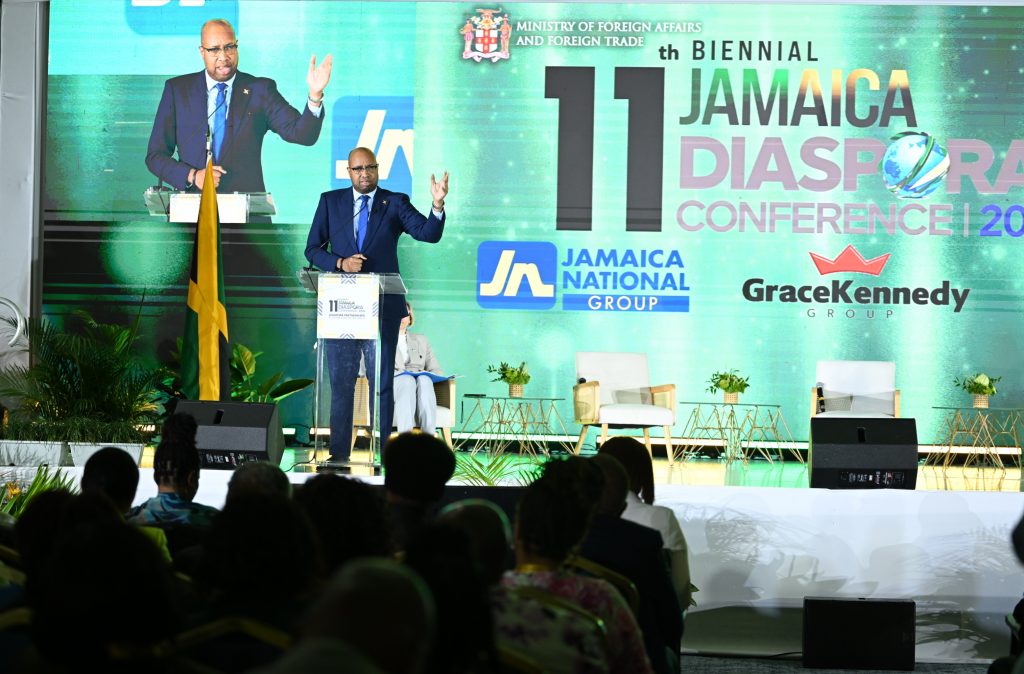
    MONTEGO BAY, St James — At the opening plenary of the 11th Biennial Jamaica Diaspora Conference held Monday at the Montego Bay Convention Centre, Delano Seiveright, State Minister for Jamaica’s Ministry of Industry, Investment and Commerce, made a direct appeal to members of the global Jamaican diaspora to bring new investment opportunities to the island nation.

    Underpinned by years of intentional, strict fiscal policy and sustained macroeconomic and political consistency, Seiveright argued that modern Jamaica has never been more prepared to welcome and support outside investment than it is today. The conference, convened around the central theme “Diaspora Partnerships: Rebuilding a More Resilient Jamaica,” provided the ideal platform for the government to showcase the country’s proven ability to withstand ongoing global economic turbulence.

    Seiveright outlined a series of key positive economic indicators that set Jamaica apart from many other small developing economies. These include large-scale ongoing infrastructure expansion across the island, consistent declines in national crime rates, and stable exchange rate performance that eases risk for foreign investors. Most notably, he highlighted the country’s current international reserve holdings, which sit at approximately US$6.5 billion. This reserve buffer covers more than 34 weeks of import costs, a figure nearly three times the 12-week international benchmark for healthy reserve levels. Seiveright emphasized that this strong reserve position is particularly remarkable for a small island developing state still working to recover from the catastrophic damage of a recent Category 5 hurricane.

    According to Seiveright, these solid core economic fundamentals, paired with Jamaica’s long track record of peaceful political stability, make the country an attractive destination for a wide range of global stakeholders, from individual investors to major multinational banks, credit rating agencies, and global capital markets. He noted that both international investors and diaspora community members have already taken note of Jamaica’s progress, framing the nation’s path to long-term prosperity as rooted in three core pillars: institutional stability, strategic cross-border partnerships, and a shared commitment to building a more resilient national economy.

    The opening plenary centered the critical role of diaspora collaboration, highlighting that leveraging the diaspora’s professional expertise, investment capital, and existing trade connections is central to advancing Jamaica’s post-disaster recovery and sustained long-term growth. Against the backdrop of an increasingly fragmented and uncertain global economy, the 11th Biennial Jamaica Diaspora Conference works to cement the country’s reputation as a regional leader in economic resilience and a premier destination for transformative foreign investment.

  • Abinader seeks reform to harmonize law enforcement dates in Greater Santo Domingo

    Abinader seeks reform to harmonize law enforcement dates in Greater Santo Domingo

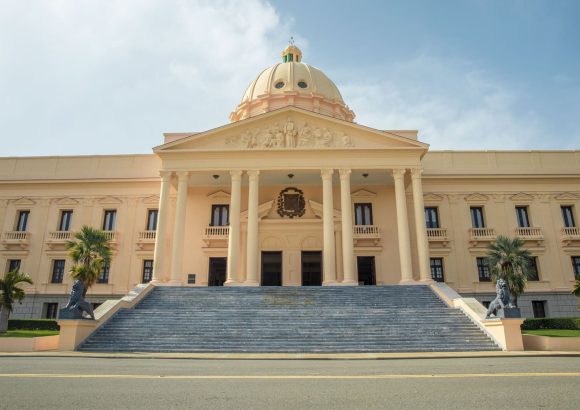
    In a move to bring the Dominican Republic’s core legal framework in line with modern social and technological realities, President Luis Abinader has formally tabled a groundbreaking civil code amendment bill before the national Senate. The proposal was transmitted to the upper legislative chamber by Jorge Subero Isa, the Executive Branch’s top legal advisor, marking a key step in the government’s push for institutional and legal modernization.

    At the heart of the reform is a plan to erase the long-standing one-day gap between the effective dates of new laws for the National District and Santo Domingo province. For years, this minor administrative discrepancy has created unintended inconsistencies in how legal provisions are applied across the two neighboring territories, eroding legal certainty for residents and businesses operating across both jurisdictions. Executive branch officials note that despite their separate administrative status, the two regions are deeply interconnected across every layer of daily life: residents commute daily for work, education, commerce and social activities, creating a single integrated metropolitan community. Outdated staggered effective dates, they argue, no longer reflect the on-the-ground reality of this closely linked urban area.

    The bill also includes a second critical update: formal legal recognition for the official electronic publication of new laws, equating its legal validity to the traditional printed format that has been the standard for decades. Government leaders emphasize that this shift will not only speed up the dissemination of new regulations to the public but also improve overall transparency, while expanding equitable access to legal information for Dominicans across the country.

    Overall, the administration frames the proposal as a foundational step toward updating the Dominican legal system. The reforms are designed to advance core rule of law principles including equal application of legislation, stronger institutional efficiency, and consistent legal standing for all residents. By aligning the civil code with current social integration and digital technological norms, the government says the changes will reinforce long-held legal guarantees of transparency, legal certainty, and equality before the law for all Dominican citizens.

  • Dominican Republic hosts regional culture ministers for CECC/SICA Meeting

    Dominican Republic hosts regional culture ministers for CECC/SICA Meeting

    On Tuesday, the capital city of Santo Domingo opened its doors to top cultural leaders from across Central America and the Caribbean, kicking off the 39th Ordinary Meeting of the Council of Ministers of Culture under the Central American Educational and Cultural Coordination of the Central American Integration System (CECC/SICA). The opening ceremony was led by Dominican Republic’s Culture Minister Roberto Ángel Salcedo, marking the start of days of targeted dialogue and collaborative planning focused on advancing regional cultural progress.

    This high-level gathering brings together senior cultural decision-makers from all CECC/SICA member states, with a core mission to deepen cross-border partnerships and move forward a shared strategic agenda centered on three key pillars: inclusive cultural development, systematic preservation of shared and national heritage, and sustainable expansion of regional creative economies. Unlike informal regional exchanges, this meeting is designed to turn collective discussion into actionable cooperation that addresses shared challenges facing cultural sectors across Central America and the Caribbean.

    In his opening address to delegates, Minister Salcedo underscored the critical role of cross-national collaboration in positioning culture as a core driver of three foundational regional goals: long-term sustainable development, deeper regional integration, and stronger social cohesion. He stressed that no single nation in the region can effectively address evolving challenges in the cultural space alone, making shared experience exchange and joint problem-solving essential to building a more resilient, vibrant cultural ecosystem across the region.

    Organizers have structured the meeting’s agenda around six priority areas identified through prior consultations with member states. These priorities include expanding and protecting the legal and economic rights of artists and cultural workers, developing more robust frameworks for safeguarding intangible and tangible cultural heritage, upgrading national cultural data and statistics systems to better track sector impact, advancing the decentralization of cultural management to expand public access to cultural resources, addressing emerging issues of digital rights and artificial intelligence’s impact on copyright, and strengthening the competitiveness of regional cultural and creative industries.

    Delegates from Belize, Costa Rica, El Salvador, Guatemala, Honduras, and Panama took active part in the first day of deliberations, each presenting successful local initiatives and public policies that have advanced goals ranging from supporting working artists to protecting centuries-old cultural traditions, and improving the accuracy and accessibility of national cultural information systems.

    Two widely cited initiatives stood out during the sharing session: Costa Rica’s targeted legislative and policy work to strengthen legal protections for cultural workers facing labor and economic insecurity, and the Dominican Republic’s innovative ARTSECURE project, which was created to provide targeted support and professional protection for working artists and cultural managers. Beyond these programs, delegations exchanged actionable insights on heritage preservation practices and methods for building cultural statistics frameworks that accurately measure the cultural sector’s full contribution to national economic growth and social progress.

    In addition to sharing existing successful programs, the Dominican delegation put forward new proposals for expanded regional cooperation in cultural innovation. Delegates also held preliminary discussions on upcoming joint initiatives tied to the Ibermedia Program, a leading fund for Ibero-American audiovisual production, and the XII Ibero-American Museum Meeting, which will bring together museum leaders from across the region next year.

    By the close of the meeting, delegates are expected to vote on and approve a series of binding cooperation agreements aimed at strengthening cultural ties across the region. These agreements will also establish permanent, ongoing collaboration mechanisms for CECC/SICA member countries, reaffirming the regional bloc’s shared commitment to positioning culture as a foundational tool for sustainable development, deeper regional integration, and the preservation of a shared regional identity.

  • USADA rips WADA over plan for test changes at big events

    USADA rips WADA over plan for test changes at big events

    LOS ANGELES, U.S. – A fierce debate over the future of global anti-doping governance has erupted this week, as the head of the United States’ national anti-doping body has publicly condemned sweeping reforms proposed by the World Anti-Doping Agency (WADA), arguing the changes would undermine independent testing and put the integrity of major international competitions — including the 2028 Los Angeles Olympic Games — at risk.

    The controversial proposals come as part of a 19-point set of recommendations released by WADA’s own Working Group on National Anti-Doping Organizations Operational Independence (WGOI), convened to address longstanding concerns about perceived conflicts of interest in global anti-doping testing protocols. The working group’s report notes that many stakeholders, including competing athletes, have raised red flags over a system that leaves national anti-doping organizations (NADOs) solely responsible for testing their own country’s top international athletes. To resolve this perceived bias, the report proposes a new structural framework that reassigns core testing responsibilities away from host nation NADOs and grants expanded authority to international sport federations and independent third-party bodies during major events.

    Under the 19th and most contentious recommendation, host nation anti-doping bodies would be completely sidelined from testing their own country’s athletes at major events held on home soil. All key functions — from developing and monitoring testing plans, to selecting athletes for screenings, to administering tests and managing result analysis — would be transferred out of NADO hands, to be taken over by what the report frames as an “independent, non-partisan body.” The working group argues this restructuring will eliminate both actual and perceived conflicts of interest, strengthen the global anti-doping system as a whole, and rebuild trust among competing athletes.

    But the proposal has drawn sharp pushback from Travis T. Tygart, Chief Executive Officer of the United States Anti-Doping Agency (USADA). In a formal statement released Tuesday, Tygart denounced the plan as a dangerous retreat from independent anti-doping enforcement, arguing that WADA leadership is pushing aside truly independent national bodies to hand testing control back to sport governing bodies and private service providers.

    “This is a dangerous step backwards that risks compromising the fairness of major events and athletes’ fundamental right to fair competition,” Tygart said. He added that framing the restructuring as progressive reform is a deliberate attempt to mislead clean athletes, sports fans and the general public, who he says deserve a system built on real independence and accountability, not one that shields sports governing bodies from public scrutiny and lets the global anti-doping watchdog avoid accountability for its own decisions.

    Tygart’s criticism is echoed by top U.S. policy officials. He highlighted a public letter released Monday by Sara Carter, director of the White House Office of National Drug Control Policy, which raised urgent alarms that the reforms would weaken the authority of national anti-doping organizations and erode public confidence in doping testing in the lead-up to the 2028 Summer Olympics, set to be hosted in Los Angeles. Carter called on WADA to abandon plans to use the WGOI report as a foundation for rewriting core rules of the global anti-doping program.

    For Tygart, the proposed overhaul is more than just a bad policy shift — it is a deliberate insult to clean athletes and all countries that consistently and fairly enforce global anti-doping rules. The standoff sets the stage for a high-stakes debate over the future of anti-doping governance just two years before the Los Angeles Games, a competition that will be under intense global scrutiny for its handling of performance-enhancing drug violations.

  • Infantino celebrates ‘1 million fans’ so far at World Cup matches

    Infantino celebrates ‘1 million fans’ so far at World Cup matches

    LOS ANGELES – Just six days after the historic expanded 48-team FIFA World Cup kicked off across the United States, Canada and Mexico, FIFA President Gianni Infantino announced a striking early milestone: more than one million fans have already passed through stadium turnstiles to watch the tournament’s matches.

    Infantino shared the milestone with his social media followers on Instagram Tuesday, expressing enthusiastic gratitude for the ongoing turnout from fans around the world. “Wow! 1 million fans in stadiums!” he wrote in the post, adding that the packed crowds had turned this iteration of the men’s World Cup into the most inclusive edition in the tournament’s history. “A huge thank you to all our passionate supporters who continue to fill the stadiums — you have brought the most inclusive FIFA World Cup to life,” his post read.

    As of Infantino’s announcement, 16 of the tournament’s 104 total scheduled matches have been completed across the three host nations. The landmark 1 million fan mark comes despite widespread controversy that marred the lead-up to the first-of-its-kind expanded World Cup. Leading up to kickoff last Thursday, tournament organizers faced fierce backlash over exorbitant match ticket prices that put attendance out of reach for many casual fans. Additionally, strict U.S. visa entry policies created significant barriers for fans from several countries, preventing many supporters from traveling to the North American tournament to see their teams compete.

    The early attendance milestone offers a point of optimism for FIFA as the tournament enters its second week of group-stage play, even as organizers continue to address the pre-existing concerns that overshadowed the tournament’s opening.

  • Serena Williams defeated in Berlin ahead of Wimbledon return

    Serena Williams defeated in Berlin ahead of Wimbledon return

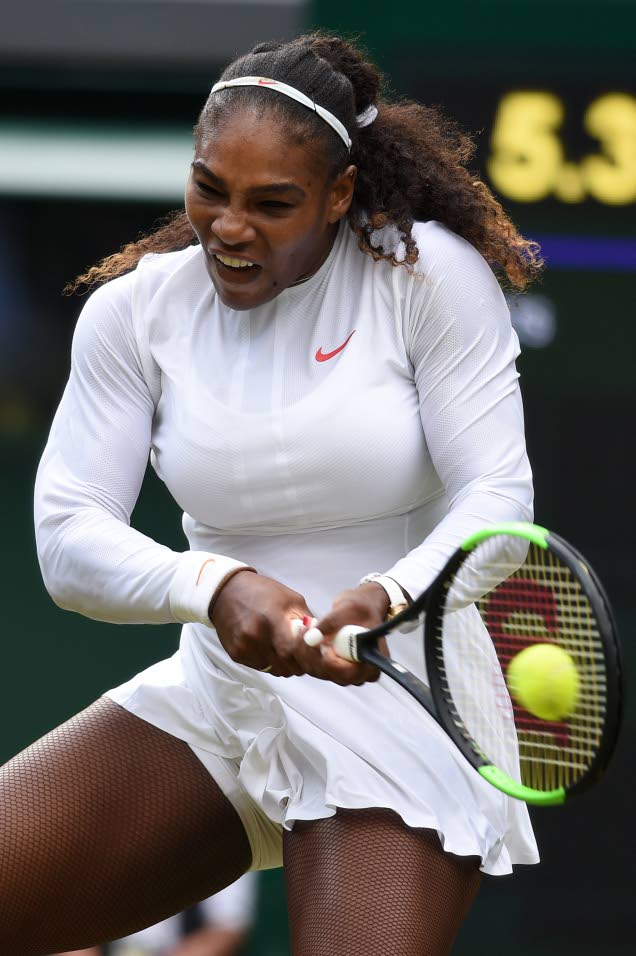
    BERLIN, Germany — Just hours after officially confirming she will team up with sister Venus for Wimbledon doubles, 44-year-old tennis icon Serena Williams faced a straight-set exit at the Berlin Open on Tuesday. Williams and her Czech partner Karolina Muchova fell 6-4, 6-4 to the pairing of Giuliana Olmos of Mexico and New Zealand’s Erin Routliffe, in only Williams’ second outing since her surprise comeback announcement earlier this month.

    The opening set slipped away from Williams and Muchova after Williams dropped serve in her second service game. In the second set, a mid-set break of Muchova’s serve proved decisive, leaving the pair unable to mount a comeback and close out the match in Olmos and Routliffe’s favor.

    Despite the loss, Williams offered a notably positive assessment of her physical performance post-match. “I felt pretty good out there. I felt actually more nimble and more sturdy and quicker than the first match in Queens,” she told reporters, adding that she felt solid overall in terms of physical conditioning and speed — two attributes she noted are critical for fast-paced grass court play.

    This Berlin run marks Williams’ second tournament appearance since she ended a two-year retirement and announced her return to competitive tennis in June. Her first comeback match at London’s Queen’s Club last week ended in a opening-round win, but her run was cut short when doubles partner Victoria Mboko suffered an injury that forced the pair to withdraw.

    When asked why she opted to pair with Muchova, a top Czech player, for the Berlin event, Williams delivered a characteristically witty response: “Czech players have given me nothing but trouble throughout my whole career. So if you can’t beat them, join them.”

    The 23-time Grand Slam singles champion originally stepped away from professional tennis in 2022, saying she wanted to prioritize time with her family. When she announced her comeback, she cited a desire to compete in front of her two young daughters as the core motivation for her return.

    Though flashes of the dominant power game that made Williams a generational force in women’s tennis for 20 years were visible on court, the nearly four-year break from full-time competition left Williams searching for rhythm, particularly in the early stages of the match. She steadily improved as the contest progressed, however, refining her footwork and unleashing the blistering serve and powerful forehand that were the hallmarks of her historic career.

    With the All England Club set to name one final singles wildcard for Wimbledon, which kicks off on June 29, speculation has mounted that Williams could pursue a singles run at the iconic Grand Slam. The tennis legend quickly shut down those rumors, however. “You think I’m ready for singles?” she asked reporters. “I need to get to work.”

    Williams last claimed a Grand Slam singles title at the 2017 Australian Open, and her most recent Wimbledon singles win came in 2016. When she takes the court at Wimbledon next month alongside Venus, the pair will be defending a legendary doubles legacy: together, the Williams sisters have claimed 14 Grand Slam doubles crowns, six of which have come at the London grass court major.

  • Neymar back in training with Brazil at World Cup

    Neymar back in training with Brazil at World Cup

    In a promising development for Brazil’s World Cup campaign, star forward Neymar has taken his first major step toward a comeback, holding his first on-field training session at the tournament Tuesday, months after he suffered a right calf injury that sidelined him for much of 2024.

    Diagnosed with the injury back in late May, the 34-year-old all-time leading goalscorer for Brazil has followed a strict rehabilitation routine ever since the Brazilian squad touched down in the United States for the tournament. Tuesday’s light running session at the team’s New Jersey training base marked a clear milestone in his gradual recovery from the prolonged layoff.

    Neymar has not yet cleared the hurdle to rejoin full team training, and was forced to sit out Brazil’s opening Group C match against Morocco this past Saturday, which ended in a 1-1 draw. His inclusion in the final tournament squad already raised eyebrows across global football circles: consistent fitness problems have kept the veteran winger from making a single appearance for the Brazilian national side since the start of 2023. This year alone, recurring injury issues have limited him to just 50 percent of his club’s matches across domestic league, cup, and Copa Sudamericana competitions.

    Brazil now turns its attention to its second group stage fixture, scheduled to take place this Friday in Philadelphia against Haiti. The team will close out its Group C campaign against Scotland on June 24 in Miami, with Neymar’s recovery timeline remaining a key talking point heading into the critical next phase of the tournament.

  • MISSING AGAIN!

    MISSING AGAIN!

    Jamaica’s Public Accounts Committee has launched formal contempt proceedings against the chief executive officer of the University Hospital of the West Indies (UHWI), after Fitzgerald Mitchell skipped a third summoned hearing for a parliamentary probe into an critical Auditor General’s audit of the hospital’s operations. The disciplinary step was finalized on Tuesday, when Mitchell failed to appear at the committee’s sitting without any advance notice or explanation, despite receiving an official parliamentary summons on June 8.

    Committee chair Julian Robinson confirmed that the panel had received no communication from either Mitchell or his legal representation regarding his absence. “In view of his absence from this meeting, there is a process that will be triggered,” Robinson told the assembled committee members.

    Mitchell’s repeated refusal to appear has drawn fierce condemnation from cross-party committee members, who specifically asked for his testimony to address red flags raised in the audit. The Auditor General’s performance review uncovered major systemic vulnerabilities at the hospital, including flawed procurement practices, weak institutional governance, and poor record-keeping protocols that create major risks for public funds and patient care.

    In a notable contrast to Mitchell’s noncompliance, two other senior former leaders called to give evidence as part of the probe — former UHWI CEO Kevin Allen and former board chair Wayne Chai Chong — have already appeared before the committee and answered questions fully. Robinson highlighted this cooperation to underscore the unacceptable nature of Mitchell’s ongoing refusal to engage with parliamentary oversight.

    “It is very concerning that a public official who is in a position of authority, having been invited first, not responded, having been summoned, no response either from himself nor his lawyer, is in contempt and in breach of the Parliament,” Robinson said.

    Senior Legislative Counsel Tiffany Stewart confirmed to the committee that all required legal and administrative steps to serve the summons were completed in full compliance with the nation’s Senate and House of Representatives Powers and Privileges Act, as well as the Standing Orders of the House of Representatives. She confirmed that Mitchell’s unexcused failure to attend meets the legal definition of contempt of Parliament, clearing the way for the House to initiate formal penalty proceedings.

    However, Stewart also drew the committee’s attention to a major gap in the current legislation: the maximum penalty laid out for contempt of Parliament is widely recognized as outdated and insufficient. Under existing law, a person found guilty of contempt only faces a top fine of 200 Jamaican dollars, equivalent to less than 1.50 USD, or up to 12 months of imprisonment only if the fine is not paid.

    Robinson emphasized that this weak penalty is clearly inadequate, and directly undermines Parliament’s core constitutional mandate to conduct oversight of public institutions. He warned that allowing senior public officials to ignore formal parliamentary summonses without meaningful consequence erodes the entire system of public accountability. “It can’t be that a committee designed to ensure accountability, transparency, and good governance will have its work subverted simply because a public officer refuses to appear before it,” Robinson added.

    After closed deliberations, the committee voted unanimously to move forward with the process. The panel will prepare a formal report for the Speaker of the House of Representatives that details Mitchell’s repeated noncompliance with the summons, and formally request that the House initiate the full contempt process laid out under existing law.