博客

  • Rotary Club of Grenada: Brunch for a cause at Rhythm & Spice

    Rotary Club of Grenada: Brunch for a cause at Rhythm & Spice

    The Rotary Club of Grenada, a long-standing volunteer service organization dedicated to elevating quality of life across the island through local community initiatives, has announced a groundbreaking new fundraising event: Rhythm & Spice — A Brunch Experience. Scheduled to take place on Sunday, June 28, 2026, from 3 pm to 11 pm at the scenic Quarantine Point Recreational Park, this purpose-driven gathering reimagines traditional charity fundraising by blending premium leisure, authentic local culture, and collective community impact into one unforgettable pre-Carnival experience.

    Unlike standard fundraising galas, Rhythm & Spice is built around the idea of doing good while having fun, giving attendees the chance to enjoy a full day of curated entertainment and local flavors while directly contributing to the Rotary Club’s ongoing community projects across Grenada. As an official Diaspora Homecoming event, it is designed to welcome a diverse range of guests, from local Rotary supporters, couples, and friend groups to visiting diaspora members and travelers seeking meaningful, high-quality social experiences on the island.

    The day’s itinerary is structured to guide guests from a relaxed afternoon brunch into a vibrant evening celebration, starting with check-in at 3 pm. All early guests will receive a complimentary signature stemless wine glass, available while supplies last. Throughout the afternoon and evening, guests will have access to an all-inclusive spread of traditional Grenadian cuisine, curated to highlight the island’s iconic culinary heritage. Standout menu items span savory classics including corn soup, cream of split pea, tania log, on-site fried fishcakes served with baked and fried bakes, Creole fish, macaroni pie, stewed peas, cou cou, stewed callaloo, lambie souse, and a custom hot herbal beverage station. For dessert, guests can indulge in local favorites such as sweet potato pudding, coconut drops, and bread pudding, among other beloved Grenadian treats. Premium alcoholic beverages and limited-time drink specials will also be available for purchase from three on-site bars, with all additional sales going toward the club’s fundraising total.

    Between 3 pm and 6 pm, guests can explore the scenic surroundings of Quarantine Point with extra experiential activities arranged exclusively for the event. Partner Ryde Go is providing Mini Scenic ATV Tours that offer sweeping panoramic views of the local landscape, as well as fun Tuk Tuk rides around the park grounds, creating ideal photo opportunities for attendees. The day will also feature multiple sponsor-backed prize giveaways, including coveted day passes from resort partner Sandals Grenada, with additional prize announcements to be shared in the coming months via the event’s official social media channels.

    As the sun sets, the event transitions to a live entertainment segment starting at 7 pm. Hosted by popular local personality Blackstorm, the evening lineup features a performance from Sakinah & The Alpha One Band, alongside guest sets from celebrated local acts Tallpree, Shortpree, and Dash. Blackstorm will then close out the event from 10 pm to 11 pm with high-energy party vibes, capping a full day of shifting moods from relaxed brunch to full festival-style celebration.

    Tickets for Rhythm & Spice are currently available in an early-bird pricing tier of EC$200, which can be purchased through the event platform Go2Fete.com, in-person at Grenadian Optical, or directly from any Rotarian. After the early-bird window closes, advance tickets will be available for EC$250. Every ticket includes access to the all-inclusive food experience, all live entertainment, and entry to all event activity areas. Complimentary on-site parking at Quarantine Point is available on a first-come, first-served basis, with no extra fee for guests. The event’s suggested dress code is Brunch Chic, Island Elegant with Spice-Inspired Tones, matching its festive, purpose-driven pre-Carnival vibe.

    Organizers emphasize that every dollar raised through Rhythm & Spice will go directly toward advancing the Rotary Club of Grenada’s community service projects across the island, making the event far more than a social gathering: it is an opportunity for attendees to brunch for a meaningful cause. For the latest updates, additional event details, and more information about the Rotary Club of Grenada’s work, guests can visit the organization’s official social media pages.

  • Opposition Leader Jamale Pringle Sworn In

    Opposition Leader Jamale Pringle Sworn In

    In a formal constitutional ceremony that marks a key step in the island nation’s legislative process, opposition leader Jamale Pringle has been officially sworn in to his role, solidifying the structure of the country’s parliamentary opposition. The oath-taking event, which followed weeks of post-electoral procedural alignment, brought together parliamentary officials, fellow opposition lawmakers, and diplomatic observers to witness the peaceful transition of opposition leadership. Pringle, who has built a political platform focused on fiscal accountability, infrastructure investment, and expanded social services for working-class communities, takes office at a time when the country is navigating ongoing economic recovery from global supply chain disruptions and rising cost of living pressures. In his first remarks after the ceremony, Pringle emphasized his commitment to constructive, principled opposition, stating that his caucus would work to hold the governing administration accountable while collaborating on policies that deliver tangible benefits to all citizens. Political analysts note that Pringle’s swearing-in completes the formation of the 15th parliament, establishing a clear balance between the governing majority and the opposition bloc that will shape legislative debate over the next five-year term. Observers also highlight that the peaceful and orderly completion of the leadership process underscores the stability of the country’s democratic institutions, amid growing regional attention to Caribbean governance dynamics.

  • Five Bills for second reading in the National Assembly on Thursday, June 18, 2026

    Five Bills for second reading in the National Assembly on Thursday, June 18, 2026

    BASSETERRE, Saint Kitts – June 16, 2026 – The government of St. Kitts and Nevis has formally released the official Order Paper for the upcoming sitting of the nation’s National Assembly, scheduled to convene at 10:00 a.m. on June 18 at the National Assembly Chambers within Government Headquarters in Basseterre. Formal public notice of the sitting has already been distributed across official government channels.

    As the administration continues to advance its commitment to strengthened good governance through targeted legislative reform, five amendment bills are scheduled to proceed to their second reading during this plenary session. All five pieces of legislation already completed their first reading stage during the previous sitting held on June 11, 2026.

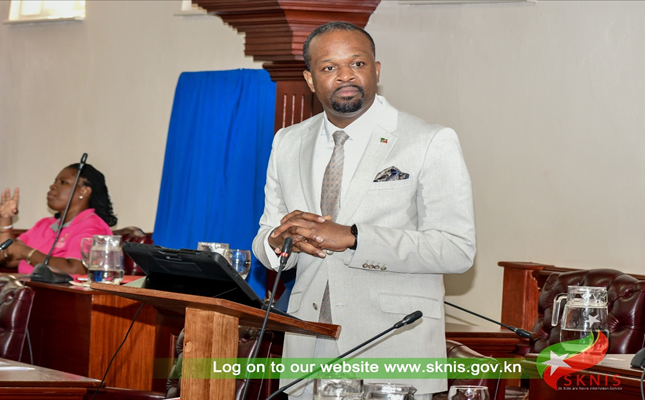
    The portfolio responsibility for all five bills falls to Honourable Konris Maynard, who serves as Minister for Public Infrastructure, Energy and Utilities, Domestic Transport, Information, Communication and Technology, and Posts. Maynard will introduce the motion for second reading for each of the proposed amendments: the Financial Services Regulatory Commission (Amendment) Bill 2026, the Gaming (Control) (Amendment) Bill 2026, the Anti-Proliferation (Financing of Weapons of Mass Destruction) (Amendment) Bill 2026, the Virtual Asset (Amendment) Bill 2026, and the Anti-Terrorism (Amendment) Bill 2026.

    To ensure full public transparency and access to the parliamentary process, the sitting will be broadcast to audiences across St. Kitts and Nevis through multiple platforms. Live audio coverage will be carried by ZIZ Radio 96 FM and other participating local radio stations. Live television coverage will be available via TV Channel 5 in St. Kitts and TV Channel 98 in Nevis, and a free live stream of the full proceedings will also be hosted on the official ZIZ Online website at www.zizonline.com.

    Members of the public seeking to review the full text of the proposed bills can access digital copies via two official channels: as soon as documents are finalized, they will be posted to the Bills section of the St. Kitts and Nevis Information Service (SKNIS) official website, and will also be made available through the SKNIS official Facebook page. This press release was originally issued by SKNIS and published in full by SKNVibes.com, which notes that it does not edit for spelling or grammatical errors and that the views expressed do not necessarily represent those of SKNVibes.com, its sponsors, or advertisers.

  • The criminality of suicide

    The criminality of suicide

    For people who reach their breaking point and survive a suicide attempt, the aftermath should be healing, not legal punishment. Yet across the Caribbean nation of Grenada, this chilling scenario remains a concrete possibility, as the country’s century-old colonial-era law still labels attempting to end one’s own life as a criminal offense. Medical professional and public health scholar Dr. Ishma Harford is now pushing for urgent change, arguing that the outdated legislation inflicts deep harm even when it is not actively enforced, and that decriminalization must be paired with systemic cultural and institutional shifts to address Grenada’s growing mental health challenges.

    Under Section 233 of Chapter 72A of Grenada’s Criminal Code, a suicide attempt is classified as a misdemeanor, punishable by up to two years of prison time, a $4,000 fine, or both. While the modern legal system rarely pursues prosecutions, preferring a more supportive approach to survivors, the law remains on the books, and there have been rare cases where it has been enforced. Grenada is not alone in this policy: it is one of four Caribbean countries that still criminalize suicide, joining The Bahamas, Trinidad and Tobago, and St. Lucia.

    The lingering criminalization creates damage that extends far beyond the rare court case, Dr. Harford emphasizes. For a person already in acute mental distress, the threat of a criminal record or jail time acts as a powerful barrier to reaching out for help. What begins as a desperate cry for support can turn into a permanent mark on a person’s criminal history, creating barriers to employment, housing, and social acceptance for years after the crisis passes. Even when prosecution never happens, the knowledge that the law criminalizes their suffering deepens the shame that already isolates people experiencing suicidal thoughts, turning survival into another source of stigma rather than a chance to heal.

    Dr. Harford traces the roots of Grenada’s suicide criminalization law to its colonial origins. The framework was inherited from an era that framed suicide as both a moral failure and a crime against God and wider society, a perspective that is reflected even in the language of the current legal code. The code uses the word “committed” to describe suicide – the same verb applied to violent offenses such as assault and fraud – a linguistic choice that reinforces the harmful framing of suicide as a wrongful act rather than a symptom of untreated mental health crisis. Changing this terminology, Dr. Harford argues, is a critical first step toward shifting how society as a whole understands and responds to suicide.

    While decriminalization is an urgent necessity, Dr. Harford stresses that removing the criminal offense from the books alone will not solve Grenada’s mental health challenges. Addressing the crisis requires intentional, long-term investment and engagement from all members of Grenadian society, far beyond symbolic gestures such as candlelight vigils. The core shift that is needed is cultural: open conversations about mental health must be normalized, so that people experiencing distress no longer suffer in silence. Clear, accessible pathways to mental health care must be widely publicized, ensuring that any person in crisis knows where to turn for immediate support. Most importantly, the country needs a humane care system that meets people where they are in their moment of need, rather than a system that responds to vulnerability with shame and police intervention.

    Though decriminalization is often dismissed as a minor legal technicality, Dr. Harford argues that it carries profound symbolic and practical meaning. Changing the law would send a clear message that Grenadian society embraces progress, and that it will not punish the most vulnerable members of the community when they need support most. It would signal that suicide survivors are not abandoned, and that the government is taking active steps to reduce the deep stigma around mental illness – a stigma that Dr. Harford notes already imposes steep social and economic costs on the country.

    Dr. Harford ends by drawing a parallel to a recent progressive policy shift in Grenada: in January 2026, the country decriminalized cannabis on the grounds that national law must reflect modern social realities. If that change was warranted, he asks, why should the criminalization of suicide remain? If the core purpose of law is to deliver justice, he concludes, there is no justice in punishing a person who has survived a suicide attempt – what they deserve is compassion, grace, and care.

  • National insurance at 59: Minister urges renewed sense of shared responsibility

    National insurance at 59: Minister urges renewed sense of shared responsibility

    As Barbados’ flagship National Insurance and Social Security Service (NISSS) marked its 59th year of operation, acting Social Security Minister Sandra Husbands has issued a urgent call to rebuild the community-focused mutual care ethos that has anchored the program since its launch, warning that the core collective spirit driving the island’s world-class social safety net is fading at the grassroots level.

    Husbands delivered the keynote address at the NISSS anniversary commemoration held at St Matthias Anglican Church, stepping in for incumbent Labour Minister Colin Jordan. Opening her remarks, she highlighted that Barbados’ social security framework outperforms most peer nations across the Caribbean and the wider world in the scope of benefits it offers to residents. This broad, inclusive coverage, she emphasized, grew directly from the island’s long-held cultural commitment to collective care and mutual support.

    But that foundational commitment is now under threat, Husbands warned. While the NISSS institution itself continues to uphold the principles of mutual aid, the shared community values that make the system viable have begun to weaken among ordinary Barbadians. To reverse this trend, she argued, the island must deliberately rekindle public understanding of interconnected responsibility: that all members of Barbadian society are bound to one another, each holding a obligation both to their neighbors and to themselves to uphold the system that protects everyone.

    The NISSS operates on a foundational principle of intergenerational and cross-community solidarity, Husbands explained. Currently employed workers contribute to support retirees; healthy, able-bodied residents cover benefits for those living with illness and vulnerability; and this generation invests in the security of those who will come after. Over its nearly six decades of operation since its 1967 founding, the service has evolved continuously to meet shifting societal needs, adapting its structure to address new economic and public welfare challenges.

    Key updates to the program over the years include the introduction of a dedicated Health Service Contribution to sustain the island’s main public care facility, Queen Elizabeth Hospital, and the creation of the Resilience and Regeneration Fund, designed to cushion households and businesses from financial hardship during periods of broad economic shock. A more recent restructuring that rebranded the program from the original National Insurance Scheme to the National Insurance and Social Security Service has also brought critical improvements for independent workers: the new framework allows self-employed Barbadians to contribute on a more flexible schedule, qualify for contributory old-age pensions, and grow their small businesses with the stability of guaranteed income security.

    Other expanded access improvements have extended non-contributory pensions to residents living with physical and mental disabilities, boosting their quality of life and reducing financial insecurity. To protect the system for future decades, NISSS has also implemented targeted pension revitalization reforms that will keep the NIS Fund financially strong and sustainable for coming generations. Most recently, the service played a central role in the government’s cost-of-living relief efforts, administering direct cash credits to households struggling with rising prices.

    For Husbands, this wide-ranging impact makes clear that the NISSS is far more than a collection of individual benefits: it is a living embodiment of the collective care that holds Barbadian society together, and its long-term strength depends on reviving that spirit in communities across the island.

  • Derde helft WK 2026: Dag 6- Kan Senegal opnieuw Frankrijk verrassen?

    Derde helft WK 2026: Dag 6- Kan Senegal opnieuw Frankrijk verrassen?

    The 2026 FIFA World Cup has continued to deliver drama and shocking results across the United States host venues, with Day 5 producing a string of underdog performances that have already rewritten early tournament expectations. As attention shifts to Matchday 6 on Tuesday, June 16, four high-stakes group stage fixtures are on the schedule, headlined by the opening campaigns of global heavyweights Argentina and 2018 champions France.

    First up on Tuesday’s slate is a highly anticipated rematch 24 years in the making: France will square off against Senegal at New York’s MetLife Stadium in East Rutherford, New Jersey, kicking off at 16:00 local time. Currently ranked third in the FIFA global rankings, Les Bleus enter the tournament as one of the pre-tournament title favorites, but they cannot afford to underestimate the 16th-ranked Senegalese side. The two nations’ only previous World Cup meeting remains one of the most iconic upsets in tournament history: in the 2002 opening group match, then-debutant Senegal knocked out defending champions France with a 1-0 win thanks to Papa Bouba Diop’s legendary match-winning goal. The result sparked nationwide celebrations in Dakar, where it was declared a national holiday, while France exited the tournament winless and Senegal advanced all the way to the quarterfinals.

    Following the France-Senegal clash, Norway will make their long-awaited 28-year World Cup return against Iraq at Boston Stadium in Massachusetts, kicking off at 18:00 local time (22:00 GMT). This fixture marks the first ever meeting between the two nations, as well as Norway’s first ever World Cup match against an Asian side. Buoyed by their first World Cup appearance since 1998, Norwegian fans have already brought electric energy to the tournament, embracing their cultural heritage with synchronized “Viking row” celebration chants in the stands. Star striker Erling Haaland has described the moment as “a 28-year-old dream”, and with elite talent like Haaland and Arsenal playmaker Martin Ødegaard leading the squad, Norway carries high expectations for their 2026 campaign. For Iraq, Tuesday’s match marks the nation’s first World Cup appearance in more than 40 years, a milestone that has sparked mixed emotions among its fanbase. While the qualification has brought rare joy to a population that has endured decades of conflict, many fans have expressed frustration over travel restrictions that have prevented them from traveling to the U.S. to cheer on their side in person.

    Next, Lionel Messi will lead Argentina into their opening 2026 campaign against Algeria at Kansas City Stadium, kicking off at 19:00 local time. While the two sides have never faced off in a World Cup finals, they share a notable history: in a 2007 friendly match between the two nations, Messi scored his first two senior international goals for Argentina in a narrow 4-3 win. Historically, Argentina has dominated its recent World Cup matchups against African sides, winning six consecutive matches dating back to a shocking opening round loss to Cameroon in 1990. Algeria’s record against South American opposition is mixed: the North African side notched a famous 1982 win over Chile, but fell to Brazil in the 1986 tournament.

    The final fixture of the day sees Austria take on Jordan at San Francisco Bay Area Stadium, kicking off at 22:00 local time. Ranked 25th in the FIFA rankings compared to Jordan’s 64th place, Austria enters the match as the clear favorite on paper, and is widely viewed as a strong contender to advance to the knockout stage. In Group J, Austria is also considered the primary challenger to Argentina for the top spot in the group standings.

    Looking back on Day 5 of the tournament, underdogs once again proved that no result can be taken for granted at this year’s World Cup. The biggest shock of the day came when Cape Verde held reigning European champions Spain to a 0-0 draw, earning the island nation its first ever World Cup point in its tournament debut. Fans celebrated wildly across the globe, including in Boston, which is home to a large Cape Verdean community. The hero of the match was 40-year-old goalkeeper Vozinha, who made seven game-saving stops to shut out Spain. His stunning performance turned him into an overnight social media sensation: his Instagram follower count skyrocketed from 50,000 before the match to 4.9 million in just 24 hours.

    In Group H, Saudi Arabia nearly pulled off a repeat of its iconic 2022 upset victory over Argentina, taking an early lead over Uruguay through Abdulelah Alamri and holding the advantage deep into the second half. However, Maximiliano Araujo equalized for the La Celeste with 10 minutes remaining to salvage a 1-1 draw. Saudi goalkeeper Mohammed Alowais then produced a string of late critical saves to secure the draw for his side, leaving all four teams in Group H level on one point after the first round of matches.

    Other Day 5 results included a 1-1 draw between Belgium and Egypt, after Egypt opened the scoring before an own goal handed Belgium a point, and a 2-2 draw between Iran and New Zealand that delivered end-to-end excitement despite off-field tensions over flag restrictions in the stadium. The only heavy defeat of the day saw Sweden run out 5-1 winners over Tunisia, a result that prompted Tunisia’s immediate sacking of head coach Sabri Lamouchi. Former manager Mondher Kebaier has taken over on an interim basis as the side looks to turn its campaign around ahead of upcoming matches against Japan and Netherlands.

    Off the pitch, the tournament has already produced its share of viral moments: a duck named Merlin, decked out in Mexico’s national team colors, became a global social media sensation during celebrations in Mexico City, with fans embracing the unexpected creature as an unofficial national mascot and tournament icon. Alongside Norway’s viral Viking chants, the squad’s Viking-themed photoshoot, shared widely by Haaland on social media, has become one of the most talked-about off-field stories of the opening week. Finally, FIFA has cleared VAR referee Shaun Evans of all allegations of racist gestures during Germany’s opening match against Curaçao, closing the early controversy. After five full days of action, the 2026 World Cup has already cemented its reputation as a tournament full of twists, with underdogs consistently outperforming expectations and keeping title contenders on their toes.

  • DNCTF awards over US$100,000 to support biodiversity and ecosystem protection projects

    DNCTF awards over US$100,000 to support biodiversity and ecosystem protection projects

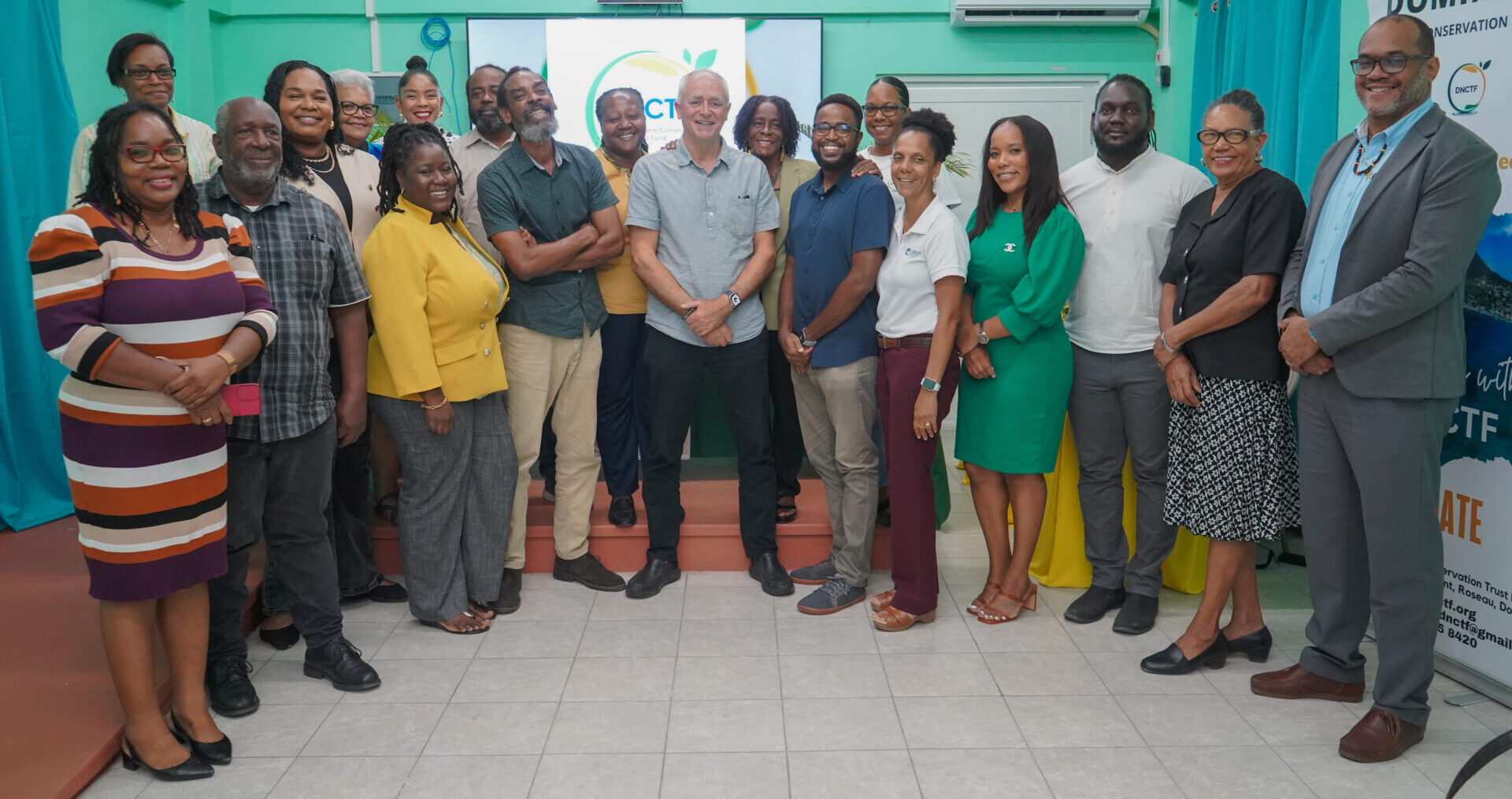
    On June 12, 2026, the Dominica National Conservation Trust Fund (DNCTF) awarded $103,000 in targeted grants to two local environmental initiatives during its second annual Grant Award Ceremony, backed by a regional Caribbean biodiversity protection framework. The funding, disbursed through the Caribbean Regional Architecture for Biodiversity (CRAB) Pro-Nature Grant Facility, breaks down into $93,000 in direct project funding and an extra $10,000 earmarked for specialized technical support and institutional capacity-building across awardees.

    The technical assistance portion of the grant program is designed to build grantee capabilities in high-priority operational areas, including transparent financial reporting, systematic project monitoring and evaluation, adherence to rigorous environmental and social safeguards, and intentional integration of gender equality and social inclusion into conservation work. The entire CRAB initiative receives strategic backing from the Agence Française de Développement (AFD) and the Fonds Français pour l’Environnement Mondial (FFEM), which channel support through the regional Caribbean Biodiversity Fund (CBF).

    One of the two selected projects is led by Dominica’s Ministry of Agriculture, Fisheries, Blue and Green Economy. Titled “Rapid Response to Lethal Yellowing Disease: Protecting Coastal Ecosystems and Restoring Biodiversity,” the initiative targets a devastating pathogen that has been spreading through Dominica’s coconut palm populations—an iconic species that underpins both coastal ecosystem stability and local smallholder livelihoods. Project activities will include expanded disease surveillance across at-risk coastal areas, targeted control of the insect vectors that spread the pathogen, widespread public outreach to educate communities on disease prevention, and systematic management of already infected trees to stop further spread.

    The second grant recipient is local marine conservation non-profit Oceans Forward Dominica, which will partner with management of the Soufriere-Scott’s Head Marine Reserve (SSMR) to upgrade marine biodiversity protection at one of Dominica’s most ecologically significant coastal protected areas. The project, “Enhancing Biodiversity Protection in the Soufriere-Scott’s Head Marine Reserve through Coral Restoration and Improved Monitoring, Surveillance and Compliance,” will combine active coral reef restoration work with upgrades to the reserve’s long-term management capacity, including more robust biodiversity monitoring, expanded patrols to prevent illegal activity, and stronger enforcement of reserve protection rules.

    Speaking at the official grant award ceremony, Permanent Secretary Ryan Anselm noted that the ministry’s coconut disease response project aligns with national priorities that tie environmental protection to economic resilience. “Protecting our coconut resources isn’t just about preserving trees—it’s about protecting the coastal ecosystems that buffer our communities from storms, the biodiversity that makes our island unique, and the livelihoods that depend on both,” Anselm explained. He also emphasized the critical cross-cutting value of healthy coral reefs, which reduce coastal erosion and storm damage while supporting productive fisheries and the sustainable tourism that forms a core pillar of Dominica’s economy.

    DNCTF Chief Executive Officer Dr. Rhonda Linton framed the new grants as far more than one-off project funding, calling them a long-term investment in Dominica’s environmental and economic future. “This funding represents a deliberate commitment to protecting and restoring the ecosystems that sustain our communities, boost our ability to withstand climate impacts, and preserve the one-of-a-kind biodiversity that makes Dominica such a special place,” Dr. Linton said. Closing with a call for collective action on environmental stewardship, she added, “If we do not protect our planet, there will be no planet left to protect.”

    The awards reflect a growing coordinated effort between local, regional, and international partners to safeguard Dominica’s extraordinary natural heritage, with the ultimate goal of ensuring the island’s ecosystems remain healthy, resilient, and productive for generations to come.

  • NEVLEC announces Reintroduction of Fuel Surcharge

    NEVLEC announces Reintroduction of Fuel Surcharge

    NIA CHARLESTOWN, Nevis – June 16, 2026 – The Nevis Electricity Company Limited (NEVLEC) has announced it will reintroduce a fuel surcharge for residential electricity customers and adjust existing surcharge rates for commercial clients, a policy change driven by relentless upward pressure and volatility in global fuel markets that has outstripped existing cost mitigation measures.

    The utility first adjusted domestic energy tariffs back in May 2024 in a deliberate effort to avoid bringing back a separate fuel surcharge for residential customers. At that time, the restructured tariff was designed to spread fuel costs into the adjusted baseline energy charge, shielding consumers from the full, abrupt impact of fluctuating fuel prices on their monthly utility bills. But persistent, sharp increases in global fuel costs have created unsustainable financial pressure on NEVLEC’s electricity generation operations.

    Internal data from the utility shows its actual fuel cost per kilowatt-hour (kWh) has surged dramatically in recent months: rising from $0.53/kWh in April 2026 to $0.76/kWh in May, and climbing again to $0.79/kWh as of June 2026. This steep upward trajectory has left the current tariff structure unable to absorb the full cost of fuel required to keep the island’s electricity service reliable and operational.

    In response to the market shifts, NEVLEC’s new surcharge policy will go into effect for the June 2026 billing cycle. While the full calculated surcharge based on current fuel costs stands at $0.79/kWh, the utility has approved a discounted rate of $0.69/kWh for domestic customers to soften the immediate financial impact on households. Commercial customers will be billed at the full, market-aligned calculated surcharge rate.

    NEVLEC emphasized that the reintroduced surcharge is not a permanent fixed fee. Rates will adjust dynamically alongside changes in global fuel prices, and the policy is classified as a temporary measure that will be re-evaluated once fuel markets stabilize. The utility says it will continue closely monitoring global fuel cost trends and adjust surcharge rates accordingly as market conditions shift.

    Acknowledging that higher utility costs create financial strain for all customer groups, NEVLEC framed the adjustment as a necessary step to protect the long-term reliability of Nevis’ electricity supply. The change allows the company to recover a portion of its increased fuel expenditures while continuing to deliver consistent power service across the island.

    To help customers offset higher monthly bills, NEVLEC has released a set of practical energy conservation tips for households and businesses. The guidance includes turning off lights, fans, televisions and unused appliances when not in use; unplugging device chargers and idle electronics; limiting air conditioning use and setting thermostats to an energy-efficient 24°C (75°F); keeping doors and windows closed when running air conditioning; switching to energy-efficient LED lightbulbs; running washing machines with full loads; avoiding leaving refrigerator doors open for extended periods; and ironing clothing in single batches to reduce repeated iron heating.

    NEVLEC reaffirmed its ongoing commitment to delivering consistent, reliable electricity service to all customers across Nevis as it navigates ongoing global energy market volatility.

  • Saint Lucia prepares for tourism growth as new projects begin

    Saint Lucia prepares for tourism growth as new projects begin

    The Caribbean island nation of Saint Lucia is on track to record its most rapid tourism expansion in recent years over the coming 18 months, according to the top official of the country’s national tourism governing body.

    Louis Lewis, Chief Executive Officer of the Saint Lucia Tourism Authority (SLTA), outlined this upbeat growth projection during an address delivered at the annual Global Piton Awards on Saturday, June 13. The core driver of this upcoming expansion, Lewis explained, will be a wave of newly completed hospitality infrastructure and purpose-built tourism developments set to enter operation across the island.

    “It’s the quickest growth period that we are going to have in the next eighteen months,” Lewis stated during the event. “There are some new things that are coming to market. We are having additional rooms.”

    Industry analysts note that the planned increase in accommodation capacity will address a long-standing limit on Saint Lucia’s ability to host higher volumes of international travelers. Lewis confirmed that the total inventory of hotel rooms across the island is set to jump by roughly 20%, a substantial upgrade that will directly boost the country’s visitor hosting capacity. “We have been looking at somewhere in the range of about 20% increase in our number of rooms, so that we have the capacity to be able to host more of our visitors,” he added.

    Beyond expanding accommodation capacity, Saint Lucia is also strategically diversifying its tourism product to align with shifting global traveler preferences that have emerged in the post-pandemic era. Long renowned as a premier global destination for romantic getaways, honeymoons and destination weddings, the island is now carving out a growing niche in the fast-expanding wellness tourism segment to attract new audience groups.

    Lewis emphasized that the country has no plans to step back from its core romantic tourism offerings, which have long been a cornerstone of its tourism brand. Instead, wellness travel is being positioned as a complementary addition to Saint Lucia’s portfolio of visitor experiences, with early data already showing measurable growth in this segment. “We’re not going to lose it, but we are adding wellness as well, and we are seeing some growth in that direction,” he explained.

    The shift toward wellness tourism comes as global travel patterns have changed substantially following the COVID-19 pandemic. Lewis noted that post-pandemic travelers increasingly prioritize experiences that center on personal health, holistic well-being and genuine engagement with local culture, a trend that Saint Lucia is well-equipped to accommodate.

    “People are looking for more immersive, integrative, authentic experiences and coming out of COVID we have heightened awareness of our own wellness; people are travelling to immerse themselves in destinations, and we are providing that product,” Lewis said.

    Another key strategic priority for the island is expanding community-based tourism, an approach that aims to distribute the economic benefits of travel more broadly across local populations rather than concentrating them in large, isolated resort properties. The government of Saint Lucia has rolled out targeted initiatives to develop new community-led experiences that encourage visitors to venture beyond resort grounds and connect directly with local communities and ways of life.

    One of the most anticipated new tourism projects breaking new ground for Saint Lucia is the development of three underwater sculpture parks, a unique attraction that combines art, cultural storytelling and environmental stewardship. Set to feature approximately 300 original sculptures — many of which will be built at larger-than-life scales — the underwater parks are designed to showcase the island’s cultural narrative while advancing global sustainability and marine conservation goals.

    Lewis explained that the one-of-a-kind attraction does more than just offer visitors a unique recreational experience: it uses public art to share the full story of Saint Lucia, from its historical origins to its current work leading climate action and environmental protection among small island developing nations. “That is where you get to see Saint Lucia’s story, not just the history of how we’ve come to where we are but what we are doing with regard to sustainability and environmental preservation,” he said.

    Despite being a small island nation with limited global economic influence, Saint Lucia is positioning itself as a leader in innovative, sustainable tourism development, Lewis added. The underwater sculpture park project is just one example of how the country is leveraging creative tourism experiences to advance global environmental protection efforts, demonstrating that small nations can deliver outsized impact in climate and conservation action.

  • DLP selects Ashma McDougall as candidate for Roseau North by-election

    DLP selects Ashma McDougall as candidate for Roseau North by-election

    The Dominica Labour Party (DLP) has officially named Ashma McDougall as its official candidate for the imminent Roseau North parliamentary by-election, according to an official party statement released to the public on Monday. The electoral contest was triggered by the recent departure of sitting Member of Parliament Miriam Blanchard, who stepped down from her role citing pressing health concerns that require her full attention.

    McDougall’s path to the candidacy came after an internal party nomination process that saw her put forward unopposed by the Roseau North Constituency Association, with the party’s National Executive Committee subsequently voting to unanimously approve her selection. In the same announcement, the DLP took time to recognize Blanchard’s years of public service to both the Roseau North constituency and the wider nation of Dominica, extending sincere gratitude for her years of dedicated work and wishing her a smooth and full recovery.

    A lifelong resident of the Roseau North area, McDougall was born in Bath Estate within the constituency and currently lives in Goodwill. After her selection was confirmed, she shared her gratitude for the broad support she has received from both party leadership and local constituents.

    “I am humbled and honoured by the vote of confidence reposed in me by the Dominica Labour Party, the Roseau North Constituency Association, and the many constituents who have encouraged me to step forward at this important time,” McDougall said in her first public remarks after the announcement. “I do not take this responsibility lightly. Roseau North is a constituency rich in talent, resilience, and potential. I am committed to listening, learning, and working alongside the people of the constituency to help create opportunities, strengthen communities, and deliver meaningful results.”

    Per the DLP’s press statement, McDougall brings a robust and diverse professional background to her candidacy, with deep experience spanning economics, private sector business, and youth development work across the island. She previously held the presidency of the National Youth Council of Dominica and later served as Executive Director of the Dominica Association of Industry and Commerce. Her work advancing youth empowerment, supporting local entrepreneurship, and driving inclusive economic development has earned her recognition at both national and regional levels, the party confirmed.

    Roosevelt Skerrit, Prime Minister of Dominica and DLP Political Leader, has already issued a full endorsement of McDougall’s candidacy, framing her selection as aligned with the party’s longstanding approach to nurturing and advancing new leadership talent across the country.

    “Ashma’s candidacy reflects the Dominica Labour Party’s continued commitment to attracting capable, energetic, and forward-thinking individuals who are prepared to contribute to the country’s development and improve the lives of its citizens,” Skerrit stated.

    The by-election is required under Dominica’s constitution to fill the vacant parliamentary seat, and is scheduled to be held in the coming weeks. Skerrit added that DLP supporters are already energized and ready to launch the campaign, with full official details of the party’s election campaign plan set to be announced publicly this coming weekend.