博客

  • Olympian calls for support system for student athletes abroad

    Olympian calls for support system for student athletes abroad

    A former Olympic track athlete from Barbados who now works as a sports tourism organizer is sounding the alarm over a growing crisis facing young local student-athletes studying abroad, urging the creation of a formal mentorship network to stop talented competitors from dropping out of post-secondary institutions due to unmanaged academic and personal stress.

    Stevon Roberts, who represented Barbados in the men’s 800-meter individual race and the 4×400-meter relay at the 1992 Barcelona Olympic Games, has spent years watching gifted Barbadian athletes leave overseas college programs early – a trend he says is not caused by a lack of ability, but by a complete absence of targeted guidance as they navigate the dual pressures of elite training and academic requirements.

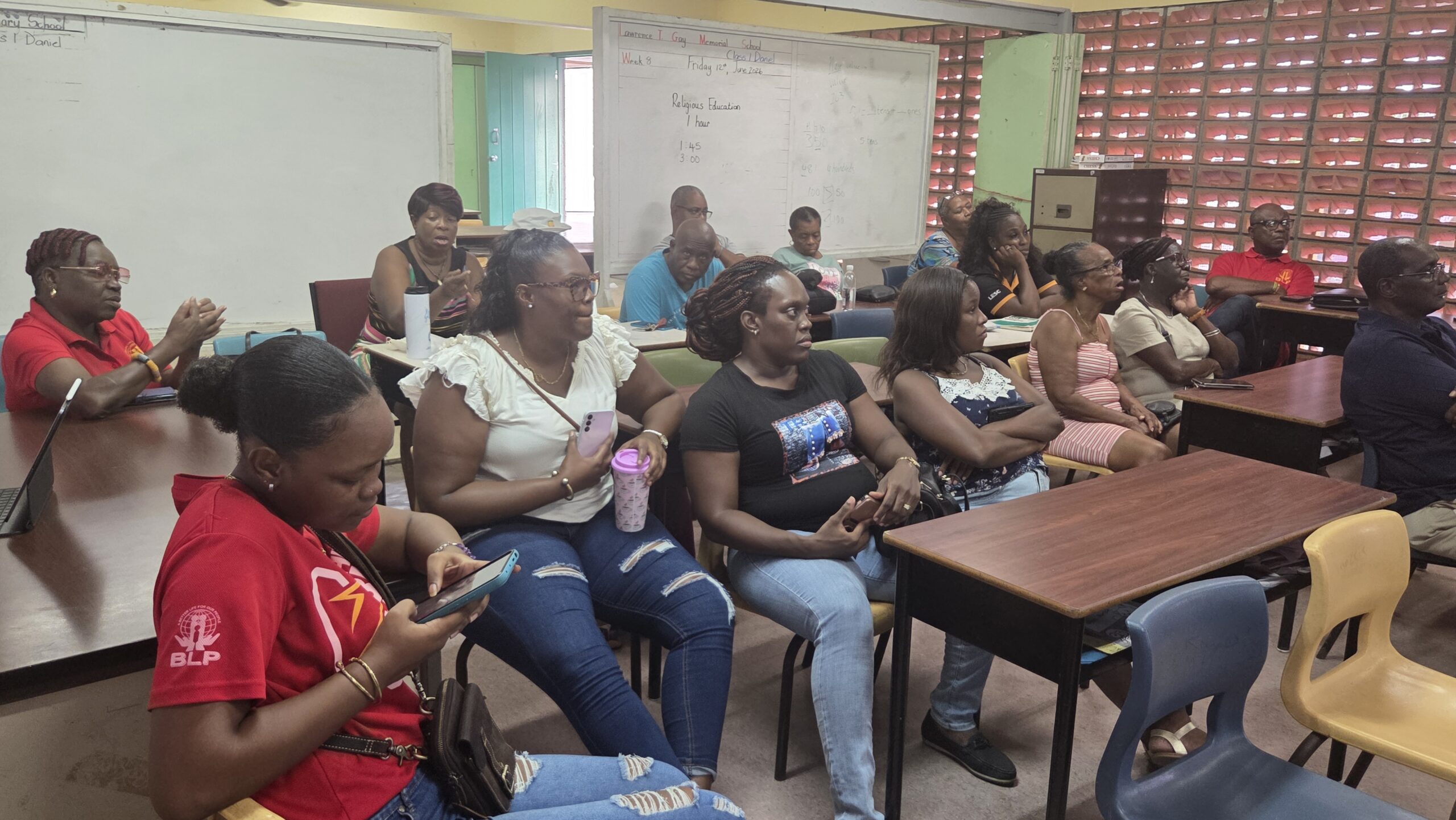
    Speaking at a Sunday meeting of the Barbados Labour Party’s St Michael West Central branch, held at the Lawrence T Gay Memorial Primary School, Roberts outlined his proposal for a specialized mentorship club, dubbed the “Big Brother club,” that would pair current student-athletes with experienced former competitors who have already navigated the challenges of competing and studying overseas.

    Roberts explained that most student-athletes on international sports scholarships face non-stop demands: daily mandatory training hours, full course loads, and strict grade requirements that, if not met, result in losing athletic eligibility and the financial support that makes their overseas education possible. He shared a recent example of a young Barbadian athlete who returned home, overwhelmed by his workload, on the brink of abandoning his scholarship entirely, with his parents unsure how to support him. He noted that many young athletes hold back from sharing their struggles with their parents out of fear of disappointing them, making peer mentorship from people who have had the same experiences irreplaceable.

    Beyond his advocacy for student-athlete support, Roberts used the platform to make the case for expanding sports tourism as a major economic driver for Barbados, pointing to the billions of dollars in global annual revenue the sector generates and the island’s untapped potential in this space.

    Highlighting the ripple economic benefits of sports tourism, Roberts explained that visiting athletes and spectators spend across nearly every sector of the local economy – from hotels and lodging to restaurants, local street vendors, leisure activities, supermarkets, and other small businesses. The World Trade Organization projects that sports tourism will soon make up 10 percent of global tourism activity, equal to roughly $842 billion in annual worldwide spending, a huge opportunity that Barbados is only just beginning to capitalize on after decades of underinvestment, Roberts said.

    For years, Barbados relied almost exclusively on cricket to draw sports tourism, but Roberts said the island has long failed to leverage its sporting assets for full economic gain. That tide is now turning, he noted, pointing to the Barbados government’s recent major investments in new sports infrastructure: a $25 million upgrade to Kensington Oval, a new national stadium, and an upcoming multi-sports facility that will be built adjacent to the stadium, all designed to attract more international sporting events.

    Roberts, who led the organization of last year’s Caribbean Motor Racing Festival, said the event delivered an immediate $3 million in direct tourism spending to the Barbadian economy. For 2024, the family-friendly November event has already secured entries for 80 race cars, signaling growing demand for international sports events on the island.

    During his address, Roberts also encouraged parents to support their children’s participation in sports, emphasizing that athletic success can be life-changing, opening up opportunities that transform the trajectory of entire families.

  • Vreedzaam: Kabinet van de President moet beleid coördineren, niet bepalen

    Vreedzaam: Kabinet van de President moet beleid coördineren, niet bepalen

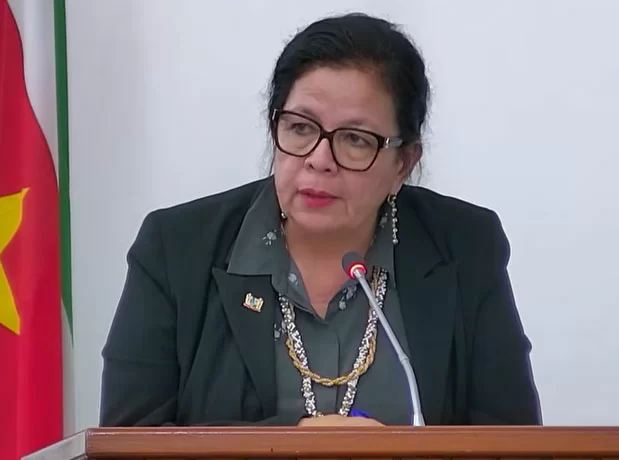
    During ongoing budget deliberations in Suriname’s National Assembly, ruling NDP party legislator Jennifer Vreedzaam has sparked a debate over institutional governance, calling out the President’s Cabinet for overstepping its constitutional mandate in policy implementation.

    Vreedzaam argues that the President’s Cabinet has strayed beyond its legally defined scope, which she says is limited to policy coordination, progress monitoring and government support. Instead, the body has taken on core responsibilities that the constitution explicitly assigns to individual line ministries, including policy development and on-the-ground execution, she claims.

    A well-functioning public sector, Vreedzaam emphasized, depends entirely on three non-negotiable pillars: clear separation of responsibilities, long-term strategic planning, and reliable, accessible data for decision-making. By taking over ministry functions, the President’s Cabinet has disrupted the established governance structure, she contended, opening the door to counterproductive political interference that undermines effective policy delivery.

    “Planning is the backbone of responsible policy direction and sound management of public funds,” Vreedzaam told the Assembly during her address. “When the President’s Cabinet steps in to set or delegate policy that rightfully belongs to ministries, it creates systemic barriers to coherent planning and smooth execution.” The lawmaker added that the current arrangement has already bred confusion across government agencies and fostered a reactive, ad-hoc approach to governance that is incompatible with modern public management standards.

    To back her position, Vreedzaam cited Suriname’s constitution, which she says clearly delineates the separation of powers and responsibilities between the President’s Cabinet and the Council of Ministers. Nowhere in the founding document, she stressed, is the President’s Cabinet granted authority to formulate or delegate core policy.

    “The President’s Cabinet must refocus on its core constitutional mandate: coordinating policy across agencies, tracking implementation progress, and supporting the work of the sitting government,” Vreedzaam said.

    The debate comes at a critical juncture for Suriname, which is preparing for a major expansion of offshore oil and gas production that promises to reshape the country’s economy. Vreedzaam warned that current governance shortcomings put the country at risk of mismanaging the expected windfall of hydrocarbon revenues. To avoid this outcome, she said, the public sector must urgently modernize its organizational structure and management practices.

    Effective stewardship of future oil revenues will require updated data infrastructure, improved strategic planning frameworks, robust accountability mechanisms, and unambiguous role definition across all branches of government, Vreedzaam argued. She added that the transition to an oil-dependent economy requires far more than financial adjustments: it demands deep, structural public administration reforms to realign governance with the country’s new economic reality.

    “If we fail to build the bridge between our outdated governance systems and the demands of this new economic era, the billions in oil revenues will never reach the communities and priorities where they rightfully belong,” Vreedzaam told lawmakers.

  • Trinidad and Tobago company selected for operation and maintenance of Wales Natural Gas Liquids plant

    Trinidad and Tobago company selected for operation and maintenance of Wales Natural Gas Liquids plant

    On Tuesday, June 16, 2026, Guyana’s Office of the Prime Minister made a landmark announcement for the country’s transforming energy sector: a consortium led by Trinidad and Tobago’s Phoenix Park Gas Processors Limited (PPGPL), in partnership with local private firm GuyGas Inc., has secured the top ranking in competitive bidding for the Operations and Maintenance (O&M) contract of Phase 1 of the Gas-to-Energy (GTE) project’s Natural Gas Liquids (NGL) Plant. Cabinet has already issued formal no-objection to open exclusive negotiations with the joint venture, marking a major milestone toward the project’s targeted 2027 launch.

    The selection of the PPGPL-GuyGas consortium followed a rigorous, transparent competitive procurement process overseen by Guyana’s National Procurement and Tender Administration Board. The request for proposals was publicly advertised in January 2025 across four major local Guyanese publications: the Guyana Chronicle, Guyana Times, Kaieteur News, and Stabroek News. In total, five qualified proposals were submitted, which an independent Evaluation Committee assessed against strict administrative, technical, and financial criteria. The PPGPL-led bid emerged as the clear front-runner, earning the highest marks for technical competence while presenting the most cost-beneficial commercial terms for the government of Guyana.

    Officials clarified that the negotiated O&M arrangement will exclusively cover core operations and long-term maintenance planning for the Phase 1 NGL facility. Separate procurement processes are already underway for other associated project components, including LPG supply and bottling, sales and marketing of residual NGL products, and the development of additional NGL storage and offloading infrastructure.

    The announcement comes one week after Trinidad and Tobago’s Energy Minister Dr. Moonilal confirmed ongoing bilateral discussions between the two Caribbean nations regarding the Wales, Guyana-based NGL plant. During a parliamentary address, Dr. Moonilal noted that high-level talks between Guyana’s President and Trinidad and Tobago’s Prime Minister had deepened cooperation on the project, paving the way for the current selection process. PPGPL, the lead operator in the consortium, is majority-owned by Trinidad and Tobago’s state-run National Gas Company and brings decades of regional experience in natural gas liquids processing and operations. Local partner GuyGas is a fully privately owned Guyanese company, selected to anchor local participation in the project.

    A core priority of the O&M contract, government officials emphasized, is advancing local content development and skills transfer to Guyanese workers. The structure of the partnership is designed to maximize local employment from the project’s outset, with a phased transition plan that will gradually hand over greater operational and maintenance responsibility to Guyanese personnel. The arrangement includes structured training programs, ongoing mentorship from PPGPL’s experienced industry teams, and intentional capacity building to grow domestic expertise in the energy sector.

    As part of the broader integrated GTE project located near Georgetown, the NGL plant will play a critical dual role in Guyana’s energy future. It will process associated natural gas brought ashore from the Stabroek Block, feeding the project’s power generation facility to produce lower-cost, cleaner electricity for Guyanese households and businesses. At the same time, the plant will recover high-value propane, butane, and pentanes-plus products for both domestic use and export to global markets. Industry observers note that engaging an experienced regional operator like PPGPL is intended to ensure the facility launches and operates safely, reliably, and efficiently from its targeted start-up in the first quarter of 2027.

    In a separate confirmation, the Prime Minister’s Office announced that Siemens Energy has been selected as the O&M operator for the GTE project’s 300-megawatt combined-cycle power plant, as well as the project’s balance of plant and auxiliary facilities. Siemens Energy will take on overall coordination responsibility for operations and maintenance across the entire integrated GTE facility, with the NGL plant’s operations integrated into this overarching framework.

    Before any contract can be finalized and signed, the proposed O&M arrangement will undergo additional technical and legal due diligence reviews. These checks, to be conducted by the Ministry of Legal Affairs and the Attorney General’s Chambers, will verify that all commercial terms, performance benchmarks, and structural arrangements align with international industry best practices and comparable sector agreements.

    For the government of Guyana, the GTE project remains a cornerstone of national economic and energy strategy. The initiative is designed to deliver reliable, affordable, lower-carbon energy to the Guyanese population while simultaneously building domestic energy capacity and unlocking new economic opportunities across the entire natural gas value chain.

  • Minister Michael Joseph Convenes Senior Technical Officers and Heads of Department Meeting

    Minister Michael Joseph Convenes Senior Technical Officers and Heads of Department Meeting

    Just over one month into assuming his multi-faceted ministerial role, the Honourable Michael Joseph, Minister of Health, Wellness, Environment and Civil Service Affairs of Antigua and Barbuda, has launched a comprehensive review of his portfolio’s operations, kicking off with a landmark collective gathering of senior leadership from all subordinate agencies and departments.

    Given the broad scope of the Ministry’s governance mandate, which covers a wide spectrum of public services from public health to environmental management and civil service administration, Joseph organized the all-department meeting to create an open platform for dialogue, break down inter-departmental silos, and map out the most urgent challenges facing the portfolio. The meeting gathered top technical officials and department heads from every corner of the Ministry, offering attendees a rare space to lay out their teams’ ongoing work, recent wins, pressing concerns and operational bottlenecks, while also building a deeper understanding of the complementary work carried out by peer departments.

    The list of attendees included Permanent Secretary Stacey Gregg-Paige and senior headquarters staff, alongside representatives from 20+ specialized units and institutions: the Central Board of Health, AIDS Secretariat, Antigua and Barbuda Emergency Medical Services (ABEMS), National Solid Waste Management Authority (NSWMA), Fiennes Institute, CARE Project, Clarevue Psychiatric Hospital, national clinics and polyclinics, Medical Benefits Scheme (MBS), Sir Lester Bird Medical Centre (SLBMC), Nutrition Unit, Expanded Programme on Immunization (EPI), Epidemiology and Surveillance Unit, Department of Environment and Civil Service Affairs Department.

    In his opening remarks to the gathered leadership, Minister Joseph urged all participants to maintain unwavering commitment to delivering high-quality public services, and to sustain proactive efforts to lift service standards across every agency and unit under the Ministry’s umbrella. He emphasized that greater internal cohesion is non-negotiable for effective public service delivery: while every department holds a unique, specialized mandate, all units are deeply interconnected, and their collective performance directly shapes how well the Ministry delivers on its core health, wellness, environmental and civil service commitments to the public.

    “Many of the challenges we face do not exist in isolation,” Joseph told attendees. “As a Ministry, we must work more closely together, communicate more effectively, and support one another in order to deliver the highest standard of service to the people of Antigua and Barbuda.”

    Looking ahead, the new minister outlined his next steps for stakeholder engagement: he will continue holding one-on-one or small-group meetings with management teams across individual departments, but will also add direct engagement with frontline and entry-level staff at all levels of the portfolio. Joseph closed by reaffirming his core governing approach: centering listening, cross-stakeholder collaboration, and incremental continuous improvement as he works alongside all Ministry stakeholders to refine operations and upgrade public services for the benefit of all Antigua and Barbuda residents.

  • Hoewel akkoord met VS is bereikt, Iraniërs sceptisch de vrede nabij is

    Hoewel akkoord met VS is bereikt, Iraniërs sceptisch de vrede nabij is

    The global community breathed a collective sigh of relief on Sunday when the United States and Iran announced a breakthrough: a memorandum of understanding to end nearly four months of open military hostility between the two nations. But for ordinary residents of Tehran, who have endured decades of crippling economic sanctions and persistent geopolitical tension, the ceasefire announcement has done little to restore confidence that this long-running crisis is finally drawing to a close.

    The formal signing of the agreement is scheduled for this Friday. Under its core terms, Iran will fully reopen the Strait of Hormuz, a critical global energy chokepoint that Tehran has largely controlled and restricted access to since hostilities began on February 28. The move is expected to calm rampant volatility on international energy markets, which have been roiled by disrupted shipping through the waterway that carries nearly 20% of the world’s daily oil trade. In exchange, the United States will lift its ongoing maritime blockade of Iran’s southern ports, a step that is projected to provide much-needed relief to Iran’s already battered national economy.

    However, the deal leaves nearly all of the most divisive and high-stakes core issues between the two nations unresolved. Key sticking points including the future of Iran’s nuclear program, the status of long-standing US economic sanctions, and hundreds of billions of dollars in frozen Iranian assets held in overseas banks are set aside for future negotiations. This vague, incomplete framework has fueled widespread pessimism across Iran that a lasting, permanent settlement will ever be reached.

    Parisa, a university student in Tehran who requested only her first name be used for security reasons, summed up the pervasive skepticism. “I don’t think this agreement will bring much benefit to ordinary Iranians, because it will never be fully implemented to deliver real stability,” she said. “It might hold for now, but both sides will eventually undermine it to advance their own competing interests.”

    Mehdi, another Tehran resident, echoed that doubt, arguing the unresolved core conflicts make a long-term ceasefire unsustainable. “I don’t believe the US will accept even the most basic of Iran’s demands,” he said.

    For most Iranians, any path to a durable long-term agreement must start with the full lifting of harsh US and United Nations sanctions that have gutted the national economy, pushed millions into poverty, and cut Iranian businesses off from most global markets. Beyond sanctions, Tehran continues to demand the unfreezing of its overseas assets and the right to charge tolls for commercial vessels passing through the Strait of Hormuz – a demand the US and most other maritime nations reject, insisting on unconditional free passage through the waterway.

    The tentative agreement came together despite multiple last-minute disruptions: recent direct skirmishes between US and Iranian forces, and staunch opposition from Israel. Just hours before the ceasefire announcement, Israel carried out an airstrike on Beirut’s southern suburbs – a move Tehran had repeatedly called a red line – that nearly derailed negotiations and pushed the entire region back to the brink of full-scale war.

    Within Iran, the deal also faces fierce pushback from hardline political factions, who demanded the Iranian government take a far more aggressive stance at the negotiating table and have pledged to challenge any perceived concessions to Washington. Iran delayed its official announcement of the deal until after midnight local time, a move widely interpreted to avoid the announcement coinciding with US President Donald Trump’s birthday, allowing Washington to announce the deal on Sunday as Trump had previously promised.

    On Monday, Tehran authorities unveiled a large black mural honoring the late Supreme Leader Ayatollah Ali Khamenei, who was assassinated and will be buried in July. Khamenei spent decades preaching deep distrust of the United States, and his legacy hangs heavily over the current negotiations. During overnight gatherings held by pro-government groups across Iranian cities, many attendees expressed deep disappointment that the government did not avenge Khamenei’s death, voiced opposition to any concessions to Washington, and issued sharp criticism of Iran’s negotiating delegation and senior security officials.

    Many pro-government Iranians argue the war will resume within months, and that Tehran should retain the tactical advantages it gained during more than 100 days of conflict with the US and Israel. “In my view, this agreement will not last; the US will break it again, just like they have before,” Mohadese, a pro-government woman, told Al Jazeera. “It’s better for us to hold firm, for example by keeping the Strait of Hormuz closed.”

    The deal also includes a commitment to end all military operations across every front, including in Lebanon – a provision Tehran insisted be included in the final text. Shortly after the Israeli airstrike on Beirut on Sunday, Mohammad Bagher Zolghadr, secretary of Iran’s Supreme National Security Council, had warned that “the answer of Islamic fighters is near.” But just hours later, Iran’s top decision-making body confirmed the ceasefire deal with the US remained intact, and no retaliatory strike would be carried out. Iranian media reports indicate Trump agreed to immediately lift the maritime blockade, moving up the original 30-day implementation timeline, in exchange for Iran canceling its planned retaliation against Israel.

    In Israel, Prime Minister Benjamin Netanyahu is facing heavy criticism from opposition groups, who frame the US-Iran deal as a major strategic failure for Israel. Israeli Defense Minister Israel Katz announced that Israel has no plans to withdraw its troops from Lebanon, Syria, or the Gaza Strip, and will respond with full force if Iran launches any attack.

    The full official text of the agreement has not yet been published, but both the US and Iran have already moved to frame the deal as a political victory. Iranian state media declared in its announcement that “the US was forced to sign this agreement to end its war against the Islamic Republic and the axis of resistance.”

    Despite widespread public skepticism among Iranians, Iranian financial markets have reacted positively to the prospect of an end to open hostilities and the potential economic boost from lifting the US maritime blockade. Iran’s national currency, the rial, strengthened for the third consecutive trading day on Monday, reaching approximately 1.61 million rial to the US dollar, recovering from a record low of around 1.9 million rial hit last month. Prices for gold coins in Tehran also dropped, while the Tehran Stock Exchange index closed at a new all-time high of nearly five million points. Many Iranian market participants hold out hope that lifting the blockade, eventually ending all sanctions, and unfreezing overseas assets will revitalize the struggling Iranian economy – though that outcome depends on dozens of political and economic factors, many of which remain completely outside of Tehran’s control.

  • Tancoo: Budget 2027  for union settlements

    Tancoo: Budget 2027 for union settlements

    During a parliamentary sitting in Port of Spain focused on approving the Standing Finance Committee’s report, Trinidad and Tobago’s Finance Minister Davendranath Tancoo made two key fiscal announcements that shape the country’s near-term economic and public policy trajectory. First, he confirmed that dedicated budget line items will be included in the 2027 national fiscal budget to cover all obligations finalized through ongoing collective bargaining negotiations with public sector worker unions, including those representing nurses and teachers. Addressing growing anxiety among union members waiting for negotiation outcomes, Tancoo noted that the full tabulation and quantification of outstanding settlement costs will take several more weeks to complete, assuring workers that promised relief will be formalized once the 2027 budget is introduced later this year. “Relief is coming, the documentation is being provided now and in fiscal 2027 the relevant appropriations will be made,” he stated to Parliament. Beyond the union negotiation announcement, Tancoo used the debate to defend the current administration’s request for an additional $2.9 billion in supplementary government funding, explaining the allocation is needed to cover urgent recurrent and capital expenditure obligations through September 30, 2026. He clarified that until a full new Appropriation Bill is tabled at the end of the current financial year, the supplementary funding will be allocated under existing expenditure heads, with administrative safeguards in place to keep all government operations running without disruption. Tancoo also used the parliamentary session to outline the current UNC administration’s economic progress over its first year in office, contrasting its performance with the former PNM government led by previous Finance Minister Colm Imbert. He emphasized that the current government has reversed years of sustained national economic decline within 12 months, acknowledging that global external shocks continue to shape domestic economic outlooks, impact investment conditions, drive cost-of-living changes and affect citizen livelihoods. “Governments are not judged by whether economic storms arise, but by how they respond,” Tancoo told the chamber. A core point of criticism directed at the previous administration was the 2010s closure of the Petrotrin state-owned refinery, which Tancoo labeled a critical strategic national asset. He argued its closure eroded the country’s energy security and forced increased reliance on more expensive imported refined fuel. Looking forward, he confirmed the current government will continue supporting the domestic energy sector, but will not rely on energy as the country’s sole long-term economic growth strategy. Tancoo also highlighted responsible management of the country’s Heritage and Stabilisation Fund (HSF), reporting that as of June 4, 2026, the sovereign wealth fund held US$6.6 billion in assets – a roughly US$620 million increase from the US$5.98 billion valuation recorded on April 30, 2025. Defending the $2.9 billion supplementary funding request, Tancoo emphasized the allocation is tied to active government programs, ongoing infrastructure projects and core public services currently being delivered to citizens. “The machinery of Government has accelerated, projects are being executed, and the nation’s development agenda is gaining momentum,” he said, noting the funding supports school repairs, critical infrastructure upgrades, public servant payrolls and institutional restoration. “Public servants are being paid. Obligations are being honoured. We are supplementing because we are delivering.” To counter opposition criticism of the supplementary request, Tancoo compared the current ask to supplementary funding approved under the previous PNM administration, noting that between 2016 and 2024, former Finance Minister Colm Imbert greenlit a total of $20.7 billion in expenditure increases, including $17.7 billion in additional draws from the national Consolidated Fund. He accused Imbert of hypocrisy, noting that what the previous government labeled standard fiscal practice is now being framed as irresponsible by the opposition. “The financial crises that this country has been placed in, must be bolted to his chest. He and the PNM are responsible,” he said. Tancoo then laid out key fiscal improvements delivered in the administration’s first year: when the UNC took office, the national fiscal deficit stood at $10.07 billion, equal to 5.8% of GDP; that figure has now been cut to $7.01 billion, or 4% of GDP – a nearly two percentage point reduction in just 12 months. Interest payments on national debt have also fallen from $7.13 billion under the PNM to $6.91 billion, freeing up additional resources for public investment rather than debt servicing. Most notably, the country’s primary fiscal balance has shifted from a $2.93 billion deficit under the previous government to a near-balanced position of a $101 million surplus, bringing Trinidad and Tobago to the threshold of a primary surplus after years of consecutive primary deficits. On the revenue front, Tancoo highlighted new revenue reforms introduced in the 2026 national budget designed to boost collection and strengthen long-term fiscal sustainability. Three new measures – the Commercial Bank Asset Levy, Electricity Surcharge, and Landlord Registration Fee and Business Surcharge – have generated approximately $224 million in new revenue since they launched in January 2026. Broader administrative and digital reforms are also underway, including modernization of the Inland Revenue and Customs and Excise Divisions and their information technology systems, the creation of a Real Estate Investment Trust (REIT) to monetize high-value state-owned assets, and preparation for the launch of NIF Bond 3 in September 2026. Work is also progressing on a new transfer pricing regulatory regime to improve tax compliance, boost foreign exchange earnings and strengthen the country’s external position. For the first seven months of the 2026 fiscal year (October 1, 2025, to April 30, 2026), total national revenue hit $30.1 billion, exceeding the original projection of $28 billion. Total expenditure came in at $31.8 billion, below the projected $34.5 billion, resulting in a deficit of approximately $1.7 billion for the period. Oil prices averaged US$62.09 per barrel in the first quarter of 2026 and US$77.64 in the second quarter, compared to the full-year budget assumption of US$73.25 per barrel, while natural gas prices averaged US$4.20 per MMBtu, matching initial projections. Tancoo acknowledged that first-half expenditure was inflated by long-outstanding liabilities, legacy debt and structural weaknesses inherited from the previous administration, including unpaid VAT bond obligations, delayed VAT refunds owed to local businesses, accumulated subsidy liabilities, and ongoing operational and financial challenges at state-owned enterprises. The minister also highlighted the administration’s progress in resolving long-stalled public sector wage negotiations, including a finalized settlement with the Public Services Association that delivered a 10% base salary increase for public servants. To ease immediate cost-of-living pressures, tens of thousands of public workers received one-time cash advances of between $10,000 and $20,000 against their retroactive back pay, with roughly $224.8 million disbursed across multiple sectors to date. Between October 1, 2025, and May 30, 2026, the government also spent $395 million on fuel subsidies to shield domestic consumers from volatile global energy price increases. Updated projections for the remainder of the 2026 fiscal year forecast average oil prices of US$85 per barrel and natural gas prices of US$4.50 per MMBtu, up from the original budget assumptions. Combined with other adjustments, these higher commodity prices are expected to boost total annual revenue by $381.7 million, resulting in a projected full-year fiscal deficit of $7.0 billion. Tancoo confirmed the $2.9 billion in supplementary expenditure will be financed through a mix of domestic and external borrowing, including partnerships with major multilateral development institutions.

  • PM: Report made to Fraud Squad to probe Scotland

    PM: Report made to Fraud Squad to probe Scotland

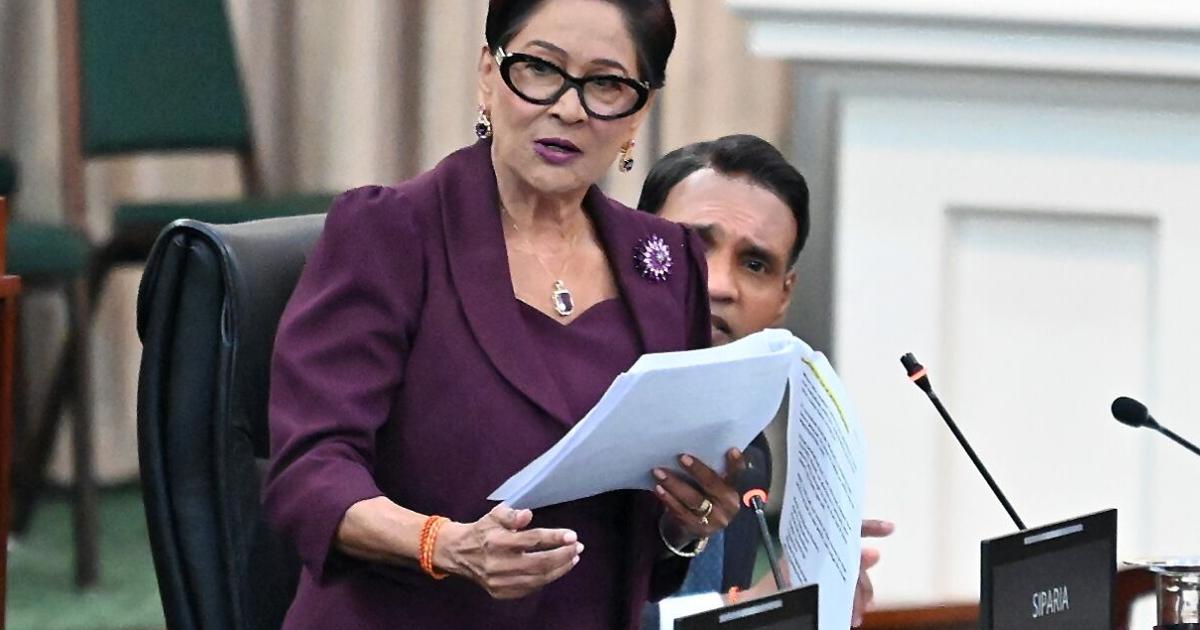
    In a bombshell announcement delivered to Trinidad and Tobago’s Parliament this week, Prime Minister Kamla Persad-Bissessar has opened the door to a full criminal investigation into Keith Scotland, an Opposition Member of Parliament and senior counsel, over allegations of corruption, malfeasance, and conspiracy to defraud connected to a multi-million-dollar uncollected utility debt case. The allegations center around a years-long dispute between state-owned energy provider Trinidad and Tobago Electricity Commission (T&TEC) and Flavorite Foods Ltd., a food processing firm chaired by Andre Monteil, a former treasurer of the opposition People’s National Movement (PNM).

    According to the Prime Minister’s detailed account, Flavorite Foods accumulated more than $2.39 million in unpaid electricity bills between April 2017, when the arrears began to accrue, and January 2022, when the company was finally permanently disconnected from the power grid. The arrears built up steadily over that five-year window: by April 2019, the company owed roughly $572,000, despite multiple negotiated payment plans that Flavorite repeatedly breached. Even after a temporary disconnection that year, power was surprisingly restored the same day without any payment being applied to the outstanding balance. T&TEC continued to tolerate repeated missed payments for nearly three more years, cutting off service permanently only when the total debt crossed the $2.4 million threshold in January 2022.

    Nine months after the permanent disconnection, T&TEC moved to recover the lost funds by retaining legal services from Scotland’s Virtus Chambers, specifically contracting Scotland and junior attorney Keisha Kydd-Hannibal to pursue the claim. The legal firm filed an initial High Court claim for the full $2.4 million in December 2022, but for 11 months, T&TEC’s legal team received no substantive updates despite repeated requests for information. When a meeting was finally scheduled in October 2023, Kydd-Hannibal only stated that Flavorite’s legal team had requested an extension to file a defense, offering no explanation for why Scotland had not moved to secure a default judgment after the required legal window elapsed, and refusing to disclose basic details including the identity of Flavorite’s legal representation.

    Court rules require a defendant to enter an appearance and file a defense within eight days of being served a claim, but Prime Minister Persad-Bissessar confirmed that no appearance or defense was ever submitted by Flavorite. Rather than proceeding with a default judgment as required, Scotland’s chambers advised that the claim would be refiled due to the unexplained delays, and a second claim for the same amount was submitted in September 2023. For another year, T&TEC continued to push for updates, with Scotland’s chambers repeatedly assuring the utility that a default judgment application had been filed and was being processed by court staff. As recently as November 2024, the firm confirmed the application had been withdrawn and refiled to address procedural issues.

    The entire scheme unraveled earlier this year, when T&TEC’s own attorneys directly requested confirmation from the Supreme Court Registrar as to whether any default judgment applications had ever been filed in either the 2022 or 2023 claims. In responses dated April 2026, Registrar Antonya Pierre confirmed that no such applications existed on court record for either case. A subsequent follow-up check by Registrar Dion Phillip in June 2026 reaffirmed the finding: thorough searches showed no default judgment requests had ever been submitted, and there was no evidence that the claim had ever been formally served to Flavorite Foods at all.

    As a result of the delays caused by the false representations from Scotland’s chambers, the Prime Minister confirmed, the entire $2.4 million claim has now become statute-barred, meaning the debt can no longer be pursued through the courts, leaving Trinidad and Tobago taxpayers on the hook for millions in lost public funds.

    In response to the findings, Persad-Bissessar has already ordered two parallel actions to hold those involved accountable. First, she has instructed Minister of Public Utilities Barry Padarath to direct T&TEC to file a civil lawsuit against Scotland and his chambers, alleging fraudulent misrepresentation, professional negligence, and breach of contract over the botched debt recovery effort. Second, the Prime Minister has ordered that a formal disciplinary complaint be prepared for submission to the Law Association of Trinidad and Tobago’s Disciplinary Committee, alleging violations of the professional Code of Conduct laid out in the country’s Legal Profession Act. Most notably, a formal report has already been filed with the national Fraud Squad, which will now lead a criminal investigation to determine whether conspiracy to defraud, malfeasance, and corruption charges are warranted against Scotland.

    As of the announcement, media outlets have been unable to reach Andre Monteil for comment on the allegations, and Scotland has not yet issued a public response to the Prime Minister’s claims in Parliament.

  • Scotland hits back at PM’s T&TEC claims

    Scotland hits back at PM’s T&TEC claims

    A high-stakes political clash has erupted in Trinidad and Tobago after Opposition Member of Parliament for Port of Spain South Keith Scotland, SC, issued a bold public challenge to Prime Minister Kamla Persad-Bissessar, demanding she repeat damaging allegations about his professional conduct in a high-profile legal case outside the protection of parliamentary privilege.

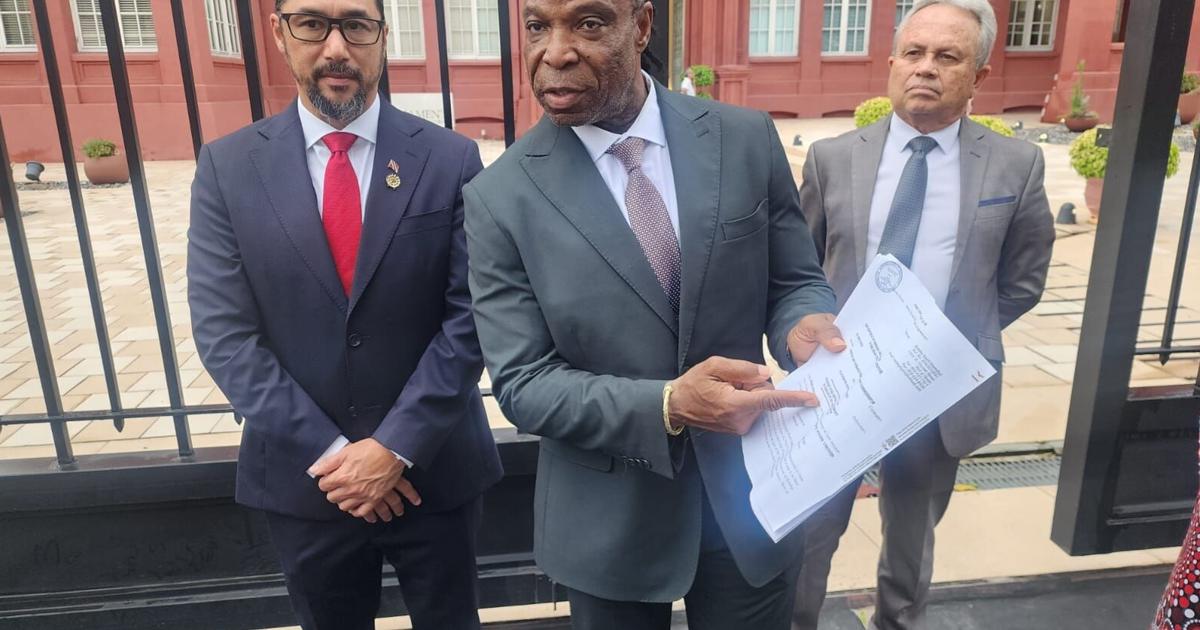
    Speaking to journalists outside Parliament this week, flanked by fellow Opposition lawmakers, Scotland pushed back forcefully against claims the Prime Minister leveled during a House of Representatives debate on the Standing Finance Committee’s adoption report. The allegations center on Scotland’s legal work handling a debt claim brought by the state-owned Trinidad and Tobago Electricity Commission (T&TEC) against local company Flavorite Foods Ltd. Scotland has labeled the Prime Minister’s remarks “very egregious attacks” on his professional reputation and firmly denied any misconduct in the case.

    After reviewing the Prime Minister’s claims in the hours following the parliamentary debate, Scotland systematically refuted each allegation, laying out clear documentary evidence to back his denial of wrongdoing. The case hinges on whether proper legal procedures were followed for T&TEC’s claim against Flavorite Foods, and Scotland outlined three core points to support his position.

    First, he confirmed there is no official documentation that bears his signature confirming any required court filing was never submitted to the court. Second, he rejected the claim that the case was invalid due to exceeding the statutory limitation period, noting that the claim was officially refiled with the court in 2024, and the court has already stamped a request for entry of default judgment after Flavorite Foods failed to enter a formal response to the claim. Scotland also pointed out that Trinidad and Tobago’s courts suspended all statutory limitation periods for two years during the COVID-19 pandemic, a critical legal detail he says the Prime Minister overlooked in her allegations.

    Scotland explained that after his legal team completed the initial refiling and default judgment application, the client took over the case files, meaning any subsequent developments are not the responsibility of his team. He also noted that he suspended his active legal practice during a previous term serving in the country’s Cabinet, further clarifying the timeline of his involvement.

    The Opposition MP stressed that he holds full documentary proof to corroborate every part of his account, including court records confirming the refiled claim, the submitted default judgment application, and an official query from the court registrar addressing outstanding procedural points in the judgment filing — information that has not previously been made public. Scotland accused the ruling government of orchestrating the attacks to damage his reputation in retaliation for his ongoing public criticism of injustice facing Trinbagonian citizens and parliamentary staff, vowing that the efforts to silence him would not succeed.

    “They will not silence my voice with attacks on my character, attacks on me and, by extension, my family,” Scotland said, adding that he would continue to speak out against unfair treatment of the public. “I want to set the record straight. What we will not do is that I will not be silenced. I will stand against injustice meted out against any parliamentary staff, meted out against people of Trinidad and Tobago.”

    Responding to questions about whether all required procedural steps were completed before he ended his active involvement in the case, Scotland confirmed that to his knowledge, all initial issues with the claim were resolved, the claim was refiled within the legally allowed timeframe, and the default judgment application was properly submitted. He also noted that he plans to reach out directly to T&TEC leadership to clarify the full details of the case and resolve any lingering confusion.

  • Padarath denies  staff intimidation

    Padarath denies staff intimidation

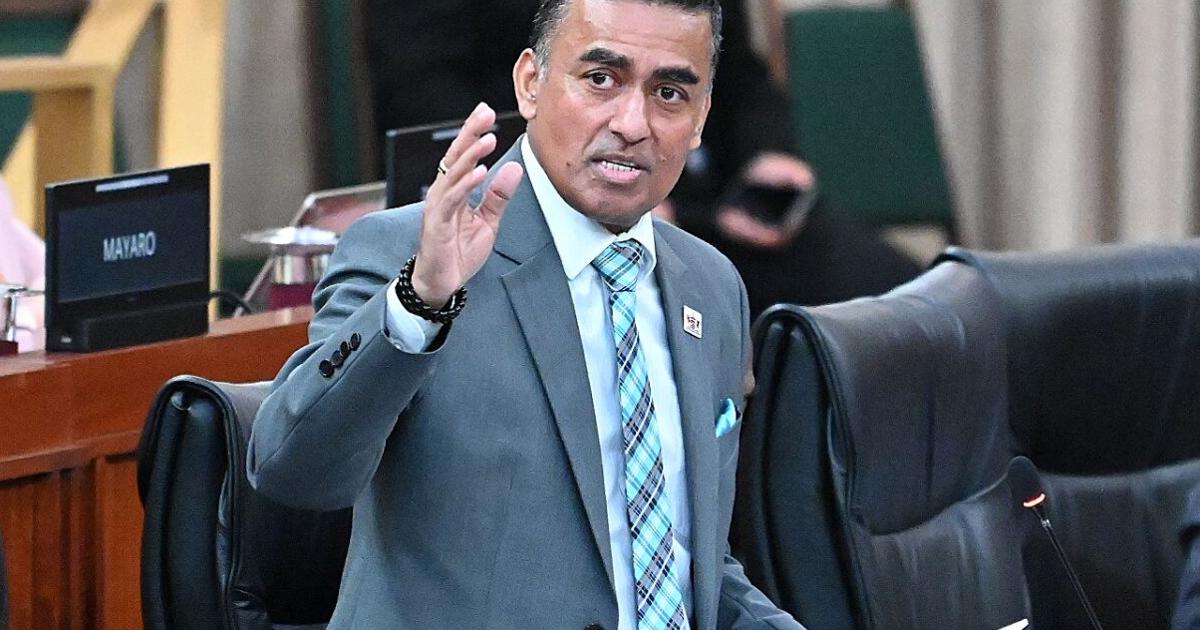
    A contentious confrontation between the ruling United National Congress (UNC) and opposition People’s National Movement (PNM) has erupted in Trinidad and Tobago following a heated Standing Finance Committee meeting last Friday, centered on a photograph taken by Government Business Leader Barry Padarath of a parliamentary audio technician. The incident has escalated into a broader political firestorm, with accusations of intimidation, institutional overreach, and even seditious racial rhetoric flying between the two major parties.

    Speaking to reporters outside the Port of Spain Parliament building on Abercromby Street one day after the clash, Padarath, who also serves as the Member of Parliament for Couva South, pushed back hard against claims that his decision to photograph the technician was intended to intimidate parliamentary staff. He explained that the snapshot was taken solely for identification purposes, rooted in a simmering dispute over alleged improper muting of government lawmakers’ microphones during proceedings.

    During the Friday committee session, UNC government representatives raised formal complaints that their microphones had been cut off unexpectedly while they were attempting to speak. Padarath subsequently approached the technical staff member responsible for managing the chamber’s audio system and captured the photograph. The interaction immediately devolved into shouting matches between government and opposition lawmakers across the floor of the House of Representatives, turning a routine committee meeting into a high-stakes partisan standoff.

    Padarath defended his choice to photograph the staff member, noting that identification is a required step for any formal complaint brought before Parliament’s Broadcasting Committee. “It is the only way that we can identify them, because we don’t know the staff of the Parliament,” he told reporters. He stressed that the act was never meant to function as an intimidation tactic: “It was meant just to identify where the possible challenges are, so when we go to the Broadcasting Committee, we can say, ‘Well, these are the technicians. These are the persons who were muting the mics at that point in time.’”

    Pressed on the combative tone his party has taken in Parliament amid the ongoing dispute, Padarath rejected any suggestion that the UNC’s approach was inappropriate. “Politics is not a tea party; the war is on and the UNC will not roll over and play dead,” he stated. He added that the ruling party has endured unfair treatment and biased procedural practices for far too long, and that the incident was simply meant to draw public attention to ongoing problems inside and outside the legislature.

    The Couva South MP also dismissed opposition demands for a criminal investigation into his conduct, arguing that PNM lawmakers were only using the incident as a distraction from inflammatory comments made by one of their own colleagues. He fired back by calling for a criminal probe into PNM MP Kareem Marcelle, questioning whether Marcelle’s recent remarks amounted to sedition.

    The comments in question date back to a PNM public rally held Thursday night at the Laventille Community Centre, where Marcelle accused the UNC-led government of using the “PNM” label as a racial slur targeting Afro-Trinidadians. Marcelle declared at the rally: “They don’t like we, and they will never like we. But I want them to know that we don’t like them and we will never like them.” He went further, claiming that “Whenever they say ‘PNM people’ on social media, to me, it is the new N-word. They hate African people. They hate black people…A bunch of racist clowns in this country.”

    Over the weekend, Padarath doubled down on his position, saying he was “ready for war” and accusing the PNM of deflecting attention from what he labeled Marcelle’s “racist and seditious” comments.

    PNM MP Stuart Young, representing Port of Spain North/St Ann’s West, pushed back against Padarath’s framing during his own press briefing outside Parliament Monday. Young questioned the meaning of Padarath’s repeated “war” rhetoric, asking: “Is it a war against public servants? Is it a war against independent parliamentary staff? That is the question that needs to be asked.”

    Young said he was speaking on behalf of all “civic-minded and right-thinking citizens of Trinidad and Tobago” to condemn any and all attacks on non-partisan parliamentary staff and public servants. He noted that all elected parliamentarians have a duty to uphold the standards of public office, even within the inherently adversarial structure of the Westminster parliamentary system.

    While Young acknowledged that robust partisan clash is a normal part of legislative debate, he argued that Friday’s incident crossed a fundamental line. “What we saw on Friday is not in that category. Parliamentarians on either side of the aisle thrusting against each other is expected,” he said. “That was a line crossed.”

    Addressing the core complaint of improper mic muting, Young clarified that the audio system operates according to long-standing, standard parliamentary procedure. “Once a person has the floor, that is the person whose mic is going to be on. The Speaker will stand up, the Speaker’s mic will be on and everybody’s mic is off; so it is whoever has the floor and command of the floor and it is their turn to speak,” he explained. “Everybody’s mic can’t be turned on at the same time, so there’s absolutely nothing abnormal with that.”

    Young concluded by accusing the current ruling UNC of exploiting procedural questions to force their uninvited comments onto the official parliamentary record, a practice he said runs counter to established legislative norms.

  • ‘Money spent on cheese paste, champagne’

    ‘Money spent on cheese paste, champagne’

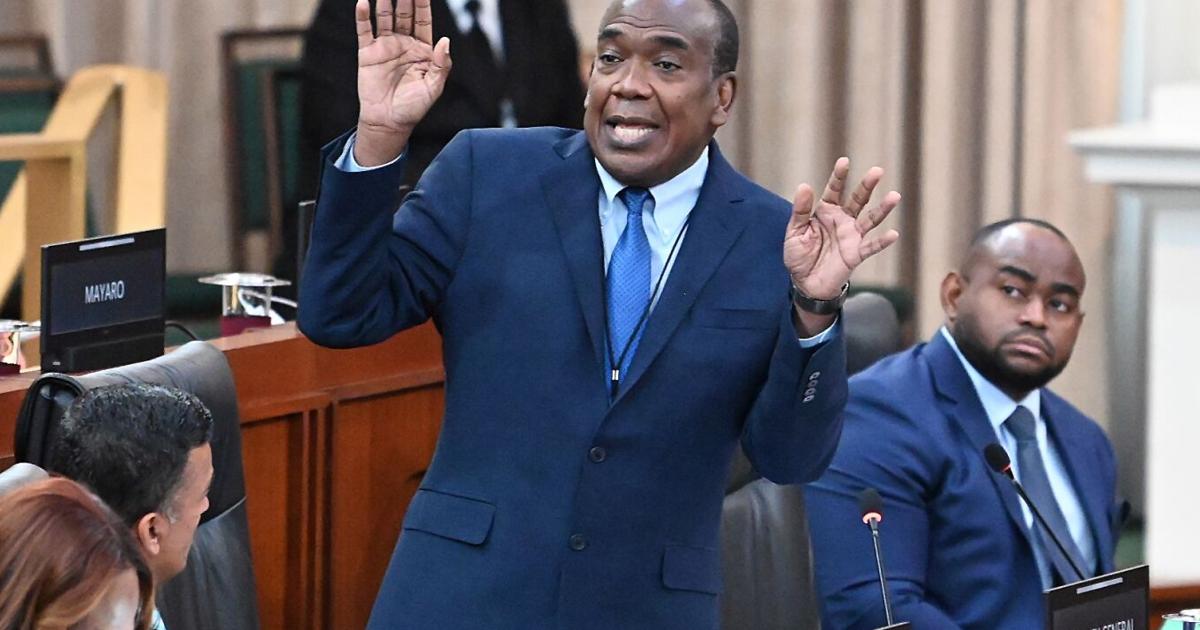
    In a fiery address to Trinidad and Tobago’s Parliament during a vote to approve the Standing Finance Committee’s report, Attorney General John Jeremie launched a scathing attack on the prior People’s National Movement (PNM) administration, accusing it of wasting $1 million in public funds on a premature, extravagant opening ceremony for the Port of Spain General Hospital’s new Central Block back in March 2025.

    Jeremie detailed that the event, which drew three-quarters of the former PNM cabinet, centered on unnecessary luxury spending that included cheese paste and champagne, even as the facility remained wholly unequipped to deliver even the most basic patient care. At the time of the high-profile opening, he explained, the Central Block only held a certificate of practical project completion—a designation that meant full operational readiness was still far from achieved. More than 10,000 pieces of medical equipment had yet to be installed, plumbing infrastructure remained unfinished, rendering all restrooms unusable, and the building held no beds, no stock of medications, not even common over-the-counter pain relievers like Panadol for event attendees who might have fallen ill. Construction on the structure would drag on for months after the ceremony concluded, Jeremie added.

    Beyond the hospital spending controversy, the Attorney General pinned the blame for recent international credit and economic downgrades for Trinidad and Tobago squarely on the PNM’s previous term in office. He defended the current United National Congress (UNC) administration’s economic management, arguing that the former finance minister Colm Imbert and his colleagues were responsible for the country’s ongoing economic challenges. Jeremie also pushed back against opposition criticism of the current government’s new fiscal measures, clarifying that recent increased penalties across multiple sectors are not new taxes, but enforcement penalties for violations of the law. He accused the PNM opposition of deliberately spreading misinformation to stoke public fear and anger toward the ruling administration.

    Jeremie also used the parliamentary address to reinforce the current government’s commitment to equal application of the law, stating that no person—regardless of their social status, political connections, or ties to powerful institutions like banks or former prime ministers—is above the law. He contrasted this with what he claimed was the PNM’s long-standing culture of applying different rules to people based on their connections, adding that the opposition’s default response to policy disagreement is to incite unrest rather than engage in constructive debate.

    The Attorney General claimed that recent attempts at unrest have included collaborations between opposition-aligned elements and two notorious local gangs, known as Sixx and Seven, to stir up public disorder. He closed by reiterating his accusation that opposition lawmakers have spread ignorance and stoked dangerous social tension in recent debates, with one unnamed opposition representative engaging in particularly “loathsome and repugnant” rhetoric to drive division.