博客

  • Records back Chai Chong

    Records back Chai Chong

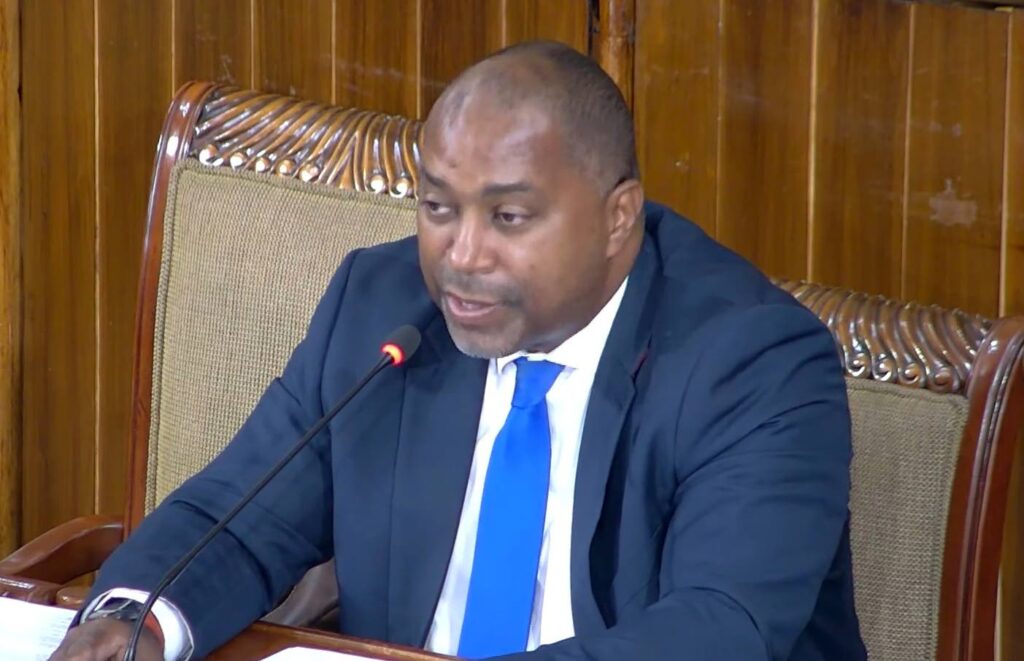
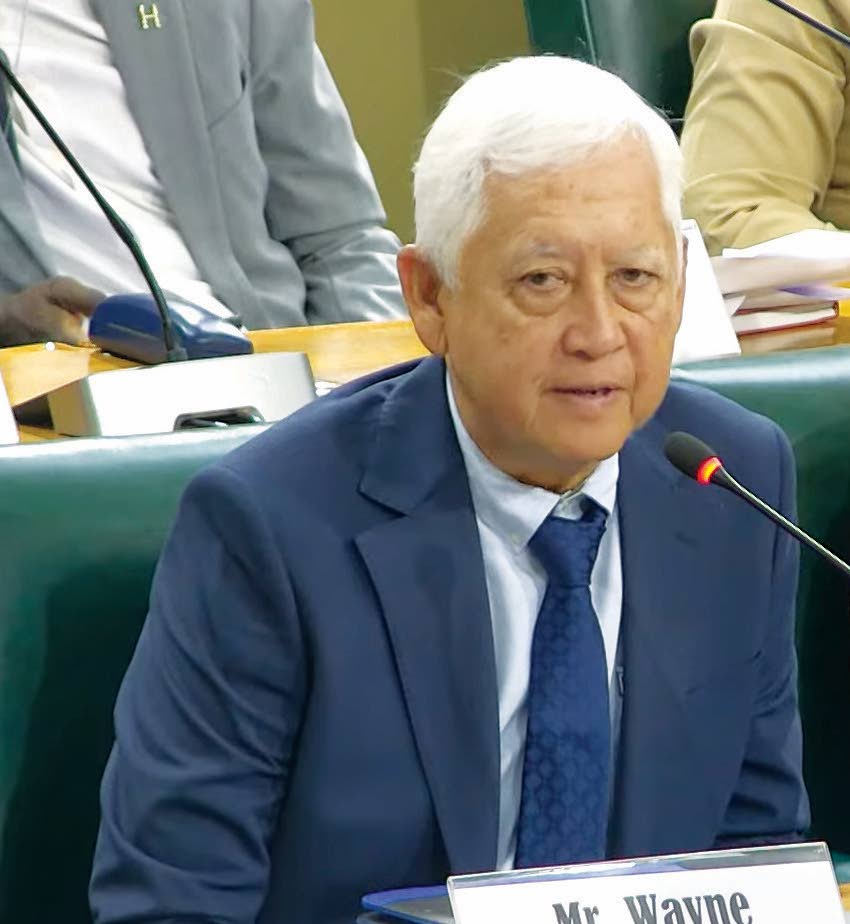
    A critical turning point has emerged in the ongoing scrutiny of the chief executive officer recruitment process at Jamaica’s University Hospital of the West Indies (UHWI), with newly unearthed official records confirming the core claims made by former board chairman Wayne Chai Chong, bolstering his public credibility this Tuesday.

    The fresh set of documents, submitted to Jamaica’s Parliamentary Public Accounts Committee (PAC), upends the narrative presented just two weeks prior. During that earlier session, committee members were informed that institutional officials could only locate two short paragraphs of documentation related to the 2023 recruitment effort, tucked away in a July 2023 board meeting minute entry. That lack of paper trail triggered sharp skepticism from lawmakers, who questioned how a high-stakes senior leadership hiring could leave so little formal evidence.

    Chai Chong first testified before the committee back in May, where he consistently maintained that the UHWI board had carried out a full, formal recruitment process before settling on a preferred candidate for the top executive role. His account was called into question earlier this month, however, when acting UHWI CEO Eric Hosin told the PAC on June 2 that institutional staff could not find any records proving the board had formally approved, rejected, or altered the candidate selection. That testimony left lawmakers deeply concerned about potential procedural gaps.

    Tuesday’s document submission completely reshapes the conversation. PAC Chairman Julian Robinson read a research department summary of the newly found records into the official parliamentary record, revealing the materials include full board correspondence, formal meeting minutes, and a complete recruitment report prepared by Great People Solutions, the external consultant hired to lead the hiring effort.

    Per the summary, the UHWI board first authorized the CEO recruitment process back on December 14, 2022, when it voted to task its joint human resource and customer service subcommittee with leading the search. The board then moved to contract Great People Solutions to manage the candidate search and deliver a shortlist of recommendations to the panel.

    The documents show that by August 2023, the search process had produced a clear top candidate. To move forward with contract negotiations, directors held a formal round-robin vote to ratify the subcommittee’s recommendation. Records also confirm that while some board members raised questions about the timeline of the process and the level of scrutiny applied to candidates, those concerns were fully discussed and resolved before the vote, with a majority of directors supporting the move to begin negotiations.

    Robinson’s reading also included a key note that the human resource subcommittee intentionally structured the entire process to align with Jamaican government procurement and hiring protocols, ensuring all steps were properly documented to withstand external audit and public scrutiny.

    Beyond the recruitment itself, the consultant’s report also included broader institutional recommendations, including addressing what Great People Solutions described as an organizational culture of non-compliance with protocols, overhauling the CEO’s official job description, reducing the broad scope of responsibilities attached to the role, and implementing a more market-aligned compensation framework for senior leadership.

    After reviewing the newly submitted records, opposition MP Peter Bunting, who represents Manchester Southern, told the committee the materials create a starkly different impression from the previous hearing. “A quick scan of it paints a completely different picture from what we were led to believe at the last meeting, like the chairman was on a frolic of his own, and that what he had presented to the committee meeting before was not accurate,” Bunting explained. He also raised questions about why such a large volume of official records was missed during the initial search for recruitment-related documents, when the committee first requested the materials.

    PAC Chairman Julian Robinson echoed those questions, while also noting that the newly discovered records align perfectly with the testimony Chai Chong gave during his earlier appearance. Robinson concluded that the documents leave no room for doubt about the accuracy of Chai Chong’s account. “There’s no question that a detailed process was followed by the board at the time in dealing with the recruitment of a then CEO of the institution,” Robinson said. “I think it is important for the record of the meeting — and certainly I know for the former chairman — that this be placed on the record so that there is no question about the accuracy of his representation to the committee when he was here. I think this fully supports his testimony here before the committee.”

  • Golding wants diaspora members on public boards

    Golding wants diaspora members on public boards

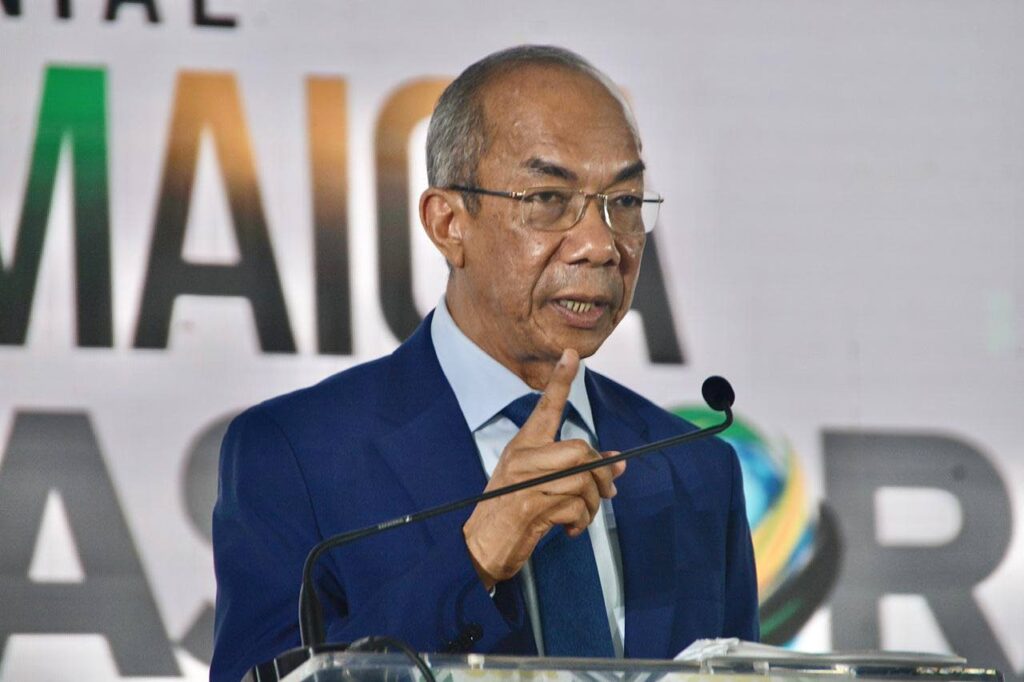
    MONTEGO BAY, St James — Addressing hundreds of delegates gathered at the Montego Bay Convention Centre for the 11th Biennial Jamaica Diaspora Conference on Tuesday, Opposition Leader Mark Golding has put forward a bold proposal to expand opportunities for Jamaican community members living abroad to contribute directly to national governance by securing appointments to the country’s more than 100 public boards. He argued that tapping into the Diaspora’s deep professional expertise and enduring commitment to Jamaica would deliver tangible improvements to the quality of public administration and state governance, adding that the policy change does not require new legislative action to be implemented.

    This year’s conference, which carries the theme “Diaspora Partnerships: Re-Building a More Climate-Resilient Jamaica”, marks a key milestone for an event that first launched in 2004. Golding praised the conference’s steady growth over two decades, noting it has evolved from a small gathering into a flagship global forum that unites Jamaicans from every corner of the world to exchange insights, collaborate on development initiatives, and strengthen ties between the island nation and its overseas community. He also paid special tribute to former Senator Delano Franklin, whose early work was instrumental in establishing the biennial conference tradition.

    Golding emphasized that the Jamaican Diaspora stands as one of the country’s most valuable national assets. “Jamaica and the Jamaican family, we are a global people,” he told attendees, noting that the global community of Jamaican expats and descendants holds a vast reservoir of professional talent, financial resources, and deep emotional connection to the island, affectionately referred to by many as “yaad”.

    Beyond cultural and social ties, Golding highlighted the Diaspora’s outsized economic and social impact on Jamaica. As the nation’s single largest source of foreign exchange earnings, the Diaspora acts as a lifeline for millions of households across the island, he explained. “You are, de facto, the most important social safety net that keeps Jamaica and Jamaican society on an even keel,” Golding said.

    Beyond his proposal for expanded public board participation, Golding used the high-profile platform to pressure the Jamaican government to urgently prioritize post-disaster recovery in the wake of Hurricane Melissa, the Category 5 storm that made landfall on the island on October 28, 2025. Months after the storm made landfall, Golding noted that communities across the country are still grappling with the aftermath of the devastation. He cited widespread reports of persistent hardship, including elevated student absenteeism in affected regions, businesses still struggling to rebuild, and hundreds of families remaining displaced and living under temporary tarpaulin shelters in parishes including Westmoreland, St Elizabeth, Hanover, southern St James, Trelawny and sections of St Ann.

    “Our priorities must be to restore the lives and livelihoods of those who are still suffering from that hurricane,” Golding stated. He called on the National Recovery and Reconstruction Authority (NaRRA) and all relevant government agencies to speed up the delivery of disaster assistance to impacted communities. “Prioritise the restoration of broken lives. Let these people get back on their feet so they can make their contribution to national development,” he added.

  • No deportee flood

    No deportee flood

    MONTEGO BAY, St James — At the 11th Biennial Jamaica Diaspora Conference held at the Montego Bay Convention Centre on Tuesday, Jamaica’s Deputy Prime Minister and Minister of National Security and Peace Dr. Horace Chang publicly refuted widespread circulating claims that the Caribbean nation is in negotiations to receive as many as 10,000 deportees from the United States, while offering clear, detailed clarification on the limited third-country national processing arrangement currently under discussion.

    The false report, first published in local outlet *The Gleaner*, sparked widespread public and diaspora concern, with many fearing that thousands of non-Jamaican individuals convicted of crimes in the US would be relocated permanently to Jamaican territory. During an open question-and-answer session, conference attendee Clive Saunders pressed Chang for clarity, asking both to confirm or deny the rumor and outline any national benefits or potential public safety risks of the proposed arrangement, as well as whether a larger-scale transfer could be considered in the future.

    Addressing the crowd directly, Chang first rejected the 10,000-deportee claim outright. “The report is false. There are no intentions to bring 10,000 illegal immigrants from the United States,” he stated. He confirmed that ongoing talks center on Jamaica’s participation in a regional Third-Country Nationals (TCN) agreement, developed in partnership with the United Nations International Organization for Migration, which facilitates temporary transitional processing of irregular migrants intercepted by the US before they are repatriated to their countries of origin.

    Chang emphasized that the scale of the arrangement would be extremely small and tightly controlled. Under the proposed terms, no more than 25 third-country nationals will be present in Jamaica for processing at any given time, with total arrivals capped at fewer than 50 individuals per two-week period. The minister explained that the US has already secured similar preliminary agreements with multiple other regional nations, including Costa Rica, Panama, Belize, St Kitts and Antigua, as part of a broader strategy to manage irregular migration flows toward North America.

    To further allay public anxiety, Chang outlined strict safeguards built into the draft memorandum of understanding (MOU). If any individual staying in Jamaica for processing chooses to apply for asylum under international law and elects to stay on the island, the entire program will be immediately halted. The arrangement also explicitly bars the transfer of any individual with a criminal record, and the United States will cover 100% of all operational costs associated with the program, removing any financial burden from Jamaican taxpayers.

    In a formal press release issued later the same day, Chang reinforced that Jamaica’s national sovereignty remains fully protected throughout negotiations, and the government has not neglected its core responsibility to protect the interests of Jamaican citizens. “We were clear about our national interests and relied on our experience over many years in managing international migration matters to inform our position throughout the negotiations,” the release noted.

    Chang added that the draft document is a non-binding MOU, not a formal treaty, and will not take effect until all pre-implementation requirements — including the finalization of detailed operational guidelines and safety protocols — are completed. The arrangement does not create any automatic obligation for Jamaica to accept any individual, and both the Jamaican and US governments retain the right to terminate the agreement at any time. No transfers will begin until both parties have signed off on all required operational procedures. The government has committed to sharing regular public updates as negotiations progress.

  • MAGNIFIQUE!

    MAGNIFIQUE!

    East Rutherford, United States – In a landmark opening Group I FIFA World Cup fixture at MetLife Stadium on Tuesday, French captain Kylian Mbappe cemented his place in his nation’s football history, striking twice to secure a 3-1 victory over Senegal and overtake Olivier Giroud as France’s all-time leading international goalscorer. The Real Madrid superstar now boasts an impressive 58 goals from 99 caps for Les Bleus, a milestone that earned glowing praise from head coach Didier Deschamps in the post-match press conference.

    Deschamps, who led France to World Cup glory in 2018, pushed back against ongoing criticism of the 24-year-old forward, framing him as a generational talent that can turn the tide of any match in a single moment. “There are still critics out there who question his impact, but make no mistake: he is an extraordinary player,” Deschamps told reporters. “Not every play went his way on Tuesday, but we all know he can win a game out of nothing with one flash of brilliance. As captain, he contributes so much to this squad both on and off the pitch, despite unfair claims that he is selfish.”

    The match got off to a rocky start for the two-time World Cup champions, who looked disjointed and unconvincing in the first half. Deschamps admitted his side wasted multiple promising opportunities and were fortunate to go into the break level, avoiding falling behind against a sharp, well-organized Senegal side. A tactical shift early in the second half turned the tide of the game, when Deschamps moved Bayern Munich winger Michael Olise from the right flank into a central midfield role.

    The adjustment immediately unlocked France’s attacking threat, with Olise’s close control and incisive passing linking the midfield to the front line far more effectively. “The second half was a massive improvement after that switch,” Deschamps explained. “Michael tied our entire attack together. The more he gets on the ball, the more dangerous we become, because he consistently finds our strikers in dangerous positions.”

    It was Mbappe who broke the deadlock in the 67th minute, slotting home the opening goal to put France ahead. Young winger Bradley Barcola extended Les Bleus’ lead just minutes later, before Senegal’s Ibrahim Mbaye pulled one back to keep the African side in the game. Mbappe put the result beyond doubt late in the match with his second, sealing the 3-1 win and writing his name into the French record books.

    Deschamps noted that the milestone carries extra weight for Mbappe, who had failed to find the net in France’s pre-tournament warm-up friendlies. “I’m genuinely so happy for him. Breaking the record at a World Cup makes this achievement even more special, it has far greater impact than it would anywhere else,” the coach said.

    Deschamps had previously warned his squad against complacency coming into the match against Senegal, a test he always expected to be demanding. With three points on the board in their opening fixture, France now enter their remaining Group I matches against Iraq and Norway in a strong position to advance to the knockout stage. “Getting that first win against a very good Senegal side was huge for us,” Deschamps added. “We had our difficulties, we were wasteful at times, but three points is what matters, and that first win was critical given how competitive our group is. We’re all looking forward to what comes next.”

    France will face their next group stage opponent Iraq in Philadelphia next Monday, as they continue their bid for a third World Cup title.

  • $200 JOKE

    $200 JOKE

    A high-profile standoff between Jamaica’s parliamentary oversight body and a top public hospital chief has thrust long-dormant flaws in the island’s contempt of Parliament legislation into the national spotlight, after University Hospital of the West Indies (UHWI) Chief Executive Officer Fitzgerald Mitchell failed to appear for a third summoned meeting of the Public Accounts Committee (PAC) on Tuesday.

    Mitchell’s repeated absence is tied to a months-long PAC probe into a damning Auditor General’s report that uncovered widespread systemic failures at the prominent public medical facility, including broken procurement protocols, gaping governance gaps, and inadequate record-keeping practices. Lawmakers had already extended multiple informal invitations to Mitchell to answer questions about the irregularities outlined in the audit before issuing a formal summons, making his unexcused no-show on Tuesday an unprecedented break from protocol. To date, neither Mitchell nor his legal representation have submitted any correspondence to the committee explaining his failure to attend.

    “It is very concerning that a public official who is in a position of authority – having been invited, first [to have] not responded, [then] having been summoned, [there was] no response either from himself nor his lawyer — is in contempt and in breach of the Parliament,” PAC Chairman Julian Robinson told members during Tuesday’s sitting at Gordon House. Robinson added that the committee had exhausted all reasonable alternative avenues to secure Mitchell’s voluntary attendance prior to moving forward with a formal summons, making his conduct particularly alarming.

    Following Mitchell’s latest absence, the PAC voted unanimously to advance the matter to the Speaker of the House of Representatives, officially requesting that the case proceed under the existing Senate and House of Representatives Powers and Privileges Act. During the meeting, Senior Legislative Counsel Tiffany Stewart walked committee members through the current legal framework for addressing contempt of Parliament, and her confirmation of the law’s outdated penalties immediately sparked a wider debate about the urgent need for legislative reform.

    Stewart confirmed that all procedural requirements for serving the summons to Mitchell had been fully met, and that his failure to comply legally qualifies as contempt of Parliament. But she also emphasized that the current legislation is woefully outdated, calling for a full comprehensive review led by the Ministry of Justice and Constitutional Affairs, the Law Reform Department, and the Office of the Parliamentary Council. Stewart specifically recommended amending Section 18 of the Act to strengthen penalties and expand available sanctions, a change she framed as critical to upholding public accountability for Jamaican public officials.

    Under the 70-plus-year-old existing law, the maximum penalty for a conviction of contempt of Parliament is a fine of just $200, with a maximum 12-month prison sentence as an alternative for those who fail to pay the fine. For Robinson, this weak penalty scheme exposes a fundamental vulnerability in Parliament’s ability to compel compliance from public officials, threatening to erode the legislative body’s constitutionally mandated oversight role.

    “It can’t be that a committee designed to ensure accountability, transparency, and good governance will have its work subverted simply because a public officer refuses to appear before it,” Robinson said. He noted that Mitchell’s refusal to cooperate stands in stark contrast to the full cooperation the committee has received from other senior UHWI officials tied to the audit, including former CEO Kevin Allen and former board Chairman Wayne Chai Chong, both of whom appeared voluntarily to answer questions about the audit’s findings.

    Opposition MP for Manchester Southern Peter Bunting described Mitchell’s actions as a deliberate affront to parliamentary authority, arguing that the committee must pursue contempt proceedings even with the current limited penalties available. “This behaviour of the CEO is outrageous and unacceptable. It is contemptuous of Parliament’s role in giving oversight to the executive and it cannot be allowed to stand or we’re just wasting our time coming here to attend PAC and other standing committee meetings,” Bunting said. While he acknowledged that a $200 fine amounts to little more than a minor nuisance for a senior public official, Bunting argued that securing a contempt conviction remains a critical step to register the committee’s formal disapproval and set a precedent for future cases.

    “The litany of mismanagement that we have read in the Auditor General’s report and for this level of contempt to be offered to this committee is just plain unacceptable. While the $200 may be a nuisance… I still think we should go through with the conviction for contempt. At least let that be on the person’s record if that is the only thing to signal to the public that this committee is completely dissatisfied and we find this behaviour absolutely unacceptable,” Bunting added.

    Veteran PAC member Lothan Cousins, the Opposition MP for Clarendon South Western, echoed Bunting’s criticism, noting that Mitchell’s repeated unexcused absences are unprecedented during his years of service on the committee. “We’re speaking about a CEO serving the hospital and receiving compensation. We are dealing with serious matters that need interrogation and it’s not only about criticism but we are here to assist as well, as you have seen over the last couple of weeks… This is most unacceptable and I sincerely hope that the minister is looking on, the board is taking note and that serious disciplinary action must be taken as it relates to this particular individual and the office that he holds,” Cousins said.

    Responding to the committee’s frustration, Errol Greene, Permanent Secretary for the Ministry of Health and Wellness, noted that the formal authority to discipline Mitchell rests with the UHWI board of directors. He nonetheless pledged to formally escalate the committee’s concerns to the board immediately following the meeting. “What I can assure you is that I will be writing as soon as I leave here to the chairman of the board to express the concerns and the angst of the PAC, and to ask that due diligence be done and whatever disciplinary actions can be taken by the board of directors of the University Hospital of the West Indies after they do their due diligence that that be done. That’s what I’m committing to do,” Greene said.

    The PAC’s ongoing investigation was launched in response to the Auditor General’s 2024 report, which detailed significant operational and governance failures at UHWI, one of Jamaica’s leading public teaching hospitals. Over the past several weeks, the committee has interviewed a string of current and former senior UHWI officials, aiming to pinpoint the root causes of the irregularities and assign accountability for the documented mismanagement.

  • Food in every fashion

    Food in every fashion

    Last Wednesday, Jamaica’s Terra Nova All Suite Hotel became a hub for culinary innovation and cultural celebration, as emerging young food enthusiasts and seasoned industry leaders gathered for the 2026 Foodie Seminar. Held under the evocative theme “Unbreakable Spirit”, the full-day event featured expert-led panel discussions spanning critical topics from food safety and national food security to small business resilience, artisanal confectionery craft, and the future of Jamaica’s booming culinary sector. The seminar serves as a lead-up to the 27th Jamaica Observer Table Talk Food Awards, the island’s most prestigious annual celebration of culinary excellence, bringing together a diverse roster of 9 expert panellists from across the industry and non-profit space.

    Opening the seminar, veteran food regulatory inspector Allison Richards centered the conversation on one of Jamaica’s most pressing industry challenges: long-term food security. During her presentation, she challenged attendees and the broader public to question whether the island can truly achieve the capacity to feed its own population. Breaking down the four core pillars of food sustainability—availability, access, utilisation, and stability—Richards urged Jamaicans to align their local actions with the 2026 World Food Safety Day theme, “From burden to solution – safe food everywhere”. In a call to action that resonated across the room, she asked: “If every household grew just one thing, what do you think Jamaica would look like? Start with you.”

    Food security and the unbreakable spirit highlighted by the seminar’s theme took center stage in the conversation from Romario Creary and Adrian Wilson, co-founders of the fast-growing Soup King food brand. Just one week before the brand’s planned grand opening in 2025, Category 5 Hurricane Melissa devastated the island, triggering widespread fresh produce shortages and skyrocketing ingredient costs that threatened to sink their new venture. Rather than abandoning their dream, the pair persevered through the crisis, and this year celebrated the launch of their first permanent retail location. Wilson shared the brand’s unlikely origin story: back in 2015, he was operating a local car wash, and began serving homemade soup to waiting customers as a small weekend perk. Today, the car wash is gone, but the soup business has grown into a recognizable local brand. “Opportunity does not always come from creating something new; it can come from something that was always right in front of you,” Wilson told attendees. “Sometimes it comes from improving something very familiar.” Creary emphasized that passion for both product and community, paired with unwavering consistency, are the foundation of long-term success: “In order to innovate, you have to be consistent first…and then you will recognise avenues to innovate; those will come.”

    The conversation shifted to the intersection of food, community empowerment and mental wellbeing when Dr. Altreisha Foster, a former vaccine scientist who now owns boutique bakery Sugar Spoon Desserts, introduced her non-profit initiative “Cake Therapy”. The program provides a safe, supportive space for underprivileged young girls to build confidence and life direction through the art of baking. Foster explained that the initiative goes far beyond teaching baking skills: the kitchen acts as a metaphor for life, teaching participants to turn chaos into something meaningful, while offering a judgment-free space to create. “It is about human connection,” she said. “Food carries memories, it carries identity, it carries my culture.”

    Attendees left with overwhelmingly positive impressions of the day’s discussions. Shelly-Ann Brown and Garfield Allen, both employees of the National Certification Body of Jamaica, which certifies local food businesses, called the event exceeding expectations. “It definitely exceeded my expectations, the presentations were superb. The organisers should be lauded, and I think the presenters should be lauded,” Allen said. Brown echoed the praise, noting: “Having that interconnection, looking at building your own business and also social responsibility being included, it was just a beautiful connection…coming together just talking about food and how it is evolving, it was excellent.”

    Looking to the future of Jamaican culinary tourism and industry growth, Joseph Johnson, owner and CEO of popular Peckish restaurant, laid out his vision for downtown Kingston as the island’s next top culinary destination. Johnson argued that the area already has the foundational cultural and community infrastructure to grow into a world-class culinary hub, with an organic street food culture that mirrors the beloved open-air energy of Manhattan’s iconic street food scene. “What we are witnessing downtown is more than just restaurants. We don’t need to invent food culture downtown, we simply need to recognise it…downtown’s best days are ahead,” he predicted, outlining a vision of walkable streets lined with sidewalk cafes and open-air dining spots.

    Additional presentations covered the craft of Jamaica’s award-winning artisanal chocolate from panellist Nadine Burie, while industry leaders Suedi Ann Hamilton, Kishauna Armstrong, and Robyn Fox shared their own stories of resilience amid industry challenges. Throughout the day, attendees actively engaged with every panel, asking questions about accessing capital, building successful business partnerships, effective networking, and navigating day-to-day industry operations. Creary urged young emerging entrepreneurs not to rely solely on industry connections, stressing that self-belief and unwillingness to compromise on core values are far more critical: “It is very important, especially for younger persons, links are nice…but let me tell you, we can do it without that, we can do it [by] believing we can do it and don’t ever compromise yourself to [do] it. Hard work and exposure are key to the future of the culinary industry, through youth.” He also praised the Jamaica Observer for creating collaborative forums that lift up the next generation of culinary professionals.

    Jamaica Observer Managing Director Dominic Beaubrun, who attended the event with his son to expose the younger generation to industry opportunities, explained that the seminar was designed to highlight the full, complex ecosystem that supports the food Jamaicans enjoy every day. “We can’t really begin to pay homage to the level of service and effort and thought and ingenuity that goes into it, but here we are laying face to people and their experiences and stories, histories, successes, failures and learning, and all of that goes to inform and educate even more,” he said.

  • PM: Many Public Works Recruits Quit Because They ‘Don’t Want to Work’

    PM: Many Public Works Recruits Quit Because They ‘Don’t Want to Work’

    In a tense parliamentary session on Tuesday, Prime Minister Gaston Browne pushed back against opposition claims that the Antiguan government has laid off hundreds of workers hired through the Public Works Department’s employment initiative, reframing the narrative to center on widespread voluntary absenteeism instead.

    Addressing questions raised by Opposition Leader Jamale Pringle, Browne stressed that circulating reports of mass staff terminations do not reflect official government policy. The core issue, he told assembled lawmakers, is not mass layoffs but widespread reluctance among many hired workers to show up for their assigned shifts. “We have a problem. A number of them don’t want to work,” the prime minister stated plainly during the debate.

    The government-led employment program was specifically crafted to bring jobless Antiguans back into the workforce, with a particular focus on vulnerable groups and young people deemed at high risk of falling into criminal activity. Workers hired through the initiative were assigned a range of public-facing tasks, from routine road maintenance and roadside trash clearance to municipal beautification projects and repainting of state-owned public buildings. Browne emphasized that the administration deliberately reached out to these marginalized groups with the explicit goal of giving them a stable path to earning income. “We sought them out. We wanted to provide them an opportunity to work,” he added.

    According to Browne, consistent attendance has emerged as a major systemic challenge for the program. Some hired workers only show up for shifts occasionally, while others have abandoned their positions entirely without formal notice. He also alleged that a portion of participants attempted to hold down separate private employment while collecting pay from the government program, failing to meet the basic commitments required of their public roles.

    Despite the attendance struggles, the prime minister reaffirmed the government’s ongoing commitment to the program and the workers it was designed to support. “We’re not going to give up on them,” he said. Browne went on to restate the core policy goal of the initiative: providing steady formal work remains a central pillar of the government’s strategy to keep young people engaged in productive, legal activity and steer them away from cycles of crime and disengagement.

  • Aristo Kelly officieel belast met waarneming directeurschap Volkshuisvesting

    Aristo Kelly officieel belast met waarneming directeurschap Volkshuisvesting

    After a year-long preparation and transition process, Aristo Kelly has formally taken over the role of Acting Director of the Housing Directorate at Suriname’s Ministry of Social Affairs and Housing (Sozavo), effective June 15. The official appointment was formalized in a public circular issued by Minister Diana Pokie, marking the completion of a recruitment and onboarding process launched more than 12 months prior.

    The Sozavo ministry is structured around two core directorates: one focused on social affairs, and the other dedicated to housing policy and implementation. Before Kelly’s appointment was finalized, Sherwin Valies, the serving Director of Social Affairs, held the acting position for the housing directorate in accordance with the ministry’s existing organizational rules. Following the publication of Minister Pokie’s circular, Valies formally transferred all acting responsibilities to Kelly this month.

    Kelly confirmed that he had already been carrying out the directorate’s leadership duties on a de facto basis for an extended period. Dating back to July 18, 2025, he joined the Housing Directorate as a senior policy advisor, working closely with Deputy Minister Danielle van Windt to build familiarity with the role and prepare for full leadership. “Over the past year, I have served as a policy advisor within the Housing Directorate, and I have already performed the director’s role in practice. Working alongside Deputy Minister Danielle van Windt, I have gained a comprehensive understanding of government administrative processes. Now that my appointment is formally complete, I can officially take on this responsibility,” Kelly stated in remarks following the announcement.

    Bringing more than a decade of private sector experience to the government role, Kelly holds a Master’s degree in International Business from Maastricht University in the Netherlands. Prior to his government appointment, he also worked as a lecturer in business administration and a graduation supervisor at the FHR School of Business. For his tenure leading the housing directorate, Kelly has laid out a clear agenda centered on upgrading the department’s operations and expanding access to housing for Surinamese people. “My core goal is to make it easier for people across Suriname to plan for home ownership as part of their long-term lives,” he said.

    According to Kelly, the directorate has already achieved one key milestone in advancing its modernization: the full rollout of digital services. Surinamese residents can now apply for housing subsidies and register for housing allocation through a new online portal, without needing to visit a government office in person.

    Looking ahead, Kelly has outlined five key priorities for his acting term. First, he will drive further professionalization of the entire directorate to streamline operations and improve service delivery. Second, he plans to implement a more effective, targeted strategy to address the country’s persistent housing shortage. Third, he will work to place the revolving fund managed by the Suriname Housing Foundation on a stable, financially sustainable footing. Fourth, he will strengthen the institutional capacity of the Housing Foundation to allow it to resume independent large-scale housing construction projects. Finally, he will prioritize greater transparency and public communication between the directorate and the Surinamese people it serves.

    “I am confident that these steps will ensure every person in Suriname has the opportunity to plan and build their own home,” Kelly said. Under his leadership, he added, the Housing Directorate will evolve into a modern, professionally managed public institution that can better meet the growing demand for affordable housing across the country.

  • TVET schools get equipment to train students for green jobs

    TVET schools get equipment to train students for green jobs

    Small island nations across the Caribbean are accelerating their transition to low-carbon, climate-resilient economies – and that shift demands a workforce equipped with the right practical skills to fill emerging green jobs. In Saint Lucia, that demand is being met with a landmark new donation of specialized technical equipment to the country’s technical and vocational education and training (TVET) sector, aimed at preparing young people for careers in sustainable development, renewable energy and green entrepreneurship.

    The donation forms a core component of two linked international initiatives: the Green & Blue Skills project and the NDC-Tec (Nationally Determined Contributions Technology) Project. It is fully funded by the German Federal Ministry for the Environment through the country’s International Climate Initiative (IKI), with implementation led by GIZ, Germany’s state-owned international development cooperation agency. Beyond Saint Lucia, the NDC-Tec project will roll out similar equipment upgrades to TVET institutions across other CARICOM (Caribbean Community) member states in coming months, supporting a regional push for just transition to green economies.

    To date, the programme has already begun delivering new tools to four of Saint Lucia’s leading TVET institutions: the School of Innovation and Technology, the Stanley Jon Odlum School of Arts, Media and Design, the School of Sustainable Agriculture and Culinary Arts, and the School of Construction and Heritage. Some equipment has already been installed at participating campuses, with the remaining shipment scheduled to arrive by the end of this week, according to GIZ’s programme head Ina De Visser.

    The diverse equipment package is tailored to build skills across multiple high-growth green sectors of Saint Lucia’s economy. For renewable energy training, institutions received two photovoltaic system trainers that allow students to gain hands-on experience installing and maintaining solar power setups, alongside basic electrical installation training kits to build foundational technical skills. Two electric vehicle diagnostic tools – the centrepiece of the donation, aligned with global shifts toward electric mobility – give students the practical knowledge needed to enter the growing EV maintenance and repair sector.

    For the island’s large agriculture and food processing sector, the donation includes two industrial smokers for developing value-added smoked food products such as smoked fish and cured meats, a pulveriser for processing raw cocoa, coffee and grain, and a commercial chocolate melanger to support artisanal chocolate production – a fast-growing niche tourism and export sector for Saint Lucia. The School of Innovation and Technology also received specialized green cooling systems to replace energy-intensive traditional air conditioning, cutting campus emissions while giving students first-hand experience with low-carbon climate control technology. As TVET Education Officer Delthia Naitram explained, the systems address a longstanding campus comfort issue while demonstrating sustainable solutions in action.

    Speaking at an official handover ceremony held at the School of Innovation and Technology’s Anse Ger campus in Deruisseaux, De Visser emphasized the programme’s core goal: to ensure the new tools are fully integrated into training curricula and help close the skills gap for modern green economy jobs. “We hope these items will be used extensively and contribute to preparing the students for modern jobs,” she said.

    GIZ Technical Advisor Sarah Stadler added that the initiative does more than deliver equipment: it supports the government of Saint Lucia’s long-term goal of expanding and modernizing the country’s entire TVET sector, aligning training outcomes with national climate and development priorities.

    Augusta Emmanuel, principal of the School of Innovation and Technology, echoed that outlook in her address to the ceremony, noting that the new equipment will enable the institution to launch industry-recognized certification programmes tailored directly to current and emerging job opportunities in the island’s growing green and blue economies.

    Saint Lucia’s Minister in the Ministry of Education Danny Butcher framed the investment as a critical response to global shifts in the world of work. Rapid technological innovation is reshaping every major industry worldwide, he pointed out, and the transition to electric mobility and clean energy is no longer a distant future – it is already unfolding across the Caribbean. “We must prepare our young people not for the jobs of yesterday, but for the opportunities of tomorrow,” Butcher said.

  • Project launched to strengthen protection of Morne Diablotin National Park

    Project launched to strengthen protection of Morne Diablotin National Park

    The Commonwealth of Dominica has kicked off a landmark conservation initiative to strengthen the long-term protection and sustainable management of Morne Diablotin National Park, a crown jewel of the Caribbean island nation’s rich natural heritage, government officials have confirmed.

    The project, outlined in an official statement from the Ministry of Environment, Rural Modernisation, Kalinago Upliftment and Constituency Empowerment, centers on two core priorities: formally demarcating the national park’s exact boundaries and establishing a structured buffer zone around the protected area. This dual approach is designed to safeguard the park’s irreplaceable natural resources while creating space for inclusive, sustainable development for neighboring communities.

    Funded by the Global Environment Facility (GEF) and implemented via a partnership between the World Bank and the Dominican government, the work falls under the broader Leveraging Eco-Tourism for Biodiversity Protection in Dominica (LETBP) Project, a national program that ties conservation goals to inclusive economic growth through nature-based tourism. After a rigorous competitive bidding process, Environment Direct Consulting Inc., a Dominican-owned environmental and geospatial firm, was selected to lead the project delivery. Headed by Dr. Camille David, the firm brings over 20 years of specialized experience across the Caribbean in environmental science, biodiversity conservation, geographic information systems (GIS), protected area management, land-use planning, and multi-stakeholder engagement.

    Morne Diablotin National Park is far more than a protected green space for Dominica: it is a critical ecological anchor for the entire island. The park is home to numerous endemic plant and animal species found nowhere else on Earth, preserves vital island watersheds that supply clean water to local communities, and supports a wide range of ecosystem services that underpin both local livelihoods and the national economy. The new buffer zone project has been in the making for years, with the concept first introduced in the official Morne Diablotin National Park Management Plan. The buffer will act as a controlled transition area between the strictly protected core forest and adjacent developed lands used by local communities.

    Ministry officials explain that well-designed buffer zones address two key challenges at once: they reduce human-caused pressures on the protected core park area, while also opening up opportunities for nearby residents to build sustainable, environmentally compatible livelihoods that do not harm the park’s ecology. Over the course of the consultancy, the project team will conduct extensive, inclusive consultations with a full range of stakeholders, including local landowners, community residents, relevant government agencies, and Indigenous and local interest groups. Key topics for discussion will include negotiating mutually acceptable buffer zone boundaries, resolving longstanding land ownership and tenure questions, and co-developing solutions that strike a fair balance between national conservation targets and the practical needs and interests of communities living near the park.

    Honourable Cozier Frederick, Minister for Environment, Rural Modernisation, Kalinago Upliftment and Constituency Empowerment, praised the launch of the initiative and underscored its central role in securing Dominica’s environmental future. “As Dominica continues to position itself as a global leader in climate resilience and environmental stewardship, the protection of our protected areas remains a national priority,” Frederick said. “This initiative represents an important investment in the future of Morne Diablotin National Park, ensuring that its forests, wildlife, watersheds, and ecological values are preserved while fostering sustainable opportunities for surrounding communities. Together, we are strengthening the foundation of a greener, more resilient Dominica.”

    The Ministry has urged all relevant stakeholders to take an active part in the upcoming consultation process, noting that open collaboration across all groups will be the single most important factor in delivering a successful, equitable project that benefits both conservation and local communities for generations to come.