For decades, Carnival across the Caribbean has been synonymous with vibrant culture, contagious music, collective creativity, and tight-knit community gathering. But for Antigua and Barbuda, one of the region’s most beloved annual celebrations has long carried a hidden cost: mountains of single-use recyclable materials that end up buried in local landfills, rather than repurposed as valuable resources. Now, a local environmental nonprofit is challenging that status quo, proving that the nation’s biggest party can also become its most powerful display of environmental stewardship.
Good Humans 268 Inc., led by founder and president Joshuanette Francis, recently partnered with Akhimo Group Inc. to pilot a transformative waste management model at De Breakfast Fête, one of the key kickoff events of Antigua and Barbuda’s annual Carnival calendar. Unlike traditional post-event cleanup efforts that only collect mixed waste for disposal, the organization was invited to embed responsible recycling into the event’s core operations from the start, to demonstrate what systemic change can look like.
For years, Good Humans 268 has pitched a deceptively simple solution to event organizers, the Antigua and Barbuda Festivals Commission, and national government agencies: separate waste at the source. When recyclable materials are sorted at the point they are generated, rather than mixed with general trash, recovery and recycling rates skyrocket, turning potential rubbish into reusable raw material. This year at De Breakfast Fête, the team got the chance to put that principle into practice.
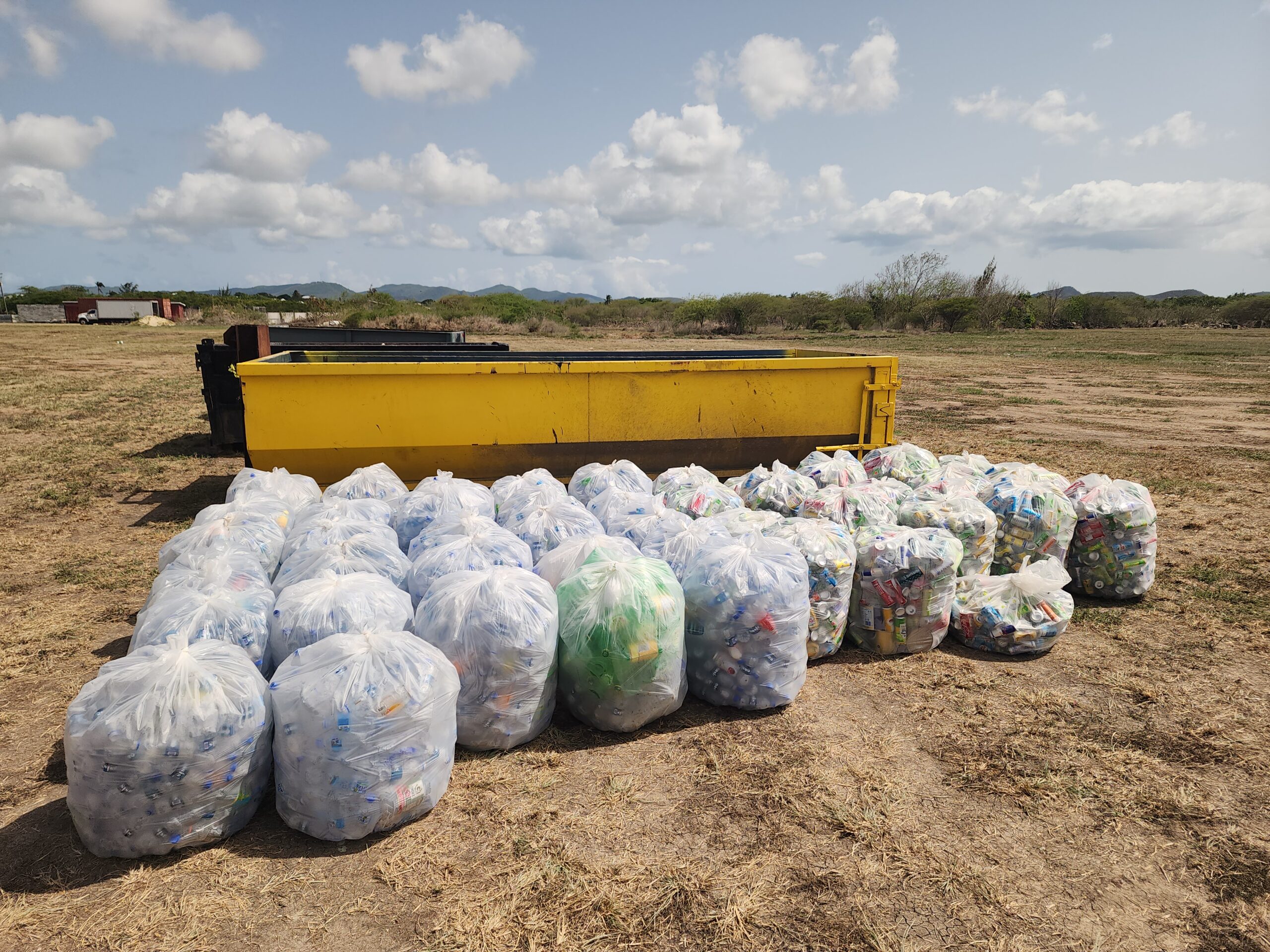
When the final note of the event’s last performance faded and attendees headed for home, the work was just beginning. Over a grueling 28-hour sorting process spread across three days, the volunteer and staff team carefully separated every recyclable item from general waste. 12 hours of sorting on Sunday were followed by 10 more hours on Monday, with final touches completed on Tuesday. The work was physically draining, but team members say the outcome made every minute worth it.
The results of the pilot speak for themselves. The team recovered roughly 19,200 plastic bottles, more than 11,600 aluminum cans, and over 3,000 glass bottles from just this single event. In total, more than 33,000 recyclable items were kept out of Antigua and Barbuda’s landfills — a staggering number that hints at the huge potential of rolling this model out across all major Carnival events. If every fête, parade, concert, and community celebration adopted source-separated recycling, the cumulative environmental impact would be transformative for the small island nation, which faces unique waste management challenges due to its limited land area.
After sorting, the plastic bottles and aluminum cans will be shipped to the Antigua and Barbuda Waste Recycling Corporation, before being exported overseas for full processing into new consumer products. Instead of taking up decades of space in a crowded landfill, these materials will get a second life as new goods — a far smarter investment of a valuable resource, Francis argues.
The De Breakfast Fête pilot reinforced a core belief the organization has held for years: effective waste management cannot start after an event ends. It must be planned in advance, before the first guest walks through the entrance. The organization’s long-term vision calls for every event promoter to add dedicated Green Teams to their staffing rosters alongside traditional cleaning crews, every Carnival band to assign staff to manage recycling, every food vendor to sort recyclable materials on-site, and every event to install clearly labeled separate collection stations for different waste streams. After all, the organization notes, preventing mixed waste is always far easier than cleaning it up after the fact.
This vision extends far beyond the annual Carnival season. If Antigua and Barbuda wants to meaningfully reduce pressure on its overstretched landfills, recycling needs to become a part of daily life, not just an afterthought for large public events, the group argues. The model could be adopted by offices, schools, churches, sporting events, small businesses, and individual households across the country to create consistent, systemic change.
Beyond environmental protection, building a widespread source-separation recycling system would also create tangible economic opportunity for Antigua and Barbuda. Every sorting station needs workers, every recycling program creates new jobs, every collection route supports logistics teams and drivers, and every new initiative opens space for local entrepreneurship and innovation. If the nation reframes waste from an expensive problem to a valuable economic resource, it could create hundreds of meaningful, sustainable local jobs, Francis says.
The Carnival pilot also highlighted another unexpected benefit of accessible recycling: it can spark public creativity and engagement. Working with local artist Menace XL, the organization built a giant teddy bear sculpture using roughly 2,400 of the collected plastic bottles. Thousands of event attendees stopped to admire the installation, with children posing for photos and adults asking questions about how it was made. The sculpture drove home a simple but powerful message: a material’s value depends entirely on how people choose to see it. A plastic bottle thrown away yesterday can become a work of art, or a new product, tomorrow.
Looking ahead, the group is pushing for systemic change ahead of Antigua and Barbuda’s 70th Independence anniversary in 2027, a milestone that represents a once-in-a-generation opportunity to reimagine what national celebration looks like. Instead of marking the historic occasion with outdated, waste-heavy practices, the nation could set a new regional standard for sustainable event management that future generations will celebrate.
Good Humans 268’s goal is straightforward: by 2027, dedicated Green Teams will be a standard requirement for all major events across Antigua and Barbuda, source separation of recyclables will become the national norm, recycling infrastructure will be expanded across the country, and cross-sector partnerships between nonprofits, businesses, and government will grow stronger. The organization predicts this shift will divert thousands more tons of waste from landfills, create new jobs, and help the public shift to a new way of thinking: waste is not the end of a product’s life cycle, but the start of its next chapter.
At its core, the future of sustainable waste management in Antigua and Barbuda does not depend on new expensive technology or massive infrastructure overhauls first. It depends on a single collective decision: a decision to think differently about waste, a decision to act differently to protect the nation’s natural resources, and a decision to recognize that every bottle, can, and piece of glass represents an opportunity for change. The question that now faces the nation is not whether change is possible — the pilot at De Breakfast Fête has already proven it works. The only question left is: are Antiguans and Barbudans ready to make that change together?