博客

  • Former Hotel Santo Domingo to be demolished in September for new convention center

    Former Hotel Santo Domingo to be demolished in September for new convention center

    SANTO DOMINGO – After years of unmet plans for the underutilized former Hotel Santo Domingo site, the Dominican government is moving forward with a transformative flagship infrastructure project set to reshape the capital’s business tourism landscape: a modern international convention center that will break ground following the three-month timeline for demolition of the aging hotel property.

    Tourism Minister David Collado has confirmed that the initiative is advancing through coordinated inter-agency planning, with the Ministry of Tourism already moving $18 million in funding to the central government to acquire the 24,000-square-meter plot. The property purchase was facilitated through the country’s National Assets agency, and the land will soon be transferred to the Dominican Development Council, which will share oversight of the full project with the Central Bank Reserve. The design phase is already underway, after a competitive bidding process selected a firm to develop architectural and structural blueprints that align with global industry standards.

    A core driver behind the project, Collado explained, is addressing a long-standing gap in the Dominican capital’s event infrastructure: currently, Santo Domingo has no venue large enough or equipped to accommodate major international conventions and large-scale industry gatherings. This gap has acted as a persistent bottleneck, holding back growth in the country’s lucrative meetings, incentives, conferences, and exhibitions (MICE) tourism segment. To ensure the new facility meets the rigorous demands of global event organizers, Dominican authorities have partnered for technical guidance with IFEMA, one of the world’s most respected and experienced convention and trade fair operators.

    Collado projected that the convention center will unlock widespread economic benefits across the capital’s hospitality sector. Drawing on data from comparable projects around the world, he noted that similar developments have driven a 6 to 7 percent jump in local hotel occupancy, a gain that will trickle down to restaurants, transportation services, retail businesses and other tourism-related industries. Beyond direct revenue gains, the new facility is expected to cement Santo Domingo’s reputation as a competitive hub for international conferences, industry exhibitions, and large-scale entertainment events, opening the door to sustained long-term growth in high-value business tourism for the Dominican Republic.


  • Opposition raises questions over potential conflict of interest in Paymaster acquisition

    Opposition raises questions over potential conflict of interest in Paymaster acquisition

    Jamaica’s main opposition party, the People’s National Party (PNP), is calling for full public clarity after Cabinet Minister Audrey Marks recently reclaimed a controlling stake in Paymaster, a major digital payments firm that operates directly within the sector her portfolio oversees. The PNP argues that the overlap between Marks’ government responsibilities and her private business interest creates legitimate, unaddressed questions about conflict of interest management and the integrity of government decision-making.

    Marks currently serves as Jamaica’s Minister of Efficiency, Innovation and Digital Transformation, a role that gives her direct oversight over policy shaping the country’s digital services, national payment systems, and fast-growing fintech ecosystem. As the PNP outlined in an official media statement, Paymaster is a core player in this exact space, delivering widespread digital transaction and payment processing services to public and private clients across Jamaica. The firm’s operations also intersect with Jamaica’s broader digital and telecommunications regulatory landscape, where private regulated providers operate under government-designed policy and rules, deepening the potential for overlapping interests.

    “This situation inherently underscores the urgent need for full clarity and transparency around how any potential conflicts are being managed,” the PNP’s statement reads. The opposition has outlined four key pieces of information the public is entitled to receive to resolve growing concerns. First, it wants confirmation on whether Marks applied for and received formal approval or an exemption from the Parliamentary Ethics Committee for her controlling ownership stake in Paymaster while holding a Cabinet position. Second, it is calling for verification that all required financial and business interest disclosures have been submitted and reviewed in line with established parliamentary rules for sitting legislators with private commercial holdings.

    Third, the PNP is demanding details on what formal recusal protocols and conflict management frameworks have been put in place to ensure Marks does not participate in any Cabinet or policy discussions that could directly or indirectly benefit Paymaster or alter its competitive position in the market. Fourth, it wants public confirmation of what safeguards exist to guarantee that government policy on digital transformation, digital payments, fintech, and related sectors remains fully independent of any actual or perceived private interest tied to the minister’s holdings.

    The PNP emphasized that the call for transparency is not an accusation of wrongdoing, but a necessary step to protect public trust in government. “For a Cabinet minister to hold ownership in a company operating within a sector directly connected to her ministerial responsibilities inevitably raises questions that must be transparently addressed,” the party stated. “The issue is not whether any wrongdoing has occurred. The issue is whether sufficient safeguards are in place to prevent actual, potential, or perceived conflicts of interest arising from this overlap. Clarity in this matter is not optional, it is essential.”

    Marks founded Paymaster originally back in 1998. The company built a nationwide network of locations across Jamaica to offer bill payment, transaction processing and other financial services to individual consumers, private businesses and government agencies. A Paymaster spokesperson confirmed that the deal to transfer back controlling ownership to Marks finalized negotiations that were first launched in 2024, before Marks was appointed to her current Cabinet post and elected as Member of Parliament for Manchester North Eastern.

  • Duartian Institute calls for defense of sovereignty during UN Secretary-General visit

    Duartian Institute calls for defense of sovereignty during UN Secretary-General visit

    In a solemn ceremony held in the historic Colonial District of Santo Domingo honoring a towering figure of Dominican independence, the head of the nation’s leading historical institution has issued a clear call to the country’s governing authorities, demanding unwavering defense of national sovereignty ahead of a visit by United Nations Secretary-General António Guterres. Wilson Gómez Ramírez, president of the Instituto Duartiano, used the 232nd birth anniversary commemoration of María Trinidad Sánchez to deliver his message, tying the modern challenge of migration policy to the founding principles of the Dominican state forged through its independence struggle.

    Gómez pointed to a long-running pattern of international pushback against the Dominican Republic’s approach to irregular border migration and the repatriation of undocumented Haitian nationals, noting that the United Nations has repeatedly voiced criticism of the country’s policy measures in this area. Against this backdrop, he stressed that any upcoming bilateral discussions or negotiations between Dominican officials and the UN leadership must be rooted in non-negotiable principles: full respect for the country’s domestic legislation and its inherent right to independent sovereign decision-making that prioritizes Dominican national interests.

    The venue and occasion of Gómez’s remarks were far from arbitrary. The event was a traditional wreath-laying ceremony honoring Sánchez, a female patriot who played a critical role in the 19th century La Trinitaria independence movement that fought for Dominican freedom from colonial rule. Gómez reminded attendees of Sánchez’s unshakable loyalty: even when facing execution by enemy forces, she refused to betray her fellow revolutionaries, turning down offers of leniency in exchange for information. Today, Gómez argued, her legacy of unwavering commitment to national self-determination remains as relevant as ever. He called on current and future generations of Dominicans to deepen their understanding of the country’s foundational history, and to carry forward Sánchez’s example by standing firm in defense of the nation’s sovereignty in all engagements with international actors.

  • Magín Díaz says 90% of proposed tax revenue will come from wealthiest 1%

    Magín Díaz says 90% of proposed tax revenue will come from wealthiest 1%

    SANTO DOMINGO – In a detailed presentation to congressional lawmakers this week, Dominican Republic Finance and Economy Minister Magín Díaz has outlined a progressive new tax reform framework that would shift nearly all new revenue collection to the nation’s wealthiest demographic. The proposal, officially named the Economic Growth, Tax Simplification and International Crisis Mitigation Bill, is crafted to shore up the country’s fiscal standing while shielding lower-income groups, the middle class, and micro, small and medium-sized enterprises (MSMEs) from additional financial strain.

    Addressing the bicameral congressional commission tasked with reviewing the legislation, Díaz confirmed that more than 90 percent of the new revenue generated by the bill would come from the top 1 percent of earners in the Dominican Republic. Unlike broad-based tax increases that have drawn public criticism in previous reform efforts, this proposal does not raise the value-added tax (locally known as ITBIS) and will not impose new tax obligations on small business operators.

    Minister Díaz projected that the adjusted tax policies would bring in between 40 billion and 50 billion Dominican pesos in new annual revenue. He framed the plan as a measured, fair solution to the ongoing economic headwinds facing the small Caribbean nation, with core goals of cutting the national fiscal deficit, keeping critical social subsidies in place, and preserving the macroeconomic stability that has supported Dominican growth in recent years.

    A key component of the government’s pitch for the bill is a commitment to full fiscal transparency. Díaz announced that the executive branch will put in place a formal accountability mechanism that will track both the real-world impact of the new tax measures and how all collected revenue is allocated and spent. During the question-and-answer portion of the commission session, the minister responded to inquiries from both ruling party and opposition legislators, and reaffirmed the administration’s openness to ongoing constructive dialogue throughout the legislative review process, backed by peer-reviewed technical data and independent economic analysis.

  • Newell says Samuda’s comments on mangrove destruction ‘inconsistent’ with gov’t data

    Newell says Samuda’s comments on mangrove destruction ‘inconsistent’ with gov’t data

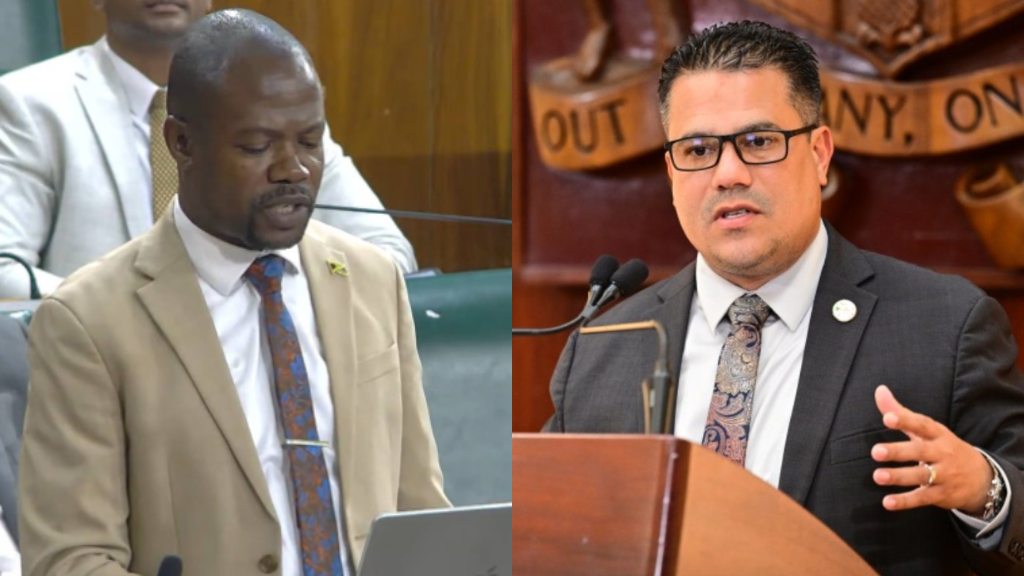
    KINGSTON, Jamaica — A public dispute over the primary driver of mangrove degradation in Jamaica has erupted between the nation’s opposition and ruling government, with opposition climate spokesperson Omar Newell calling out Environment Minister Matthew Samuda for misleading claims that contradict the government’s own official national planning document.

    The controversy stems from comments Samuda made last Friday at a Rotaract District 7020 Conference held at the Ocean Coral Spring Resort in Trelawny. First reported by the Jamaica Observer on June 15, Samuda asserted that the single largest threat to Jamaica’s mangrove ecosystems is illegal tree harvesting for firewood and charcoal production. He went on to argue that poverty-driven cutting, rather than residential or commercial development projects, is responsible for the majority of the country’s mangrove forest degradation. “If you don’t reduce poverty, mangroves become charcoal, and that’s where we have significant degradation of our mangrove forest — not from housing developments or commercial developments,” Samuda stated.

    In an official statement released Wednesday, Newell, the Opposition Spokesman on Environment and Climate Resilience, pushed back against Samuda’s framing. While he explicitly affirmed that illegal mangrove cutting is illegal and requires targeted enforcement, Newell argued that the minister’s claims directly contradict findings laid out in the government’s own *National Mangrove and Swamp Forest Management Plan 2023–2033*.

    Newell emphasized that the timing of Samuda’s comments is particularly troubling in the wake of Hurricane Melissa, a recent storm that underscored the critical role mangroves play in shielding Jamaica’s coastal communities from storm surge, extreme wind, and coastal erosion. “Jamaicans understand better than ever that mangroves are not simply trees along the coastline. They are part of our national defence against climate disasters,” Newell noted.

    Citing data from the national management plan, Newell explained that approximately 19.56% of all recorded mangrove loss in Jamaica is linked to three key development sectors: tourism, commerce, and transportation. He stressed that the data identifying tourism development as the leading cause of mangrove depletion is not opposition-generated propaganda, but a formal finding from an official government document that Minister Samuda and his department have full access to.

    Newell also highlighted a striking context to Samuda’s remarks: the comments were delivered at a resort development that itself cleared healthy mangrove ecosystems during its construction phases. He argued that Samuda’s framing disproportionately shifts public blame onto low-income Jamaicans who rely on mangrove harvesting for basic livelihoods, while letting large-scale development projects — the officially documented top driver of loss — avoid adequate public scrutiny.

    “Environmental accountability cannot be reserved for the poor while the larger drivers of environmental degradation receive less scrutiny,” Newell said. He added that as the custodian of most of Jamaica’s forested wetland areas, the Jamaican government has a fundamental responsibility to ground public statements and policy in empirical evidence, not selective storytelling.

    Mangroves are widely recognized as one of Jamaica’s most valuable natural assets for climate resilience, buffering coastal populations from the worsening impacts of climate change that include more intense tropical storms and rising sea levels. Newell stressed that effective mangrove protection requires equal accountability for all sources of destruction, regardless of economic or political influence. “Whether the threat comes from illegal cutting or from large-scale development, the standard must be the same,” he said.

    To resolve the public confusion created by Samuda’s comments, Newell is calling on the minister to issue a formal clarification of his remarks and publicly confirm the official findings laid out in the *National Mangrove and Swamp Forest Management Plan 2023–2033*. This step, Newell argued, would ensure that national discussions about mangrove protection are guided by factual evidence rather than misleading, selective narratives that disproportionately burden the most vulnerable groups in Jamaican society.

    “Jamaicans deserve an environmental policy that follows the facts. We cannot ignore the findings of our own national management plan while placing disproportionate blame on those with the least economic power in our society,” Newell said. “If we are serious about protecting our mangroves, we must be equally serious about confronting the principal documented causes of their destruction.”

  • Officials’ underestimated Power Outage Severity

    Officials’ underestimated Power Outage Severity

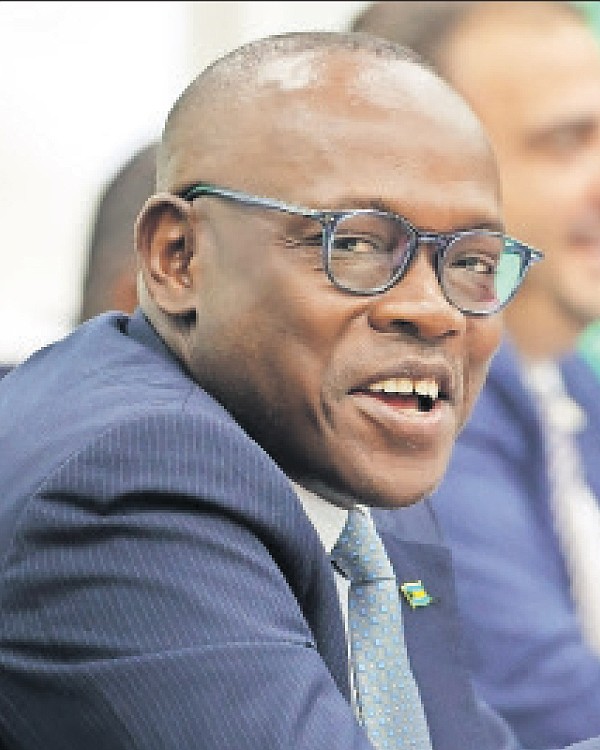
    Bahamas Energy Minister JoBeth Coleby-Davis publicly admitted on Wednesday that government regulators significantly underestimated the scope and severity of widespread power outages that have disrupted residential and commercial operations across the country through the early summer months.

    Speaking directly to reporters outside the Bahamas Power and Light (BPL) Big Pond substation, Coleby-Davis traced the ongoing disruptions to unforeseen delays to critical transmission and distribution network upgrades. The multi-million dollar modernization project was initially scheduled for full completion by the end of May, but progress was halted for eight weeks following the fatal shooting of Cody Castillo, an employee of construction contractor Pike. This extended pushback forced BPL and the Bahamas Grid Company to continue infrastructure overhauls during the region’s annual extreme heat season, putting unexpected strain on already compromised sections of the national grid while key circuits are taken offline for retrofitting.

    “We didn’t expect it to be as bad as it has turned out to be for residents,” Coleby-Davis told reporters. “The record-breaking high temperatures we are seeing right now in June usually do not hit the Bahamas until August or September, a window when all this work would have already been wrapped up. Sometimes, unforeseen events completely upend even the most carefully laid plans.”

    Coleby-Davis explained that one of the biggest challenges of the delayed timeline has been rolling, unpredictable outages across different regions of the country. With work spilling into the hot summer season, many communities that normally rely on two parallel power circuits are currently operating on just one to allow crews to complete upgrades. This reduced capacity, paired with earlier-than-usual extreme heat, has created far more disruption than officials initially projected.

    Despite the ongoing inconvenience, the minister emphasized that the project is now 95 percent complete, with only a few additional weeks of work required before the upgrades are finalized. She warned the public to prepare for continued intermittent disruptions over that period, but framed the short-term pain as a necessary investment in long-term grid reliability.

    “These temporary outages are part of building a far more resilient power system that can better withstand future disruptions from extreme weather and other incidents,” she said.

    Coleby-Davis’s comments came just hours after the Ministry of Energy released an official statement acknowledging widespread public frustration with the ongoing outages, particularly during the early summer heat. The ministry clarified in the statement that the national power grid actually has sufficient generation capacity to meet current peak demand, but the reconfiguration of the grid for upgrade work has stretched distribution networks beyond their normal limits.

    “It’s much like plugging too many appliances into a single circuit in your home,” the statement explained. “The electricity is there to meet demand, but the pathway delivering it to end users is pushed beyond its normal operating capacity.”

    Coleby-Davis echoed this explanation, noting that most unplanned outages stem from system overloads on reduced distribution capacity, not a shortage of power generation. “When we plan outages, we share notice with the public well in advance,” she said. “But when we have an overload, it’s like a tripped circuit breaker in your home: we have to reduce the load manually to bring service back online, and we are working every day to minimize these unplanned events.”

    Officials also provided an update on work at the Fire Trail Road substation, where crews have finished installing a new transformer and are on track to complete cable installation and commissioning within four days. Once the new transformer is energized, the substation will operate with two units, boosting overall capacity, improving load distribution, and strengthening reliability for customers in the surrounding area.

    BPL Executive Chairman Christina Alston called the newly upgraded Big Pond substation a “historic” and “world-class” facility, part of a $130 million comprehensive grid modernization package. “This is a monumental infrastructure project that will serve this island for decades to come,” Alston said. “All of the most critical transmission lines serving New Providence will route through this substation. If there is an unexpected event — a lightning strike, a tropical weather system, any kind of grid anomaly — the substation’s automated switches will redirect power flow automatically to keep service online. That is exactly what grid reliability looks like, and this project will go a long way toward cutting down on long-term outages across the island.”

  • Country about 300 teachers short but too many parents ‘disengaged’

    Country about 300 teachers short but too many parents ‘disengaged’

    Nassau, Bahamas – Amid growing public discourse over systemic flaws in the country’s education sector, Bahamas Education Minister Chester Cooper has pushed back against the decades-old perception that Bahamian students collectively earn a “D average”, labeling the pervasive stereotype both factually unfounded and deeply damaging to the nation’s youth. During his address to the ongoing budget debate, Cooper also pulled back the curtain on a critical unaddressed challenge: the country currently faces a shortage of roughly 300 teachers across multiple academic and vocational disciplines.

    Cooper emphasized that there is no statistically valid method to calculate a uniform national grade average for all Bahamian students, even as he acknowledged the widespread label has become a common shorthand for public frustration with longstanding shortcomings in the education system. Rather than focusing exclusively on student test performance, Cooper outlined that the Davis administration’s core mission extends far beyond boosting exam pass rates. The government’s goal, he explained, is to cultivate engaged citizens who possess strong literacy skills, critical thinking capabilities, and effective communication tools to build successful careers and contribute to national development.

    “We have capable young people, many of whom an outdated system has not yet unlocked,” Cooper told lawmakers during his budget contribution. “So, we intend to stop grading only the students, and start grading the system that is meant to serve them, and we will be measured on whether we fix it.”

    The sweeping reform agenda Cooper laid out is backed by a $383.6 million recurrent budget allocation to the Ministry of Education, a commitment the government says reflects its priority of addressing deep-rooted weaknesses in the sector. Cooper did not shy away from acknowledging systemic failures: he admitted that too many Bahamian students are not reading at grade level, struggle to master core mathematics concepts, and graduate secondary school without the technical and soft skills that local employers demand. He also pointed to low parental engagement as a persistent barrier to improvement, noting that many caregivers remain disconnected from their children’s educational progress.

    Even amid these challenges, Cooper struck a confident tone about the country’s ability to deliver meaningful change. “The Bahamas is capable,” he said. “We are not without talent, ideas or resources. What we must bring now is even more focus, more discipline, more urgency, more accountability, more engagement and more partnership. And a willingness to measure success not by speeches, not by photo ops, but by outcomes.”

    A top policy priority for the ministry in the coming year will be building robust systems to track post-graduation outcomes and measure workforce readiness among leaving students. While the ministry will continue its core mandate of issuing academic credentials and preparing young people for the workforce, Cooper stressed that the country must do more to equip graduates to contribute meaningfully to national economic and social life.

    One of the most significant long-term reforms under consideration is the introduction of three distinct secondary school diploma pathways, set to launch in the 2027 academic year. The new framework aligns with international best practices, designed to raise the national secondary graduation rate to 85 percent by 2030 while offering students flexible routes to success that uphold rigorous academic standards. Under the plan, students will be able to select a diploma track that matches their individual strengths, interests and career goals: an academic diploma with an honours distinction for high-achieving students, a vocational diploma focused on career and technical skills, and a specialized diploma for students receiving special education support.

    Turning to immediate operational challenges, Cooper reaffirmed the government’s commitment to resolving the national teacher shortage ahead of the upcoming school year. He added that the ministry’s top near-term priority is ensuring all schools are fully prepared for reopening, with all necessary campus repairs completed and long-running infrastructure issues resolved. To end the recurring cycle of last-minute emergency repairs every summer, Cooper said the ministry will build out its own in-house maintenance capacity, eliminating the wait for budget allocations that delays critical work ahead of the fall term.

    “Schools should not have to wait until June and then July for budget drawdowns to fix what breaks for September; stronger internal maintenance capacity and process is how we end that cycle,” he explained.

    In a major announcement for technical education in the country, Cooper revealed plans to construct a new, purpose-built campus for the Bahamas Technical and Vocational Institute (BTVI). The institution has long outgrown its existing facilities, and Cooper noted that it urgently requires a modern, fit-for-purpose campus to meet growing student demand. The government has already identified a 30-acre plot of land adjacent to Government High School as the proposed site for the project, and has secured $10 million in financing to advance initial planning and design work.

    “Our long-term vision is to create a world-class technical education campus that will serve thousands of students annually and become the centerpiece of technical and vocational education in The Bahamas,” Cooper said. “The full development of this campus is expected to represent an investment of approximately $250 million over several phases.”

  • Arson displaces forty residents

    Arson displaces forty residents

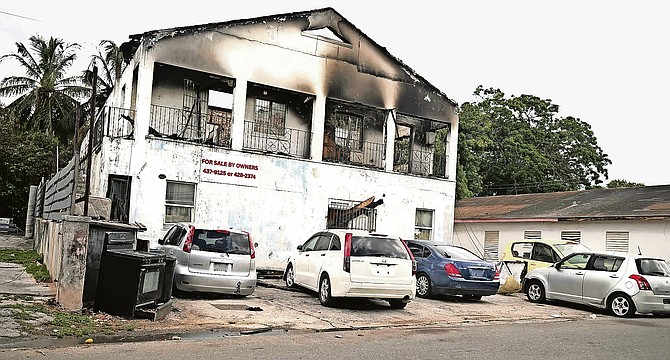
    On a Monday afternoon, a residential fire traced back to a domestic altercation completely destroyed a seven-unit two-story apartment building on Infant View Road in Nassau, leaving approximately 40 residents homeless and a 39-year-old woman in police custody facing suspicion of starting the blaze.

    Emergency response teams received the distress call shortly before 3 p.m., with three fire units deployed immediately to the scene. When firefighters arrived, aggressive flames had already engulfed much of the stone structure. Crews worked rapidly to contain the fire and prevent it from spreading to adjacent properties, eventually extinguishing the blaze before additional structures were threatened. The upper floor of the building was completely gutted by flames, while lower-level units suffered extensive damage from heat, smoke and water used to douse the fire. Remarkably, no physical injuries were reported among residents or first responders.

    Preliminary investigations by local law enforcement have outlined a clear timeline of events leading up to the disaster. Prior to the fire breaking out, witnesses recorded a heated argument between a male and female believed to be in a romantic relationship. Multiple witnesses stated they observed the female suspect carrying a plastic bottle filled with an unidentified brown liquid shortly before the blaze. Flames were first spotted originating from the suspect’s second-floor apartment in the southeastern corner of the building, and the suspect was later seen fleeing the area west along Infant View Road before being taken into police custody. Of the seven units in the complex, three were occupied by the suspect’s extended family members.

    For many of the displaced residents, the disaster came at a devastatingly pivotal moment. Among those who lost nearly all their possessions is 32-year-old Robin Pierre, a mother of three who had lived in the building for 15 years. Just weeks before she was set to begin a new career as a nurse intern at Nassau’s Princess Margaret Hospital after graduating from the University of The Bahamas nursing program, the fire claimed everything her family owned.

    “We lost cash, all our clothing, critical personal identification documents, every essential household item – our stove, refrigerator, living room furniture, mattresses, everything,” Pierre explained in an interview with The Tribune. “We couldn’t get in to save even a single thing.”

    Despite the overwhelming loss, Pierre emphasized that she counts her family’s safety as the most important outcome. “My first thought was making sure all three of my kids got out unharmed. Once I confirmed everyone was safe, I was just relieved. No one got hurt, that’s what matters,” she said. “The things we lost are just material. They can be replaced. It will take time, but we can rebuild what we lost. Nothing is more important than all of us being okay.”

    Still, the timing of the fire has created significant setbacks for Pierre and her family, who rely on her as their primary breadwinner. Her parents, both senior citizens, live with the family, and her mother lives with a chronic medical condition that requires ongoing care. “All of my nursing scrubs, all of the professional supplies I need for my new job burned. My start date is right around the corner, and I have nothing. This set us back 10 steps, especially for me,” Pierre said. “I’m the one who provides for everyone, so now I have to figure out how we go from nothing to being stable again in just a couple of weeks.”

    Pierre noted that she has worked to stay resilient for her family, framing her role as the steady foundation everyone depends on. “I have to stay strong for all of them. If the person everyone looks to falls apart, what happens to the rest of us?” she said.

    Currently, Pierre and her family are staying in a cramped one-bedroom home with relatives, while they wait for formal assistance from the country’s Department of Social Services. Local community members have already stepped forward to donate groceries, clothing and basic necessities, and Pierre has launched a public appeal for additional support to help her family get back on their feet. A GoFundMe campaign has been set up with a modest target of $5,500, a goal Pierre says she set to avoid placing an undue burden on others.

    “I picked that number because I was being realistic. I just need help covering the first and last month’s rent and security deposit for a new place, and enough to get basic home essentials – a bed, a bedroom set, even secondhand items are fine,” she explained.

    The owner of the apartment building, which has been owned by his family since the 1980s, declined to provide further comment on the fire or the future of the property.

  • Women United blasts lack of funds for violence commission

    Women United blasts lack of funds for violence commission

    Bahamian women’s advocacy group Women United has publicly condemned the Davis administration for undermining the landmark Protection Against Violence Act it ushered into law, after revealing the newly seated Protection Against Violence Commission was completely left out of the 2026/27 national budget’s dedicated allocations.

    The organization’s president, Lisa Bostwick-Dean, confirmed that after a thorough review of the Draft Estimates of Revenue and Expenditure released by the Ministry of Finance, no line item explicitly earmarks funding for the commission – the central governing body created to bring the 2023 anti-violence law into active practice.

    When the Protection Against Violence Bill went through parliamentary debate in 2023, Prime Minister Philip “Brave” Davis positioned the commission as a critical coordinating body: it would unify national support services for violence survivors, oversee the rollout of a national strategic anti-violence plan, and hold direct control over funding for community-focused intervention programs. The law ultimately passed the national legislature in July 2023 and secured Senate approval a month later, but the body’s rollout faced significant delays.

    It was only in early 2026 that the commission was formally sworn in, with its appointment taking effect on February 1 and a public announcement made on March 2 – nearly three full years after the legislation was officially gazetted. Commission chair Marisa Mason-Smith told local outlet The Tribune shortly after the announcement that she aimed to have the body fully operational by May. To date, however, the commission still lacks a permanent headquarters, operating temporarily out of space donated by the Ministry of Social Services.

    For Women United, the omission of dedicated funding in the first budget released after the commission’s appointment casts serious doubt over the government’s stated commitment to addressing systemic violence. Bostwick-Dean pointed to the suspicious sequence of delays: the law passed in 2023, the core implementing body was seated only on the eve of a national election, and immediately after the vote, it was left without any financial resourcing in the governing administration’s budget.

    “This sequence of events suggests a troubling lack of genuine commitment to using the tools in the Act to assist in the fight against violence,” Bostwick-Dean said.

    Under the terms of the original law, the commission is tasked with leading a whole-of-nation response to violence by bridging gaps between government ministries, non-profit support service providers, and grassroots community organizations. The legislation was framed as a transformative step to expand protections for violence survivors, build a cohesive framework for support services ranging from emergency shelter to survivor advocacy, implement national data collection and monitoring, and deliver coordinated care to those affected.

    Women United warns that without a dedicated budget allocation, Bostwick-Dean’s ability to execute the commission’s legally mandated responsibilities will be severely limited. The body is required to develop a binding national strategic anti-violence plan, coordinate cross-sector support for survivors, verify that sufficient emergency shelter capacity exists across the country, and approve grant funding for local community violence intervention projects. The Protection Against Violence Act explicitly states that the commission’s operating funds must come from parliamentary appropriations, meaning it cannot legally or practically function without official budgetary allocation.

    “A Commission without funding is a Commission without capacity,” Bostwick-Dean emphasized. “It cannot appoint advocates for victims. It cannot liaise with shelters. It cannot support service providers. It cannot certify funding for community projects. It is, in effect, a shell.”

    The advocacy group stressed that violence against women and children remains an ongoing, unresolved public crisis in The Bahamas, and the commission is the only body mandated to deliver the multi-disciplinary, coordinated response the 2023 Act promised. Women United is calling on the Davis administration to immediately correct the oversight: either identify the existing allocation for the commission in the current budget draft, or reallocate funds from other government line items to ensure the body has the resources it needs to operate.

    Bostwick-Dean recalled that the Davis administration’s own 2026 Blueprint for Progress manifesto explicitly pledged to “fully resource and operationalise the Protection Against Violence Act.” “That promise must be kept,” she said. “The women and children of The Bahamas deserve nothing less.”

  • Hanna-Martin urges focus on local tourism spending

    Hanna-Martin urges focus on local tourism spending

    The Bahamas has continued its post-pandemic tourism rebound, hitting a new milestone in visitor arrivals through the first four months of 2026, according to the nation’s top tourism official. Speaking in the country’s House of Assembly on Wednesday, Tourism Minister Glenys Hanna-Martin unveiled the latest sector data and used the occasion to call for a fundamental reevaluation of how the country defines tourism success, arguing that raw arrival numbers no longer equal broad national prosperity.

    Between January and April, the archipelago recorded a total of 4.9 million visitor arrivals via both air and sea across all its islands, Minister Hanna-Martin confirmed. The figure represents a 13.9% increase compared to the same period in 2025, and an 88% jump over pre-pandemic levels recorded in 2019. Foreign air arrivals alone also outpaced prior benchmarks, growing 5.5% against 2018 numbers and 4.3% over 2025’s first four months.

    But the minister drew sharp attention to a stark imbalance in visitor spending that has long shaped the country’s tourism sector: the gap between mass cruise tourism and high-value stopover travel. Industry estimates show the average cruise passenger spends just $85 to $150 per visit, while the average overnight stopover visitor spends roughly $2,700 per trip. Even as cruise passengers account for 80% of all annual arrivals to The Bahamas, they contribute only around 20% of total tourism expenditure, figures Hanna-Martin called “stark” and impossible to ignore.

    “Many destinations have learned that increasing arrivals does not on its own increase prosperity,” the minister told legislators. “The Bahamas already attracts high-spending visitors, so the work before us is to maximize local capture of that spending.”

    Hanna-Martin outlined that the nation’s new tourism strategy will center on shifting focus from raw arrival growth to boosting four core outcomes: higher per-visitor expenditure, longer average length of stay, increased repeat visitation, and a larger share of total tourism revenue retained within local Bahamian economies. The strategy is built on five key pillars, including expanding tourism yield and local economic retention, improving airlift and international connectivity, developing climate-resilient tourism infrastructure, establishing digital tourism leadership, and ramping up investment in local workforce development.

    Addressing gaps in workforce participation, the minister emphasized that far too many Bahamian citizens remain locked out of higher-income positions across the tourism sector. Calling the current underrepresentation “insane,” she pledged that the government would prioritize targeted changes to expand access to these roles. “That must change and it will change,” she said.

    To address the cruise spending imbalance, Hanna-Martin announced that the government will soon launch formal discussions with major cruise lines and local industry stakeholders to revise current visitor patterns. The government’s goals include encouraging cruise passengers to spend time and money outside of restricted, cruise-controlled port areas, and marketing the nation’s leisure offerings to convert day-tripping cruise visitors into future overnight stopover guests.

    “The question we must keep asking is, how much value each visitor generates, and how much of every tourism dollar stays in the local economy,” Hanna-Martin said, framing the new approach as a long-overdue adjustment to build a more equitable and prosperous tourism sector for all Bahamians.