
FRANKFURT, Germany – A surprising supply chain hiccup hit sportswear brand Adidas this week, when massive fan demand for personalized World Cup jerseys of top German players left the company temporarily short of the single letter ‘V’, leaving popular custom shirts out of stock for a short window. The global sportswear giant, which currently serves as the official kit manufacturer for the German men’s national football team, confirmed Wednesday that the rush for printed shirts featuring star players Kai Havertz, Deniz Undav and Aleksandar Pavlovic entirely drained its inventory of the 22nd letter of the alphabet. “There were short-term shortages in the availability of the letter V,” a company spokesperson confirmed to AFP Wednesday. The good news for eager German football fans, however, is that the issue was addressed far faster than many expected. The spokesperson added that the temporary stock gaps “were quickly resolved” and that personalized tops featuring the letter ‘V’ would soon be back available for online orders. Earlier the same day, independent checks showed that attempts to purchase a personalized Havertz shirt through Adidas’ official e-commerce store returned an error message reading, “Sorry, we’re currently out of stock of the following characters: V.” By the end of the day, the customized jerseys were back up for purchase, priced at 170 euros, equal to approximately $198 USD. The unexpected letter shortage comes amid a major global tournament, where Adidas sees massive revenue from official merchandise sales. The company currently provides match kits for 14 of the 48 national teams competing in this year’s World Cup, and the tournament’s related merchandise typically delivers a significant boost to the brand’s annual bottom line. But this current partnership with the German national team is set to come to an end in a few years. Starting in 2027, Germany will switch kit suppliers from Adidas to American sportswear giant Nike, bringing a close to a working relationship that has stretched more than 70 years and covered four of Germany’s World Cup championship wins.
博客
-
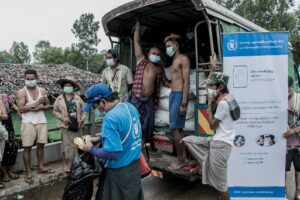
UN food aid agency welcomes US$800m donation from US
ROME, Italy – The United Nations’ World Food Programme (WFP), the world’s largest humanitarian agency tackling global food insecurity, has received a much-needed $800 million injection from the United States, the organization announced Wednesday. The new funding comes after the agency faced crippling funding reductions from major Western donors including both Europe and the U.S. that left it struggling to meet surging global demand for food assistance.
In an official statement, the WFP confirmed the fresh contribution will enable the organization to maintain life-saving food and nutrition support operations that will reach over 38 million vulnerable people spread across at least 37 countries.
Earlier this month, the Rome-based global aid body warned it was confronting a catastrophic funding gap just as global need for emergency food assistance hits record highs. Data from the agency shows total contributions dropped sharply from $10 billion in 2023 to just $6 billion in 2024, a 40% decline that stretched its operational capacity to breaking point.
The funding crunch has unfolded against a backdrop of cascading global crises that have drastically increased both the scale of need and the cost of delivering aid. In particular, the ongoing conflict in the Middle East has created new logistical disruptions that have pushed up delivery costs for aid missions across multiple regions, straining already stretched budgets.
Carl Skau, WFP Acting Executive Director, emphasized the timeliness of the U.S. contribution, noting that “at a time when needs are outpacing resources, this generous support from the United States is coming at a critical moment.”
Looking ahead, the WFP has set a target to reach 110 million people facing acute food insecurity around the world in 2025. To meet that ambitious, life-saving goal, the agency estimates it will require a total of $13 billion in total contributions – a target that remains far out of reach despite the new $800 million commitment.
-
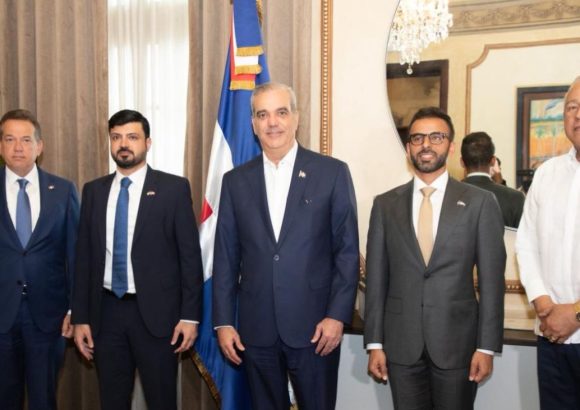
Dominican Republic to host World Governments Summit Regional Dialogue again in 2026
Santo Domingo — The Dominican Republic has been selected to host the Latin America and Caribbean regional edition of the World Governments Summit (WGS) for the second consecutive time, with the high-profile gathering set to kick off at Cap Cana’s The St. Regis Cap Cana Resort on November 20 and 21, 2026. This landmark event marks only the second occasion in the summit’s history that it will be held outside its permanent home in Dubai, a distinction that underscores the Caribbean nation’s growing regional influence.
President Luis Abinader made the official announcement, revealing that organizers project the 2026 summit will draw nearly 400 high-level attendees. The participant list is expected to include sitting heads of state, cabinet-level ministers, senior leadership from leading global intergovernmental organizations, and top C-suite executives from major international businesses. Beyond facilitating cross-sector dialogue, Abinader emphasized that the summit will solidify the Dominican Republic’s standing as the primary regional hub for cutting-edge innovation and public sector modernization.
Víctor “Ito” Bisonó, the Dominican Republic’s Minister of Industry and Commerce, shared that preliminary planning is already well underway. Event organizers have begun extending invitations to government leaders across Latin America and the Caribbean, with a packed agenda centered on pressing shared priorities. Key discussion themes will range from forward-thinking governance models and emerging technology adoption to inclusive economic growth, sustainable tourism development, climate action, and expanding impactful public-private partnerships across the region.
Mohamed Al Sharhan, Managing Director of the World Governments Summit Organization, explained the decision to reaward the hosting rights to the Dominican Republic. He cited the nation’s consistent, unwavering commitment to advancing innovation and driving transformative change within its public institutions as a core factor in the selection. Al Sharhan added that the 2026 summit will do more than advance regional dialogue: it will deepen the longstanding strategic ties between the Dominican Republic and the United Arab Emirates, while further positioning the Caribbean country as the primary gateway for cross-regional cooperation and global knowledge exchange in the Latin America and Caribbean space.
Attendees will take part in a structured program of activities, including opening plenary sessions, closed-door ministerial roundtables, and interactive strategic workshops focused on addressing the future of governance and pressing shared global challenges.
-
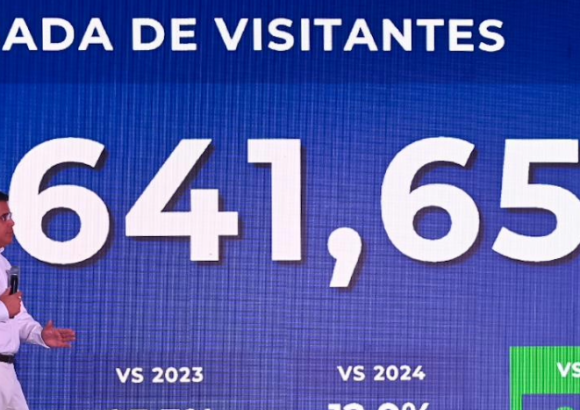
Dominican Republic welcomes 5.6 million visitors in first five months of 2026
The Dominican Republic’s tourism sector has sustained its positive upward trajectory through the first five months of 2026, official data from the nation’s top tourism official confirms. Tourism Minister David Collado announced that the Caribbean destination welcomed a total of 5.64 million international visitors between January and May 2026, marking an 8% year-over-year increase compared to the same period in 2025.
Breaking down the visitor figures, air travel accounted for the largest share of arrivals, with 4.15 million travelers entering the country via commercial and private flights — a 10.8% jump from 2025’s first five months. Cruise tourism remained a steady secondary stream, contributing nearly 1.5 million additional visitors to the annual total.
The robust growth trend held strong into the final month of the reporting period: Collado confirmed that May 2026 alone saw 744,045 air arrivals, a 10.4% increase compared to May 2025 that outpaces growth rates recorded in pre-2025 years as well.
When looking at source markets, the United States retains its position as the Dominican Republic’s largest supplier of tourists, accounting for 41% of all international visitors to the country in the 2026 period. Canada follows as the second-largest source market at 21%, with South American nations Argentina and Colombia rounding out the top four at 7% and 5% respectively.
In terms of airport infrastructure distribution, Punta Cana International Airport — the primary gateway for leisure travelers to the Dominican Republic’s eastern beach resorts — handled the vast majority of air arrivals, processing 66% of all air travelers between January and May. Las Américas International Airport, Cibao International Airport, and Puerto Plata’s Gregorio Luperón International Airport followed in volume, respectively.
Beyond raw arrival numbers, Collado highlighted strong performance across key industry indicators. Average hotel occupancy across the country hit more than 79% between January and April 2026, while overall visitor satisfaction scored 4.5 out of 5 in official surveys. Strikingly, 93% of surveyed tourists stated they would plan a return trip to the Dominican Republic, and 60% confirmed they would actively recommend the Caribbean destination to friends, family, and social media contacts.
-
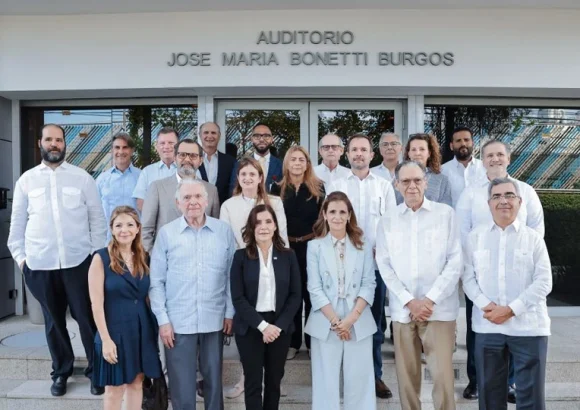
U.S. Ambassador tours Grupo SID facilities, highlights bilateral trade opportunities
In a recent diplomatic and business engagement in Santo Domingo, United States Ambassador Leah Francis Campos toured the operational facilities of leading Dominican conglomerate Grupo SID, aiming to gain first-hand insight into the group’s rapid expansion, advanced industrial capabilities, and far-reaching contributions to the Dominican Republic’s national economic growth.
During the site visit, senior Grupo SID executives walked Ambassador Campos through the conglomerate’s cutting-edge production and logistics infrastructure, which underpins the company’s cross-border operations spanning 22 nations across the globe. As one of the Dominican Republic’s most established and diversified business groups, Grupo SID brings nearly nine decades of operational history to its varied portfolio, which spans consumer goods, food production, and even professional sports. The group owns well-known local brands including MercaSID, Induveca, and Induspalma, alongside the popular Dominican Winter League baseball franchise Leones del Escogido. To date, it supports more than 5,400 direct employment positions across the country, while managing a network of 20 dedicated manufacturing plants and 11 strategically located distribution centers.
In her remarks during the visit, Grupo SID Chief Executive Officer Ligia Bonetti emphasized the critical role of the United States as a core strategic partner that has enabled the conglomerate’s sustained global expansion. She reaffirmed Grupo SID’s longstanding dedication to driving innovation, maintaining operational excellence, and nurturing reciprocal, mutually beneficial commercial partnerships between the two nations.
The meeting also brought the group’s deep-rooted commercial connections to the U.S. market into sharp focus. Currently, Grupo SID’s products are stocked at more than 1,200 retail outlets across 14 U.S. states and territories, including over 200 locations within major retail chain Walmart. Beyond retail access, Grupo SID has established long-term collaborative partnerships with a roster of major U.S.-based global brands, including consumer goods giant Kimberly-Clark, food conglomerates Kraft Heinz and General Mills, confectionery leader Hershey’s, e-commerce and tech trailblazers Amazon and Microsoft, and supply chain technology firm Blue Yonder. These partnerships have been a key driver of the group’s ongoing innovation and enhanced competitiveness in global markets.
Beyond showcasing Grupo SID’s operations, the visit provided a valuable high-level platform for open discussions on expanding trade, attracting additional cross-border investment, and deepening overall commercial cooperation between the Dominican Republic and the United States.
-
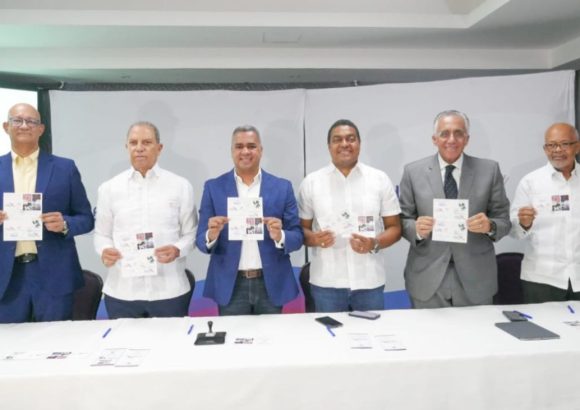
INPOSDOM launches commemorative stamps for Santo Domingo 2026 Central American and Caribbean Games
SANTO DOMINGO — A new piece of regional sports history has been immortalized in print, as the Dominican Postal Institute (INPOSDOM) partnered with the Organizing Committee of the XXV Central American and Caribbean Games Santo Domingo 2026 to launch an official series of commemorative postage stamps honoring the 100-year anniversary of the oldest continuous multi-sport event in the Central American and Caribbean region.
The 2026 iteration of the games, scheduled to run from July 24 to August 9, will gather thousands of elite competitors from across the region to compete for top honors. Ahead of the opening ceremony, the newly unveiled stamp collection serves as an early celebration of the milestone event and the values it has upheld for a century.
Speaking at the unveiling, INPOSDOM Director Erick Guzmán emphasized philately’s unique role as a keeper of collective memory and a platform to amplify events of national and regional importance. He framed the new stamp release as more than a commemorative product: it is a tribute to the core values the games embody — athletic excellence, disciplined dedication, and cross-border unity across Central America and the Caribbean.
Leadership from both the local organizing committee and regional sports governing body echoed Guzmán’s praise for the initiative. José P. Monegro, president of the Santo Domingo 2026 Organizing Committee, and Luis Mejía Oviedo, head of Centro Caribe Sports, jointly described the stamp project as a lasting tangible legacy that honors 100 years of sporting integration and warm friendship between all participating nations.
Designed by architect Alejandro Vignieri, the commemorative release comprises 18,000 individual stamps and 2,000 limited-edition souvenir sheets. Each design showcases sporting disciplines set to feature in the 2026 games program, and the collection as a whole underscores the Dominican Republic’s longstanding commitment to advancing regional sport and cross-border cooperation.
When the games kick off next year, the Dominican capital will welcome approximately 6,225 athletes from 37 member countries. Over the course of 16 days of competition, these athletes will compete across 40 distinct sports and 56 disciplines, vying for a total of 1,555 medals. The event will transform Santo Domingo into the premier sporting hub of the Central American and Caribbean region for the duration of the games.
-

Barbados hosts high-level food systems investment forum
BRIDGETOWN, Barbados — High-level agriculture ministers from across the Caribbean have gathered to advance a groundbreaking capital-first strategy for overhauling the region’s food systems, repositioning the agricultural sector as a strategic, high-potential asset class for global and local investors.
Hosted by the United Nations Barbados and the Eastern Caribbean office, the one-day Food Systems Investment Forum held Tuesday brought together senior regional government representatives, leaders from international financial institutions, private sector investors, and global development partners under the central theme “Mobilising Equity Capital for Resilient Food Systems in the Caribbean.”
Following the conclusion of the forum, officials announced the official launch of a new UN-curated Deal Book, which showcases 320 million U.S. dollars worth of fully vetted, investment-ready opportunities spanning every segment of the Caribbean’s food systems. The curated resource is designed to sustain the deal-making momentum built during the event and create structured connections between institutional investors and regional food and agriculture enterprises.
In his opening address titled “From Policy to Capital Deployment,” Simon Springett, UN Resident Coordinator for Barbados and the Eastern Caribbean, emphasized the critical urgency of closing the persistent financing gap holding back Caribbean food systems and unlocking new streams of private equity. Springett outlined long-standing structural challenges facing the sector: overall capital flows remain misaligned with development needs, most financing is limited to concessional loans or donor grants, and long-term patient equity capital is largely absent from the market. Compounding this issue, he noted that most private regional capital is currently diverted to non-productive sectors such as real estate, rather than flowing into the food economy that supports local livelihoods and food security.
Springett called on Caribbean national governments to strengthen regulatory and policy environments to attract investment, while urging private investors to recognize the growing pipeline of viable opportunities across agriculture, fisheries, food processing, and cold chain logistics. “The opportunity is here. Capital exists. But they are not connected in a structured and meaningful way,” he explained. “This forum is designed to change that…through a different kind of conversation — one that starts with capital: how investors assess risk, what makes a project bankable and what actually unlocks deals.”
John Morris, Chairman of International Asset Management and Managing Partner of the regional CaribGROW Fund, echoed the call for expanded equity participation, noting that well-managed Caribbean food businesses with proven revenue streams and defensible market positions are fully capable of delivering competitive financial returns. Drawing an analogy to the U.S. New York Knicks basketball team, Morris framed the challenge as a structural one, not a lack of viable opportunity: “The challenge is not the opportunity, the challenge is capital.”
Morris compared regional capital markets to a team sport, where sustained success depends on diverse stakeholders collaborating to build a robust ecosystem. He acknowledged that multilateral institutions, development finance bodies, regional banks, and national governments have already laid critical groundwork for investment, but emphasized that equity remains the missing core component. “Equity is where ownership, wealth creation and wealth retention live,” he said, warning that without access to equity capital, local businesses cannot scale and remain permanently vulnerable to foreign acquisition. By contrast, he explained, his fund’s model of taking minority stakes allows local families and stakeholders to retain control of their businesses, keeping generated wealth within the Caribbean region.
Barbados’ Minister of Agriculture, Food and Nutritional Security Dr. Shantal Munro-Knight highlighted the widespread shared commitment to action among all participants, noting that the conversation around Caribbean food systems has evolved far beyond a narrow focus on production alone. “This is an acknowledgement that we have come here to do something big and that is important. I also see in the room, people of like minds who I do not have to convince of the importance of the conversation,” she said.
Framing food systems as one of the most consequential economic and development opportunities for the entire Caribbean, Munro-Knight urged both public sector leaders and private investors to recognize the sector’s transformative potential. “If you want an equation that answers one of the most fundamental challenges facing this region, our food security, while also enabling social and structural economic transformation, then you’re in the right place at the right time,” she stated.
Drawing a parallel to the groundbreaking Bridgetown Initiative for climate finance, she stressed that “meeting the moment” requires innovative, equitable partnerships that center Caribbean voices as equal stakeholders and reimagine how investment capital is structured and delivered. She pointed to large-scale, investable projects across the sector including logistics infrastructure, agro-processing facilities, cold chain networks, digital agricultural transformation, and agritech innovation. “These are investable opportunities, big investable opportunities,” she said, issuing an open invitation to private sector partners to collaborate with regional governments. “We’ve come to the table, meet us with your capital.”
Unlike traditional industry conferences that focus only on policy dialogue, the 2024 Food Systems Investment Forum was designed to drive tangible action, facilitating direct one-on-one engagement between investors and government leaders, showcasing pre-vetted investment opportunities, and advancing active transaction negotiations and cross-sector partnerships. Attendees took part in investor-focused roundtables, thematic breakout sessions, and bilateral deal meetings all aimed at accelerating capital deployment and scaling initiatives to build more climate and food-resilient regional food systems. By centering equity capital, blended finance structures, and market-driven solutions, the forum seeks to unlock the full economic and resilience potential of Caribbean food systems while advancing the United Nations’ Sustainable Development Goals across the region.
-

President Luis Abinader congratulates Karl-Anthony Towns after historic NBA championship
On Tuesday, Dominican Republic President Luis Abinader hosted a virtual congratulatory call from the National Palace with Dominican-born NBA superstar Karl-Anthony Towns, fresh off Towns’ key role in securing the New York Knicks’ first NBA championship title in 51 years. Sports Minister Kelvin Cruz also participated in the conversation, which centered on Towns’ lasting influence as a public figure and his years of commitment to elite athletic excellence.
During the warm exchange, President Abinader emphasized that Towns’ landmark achievement has sparked widespread national pride across the Dominican Republic, praising the player’s relentless discipline and dedication that served as the foundation of his championship run. He highlighted how Towns’ success sets a powerful example for young Dominican athletes chasing professional sports dreams.
Towns expressed sincere gratitude for the presidential recognition, opening up about what it meant to him to represent his Dominican heritage on the sport’s most high-profile global stage. The 2024 postseason marked the strongest performance of Towns’ entire NBA career, with the big man posting standout per-game averages of 15.9 points, 10.6 rebounds, 4.9 assists, 1.3 blocks, and 1.3 steals. He also shot an impressive 45.6% from three-point range throughout the playoffs and logged a team-leading plus-minus of +258 across the Knicks’ championship run.
In a major announcement during the call, Towns shared his plan to bring the coveted Larry O’Brien NBA Championship Trophy back to the Dominican Republic, so that local basketball fans can join in celebrating the historic title. Both President Abinader and Minister Cruz enthusiastically embraced the planned visit, reaffirming that the entire Dominican nation takes immense pride in the success of a player with deep Dominican roots.
-
World Cup fever grips Corporate Area
Across Jamaica’s Corporate Area, the 2026 FIFA World Cup has ignited a nationwide wave of football passion, transforming ordinary public spaces into packed hubs of excitement where the roar of cheering fans, the clink of beer mugs, and a sea of national team jerseys from across the globe have become the new norm. As the tournament enters its most anticipated phases, local hospitality and entertainment venues have opened their doors to hundreds of avid supporters, who gather to share the thrill of every match alongside like-minded fans. With dozens of successful watch parties already held in the opening weeks of the competition, event organizers across the country confirm that crowd sizes and energy levels are only set to rise as the tournament progresses toward its final stages.
One of the most popular gathering spots for fans is Usain Bolt’s Tracks and Records (UBT&R), where thousands of football enthusiasts have already turned out to catch the tournament’s biggest headline match-ups. Jizelle Cowan, Marketing Manager at UBT&R, noted that the venue has lived up to its reputation for delivering premium sporting viewing experiences, with nonstop energy from kickoff to the final whistle. “Our patrons have come to expect top-tier event experiences for every major sport we host, and this World Cup has been no exception,” Cowan explained. She highlighted that Brazil’s opening group stage match drew an especially large, passionate crowd, with an electric atmosphere that captured the unrivaled excitement that only a World Cup can bring. “We saw a fantastic turnout for the Brazil fixture on Saturday, and we’re only expecting crowds to grow as knockout rounds approach,” Cowan added. “We’re committed to airing every high-demand match, so we encourage patrons to follow our social media channels for the latest schedule updates.”
To elevate the match-day experience for visitors, UBT&R has launched a full slate of World Cup-exclusive promotions and offerings. Fans can purchase custom branded beer mugs, take advantage of discounted drink bucket specials, and enter prize giveaways through a partnership with leading local brewery Red Stripe. The venue has also rolled out a new limited-edition food menu, headlined by a signature sharing platter inspired by the World Cup’s three host nations: the United States, Mexico, and Canada.
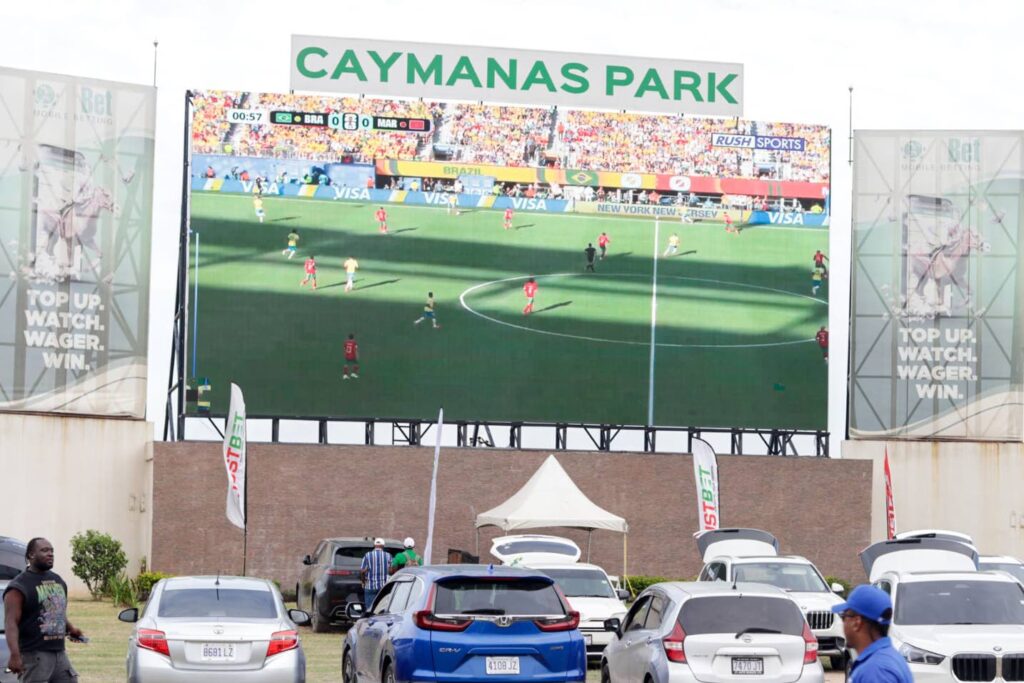
For fans seeking a one-of-a-kind open-air viewing experience, Caymanas Park—home to Jamaica’s largest outdoor screen—has been converted into a sprawling World Cup tailgate destination by Supreme Ventures Limited. Chloleen Daley-Muschett, Assistant Vice-President of Public Relations and Corporate Affairs at Supreme Ventures Limited, explained what sets the venue’s watch party series apart from other offerings across the island. “Our tailgate format gives fans full control over their experience,” Daley-Muschett shared. “You can drive right into the infield with your group, set up your own chairs, and bring your preferred food and drinks to enjoy while you watch the match on our massive screen.” For visitors who prefer not to bring their own refreshments, the venue has partnered with local vendors including Wisynco, Rum-Bar, and Kingston Jerk to keep a wide range of food and drink options available throughout every event.
To keep energy high beyond 90 minutes of football, organizers have added extra entertainment elements that run before kickoff, during match breaks, and after the final whistle. “We have live music running throughout the entire event, from pre-game build-up to post-match wrap-up,” Daley-Muschett told the Jamaica Observer. “After our opening Brazil match, the vibe was so good that crowds lingered for hours after the final whistle, playing dominoes and keeping the celebration going.”
The World Cup buzz extends far beyond these major venues, with popular spots across Jamaica—including 100, Island Vibes, Summit, Lucky Play Lottery Store, and Timber Lounge in Portmore—drawing consistent crowds of fans eager to cheer on their favorite teams in lively, communal settings. Even small community bars and local chill spots have reported steady, decent turnout throughout the tournament so far. Adding a new twist to the viewing experience, Palace Amusement has also joined the 2026 World Cup frenzy, screening selected high-profile matches at its Carib 5 and Sunshine Palace cinema locations.
With the group stage already delivering a string of unexpected, memorable moments and the high-stakes knockout rounds still on the horizon, organizers across Jamaica are gearing up for even larger crowds, bigger celebrations, and more unforgettable nights of world-class football as the tournament unfolds.
-
SCOTIA’S $54-B EXIT PROBLEM
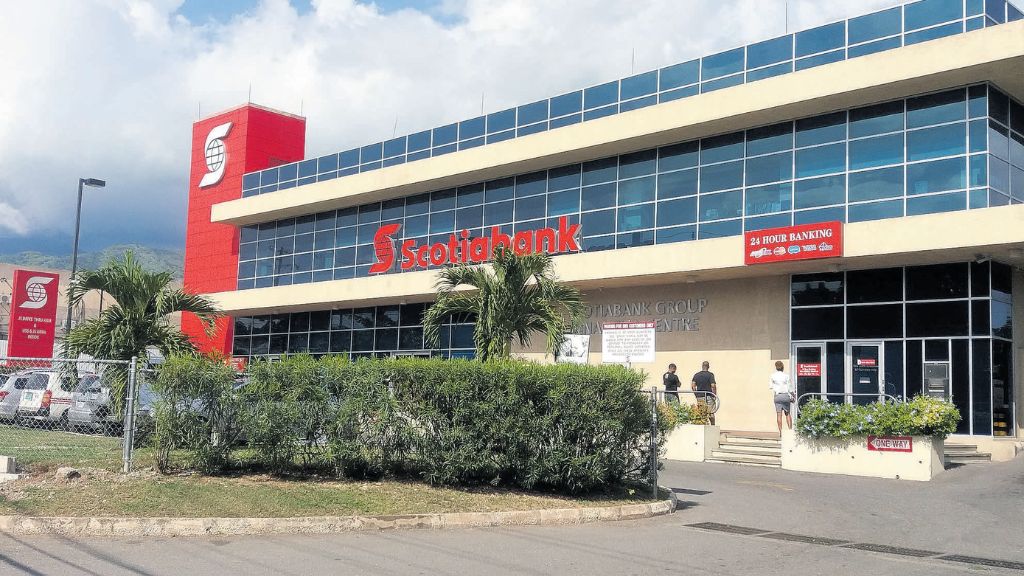
A proposed privatization of one of the Jamaica Stock Exchange’s (JSE) most prominent blue-chip companies is set to deliver a massive $54 billion cash windfall to Jamaican minority investors, but market analysts warn that filling the gap the banking giant would leave in portfolios and the broader exchange will be a far bigger challenge than deploying the new capital.
Scotiabank Caribbean Holdings Limited, which already controls a 71.78% majority stake in Scotia Group Jamaica Limited, has tabled a $61.50 per share offer to buy out all outstanding minority shares to take the dividend-paying banking group private. Based on the more than 878 million outstanding minority-held shares, the total payout to diverse stakeholders — from large institutional investors like pension funds and unit trusts to retail individual shareholders — would hit an estimated $54 billion.
Following the announcement, Scotia’s stock climbed 1.4% or 82 cents to close at $59.40 on Tuesday, still trading $2.10 below the proposed buyout price, putting the company’s total market valuation at roughly $184.8 billion. If the transaction wins approval from minority shareholders and Jamaica’s Supreme Court, Scotia will be delisted, removing one of the JSE’s largest and most liquid domestic financial stocks from an exchange that already has a limited pool of sizable, tradeable companies capable of absorbing large institutional investments.
Industry leaders say the flood of cash from the buyout is unlikely to be reinvested in a single replacement asset, with allocation varying based on individual investor mandates, risk tolerances and prevailing market returns. Richardo Williams, senior vice-president for asset management and head of Barita Fund Managers, explained that while the JSE may appear to have sufficient listed equities on paper, practical constraints narrow the options for large funds dramatically.
“The binding constraint is less likely to be the existence of listed equities and more likely to be investable capacity under investment mandate and risk limits,” Williams shared in emailed responses to *Jamaica Observer*, noting that regulatory and internal rules bar large funds from concentrating too much capital in a single company or industry. Funds also need enough publicly traded shares to absorb large investments without triggering sharp price spikes, meaning many existing listed Jamaican companies are too small, too thinly traded, or already overrepresented in institutional portfolios to replace Scotia’s capacity.
The core challenge, Williams emphasized, is replicating Scotia’s unique value proposition for most investors rather than just finding a single replacement stock. For decades, Scotia delivered a rare combination of consistent dividend income, solid exposure to Jamaica’s financial sector, a proven track record of profitability, and enough trading liquidity to accommodate large position entries and exits. Recreating that balance will require investors to spread their $54 billion in proceeds across multiple stocks, bonds and alternative assets.
The bank’s most recent financial performance underscores its strength: it reported $10.1 billion in net income for the six months ending April 30, up from $9.2 billion in the same period a year prior, and its board recently approved a second interim dividend of 45 cents per share.
Davie Martin, general manager for trading and treasury at JMMB Group, echoed the concern that Scotia’s departure will shrink viable options for investors prioritizing liquidity and regular dividend income. Last year, roughly 26.4 million Scotia shares traded hands, compared to 117 million for NCB Financial Group and 19.6 million for Sagicor Group Jamaica. Data shows that the top 10 shareholders of Scotia control more than 82% of the company, with most non-controlling stakes held by long-term holders like pension funds, leaving only a small portion of shares actively available for trading at any given time.
“If the deal goes through, then minority shareholders will have to seek appropriate alternative investment options, which could be difficult, especially in the sizes required by institutional investors,” Martin told *Business Observer*.
If a large share of the buyout proceeds stays within Jamaican equities, Williams warned, it could create upward price pressure on the small pool of remaining large-cap blue-chip stocks, increasing portfolio concentration in a handful of companies and pushing down dividend yields for new buyers unless those companies raise their payouts. Martin added that the current market environment of higher interest rates, global economic uncertainty, and muted domestic equity valuations has already pushed many investors toward fixed-income assets like government and corporate bonds, meaning a portion of the Scotia windfall is likely to flow into assets outside the domestic stock market rather than back into JSE listings.
The proposed delisting also raises a broader question about the JSE’s ability to replace major listed companies when they exit. Based on current market values, Scotia accounts for roughly 10% of the JSE Main Market’s total capitalization, meaning its exit would remove one-tenth of the market’s value if other prices hold steady. Over the past decade, 12 companies have been delisted from the JSE with a combined pre-delisting market valuation of roughly $123.67 billion — nearly 50% less than Scotia’s current $184.8 billion valuation. While the exchange added 16 new Main Market listings over that same period, none have approached Scotia’s size, liquidity and market role. Martin noted that based on the past two years of listing activity, a direct replacement of Scotia’s scale is unlikely to come to the JSE quickly.
In explaining the rationale for the deal, Scotiabank said taking the company private will boost capital and operational efficiency, allowing the group to respond faster to market opportunities, with no material changes to Scotia’s ongoing day-to-day operations in Jamaica. Martin noted that privatization deals typically follow similar logic: majority owners benefit from reduced public reporting requirements and greater flexibility to make long-term strategic decisions, and often move to buy out minority stakes when they believe the public market is undervaluing the business.
This rationale mirrors the 2018 privatization and delisting of Cable & Wireless Jamaica, where the controlling owner cited low trading volumes, reduced administrative and compliance burdens, and simplified group structure as core justifications for the buyout. While Scotia’s deal has a different structure, the underlying logic of full integration over retaining a public minority listing aligns with prior Jamaican privatization transactions.
Since the buyout announcement, Scotia shares have climbed steadily: jumping 7.78% or $4.22 to $58.43 the Friday after the announcement, adding 15 cents on Monday, and rising a further 82 cents to close at $59.40 on Tuesday. Williams advised shareholders to wait for full transaction documents and independent valuations to assess the fairness of the $61.50 offer against Scotia’s historical performance, balance sheet value, future growth prospects and dividend track record. Beyond valuation, he added, shareholders must weigh the certainty of an immediate cash payout against the potential long-term gains of retaining an ownership stake in the business.
With regulatory and shareholder approvals still pending, the immediate debate centers on whether the offer fairly values Scotia’s shares. For Jamaica’s national stock market, however, the bigger, longer-term question is what will fill the gap left by one of its most important listed companies, if any replacement can be found at all.