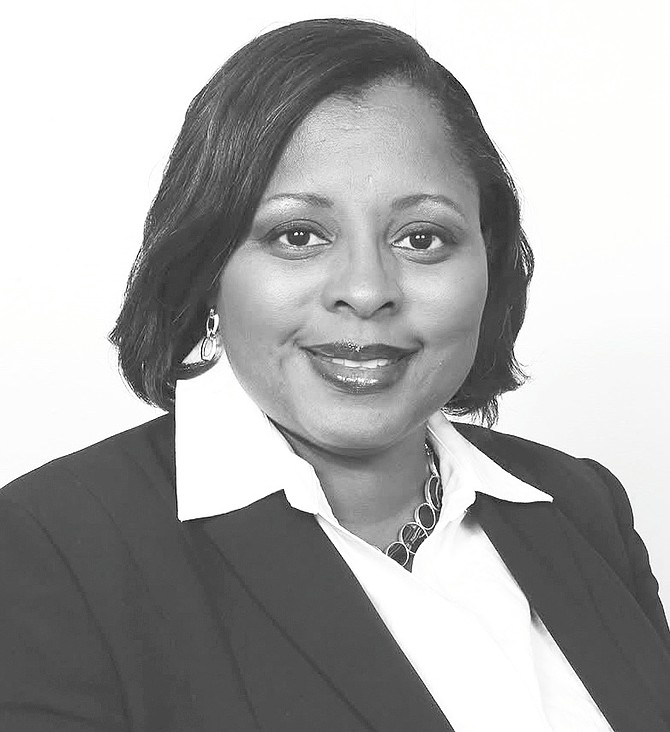
Bahamian women’s advocacy group Women United has publicly condemned the Davis administration for undermining the landmark Protection Against Violence Act it ushered into law, after revealing the newly seated Protection Against Violence Commission was completely left out of the 2026/27 national budget’s dedicated allocations.
The organization’s president, Lisa Bostwick-Dean, confirmed that after a thorough review of the Draft Estimates of Revenue and Expenditure released by the Ministry of Finance, no line item explicitly earmarks funding for the commission – the central governing body created to bring the 2023 anti-violence law into active practice.
When the Protection Against Violence Bill went through parliamentary debate in 2023, Prime Minister Philip “Brave” Davis positioned the commission as a critical coordinating body: it would unify national support services for violence survivors, oversee the rollout of a national strategic anti-violence plan, and hold direct control over funding for community-focused intervention programs. The law ultimately passed the national legislature in July 2023 and secured Senate approval a month later, but the body’s rollout faced significant delays.
It was only in early 2026 that the commission was formally sworn in, with its appointment taking effect on February 1 and a public announcement made on March 2 – nearly three full years after the legislation was officially gazetted. Commission chair Marisa Mason-Smith told local outlet The Tribune shortly after the announcement that she aimed to have the body fully operational by May. To date, however, the commission still lacks a permanent headquarters, operating temporarily out of space donated by the Ministry of Social Services.
For Women United, the omission of dedicated funding in the first budget released after the commission’s appointment casts serious doubt over the government’s stated commitment to addressing systemic violence. Bostwick-Dean pointed to the suspicious sequence of delays: the law passed in 2023, the core implementing body was seated only on the eve of a national election, and immediately after the vote, it was left without any financial resourcing in the governing administration’s budget.
“This sequence of events suggests a troubling lack of genuine commitment to using the tools in the Act to assist in the fight against violence,” Bostwick-Dean said.
Under the terms of the original law, the commission is tasked with leading a whole-of-nation response to violence by bridging gaps between government ministries, non-profit support service providers, and grassroots community organizations. The legislation was framed as a transformative step to expand protections for violence survivors, build a cohesive framework for support services ranging from emergency shelter to survivor advocacy, implement national data collection and monitoring, and deliver coordinated care to those affected.
Women United warns that without a dedicated budget allocation, Bostwick-Dean’s ability to execute the commission’s legally mandated responsibilities will be severely limited. The body is required to develop a binding national strategic anti-violence plan, coordinate cross-sector support for survivors, verify that sufficient emergency shelter capacity exists across the country, and approve grant funding for local community violence intervention projects. The Protection Against Violence Act explicitly states that the commission’s operating funds must come from parliamentary appropriations, meaning it cannot legally or practically function without official budgetary allocation.
“A Commission without funding is a Commission without capacity,” Bostwick-Dean emphasized. “It cannot appoint advocates for victims. It cannot liaise with shelters. It cannot support service providers. It cannot certify funding for community projects. It is, in effect, a shell.”
The advocacy group stressed that violence against women and children remains an ongoing, unresolved public crisis in The Bahamas, and the commission is the only body mandated to deliver the multi-disciplinary, coordinated response the 2023 Act promised. Women United is calling on the Davis administration to immediately correct the oversight: either identify the existing allocation for the commission in the current budget draft, or reallocate funds from other government line items to ensure the body has the resources it needs to operate.
Bostwick-Dean recalled that the Davis administration’s own 2026 Blueprint for Progress manifesto explicitly pledged to “fully resource and operationalise the Protection Against Violence Act.” “That promise must be kept,” she said. “The women and children of The Bahamas deserve nothing less.”