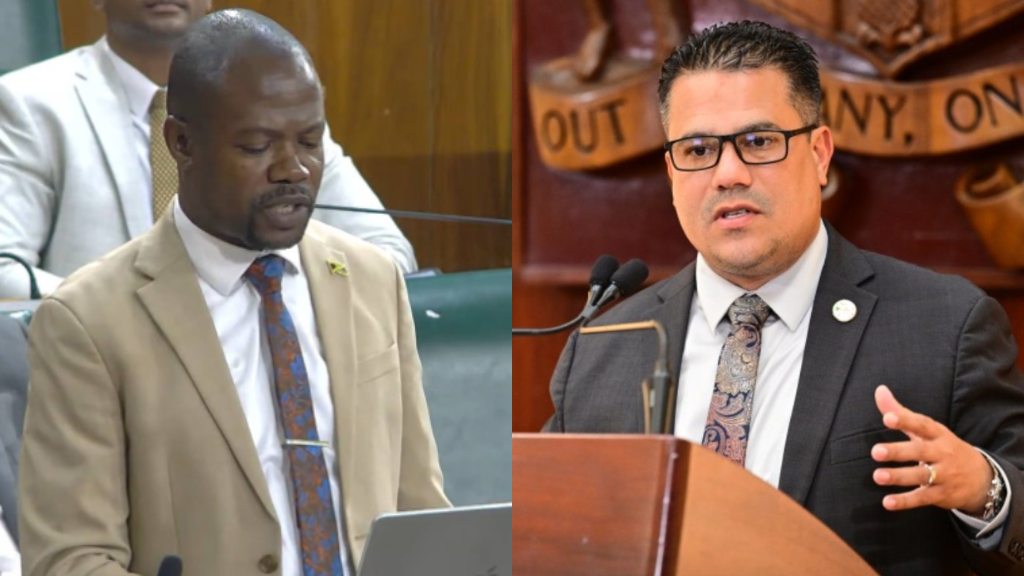
KINGSTON, Jamaica — A public dispute over the primary driver of mangrove degradation in Jamaica has erupted between the nation’s opposition and ruling government, with opposition climate spokesperson Omar Newell calling out Environment Minister Matthew Samuda for misleading claims that contradict the government’s own official national planning document.
The controversy stems from comments Samuda made last Friday at a Rotaract District 7020 Conference held at the Ocean Coral Spring Resort in Trelawny. First reported by the Jamaica Observer on June 15, Samuda asserted that the single largest threat to Jamaica’s mangrove ecosystems is illegal tree harvesting for firewood and charcoal production. He went on to argue that poverty-driven cutting, rather than residential or commercial development projects, is responsible for the majority of the country’s mangrove forest degradation. “If you don’t reduce poverty, mangroves become charcoal, and that’s where we have significant degradation of our mangrove forest — not from housing developments or commercial developments,” Samuda stated.
In an official statement released Wednesday, Newell, the Opposition Spokesman on Environment and Climate Resilience, pushed back against Samuda’s framing. While he explicitly affirmed that illegal mangrove cutting is illegal and requires targeted enforcement, Newell argued that the minister’s claims directly contradict findings laid out in the government’s own *National Mangrove and Swamp Forest Management Plan 2023–2033*.
Newell emphasized that the timing of Samuda’s comments is particularly troubling in the wake of Hurricane Melissa, a recent storm that underscored the critical role mangroves play in shielding Jamaica’s coastal communities from storm surge, extreme wind, and coastal erosion. “Jamaicans understand better than ever that mangroves are not simply trees along the coastline. They are part of our national defence against climate disasters,” Newell noted.
Citing data from the national management plan, Newell explained that approximately 19.56% of all recorded mangrove loss in Jamaica is linked to three key development sectors: tourism, commerce, and transportation. He stressed that the data identifying tourism development as the leading cause of mangrove depletion is not opposition-generated propaganda, but a formal finding from an official government document that Minister Samuda and his department have full access to.
Newell also highlighted a striking context to Samuda’s remarks: the comments were delivered at a resort development that itself cleared healthy mangrove ecosystems during its construction phases. He argued that Samuda’s framing disproportionately shifts public blame onto low-income Jamaicans who rely on mangrove harvesting for basic livelihoods, while letting large-scale development projects — the officially documented top driver of loss — avoid adequate public scrutiny.
“Environmental accountability cannot be reserved for the poor while the larger drivers of environmental degradation receive less scrutiny,” Newell said. He added that as the custodian of most of Jamaica’s forested wetland areas, the Jamaican government has a fundamental responsibility to ground public statements and policy in empirical evidence, not selective storytelling.
Mangroves are widely recognized as one of Jamaica’s most valuable natural assets for climate resilience, buffering coastal populations from the worsening impacts of climate change that include more intense tropical storms and rising sea levels. Newell stressed that effective mangrove protection requires equal accountability for all sources of destruction, regardless of economic or political influence. “Whether the threat comes from illegal cutting or from large-scale development, the standard must be the same,” he said.
To resolve the public confusion created by Samuda’s comments, Newell is calling on the minister to issue a formal clarification of his remarks and publicly confirm the official findings laid out in the *National Mangrove and Swamp Forest Management Plan 2023–2033*. This step, Newell argued, would ensure that national discussions about mangrove protection are guided by factual evidence rather than misleading, selective narratives that disproportionately burden the most vulnerable groups in Jamaican society.
“Jamaicans deserve an environmental policy that follows the facts. We cannot ignore the findings of our own national management plan while placing disproportionate blame on those with the least economic power in our society,” Newell said. “If we are serious about protecting our mangroves, we must be equally serious about confronting the principal documented causes of their destruction.”