博客

  • Learning co-op helps at-risk boys become young farmers

    Learning co-op helps at-risk boys become young farmers

    A ground-breaking seven-week agriculture-focused pilot programme has successfully reconnected 15 disengage teen boys with education at Frederick Smith Secondary School (FSSS) in Trents, St. James, delivering measurable improvements in school attendance, collaborative skills and hands-on technical ability while producing marketable hydroponic farm goods, programme officials confirmed this week.

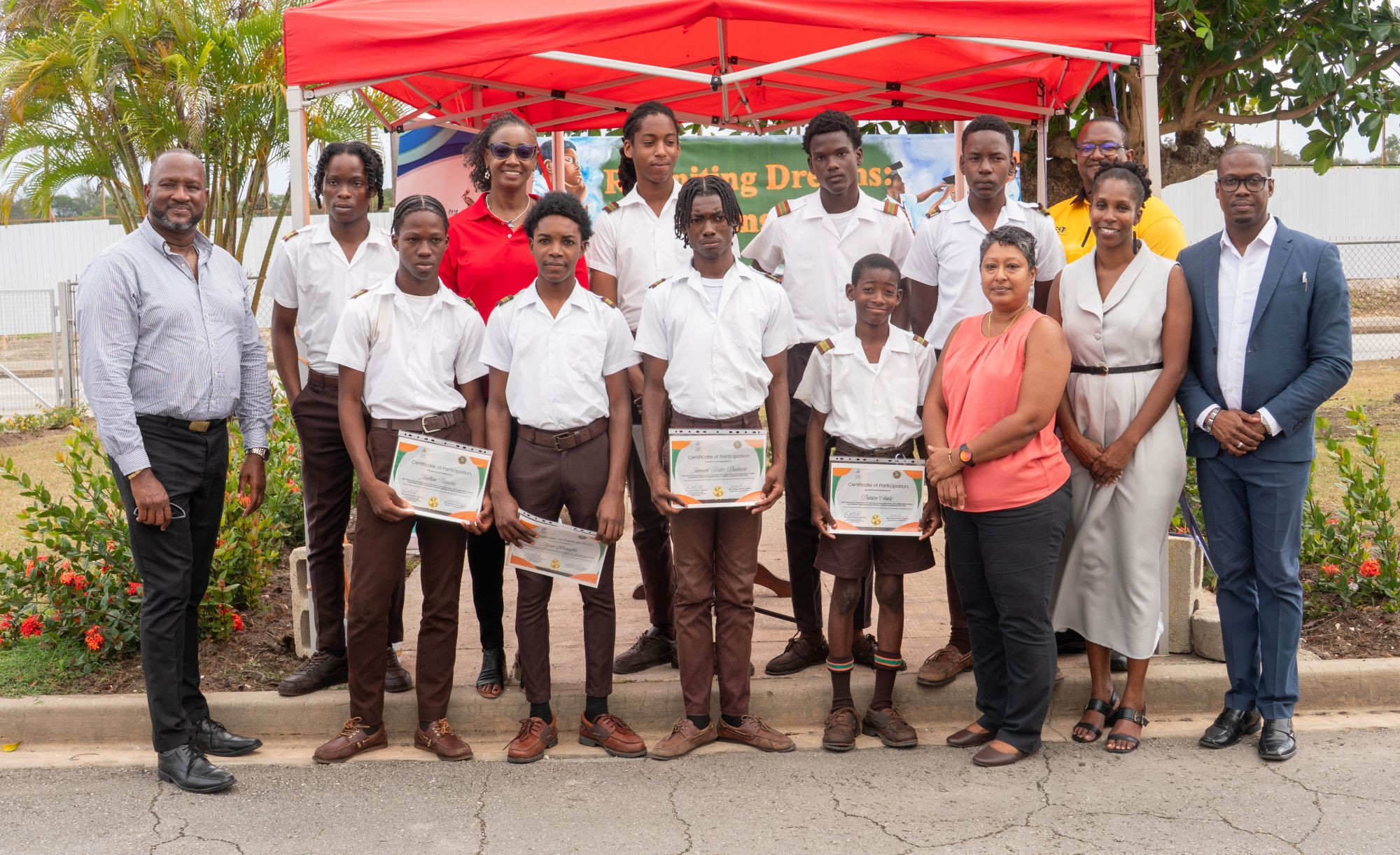
    The initiative, branded “Learning Cooperative: Securing Futures, Saving Lives,” wrapped up on Monday with a celebratory closing ceremony on the school campus. Co-developed and delivered in partnership with The University of the West Indies (UWI) Cave Hill Campus, the programme moves beyond traditional classroom learning by embedding core academic skills like literacy and numeracy into practical, revenue-generating agricultural and entrepreneurial work.

    Unlike conventional learning models that leave hands-on learners disconnected from static lesson plans, this cooperative model integrates academic theory with tangible, income-producing farm work to boost student engagement, cultivate leadership capabilities, and strengthen critical social and emotional competencies. Over the programme’s duration, participating students built their own soilless hydroponic grow boxes directly on school grounds, operated the full hydroponic system, and cultivated leafy spinach and a range of culinary herbs. The fresh produce was then processed into high-value consumer goods, including handcrafted pesto and homemade mint ice cream — treats that guests sampled during the closing ceremony.

    Dr. Michele Singh, Director of UWI’s Centre for Agricultural Research and Innovation (CAGRI), highlighted the programme’s core mission to reframe secondary education for diverse learning styles. “When we launched this project, we saw a clear opportunity to rewrite the story around what effective education can look like,” Singh explained. “We live in a rapidly changing world, and traditional classroom settings too often leave bright, hands-on learners behind. We believed that tying academic concepts to the practical, revenue-driven reality of modern agriculture could create something truly transformative — and that is exactly what we achieved with the FSSS Learning Cooperative.”

    Singh emphasized that the pilot’s success relied on cross-sector collaboration, crediting the UWI School of Education, FSSS administration, and the Barbados Trust Fund Limited, which donated the programme’s hydroponic infrastructure. “By turning their agricultural work into tangible revenue and contributing to community well-being, these students have proven that agriculture is a viable, respected, and highly profitable career path,” she added.

    The programme was designed specifically as an intervention for 15 boys who had increasingly disengage from traditional classroom instruction. Using sustainable food production as a framework for holistic personal development, the curriculum also embedded training in conflict resolution, emotional self-regulation, and team collaboration. School leaders report that outcomes have far exceeded initial expectations, and the pilot’s model is already being considered to shape future curriculum design across the school.

    Acting FSSS Principal Shanelle Waithe spoke to the unexpected broader impact the small pilot has had on the entire school community. “We did not fully anticipate how far this small intervention would reach,” Waithe noted. “Over seven weeks, these 15 young men planned, built, planted, nurtured, and harvested their own hydroponic operation. They have learned to work through conflict, show up for their teammates, and take pride in something they built with their own two hands. In doing that, they have given our school far more than 15 individual success stories — they have given us a replicable blueprint.”

    What launched as a targeted support programme for a small group of at-risk students has grown into a pilot that now serves as a model for project-based, integrated learning across the entire institution, Waithe added. The initiative also aligns with wider regional education reform efforts, echoing global conversations about student-centered curriculum design and collaborative school governance.

    Dr. Laurette Bristol, Director of the UWI School of Education at Cave Hill, emphasized the critical role of community partnerships and relevant, hands-on curricula in 21st-century education. “The UWI School of Education embodies engaged scholarship and leadership, working directly with schools and teachers to drive authentic education transformation,” Bristol explained. “This is not superficial change: it is about helping school communities identify their unique educational challenges, build cross-sector partnerships, and design education that is sustainable and regenerative. That is what it means to reignite young people’s dreams for the future.” Bristol also extended gratitude to parents, faculty, and school leadership for their ongoing support of participating students throughout the pilot.

  • Govt opens biz funding window to CAF development bank

    Govt opens biz funding window to CAF development bank

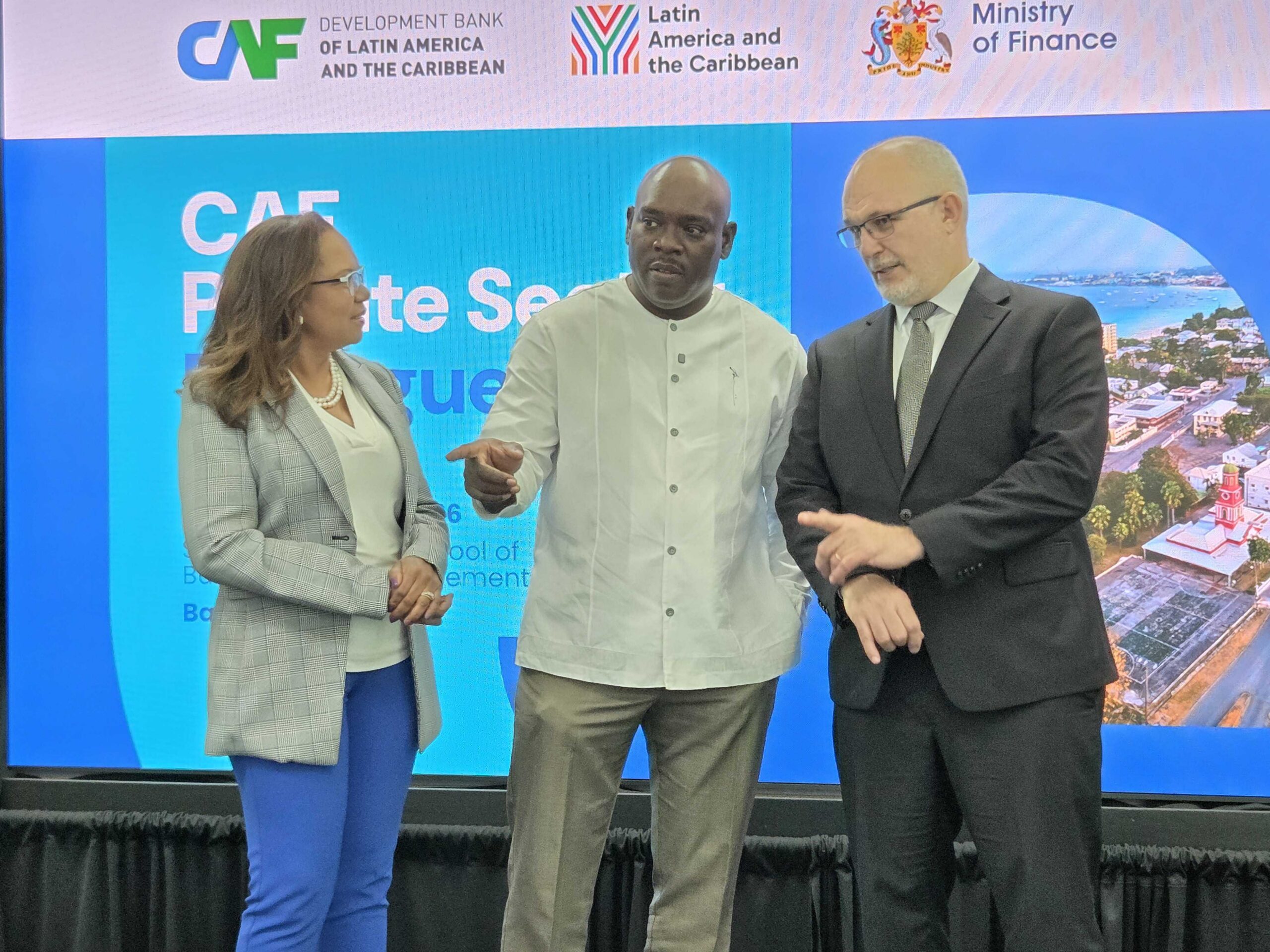
    In a landmark announcement Tuesday that signals a major shift in Barbados’ economic development strategy, Finance Minister Ryan Straughn confirmed that full membership in the Development Bank of Latin America and the Caribbean (CAF) has opened direct access to regional development capital and international export markets for the island nation’s private businesses. For the previous 12 years, only the Barbadian government was eligible to borrow from the Caracas-headquartered regional financial institution — a restriction that is now fully lifted. Under the new framework, Barbadian firms of all sizes can tap low-cost financing, specialized financial advisory services, and cross-border partnership networks that were previously out of reach for private operators. The reform is designed to enable business owners to scale their existing operations, expand product lines, and break into new regional and global export markets.

  • Dominican teachers complete ACT in mathematics cohort 2 regional training programme

    Dominican teachers complete ACT in mathematics cohort 2 regional training programme

    A cohort of 30 secondary school educators from across the Caribbean island nation of Dominica has wrapped up a landmark regional professional development initiative focused on upgrading mathematics instruction and expanding technology integration in K-12 classrooms. As announced in an official press statement from Dominica’s Ministry of Education, Human Resource Planning, Vocational Training and National Excellence, the country’s participation in the second cohort of the Advancing Caribbean Teachers (ACT) in Mathematics programme has reached a successful conclusion.

    The cross-border initiative brought together mathematics educators from three Caribbean nations—Dominica, Barbados, and Grenada—uniting them in a collaborative regional push to address gaps in math education and lift student performance across the bloc. For Dominica’s contingent, the 30 participants represented every one of the island’s 14 secondary schools, joined by the territory’s Learning Support Advisor for the Western region.

    The programme received joint institutional and logistical support from two leading regional and global education bodies: the University of the West Indies (UWI) Mona Campus, and the Commonwealth of Learning (COL). Local activities for Dominican participants kicked off in November 2025 with a two-day in-person introductory workshop held on the 13th and 14th of the month. Following the in-person opening, educators continued their skill-building through an online Community of Practice, which leveraged a suite of accessible digital platforms including Moodle, Zoom, WhatsApp, and COL Commons to keep participants connected between scheduled learning sessions.

    Throughout the entire duration of the programme, participating Dominican educators maintained exceptionally high levels of engagement, and readily adopted a range of research-backed, innovative teaching methodologies crafted to drive stronger student learning outcomes in mathematics. Programme facilitators trained participating teachers to implement the initiative’s signature “5 Master Moves” instructional framework, and guided them to integrate a diverse toolbox of interactive digital learning tools directly into their daily classroom practice. These tools included widely used educational platforms and applications: GeoGebra, PhET Interactive Simulations, Polypad, Didax, Wordwall, and Liveworksheets.

    Beyond technical digital skills, the programme also trained educators in gender-responsive teaching practices, designed to foster more inclusive classroom environments that encourage equal participation from all students, regardless of gender, in mathematics learning. The initiative also prioritized building sustainable regional collaboration between educators from participating countries, boosted participating teachers’ confidence in leveraging educational technology for instruction, and offered formal credentialing for educators who engaged with Open Educational Resources (OER).

    Dominica’s Ministry of Education formally extended its gratitude to all stakeholders who contributed to the programme’s successful implementation on the island, including secondary school principals, department heads, the participating teachers themselves, the UWI Mona Campus team, and the Commonwealth of Learning. Regional education stakeholders across the bloc have framed the ACT in Mathematics Cohort 2 initiative as a critical investment in Caribbean education, noting that it creates valuable space for educators to upskill, exchange evidence-based best practices, and contribute to long-term regional efforts to raise the quality of mathematics education across the Caribbean.

  • Football or Faith? Jamaican Pastor Warns of Watching the World Cup

    Football or Faith? Jamaican Pastor Warns of Watching the World Cup

    As the 2026 FIFA World Cup approaches, a provocative call from a Jamaican Seventh-day Adventist pastor has ignited widespread discussion across faith and sports communities. Godfrey Jesse Williams, the religious leader at the center of the conversation, is urging all Christian believers to forgo watching the tournament, warning that the global sporting event can pull followers away from their spiritual commitments and even put their salvation at risk.

    In an interview with local outlet *The Jamaica Star*, Williams laid out his full argument, framing the issue as a core conflict between worldly devotion and spiritual loyalty. He explained that World Cup matches absorb massive amounts of time and emotional energy that Christians ought to reserve exclusively for their relationship with God. Over time, he argued, many devout believers gradually shift their priorities, becoming overly invested in sports outcomes that ultimately have no eternal significance.

    To back his position, Williams draws directly from biblical text, citing 1 John 2:15, which commands believers not to love the world or the things in the world. Beyond time commitment, he points to the cultural values that competitive sports like the World Cup promote: individual pride, cutthroat competition, and extreme emotional volatility that run counter to the humility and peace central to Christian teachings. As a concrete example of this emotional upheaval, he references Germany’s historic 7-1 semi-final defeat of host Brazil at the 2014 World Cup, a result that left millions of fans across the globe in despair and triggered widespread public outbursts of grief and anger. For Williams, this moment is a clear illustration of how the tournament can consume believers’ emotional lives in ways that disrupt spiritual stability.

    What makes Williams’ stance notable is that it comes from personal experience, not just abstract doctrine. He openly shares that he was once an avid sports fan himself, closely following NBA legend Michael Jordan and the Chicago Bulls during the team’s dominant 1990s run, as well as soccer icon Lionel Messi and FC Barcelona during Messi’s tenure with the club. Eventually, however, Williams made the decision to step away from following professional sports entirely, saying the shift allowed him to refocus his full attention on his religious calling.

    Williams’ warning has already drawn mixed reactions across Jamaica, with some believers affirming his call to prioritize spiritual discipline, while others argue that recreational viewing of the World Cup can coexist with a healthy Christian faith.

  • Netball season launches with new structure

    Netball season launches with new structure

    The 2025 Barbados netball league season is scheduled to kick off this Wednesday at the University of the West Indies Cave Hill campus court, bringing with it a newly restructured competition format designed to align with the island nation’s upcoming high-stakes international hosting commitment.

    Nisha Craigwell, president of the Barbados Netball Association, confirmed in an interview with Barbados TODAY that the league’s long-standing seven-division structure has been streamlined into just five divisions for this condensed season. To cut down on the total number of matches required, the organization merged the former Division 1 and Division 2 tiers, leaving the top-tier Diamonds division as the league’s premier competition. Following the Diamonds are four subsequent divisions: Ruby, Sapphire, Emerald, and Opal, the last of which is reserved for under-14 youth competitors.

    Craigwell outlined the multiple key factors that pushed the association to redesign the season structure this year. Traditionally, the netball season opens every year on March 15 to mark the association’s founding anniversary, but the 2025 campaign was pushed back to a June 17 start date. The major catalyst for the condensed format and adjusted timeline is the regional Netball World Cup qualifier tournament, which Barbados is set to host in October this year. Association leadership aims to wrap up all domestic league play before the international qualifier gets underway, to avoid scheduling conflicts and ensure full focus on the elite event.

    Another logistical challenge that shaped the season’s game plan is ongoing renovation work at the main Waterford netball stadium. For the majority of the 2025 season, most lower-division matches will be held on outdoor courts, while the newly installed glass floor at the Wildey Gymnasium will be prioritized exclusively for Diamonds division matches. This arrangement is intended to give the senior national team players competing in the top division critical practice time on a high-quality indoor surface ahead of the October qualifier. Craigwell added that the association currently expects the Waterford stadium renovations to be finished before the domestic season concludes, allowing the league to move all remaining matches to the upgraded facility once work wraps up.

    Last year’s league title was claimed by Brittons Hill United, which enters the new season as the defending champion. Looking ahead to the regional qualifier, where Barbados will face off against top teams from across the Caribbean and the Americas, Craigwell reported that preparation progress has remained on track. “Our players have been training all year round,” she said. “We started out with just physical conditioning, but we’ve transitioned into regular gymnasium sessions now. The girls are looking good, getting fully fit, and we expect a very strong showing from our team.”

  • Shallow says cruise port deal a ‘no-brainer’

    Shallow says cruise port deal a ‘no-brainer’

    St. Vincent and the Grenadines’ new government has entered into a landmark 30-year concession partnership with Global Ports Holdings (GPH), the world’s largest cruise port operator, to revitalize the aging Kingstown Cruise Terminal and boost the country’s underperforming cruise tourism sector. The partnership, formalized via a signed memorandum of understanding (MoU) by the newly elected New Democratic Party (NDP) administration, will bring a phased total investment of up to EC$255 million into the terminal and national tourism infrastructure over the course of the agreement.

    The Kingstown Cruise Terminal, which was originally constructed by the NDP in the late 1990s, has not received any major expansion or comprehensive upgrade in more than 25 years. After the Unity Labour Party took office in 2001 and held power until its election defeat in November 2024, the facility remained the country’s only purpose-built cruise ship pier, falling badly behind competing regional destinations in infrastructure and service quality.

    Tourism Minister Kishore Shallow has defended the partnership as an obvious strategic decision given the terminal’s consistent financial drain on public coffers and the country’s strained national budget. Speaking on local radio station Hot 97 FM, Shallow disclosed that the terminal has operated at a net loss for four of the past five years, forcing the government to inject more than EC$15 million in public funds just to keep the facility operational over that period. Only 2023 delivered a small profit, totaling just EC$266,000 — a figure that highlights how little the current publicly run model benefits the public purse, Shallow argued.

    Shallow framed the deal as a clear choice between taking on costly new public debt to fund much-needed upgrades, or partnering with a global industry leader that brings both the required capital and specialized expertise to the project. “Do we have the capital now to invest in our port? The answer to that is no. Can we access it as a loan? Yes. Do we want more loan? No. Not for the port, certainly,” he told radio listeners.

    Unlike many similar regional public-private partnerships, the St. Vincent and the Grenadines agreement includes two unprecedented provisions that prioritize local stakeholder participation, Shallow noted. Up to 30% of equity in the concession operating company will be reserved for ordinary Vincentian investors, and the arrangement guarantees at least one local representative on the company’s board of directors to permanently protect national interests. A public prospectus detailing revenue streams, fee structures and other key terms of the investment will be released to allow potential local investors to make informed decisions before they commit to buying equity. Any dividends generated by the concession will be distributed to shareholders, with 30% of all profits returning to local investors, Shallow added.

    The minister emphasized that the 30-year concession does not equate to selling off the national asset. After the agreement expires, full ownership of the upgraded terminal and all related infrastructure will revert to the government and people of St. Vincent and the Grenadines. “So just imagine you invest 250-something million dollars, and then after that we own the entire thing… They’re not walking with the port when they leave,” he explained.

    Beyond upgrading the terminal itself, the partnership is designed to address deep structural gaps that have held back St. Vincent and the Grenadines’ cruise tourism competitiveness. Official data shows that average annual cruise passenger arrivals over the past five years (excluding the COVID-19 pandemic travel shutdown) have hovered around just 230,000, far lower than peer regional destinations. Average per-passenger spending in St. Vincent is only around US$59, the lowest rate across the Caribbean. The current out-of-date infrastructure also means the country cannot accommodate larger, more modern cruise vessels that carry higher-spending tourists, and the country lacks the diversified onshore tourism attractions that draw longer visits and greater spending.

    The first phase of the project, which will require an initial investment of more than EC$55 million, focuses on urgent upgrades to the existing terminal, including a full renovation and transformation of the terminal building, improved pedestrian connections between the port and downtown Kingstown, and targeted investment in tourism attractions across all of the country’s islands. Shallow explained that this investment in broader national tourism sites was a key negotiated priority to ensure the partnership delivers widespread benefits across the country, not just at the port itself.

    Shallow noted that redirecting the EC$15 million in annual public subsidies that currently prop up the loss-making terminal to core public services would bring immediate benefits to all Vincentians. “Just imagine if we didn’t have to spend that 15 million there, and we could invest that in healthcare, education, [and] improve our roads. That is what is in front of us here,” he said.

  • King receives prestigious Davis Cup Commitment Award

    King receives prestigious Davis Cup Commitment Award

    After more than 15 years of consistent dedication to carrying Barbados’ flag on one of men’s tennis’ biggest global stages, the island nation’s top-ranked player in history Darian King has been recognized with one of the sport’s most prestigious honors for national team commitment: the ITF Davis Cup Commitment Award.

    The 34-year-old veteran accepted the award in-person last weekend, during the 2026 Davis Cup Americas III competition hosted in Costa Rica. Presented annually by the International Tennis Federation, the award distinguishes players who have shown extraordinary, long-standing devotion to representing their home country across decades of Davis Cup competition, the premier men’s international team tennis event worldwide.

    King first stepped onto the Davis Cup court to represent Barbados in 2009, kicking off what would become a historic 15-year run with the national side. Over his career, he has earned 31 caps for Barbados in the tournament, compiling a record that stands as one of the most dominant in the country’s Davis Cup history: 44 wins in singles competition, and more than 70 total victories across singles and doubles play.

    King’s career highlights with the Davis Cup side extend far beyond his win total. In 2014, he was the driving force behind one of the biggest upsets in Barbados Davis Cup history, when the underdog side defeated Mexico to earn promotion to the Americas Zone Group I — a milestone that remains a high point for Barbados tennis.

    Individually, King reached his career-high ATP ranking of world No. 106 in 2017, the same year he qualified for the main draw of the US Open, marking a career-best individual performance for the Barbadian star.

  • Panton Calls Proposed $73M BEL Share Investment a “Bailout”

    Panton Calls Proposed $73M BEL Share Investment a “Bailout”

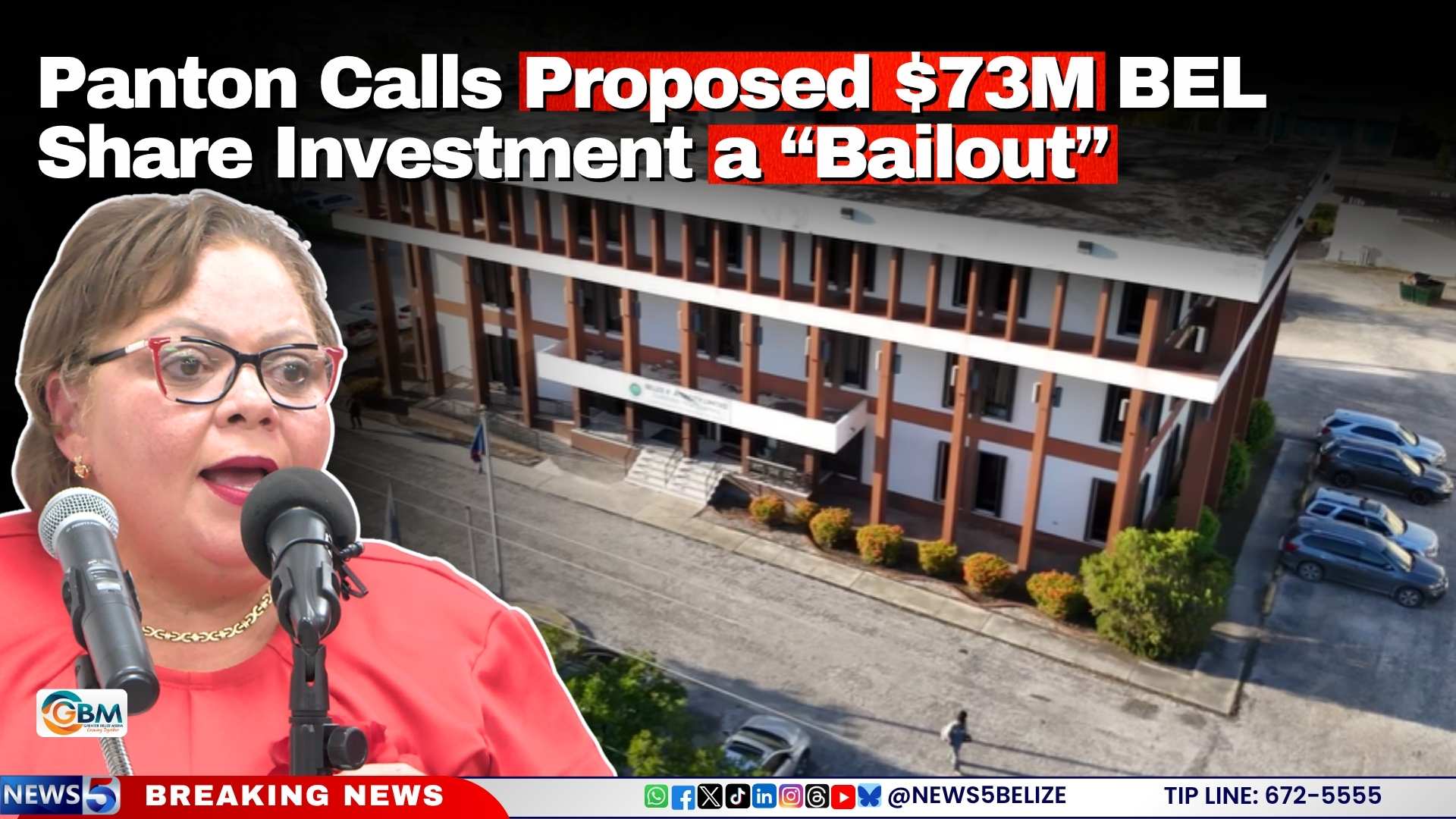
    A planned $73 million government investment into Belize Electricity Limited (BEL) has ignited sharp political debate in Belize, as the opposition lashes out at the proposal framing it as an underdisclosed bailout that will ultimately burden ordinary taxpayers.

    The initiative, put forward by Prime Minister John Briceño’s administration, asks for legislative approval to acquire just over 8.1 million newly issued shares of BEL at a price point of $9 per share. In defending the plan, Briceño has emphasized that the core goal of the investment is to reinforce national control over Belize’s critical electricity infrastructure, strengthening domestic ownership of the country’s core power supply network.

    But the proposal has quickly drawn fierce scrutiny from the country’s political opposition. Tracy Panton, leader of the United Democratic Party, is leading the charge against the plan, questioning both the source of the $73 million in funding and the ultimate impact on public finances. During a press briefing held by her party on June 16, 2026, Panton publicly labeled the share acquisition nothing more than a bailout for the state-linked power provider.

    Panton raised concerns specifically about whether the government intends to draw funds from Belize’s Social Security Board (SSB) to cover the cost of the purchase, a move she argues would put retirement and social welfare funds at risk. Ahead of a scheduled House of Representatives committee meeting set to discuss the proposal the following day, Panton warned she would immediately make the information public if there was any confirmation of SSB funds being tapped for the investment.

    The opposition leader also noted that while she had directly raised the funding question to a member of the ruling People’s United Party (PUP) during a visit to Belmopan, she did not receive a clear response. The ruling party member did, however, deny that SSB funds would be used for the share purchase.

    Despite that denial, Panton maintained her position that no matter what funding stream the government chooses to use, the full cost of the $73 million investment will eventually be passed on to the Belizean public. She added that while Belizeans would likely be far more open to supporting public spending on the power sector if it translated to lower monthly electricity bills or more reliable service, she remains deeply skeptical that the proposal will deliver any such tangible benefits for ordinary citizens.

    The upcoming House committee meeting is expected to be the first major legislative step for the proposal, where further details on funding and policy goals will likely be debated publicly.

  • Works begin at 13 primary schools ahead of September return

    Works begin at 13 primary schools ahead of September return

    A comprehensive summer infrastructure upgrade programme is now underway at 13 public primary schools, just days after the campuses were closed for the project, the Ministry of Education Transformation has officially confirmed. Launched with the core goal of delivering safer, more functional learning spaces when students and educators return for the new academic term in September, the initiative aims to leave every participating school with modernized facilities fit for 21st century learning, ministry officials shared in a statement released Monday.

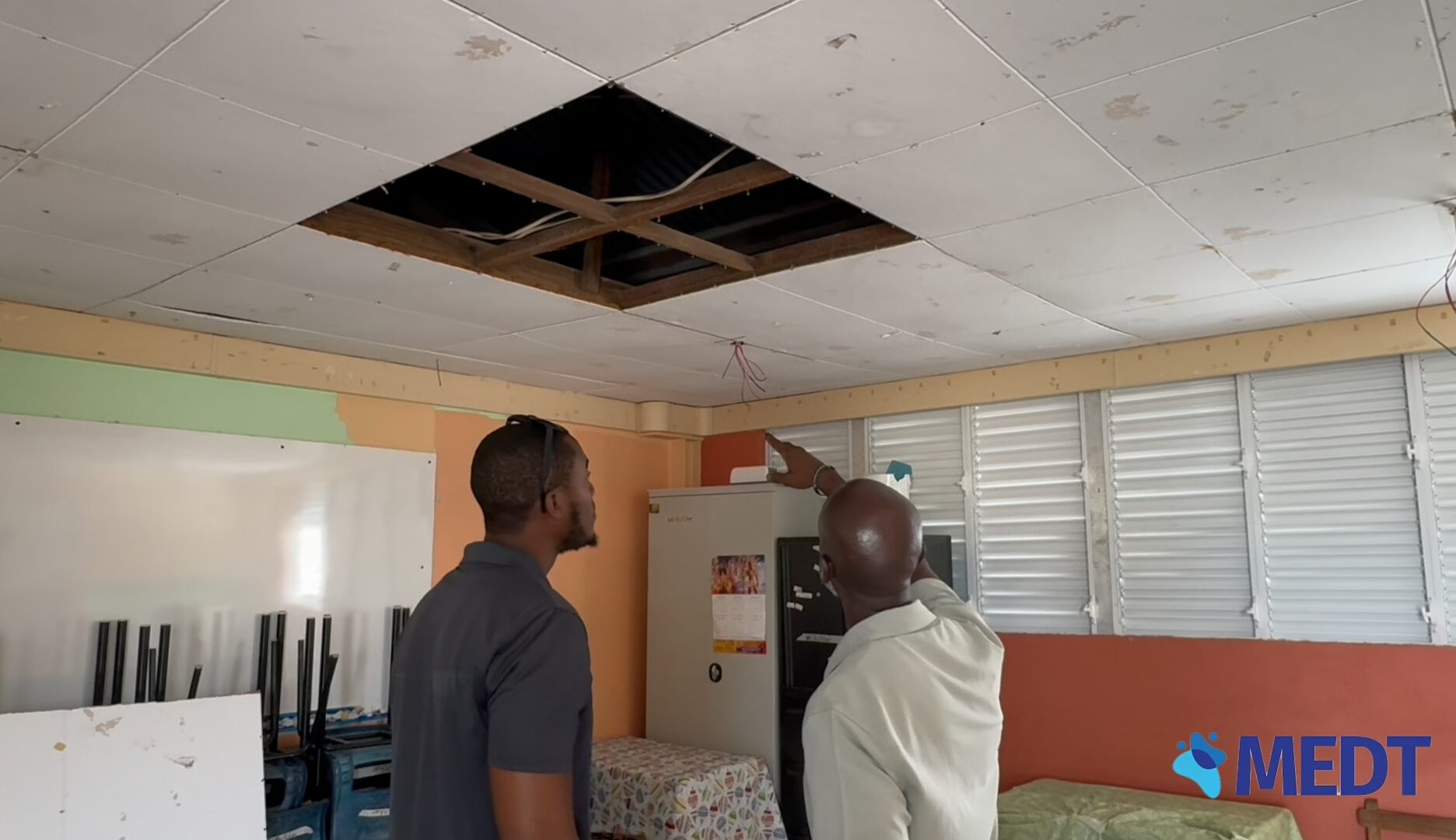
    Wayne Baker, head of the Education Technical Management Unit, which is overseeing the refurbishment works, detailed the targeted upgrades being carried out at individual sites to address long-standing infrastructure issues. At Grantley Prescod Primary School, located in St Barnabas, the school’s original 1954 construction included outdated TenTest fibreboard ceilings across the main hall, all classrooms, and connecting corridors. These decades-old materials are currently being removed and replaced with durable modern PVC ceiling boards, eliminating safety and degradation concerns linked to the obsolete material.

    Over at Deacons Primary School, work teams have prioritized replacing aging louvred windows in the campus’ eastern building, a section that has struggled with chronic water leakage during rain events for years. The faulty windows have allowed moisture to seep into classrooms, damaging interior finishes and creating uncomfortable learning conditions, so the replacement work will resolve this persistent issue.

    Beyond these site-specific fixes, a set of uniform broader upgrades will be rolled out across all 13 schools in the programme. According to Baker, the most impactful campus-wide change will be a full replacement of existing roof sheeting: the standard permaclad sheets currently in place will be swapped out for new white-coated alternatives. “These new sheets cut down on heat buildup inside classrooms, which means we can create much more comfortable learning and working environments for both students and staff,” Baker explained of the energy and comfort benefits of the upgrade.

    In addition to structural repairs, roofing replacements, and targeted fixture updates, all 13 participating schools will receive a full cosmetic refresh: external walls, safety railings, and entry doors will be repainted to boost curb appeal and protect exterior materials from weather damage. The full list of schools joining the programme includes Blackman and Gollop Primary, A. Dacosta Edwards Primary, All Saints Primary, Roland Edwards Primary, St James Primary, St Stephen’s Primary, Hilda Skeene Primary, Bayley’s Primary, Christ Church Girls’ Primary, Hillaby Turners Hall Primary, and St George Primary, alongside the two schools already undergoing site-specific work.

  • Derde helft WK 2026: Frankrijk herpakt zich en wint van Senegal

    Derde helft WK 2026: Frankrijk herpakt zich en wint van Senegal

    Group I of the 2026 FIFA World Cup opened its slate with a thrilling encounter at the New York New Jersey Stadium, where four-time world champions France eventually secured a 3-1 win over a Senegal side that defied underdog expectations to push the title holders to the final whistle.

    From the opening kickoff, Senegal’s attacking unit led by Sadio Mané made their intentions clear: they had come to compete and advance, not just make up the numbers. The African side poured forward immediately, catching France cold in the opening minutes and forcing Les Bleus to drop deep into a defensive shell to avoid falling behind early. It took France nearly 10 full minutes to find their footing in the match, as Senegal’s press repeatedly cut off their build-up play before it could threaten.

    The first clear chance of the game came just two minutes in, when Theo Hernández was forced to clear a dangerous Senegal cross over his own goal line to prevent an opening score. France mustered their first shot on goal in the 18th minute, courtesy of Ousmane Dembélé, but the effort failed to test Senegal’s goalkeeper Édouard Mendy.

    Senegal came inches from taking the lead in the 25th minute: Nicolas Jackson’s shot ricocheted off the goalpost, bounced off French goalkeeper Mike Maignan, and rolled toward the goal line before somehow staying out. On the stroke of halftime, Mané cut the ball back from the byline to Ismaïla Sarr, but Sarr fired his close-range effort over the crossbar. Senegal was the far sharper side for the entire first half, but wasteful finishing from Jackson and Sarr kept the scores level at 0-0 going into the break, with Australian referee Alireza Faghani overseeing the encounter.

    France emerged from halftime a transformed side, finally committing numbers forward and showing the attacking bite expected of defending champions. Désiré Doué had the first chance of the second half in the 48th minute, but his shot drifted just wide of the post. Four minutes later, Michael Olise broke through on goal, only for a quick reaction from Mendy to deny what looked like a certain opening goal.

    Minutes later, Kylian Mbappé broke into the Senegal penalty area only to be stopped once again by the Senegalese shot-stopper. Just after the hour mark, Mbappé appealed for a penalty after a challenge in the box, but the review ruled out any spot kick. In the 64th minute, Mbappé ran onto a through ball from Olise and again was denied by Mendy, but two minutes later, the French star finally got the better of the keeper. Finishing a well-worked pass from Olise, Mbappé slotted home to put France ahead 1-0.

    Senegal did not create another dangerous chance until the 79th minute, when Jackson again failed to convert a good opportunity into a goal. In the 82nd minute, French substitute Bradley Barcola doubled France’s lead, collecting a deep through ball from Adrien Rabiot and chipping it over the onrushing Mendy to put Les Bleus up 2-0. Shortly after, Mbappé had a golden chance to put the game to bed from an Olise pass inside the box, but he missed the chance to extend the lead.

    That miss set up a late scare for France: in the fourth minute of stoppage time, substitute Ibrahim Mbaye cut the deficit to 2-1 with a clinical solo finish, setting up a frantic final minute of play. But just 60 seconds later, Mbappé sealed the three points for France with a spectacular long-range strike from outside the penalty area, putting the final score at 3-1 and getting France’s 2026 World Cup campaign off to a winning start.