博客

  • Making Women Seen in Belize’s Fishing Industry

    Making Women Seen in Belize’s Fishing Industry

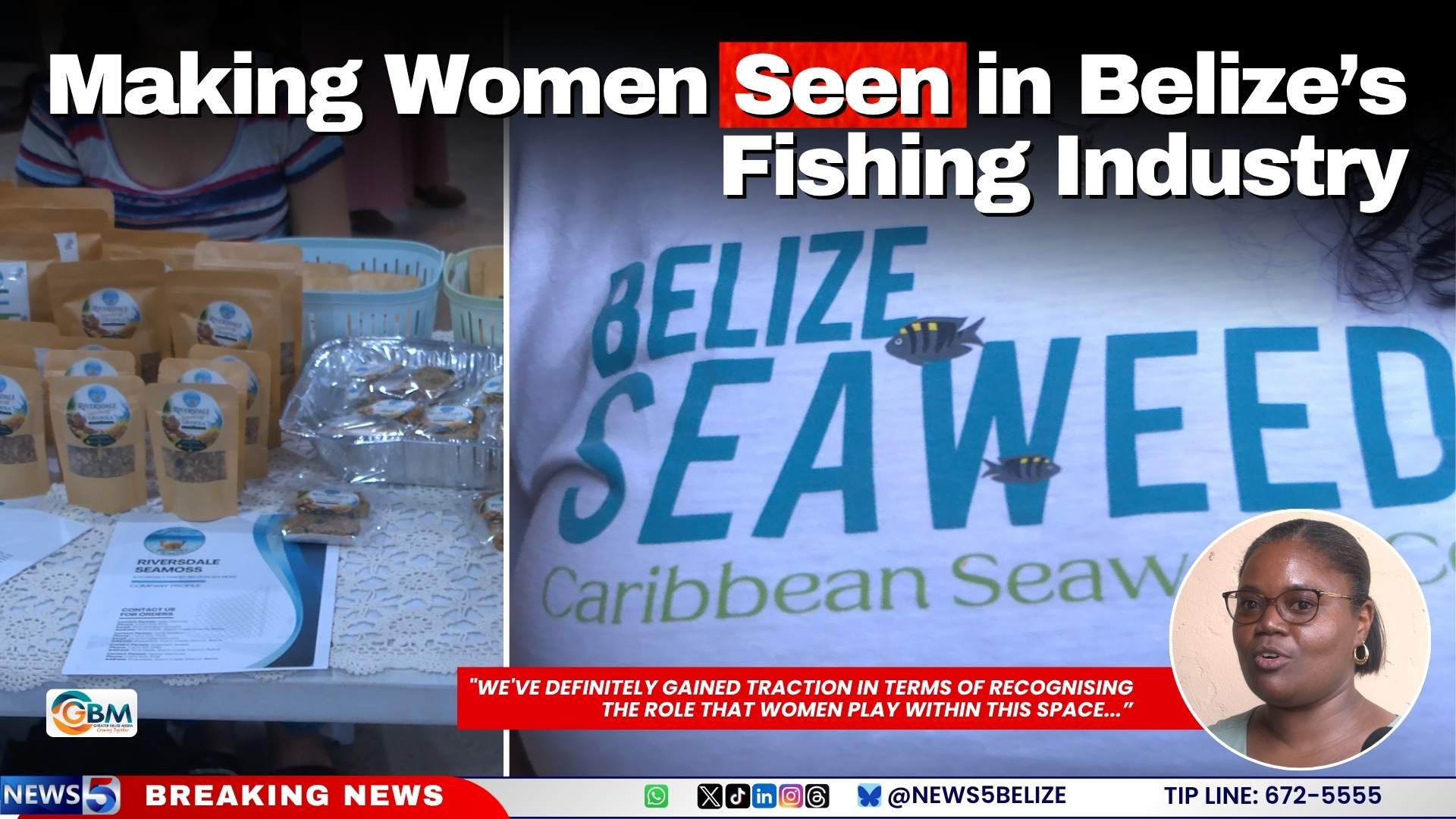
    On June 16, 2026, the ninth annual Women in Fisheries Forum kicked off in Belize, shining a long-overdue spotlight on a pressing, underdiscussed challenge facing the Central American nation’s critical fishing industry: the systemic invisibility of women who power the sector across every step of the supply chain.

    While Belize’s multi-million dollar fishing economy relies heavily on women’s labor—from catching and processing seafood to managing coastal households, adding product value, and running small marine-focused businesses—industry data and official records have largely erased their contributions. For decades, many women working in the sector have been undocumented, overlooked for professional opportunities, and locked out of critical benefits and resources simply because their work is not formally recognized. Most commonly, women who sell their catch to fishing cooperatives have their products registered under their spouse or husband’s name, leaving their individual labor unaccounted for entirely.

    This two-day convening brings together a cross-section of stakeholders: artisanal fishers, female marine entrepreneurs, conservation leaders, and policy advocates, all united around a shared goal of breaking down the barriers that hold women back. This year’s forum centers the blue economy, with a specific focus on helping women expand beyond the traditional high-demand species of fin fish, lobster, and conch into new, sustainable fisheries segments that offer greater economic stability.

    Ralma Lamb-Lewis, Marine Conservation Director at the Wildlife Conservation Society, a key organizer and stakeholder in the event, emphasized that while progress has been made in recent years to acknowledge women’s fundamental role in Belize’s fishing sector, the conversation must now move from recognition to action. “We’ve definitely gained traction in terms of recognising the role that women play within this space,” Lamb-Lewis noted. “But more so what we want to transition into now is for us to be able to definitely increase their access to some of the resources available out there.”

    The stakes of formal documentation are high for women across the sector. Without official recognition of their work, women cannot access basic social security benefits, workplace injury protection, or targeted funding and capacity-building opportunities offered by non-governmental organizations, government agencies, and international donor groups. “Once they’re documented, it allows you to access more opportunities,” Lamb-Lewis added. Participants at the forum are expected to draft collaborative policy recommendations and partnership frameworks to address the documentation gap and expand equitable access to leadership, financing, and resources for women working across Belize’s fishing industry.

  • COMMENTARY: Democracy beyond antagonism and pernicious polarization – Rethinking political engagement in Dominica

    COMMENTARY: Democracy beyond antagonism and pernicious polarization – Rethinking political engagement in Dominica

    Recent back-to-back public meetings between senior leaders of the ruling Dominica Labour Party (DLP) and two long-time prominent figures from the main opposition United Workers Party (UWP) have sent shockwaves through Dominica’s political landscape. For many rank-and-file UWP supporters, the interaction has sparked anger, confusion, and a widespread sense of betrayal, with opposition-aligned media avoiding clear discussion of the encounters and grassroots activists expressing deep distress. Even among non-UWP supporters, the cross-partisan engagement has been met with quiet curiosity. Across the political spectrum, a common unspoken norm holds that sitting government officials and opposition representatives should avoid any substantive cooperation or public interaction, particularly between the DLP and UWP.

    What makes this norm particularly striking, however, is its inherent contradiction: many of the same voices that decry collaboration between incumbents and opposition figures simultaneously demand unity among all anti-government groups to unseat the ruling party. For these critics, cooperation is only legitimate when it targets the sitting government’s political standing and authority. This double standard is not just inconsistent — it is dangerous, anti-democratic, and fundamentally counterproductive to Dominica’s national development.

    This toxic worldview frames political disagreement as an eternal, zero-sum conflict that takes priority over the collective national good. Rooted in elite self-interest rather than public service, it treats political opponents as inherent enemies rather than competing actors with a shared stake in national progress. When any engagement across party lines is labeled betrayal, the nation deliberately locks out valuable perspectives, expertise, and human capital that could advance shared development goals, leaving critical potential resources untapped.

    This flawed logic stands in direct contradiction to the core purpose of democratic governance. Democracy was never designed to institutionalize permanent hostility; instead, it exists to manage political disagreement peacefully while enabling collective action for the common good. Leading contemporary research on political polarization confirms that an “us versus them” ideological framework systematically erodes democratic institutions. As political scientists Jennifer McCoy, Tahmina Rahman, and Murat Somer detail in their work on global democratic crisis, severe polarization reshapes ordinary political differences into conflicting, hostile identities, turning political competitors into existential enemies. In this poisoned environment, compromise becomes betrayal, open dialogue becomes a sign of weakness, and effective governance becomes nearly impossible. The end result, all too often, is democratic erosion, institutional gridlock, and plummeting public trust in government.

    These risks are exponentially higher for small island developing states like Dominica. Unlike large nations with large populations, deeply rooted democratic institutions, and vast domestic resource bases, small developing economies depend entirely on social cohesion, political stability, and efficient governance to thrive. Every skilled, capable citizen represents a critical national asset, regardless of their partisan affiliation. When political conflict is weaponized and prolonged, the nation voluntarily sidelines a portion of its most valuable human capital. Competence is replaced by political loyalty as a qualification for leadership, and collaborative opportunities are sacrificed on the altar of partisan rivalry.

    The Caribbean region is littered with cautionary examples of how extreme political antagonism derails long-term development. Across multiple Caribbean territories, election cycles are defined by hyper-partisan mobilization that leaves societies deeply divided years after votes are counted. Sitting governments drain massive political capital deflecting opposition attacks, while opposition parties devote nearly all their resources to undermining incumbents rather than contributing constructive solutions to national challenges. In this environment, sound public policy becomes the first casualty of political warfare. Long-term development plans are routinely scrapped when new parties take power, and infrastructure and social projects are evaluated based on which party proposed them, not on their inherent public value.

    Jamaica’s experience with extreme political tribalism in the 1970s and 1980s offers a particularly clear warning. Political competition grew so intense that entire communities were branded by their party allegiance, fueling deep social fragmentation and endemic political violence. The development costs were severe: pervasive political instability drove away foreign investment and eroded public confidence in state institutions. While Jamaica has since made major progress reducing political violence and strengthening democratic norms, its history stands as a stark reminder of how much damage entrenched political conflict can inflict on a society.

    Similarly, Guyana’s decades-long political crises illustrate how the toxic combination of ethnic and partisan polarization cripples governance and delays development for generations. When political competition is framed as a zero-sum battle for survival rather than a debate over competing policy ideas, public distrust deepens and national consensus becomes nearly impossible to achieve. Partisan political calculations consistently take priority over pressing national development needs.

    Scholarly research aligns with these on-the-ground Caribbean experiences: the most dangerous form of political conflict is not disagreement itself, but what researchers term “pernicious polarization” — a condition where society splits into mutually hostile camps that prioritize partisan victory over democratic norms, and increasingly distrust anyone outside their own group. In this context, opportunistic political leaders mobilize supporters through fear, resentment, and deliberate demonization of opponents. Over time, democratic institutions weaken as citizens come to value partisan success more than they value the foundational rules of democracy.

    This threat should command the attention of every Dominican. If every single interaction between members of opposing parties is labeled a betrayal, democracy itself is drained of its purpose. Healthy democratic systems need political competition to function, but they also depend on targeted cooperation to deliver progress. Some of the world’s most successful democracies have prospered precisely because political actors accept that while they may disagree on policy and approach, they share a common responsibility to advance the nation’s future.

    Across the globe, ruling governments and opposition parties routinely collaborate on core national priorities: national security, economic growth, disaster response, education reform, and constitutional updates, to name a few. This kind of cross-partisan cooperation does not eliminate political competition. Instead, it ensures that competition serves national development rather than undermining it.

    The damage of permanent political conflict extends far beyond institutional gridlock. Polarization also opens the door for anti-democratic actors to manipulate public anger and fear. When ordinary citizens come to see political opponents as existential enemies rather than fellow citizens, they are far more likely to support undemocratic actions targeting those rivals. Multiple studies confirm that highly polarized societies face a much higher risk of democratic backsliding, because leaders can justify attacks on independent institutions, restrictions on dissent, and erosion of democratic norms by framing opponents as a threat to national survival.

    For small developing states like Dominica, this risk is especially acute. Political instability deters foreign investment, weakens public confidence in institutions, and distracts leaders from addressing urgent national challenges: economic diversification, climate change adaptation, youth unemployment, education reform, healthcare expansion, and technological innovation. Like other Caribbean nations, Dominica faces steep development hurdles that demand national unity and collective effort. The climate crisis alone requires unprecedented cooperation between political parties, the private sector, civil society, and ordinary citizens. No single political party holds all the ideas, expertise, or resources needed to secure a prosperous future for the Dominican people.

    That is why a fundamental rethinking of how political engagement works in Dominica is long overdue. Dominicans must reject the harmful myth that permanent conflict is a sign of a healthy democracy. Democracy is at its strongest when disagreement coexists with mutual respect, trust in democratic institutions, and a shared commitment to national progress. Political leaders who reach across partisan lines to engage constructively should be celebrated, not condemned. Citizens should judge leaders not by how fiercely they attack their opponents, but by their ability to solve problems, build consensus, and deliver for the public good.

    Ultimately, ordinary Dominicans never benefit from permanent political conflict. The main winners are political elites and opportunists who profit from division, fear, and distrust. The rest of society pays the price: missed economic opportunities, weakened institutions, delayed development, and a weaker, less representative democracy. Dominica’s future prosperity does not depend on one political camp permanently defeating another. It depends on all citizens recognizing that national development is a shared project that requires buy-in from every part of society.

    The defining political question for Dominica today is not how to intensify and weaponize political differences, but how to turn political competition into a productive force that drives national progress. By rejecting the weaponization of political disagreement, encouraging open dialogue across partisan lines, and prioritizing national development over narrow partisan interests, Dominica can strengthen its democracy and boost its prospects for shared prosperity. The nation faces a clear choice: a politics of permanent antagonism, or a politics of constructive engagement. Regional history, peer-reviewed scholarship, and decades of Caribbean experience all confirm that only the second path can deliver sustainable development and full democratic maturity for the Dominican people.
  • Grenada invests millions in disaster protection

    Grenada invests millions in disaster protection

    As climate change intensifies hurricane activity across the Caribbean, small island developing states are racing to strengthen their financial defenses against natural catastrophes that can wipe out decades of hard-won economic progress. For Grenada, this effort translates into a more than $2 million annual investment this year to renew its disaster insurance coverage through the Caribbean Catastrophe Risk Insurance Facility (CCRIF), marking a notable increase from last year’s $1.8 million premium. According to Mike Sylvester, Permanent Secretary in Grenada’s Ministry of Finance, the higher premium is a direct reflection of recent major disaster events across the region, including Hurricane Beryl that hit Grenada in 2024 and Hurricane Melissa that struck Jamaica in 2025.

    While Sylvester acknowledges that the growing insurance cost represents a significant burden for Grenada’s small economy, he emphasizes that the expenditure is non-negotiable for a nation repeatedly battered by climate-driven shocks. “It’s something that we have to maintain going forward as we continue to build resilience and ensure we can protect lives and livelihoods in the event of a natural disaster,” he noted in an interview with the Government Information Service’s *Let’s Talk Finance* program.

    CCRIF operates as an innovative regional parametric risk pool, a mechanism designed to release fast liquidity to member governments when predefined hazard thresholds are met, cutting through the lengthy assessment processes that delay traditional insurance payouts. The value of this rapid response model was clearly demonstrated after recent extreme weather events. Just 14 days after Hurricane Beryl made landfall in Grenada, the country received a total payout of $44.04 million across three separate CCRIF policies: $42.4 million from the core tropical cyclone coverage, $1.1 million for fisheries damage, and $549,000 for excess rainfall-related losses. Jamaica saw similarly fast support after 2025’s Hurricane Melissa, collecting $91.9 million in payouts within 15 days, split between $70.8 million for cyclone damage and $21.1 million for excess rainfall.

    These rapid disbursements highlight both the critical strengths and inherent limitations of parametric insurance for small island economies. While immediate access to capital jumpstarts early recovery efforts, the payouts are rarely large enough to cover the full cost of major catastrophic events. To address this gap, Grenada has adopted a “risk layering” strategy that combines CCRIF coverage with additional emergency financing tools. Most recently, the country secured a $20 million contingency line of credit from the World Bank via the Catastrophe Deferred Drawdown Option (CAT-DDO), a facility that can be activated immediately in the aftermath of a disaster or public health emergency. “We have secured as of today US$20 million with the World Bank, and that money is available as we speak,” Sylvester confirmed.

    Beyond international credit facilities, Grenada is also building domestic emergency buffers through its National Contingency Fund. Since July 2023, 10% of all monthly receipts from the National Transformation Fund (NTF) have been deposited into the contingency account, which is held at the Eastern Caribbean Central Bank (ECCB). As of the latest update, the fund holds just over EC$61 million. Combined with the World Bank CAT-DDO facility, this brings Grenada’s total standalone emergency financing capacity to roughly EC$115 million, complementing the coverage it receives from CCRIF.

    Currently, CCRIF coverage for Grenada extends to tropical cyclones, earthquakes, excess rainfall, fisheries, and select utility sector risks. Critical local utility providers including the National Water and Sewerage Authority (Nawasa) and Grenada Electricity Services Ltd. (Grenlec) maintain their own separate coverage arrangements. Looking ahead, Grenadian officials are exploring opportunities to expand disaster protection to the country’s most vulnerable economic sectors, especially tourism and small businesses, which face high exposure to storm damage and often lack the resources to recover independently. “The hotel sector is one of the major sectors in the economy that, in the event of a disaster, can sort of cripple the economy,” Sylvester explained.

    Grenada’s integrated approach to disaster risk financing mirrors a growing regional trend across the Caribbean, where governments increasingly rely on risk layering – combining insurance, contingent credit, and sovereign reserve funds – to soften the fiscal blow of natural disasters. “It’s not like you can stop these events,” Sylvester said. “What you want to do is bounce back better.” Still, the steady rise in insurance premiums has sparked urgent questions about long-term affordability for small Caribbean economies: how can these nations continue scaling up disaster financing at a rate that outpaces their revenue growth, especially as climate change drives more frequent and severe extreme weather events? Even with forecasts calling for a less active 2026 Atlantic hurricane season, Sylvester cautioned that complacency is not an option. “All you need is one major event to create serious problems for us,” he stressed.

  • Barbados now has a national instant payment system

    Barbados now has a national instant payment system

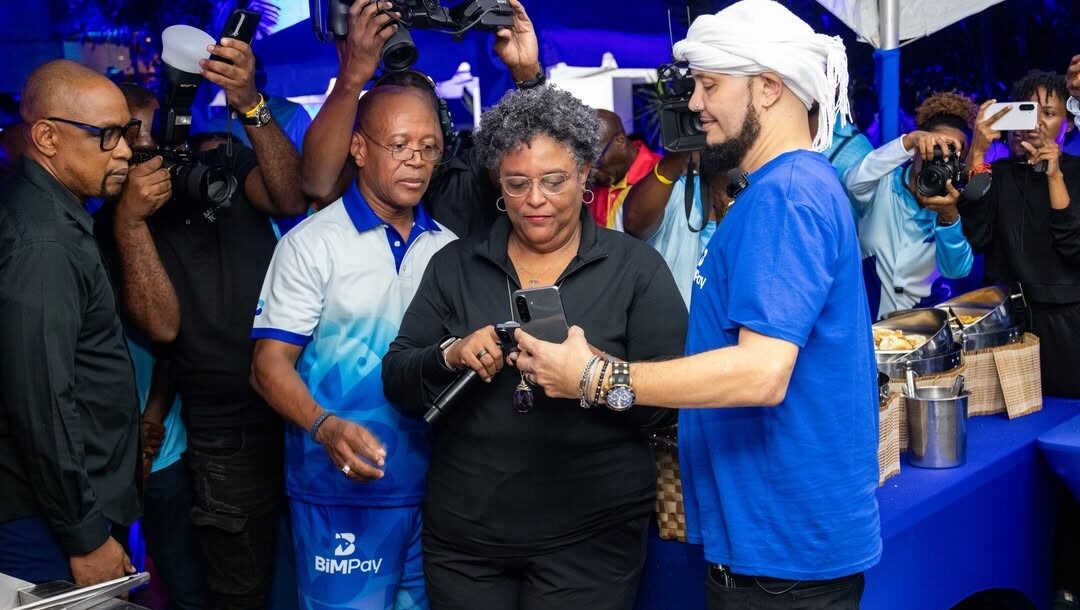
    Barbados has entered a new era of digital finance with the official launch of BiMPay, the island nation’s first national instant payment infrastructure, developed and rolled out by the Central Bank of Barbados. The groundbreaking platform went live shortly before midnight on Friday following two years of rigorous development, enabling round-the-clock, real-time fund transfers for individual consumers, private enterprises, and public sector agencies across the country.

    In the first 48 hours of operation, the system exceeded early expectations, processing more than 20,000 individual transactions with a total combined value approaching BDS$8 million, equal to roughly US$4 million, central bank officials confirmed. Currently, 11 key entities are already integrated into the BiMPay network, including six of Barbados’ leading commercial banks, three credit unions, the Barbados Stock Exchange, and the Accountant General’s Office, allowing for instantaneous fund movement between participating institutions and eliminating the traditional wait times for payment clearance.

    The launch was not without early minor hiccups: a sudden surge in user interest saw roughly 12,000 people download the BiMPay app within the first 60 minutes of going live, which triggered an automatic spam flag from Google for registration emails sent to Gmail account holders. Central Bank Governor Dr. Kevin Greenidge noted that the technical issue was resolved rapidly, and despite the temporary disruption, the system recorded a 99% transaction success rate in its opening days.

    “For a newly launched system of this scale, a 99% success rate across 20,000 transactions totaling $8 million is an extraordinary result,” Greenidge emphasized.

    Planning is already advancing for a second expansion phase that will onboard additional financial institutions and government bodies, most notably the National Insurance and Social Security Service. Authorities have not yet set a firm timeline for the rollout of phase two, however, noting that further standardization work is required to guarantee seamless transaction processing across all new and existing connected entities.

    Barbados Prime Minister Mia Mottley, who carried out the system’s first official live transaction during Friday’s launch ceremony, framed BiMPay as a transformative leap forward for the country’s broader digital transformation agenda. “When a country sleeps, it loses opportunity,” Mottley stated, pointing out that the 24/7 availability of the system removes the time barriers that once limited economic activity.

    Beyond convenience, Mottley highlighted that the instant payment system will bring long-term benefits to small business owners, who will be able to build formal digital financial records through regular transactions, improving their eligibility for much-needed credit. The platform is also expected to cut down on cash-related crime by reducing overall reliance on physical banknotes across the Barbadian economy.

    The launch of BiMPay aligns with a growing regional trend across the Caribbean, where more countries are investing in modern digital payment infrastructure to boost financial inclusion, cut reliance on cash, and streamline transaction processes for both consumers and business operators.

  • Flow announced as Official Partner of the Republic Bank CPL

    Flow announced as Official Partner of the Republic Bank CPL

    One of the world’s top-tier T20 cricket competitions, the Republic Bank Caribbean Premier League (CPL), has revealed a new official partnership with Flow, the Caribbean’s leading telecommunications provider, ahead of its 2026 tournament. The alliance brings together two regionally rooted brands united by a shared mission: to deliver premium entertainment and strengthen connections among communities across the Caribbean. Through Flow’s involvement, millions of cricket fans across the region and beyond will enjoy an upgraded CPL experience, marked by expanded access, deeper interactive engagement, and more reliable connectivity throughout the tournament.

    Jamie Stewart, Commercial Director of CPL, expressed enthusiasm about the new collaboration, noting that Flow has long been recognized as a leader in connectivity and innovation across the Caribbean. Stewart emphasized that Flow’s dedication to creating standout consumer experiences aligns perfectly with CPL’s core vision, and the league is eager to work alongside the telecom provider to bring fans closer to on-field action than ever before.

    Inge Smidts, Chief Executive Officer of Liberty Caribbean — Flow’s parent company that also operates Liberty Business and BTC — echoed that excitement, pointing out that cricket is far more than a sport to Caribbean communities: it is a core part of the regional identity, culture, and shared social fabric. Smidts explained that the CPL partnership builds on Flow’s long-standing commitment to investing in moments that unite Caribbean people. Following the brand’s role as Official Telecommunications Partner for the 2024 ICC Men’s T20 World Cup, this new collaboration with CPL further solidifies Flow’s standing as a trusted supporter of world-class sporting events across the region. Smidts added that the company is proud to back a platform that elevates local Caribbean cricket talent, connects millions of passionate fans, and highlights the region’s dynamic energy and excellence to a global audience.

    Founded in 2013, CPL is a franchise-based T20 cricket tournament that blends elite athletic competition with the vibrant Carnival atmosphere that is iconic to Caribbean culture. It has grown steadily to become one of the most-watched cricket leagues in the world, recording a total broadcast and digital viewership of 1.17 billion in 2025. The current title holder is Trinbago Knight Riders, and the league’s other six franchise teams include Antigua & Barbuda Falcons, Barbados Royals, Guyana Amazon Warriors, Jamaica Kingsmen, St Kitts & Nevis Patriots, and St Lucia Kings.

    The addition of Flow as an official partner will strengthen CPL’s capacity to deliver unforgettable experiences for fans, both in-stadium for attendees and across digital platforms for remote viewers. The 2026 Republic Bank Caribbean Premier League is scheduled to run from August 7 to September 20, 2026. More information about the tournament, schedule, and tickets is available on the official CPL website at www.cplt20.com.

  • Frederick Henry Pleads Guilty to Attempted Murder in 2023 Carlisle Bay Shooting

    Frederick Henry Pleads Guilty to Attempted Murder in 2023 Carlisle Bay Shooting

    A criminal case stemming from a 2023 late-night shooting outside a popular Antiguan resort has reached a critical turning point, after a Golden Grove resident entered guilty pleas to all charges related to the attack that left two hotel workers seriously injured.

    Frederick Henry, the defendant in the case, formally admitted his guilt on Monday to four separate criminal counts: one count of attempted murder, unlawful possession of a firearm, unlawful possession of ammunition, and shooting with intent to inflict grievous bodily harm. With his guilty plea on the record, High Court justice officials have scheduled sentencing hearings for July 21, where a judge will determine the appropriate punishment for the offences.

    The violent incident that led to these charges dates back to April 11, 2023. At roughly 11:30 p.m., as two employees of the Carlisle Bay Resort (located in Old Road) were finishing their shifts and exiting the property, they were ambushed and shot by the attacker. Court documents confirm the identities of the two victims as Dane Anthony and Morrisa Henry, who were walking toward the resort’s main gate when the attack began.

    In the immediate aftermath of the shooting, Anthony suffered at least two distinct gunshot wounds, while Morrisa Henry sustained multiple gunshot injuries to her arms and torso. Remarkably, despite his own serious injuries, Anthony managed to walk back to the hotel’s main lobby to alert staff and call for emergency help. Both victims were quickly transported to a local hospital for urgent medical care, treated for their life-altering injuries, and eventually released after recovering enough to leave care.

    Since the incident occurred, Henry has remained in court custody as the case moved through the island’s criminal justice system. His decision to plead guilty eliminates the need for a full public trial, bringing the pre-sentencing phase of the case to a close. When the court reconvenes next month to hand down sentencing, judicial officials have confirmed they will take three key factors into account: the severity of the crimes committed, the lasting physical and psychological impact of the attack on the two victims, and any mitigating circumstances that could affect the length or severity of the sentence.

  • Greater Belize Media Tops Caribbean Region with 93 Nominations

    Greater Belize Media Tops Caribbean Region with 93 Nominations

    In a landmark achievement for regional media in the Caribbean, Greater Belize Media (GBM), parent company of News 5 Live, has secured a leading position ahead of the 37th Caribbean Broadcasting Union (CBU) Media Awards, capturing an unprecedented 93 nominations across every major award category – more than any other participating media organization across the region this year.

    GBM’s broad slate of nominations spans every core sector of modern media, starting with television, the awards program’s most hotly contested competitive track. The Belize-based media house earned nods across 15 television categories, including high-profile divisions such as Best News Story, Best Investigative Report, Best Documentary Programme, and Best Sports Story, alongside category recognition for Best Entertainment Programme, Best Magazine Programme, Best Comedy Item, Best Advertisement, and Best Public Service Announcement. GBM also picked up nominations for specialty journalistic awards, including Financial Literacy Journalism, Excellence in Media Coverage of Caribbean Arts and Culture, Excellence in Environmental Reporting on Mangrove/Seagrass, and Best Production on Land Degradation Neutrality.

    Notably, GBM dominated the Child Rights Champion award track, securing nominations in all three subcategories: Investigative Reporting on Child Rights, Elimination of Violence Against Children, and Children Who Inspire Story. Beyond television, the organization earned three nominations in digital media for Best News Story, Best Sports Story, and Best Investigative Item, plus a single nomination for Best Sound Engineer in the radio division.

    In the People’s Choice Awards, the only CBU category decided by direct public voting from Caribbean audiences, GBM picked up three additional nods for Best Music Reel, Best Educational Reel, and Best Comedy Reel. Rounding out its historic haul, the media house earned two more nominations in Special and Individual Awards: Best Social Media Content Creator and Best Videographer.

    All award winners will be revealed at the 37th CBU Media Awards Gala, scheduled for August 19, 2026. The gala will take place during CBU’s 57th Annual General Assembly, branded #CBUAGA57, which will be hosted this year in Georgetown, Guyana by the Guyanese government.

    This year’s general assembly has been organized around the timely central theme “Caribbean Media and AI”, a topic that carries growing urgency for newsrooms across the region as the industry navigates both the transformative opportunities and disruptive impacts of artificial intelligence on journalism, content creation, and audience engagement. CBU President Anthony Greene formally confirmed the theme and venue in a pre-recorded video message shared with CBU members and industry stakeholders earlier this year.

    The three-day gathering is expected to bring together a diverse cross-section of global and regional media stakeholders, including media executives, working journalists, academic researchers, independent content creators, international development partners, and media equipment and service suppliers. The event’s programming will include professional development workshops, panel discussions on emerging industry trends, networking opportunities, and the formal celebration of regional media excellence through the awards gala. The CBU Annual General Assembly has long stood as one of the Caribbean’s premier forums for cross-sector dialogue and collaboration within the regional media industry.

    As event preparations progress, CBU will release full registration details and complete programming information through its official website and social media channels in the coming weeks.

  • Iran verdeeld over akkoord met de VS: hardliners versus gematigden

    Iran verdeeld over akkoord met de VS: hardliners versus gematigden

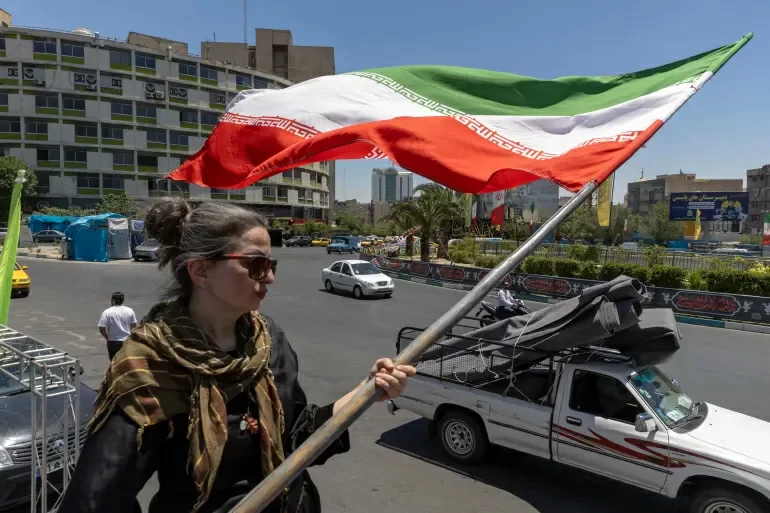
    After months of grueling, high-stakes negotiations, the United States and Iran have finalized a memorandum of understanding set to be signed this Friday in Switzerland. Yet even as the diplomatic milestone approaches, deep unresolved differences and fierce internal rifts within Iran’s political establishment leave the future of the deal far from certain, with experts warning frictions will almost certainly emerge during implementation in the coming months.

    At the center of the uncertainty is Iran’s new Supreme Leader, who succeeded his father, the late Ayatollah Ali Khamenei, after Khamenei was assassinated in a February airstrike that also left the new leader wounded. Since taking office, the new Supreme Leader has made almost no public appearances, releasing only rare written statements, and has yet to take an explicit public stance on the agreement with the US. His public comments have so far focused exclusively on two non-negotiable priorities: maintaining Iranian control over the strategic Strait of Hormuz, and protecting the country’s nuclear and missile programs as inalienable national assets.

    This silence has sparked widespread speculation and competing interpretations across Iran’s political landscape. Keyhan, the ultraconservative newspaper whose editor-in-chief was originally appointed by the late Khamenei, argues the new leader’s deliberate refusal to address the nuclear file is a signal that Iran considers the dossier closed, and sees no need for further negotiation — even as the US and Israel launched their recent military campaign explicitly aimed at curbing Iran’s nuclear ambitions. The publication has issued a stark warning, noting “We stand at a critical juncture in West Asian history; there is no room for weakness or error, and no one must cross the Supreme Leader’s red lines.”

    Remaining senior leaders of the Islamic Revolutionary Guard Corps (IRGC), which lost dozens of top officers in the recent conflict, have emerged as key power brokers shaping the negotiations with Washington. IRGC chief General Ahmad Vahidi and other senior commanders have repeatedly stated they are prepared to resume military operations if necessary, but have declined to comment on the fine print of the draft agreement. Having invested decades and billions of dollars building Iran’s regional “axis of resistance” network of allied militias, IRGC leaders insist Tehran will never abandon its allies, most notably Lebanon’s Hezbollah, and that any final agreement must protect these groups from Israeli aggression.

    Esmail Qaani, commander of the IRGC Quds Force which oversees the axis of resistance, made his first public appearance in months Monday evening to address the agreement. Qaani claimed the Bab al-Mandeb Strait is fully controlled by Hezbollah, Yemen’s Houthi movement and other resistance groups, and reaffirmed Iran’s threat to close the critical waterway if hostilities resume. He also explicitly offered public support to Mohammad Bagher Ghalibaf and other members of Iran’s negotiating team, who have faced fierce backlash from hardline factions for striking a deal with the US.

    Ghalibaf, currently Iran’s parliamentary speaker and a former senior IRGC commander, is widely viewed as a pragmatic conservative who backs the agreement. In a rare address on state television following April’s ceasefire, Ghalibaf acknowledged that the US and Israel hold overwhelming military superiority over Iran, meaning they cannot be defeated through open conflict, but argued that a favorable agreement is achievable if Iran can secure gains on the battlefield. Even IRGC General Mohammad Bagher Zolghadr, secretary of Iran’s Supreme National Security Council (SNSC), who previously insisted Tehran would not make concessions, ultimately oversaw the SNSC’s public ratification of the draft deal with Washington.

    Hardline factions within Iran’s establishment remain fiercely opposed to the agreement, which they dismiss as a capitulation to US President Donald Trump, whom they hold directly responsible for the assassination of former Supreme Leader Ali Khamenei and Quds Force commander Qassem Soleimani in 2020. Hardliners demand Tehran refuse to make any major concessions on its nuclear program, maintain full control of the Strait of Hormuz, impose shipping tolls on foreign vessels passing through the waterway, and force all US troops out of the Middle East.

    The faction includes dozens of hardline parliamentarians and members of the Paydari Front, led by Saeed Jalili, Khamenei’s personal representative to the SNSC and a veteran negotiator who has overseen multiple failed rounds of talks with the West. Jalili is one of the most prominent opponents of the current deal, and unconfirmed rumors have circulated that he was removed from his post shortly before the agreement was announced. Alongside Keyhan, IRGC-aligned media outlets including Tasnim News Agency, Fars News and Mehr News have all pushed a hardline anti-US narrative and criticized the draft deal.

    By contrast, Iran’s civilian government led by moderate President Masoud Pezeshkian, who supports the agreement, has seen its political power erode significantly in recent years as hardliners outside the government have consolidated control. Pezeshkian, who still serves as chairman of the SNSC, argued last week in Tehran that Iran must end the damaging status quo of “no war, no peace” with the United States. He has appointed several key ministers who back a negotiated solution that protects Iranian interests, most notably through the full lifting of crippling Western sanctions.

    Reformists and moderate figures, including former presidents Hassan Rouhani and Mohammad Khatami and former foreign minister Javad Zarif, have been largely sidelined from power in recent years, but they remain vocal supporters of the negotiating process. They back a deal to end hostilities and open up Iran’s struggling economy to prevent a total economic collapse. Following the announcement of the draft memorandum, Khatami called for national unity, saying “Now is the time for unity among all Iranians — both supporters and opponents of the system — to support the negotiations and negotiators, and work toward an agreement that brings lasting peace and a life free from fear and war.”

    Even as preparations for Friday’s signing move forward in Switzerland, the competing visions and deep divisions within Iran’s political elite mean the path ahead for the agreement remains rocky, with multiple potential roadblocks that could derail implementation long after the ceremonial signing.

  • $340K Water Equipment to Hook up Homes in 15 Villages

    $340K Water Equipment to Hook up Homes in 15 Villages

    On a ceremonial handover held Monday, the Belizean government has distributed roughly $340,000 BZ worth of critical water system equipment and maintenance supplies to 15 rural communities spread across three districts: Cayo, Stann Creek, and Toledo. The initiative, led by the Ministry of Rural Transformation, Community Development & Local Government, includes a broad range of essential assets to upgrade and expand community-run water access, from large storage tanks, connecting piping and water meters to general plumbing materials, drainage culverts, and maintenance tools such as weed eaters and a commercial lawnmower.

    Addressing attendees at the event, Rosaura Chan, president of the National Association of Village Councils, framed the handover as both a transformative opportunity and a collective obligation for recipient communities. “The true value of these resources will not be measured by what is received today, but by how well they are maintained and how many lives they continue to improve in the years ahead,” Chan remarked. She also emphasized the foundational role of rural communities to national strength, noting, “The strength of Belize is not found only in towns and cities. It is found in our villages.”

    In remarks that carried clear political overtones, cabinet minister Oscar Requena drew a sharp contrast between the current administration and the previous 13-year rule of the United Democratic Party (UDP). Requena directly questioned event attendees, asking repeatedly if the former government ever delivered comparable infrastructure investments to rural villages, before concluding that such a commitment to rural communities “never” happened under UDP leadership. Requena also pushed back against growing calls to transfer management of all rural water systems to the national utility Belize Water Services, arguing that community-governed water boards keep revenue and resources local to directly benefit residents. As evidence of this model’s success, he pointed to two rural communities, San Antonio in Toledo and Hopkins, which have paid off tens of thousands in collective debt and built up significant community savings after installing community-managed metered systems.

    Osmond Martinez, the area representative for the district that includes three of the 15 beneficiary villages, Bladen, San Isidro, and Bella Vista, highlighted the urgent unmet need driving the investment. Martinez noted that Bella Vista has experienced an unprecedented 88% population growth between 2010 and 2022 – a faster rate of expansion than any other village in Belize’s history – leaving dozens of local homes still without access to piped running water.

    Fellow cabinet minister Dr. Louis Zabaneh closed out official remarks by reaffirming the current government’s commitment to directing public and donor funding toward rural community needs. “It is important for us to continue to give as much as we can to our communities and to our people, because that is what the balance is,” Zabaneh said. “It is by what we’re doing, by taking the taxpayers’ money, by taking grant funds, loan funds, or whatever it is, and using it properly and the right way.”

  • Dominican-authored book on Caribbean World War II history helps individuals link to family in St Lucia

    Dominican-authored book on Caribbean World War II history helps individuals link to family in St Lucia

    Historical research often uncovers forgotten battles and little-known military operations, but a newly released book on German U-boat activity in the Caribbean during World War II has delivered an unexpected, heartwarming result: reconnecting two branches of a divided family across Dominica and St. Lucia.

    Author Clement Richards’ latest work, *Sea Wolves in Warm Waters: The U-Boat Battle in the Caribbean*, explores the underdocumented impact of Nazi submarine attacks on Caribbean waters and the local people caught up in the global conflict. Far from staying confined to its pages, the publication has already sparked unexpected personal revelations that align with its core mission, Richards shared in a recent official press statement.

    The story of the reconnection began on June 13, 2026, when Richards appeared as a guest on DBS Radio’s popular current affairs program *Connecting the Dots*. During the interview, he walked listeners through the untold experiences of Caribbean merchant seamen who served and died during the war, highlighting the case of McWilliam Hector, a Dominican sailor killed in a 1944 U-boat torpedo attack.

    Within days of the broadcast, 76-year-old Annaclette Theresa Hector-Leslie from Paix Bouche, Dominica, reached out to Richards by phone to share a life-changing revelation: she was one of Hector’s surviving daughters. This new contact solved a months-long search for a man who had spent years looking for his father’s side of the family. The information Hector-Leslie provided will soon be shared with R. Walcott Everette, a St. Lucia resident who is also Hector’s son.

    Everette first launched his public search for his Dominican relatives earlier this year. On April 28, 2026, he left a comment on a Facebook post from the popular page *I Love St. Lucia*, which was sharing news of the upcoming release of Richards’ book. In his comment, Everette explained he had been born shortly before his father’s ship was attacked and sunk in 1944. Raised only by his mother, he knew his father was originally from Dominica and had spent decades hoping to trace his paternal family roots on the island.

    For Richards, the accidental reconnection is far more than a charming coincidence—it is proof that the deeper purpose of his work is already being realized. While the book’s primary focus is documenting the scope of German U-boat operations across the Caribbean between 1939 and 1945, it was also always intended to center the human cost of the conflict, lifting up the personal stories of affected families that have been left out of most mainstream military histories.

    Public reaction to the book has repeatedly reinforced this core truth: the Caribbean’s World War II experience is not just a story of ships and submarines, but of ordinary people who played active roles in the global war. “The Caribbean was not on the sidelines of World War II,” Richards emphasized. “Our people served, suffered, and sacrificed. Some never returned home. The story of Mr. McWilliam Hector is one of those stories, and I am deeply moved that this book has played even a small part in helping his children reconnect with that history and with each other.”

    This unexpected outcome perfectly illustrates the power of local historical research to recover lost memories and bridge generational and geographic gaps for modern families, Richards noted. A central goal of the book is to spark broader public conversation about the Caribbean’s forgotten wartime role and encourage communities to uncover the full stories behind the names in official historical records.

    *Sea Wolves in Warm Waters* is Richards’ second published book, following his debut work *Indian Warner: Son of Two Worlds*. The new release continues to draw widespread attention across the Caribbean for shining a light on a dramatic, yet long-overlooked chapter of the region’s modern history.