博客

  • NOAA Revises Atlantic Hurricane Outlook, Still Expects Below-Normal Season

    NOAA Revises Atlantic Hurricane Outlook, Still Expects Below-Normal Season

    As the 2026 Atlantic hurricane season heads toward its climatological peak in early September, the U.S. National Oceanic and Atmospheric Administration (NOAA) has reaffirmed its initial projection that the region will see substantially below-normal cyclone activity. The updated outlook, published Thursday, points to a rapidly strengthening El Niño event as the dominant factor suppressing storm formation and growth across the Atlantic basin.

    Per NOAA’s revised prediction, the entire Atlantic will see between seven and 13 named storms total, counting the two systems that have already formed through the current stage of the season. Of these projected storms, two to six are expected to strengthen into full hurricanes, and just zero to two are forecast to reach major hurricane status – the classification reserved for systems with sustained wind speeds of 111 mph (178 km/h) or greater, ranking Category 3 or higher on the Saffir-Simpson scale.

    The agency puts the probability of the season ending below the long-term average at 75%, with just a 20% chance of near-normal activity and a mere 5% chance of activity exceeding average levels. This updated outlook shows almost no shift from NOAA’s initial seasonal forecast released back in May, reflecting the consistent trajectory of climate conditions shaping the season.

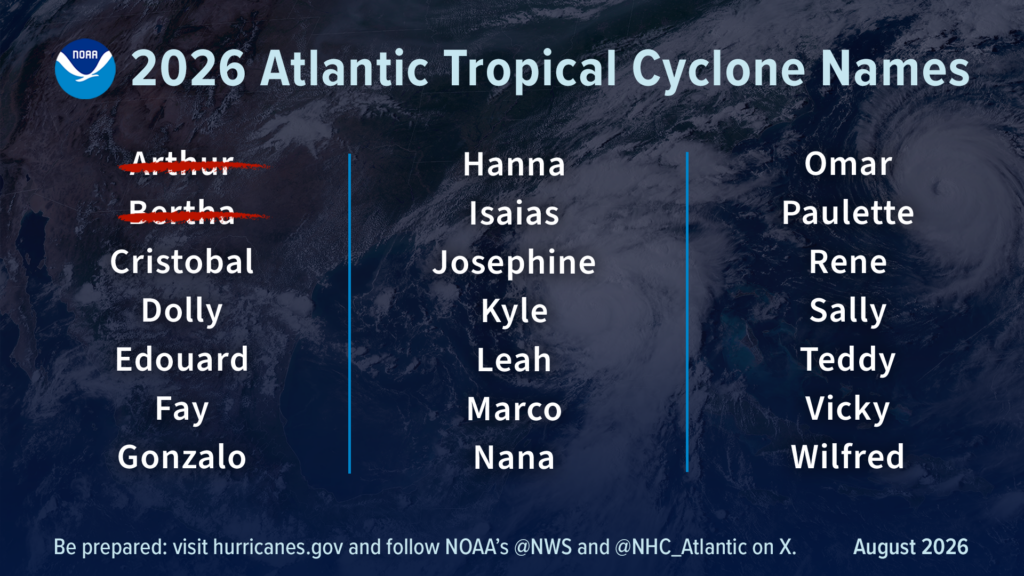
    To put the projections in context, an average Atlantic hurricane season typically generates 14 named storms, seven hurricanes, and three major hurricanes. Through the first half of the 2026 season, only two named storms – Tropical Storm Arthur and Tropical Storm Bertha – have formed, and neither gained enough strength to reach hurricane status. Both systems originated in the Gulf of Mexico before making landfall in Louisiana, bringing heavy downpours to the Gulf Coast; Arthur also spawned multiple tornadoes across the region during its passage.

    Ken Graham, director of NOAA’s National Weather Service, stressed that storm strength measured by wind speed does not capture the full scope of potential harm from tropical systems. “Inland rainfall is a major cause of damage from tropical storms and hurricanes, as Arthur demonstrated,” Graham noted. “That’s why it’s important to prepare for every storm that’s projected to impact your area, even if it never reaches hurricane strength.”

    Forecasters confirm that the primary force limiting Atlantic storm activity this year is the strengthening El Niño, which first developed in the equatorial Pacific back in June. El Niño alters global wind patterns to increase vertical wind shear across the entire Atlantic basin – a condition that tears apart developing tropical systems before they can organize and intensify, sharply reducing the overall number of storms that form.

    Matt Rosencrans, NOAA’s lead seasonal hurricane forecaster, explained that El Niño has solidified its role as the overriding climate influence for the 2026 Atlantic season. “When El Niño emerges, it usually becomes the dominant factor in total hurricane season activity, and this El Niño continues to get stronger every month,” Rosencrans said. “Compared to a mature El Niño, other mechanisms play a smaller role in determining the number and intensity of tropical storms in the Atlantic basin.”

    Two secondary climate factors are also factored into the outlook: near-average sea surface temperatures across the Atlantic and a neutral West African monsoon. Forecasters note both will have far less impact on overall seasonal activity than the strengthening El Niño event.

    While the Atlantic is set for a quieter than usual season, El Niño has the opposite effect on Pacific hurricane activity, pushing both the Eastern and Central Pacific basins toward above-average seasons this year. NOAA continues to project 15 to 22 named storms for the Eastern Pacific, where seven named storms – including two hurricanes and one major hurricane – have already formed, matching the above-average trajectory the agency initially predicted.

    NOAA underlines one critical caveat to its seasonal outlook: the broad projection of total storm activity does not include predictions for where any individual storm will make landfall. Landfall location is determined by short-term atmospheric patterns that can only be reliably forecast roughly one week in advance, the agency notes. The U.S. National Hurricane Center continues to issue regular, updated forecasts, watches and warnings for all active tropical systems to keep at-risk coastal communities informed.

  • Reminder: Queen Conch Closed Season Remains in Effect Until August 31

    Reminder: Queen Conch Closed Season Remains in Effect Until August 31

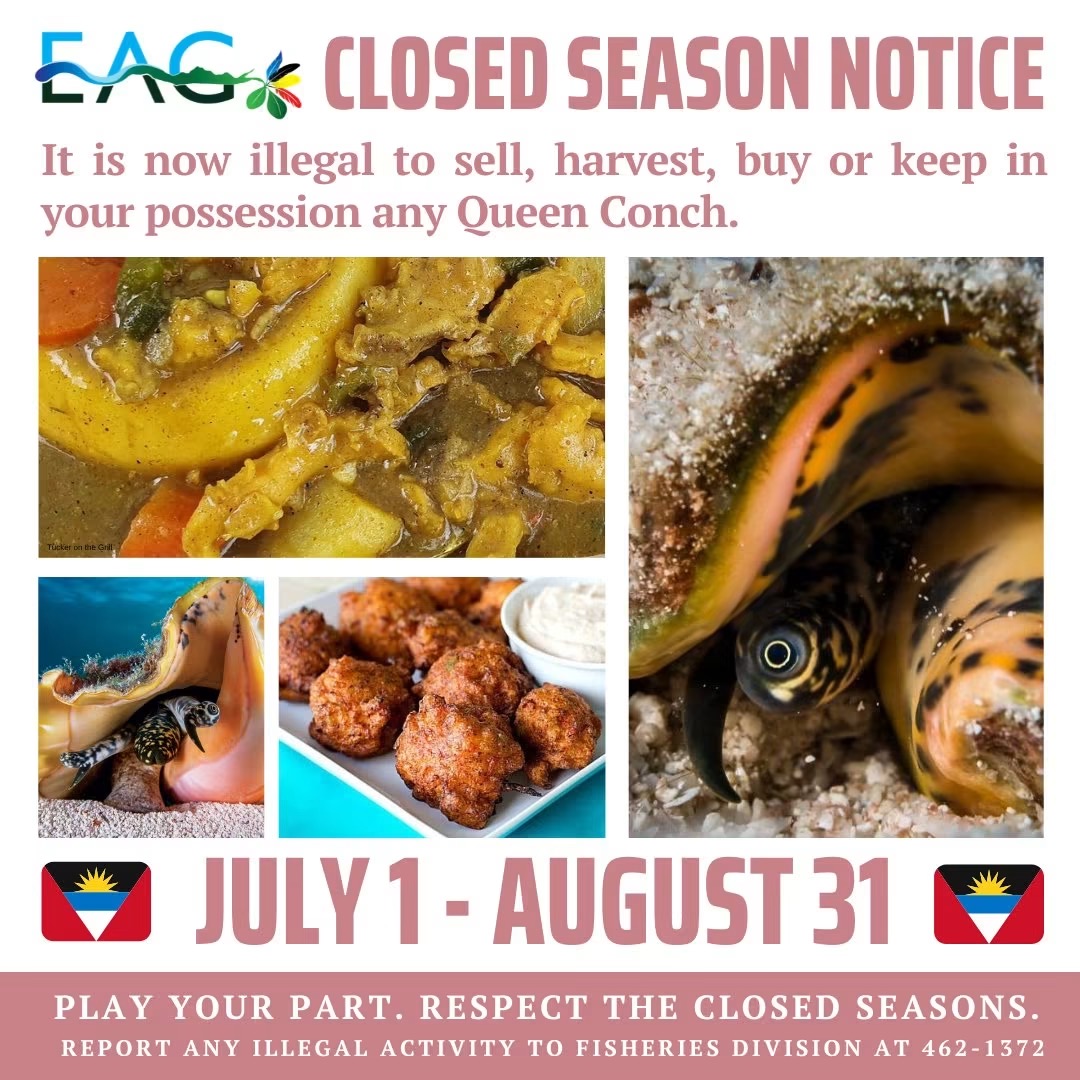
    ST. JOHN’S, Antigua and Barbuda – As the 2026 annual queen conch closed season enters its second month, local authorities and environmental conservation groups have reissued a public reminder to all residents, commercial fishers, and businesses across the twin-island nation that harvesting, trading, or holding queen conch remains illegal through August 31.

    This seasonal regulatory closure, which runs from July 1 to August 31 each year, aligns with the species’ critical annual breeding cycle. The pause in human harvesting activity gives queen conch populations unimpeded space to mate and reproduce, laying the groundwork for more robust population growth in the coming years. As one of Antigua and Barbuda’s most ecologically and economically valuable marine resources, long-term protection of queen conch is tied directly to the sustainability of the local fishing industry and the health of the nation’s coastal marine ecosystems.

    The Environmental Awareness Group (EAG), a leading local environmental advocacy organization, has emphasized that widespread public compliance with the closure rule is essential to preserving the species for future generations. Environmental advocates have called on community members to not only adhere to the regulations themselves but also remain vigilant for any suspicious activity related to the protected conch.

    Any member of the public who suspects illegal harvesting, sale, or possession of queen conch during the closed season is instructed to report the activity immediately to the national Fisheries Division via the dedicated contact line at 462-1372, enabling rapid enforcement of conservation rules.

  • Additional EC$19 million coming for Dominica’s small businesses, say officials

    Additional EC$19 million coming for Dominica’s small businesses, say officials

    Dominica’s government is expanding its successful micro, small and medium enterprise (MSME) financing initiative, adding an additional EC$19 million in low-interest concessionary funding that will become accessible to local entrepreneurs starting this December. The announcement was made by Finance Minister Dr. Irving McIntyre during his presentation of the 2026-2027 National Budget to Parliament this Tuesday.

    Under the expanded programme, the additional capital will be channeled through the AID Bank, which will manage direct lending to eligible MSMEs across the country. Dr. McIntyre outlined that the loan terms have been intentionally crafted to reduce financial strain for growing and emerging businesses: borrowers will pay a fixed 3.5 percent interest rate calculated on a reducing balance, with repayment windows stretching up to 10 years and a six-month grace period that covers both principal and interest payments.

    “These terms are designed to protect cash flow when a business is most vulnerable: during start-up or expansion,” Dr. McIntyre told lawmakers, emphasizing that the flexible structure addresses the unique financial challenges new and growing businesses face in their early stages.

    This new injection of funding builds on the success of the initial EC$27.8 million MSME Loan Facility, which supported 554 local businesses before all allocated funds were fully committed by March 31, 2026. Beneficiaries of the first round of funding spanned a wide range of key Dominican economic sectors, including agriculture, tourism, transportation, manufacturing, and various service industries.

    Dr. McIntyre noted that the rapid full uptake of the first programme’s funding sends a clear signal: local entrepreneurs are eager and ready to scale their operations when affordable, accessible financing is made available to them. He added that the Dominican government positions MSMEs as a foundational pillar of the national economy, critical to both boosting employment rates and advancing long-term economic diversification.

    “These businesses are not on the margins of the economy,” McIntyre said. “They are often where Dominicans earn their first wage, develop an idea, and build a livelihood.”

  • Chinese ambassador donates $20,000 to Parks Authority

    Chinese ambassador donates $20,000 to Parks Authority

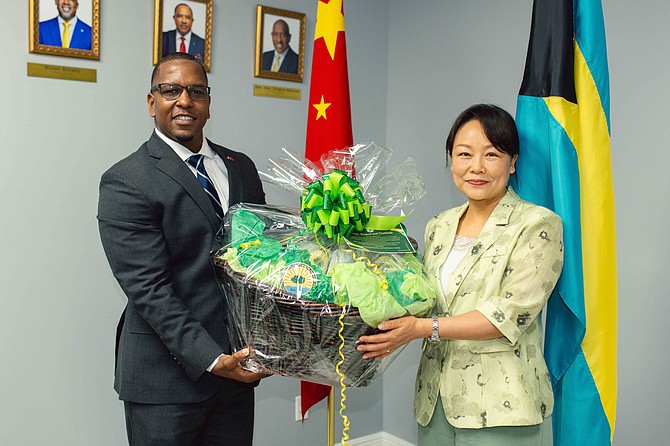
    In a bilateral engagement aimed at strengthening community-focused cooperation between China and The Bahamas, Chinese Ambassador Yan Jiarong has contributed $20,000 to the Bahamas Public Parks and Public Beaches Authority. The donation ceremony took place Wednesday during the ambassador’s official visit to the authority’s dual headquarters located on Gladstone Road and Fire Trail Road West.

    Before the formal handover, Ambassador Yan held in-depth talks with the authority’s executive leadership team and Board of Directors. The closed-door discussion centered on issues of shared interest, touching on potential areas of future collaboration related to public space preservation and cross-national cultural exchanges centered around Bahamian natural public assets. Following the meeting, both sides held a public press briefing to communicate the purpose and details of the donation to local media. At the close of the briefing, Ambassador Yan and Executive Chairman Jamahl Strachan formally completed the gift exchange.

    The seven-figure contribution (in Bahamian currency terms) is earmarked specifically to advance the authority’s core mandate: the ongoing upkeep, expansion, and improvement of public parks and beach spaces scattered across the entire archipelago of The Bahamas. These public spaces serve as critical recreational and cultural hubs for local residents, and form a core pillar of the country’s $3 billion a year tourism industry, which attracts millions of international visitors annually.

  • Santiago tourism cluster supports construction of Amber Tourist Highway

    Santiago tourism cluster supports construction of Amber Tourist Highway

    In the northern Dominican city of Santiago de los Caballeros, the leading regional tourism industry coalition has thrown its full support behind a proposed infrastructure project that promises to reshape travel and economic activity across two of the nation’s most popular tourism hubs. The Santiago Tourist Destination Cluster has publicly endorsed the development of the Amber Tourist Highway, arguing that the new roadway will fill critical gaps in regional connectivity between the provinces of Santiago and Puerto Plata, unlocking shared economic and tourism growth for both areas. Brenda Sánchez, president of the cluster, which represents a broad cross-section of local tourism-related businesses and stakeholders, framed the highway initiative as a transformative opportunity for the Dominican Republic’s northern tourism corridor. She emphasized that the project will make it far easier to cultivate multi-destination travel, a strategy that encourages visitors to extend their stays and explore more of the country rather than limiting their trips to a single location. Improved road links will also streamline travel for both domestic tourists traveling within the Dominican Republic and international visitors arriving from overseas, removing common logistical barriers that currently discourage cross-province travel. Beyond improving convenience for travelers, Sánchez noted that the highway will deepen the collaborative relationship between Santiago and Puerto Plata, two core pillars of the Dominican Republic’s $7 billion annual tourism industry. The interconnected nature of the new route will allow the two destinations to complement one another: visitors can explore the cultural and historic attractions of inland Santiago, then easily travel to the coastal resort hubs of Puerto Plata for beach getaways, creating a more well-rounded vacation experience. Sánchez added that this enhanced connectivity will also boost the region’s overall global competitiveness as a tourism destination. A more integrated, accessible corridor is likely to draw higher levels of foreign and domestic private investment into hotels, restaurants, adventure tourism operations, and other tourism-related businesses, creating new jobs and expanding tax revenues for local governments. For existing businesses across the sector, from small family-owned guest houses to large international resort chains, the improved infrastructure will translate to higher customer volumes and stronger revenue streams. In closing, the Santiago Tourist Destination Cluster reaffirmed its longstanding commitment to supporting strategic infrastructure projects that align with the goal of sustainable, inclusive tourism growth. The organization stressed that investments that improve regional mobility, expand access to tourism assets, and strengthen collaboration between complementary destinations are key to ensuring the long-term resilience and prosperity of the Dominican Republic’s tourism economy, which accounts for roughly 15% of the nation’s total GDP.

  • Dominican Agriculture Ministry and Indomet partner to strengthen climate resilience

    Dominican Agriculture Ministry and Indomet partner to strengthen climate resilience

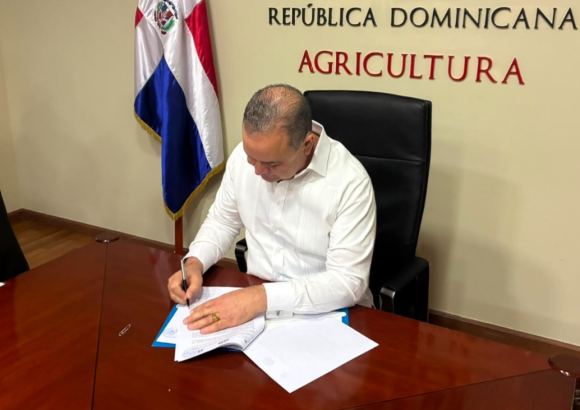
    In a landmark step to address growing climate volatility in the agricultural sector, the Dominican Republic’s Ministry of Agriculture and the Dominican Institute of Meteorology (Indomet) have formalized a new collaborative agreement focused on upgrading the nation’s climate risk management systems. The deal was signed in Santo Domingo by Agriculture Minister Francisco Oliverio Espaillat Bencosme and Indomet Director Gloria Ceballos, marking a coordinated effort to merge specialized climate and water data with day-to-day agricultural planning across the country.

    At its core, the partnership is designed to bridge the gap between scientific meteorological research and on-the-ground agricultural practice, enabling small-scale and large-scale producers alike to make more informed decisions that account for shifting weather patterns. Unlike past disconnected initiatives, this agreement institutionalizes data sharing between the two agencies, putting climate expertise directly in the hands of the farming communities that need it most.

    One of the most significant components of the new agreement is the planned expansion of the Agroclimatic Roundtables, regular collaborative forums that bring together a cross-sector group of stakeholders: professional meteorologists, leading agricultural scientists, local agricultural extension agents, and working farmers. At these roundtables, participants walk through the latest long and short-term weather forecasts, evaluate how projected conditions—from extended dry spells to unexpected heavy downpours—will impact local crops, and co-develop customized farming guidance tailored to the unique ecological and agricultural conditions of each Dominican region.

    Beyond expanding the roundtable program, the initiative includes a suite of complementary activities to embed climate adaptation across the sector. These include the regular publication of specialized agroclimatic bulletins that distill complex climate data into accessible, actionable updates for producers, ongoing hands-on training programs for both working farmers and agricultural technical staff, and sustained cross-agency exchange of the latest technical and scientific research related to climate and agriculture. The partnership will also provide active support for the development and implementation of public policies that prioritize building long-term resilience in the Dominican agricultural sector.

    Government and agency leaders emphasized that the agreement fills a critical gap in the nation’s approach to climate and agriculture. By helping farmers anticipate and prepare for climate-related events such as severe droughts, intense tropical rainfall, and record high temperatures, the partnership is expected to cut widespread crop and income losses that have hit Dominican farming communities in recent years. Beyond reducing immediate risk, officials noted, the initiative will strengthen the nation’s overall food security and encourage the adoption of more environmentally sustainable farming practices that align with long-term climate adaptation goals.

  • Abinader arrives in Colombia for presidential inauguration

    Abinader arrives in Colombia for presidential inauguration

    On a Friday morning marked by diplomatic protocol, Dominican Republic President Luis Abinader touched down in the Colombian city of Cali, beginning a one-day official visit to attend the swearing-in ceremony of incoming Colombian President Abelardo de la Espriella.

    After his aircraft arrived at Alfonso Bonilla Aragón International Airport, Abinader was greeted by a welcoming party that included Félix Aracena, the Dominican Republic’s ambassador to Colombia, senior Colombian protocol officers, and ranking civil and military representatives from the host nation. The visit opened with formal military honors, a standard diplomatic gesture for visiting heads of state.

    Accompanying President Abinader on the trip is Roberto Álvarez, the Dominican Republic’s Minister of Foreign Affairs. The visit was arranged in response to an official invitation extended to the Dominican government, a step that highlights the longstanding diplomatic bonds and collaborative partnership between the Caribbean nation and the South American country.

    Before the inauguration ceremony gets underway at the USC Arena, located on the campus of Santiago de Cali University, Abinader has a packed schedule of bilateral engagements with other visiting heads of state and high-level government officials from across the region. He is also slated to attend an official welcome reception hosted by President-elect de la Espriella and his spouse, Ana Lucía Pineda.

    Once the swearing-in ceremony concludes, President Abinader and the entire Dominican delegation are scheduled to depart Colombia and return to the Dominican Republic by the end of the same day, wrapping up the quick diplomatic mission.

  • Dominican Republic ranks among top six countries in regional digital health test

    Dominican Republic ranks among top six countries in regional digital health test

    Against a backdrop of 20 competing delegations from across the Latin American and Caribbean region, the Dominican Republic has secured a spot among the top six performers at the 5th Regional Digital Health Connectathon, held in Panama City. The high-profile regional event, organized alongside the PH4H 2026 Regional Conference, was designed to test national health systems’ capacity to share clinical data safely and efficiently in line with global interoperability norms.

    Unlike conventional conferences that focus only on policy discussion, the Connectathon puts technical teams through hands-on, real-world scenario testing to evaluate cross-border health information exchange. Dominican technical delegations achieved a perfect 100% completion rate for all assigned test cases, a result that cemented its standing as one of the region’s top-performing participants in this exercise.

    Testing was centered on five high-priority domains critical to modern cross-border digital health: the International Patient Summary (IPS), cross-border telehealth consultations, electronic yellow fever vaccination certificates, electronic medication prescriptions, and health data cybersecurity frameworks. The Dominican team successfully demonstrated proficiency across every testing area: it proved capable of producing and sharing standardized patient clinical summaries, authenticating digital vaccination certificates, processing cross-border telemedicine requests, retrieving accurate medication data, and deploying core security tools including digital signatures and QR codes to safeguard sensitive patient health information.

    According to the Dominican Republic’s Ministry of Public Health, this strong performance marks a meaningful milestone in the rollout of the country’s National Digital Health Strategy. It also paves the way for the planned implementation of the Single Electronic Health Record (known locally as EEUS), a transformative system that will grant authorized medical providers secure access to a patient’s full clinical history, regardless of where the original care and data collection took place. This achievement positions the Dominican Republic as a growing leader in regional digital health integration, bringing it closer to a fully connected, patient-centered national health ecosystem.

  • The bubble is broken: time to talk about real funding for Dominican literature

    The bubble is broken: time to talk about real funding for Dominican literature

    For years, stakeholders across the Dominican literary community have reflected on the trajectory of the nation’s literary landscape. This ongoing conversation is deeply rooted in shared responsibility that binds together communities, industry players, creative enterprises, and the collective of allies who have long worked to elevate Dominican storytelling.

    Just days ago, Roxanna Marte, Dominican fiction writer, professor, cultural strategist and director of the literary collective CuentaRD, shared a landmark observation on her Instagram: the insulating bubble that long surrounded Dominican literature has finally popped. The shift happened far more rapidly than even the most optimistic community leaders once anticipated, driven by the collective talent, passionate commitment, and shared sense of purpose that unites hundreds of creators and cultural organizers across the country.

    This breakthrough, however, does not mean the work is finished, nor that the sector can afford to step back and relax. Substantial, systemic challenges remain, and ignoring them will not make them disappear. In a previous analysis, Marte outlined three core pillars that require intentional investment to grow Dominican literature: nurturing emerging creative talent, securing sustainable long-term funding, and building robust organizational infrastructure to support cultural expansion – what she terms “organizational know-how.”

    Until now, one critical underpinning of this progress has gone undiscussed: the dynamic, unyielding leadership that has driven the entire movement forward. Marte emphasizes that the Dominican private sector has delivered extraordinary results, setting a new benchmark for innovative cultural management not just for the Dominican Republic, but across the entire Caribbean. Private cultural leaders have openly and unapologetically upended outdated, stagnant systems that long held local literature back.

    The bubble was burst by sheer grit and relentless effort, fueled by the unconditional commitment of these cultural leaders, who work tirelessly to bring Dominican storytelling to new audiences, no matter the personal or professional cost. Reaching this milestone brings a quiet sense of relief and well-earned pride – a moment to pause and celebrate after years of grueling work. With the bubble broken, there are no more excuses for failing to reform a system that remains in flux. The momentum of this movement cannot be stopped, because the community has already mastered the most critical component of long-term success: the human element. Through every challenge and every win, literature remains a non-negotiable national priority, and cultural management is driven by a deep passion to create lasting, meaningful experiences that resonate with audiences at home and abroad.

    Looking ahead, two major structural challenges still demand urgent, collective attention. First, the sector continues to lack cohesive, functional organizational foundations that cut across individual projects, cultural institutions, and both public and private cultural governing bodies. Second, consistent, sufficient funding – the backbone of any real, lasting change in the cultural sector – remains out of reach for most projects.

    As observed across the community in recent months, gaps in structured cultural management and organizational infrastructure persist across the sector. These gaps include a lack of direct financial investment, poorly defined leadership teams, inadequate professional training for cultural workers, and insufficient, consistent support from public cultural institutions. Importantly, Marte notes that public entities cannot be expected to bear the entire financial burden of sustaining the literary sector; backing long-term cultural projects carries significant inherent financial risk that no single actor can absorb alone.

    To prevent cultural work from becoming an unsustainable burden for creators and organizers, the sector needs dedicated, tangible resources. For any project director, it is nearly impossible to deliver a consistent, high-quality cultural experience when leading an unfunded private initiative. Targeted funding must be allocated to promising projects, and every viable proposal deserves rigorous evaluation, given the immense public value that a thriving literary sector brings to the entire Dominican nation.

    Securing consistent funding is a skill many cultural managers are still developing, and Marte points out that the priorities of funding institutions often remain opaque to creators and organizers. What the sector needs now, she argues, is open, structured dialogue between public and private stakeholders to address the current gaps in the system. No single actor can build a thriving, inclusive literary ecosystem alone – this is especially true in the Caribbean, where economic and social conditions are notoriously unstable, variable, and unpredictable. The private sector holds a shared responsibility to advocate for progressive public cultural policies and support targeted programs that can transform the Dominican literary landscape for the better.

    This open, collaborative dialogue is the first step toward building the thriving ecosystem that cultural leaders have envisioned for decades. Already, the collective willingness to see these projects succeed is stronger than ever, and more tangible than at any point in the nation’s history. Never before has Dominican literature sparked such widespread conversation across social media platforms, local book clubs, publisher marketing campaigns, and international co-publishing projects. More Dominican authors are breaking into global foreign markets than ever before, and the sector currently holds a level of international visibility that was unthinkable just a generation ago – even as work continues to build out the structural foundations of the movement.

    The bubble that long isolated Dominican literature from the world is broken, but extensive work remains to be done in the new, open space that has emerged. This work will require constant exploration, adaptive learning, intentional adjustment, and ongoing renewal until the sector is fully consolidated, accessible, and sustainable for all Dominican society.

    Marte extends an open invitation to all stakeholders – over a fresh cup of Dominican coffee – to pause, reflect on the progress the community has already made, and welcome new partners to join the work being built with such dedication across the country. The path to long-term success will never be forged by one group working alone. Real, lasting success is only possible when we work together, honoring every voice in the movement.

  • Punta Cana MRO Center starts operations with first aircraft from JetBlue

    Punta Cana MRO Center starts operations with first aircraft from JetBlue

    The Caribbean nation of the Dominican Republic has achieved a landmark milestone in the growth of its aviation sector, as the first commercial aircraft touched down at the newly constructed Aircraft Maintenance, Repair and Overhaul (MRO) Center at Punta Cana International Airport this week.

    A JetBlue Airbus A320, bearing registration number N634JB, has the distinction of being the first aircraft to enter the purpose-built maintenance facility, officially kicking off commercial operations at the site. The aviation complex is the result of a collaborative development project between Grupo Puntacana, the Dominican developer behind Punta Cana’s tourism and infrastructure ecosystem, and FL Technics, a globally recognized leader in aircraft maintenance and support services.

    This inaugural arrival also doubles as the MRO center’s first contracted commercial job, strengthening the long-standing partnership between JetBlue and Punta Cana International Airport’s expanding network of aviation infrastructure. JetBlue has long been a key operator at the Dominican tourism hub, connecting millions of annual visitors to Punta Cana from North American markets.

    The overarching strategic goal of the new MRO facility is to cement the Dominican Republic’s status as the leading regional hub for aircraft maintenance services across the Caribbean and broader Americas. Prior to the center’s launch, regional airlines were forced to divert their aircraft to far-flung international maintenance markets for specialized overhaull and repair work, incurring significant extra costs and downtime. The new facility eliminates this gap by offering local access to specialized maintenance services for carriers operating in the region.

    Situated within the Punta Cana Free Trade Zone, the MRO center occupies a total plot area of roughly 115,588 square meters, with 27,000 square meters of purpose-built maintenance and operations space completed in its first development phase. This initial stage includes five dedicated maintenance bays configured to accommodate narrow-body aircraft, the most common jet type operated on regional and short-haul routes across the Caribbean. Project leaders have already outlined plans for future expansion to accommodate wide-body aircraft as demand for services grows.

    Beyond core maintenance work, the facility will deliver a full suite of aviation services including routine scheduled inspections, heavy base maintenance, aircraft component repairs, custom cabin modifications, and a range of other specialized technical aviation work. Government officials and aviation industry leaders alike project that the new MRO center will deliver broad economic benefits to the Dominican Republic, including the creation of high-wage skilled technical jobs, expanded opportunities for local technical training programs, and long-term growth for both the country’s core aviation sector and its multi-billion dollar tourism economy.