博客

  • Banreservas honors Minerva Mirabal’s centenary with art exhibition

    Banreservas honors Minerva Mirabal’s centenary with art exhibition

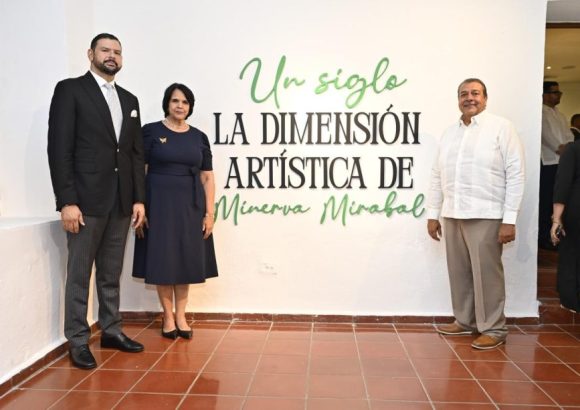
    On the 100th anniversary of Minerva Mirabal’s birth, a groundbreaking new exhibition opened this week at the Banreservas Cultural Center in Santo Domingo, pulling back the curtain on the little-explored creative identity of one of the Dominican Republic’s most revered heroines.

    Titled “A Century: The Artistic Dimension of Minerva Mirabal,” the showcase is a joint venture between the cultural center and the Mirabal Sisters Foundation. It marks the first time such a comprehensive collection of Mirabal’s creative output has been made available to the public, spanning a diverse range of mediums from paintings and sculptures to personal memorabilia, archival photographs, and video presentations. Each piece on display weaves together her lifelong passions for creative expression, social justice, and individual freedom.

    At the official opening ceremony, Franklin Soriano, Vice President of Communications and Social Responsibility at Banco de Reservas, underscored the institution’s longstanding dedication to expanding public understanding of iconic Dominican figures. Soriano emphasized that the exhibition pushes beyond the well-documented narrative of Mirabal’s political activism and historical importance, framing her first and foremost as a skilled visual artist whose work carries deep emotional sensitivity and unique creative vision.

    After a successful debut run in the Dominican city of Santiago, the exhibition has moved to its current venue at the Banreservas Cultural Center’s Ada Balcácer Gallery, where it will remain open to the public through August 9. The showcase features 16 original works created by Mirabal herself, paired with nine complementary pieces from prominent contemporary Dominican artists including Miguel Núñez, Pedro Pascual, Virgilio García, and Radhamés Mejía.

    To help visitors engage more deeply with Mirabal’s undertaught artistic contributions, the cultural center has planned a full roster of accompanying public programming, including guided exhibition tours, academic lectures, and hands-on educational activities. Minou Tavárez Mirabal, Minerva Mirabal’s daughter, shared her appreciation for the initiative, noting that the exhibition does more than celebrate her mother’s legacy—it honors all the activists who fought to entrench democracy and human rights across the Dominican Republic.

    Curated by veteran art critic Abil Peralta and seasoned museum specialist Guadalupe Casasnovas, the exhibition reframes public understanding of this towering Dominican historical figure. For decades, Mirabal has been celebrated globally for her fearless role in the fight against dictatorship, but this new showcase makes clear that her legacy extends far beyond political activism, cementing her place in the Dominican art world as well.

  • Dominican Republic and Puerto Rico seek closer collaboration in judicial affairs

    Dominican Republic and Puerto Rico seek closer collaboration in judicial affairs

    Two Caribbean jurisdictions, the Dominican Republic and Puerto Rico, have opened a new chapter of cross-border partnership with formal discussions aimed at deepening collaborative work across their judicial sectors. The talks center on three core pillars: reciprocal exchange of specialized legal knowledge, enhanced institutional coordination, and expanded academic training opportunities for public legal servants on both sides.

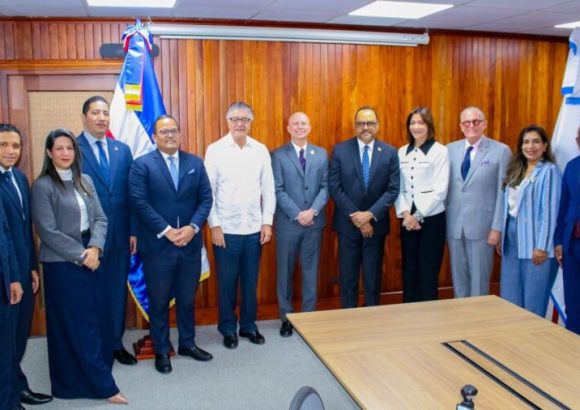
    The high-level meeting, hosted at the headquarters of the Dominican Ministry of Justice in Santo Domingo, brought together key top legal officials from both regions. Leading the Dominican delegation was Minister of Justice Antoliano Peralta, while Puerto Rico’s delegation was headed by Secretary of Justice Lourdes Gómez Torres and Attorney General Omar Andino Figueroa.

    During the closed-door discussions, participating officials conducted a comparative review of the operational frameworks and organizational structures of their respective justice institutions. Both sides expressed mutual interest in advancing a slate of joint collaborative initiatives, ranging from long-term academic exchange programs and cross-institutional internships to targeted specialized training courses for sitting judicial and legal staff.

    The Dominican delegation also included multiple vice ministers of justice, Roberto Santana, the Director of the Dominican Penitentiary Services, and Jaime Francisco Rodríguez, Rector of the Institute of Higher Education for Penitentiary Staff (ISEEPENC). Senior authorities from both sides emphasized that structured experience-sharing and the exchange of proven best practices will deliver tangible value, strengthening the efficiency and fairness of justice administration across both territories.

    After wrapping up the initial bilateral negotiations, the Puerto Rican delegation traveled to the Dominican Attorney General’s Office for a follow-up meeting with Dominican Attorney General Yeni Berenice Reynoso. Per their official itinerary, the visiting delegation will next take part in an academic forum hosted by the Dominican National School of the Judiciary, before concluding their visit with scheduled tours of other key institutions that make up the Dominican judicial system.

  • WATCH: Barbados named Climate-Smart Country of the Year at Caribbean summit

    WATCH: Barbados named Climate-Smart Country of the Year at Caribbean summit

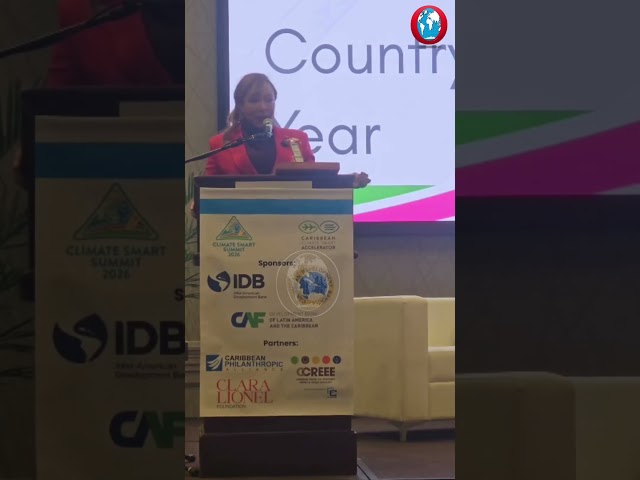
    The first-ever Climate Smart Awards drew to a close on Wednesday, wrapping up a two-day Climate Smart Summit hosted at Bridgetown’s Hilton Barbados Resort, with Barbados claiming the highest honor: Climate-Smart Country of the Year. The Caribbean island nation was selected for the award in recognition of its groundbreaking leadership across three critical climate action pillars: scaling up renewable energy expansion, unlocking unprecedented volumes of climate finance, and building robust long-term climate resilience plans. Accepting the award on Barbados’ behalf, Minister of Finance and Economic Affairs Ryan Straughn emphasized that the honor is a testament to nearly a decade of deliberate advocacy and creative policy innovation in the global climate finance space. Speaking to Observer Online, Straughn noted that the award validates the small island nation’s years of work amplifying the underrepresented voices of climate-vulnerable small island developing states in global climate negotiations. For eight years, Barbados has pushed for systemic change through the Bridgetown Initiative, a landmark framework that calls for a complete overhaul of global development finance structures, specifically reforming how wealthy nations support low-income and climate-vulnerable countries in mitigating and adapting to climate change impacts. Straughn highlighted that Barbados has pursued aggressive, creative financial restructuring that has proven even small nations can deliver impactful climate action by partnering effectively with both multilateral development banks and global commercial markets. Beyond delivering certainty to creditors, the minister pointed to the nation’s pioneering work on natural disaster clause financing instruments, which give vulnerable countries greater flexibility to invest in resilience rather than diverting critical resources to debt service during climate crises. Racquel Moses, CEO of the Caribbean Climate-Smart Accelerator—the organizer of the summit and awards—credited Barbados with extraordinary progress in expanding renewable energy capacity, noting the country has achieved 95% growth in renewable energy generation since the adoption of the Paris Agreement in 2015. Moses added that Barbados has set a regional benchmark for climate accountability by consistently meeting its Paris Agreement obligations, including on-time submission of its updated Nationally Determined Contributions (NDCs), and has mobilized higher levels of climate finance than any other country in the Caribbean. Moses explained that award assessments were based on a rigorous set of criteria, including renewable energy growth and ambition post-2015, national climate vulnerability and preparedness, NDC compliance, and climate finance mobilization capacity. Beyond the top national honor, the ceremony recognized a diverse range of organizations and projects driving climate action across the Caribbean, spanning philanthropy, community leadership, innovative technology, and on-the-ground adaptation and mitigation work. The Caribbean Biodiversity Fund (CBF) was named Climate Smart Philanthropist of the Year, while Curaçao took home the award for Climate-Smart Overseas Territory of the Year. Shalini Maharaj, a technical officer at CBF, told Observer Online the award highlights the regional fund’s core mission of strengthening long-term climate resilience and protecting Caribbean biodiversity. Established to deliver a steady, sustainable stream of funding for conservation efforts across the region, CBF’s work supports targeted initiatives that protect and preserve the Caribbean’s unique natural ecosystems. “It’s a tremendous honor to have our work recognized by the region,” Maharaj said. “Every person involved with CBF, from the board of directors to our on-the-ground staff, works tirelessly to deliver on our vision and mission. This acknowledgment of our hard work is incredibly gratifying, and this win is not just for our organization—it’s a victory for the entire Caribbean.” Several major global philanthropic organizations also received recognition for their climate action investment across the region, including the John Templeton Foundation, ClimateWorks Foundation, Bloomberg Philanthropies, and the Bezos Earth Fund. The remaining award categories honored local and regional projects driving tangible climate impact: Kukki Aquaculture took home Climate Smart Adaptation Project of the Year, GrenadaGrows won Climate Smart Mitigation Project of the Year, Finca Chocolat claimed the Nature-Based and Ecosystem Resilience Award, and PROTOFABTT was recognized with the Innovation and Technology for Climate Award. Special recognition awards went to the Inter-American Development Bank and New Energy Events, while the Clara Lionel Foundation won the event’s People’s Choice Award for its climate work in the region.

  • Punta Bergantín develops native species nursery to support sustainable tourism and conservation

    Punta Bergantín develops native species nursery to support sustainable tourism and conservation

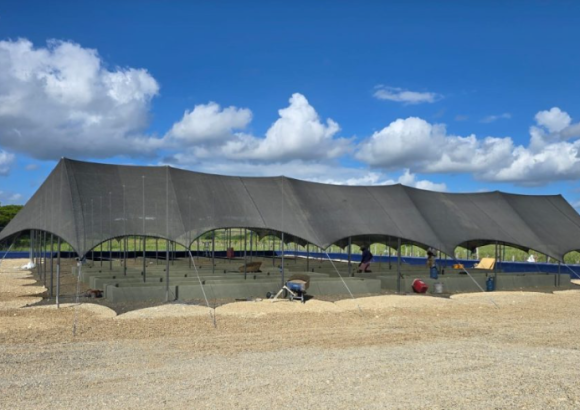
    On Puerto Plata’s scenic North Coast, a landmark sustainable tourism initiative is turning conservation commitments into tangible action: the Punta Bergantín tourism development project has launched a specialized plant nursery focused on cultivating native and endemic plant species, a core step forward in its ambitious environmental sustainability strategy. The project’s ultimate goals are to safeguard regional biodiversity and repair damaged natural ecosystems along the coast, setting a new benchmark for responsible tourism development in the Caribbean.

    This conservation collaboration brings together three key stakeholders: the Punta Bergantín project leadership, the Puerto Plata Provincial Directorate of Environment, and the Santiago Botanical Garden, combining technical expertise, regulatory support, and on-the-ground execution to deliver meaningful ecological impact. So far, the partnership has already integrated 355 individual specimens of at-risk native plant species into the nursery’s conservation program, and completed the planting of 1,260 native tree specimens across the project’s development area. These initial actions lay a strong foundation for scaled-up ecological restoration and long-term biodiversity conservation across the region.

    Leonela Vólquez, who leads community engagement, sustainability, and research efforts for the Punta Bergantín project, framed the new nursery as far more than a temporary conservation gesture—she describes it as a strategic, long-term investment that ties environmental protection directly to the future of the region’s tourism sector. Beyond propagating rare plants, the facility will drive landscape regeneration across degraded coastal areas, create a protected refuge for vulnerable plant species at risk of extinction, offer hands-on environmental education opportunities for local communities and visitors, and strengthen the North Coast’s reputation as a premier nature-focused travel destination.

    Vólquez emphasized that the nursery is fully aligned with the project’s core guiding principle: that tourism growth must go hand-in-hand with measurable, concrete action to conserve and restore natural resources, rather than prioritizing development over ecological health. The facility will serve as the primary production hub for native and endemic plant species needed for the project’s ongoing restoration work, while supporting a broader tourism model that is more climate-resilient, environmentally accountable, and deeply rooted in the region’s unique natural landscape.

    In its first full year of operation, the nursery will specifically provide safe haven for 11 plant species classified by conservation experts as either endangered or critically endangered, filling a critical gap in regional plant conservation efforts. The nursery is not an add-on to the Punta Bergantín project—it is a central, required component of the development’s official Environmental Management Plan, as well as its Tree Transplanting, Compensation, and Reforestation Program, two frameworks that structure and regulate all of the project’s sustainability and environmental protection work moving forward.

  • Dominican Republic and U.S. sign nuclear cooperation agreement

    Dominican Republic and U.S. sign nuclear cooperation agreement

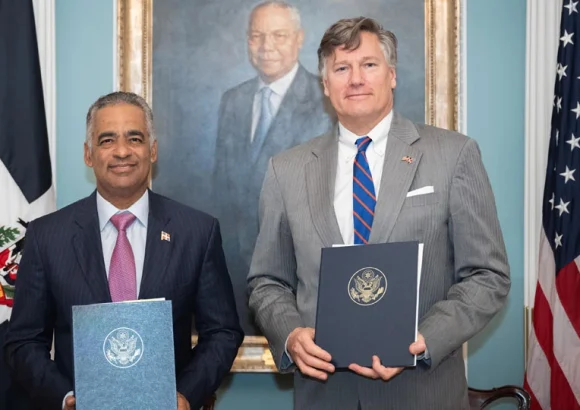
    In a significant step forward for bilateral energy collaboration, the United States and the Dominican Republic have formalized a new partnership in the civilian nuclear sector through a recently signed memorandum of understanding in Washington, D.C. The agreement, crafted to deepen cross-border cooperation, is set to advance shared goals of bolstering regional energy security, driving technological advancement, and expanding mutually beneficial economic relations between the two nations.

    The signing ceremony brought together top officials from both governments: U.S. Under Secretary of State Christopher Landau signed on behalf of the United States, while Joel Santos, the Dominican Republic’s Minister of Energy and Mines, represented his country. According to official statements from the U.S. State Department, the MOU lays out a structured framework for future collaborative work focused exclusively on the peaceful applications of nuclear technology. A core priority embedded in the agreement is upholding rigorous global standards for nuclear safety, operational security, and non-proliferation, ensuring all activities align with international regulatory norms.

    Senior officials from both sides emphasized that the new partnership underscores a shared commitment to building deeper ties in the civilian nuclear space. It also opens the door to exploring new collaborative opportunities that will support long-term energy diversification strategies and inclusive economic growth in the Dominican Republic and across the broader Caribbean region.

    The State Department highlighted that nuclear technology delivers a broad array of critical benefits across civilian sectors beyond power generation. These life-enhancing and development-focused applications include improved medical diagnostics, more accessible advanced cancer treatment, more productive agricultural practices, and cutting-edge scientific research. The framework agreement is expected to clear the path for targeted joint projects and knowledge-sharing technical cooperation in each of these high-impact areas in the coming years.

    Importantly, authorities have clarified that the memorandum does not grant immediate authorization for the transfer of nuclear materials, specialized equipment, or sensitive technology. Instead, it functions as a foundational platform for ongoing dialogue, relationship-building, and the development of potential future initiatives centered on civilian nuclear energy and innovative nuclear technology applications.

    For bilateral relations between the U.S. and the Dominican Republic, the signing marks a measurable new milestone in energy cooperation. It also draws attention to the expanding role that advanced low-carbon technologies play in advancing sustainable development and strengthening energy resilience across Caribbean nations, many of which face growing challenges from energy price volatility and climate change.

  • Body believed to be missing 12-y-o Christal McLean found in Portland river

    Body believed to be missing 12-y-o Christal McLean found in Portland river

    PORTLAND, Jamaica — In a tragic development that has shaken the small community of Portland, remains widely suspected to be those of 12-year-old missing local girl Christal McLean were recovered from the Rio Grande at Grants Level on Wednesday. The body was found in an advanced state of decomposition, leaving community members on edge as authorities work to confirm key details of the case.

    McLean, who lived in the quiet neighborhood of Berrydale in Portland, was first registered as a missing person by authorities on Friday, June 12. After two full days of intensive search operations failed to turn up any trace of the child, Portland police took the step of issuing a public high alert on Monday, urging community members to come forward with any information that could help locate her.

    According to official investigative records, the last confirmed sighting of McLean placed her at her own home around 7:00 a.m. on the day she disappeared, before she was noticed missing and reported to authorities.

    The grim discovery unfolded just after midday on Wednesday, when a group of recreational rafters navigating the Rio Grande accidentally came across the remains. The rafters immediately contacted local law enforcement to report their find, and officers responded quickly to secure the scene. Investigators have confirmed that the remains were already in a far-advanced state of decomposition when they were recovered.

    Local residents who gathered at the site after police arrived shared additional observations about the scene: the body’s head was submerged under the river’s water, and a discarded bag was found a short distance from the remains. Inside that bag, residents reported, were clothing items believed to belong to McLean, as well as a collection of school books.

    McLean was a student who had previously attended Boundbrook Primary School and was currently enrolled at Port Antonio High School, which serves the Portland region.

    At this stage of the investigation, the Portland Police Department has not confirmed the identity of the remains or the cause of death. Both key details will be determined once a full forensic autopsy is completed, and law enforcement says they are currently awaiting the autopsy results to move the investigation forward.

  • Afreximbank advances push for Caricom EXIM bank

    Afreximbank advances push for Caricom EXIM bank

    BRIDGETOWN, Barbados — As the African Export-Import Bank (Afreximbank) continues expanding its footprint in the Caribbean, a landmark plan to launch a dedicated regional export-import bank for the Caribbean Community (Caricom) is moving steadily through official approval channels, bringing new hope for easing the region’s long-standing access gaps to affordable development capital.

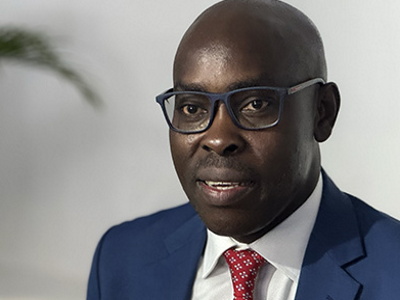
    Okechukwu Ihejirika, acting chief operating officer of Afreximbank’s Caribbean Office, shared updates on the proposal Wednesday on the sidelines of the Climate Smart Summit held in the Barbadian capital. Speaking to Observer Online, he confirmed that the draft plan for the Caricom EXIM Bank has already completed its presentation to Caricom’s Council of Foreign Ministers and is now advancing through the regional review process.

    “The initiative is currently under formal review. It was just presented to foreign ministers recently, so we expect to receive clearance from Caricom heads of government in the near term,” Ihejirika explained. He added that all feasibility studies for the project have been finalized, the full proposal has been circulated to relevant stakeholders, and implementation work will begin immediately once regional leaders formally approve the need for the new institution.

    The proposed bank is designed to directly address a persistent economic challenge across the Caribbean: both public sector bodies and private businesses have long struggled to secure low-cost, long-term financing to support trade expansion and development projects. If established, the institution would fill a critical gap in the regional financial ecosystem by tailoring lending products to the specific needs of Caribbean economies.

    In addition to advancing the new regional bank plan, Ihejirika announced a major expansion of Afreximbank’s own investment commitments to the region. When the bank launched its Caribbean regional hub in Barbados in 2023, it set an initial approved investment envelope of $1.5 billion. That cap has now been tripled to $5 billion to meet growing demand for financing across key strategic sectors.

    Afreximbank’s current priority areas for investment in the Caribbean include infrastructure development, cross-border trade facilitation, and projects that build climate resilience — a critical focus for small island developing states that are disproportionately vulnerable to extreme weather and sea-level rise. To date, since opening its Barbados office, the bank has already approved close to $700 million in credit facilities for projects across multiple Caribbean nations, Ihejirika said.

    Full additional details on the proposed Caricom EXIM Bank, including an analysis of its potential long-term impacts on regional development financing, will be featured in the upcoming Friday edition of *Business Week*.

  • Inside the $164-million calculation

    Inside the $164-million calculation

    In a high-stakes forensic investigation that has captured Jamaica’s political attention, the country’s Integrity Commission has concluded that former legislator Dr. Andrew Wheatley holds roughly $164 million in assets and expenditures that cannot be traced to verifiable lawful sources of income, setting the stage for four criminal charges and a bitter public dispute over conflicting financial records. This is no simple he-said-she-said allegation: it is a granular, method-driven forensic accounting fight that turns on which income streams were counted, which were excluded, and what evidence remains out of public view five years after the probe first launched.

    The core of the conflict hinges on a source-and-application-of-funds analysis, a standard forensic tool that compares all confirmed lawful income against documented spending, asset purchases, and other uses of money across a multi-year period. Investigators began by compiling all verifiable income streams available to Wheatley, including parliamentary and employment salaries, confirmed rental earnings, investment returns, proceeds from verified property sales, documented business income, and approved loans. They then mapped all of Wheatley’s confirmed outlays: real estate acquisitions, new investments, loan repayments, estimated day-to-day living costs, and the net growth of his asset portfolio. After adjusting the calculation to credit all explanations investigators deemed satisfactory, all independently verified bank deposits, and consistent transaction patterns, the commission still found a $164 million gap between confirmed lawful income and recorded uses of funds. Crucially, investigators stress this is not an allegation that $164 million was stolen from the Jamaican government, but rather that the origin of $164 million in spending and assets cannot be linked to confirmed legal sources.

    Wheatley has forcefully rejected the commission’s final calculation, arguing that the investigation wrongfully excluded roughly $168 million in documented, fully lawful rental income, plus additional legitimate proceeds used to repay approximately $50 million in business loans. He insists every dollar of his assets and spending can be traced to legal sources, and that the commission’s analysis is fundamentally inaccurate, incomplete, and unfair. The commission pushes back on this claim, emphasizing that all verified rental income and credible explanations were already included in its final calculation before arriving at the $164 million gap.

    A key point of confusion for outside observers is the overlapping $168 million figures cited by both sides: one is the commission’s estimate of total bank deposits that remain unexplained after adjustments, while the other is the total rental income Wheatley says was wrongfully excluded from the analysis. The central unresolved question here is how much of Wheatley’s claimed rental income was already counted by investigators, how much was left out, and whether the two $168 million figures actually overlap.

    Digging into the granular disputes between the two parties reveals multiple unresolved points that will ultimately be settled in court. On the topic of rental income, Wheatley says he provided leases and bank records proving $168 million in lawful rental earnings that the commission failed to recognize. The commission counters that Wheatley only reported $143.3 million in rental income initially, and investigators only received supporting documentation for a subset of his properties, so they only credited income that could be independently verified. It remains unclear exactly which deposits were accepted, rejected, or already counted, and why the two sides report vastly different total rental figures.

    Next, Wheatley argues the commission failed to properly account for lawful, verifiable sources he used to repay $50 million in business loans. The commission notes that many of these loans should have been disclosed as liabilities in Wheatley’s mandatory statutory declarations, a requirement he allegedly failed to meet. It is still unresolved whether all loan proceeds and repayments were correctly traced, and whether all liabilities were properly disclosed as required by law.

    Disputes also surround a 20-lot real estate development held jointly by Wheatley and business partner Patrick Phipps. Six of the 20 subdivided apartments were transferred to Wheatley’s sole ownership, which he describes as his 30 percent commercial share of the joint venture, not an unreported gift as initially described by his legal team. The commission says it already considered this explanation, but remains concerned about the failure to disclose ownership interests in all 20 lots, and the subsequent disposal of 14 remaining lots while Wheatley was a joint owner. To date, Wheatley has not publicly detailed how the 14 lots were sold or transferred, where the proceeds went, and how these interests were disclosed in his mandatory filings.

    Other unresolved points include a down payment for land tied to Prosperity Realtor, which the commission says should have been reported as an investment in the landowning company that has not been disclosed; the sale of Wheatley’s former ownership stake in Western Medical Centre, which he says is a lawful business transaction, but the commission says the proceeds of the sale could not be verified from the records provided or obtained independently; and the commission’s claim that Wheatley failed to fully provide requested information despite repeated formal requests, which Wheatley denies, arguing he cooperated fully and investigators could have requested additional evidence if needed.

    The investigation stretched across five years, beginning with a formal referral in 2021, followed by multiple rounds of record requests, interviews, and updated analysis. The commission obtained additional third-party records earlier this year, before submitting its final investigation report and indicative prosecutorial ruling to Jamaica’s Parliament in June 2026. The Director of Corruption Prosecution has recommended four charges against Wheatley: knowingly making false statements in statutory declarations between 2013 and 2017 under the former parliamentary integrity law; knowingly making false statements in statutory declarations between 2018 and 2022 under the current Integrity Commission Act; failing without reasonable cause to provide information requested by the Director of Information and Complaints; and illicit enrichment under the Corruption (Prevention) Act.

    To date, these charges are only a prosecutorial recommendation, not a conviction, and Wheatley has repeatedly denied all wrongdoing, asserting he is entitled to the legal presumption of innocence and plans to vigorously contest the charges in court. Both sides have published summary accounts of their positions, but the core of the dispute will only be resolved through a full court examination of line-by-line financial records, including a full reconciliation of claimed rental income, loan documentation, full records for the 20-lot development, sale paperwork for the medical centre, ownership records for Prosperity Realtor, and the full forensic model used by the commission to calculate the $164 million gap. The outcome of this case will turn on tangible evidence, not persuasive rhetoric: the critical missing document is a full line-by-line reconciliation that shows what was claimed, what was proven, what was accepted, what was rejected, and why each decision was made.

    This reporting is based on the Integrity Commission’s public investigation report, the indicative prosecutorial ruling, and Dr. Andrew Wheatley’s official media statement released on June 17, 2026.
  • The Pure Ultra Lounge Experience

    The Pure Ultra Lounge Experience

    Nestled in the lively Ironshore neighborhood of Montego Bay, Jamaica, a one-of-a-kind entertainment and dining venue has carved out its niche by blending laid-back evening relaxation with high-octane nightlife energy. This is Pure Ultra Lounge, a space designed to fit every social occasion from casual catch-ups to big celebratory nights, co-headed by director Romario Ramcharan and operations manager Chanta Ramcharan, his cousin.

    In early June, a panel of judges from the Jamaica Observer Table Talk Food Awards, led by awards conceptualizer Novia McDonald-Whyte, made the trip to this buzzy hotspot to test whether its growing reputation lived up to the hype. The June 9 visit opened with warm hospitality from Chanta Ramcharan, who ushered the judging panel into the lounge’s sleek, modern space, kicking off the experience with a welcome round of creamy, fruity rum punch and a group toast that set a friendly, anticipatory tone for the afternoon.

    Founded in December 2022, Pure Ultra Lounge was born from a clear vision: to create a go-to nightlife and dining destination that caters equally to local Jamaicans and international visitors. Its culinary identity strikes a careful balance, drawing on global culinary trends while staying firmly rooted in bold, authentic Jamaican flavors, Romario Ramcharan explained in an interview with Thursday Food.

    “Our goal opening Pure was to expand Montego Bay’s options for both entertainment and elevated dining, bringing together international-style cuisine with our beloved local flavors,” Ramcharan shared. “We wanted to build an elevated take on local fare that holds its own on the international stage, so that when tourists visit, they can find familiar dishes they love alongside unique Jamaican specialties they’ll remember.”

    To kick off the tasting, head chef Shanoy Wilson walked the panel through a curated spread of appetizers designed to highlight the lounge’s core culinary style. First up was the lounge’s signature nachos, followed by crisp coconut-crusted shrimp served with tangy pinamango sauce, and a trio of tacos loaded with beef, chicken, and shrimp respectively.

    Next, the judges sampled the first of Pure’s expertly crafted signature cocktails: the After Dark, a balanced blend created to complement the lounge’s savory menu. Per Ramcharan, every cocktail on the list is intentionally curated to blend the familiar with the unexpected. This approach encourages local guests to step outside their comfort zones and try adventurous new flavor combinations, while ensuring international visitors can find classic, comforting drinks that feel like home.

    The appetizer parade continued with a diverse selection of chicken wings, ranging from approachable, crowd-pleasing flavors like mild BBQ and sweet honey garlic to fiery, bold options including Cajun ban ban and mango habanero. After wings came cheesy chicken and shrimp quesadillas, followed by a creative twist on a Jamaican classic: salt fish rundown served in tostone cups, a clever adaptation born from a temporary plantain shortage that didn’t compromise the dish’s iconic flavor.

    Between appetizers and the main course, judges had the chance to sample a second signature cocktail: refreshing watermelon tequila, a light, bright sip that perfectly prepared palates for the rich entrées to come. Even though the panel was already far more than full after the extensive spread of starters, they couldn’t turn down the impressive main course selection.

    Headlining the entrée line-up was the lounge’s popular drunken salmon, offered two ways: one glazed in sweet-spicy honey jerk sauce served with creamy mashed potatoes and sautéed greens, and a second preparation poached in white wine sauce paired with fresh corn on the cob and seasonal vegetables. For guests craving a hearty classic, Pure also serves a standout surf and turf: tender grilled beef tenderloin paired with plump seared shrimp and seasonal vegetables.

    The tasting concluded on a sweet note with Pure’s showstopping cookie ice cream cup: a edible bowl made from a warm, gooey chocolate chip cookie, filled with creamy vanilla ice cream, drizzled with rich chocolate syrup, and topped with fluffy whipped cream.

    By the end of the visit, the Table Talk Food Awards judging panel left Montego Bay thoroughly impressed with Pure Ultra Lounge. The venue delivered on its promise of outstanding creative cuisine, innovative mixology, and a welcoming, versatile atmosphere, leaving everyone fully sated and already planning their next visit.

  • Political appointments?

    Political appointments?

    KINGSTON, Jamaica – During Wednesday’s Sectoral Debate in the country’s House of Representatives, Jamaica’s Opposition Spokesperson on Rural and Community Development Dr. Kenneth Russell has put forward serious allegations of systemic partisan patronage at the nation’s Social Development Commission (SDC), warning that blurred lines between partisan politics and community development risk eroding public trust in the key public institution.

    Dr. Russell, a first-term Member of Parliament, told lawmakers that a troubling pattern has emerged: multiple defeated candidates from the governing Jamaica Labour Party (JLP) have been appointed to top leadership positions at the SDC, a body mandated to drive grassroots community organizing and development across the island. Among the appointees he named are SDC Chairman Hidran McKlusky, Executive Director Omar Frith, and Kingston and St Andrew Parish Manager Wade Brown. All three lost recent electoral contests to candidates from the opposition People’s National Party (PNP): McKlusky was defeated by PNP’s Peter Bunting in the Manchester Southern constituency during the 2025 General Election, Frith lost to Mikael Phillips in Manchester North Western in the same poll, and Brown fell to Oliver Clue in the 2024 Local Government Election for the Harbour View division.

    “These are not hidden party volunteers – all of them ran for and lost public office in very recent contests,” Russell told the chamber. “This is a very disconcerting pattern that demands urgent government clarification.” The Opposition spokesperson also called on Rural and Community Development Minister Desmond McKenzie to provide a full update on the SDC’s current governance status, including whether a fully authorized, properly constituted board is currently in place.

    Beyond the controversial appointments, Dr. Russell highlighted long-running staffing shortages that he says have left community services crippled across much of the country. He told Parliament that while three community development liaison officers are supposed to be assigned to the South East St Ann constituency, the post has operated with only a single officer for multiple years. While he acknowledged that recruitment efforts are ongoing, Russell urged the minister to prioritize filling all vacant posts as quickly as possible through a transparent, non-partisan hiring process.

    Dr. Russell emphasized that the SDC holds a unique role in Jamaican public life, operating not as a regulatory or enforcement body, but as a neutral facilitator for grassroots participation, local leadership, and collective community action. “Trust is the most valuable currency of community development,” he explained. “When the lines between partisan politics and community-focused work get blurred, the institution’s credibility erodes, public participation drops, and the public trust that makes our work possible dies.”

    Looking beyond the current leadership and staffing issues, the Opposition spokesperson called for a sweeping, full review and modernization of the decades-old legislative framework that governs the SDC. The commission currently operates under the Jamaica Social Welfare Commission Act, a law first passed in 1958 and last revised in 1965. Russell argued that the 68-year-old legislation is completely out of step with modern community needs, digital technologies, and evolving public expectations.

    “Today’s opportunities, tools, and community aspirations are nothing like what they were when this law was written,” he noted. “The world is changing fast, and the aspirations of Jamaican people are changing even faster, yet too much of our policy thinking around rural and community development remains trapped in outdated assumptions. It sometimes feels like this Government is still playing an outdated children’s game while the rest of Jamaican society has moved on to meet new challenges.”

    Dr. Russell rooted his push for reform in the original vision of the commission’s precursor, Jamaica Welfare, founded by Norman Manley in 1939 to drive grassroots development. Manley convinced the banana industry to commit an annual £80,000 investment to the initiative – a sum equal to roughly J$1.49 billion today. By comparison, Russell pointed out, the total SDC budget for 2026 is only J$1.9 billion, despite the country now having more than twice the population it did when the original initiative launched.

    “Nearly 90 years have passed since that original, ambitious vision was laid out, and we have to ask hard questions: Have we kept pace with that founding ambition? Have we updated our approach to meet the needs of 21st century Jamaican communities?” Russell asked, closing his call for urgent government action to address both partisan appointments and structural reform of the country’s community development system.