博客

  • 19-y-o dies in Manchester crash

    19-y-o dies in Manchester crash

    A fatal traffic collision in rural Manchester, Jamaica has claimed the life of a 19-year-old local motorcyclist, marking the latest in a string of road deaths that continue to impact communities across the island nation. The victim, identified by Jamaican Constabulary Force officials as Andrew Williams, a resident of the Hatfield district, died from traumatic injuries sustained during the Tuesday afternoon crash on Logwood Mews road.

    According to official police accounts, the impact occurred at approximately 4:30 p.m. local time, roughly 300 meters south of the junction connecting Logwood Mews to Hatfield’s main thoroughfare. The collision involved two vehicles: Williams’ green Snypa CG200 motorcycle and a privately owned Honda passenger car. The force of the crash threw Williams from his motorcycle immediately on impact. First responders rushed the injured motorcyclist to a nearby regional hospital, but medical staff pronounced him dead shortly after his arrival. No further details on the condition of the car driver have been released as of Thursday.

    This fatality is the latest addition to Jamaica’s 2024 road traffic death toll, which police officials have updated this week. As of 6:00 a.m. on Thursday, authorities had recorded 134 fatal road accidents across the country since the start of the year. While any road death represents a tragic loss for local communities, the current figure marks a notable improvement from the same period in 2023, when 176 people lost their lives in road crashes across the nation.

    The updated count includes two additional fatal accidents that took place just one day after the Manchester collision. On Wednesday morning, a single crash on the Llandovery main road in the parish of St Ann claimed the life of one male motorist. Later that same evening, a multiple-vehicle collision on Braco main road in Trelawny left three men dead, with multiple other people transported to hospital for treatment of injuries. Local transportation safety advocates have repeatedly called for expanded infrastructure investment and stricter enforcement of traffic laws to bring the island’s road fatality rate down further in coming months.

  • Russia returns 522 bodies to Ukraine

    Russia returns 522 bodies to Ukraine

    KYIV, UKRAINE – In a rare display of limited cooperation between the two warring nations, Russia has returned the remains of 522 people identified as fallen Ukrainian soldiers to Ukrainian authorities, officials confirmed Thursday. The repatriation deal also saw Moscow receive the bodies of 31 of its own deceased service members, according to Russian parliamentarian Shamsail Saraliyev, who shared the confirmation with domestic Russian broadcaster RBC. Ukraine’s official Center for the Treatment of Prisoners of War announced the development in a post across its social media channels, noting that the Russian side has classified all returned remains as those of Ukrainian citizens, majority of which are active-duty military personnel. Kyiv has not yet issued an official comment confirming whether it transferred Russian fallen troops back to Moscow as part of the swap. Visual documentation released by Ukraine’s POW center shows personnel clad in protective white overalls and face coverings unloading sealed body containers from white cargo trucks at an undisclosed location. The announcement of this limited humanitarian exchange comes at the same time that both Russia and Ukraine launched large-scale drone attacks targeting one another’s capital cities, raising fresh concerns over escalating hostilities. Diplomatic negotiations aimed at ending the full-scale invasion, which has stretched on for more than two full years following Russia’s 2022 incursion, have remained completely stalled for an extended period. Since the full-scale invasion began in 2022, the repatriation of living prisoners of war and the remains of fallen combatants from both sides has stood out as one of the only consistent areas of dialogue and cooperation between Moscow and Kyiv, even amid open, large-scale armed conflict across eastern and southern Ukraine. Cross-border returns of fallen troops have long been a core humanitarian demand from families of missing service members on both sides of the conflict, who have spent years waiting for information and the chance to properly bury their loved ones.

  • PM: US drug case too serious for spectacle

    PM: US drug case too serious for spectacle

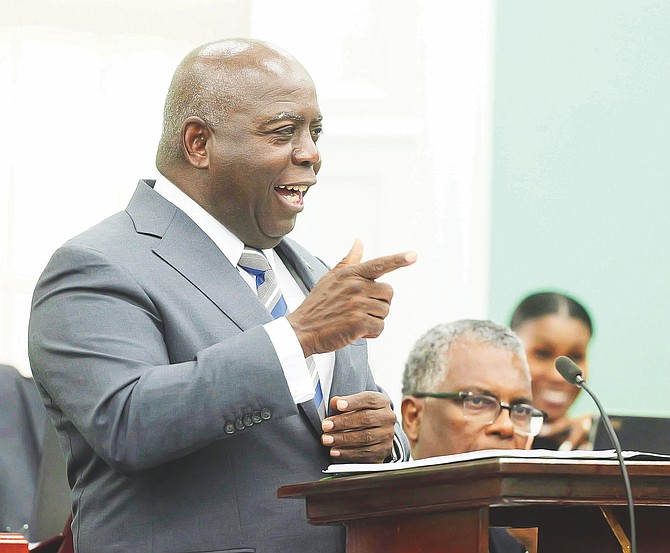
    By EARYEL BOWLEG\nTribune Staff Reporter\n\NASSAU, Bahamas — Bahamian Prime Minister Philip \”Brave\” Davis delivered a fiery address in the House of Assembly this week, pushing back against opposition efforts to center a high-profile US federal drug investigation connected to local figure Eric Jonathan Gardiner, arguing that the serious allegations at the heart of the case are being exploited for cheap political gain rather than treated with the gravity they demand.\n\nThe controversy traces back to an election-day plane crash that preceded Gardiner’s arrest and indictment by US authorities, with details of the Drug Enforcement Administration (DEA) investigation becoming a major flashpoint in Bahamian parliamentary discourse in recent weeks. Davis lashed out at the opposition for dedicating excessive time and political theater to the ongoing US court proceeding, saying the focus has derailed critical legislative debate over the country’s national budget.\n\n“Allegations of this gravity are far too serious to be cheapened into a cycle of accusation, speculation, and spectacle,” Davis said during the session. “We may have your political spectacle in the coming years, but I just wish to caution those who would supply it: do not do so at the expense of the serious matters that demand the maturity of this house and the trust of the Bahamian people.”\n\nThe prime minister reaffirmed his long-held position that all claims raised in the federal affidavit will undergo a full, independent investigation to uncover the full truth. He emphasized that unfounded speculation through press statements, social media posts, and political point-scoring serves no public good when key facts remain under seal in US courts, noting that no additional information has been released by the American judicial system to date.\n\nDavis’ remarks immediately sparked a heated, chaotic exchange between government and opposition legislators on the House floor. House Speaker Patricia Deveaux ultimately ordered that certain opposition comments be struck from the official record, and pushed back against the intensity of the debate, noting that none of her constituents have raised the case as a top priority amid everyday concerns facing the country. “These people are concerned about everyday life. All of this what we charading in here about this and gaslighting what is going on with this particular case? While it’s important to the country, not one of my constituents talked about this,” Deveaux said.\n\nDavis further drew a contrast between the governing Progressive Liberal Party’s approach and that of the opposition, asserting his administration has refused to engage in character assassination against political rivals. To back up his claim, he pointed to a 2024 incident involving former National Security Minister Marvin Dames, an opposition figure whose business partner Malcolm Goodman was arrested off the coast of Florida in February carrying roughly 200 kilograms of cocaine, valued at an estimated $4 million. Davis said he explicitly instructed his party’s campaign not to raise the incident against Dames, as no definitive links to the former minister had been proven. Dames has repeatedly denied any connection to the drug seizure, saying neither he nor his wife had any knowledge of, involvement in, or financial benefit from the alleged illegal activity.\n\nAddressing lingering speculation connected to the election-day plane crash at the center of the Gardiner case, the Office of the Prime Minister issued a formal clarification Wednesday confirming Davis “has never travelled on the aircraft in question.” The statement added that the plane’s pilot, Ian Nixon, had previously provided flight services to Davis during an earlier period when the prime minister worked with Pineapple Air.\n

  • Two police accused of extorting a US tourist

    Two police accused of extorting a US tourist

    Two serving members of the Royal Bahamas Police Force have secured conditional bail after entering not guilty pleas to charges that they extorted $600 from a United States traveler visiting the Caribbean nation. The case stems from an incident that began when American tourist Erick Mondelo was found in possession of suspected illicit drugs while aboard a cruise ship operating in Bahamian waters. Following the discovery, Mondelo was transferred into the custody of local law enforcement for processing, prosecutors allege.

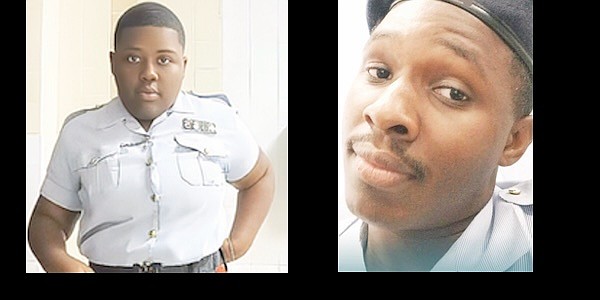
    According to official court documents filed by prosecutors, the two accused officers — 23-year-old Breanna Miller, a resident of Cox Way on East Street, and 27-year-old Felton Turner, who lives on Sears Road — allegedly struck an unlawful deal with Mondelo. The pair are accused of demanding and accepting a $600 cash payment from the tourist in exchange for dropping criminal proceedings against him related to the suspected drug find.

    The alleged corrupt arrangement only came to the attention of senior authorities after Mondelo submitted a formal complaint about the officers’ conduct. That complaint triggered an internal investigation by police oversight officials, which ultimately led to the filing of criminal extortion charges against both Miller and Turner.

    During their initial court appearance before Magistrate Abigail Farrington, both defendants formally denied the extortion charges brought against them. Turner is being represented by defense attorney Maria Daxon, while Kelsie Munroe serves as legal counsel for Miller. Magistrate Farrington granted bail to each defendant set at $5,000, requiring that each secure one to two financially responsible sureties to guarantee their release.

    As additional conditions of their pre-trial release, Miller has been ordered to check in and sign the attendance log at the East Street South Police Station on the final Sunday of each calendar month. Turner faces an identical requirement, though he must report to the Central Police Station for his monthly check-ins. Both officers are scheduled to reappear in court on September 15, when their formal trial on the extortion charges will get underway.

  • Opposition calls for probe into US laundering allegations

    Opposition calls for probe into US laundering allegations

    Bahamas’ main opposition leader Michael Pintard is pressing the ruling Davis administration to launch a formal commission of inquiry into explosive allegations that proceeds from international drug trafficking were laundered through public sector contracts, arguing that recently unsealed U.S. court documents connected to accused drug figure Eric “Player” Gardiner have raised questions too grave for the government to sweep under the rug.

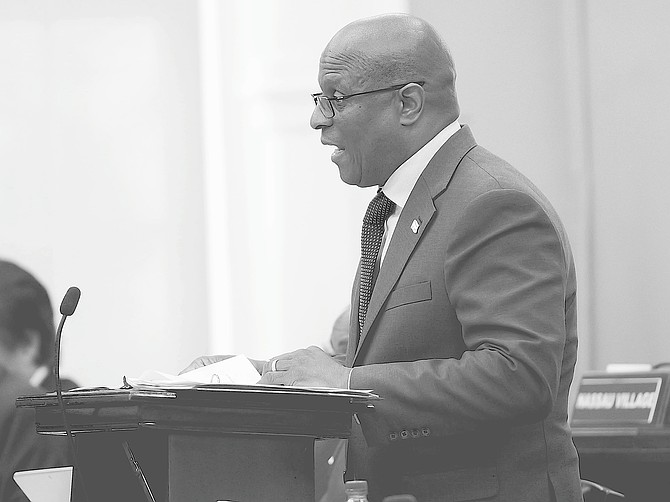
    Speaking during his address on the national budget yesterday, Pintard called for public funding to support an independent probe that will examine claims of systemic corruption, alleged ties between domestic actors and transnational drug trafficking networks, money laundering facilitated through government-awarded contracts, and potential complicity by sitting public officials or members of the country’s armed forces.

    Paper trails linking corporate entities to Gardiner have already drawn public scrutiny. Top Notch Builders, a construction firm that corporate records connect to Gardiner, secured a public-private partnership contract to build the Eight Mile Rock Government Complex just months ahead of the 2017 Bahamian general election. A second affiliated firm, Complete Construction, was later tapped as the primary contractor for the high-profile Carmichael Village affordable housing development project, one of the government’s major public welfare infrastructure initiatives.

    The controversy escalated after U.S. court filings referenced an un-named individual only identified as “Politician 1”, who is alleged to have held meetings with people central to the drug trafficking investigation inside a parliamentary facility. To date, neither U.S. court documents nor any Bahamian regulatory or law enforcement agency has publicly revealed the identity of this individual, fueling widespread public speculation.

    Pintard emphasized that the allegations carry significant weight because they are rooted in formal international legal proceedings, and cannot be dismissed as mere political grandstanding by the opposition. He also pointed out a clear contradiction in the ruling administration’s public response to the scandal: while senior government officials have attempted to downplay the controversy as insignificant, the Royal Bahamas Police Force has publicly committed to launching its own investigation into the claims.

    “For those who have tried to write this off as a nothing burger, the fact that the Royal Bahamas Police Force itself has committed to carrying out a full investigation directly contradicts that claim,” Pintard stated. “In fact, it directly rebuffs the Minister of Foreign Affairs, who has already dismissed this entire controversy as a nothing burger.”

    According to Pintard, the independent inquiry should prioritize two core goals: confirming whether the un-named politician referenced in U.S. court documents exists, and uncovering any other individuals who may be involved in the alleged corrupt activities. He also issued a direct challenge to the Davis administration, demanding full transparency around all public contracts awarded to companies that are now the subject of scrutiny over the laundering allegations.

    Pintard added that the government has a responsibility to disclose not only the full details of contracts connected to the firms tied to Gardiner, but also all public contracts linked to any other companies that have raised red flags for corruption or illicit activity.

    Despite his sharp criticism of the administration’s handling of the scandal and its overall fiscal policy, Pintard confirmed that the opposition will back the country’s overall national budget, though it will register opposition to specific pieces of legislation tied to the spending plan.

    He went on to criticize the government’s proposed budget as fundamentally unrealistic, arguing that steep, repeated tax hikes have placed unbearable financial pressure on ordinary Bahamian households, while increased government spending has failed to deliver tangible, visible improvements to core public services including infrastructure, healthcare, education, and sanitation.

    Pintard noted that collections from the country’s Value Added Tax (VAT) have grown substantially under the current administration, and calculated that total tax revenue collected under the current government has reached approximately $12.5 billion, while total public spending over the same period has hit roughly $17.4 billion. He argued that the wide gap between massive government spending and the lack of meaningful progress on core public services only reinforces the urgent need for greater governmental accountability and the independent inquiry into the corruption and money laundering allegations that have dominated recent national political discourse.


  • Govt plans new title rules and revised vehicle fees

    Govt plans new title rules and revised vehicle fees

    The Bahamas government is advancing one of the most comprehensive overhauls of road traffic regulations in decades, with a package of reforms designed to formalize the vehicle market, boost government revenue collection, and modernize services for drivers across the archipelago.

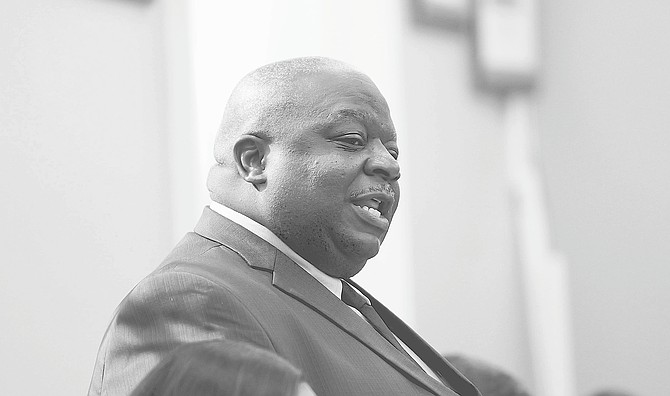
    Transport Minister Leon Lundy has outlined the core changes contained in the upcoming Road Traffic (Amendment) Bill 2026, headlined by a new mandate that all imported vehicles obtain an official Certificate of Title before they can be released from Bahamian customs. This requirement will create a permanent, traceable ownership record starting from the moment a vehicle enters the country, addressing longstanding gaps in the secondary vehicle market.

    Under the new rules, the certificate must be presented any time a vehicle changes ownership, and sellers will also be required to secure a Motor Vehicle Title Clearance Certificate before completing a transfer. Lundy explained that these measures are targeted at cracking down on unregulated activity in the resale sector, including informal off-the-books transfers, untaxed sales, and transactions involving uninsured vehicles that operate without government oversight.

    A second key plank of the reform is a restructured national vehicle licence fee system, with new rates tiered by vehicle weight. Fully electric vehicles will qualify for a reduced annual fee of $125, in a policy move that supports cleaner transportation adoption. For gas-powered vehicles, the new tiers are: Class A (vehicles up to 3,000 pounds) at $160 per year, Class B (3,000 to 5,000 pounds) at $215, Class C at $610, and the heaviest Class D vehicles at $760 annually.

    The revised fee structure comes as the Road Traffic Department (RTD) already stands as one of the Bahamian government’s largest revenue generators. In 2025 alone, the department processed more than 130,000 vehicle registrations and over 100,000 driver’s licence applications across its 30+ locations, collecting more than $50 million in total government revenue. Recent corrective audits have already yielded immediate returns: a review of vehicle licence classifications uncovered misregistered vehicles and recovered $112,500 in overdue government revenue, while a separate audit of taxi and livery plates recalled inactive permits for reissuance to active drivers.

    To complete the modernization push, the RTD has committed to a full transition to cashless operations, developed in close collaboration with the Central Bank of The Bahamas, the Ministry of Finance, the Public Treasury, and external policy advisers. The new system will accept digital payments via debit cards, credit cards, and the Bahamian central bank digital currency Sand Dollar, and will incorporate a real-time revenue analytics dashboard that allows government officials to monitor collections instantaneously.

    A core infrastructure upgrade, the new Transport Management System, is currently being developed by Canadian Bank Note with project management from global professional services firm Deloitte, and Lundy confirmed the system is on track to launch by December this year. Once operational, the platform will allow Bahamian drivers to renew vehicle registrations and driver licences remotely, eliminating the need for in-person visits for routine services. Lundy emphasized that this timeline is not an aspirational goal, but a firm commitment with a fixed deadline.

    The reforms also extend to underserved Family Islands, where an automation initiative is rolling out across Inagua, Mayaguana, Acklins, Crooked Island, the Berry Islands and Cat Island. Three of these new automated locations are already operational, with the remaining sites set to open once staff hiring and placement is completed.

  • Cancer patient issues plea for O-negative blood donors

    Cancer patient issues plea for O-negative blood donors

    From her hospital bed in New Providence, 51-year-old Anastasia Johnson, a mother of three from Abaco, The Bahamas, is fighting through ovarian cancer and a mounting crisis: a critical shortage of the rare O-negative blood she needs to finish the last round of life-saving treatment that will decide her long-term health outcome.

    Diagnosed with the disease just over a year ago, Johnson has seen her life upended completely by the constant, debilitating pain of her illness, forcing her to step away from work entirely. What once was filled with casual lunches and afternoons playing in the park with her children – an 11-year-old son, a 14-year-old son, and an adult daughter – has been reduced to a grueling routine of bi-monthly cross-island travel for chemotherapy appointments. She has relied on the father of her children and close family members to help cover the costs of care and support her through the hardest days, but even their support cannot solve the growing blood shortage crisis she now faces.

    For most adult women, a healthy hemoglobin level falls between 12 and 15.5 grams per deciliter. Johnson’s levels have plummeted to just 7.1, a drop that has put her final chemotherapy round on hold indefinitely until her blood count can be raised. The only way to boost her levels quickly enough for treatment is through blood transfusion, but securing the rare O-negative blood she needs has been a persistent, emotionally draining battle throughout her entire course of care. O-negative blood is known as the universal donor blood type, making it particularly critical for medical systems, but it is carried by only around 7% of the general population, making consistent supplies hard to maintain.

    Johnson told local reporters that the emotional weight of waiting for donations has been overwhelming. “I cry almost every night because I miss my family. I cried all last night, I haven’t even slept for the day,” she shared in an interview, her voice breaking with emotion. “The pain is so intense sometimes I can’t sleep at night. I cry because of the pain.” After months of treatment away from home, her only goal is to get her final round of chemo done and return to the children she loves, she says.

    Johnson’s public plea shines a light on a long-standing, underreported public health challenge across The Bahamas: local blood banks have struggled for years to maintain sufficient inventory to meet patient demand, leaving many vulnerable patients waiting for critical life-saving donations. The patient says she only needs one to two units of O-negative blood to push her hemoglobin levels high enough to proceed with her sixth and final chemotherapy treatment, which will reveal whether her cancer has responded to treatment or spread to other areas of her body.

    Despite the hardship, Johnson says she continues to fight one day at a time for her family, holding out hope for a miracle that will let her go home. She is calling on all eligible donors with O-negative blood to donate at local blood banks to help her and other patients waiting for life-saving transfusions. “When you see people asking for help, if you can help, please do help, because it’s a lot mentally that they be going through,” she said. Members of the public who wish to offer additional support to Johnson can reach her directly at 242-804-2078.

  • Seabreeze MP laughs off health rumours caused by seafood poisoning

    Seabreeze MP laughs off health rumours caused by seafood poisoning

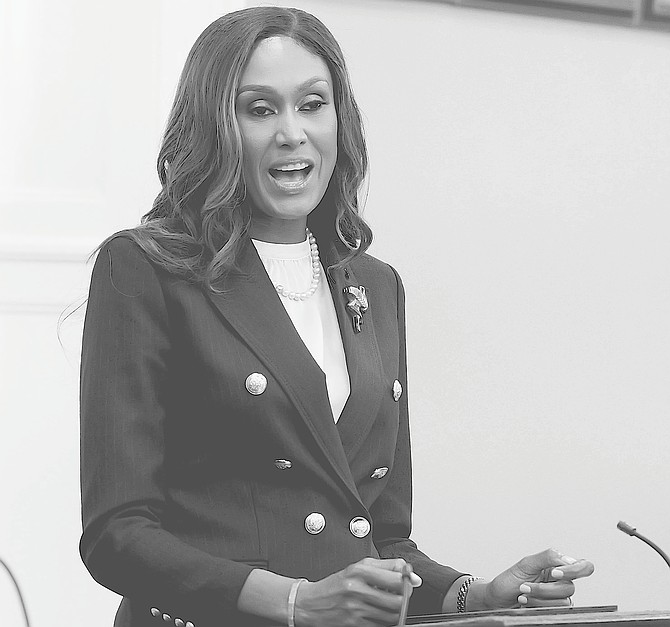
    Bahamian Member of Parliament for Seabreeze Leslia Brice turned to lighthearted wit to put widespread health rumors to rest during an address to the House of Assembly this week, revealing that a simple unexpected reaction to a weekend lobster meal was behind the recent public concern over her wellbeing.

    The incident unfolded Saturday, when Brice had an unanticipated adverse reaction shortly after eating the crustacean. News of the sudden episode spread quickly through local networks, sparking unconfirmed speculation about the severity of her condition that soon reached the public sphere. In the hours that followed, Brice was flooded with calls, texts and messages of concern from close family, friends and political supporters across her constituency.

    Addressing the chamber, Brice framed the moment with characteristic good humor, joking that the unexpected challenge came not from a political rival or a contentious legislative debate, but from a single piece of lobster that derailed her weekend plans. She went on to acknowledge the outpouring of support she received, noting that constituents in Seabreeze reached out en masse, with many even saying they were prepared to travel to her side immediately to offer support.

    “Madam Speaker, that is love, that is the connection, that is the bond that I share with the people of Sea Breeze,” Brice told the chamber, emphasizing how moved she was by the community’s response.

    Brice extended her sincere gratitude to everyone who reached out with well wishes and prayers, noting that the widespread show of care underscored the deep, trusting relationship she has built with the residents she represents during her time in office. The lawmaker also used the moment to quash any remaining uncertainty about her ability to serve, drawing a parallel between the recent health scare and the grueling general election campaign she just navigated to secure her seat.

    “Now, I want to be clear, I was not about to let that little lobster take me out, Madam Speaker,” she said. “I survived a gruelling and intense campaign. I walked those streets, I knocked on those doors, I stood in the heat for hours, and I am still standing. And if a whole election could not slow me down, a piece of seafood certainly was not going to stop me.”

    The address quickly drew a warm reaction from fellow representatives and observers, closing out public speculation about Brice’s health while highlighting the popular lawmaker’s well-known sense of humor and close connection to her constituency.

  • Jamaica to host 2029 Our Ocean Conference in Montego Bay

    Jamaica to host 2029 Our Ocean Conference in Montego Bay

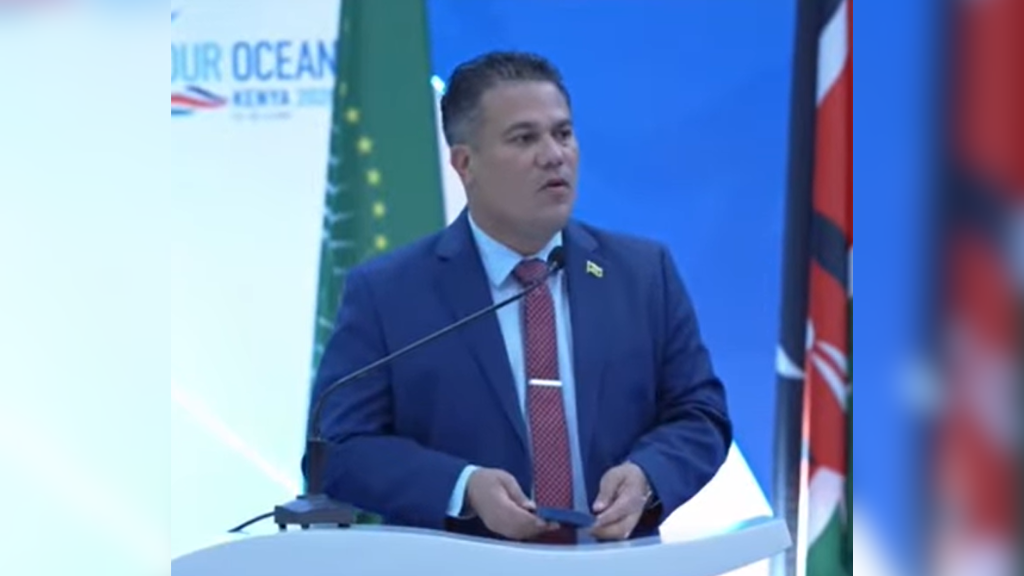
    At the closing ceremony of the 11th iteration of the Our Ocean Conference held in Mombasa, Kenya, Jamaica officially announced that it will welcome global ocean governance stakeholders to Montego Bay for the 13th edition of the landmark summit in June 2029. The handover of conference hosting responsibilities marks a significant milestone for global ocean protection efforts, placing Jamaica’s iconic coastal city at the center of international marine conservation dialogue once again.

    Matthew Samuda, Jamaica’s Minister of Water, Environment and Climate Change, formally accepted the hosting mandate on the island nation’s behalf, framing the opportunity as a weighty global commitment rather than merely an event to organize. In his closing address, Samuda expressed that Jamaica takes on this role with profound gratitude, intentional humility, and a deep-seated sense of accountability to the global community. “This is more than the acceptance of an event. It is the acceptance of a responsibility to the world’s oceans, to future generations, and to the billions of people whose lives, livelihoods, food security, culture, and prosperity depend on a healthy marine environment,” he told attendees.

    Samuda opened his remarks by extending gratitude to the Kenyan government and people for their warm hospitality and visionary leadership throughout the 11th conference, which operated under the unifying theme “Our Ocean, Our Heritage, Our Future.” He went on to highlight the unique historical significance Montego Bay holds for the global ocean governance framework, recalling the city’s central role in the years-long negotiations that produced the United Nations Convention on the Law of the Sea (UNCLOS) — a foundational treaty that still guides international marine policy and conservation work today. “Montego Bay is not simply a beautiful coastal city. It is a place etched into the history of global ocean governance,” Samuda emphasized.

    Looking ahead to the 2029 summit, Samuda outlined Jamaica’s core priority for the conference: shifting the focus from non-binding pledges to tangible, actionable implementation and measurable, verifiable conservation outcomes. “The world does not need simply another conference; the world needs outcomes,” he stated, underscoring growing global frustration with empty commitments amid accelerating marine ecosystem degradation, ocean acidification, and overexploitation of marine resources.

    As the handover process moves forward, Jamaica is preparing to collaborate closely with Canada, which has been selected to host the 12th Our Ocean Conference before Jamaica’s turn in 2029. Samuda closed by extending an open invitation to all global leaders, marine scientists, non-governmental organizations, private sector stakeholders, and community representatives, saying Jamaica eagerly anticipates welcoming the global community to Montego Bay five years from now to advance collective action for healthy, resilient oceans.

  • Adriano Espaillat backs deportation for immigrants convicted of violent crimes

    Adriano Espaillat backs deportation for immigrants convicted of violent crimes

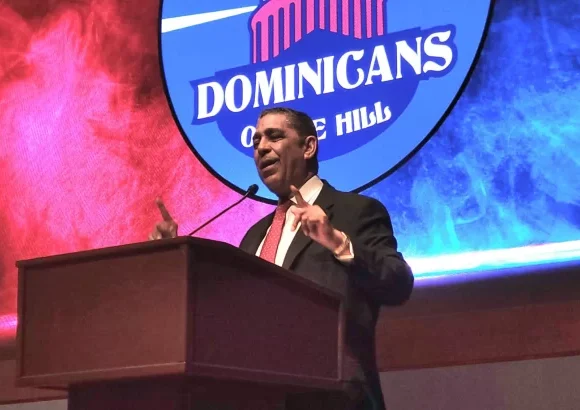
    As national conversations over U.S. immigration enforcement and deportation rules continue to roil policymakers and communities across the country, Democratic Congressman Adriano Espaillat has laid out a measured, targeted approach to how the nation should handle immigrant residents convicted of crimes. Speaking from New York in a recent televised public appearance, the lawmaker drew a clear line between immigrants who have committed violent felonies and those convicted of low-level, non-violent minor offenses, arguing that one-size-fits-all automatic deportation does not align with American legal principles.

    For immigrants convicted of severe violent crimes — including homicide and sexual assault — Espaillat affirmed that they must be held fully accountable through the existing U.S. criminal justice system. When existing federal or state law explicitly requires deportation following a conviction for such offenses, he stressed that those legal mandates must be enforced without exception. This position marks a break from more hardline progressive stances that call for sweeping rollbacks of deportation authority, positioning Espaillat as a voice seeking common ground in the polarizing immigration debate.

    When it comes to minor offenses, however, the Dominican-born congressman pushed back against mandatory automatic deportation policies. He pointed out that a large share of these low-level cases involve long-term U.S. residents and parents who have put down roots in American communities, many of whom have lived in the country for decades. Instead of permanent separation from their families and communities through deportation, Espaillat argued these individuals should be granted a meaningful chance to take accountability for their actions and rebuild their lives within the U.S.

    Espaillat brought personal context to his policy arguments, drawing on his own childhood experiences with aggressive immigration enforcement in his family. He reflected that harsh, overreaching immigration raids targeting immigrant communities were common long before the creation of U.S. Immigration and Customs Enforcement (ICE), noting that aggressive enforcement has a long and troubling history in the country that continues to shape immigrant trust in public institutions today.

    Central to Espaillat’s framework is a unwavering commitment to due process for all immigrants, regardless of the offenses they are accused of. He emphasized that deportation proceedings should never be initiated before an individual has completed their process through the criminal justice system and received a formal conviction. Any removal action, he added, must be carried out in strict compliance with existing U.S. law and the constitutional protections that apply to all people within the country’s borders, regardless of immigration status.