博客

  • WATCH: Senator Malaka Parker Rejects Claims Connecting Her to Criminal Investigation

    WATCH: Senator Malaka Parker Rejects Claims Connecting Her to Criminal Investigation

    A major political firestorm has erupted in Antigua and Barbuda this week, as opposition Senator Malaka Parker has issued a forceful public denial of any connection to the recent arrest of a close associate, while leveling serious accusations against sitting Prime Minister Gaston Browne that he is running a coordinated smear campaign to undermine her politically.

    In a detailed public statement released to media and constituents, Parker stressed that she has “absolutely no involvement” in the events that spawned criminal allegations and ongoing legal proceedings against the associate. The senator flatly rejected any claims that she had prior knowledge of the activities under investigation, clarifying that she has no ties whatsoever to the actions at the center of the case. She also pushed back against circulating claims that the arrested individual played any role in managing or financing her political campaigns, calling those assertions entirely unfounded.

    Parker opened her statement by affirming her commitment to core democratic values: she acknowledged that every individual facing legal action is entitled to due process and the presumption of innocence, while also recognizing that public office demands high standards of transparency and accountability. “True leadership requires transparency, integrity and accountability, values I have always upheld,” she said.

    The bulk of Parker’s statement was dedicated to scathing criticism of Prime Minister Browne, whom she accuses of deliberately linking her name to the ongoing court case to destroy her public reputation. Parker labeled Browne’s public comments on the matter as blatant political opportunism, alleging that he has relied on “outright libel, lies and innuendo” to carry out what she calls a deliberate “public character assassination.”

    She further argued that it is deeply inappropriate for a sitting head of government to insert themselves so publicly and aggressively into an active, pending legal proceeding. “It is virtually unheard of in our region or anywhere for a sitting Prime Minister to weigh in so publicly and so aggressively on a pending court matter,” Parker noted. “It is morally reprehensible for him to attempt to drag an innocent fellow citizen into it.”

    The opposition senator framed the attacks against her as rooted in political calculation, claiming Browne and his governing administration see her as a major threat to their hold on power. “The Prime Minister views this strong, independent, educated and competent Black woman as a direct threat to his grip on power,” she said.

    Parker also used the moment to highlight broader systemic inequities facing women in political life. She argued that female politicians are routinely held to a different standard than their male counterparts: while men are judged on their policy records and personal conduct in office, women are subjected to unfair, intrusive scrutiny of their personal relationships, family lives, appearances, and associations.

    In one of the most serious allegations in her statement, Parker claimed that certain senior law enforcement officials are working at the political direction of the Prime Minister to fabricate a connection between her and the case, despite no evidence of any link existing currently. “We have increasing evidence to suspect that certain senior police officers, acting at the political behest of the Prime Minister, are actively seeking ways to fabricate a connection between myself and the case where none exist,” she claimed. Notably, Parker did not include supporting evidence for this allegation in her public statement.

    Despite what she described as coordinated efforts to intimidate her into silence, Parker made clear that she has no plans to back down. She reaffirmed her commitment to holding the current administration accountable to the people of Antigua and Barbuda. “I will not be intimidated. I will continue to stand my ground, speak truth to power, and hold this government accountable in the absolute interest of the people of Antigua and Barbuda,” she said.

    Parker closed her statement by thanking supporters who have reached out to her amid the controversy. She added that she will continue to offer prayers and support to friends and loved ones facing legal challenges, a stance she emphasized does not amount to an endorsement of any alleged wrongdoing.
  • Pringle Backs Fatal Accidents Bill, Calls for Broader Protection for Grieving Families

    Pringle Backs Fatal Accidents Bill, Calls for Broader Protection for Grieving Families

    In a landmark parliamentary sitting held on Tuesday, Antigua and Barbuda’s legislative body passed the Fatal Accidents Bill 2026, a sweeping update to a legal framework that has remained largely unchanged for nearly a century. The final version of the legislation, which incorporates key adjustments proposed by the opposition, marks a significant step forward in protecting the rights of grieving families who have lost loved ones to preventable fatal accidents.

    The bill was shepherded through parliament by Attorney General Sir Steadroy Benjamin, who laid out the urgent need to replace the country’s existing 1924-era fatal accidents legislation. Outdated and out of touch with modern family structures and social realities, the century-old law failed to adequately address the deep harm that surviving family members endure after a fatal incident caused by a third party’s negligence or misconduct. Under the proposed reforms, a formal, standardized framework would be created to allow eligible dependents to pursue financial compensation for their loss, including a long-overdue new provision: formal recognition of bereavement damages for the grief and psychological suffering that follows a family member’s death.

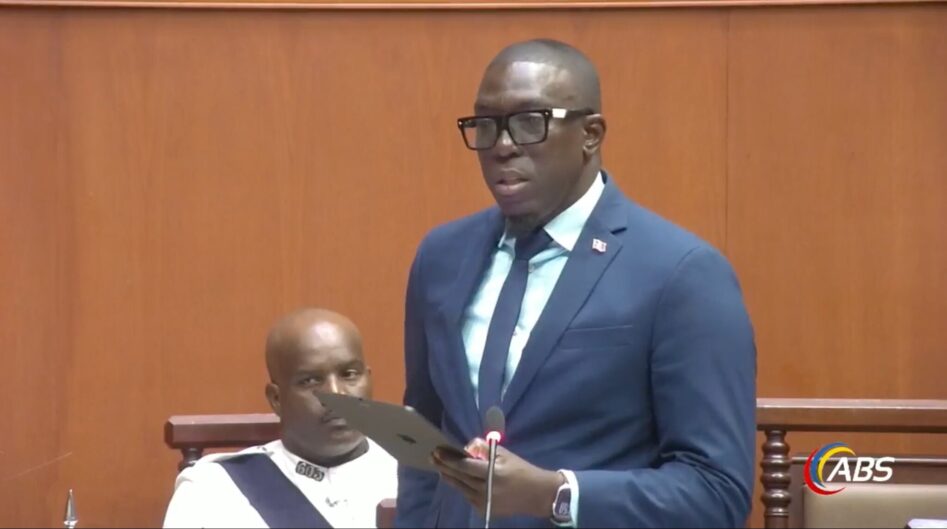
    Opening the debate on the legislation, Opposition Leader Jamale Pringle announced his support for the overarching goals of the bill, affirming that updating the outdated law was a critical priority for protecting vulnerable families across the nation. However, Pringle highlighted key gaps in the original draft that he argued weakened the law’s ability to deliver justice to all affected groups.

    Pringle’s first key recommendation centered on explicit recognition of children impacted by a parent’s fatal death. In his remarks, he questioned whether the original legislation’s broadly worded eligibility provisions sufficiently accounted for the lifelong emotional and financial harm that minor children suffer when they lose a parent, and called for children to be explicitly named as eligible claimants for bereavement compensation. He also raised targeted concerns around provisions covering common-law partnerships, noting that the existing qualifying period for a surviving common-law partner to be recognized as an eligible dependent failed to reflect modern relationship norms, and called on lawmakers to revisit that requirement.

    In response to the opposition’s input, Attorney General Benjamin reaffirmed the core purpose of the legislation: to center the needs of surviving family members who are left to pick up the pieces after a fatal accident. He emphasized that the introduction of formal bereavement damages was itself a historic shift, noting that for the first time, the law would explicitly recognize the profound emotional trauma that families endure after fatal incidents, particularly road fatalities. “That pain and suffering endured by dependents when a family member loses his life is something that the law has failed to acknowledge for far too long,” Benjamin told parliament. The legislation, he added, would ensure that dependents and beneficiaries receive stronger protections when a core breadwinner or family member dies as a result of someone else’s actions.

    During the bill’s committee stage, parliamentarians voted to adopt the opposition’s key proposed amendments. The final version of the bill explicitly expands bereavement compensation eligibility to include children directly, and raises the maximum allowed bereavement award from the original proposed amount to Eastern Caribbean dollar 20,000, providing more substantial financial recognition for families’ emotional loss.

    Following the approval of the amendments, the full bill was passed by parliament. The updated legislation establishes streamlined, modernized procedures for filing fatal accident claims, and broadens the scope of eligible claimants to include spouses, children, parents, and other eligible dependents across a range of family structures.

    In closing remarks after the vote, Pringle noted that the collaborative process to amend the bill had resulted in a far stronger piece of legislation, and expressed hope that the new framework would deliver on its core promise: ensuring that families devastated by tragedy receive fair treatment and meaningful support under Antigua and Barbuda’s law.

  • CYEN Grenada calls on youth to recognise, respect, and restore land

    CYEN Grenada calls on youth to recognise, respect, and restore land

    On June 17, the Grenada Chapter of the Caribbean Youth Environment Network (CYEN) joined the global movement to mark the World Day to Combat Desertification and Drought, centering its local campaign around this year’s global theme: *Rangelands: Recognise. Respect. Restore.*

    This annual observance urges communities worldwide to acknowledge the critical ecological and economic value of rangelands, honor the generations of traditional knowledge held by pastoralists and local farming communities that steward these landscapes, and actively reverse degradation through targeted sustainable land management practices.

    For the tri-island nation of Grenada, which includes Carriacou and Petite Martinique, pasturelands and grazing areas form the backbone of local livestock and small ruminant agriculture—an economic and cultural pillar of rural communities that underpins national food security. Despite this importance, these vital lands face growing threats from unsustainable land clearing practices, overgrazing, widespread deforestation, accelerating soil erosion, and increasingly prolonged dry spells driven by shifting climate patterns.

    “Rangelands may not be the first landscape people associate with our small island nation, but the core message of this year’s theme resonates across every corner of Grenada,” explained Jevaire Baptiste, Secretary of CYEN Grenada Chapter. “When we choose to recognize the value of our land, respect the people who care for it, and commit to restoring what has been damaged, we build a more secure future for all of us.”

    To turn this message into tangible action, CYEN Grenada has launched a youth-focused campaign calling on young people across all three islands to engage with the three pillars of the theme in their daily lives:
    – **Recognise**: Acknowledge the fundamental role that local pastures, grazing areas, and farmlands play in upholding food security, protecting native biodiversity, and sustaining rural livelihoods.
    – **Respect**: Honor the hands-on knowledge and generations of experience held by livestock keepers, crop farmers, and rural communities that manage these lands year-round.
    – **Restore**: Implement practical local actions including planting and nurturing native trees in community spaces, avoiding full land clearing for agriculture, development, or grazing that leaves soil exposed, maintaining natural ground cover, native grasses, and selected trees to protect topsoil, reduce erosion, lock in moisture, and preserve soil fertility, backing sustainable farming and grazing systems such as rotational grazing, mulching, contour farming, cover cropping, rainwater harvesting, and agroforestry, practicing water conservation and responsible water use, especially on agricultural lands, protecting interconnected ecosystems including forests, wetlands, watersheds, and coastal habitats that support healthy land systems, cutting down on pollution and ensuring proper disposal of both agricultural and household waste, and participating in local environmental volunteer initiatives and community-led land restoration projects.

    As a Small Island Developing State, Grenada is disproportionately vulnerable to the worst impacts of climate change, from prolonged droughts and extreme rainfall to severe flooding, destructive landslides, and accelerating coastal degradation—all of which compound existing pressure on the nation’s grazing lands and pastures. Restoring and sustainably managing these landscapes delivers far-reaching benefits: it strengthens national food security, supports working livestock and crop farmers, creates new entrepreneurship opportunities in sustainable agriculture and agroforestry, boosts overall climate resilience, and protects native biodiversity.

    Across every sector—from sustainable farming and conservation to agribusiness and community land stewardship—young people hold unique power to drive meaningful change and build a more resilient, food-secure future for the tri-island nation. On this year’s World Day to Combat Desertification and Drought, CYEN Grenada is amplifying a clear call to action for all citizens, and especially young people, to embrace the mission of recognize, respect, restore for the lands that sustain all Grenadians. By protecting the nation’s pasturelands and grazing areas today, the country can safeguard food supplies, livelihoods, and opportunity for generations to come.

    *Disclaimer: NOW Grenada is not responsible for the opinions, statements or media content presented by contributors. In case of abuse, click the official portal to report.*

  • SGU, champions of 2026 GCIC Inter-Sector Windball Cricket Competition

    SGU, champions of 2026 GCIC Inter-Sector Windball Cricket Competition

    On June 5, 2026, the Grenada Chamber of Industry and Commerce (GCIC) wrapped up its highly anticipated 2026 Inter-Sector Windball Cricket Competition, capping off weeks of competitive play and community connection that brought workplaces from across the island nation together.

    This year’s tournament broke recent turnout marked one of the largest in the event’s history, drawing 28 competing squads drawn from both public and private sector organizations across Grenada. From the opening matches, athletes brought energy and competitive spirit that set the tone for weeks of engaging play. After an action-packed preliminary round and two tightly contested knockout stages, only four top-performing teams advanced to the final round of rankings, each showcasing consistent talent, relentless determination and seamless collaborative play throughout the tournament.

    When the final match concluded, St George’s University (SGU) claimed the top spot, earning the 2026 championship title after a series of dominant run of standout performances across every stage of the competition.

    The final official rankings for the tournament are as follows: first place went to St George’s University, second place was secured by His Majesty’s Prisons, third place went to the National Water and Sewerage Authority (Nawasa), and fourth place was earned by the Grenada Hospitals team.

    In a statement following the event, the GCIC extended warm congratulations to every team that took part in the 2026 competition, with special recognition for the four finalists for their impressive accomplishments. The chamber also offered sincere thanks to all participating employers, event sponsors, partnering organizations, match officials, volunteer staff, attending spectators and every individual who contributed time, resources, and effort to make this year’s tournament a success.

    With the 2026 edition successfully completed, the GCIC says it plans to build on this year’s momentum, expand participation and grow the event in future iterations. The organization has already expressed excitement to welcome even more cross-sector teams to upcoming inter-sector sporting programs in the coming years.

    Those seeking additional information about the GCIC or future iterations of the Inter-Sector Windball Cricket Competition may contact the GCIC Secretariat located in Frequente, St George’s, by telephone at (473) 440-2937 or (473) 403-2937, via email at [email protected], or through the official GCIC website.

  • Oblique Seville leads men’s 100m semi-final qualifiers

    Oblique Seville leads men’s 100m semi-final qualifiers

    On the opening day of Jamaica Athletics Administrative Association’s (JAAA) annual national championships held at Kingston’s iconic National Stadium, elite Jamaican sprinters put on a controlled yet impressive display Thursday, with reigning world championship competitor Oblique Seville leading the pack of heat winners advancing to the next round of the men’s 100-meter event.

    Competing in cool, headwind conditions that slowed times across all heats—with wind readings ranging from -1.0 to -2.7 meters per second—Seville delivered a smooth, effortless performance to claim victory in his opening heat. The world-class sprinter crossed the finish line in 10.09 seconds, finishing well clear of second-place finisher Rasheed Foster, who clocked 10.30 seconds, and third-place Michael Campbell, who registered a time of 10.39 seconds. Both Foster and Campbell earned spots in Friday’s semi-final round alongside Seville, capping a consistent showing from the heat’s top three competitors.

    Another of Jamaica’s top young sprint talents, Ackeem Blake, the World Indoor 100m bronze medalist, also secured his place in the next round with a solid 10.11-second finish in his heat, run into a 1.9-meter-per-second headwind. Joining Blake and Seville in the semi-finals are a mix of emerging and established athletes: Nishion Ebanks notched a 10.22-second qualifying run, 19-year-old rising star Gary Card took his heat in 10.33 seconds despite a stiff 2.7-meter-per-second headwind, and Travis Williams rounded out the group of confirmed heat winners with a 10.23-second finish.

    The national championships serve as Jamaica’s primary qualifying event for the country’s world championship and Olympic teams, making the opening round performances a key early indicator of the sprinters’ form ahead of more high-stakes competition later in the year. Friday’s semi-final and final rounds will determine which Jamaican sprinters earn the opportunity to represent the country on the global stage this season.

  • TCN arrangement was initiated by US, says Morris Dixon

    TCN arrangement was initiated by US, says Morris Dixon

    KINGSTON, Jamaica — Top Jamaican government officials have moved to clear widespread public confusion surrounding the newly disclosed Third Country Nationals (TCN) transit agreement, confirming the arrangement was first proposed by the United States government rather than initiated by Jamaican authorities.

    Senator Dr Dana Morris Dixon, Jamaica’s Minister of Education, Skills, Youth and Information, laid out the origins of the deal during an official Ministerial Update hosted by the Jamaica Information Service (JIS) at Jamaica House this Thursday. She emphasized that the entire conversation around the TCN programme began with a formal approach from the U.S. to Jamaican diplomatic officials.

    Her public statement comes just days after news broke that Jamaican authorities had signed a Memorandum of Understanding (MoU) that enables the transit of people transferred from U.S. custody through Jamaican territory before they reach their final destinations. Morris Dixon was quick to draw a clear line between this transit agreement and a separate, unrelated policy discussion currently underway: a separate initiative led by Ambassador Audrey Marks, Minister without portfolio in the Office of the Prime Minister, focused on attracting skilled foreign workers to boost Jamaica’s domestic economy.

    According to Morris Dixon, Jamaican officials issued formal clarification of this distinction almost immediately after the confidential diplomatic cable at the center of recent media coverage was first drafted, noting that bilateral negotiations are almost always kept private to allow for flexible, iterative discussions between parties without unnecessary public speculation.

    The details of the agreement’s approval process were further outlined by Deputy Prime Minister Dr Horace Chang, who also serves as Minister of National Security and Peace, during Wednesday’s post-Cabinet press briefing at Jamaica House. Chang confirmed that the final decision to sign the MoU followed months of extensive cross-government negotiations, involving Jamaica’s Ministry of Foreign Affairs and Foreign Trade, the Ministry of National Security and Peace, the Office of the Prime Minister, and legal advisors from the Attorney General’s Office.

    Crucially, Chang pushed back against widespread misinformation that the agreement would open Jamaica to permanent migration from individuals transferred by the U.S. He stressed that all people processed under the deal are only in transit through Jamaica, and will not remain in the country as permanent residents. To enforce this, the two sides have agreed to a strict quota: no more than 25 individuals will be processed for transit every two weeks, regardless of destination, which includes the individuals’ home countries.

    Chang added that Jamaica retains full sovereign authority over the arrangement: Jamaican officials hold the right to refuse entry to any individual at any time, and both the U.S. and Jamaica can terminate the entire agreement without being required to provide long-form advance notice to the other party.

  • Jeremy Bembridge leads men’s 400m qualifiers

    Jeremy Bembridge leads men’s 400m qualifiers

    On the opening day of the Jamaica Athletics Administrative Association (JAAA) National Championships, held Thursday at Kingston’s iconic National Stadium, Racers Track Club’s Jeremy Bembridge put on a dominant opening performance to secure the top spot among all advancing athletes in the men’s 400-meter event. Crossing the finish line in 45.84 seconds to claim victory in his first-round heat, Bembridge outpaced runner-up Kimar Farquharson, an athlete representing Texas A&M University, who clocked a solid 46.06 seconds to also move forward in the competition.

    Reigning 2023 world 400m champion Antonio Watson also delivered a strong showing to advance, winning his own heat with a time of 45.91 seconds. Watson finished ahead of Shaemar Uter of Texas Tech University, who recorded a 46.14 second finish, and Emil Gordon of the University of Technology, Jamaica, who crossed in 46.66 seconds.

    Additional heat winners advanced to Friday’s scheduled semifinal round as well, including Bovel McPherson, who took his heat in 46.83 seconds. Zandrion Barnes also booked his spot in the next round with a 46.04 second finish, joining other qualifying athletes Reheem Hayles (46.09 seconds), Demar Francis (47.32 seconds), Delano Kennedy (47.39 seconds), and veteran Javon Francis (47.64 seconds). All advancing athletes will return to the National Stadium on Friday to compete for a spot in the event’s final round.

  • 11th Diaspora Conference ‘greatest homecoming experience’, says Jarrett

    11th Diaspora Conference ‘greatest homecoming experience’, says Jarrett

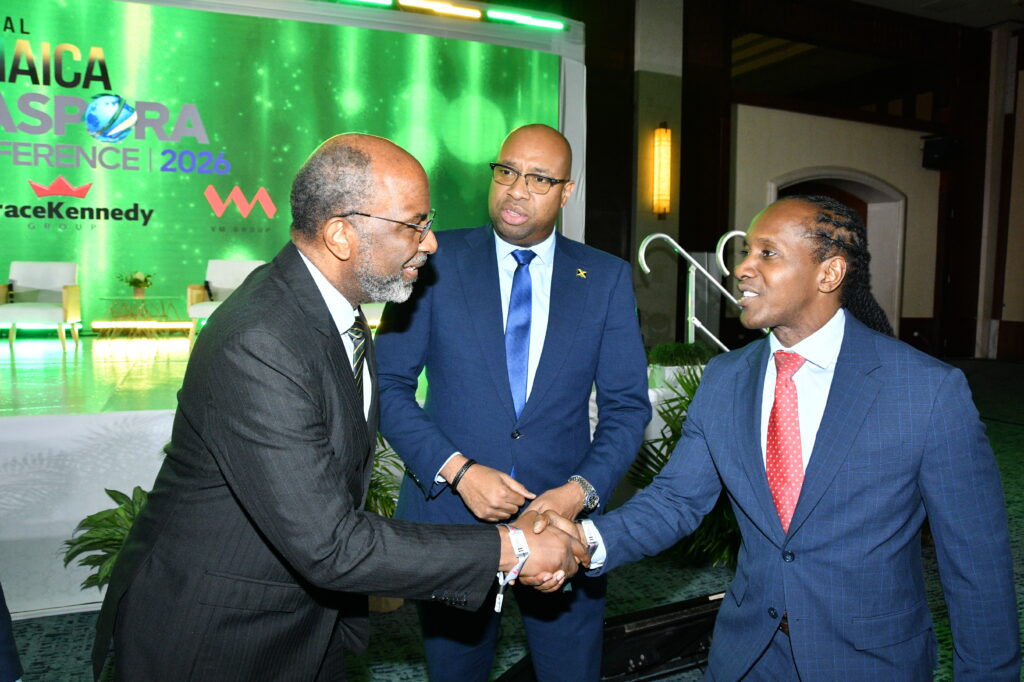
    MONTEGO BAY, St. James, Jamaica — The 11th Jamaica Diaspora Conference, the largest gathering of its kind in the event’s 22-year history, concluded last week after five days of collaborative discussions at the Montego Bay Convention Centre, with organizers hailing it as an unprecedented “homecoming experience” that has cemented the global Jamaican community’s role as a transformative movement for national progress.

    Held biennially under the central theme “Diaspora Partnerships: Rebuilding a More Resilient Jamaica” from June 14 to 18, this year’s conference drew more than 1,000 attendees spanning 15 countries, including Jamaicans living overseas and international allies committed to the island nation’s growth. Earl Jarrett, chairman of the conference and CEO of The Jamaica National Group, led post-event reflections highlighting how the gathering was intentionally shaped by input from the global Jamaican community itself.

    Unlike previous iterations, the full conference agenda was developed following a widespread survey of diaspora members, ensuring every debate and workshop centered the issues that matter most to Jamaicans living abroad. Topics on the schedule covered a broad cross-section of national priorities, ranging from foreign direct investment and returning resident policies to agricultural development, education expansion, philanthropic collaboration, technological innovation, public security, youth empowerment, disaster preparedness, and climate resilience. Jarrett emphasized that the depth of conversations benefited enormously from the direct, hands-on participation of on-the-ground delegates, who brought lived experience and concrete ideas to the table.

    The record turnout for this year’s conference, Jarrett noted, is far more than a milestone for the event—it is proof of the unwavering commitment Jamaicans overseas hold for their home country’s development and ability to withstand crisis. What began as individual and small-group efforts to support family and friends back in Jamaica has evolved into a cohesive, people-powered movement, he argued, pointing to the diaspora’s extraordinary response to Category 5 Hurricane Melissa, which devastated large swathes of the island in October 2025.

    “Organically, you all built formal and informal networks across the globe to support your schools, your hometown communities, your families, and Jamaica as a whole,” Jarrett told attendees in his closing remarks, praising the community’s consistent philanthropic leadership. “All those relief containers, all those donations that arrived after the hurricane—none of that would have happened without your independent, dedicated efforts. When I saw footage of donation drives, it wasn’t just Jamaicans giving—it was your neighbors, your colleagues, your friends who have come to care deeply about our country. These friends of Jamaica are part of this movement too, and when you count all of us together, Jamaica is a community of 6 million strong, far beyond our island borders.”

    Jarrett extended credit to the Jamaican government and all participating stakeholders for their work to pull off the successful gathering, but stressed that the conference’s real impact will be measured in what comes after the closing plenary. “Gathering us all together here is a wonderful thing, it’s important to reconnect and build relationships,” he said. “But this work isn’t just about conversation—it’s about turning the ideas and concerns raised here into tangible solutions. For years, the government has already adapted its bureaucratic processes and policies in response to feedback from past diaspora conferences, and that progress needs to keep going.”

    That call for sustained action beyond the conference hall was echoed by Alando Terrelonge, Minister of State in the Ministry of Foreign Affairs and Foreign Trade, who leads the government’s diaspora affairs portfolio. Closing out the event, Terrelonge reaffirmed that the true value of the week’s deliberations will not be judged by the quality of dialogue alone—but by the tangible actions delivered by both government and diaspora partners in the weeks, months, and years to come.

  • Horror injury overshadows Canada’s first World Cup win

    Horror injury overshadows Canada’s first World Cup win

    The 2026 FIFA World Cup delivered a night of stark contrasts in Vancouver on Thursday, as Canada secured the first men’s World Cup win in its national history with a dominant 6-0 dismantling of Qatar in Group B action — but the historic achievement was overshadowed by a devastating injury to Canadian midfielder Ismael Kone that cast a pall over BC Place Stadium.

    The rout was led by Jonathan David, who notched a clinical hat-trick to cement his status as Canada’s standout attacking threat. Cyle Larin opened the scoring for the side in the 16th minute, before David netted two first-half strikes to put Canada firmly in control. Qatar’s evening unraveled early, when defender Homam el-Amin was sent off in the first half, leaving the side a man down before the break. The Qatari numerical disadvantage grew worse just after halftime, when a VAR review upgraded a yellow card for Assim Madibo’s clumsy tackle from behind on Kone to a red card, cutting Qatar down to nine players.

    The challenge left Kone, who plies his club trade in Italy, writhing in visible pain on the turf while clutching his left leg. Alarmed teammates immediately signaled for Canadian medical staff to rush onto the pitch, making the severity of the injury clear from the first moments. After receiving on-field treatment, Kone was stretchered off the ground, managing to wave to the packed crowd of home fans while breathing from an oxygen tube as he exited.

    Canada took full advantage of their two-man numerical advantage in the second half, extending their lead with three additional goals. Nathan Saliba, the substitute brought on to replace the injured Kone, curled a precise free kick into the back of the net in the 64th minute to push the score to 4-0. In a moving show of solidarity for his injured teammate, Saliba raced straight to the touchline after scoring and held up a replica of Kone’s Canadian national team jersey. A second substitute Jacob Shaffelburg then forced Qatar defender Mohammad Manai into an own goal in the 87th minute, when his powerful strike deflected off Manai and past the Qatari goalkeeper. David closed out the historic rout, completing his hat-trick in the second minute of stoppage time to cap the 6-0 scoreline. Canadian Prime Minister Mark Carney was in attendance at the stadium, cheering on the Canadian side, nicknamed “Les Rouges”, throughout the match.

    Now after their opening win, Canada sits atop Group B in a strong position to advance. The side only needs a draw in their final group stage match against Switzerland to secure first place in the group, putting them on track for a knockout stage berth in their World Cup campaign.

  • Duckie assumes head coach role at Waterhouse

    Duckie assumes head coach role at Waterhouse

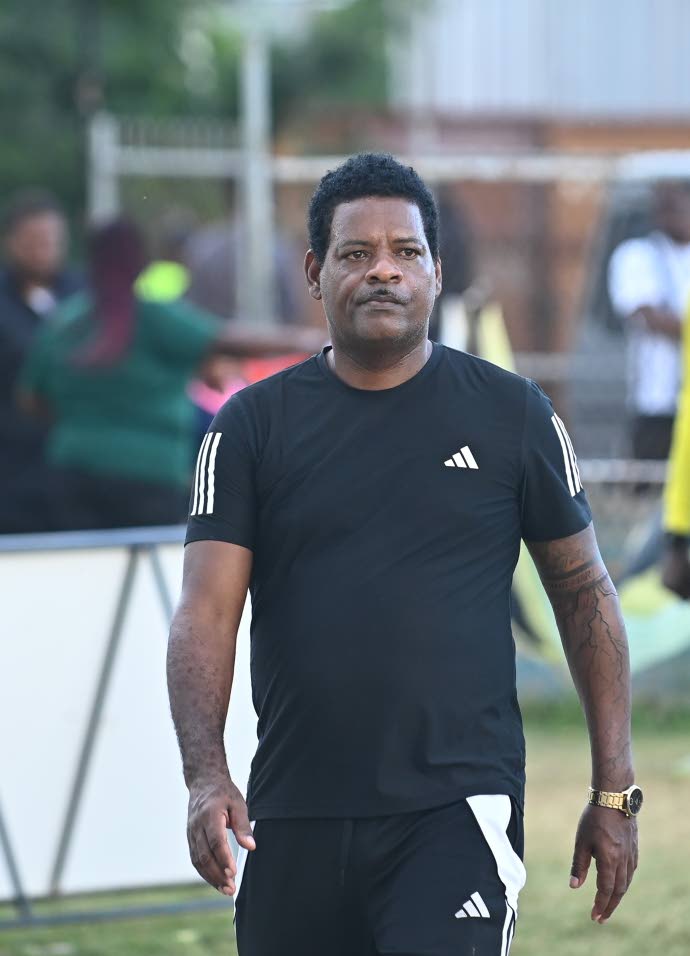
    KINGSTON, Jamaica — A major shakeup has hit Jamaica’s top-flight football scene, as well-respected local coach Donovan Duckie has stepped into the head coaching role at Waterhouse FC. The appointment comes immediately after former Argentine manager Javier Aintein stepped down from the position unexpectedly, leaving a sudden vacancy at the club.

    Fresh off his recent resignation from another Jamaican side, Chapelton Maroons, Duckie’s return to Waterhouse marks his third tenure leading the squad. The coach already held the top job at the club for the 2012-2013, 2013-2014, and 2017/2018 seasons, giving him deep existing ties to the organization.

    In his first public comments since taking the role, Duckie framed his comeback as a rare privilege. “It is a privilege to return to Waterhouse FC, a club that I have tremendous respect and affection for,” he stated. “I look forward to working with the players, staff and the entire Waterhouse family as we set our sights on achieving our goals together.”

    Duckie also extended his gratitude to the club’s leadership for the opportunity, singling out chairman Bruce Bicknell and president Donovan White for entrusting him with the role.

    The coach already has a proven track record of success during his previous stints with Waterhouse. In 2013, he guided the team to a second-place finish in the national league, and in 2015 he led the club to qualification for the Caribbean Club Championship.

    For Duckie, the club holds far more than professional significance, calling it a second home. “Waterhouse is like a second home for me, and I am forever grateful to the people of the community for the love they have shown me in the past,” he said. He recalled one of the squad’s most memorable near-victories: a 2013 title race that came down to a penalty shootout against Portmore United, where Waterhouse fell just short of the championship but still secured qualification for Concacaf club competition.

    While he acknowledges the value of past successes, Duckie emphasized that history will not drive his current work. “But what is important is for me, it’s good to reflect on history, but it counts for nothing in football,” he explained. “So, we must ensure that this club takes its rightful place in the Jamaica Premier League, which is to be champions and to be playing in Concacaf football.”

    Describing the appointment as an honour to return to a club with such a deep and decorated history, Duckie said he is eager to hit the ground running. He pledged to bring full effort to every aspect of the role, noting that anything less than 100% would fall short of the expectations the Waterhouse community holds for the team. He closed by urging local fans to turn out in force to support the squad through the upcoming campaign.