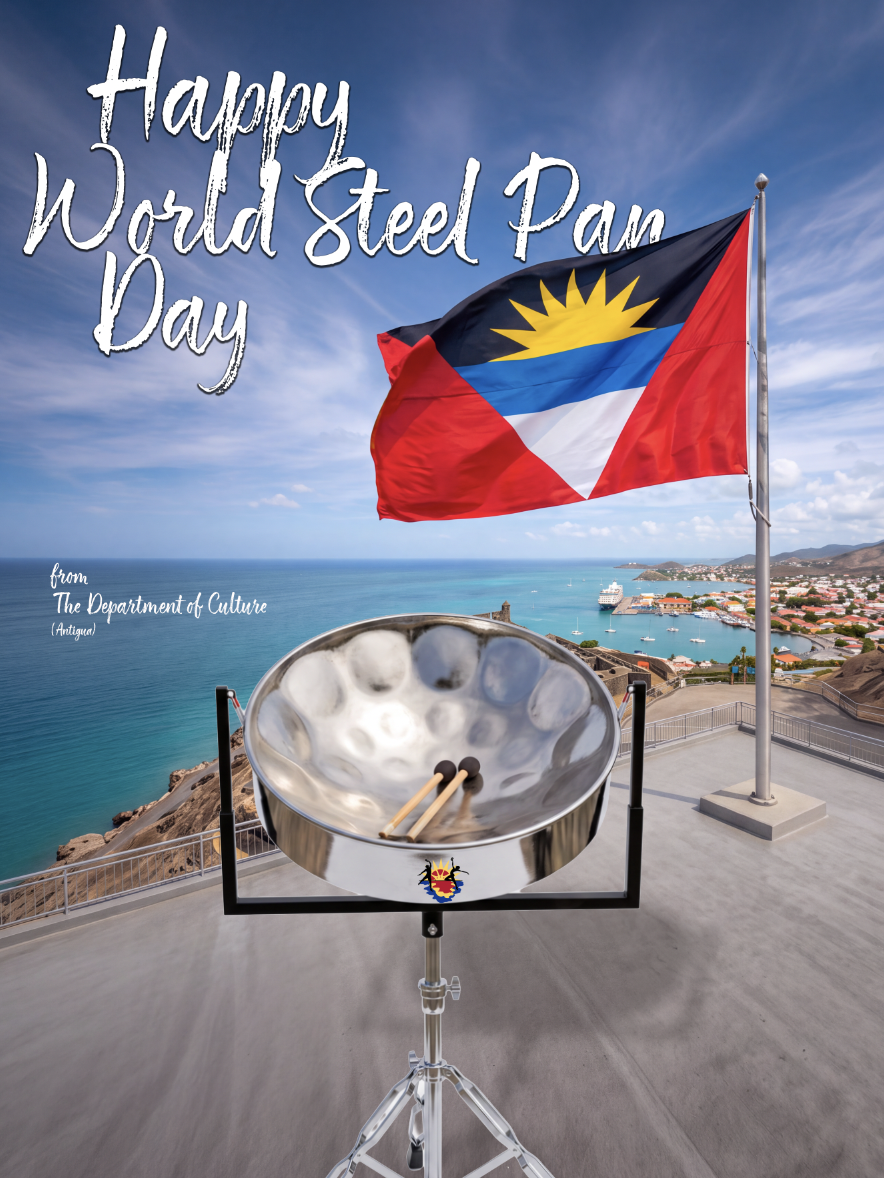
On the cusp of 2026 World Steelpan Day, Antigua and Barbuda’s Department of Culture has launched a landmark three-week honor initiative to celebrate the generations of creators that built the nation’s beloved steelpan tradition, extending warm greetings to the Caribbean nation’s residents and steelpan communities across the globe. Running from August 11 to August 31, 2026, the campaign will shine a spotlight on the most influential figures in local steelpan history – from master players and creative arrangers to skilled tuners, instrument builders, dedicated tutors, visionary bandleaders, and pioneering steelbands – whose collective talent, innovation, leadership, and decades of service have forged Antigua and Barbuda’s enduring steelpan legacy.
To ensure that unsung community heroes get their long-overdue recognition, the Department of Culture has issued a public call for recommendations. Local residents are invited to submit profiles of deserving steelpan icons or groups from their communities, including basic information such as the nominee’s name, affiliated community, and area of contribution, along with a short description of their work and any available historical materials or photographs that document their impact.
At its core, the campaign pursues three key goals: celebrate excellence in steelpan craft, preserve at-risk cultural histories that might otherwise be lost, and foster deeper national pride for the instrument that has become a defining symbol of Antigua and Barbuda’s identity. For the pioneers of the mid-20th century, the road to respect was long and fraught with prejudice. Born as a working-class cultural invention in Trinidad and Tobago, the steelpan arrived in Antigua and Barbuda in the mid-1940s, with 1945 widely marked as the official start of the local movement. In working-class communities across the nation – including Point, Grays Farm, Ottos, Pigotts, Barnes Hill, and New Winthorpes – ordinary laborers turned discarded scrap metal into a groundbreaking new instrument and a unique form of cultural expression.
In those early days, steelpan players faced rampant discrimination: they were publicly ridiculed, legally punished, physically assaulted, and labeled troublemakers solely for their association with the instrument. Large segments of society dismissed steelpan music as a “hellish cacophony”, rejecting it as an unworthy art form. Yet despite systemic prejudice and widespread resistance, these early pioneers persisted, building instruments by hand, organizing community bands, rehearsing tirelessly, performing across the region, and refining their craft against all odds. Through unwavering determination, the sound once dismissed as mere noise evolved into one of Antigua and Barbuda’s most cherished national musical traditions.
It did not take long for Antigua and Barbuda’s steelpan movement to earn international acclaim. The nation hosted its first official steelpan competition in 1949, and early local bands began touring across the Caribbean to share their sound with new audiences. By 1952, studio recordings featuring iconic early groups Brute Force, Hells Gate, and North Stars entered the official recorded history of Caribbean steelpan music, cementing the nation’s reputation as a hub of steelpan excellence. Early trailblazing bands including Hells Gate, Brute Force, Red Army, North Stars, and Rising Sun laid the organizational and creative foundation that allowed future generations of steelpan artists to thrive. As the 2026 World Steelpan Day honor campaign gets underway, the Department of Culture reaffirms its gratitude to these pioneers and extends happy World Steelpan Day wishes to the nation and the global steelpan fraternity.