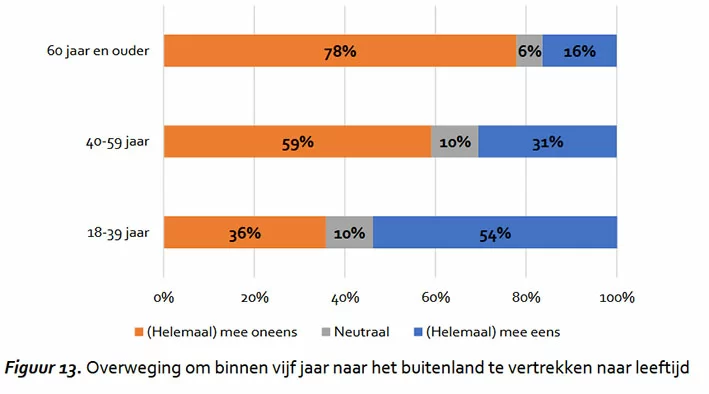
As Suriname stands on the cusp of unlocking major new economic opportunities from its emerging oil and gas sector, it confronts a pressing, underrecognized threat: the potential exodus of more than half of its young working-age population, according to groundbreaking new national survey data.
The findings come from the 2026 National Perception Survey Suriname 3.0, conducted by independent research institute NIKOS on behalf of the country’s Ministry of Oil, Gas and Environment. The study set out to map the public’s visions, expectations and development priorities for the nation as it approaches 2050, and has delivered one of the most stark assessments of youth migration intentions ever recorded in the country.
Across the entire surveyed population, 36% of respondents reported they are considering leaving Suriname within the next five years to seek work, pursue education, or build a better life abroad, while 54% rule out an international move. But when broken down by age group, the data shifts dramatically: among 18 to 39-year-olds, the share of those considering emigration jumps to 54%. That figure falls to 31% for 40 to 59-year-olds, and drops to just 16% for respondents aged 60 and older, confirming that the country’s youngest generation is the most likely to weigh leaving.
The research team is careful to note that emigration intention does not guarantee all these young people will actually leave the country. Even so, the size of this group is being treated as a critical warning sign, particularly against the backdrop of the economic growth Suriname projects for the coming decade. New offshore oil and gas developments are expected to generate thousands of new jobs, attract billions in foreign investment, and open up broad-based economic opportunities across sectors — developments that will require a large, skilled domestic workforce to fully leverage.
The survey highlights a striking, counterintuitive contradiction in the data. The same young cohort that is most willing to leave Suriname is also by far the most motivated to invest in their own professional development. A remarkable 92% of 18 to 39-year-olds say they would pursue additional education or vocational training if it would increase their chances of earning a higher income. That compares to 73% of 40 to 59-year-olds and just 24% of adults over 60. Far from being uninterested in professional advancement, Suriname’s youngest generation demonstrates extraordinary enthusiasm for upskilling and building more prosperous careers.
This combination of high willingness to upskill and high willingness to emigrate creates a significant development risk for the nation. If large numbers of these motivated, skilled young people choose to build their futures abroad, Suriname could lose the exact human capital it needs to capitalize on its upcoming economic growth. The survey explicitly names this risk, noting that while the country holds enormous untapped development potential through its ambitious youth population, it now faces a serious threat of deepening brain drain.
This concern is already widely shared by the public: 22% of all survey respondents named youth talent outflow as one of the biggest long-term risks to Suriname’s development, matching the share that identified insufficient education and skills training as a top threat. Young people and highly educated respondents were far more likely to flag talent emigration as a critical problem.
The report draws a direct causal link between the two challenges: if Suriname fails to train enough qualified domestic workers and simultaneously loses a large share of its existing skilled talent to other countries, the national labor market will face dual pressure that could derail growth. During an expected period of economic expansion, a shortage of skilled workers could leave the country unable to capitalize on its new oil and gas opportunities on its own, forcing it to become far more dependent on foreign expertise and labor.
Another surprising finding defies common assumptions about why young people consider emigration: the intention to leave is not driven by widespread pessimism about Suriname’s future. In fact, the survey found that young people are far more optimistic about the country’s trajectory than older generations. Nationwide, 42% of respondents expect Suriname’s overall situation to improve in the coming years, 32% expect it to stay roughly the same, and 26% expect it to worsen. The 18 to 39-year-old age group recorded the highest levels of optimism among all demographic cohorts.
This creates a striking paradox: young Surinamese see national economic potential, are overwhelmingly willing to invest in their own skills to advance, yet more than half are still keeping the option of moving abroad open for their personal futures.
The survey’s findings go far beyond measuring migration trends; they raise fundamental questions about Suriname’s future development strategy. For policymakers, the core challenge is no longer just training young people to fill the new jobs that will come from oil, gas, and broader economic diversification. The country must also create the domestic conditions that give these young people compelling reasons to stay, build their careers, and contribute their skills, entrepreneurship and labor at home. After all, new economic opportunities alone will not drive growth if the generation meant to capitalize on them is actively considering building their futures elsewhere.