博客

  • Cases of missing teenagers down

    Cases of missing teenagers down

    As the Caribbean Secondary Education Certificate (CSEC) examinations wrapped up on June 19, the head of one of Trinidad and Tobago’s leading volunteer search and rescue organizations is sounding a warning: historical data points to an upcoming uptick in reported cases of missing teenage girls, even as overall missing person statistics have dropped sharply so far this year.

    Vallence Rambharat, leader of the Hunters Search and Rescue Team (HSRT), shared his analysis in an interview with the Sunday Express from Chase Village last month, noting that recurring patterns around major public holidays, seasonal events, and school break periods have consistently shaped missing person case volumes. From Christmas and Carnival to Point Fortin Borough Day and the annual August school vacation, Rambharat explained, these post-event periods almost always see an increase in young people leaving difficult home environments.

    Current data already shows a dramatic downward shift in the share of missing person cases involving runaway teenage girls. In 2022, this group made up 38% of all missing person reports across Trinidad and Tobago. Through the first part of 2026, that share has fallen to just 14%, Rambharat said. The overall volume of missing person reports has also dropped significantly, averaging only 22 new cases per month this year compared to higher numbers in previous years.

    But despite these encouraging trends, Rambharat emphasized that teenage girls who go missing remain the most widely misunderstood group of missing persons in the country. He pushed back against the widespread public perception that most of these young people run away from home simply to pursue romantic relationships, a harmful stereotype he said leads to premature judgment and underinvestment in resolving cases.

    “Most people just say they run away with a man, and that is not the full story,” Rambharat explained. “While that may sometimes be the outcome, the root cause is almost always severe instability and hardship at home. These girls are dealing with chaotic, unsafe home environments, and they are just looking for a way out.”

    Rambharat detailed the core underlying issues that drive many teenage runaways: physical, emotional, and sexual abuse, chronic neglect, incest, and persistent socio-economic hardship that makes home life untenable for minors as young as 16 and 17. In many cases, he added, vulnerable teenagers who leave home end up falling for manipulative relationships outside the home that compound their original problems, leaving them in far more dangerous situations than they left behind.

    Because of these complex underlying issues, the HSRT often partners with the Children’s Authority and Child Protection Unit to conduct deeper investigations into cases of missing teenage girls, rather than treating them as routine runaways. Rambharat noted that many of these young people open up to rescue team members once they are located, confirming the pattern of domestic hardship that led them to leave.

    Beyond teenage girls, Rambharat highlighted two other high-priority groups that require more public awareness and systemic support. The HSRT’s most concerning caseload involves adults between the ages of 20 and 50, the majority of whom are women who intentionally leave toxic situations and do not want to be located by family or authorities. When the HSRT locates these individuals, Rambharat said the team honors their requests for privacy, keeping their location confidential to allow them to build new, safe lives.

    The second most misunderstood group, Rambharat added, is elderly adults, particularly those living with undiagnosed dementia. He urged family members to educate themselves on the early warning signs of cognitive decline and to seek regular medical check-ups for all relatives over the age of 60. Catching dementia early, he explained, can help families put safeguards in place to prevent elderly adults from wandering off and becoming lost.

    When asked if Trinidad and Tobago is facing a hidden crisis of missing persons, Rambharat framed it as a manageable but underaddressed problem, not a full-blown crisis. He credited the HSRT’s widespread use of social media to publicize missing person cases with helping to bring broader public attention to the issue in recent years.

    To improve the country’s overall response to missing person cases, Rambharat is calling on the Trinidad and Tobago government to establish a dedicated, centralized missing persons unit that unifies search and rescue resources across the Police Service, Fire Service, Coast Guard, and Defence Force. Currently, Rambharat argued, different agencies operate in isolated silos, creating unnecessary coordination delays and slowing response times for critical cases.

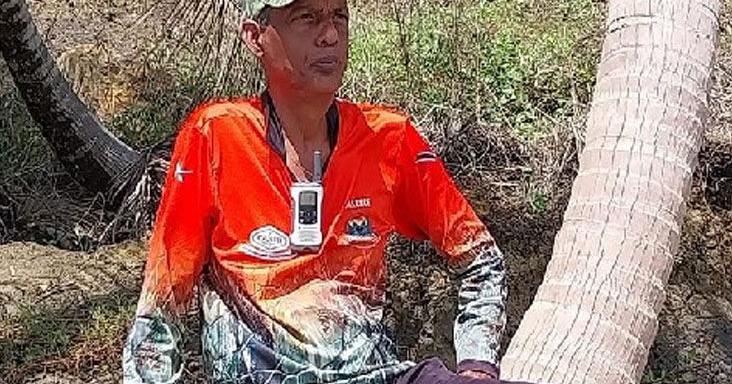
    He also called for increased public investment in specialized search and rescue equipment, including upgraded drones, advanced sonar technology, purpose-built utility vehicles, and a dedicated emergency response helicopter. Rambharat pointed to a recent high-profile extraction of a hiker with a broken leg from a remote trail to illustrate the gap in current resources: it took the Defence Force 48 hours to deploy assistance, a delay that could have been avoided entirely if a dedicated helicopter was available for emergency response.

    A dedicated unified unit and upgraded equipment, Rambharat said, would drastically cut response times and improve outcomes for the most urgent missing person and search and rescue cases across the country.

  • Guevarro: 290 cops on suspension

    Guevarro: 290 cops on suspension

    One year into his tenure leading the Trinidad and Tobago Police Service (TTPS), Commissioner Allister Guevarro has opened up about the service’s ongoing anti-misconduct efforts, public trust challenges, and legal barriers to greater transparency in policing. In a candid interview held Thursday at the Port of Spain Police Administration Building, Guevarro confirmed a striking statistic: 290 officers across the TTPS are currently suspended amid ongoing disciplinary or criminal proceedings – a figure that has not been made public by the current leadership until now.

    The Commissioner emphasized that this large number of suspensions is not a sign of systemic failure, but rather proof that robust accountability mechanisms are active within the service. When he first took office, Guevarro noted, he was immediately confronted with a string of alleged misconduct cases, and he made rooting out corrupt and unethical actors within the TTPS a top priority from day one. “We try to root out the negative elements within the Police Service itself,” he stated.

    To illustrate the service’s action against misconduct, Guevarro pointed to the high-profile case of Police Constable Stefon Khan. Khan was arrested and suspended earlier this year after an investigation found he had stolen $242,000 worth of marijuana seized as evidence from the Chaguanas Police Station, replacing the cannabis blocks with packages of wood and a ceramic tile. The officer was charged with misbehaviour in public office and brought before the court in May, a resolution that the public was broadly aware of – but Guevarro says that for most cases, the public never learns what action is taken after allegations first surface.

    A core challenge the TTPS faces, Guevarro explained, is the widespread public perception that police misconduct is rarely punished. While initial allegations against officers often draw intense public and media attention, the subsequent disciplinary processes, arrests, and court proceedings rarely gain the same level of public interest. Even when the TTPS issues official statements about case outcomes, Guevarro noted that social media conversations still frequently question whether misconduct cases are ever actually prosecuted, with many users asking for updates on old cases months after announcements have been made.

    The last time a similar suspension count was made public was in 2020, when then-Commissioner Gary Griffith revealed 280 officers were suspended with full pay, costing taxpayers an estimated $50 million annually. Guevarro did not address the cost of the current 290 suspensions in his comments, but he framed the current figure as evidence that multiple accountability bodies – including the TTPS’ own Professional Standards Bureau, internal disciplinary units, and the independent Police Complaints Authority (PCA) – are actively working to hold officers to account. “We are able to investigate, arrest and charge our own,” he said, adding that these systems demonstrate the TTPS’ commitment to removing officers who break the law or violate professional standards.

    Guevarro also touched on public confidence in his leadership and the broader police service. He shared that internal polls conducted after his first 100 days in office showed he held an 80% public approval rating, but stressed that his personal popularity does not equate to public trust in the entire TTPS. “Guevarro is not the TTPS,” he said. “I am the leader of the organisation, and it is for me to take decisions and operate in a particular way with integrity and everything else that comes with the office.”

    Beyond misconduct accountability, Guevarro highlighted a key legal barrier that limits the TTPS’ ability to build public trust through transparency: current restrictions on releasing evidence that is part of active court proceedings. He explained that this is most often an issue with body-worn camera footage, even in cases where the video clearly vindicates officers’ actions.

    As an example, he cited a recent controversial shooting in Tunapuna, where an officer responded to a domestic violence call, was stabbed by a suspect, and fatally shot the man during the confrontation. The officer was wearing a body camera that clearly captured the unprovoked attack and the circumstances that justified the shooting, but Guevarro said the TTPS is legally prohibited from releasing that footage to the public to clear up misinformation about the incident. The same restriction applies to other high-profile pending cases, including the Joshua Samaroo matter, he added.

    “Under our current laws, as long as that footage is to become part of evidence before the court, cannot be shown,” Guevarro explained, noting that releasing such information could be considered prejudicial to a fair trial and impact the final judicial outcome. “I still can’t even show that to the public.”

    The Commissioner said he supports opening national discussions to reform policies around body-worn camera footage, pointing to existing frameworks in the United States and United Kingdom that allow for greater public disclosure in appropriate cases. However, he emphasized that any reform would require buy-in and changes from multiple stakeholders across the criminal justice system, including lawmakers and the Judiciary, not just the TTPS. Guevarro framed the issue as part of a broader national conversation about balancing transparency, public accountability, and fair administration of justice in Trinidad and Tobago.

  • ‘Environmental giant’ Agard dies at 71

    ‘Environmental giant’ Agard dies at 71

    The global environmental community is mourning the passing of John Agard, 71, the former chairman of Trinidad and Tobago’s Environmental Management Authority (EMA) and emeritus professor at The University of the West Indies (The UWI), who died on Friday.

    Widely regarded as one of the most influential conservation voices and scientific minds across the Caribbean, Agard’s decades of groundbreaking work in sustainable development and climate action earned him respect from colleagues and leaders at home and abroad, with tributes flooding in from across sectors in the days following his death.

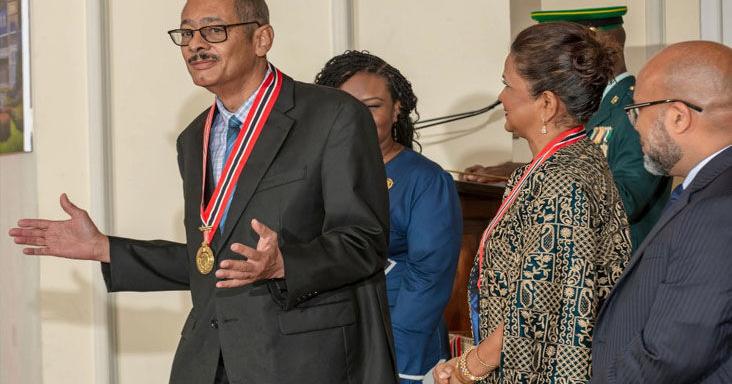
    A decorated scholar and public servant, Agard was awarded the Order of the Republic of Trinidad and Tobago, the nation’s highest honor, in 2023. His international reputation was cemented through key contributions to global climate research: he served as a lead author for the “Small Islands” chapter of the Intergovernmental Panel on Climate Change’s (IPCC) Fourth Assessment Report, a work that jointly received the 2007 Nobel Peace Prize alongside former U.S. Vice President Al Gore.

    Beyond the IPCC, Agard held critical roles in other landmark global environmental assessments. He led author teams for the “Small Island Systems” and “Scenarios” chapters of the 2005 Millennium Ecosystem Assessment, work that earned him the prestigious Zayed Prize for the Environment. He also served as coordinating lead author for the “Scenarios” chapter of the United Nations Environment Programme’s 2007 *Global Environmental Outlook*, and co-led the 2007 Caribbean Sea Assessment (CARSEA) in partnership with the Cropper Foundation.

    Closer to home, Agard left an indelible mark on Trinidad and Tobago’s environmental governance. During his tenure as EMA chairman, he played a central role in drafting the nation’s foundational National Environmental Policy, and shaped landmark local environmental legislation including the 2001 Certificate of Environmental Clearance Rules, Noise Pollution Rules, and Water Pollution Rules. He also spearheaded the designation of some of the country’s most critical protected areas: Matura National Park was named an Environmentally Sensitive Area in 2004 under his leadership, Nariva Swamp became a Managed Resource Protected Area in 2006, and the Aripo Savannahs received designation as a Strict Scientific Reserve in 2007.

    Rose-Marie Belle Antoine, principal of The UWI’s St. Augustine campus, remembered Agard as a multi-faceted leader whose impact extended far beyond research. “A giant in the intellectual world, especially in relation to the environment and climate change sciences, he was committed to sharing his knowledge and worked just as tirelessly as a mentor,” Antoine said in an official statement. She added that Agard, a long-time faculty member at the university, was a brilliant, innovative public servant who gave immeasurably to The UWI, the local community, and the global environmental movement.

    Courtenay Rooks, a veteran environmental conservationist and former president of the Trinidad and Tobago Incoming Tour Operators Association, honored Agard’s lifelong commitment to protecting Trinidad and Tobago’s unique natural heritage. “The country has lost a patriot whose life was dedicated to the future of Trinidad and Tobago,” Rooks said, describing Agard as one of the most generous and remarkable people he had ever encountered. “He was passionate about Trinidad and Tobago and always pushed to save our environment. His work at The UWI and the Institute of Marine Affairs was done selflessly, with the same passion and strong focus to help save the planet. The world has lost a giant.”

    Colleagues who worked alongside Agard at the EMA and across the Caribbean environmental sector have called for greater permanent recognition of his contributions, particularly his foundational work in development planning, disaster risk reduction, and climate adaptation policy for Small Island Developing States, a group disproportionately vulnerable to climate impacts. They emphasized that his decades of work should not be forgotten by future generations.

    Agard’s alma mater, Fatima College, also joined in paying tribute via a social media post, noting that the alumnus did not only transform academic environmental science but dedicated his career to leveraging research to improve quality of life for all. Agard was among the first group of inductees into the Fatima College Hall of Achievement in 2015, honored in the Pioneers category for his trailblazing work.

    In its official announcement of Agard’s passing, The UWI reflected on his lifelong mantra, which summed up his core mission: his passion was “to make the world a better place. To make my country a better place. To make my region a better place.” The university remembered him first as a groundbreaking scientist, and above all, as a leader fiercely committed to protecting the planet’s natural environments for current and future generations.

  • Alyssa, mom on 3 charges each

    Alyssa, mom on 3 charges each

    Trinidad and Tobago’s acting Police Commissioner Allister Guevarro has defended the recent arrest and charging of well-known local social activist Alyssa Phillip and her mother Camille Caresquero, after the pair joined the country’s annual permitted Labour Day procession in Fyzabad on Friday without formal authorisation for their separate group.

    Both women now face three criminal offenses each in connection with the incident. For Phillip, the charges include leading an unauthorised public procession, refusing an official order to disperse the group, disorderly conduct, and resisting arrest by law enforcement officers. Caresquero is charged with participating in an unlawful procession, obstructing a police officer in the course of their duties, and resisting arrest.

    This arrest marks the second time the mother-daughter activist pair has been taken into custody for protest-related activity in recent weeks. They are currently out on bail pending trial for separate charges stemming from an unsanctioned demonstration outside the Office of the Director of Public Prosecutions in Port of Spain last month. Earlier in May, both women pleaded not guilty to all charges connected to that earlier protest before Magistrate Indira Rmarine Misir-Gosine.

    Phillip and Caresquero have become prominent figures in Trinidad and Tobago’s local activist space, leading a series of public demonstrations and community vigils calling for greater accountability and transparency in the criminal justice system. Their protests stem from the controversial charging of Kaia Sealy with manslaughter and firearms-related offenses in connection with the January 20 police-involved shooting death of her husband Joshua Samaroo in St Augustine.

    In a formal public statement released on Sunday, titled *TTPS Reaffirms the Rule of Law During Labour Day Procession*, the Trinidad and Tobago Police Service (TTPS) addressed widespread public discussion and debate surrounding the arrests, emphasizing that all enforcement action was carried out in full compliance with existing national legislation.

    Commissioner Guevarro noted that the TTPS fully recognizes and upholds all constitutionally protected rights of citizens to peaceful assembly and freedom of expression. However, he stressed that these fundamental rights are not absolute and must be exercised within the boundaries set out by national law.

    Guevarro added that law enforcement officers acted with full professionalism and clear adherence to procedural guidelines throughout the incident. “It is regrettable that enforcement became necessary, but the sanctity of the Labour Day procession should never be compromised by persons seeking to attach unrelated agendas to a permitted national event,” Guevarro said in the statement.

    Under Trinidad and Tobago’s Summary Offences Act, all public marches require a formal permit issued directly by the Commissioner of Police, with written applications submitted within a statutorily defined timeframe. The commissioner has the authority to approve or deny permit applications based on assessments of public safety and public order risk. The national trade union movement, which organizes the annual Labour Day procession, completed all required legal steps and received full official approval for this year’s event, the TTPS confirmed.

    According to the TTPS’s account of Friday’s incident, Phillip and a small group of her supporters, none of whom were affiliated with the organizing trade union movement, attempted to join the back of the authorised procession. Officers confirmed with event organizers that the activist group was not a formal part of the permitted event, then notified Phillip that her group’s participation would constitute a separate, unauthorised public march that required its own permit. Police also warned the group that their unauthorised presence risked jeopardizing the entire permitted Labour Day event.

    Despite multiple formal warnings, the activist group moved forward and joined the procession as an unauthorised tail contingent. In line with Section 116 of the Summary Offences Act, a senior police officer of the required rank formally ordered Phillip, as the group’s leader, to direct the assembly to disperse. When Phillip refused to comply with the lawful order, officers moved in to arrest both her and Caresquero.

    The TTPS further grounded its enforcement action in a recent High Court ruling delivered by Justice Ricky Rahim in the case *Walker v Attorney General (CV2023-00302)*. That ruling explicitly clarified the legal distinction between static public meetings and moving public marches, and reaffirmed that all public marches require prior written permission from the Commissioner of Police, regardless of whether they intend to attach themselves to an already permitted event.

    “The judgment confirms that any group wishing to participate in a public march must have a permit, and that attaching an unauthorised procession to a lawful one is a breach of the act,” the TTPS statement noted. “The activist group in question did not give notice of a meeting, nor did they apply for or receive a permit for a march. Their actions, therefore, fell squarely within the statutory definition of an unlawful public march.”

    Police officials added that enforcement action was necessary to prevent potential escalation of unrest, protect all attendees of the authorised Labour Day event, uphold the rule of law, and preserve the integrity of the national legislative framework governing public assemblies. “Allowing an unpermitted procession to merge with a lawful one would have undermined the event, created security risks, and violated the legal framework governing public marches,” the statement said.

    The TTPS concluded by reaffirming its ongoing commitment to upholding all constitutional rights of Trinidad and Tobago citizens, enforcing the law equally and without bias, ensuring that national public events proceed safely and without disruption, and engaging with the public in a transparent and respectful manner. The service also issued a reminder to all activist and community groups seeking to hold public marches that completion of the formal permit process is required to avoid similar enforcement action in the future.

  • Former MP hails blind student’s historic CPEA success, urges corporate support

    Former MP hails blind student’s historic CPEA success, urges corporate support

    An 11-year-old blind student from St. Vincent and the Grenadines (SVG) has captured national attention for her extraordinary performance in the 2024 Caribbean Primary Exit Assessment (CPEA), earning a spot at one of the country’s most prestigious secondary institutions. Former East St. George Member of Parliament and ex-finance minister Camillo Gonsalves, who left office after November 2023’s general election, shared the inspiring news in a public Facebook video posted Saturday, highlighting what he calls a defining milestone for inclusive education in the nation.

    Faith Grant, who was born without sight, completed her primary education at Fair Hall Government School, an institution that has pioneered a mainstream inclusive education programme for students with physical and learning disabilities. Out of 1,760 CPEA test-takers across SVG, Grant ranked 43rd overall and 19th among all female students — a result that secured her admission to the elite Girls’ High School (GHS).

    Gonsalves emphasized that Grant took the exact same standardized examination as every other student, with only targeted accommodations made to help her access test content. A trained invigilator read all questions aloud to her, and for visual components such as geometric diagrams, test staff described shapes by tracing their outlines on her hand or back to help her conceptualize the information. Despite these additional barriers, Grant not only passed the high-stakes exam but outperformed the vast majority of her sighted peers.

    The former MP, who has followed Grant’s academic journey closely for years, shared that the young student has long dreamed of attending GHS, a goal that has now become a reality. He described Grant as a multilingual, high-energy learner with an insatiable love of literature and a natural aptitude for mathematics and science. At Fair Hall Government School’s graduation ceremony held June 12, Grant already received multiple academic awards, and she now stands as the school’s highest-ranking CPEA graduate in this year’s cohort.

    Gonsalves credited much of Grant’s success to the intentional inclusive education model implemented at Fair Hall Government School, led by principal Angella Kydd Roberts. Several years ago, school leadership made a deliberate decision to integrate students with physical and learning challenges into the general student body, providing them with the same core curriculum as their peers while offering specialized support. The school counts a number of faculty with formal special education training, and even uncertified staff have embraced the institution’s mission, adapting their teaching methods to meet diverse student needs with creativity and care. Grant is not the first student with special needs from Fair Hall to advance to secondary education, but Gonsalves confirmed she is the highest-achieving in the school’s history based on CPEA outcomes.

    Placing Grant’s achievement in historical context, Gonsalves noted that when he was a child, blind students in SVG were excluded from mainstream primary education entirely, let alone offered access to elite secondary schools. Grant’s admission to GHS marks a historic first for the nation, and Gonsalves framed her success as both a personal victory and a national milestone for SVG’s evolving education system. While he acknowledged that additional accommodations will be needed to support Grant during her secondary studies, he expressed full confidence in her ability to overcome any future obstacles.

    To support Grant’s transition to GHS, Gonsalves has issued a public appeal to corporate entities and good corporate citizens across SVG to provide financial support for specialized assistive technology. Grant is currently learning braille, but many advanced secondary school textbooks and learning materials — particularly those with complex diagrams and illustrations — are not available in braille format. Modern adaptive tools can convert these materials into accessible formats for Grant, but the equipment carries a high price tag that is out of reach for most families. Gonsalves urged local businesses to connect with Grant’s mother to offer support that will remove barriers to her continued academic success.

    Closing his message, Gonsalves emphasized that Grant’s achievement was a collective effort, thanking her family, the school’s principal, and all of her teachers for the support that brought her to this point. “It really has been a village that has taken Faith to this point,” he said. He ended with a hopeful pun on Grant’s first name, echoing the SVG national anthem: “I know she’ll go further, and I know that our faith will see us through. Big up.”

  • ‘Not another quarry’ – officials, residents contrast Roseau, Richmond operations

    ‘Not another quarry’ – officials, residents contrast Roseau, Richmond operations

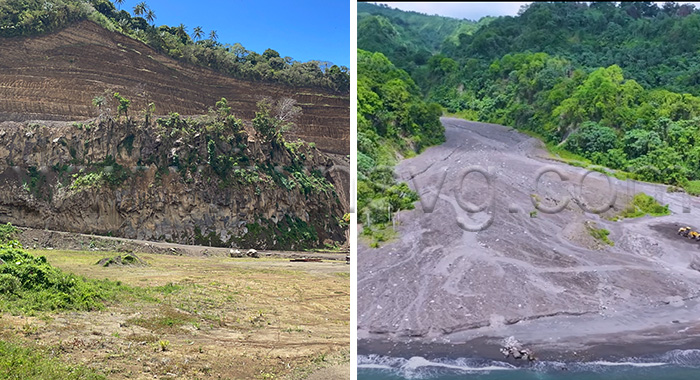
    A proposed sand and aggregate harvesting project along St. Vincent and the Grenadines’ Roseau River has emerged as a flashpoint of conflict, pitting government officials against North Leeward residents still grappling with the fallout of the divisive 2022 Richmond quarry project. During a recent public forum hosted in Golden Grove as part of North Leeward MP Kishore Shallow’s “North Leeward Matters” community outreach series, senior government and technical leaders went to great lengths to emphasize that the Roseau initiative differs sharply from the foreign-owned Richmond operation that divided local communities years ago.

    Shallow, a representative of the New Democratic Party government that took office in November 2025, framed the Roseau project as a deliberate corrective to the mistakes of the previous Unity Labour Party administration’s Richmond quarry deal. That 2022 agreement leased 59 acres of prime state-owned agricultural land to St. Lucian private businessman Rayneau Gajadhar for a 30-year full-scale stone quarry operation, a move local residents decried as an unlawful “land grab” and catastrophic environmental harm. Shallow told attendees the Richmond project has already blocked critical national development, revealing that the World Bank rejected funding for a planned recreational site in the area specifically due to unregulated pollution from the quarry. He added that the new government plans to review the existing Richmond quarry contract and order a full independent environmental assessment to address longstanding community grievances.

    By contrast, Shallow and other officials characterize Roseau as a low-impact, state-controlled sand harvesting operation that leverages naturally deposited volcanic river aggregate rather than large-scale excavation. Health, Wellness, Environmental Health, and Energy Minister Daniel Cummings, a trained water engineer, outlined core technical differences between the two projects: the Roseau operation will not require blasting, will not remove topsoil or overburden, and will produce far less dust and water pollution than Richmond. Unlike the Windward Coast’s Rabacca site, where rough seas make aggregate export dangerous and inefficient, Cummings noted that Roseau’s calm Leeward coast waters allow for safe barge loading, creating a steady state revenue stream that can be reinvested in domestic public infrastructure.

    Transport, Infrastructure, and Physical Planning Minister Nigel “Nature” Stephenson acknowledged that the Richmond project has left deep “pain” and “environmental scars” that have eroded community trust in new resource development projects in North Leeward. He stressed that unlike Richmond, which cleared large swathes of forest and agricultural land for full-scale quarrying, Roseau will only collect loose aggregate already deposited by natural river and volcanic activity, causing minimal disruption to local ecosystems. Critically, Stephenson added that all revenue from the Roseau project will go to the Government of St. Vincent and the Grenadines for public benefit, in contrast to Richmond, where most profits left the country for foreign investors. “North Leeward will benefit like you have not seen over the past five or even 20 years,” he told attendees.

    Kem Bartholomew, CEO of the state-owned Barbados Regional Aggregates and Stone Authority (BRAGSA) which will lead the Roseau operation, reinforced that state control is the key distinction from Richmond’s private foreign ownership. He noted that BRAGSA has already completed a required environmental and social impact assessment (ESIA) for Roseau, a step activists say the Richmond project skipped when it moved ahead ahead of regulatory approval. Bartholomew added that the 3-kilometer Roseau project site holds an estimated 4.2 million cubic meters of aggregate with a gross value in the tens of millions of dollars, arguing that allowing the material to simply wash out to sea would be a wasted national opportunity.

    Reynald Murray, the environmental consultant who prepared Roseau’s ESIA, backed up officials’ technical claims, confirming that the project will not involve topsoil removal, blasting, or sediment-causing washing that would pollute rivers and nearshore waters. Even so, Murray cautioned that the project carries a concrete, underdiscussed risk to local fisheries that must be managed proactively. He proposed that Roseau be run as a multi-use bay with shared governance between BRAGSA, local fishers, and tourism operators, rather than the closed single-use industrial site that Richmond became.

    Despite officials’ repeated assurances, local community leaders, indigenous rights advocates, and residents say the Roseau project already mirrors the Richmond project’s most problematic patterns. Adonis Charles, chair of the North Leeward Preservation Front, said the project mirrors Richmond’s history of rushed, limited consultation with affected communities before operations begin. Charles noted that the Richmond lease cost the developer just EC$12,000 in annual rent and saw nearly every local environmental and land use law broken, warning the new government against repeating that pattern. “Don’t get us wrong, we are all for development, but development must be balanced,” Charles said, adding that he hopes the Golden Grove meeting is not the final opportunity for community input.

    Activist Adrian “Tari” Codougan argued that rebranding large-scale extraction as “sand harvesting” does not fix the core problem of exclusion: the project was already underway before officials began engaging local communities whose livelihoods would be affected. Codougan proposed a national legal requirement that 25% of net profits from all community-based resource extraction be returned directly to the host community, noting that Richmond residents have never seen fair, proportional benefits from the quarry. Local fisherfolk added that the Roseau River mouth extraction poses direct risks to fishing livelihoods, already strained by the 2021 volcanic eruption and ongoing pollution from Richmond.

    In closing, Shallow pushed back on community concerns, framing the Roseau project as a once-in-a-generation “golden opportunity” for both North Leeward and the entire country. He acknowledged that ongoing consultation and tangible community benefits are required to move the project forward, maintaining that the new government has learned critical lessons from the Richmond quarry controversy.

  • Derde helft WK 2026: Japan walst over Tunesië en zet grote stap richting achtste finales

    Derde helft WK 2026: Japan walst over Tunesië en zet grote stap richting achtste finales

    The 2026 FIFA World Cup delivered a dominant display from Japan on Sunday morning, as the Asian side cruised to a convincing 4-0 victory over Tunisia at Monterrey’s Estadio BBVA in Mexico. The lopsided result, which marked the historic 1000th match in FIFA World Cup history dating back to the inaugural 1930 tournament in Uruguay, puts Japan on the cusp of advancing to the knockout stage, while leaving Tunisia on the brink of early elimination.

    Japan came out of the gate with relentless energy, pressing Tunisia high and disrupting the North African side’s build-up play from the first whistle. It took just four minutes for the Samurai Blue to open the scoring, as Daichi Kamada coolly finished off a fluid attacking sequence after a precise setup from Keito Nakamura, setting the tone for the entire match.

    Tunisia struggled desperately to gain a foothold in the game after falling behind. The African side turned the ball over repeatedly in midfield, unable to cope with Japan’s high-intensity pressing and rapid positional rotations, and barely registered a dangerous chance on goal for the entire first half. The quality gap between the two sides became undeniable in the 31st minute, when striker Ayase Ueda doubled Japan’s lead, tapping home a clinical finish from a Ko Itakura pass to send Japan into halftime with a comfortable 2-0 advantage.

    Japan maintained full control of the match after the break, even as Tunisia was forced to push forward in search of goals, leaving gaps at the back that the Asian side exploited expertly. The match was put beyond all doubt in the 69th minute, when defender Junya Ito made an unexpected run into Tunisia’s penalty area and slotted home after a beautiful assist from Ueda, extending the lead to 3-0. Ueda completed his brace 14 minutes later, converting a cross from Kota Sano to lock in the final 4-0 scoreline.

    The lopsided win comes on the heels of Japan’s 2-2 draw with Netherlands in their opening group match, confirming the side’s status as one of the tournament’s most dangerous dark horses. Japan’s cohesive blend of structured positional play, high defensive intensity, strict tactical discipline, and blistering counterattacking pace has made them a formidable opponent for any side in the competition, with Ueda emerging as the standout performer of the match thanks to his two-goal haul.

    For Tunisia, the situation has become extremely precarious following the result. The North African side already suffered a heavy 5-1 defeat to Sweden in their opening fixture, and with two back-to-back losses and a poor goal difference of just one scored and nine conceded, early group stage elimination looks almost unavoidable.

    This tournament marks Japan’s eighth appearance at the World Cup finals. Since making their debut in 1998, Japan have developed into consistent competitors on the global stage, qualifying for the knockout round four times, and this current squad looks well-positioned to extend that record. Tunisia, by contrast, is competing in their seventh World Cup. Long ranked among the top football nations in Africa, the side has never managed to advance past the group stage in their previous appearances.

    To mark the historic occasion of the 1000th World Cup match, the officiating team wore a special gold edition of the FIFA emblem on their kits. With three points from two matches, Japan sit in a strong position in Group F heading into their final group fixture against Sweden, and can approach the game with plenty of confidence. For Tunisia, the task of turning their tournament around has become almost insurmountable.

  • ABYETS Equips Young Entrepreneurs for Success at Upcoming Barbuda Trade Show

    ABYETS Equips Young Entrepreneurs for Success at Upcoming Barbuda Trade Show

    Barbuda’s River Run recently played host to a transformative strategic retreat organized by the Antigua and Barbuda Young Entrepreneurs Trade Show (ABYETS), designed to equip emerging and established young business leaders with critical skills ahead of the nation’s leading youth-focused business exhibition. Centered around the core theme “Restore, Connect, Empower,” the three-day immersive program brought together 29 participants drawn from both existing young entrepreneur networks and first-time registrants for the 2026 event.

    The retreat was intentionally structured to address key gaps in youth entrepreneurial development, with a curriculum tailored to turn abstract business ideas into tangible, executable strategies. The program kicked off with an interactive vision board workshop, a hands-on activity that guided participants to map out long-term professional goals, refine their brand messaging, and solidify their unique market positioning. Following the workshop, attendees took part in a fast-paced “speed-dating” pitch exercise, a dynamic format that forced participants to distill their business value propositions into tight, engaging presentations delivered to their fellow entrepreneurs.

    This peer-to-peer pitching session created a low-pressure environment for iterative feedback, allowing participants to refine their messaging and communication skills long before they face audiences and potential customers at the main trade show. Scheduled for July 4, 2026, the exhibition will be held at the Holy Trinity School grounds in Barbuda, where participants will showcase their one-of-a-kind products and services to local and regional attendees.

    In opening remarks to the cohort, ABYETS’ founder highlighted the critical roles of adaptability and clear vision for young entrepreneurs navigating today’s volatile global marketplace. “Think big,” the founder urged participants. “Never be afraid to grow an idea from a concept into a full-fledged business. The world is waiting for the unique solutions that only you can bring to the table, and the confidence you build here today is the bedrock of the success you will achieve tomorrow.”

    By the close of the retreat, participants departed River Run with a sharpened sense of purpose, walking away with actionable business tools, increased self-assurance, and a expanded network of like-minded young professional collaborators. Organizers have already extended an open invitation to members of the public across Antigua and Barbuda and beyond to attend and support the upcoming 2026 trade show, where the next generation of Caribbean business leaders will step into the spotlight. ABYETS operates as a mission-driven initiative focused on advancing youth empowerment through entrepreneurship, with more information available via communitycharitableministry.org.

  • Bolivia roept noodtoestand uit te midden van blokkades

    Bolivia roept noodtoestand uit te midden van blokkades

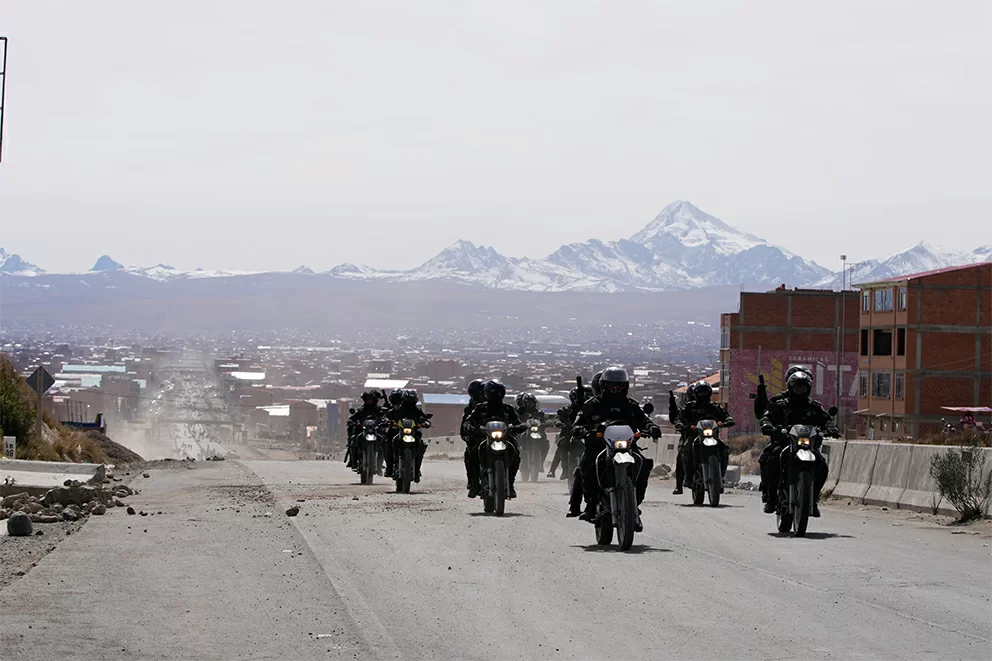
    Five weeks of mass anti-government protests have pushed Bolivian President Rodrigo Paz to declare a national 90-day state of emergency, granting the military expanded authority to clear crippling road blockades that have cut off critical supply lines to the capital La Paz and other major urban centers.

    The unrest, which has rocked Paz’s centrist administration just seven months after he took office, stems from public anger over sweeping austerity measures, most notably the elimination of long-standing fuel subsidies. What began as peaceful demonstrations has escalated into violent clashes between protesters armed with explosives and riot police, leaving at least 37 people injured and prompting more than 365 arrests, according to official government data.

    The human cost of the crisis has grown far steeper, however. Bolivia’s ombudsman’s office and independent human rights groups confirm at least 17 deaths have been linked to the unrest, most caused by lack of access to urgent medical care after blockades isolated entire communities. The Bolivian government alone has recorded seven deaths directly tied to delayed or unavailable medical treatment, as critical routes into La Paz remain barricaded, triggering acute shortages of fuel, food, and even medical oxygen in hospitals. Vehicles have been left stranded across the country, and patients requiring routine and emergency care have been unable to reach care facilities.

    In a nationally televised address defending the executive order, Paz emphasized that the state of emergency is not intended to restrict civil liberties, but to restore the freedoms ordinary Bolivians have been denied by the ongoing blockades. As stores shuttered and supermarket shelves emptied amid the supply collapse, public pressure for a forceful response to restore order has mounted rapidly.

    Progress toward de-escalation remains fragmented. On Friday evening, Paz secured an agreement with one major labor union, whose leadership has since called for protesters to lift their roadblocks. But hardline factions of the movement, who are demanding Paz’s immediate resignation, have rejected negotiations and refused to stand down.

    Under the terms of the emergency decree, blocking public roads that disrupt transport and supply chains is formally prohibited, and the military is authorized to temporarily support police operations to clear routes, reestablish public order, and protect civilian populations. Paz’s administration has stressed that constitutional protections and due process remain in effect, and that ordinary citizens will still be able to carry out their daily activities without widespread restrictions. The 90-day state of emergency can be ended early if violence and threats against civilians cease, the government added.

    Paz, who took office last November after ending nearly 20 consecutive years of rule by the left-wing Movement for Socialism (MAS), campaigned as a centrist reformer. He ran on promises to resolve pre-existing fuel shortages, shore up the struggling national treasury, and preserve critical social safety net programs for vulnerable populations. But his austerity pivot, particularly the cuts to fuel subsidies, has sparked rampant inflation and deepened public discontent across the country.

    The protest movement is led by highland Indigenous communities and rural workers, many of whom are former MAS supporters who accuse Paz of disregarding their core economic and social interests. Politically, the president faces mounting pressure from all sides: the conservative parliamentary majority and the left-wing opposition, led by ex-president Evo Morales who is backing the protests from exile and calling for snap new elections.

    On the international stage, Paz has secured formal backing from the United States, which has pledged additional emergency aid and logistical support to alleviate shortages caused by the blockades. U.S. officials have condemned the unrest as an attempted coup against Bolivia’s democratically elected legitimate government, and warned that bad actors are seeking to exploit the chaos to destabilize the broader Andean region.

  • SVG agri-projects go to ‘deal room’ after minister’s pitch in Barbados

    SVG agri-projects go to ‘deal room’ after minister’s pitch in Barbados

    Against a regional backdrop of rising food import dependency, climate-driven agricultural shocks and supply chain disruptions, St. Vincent and the Grenadines (SVG) has positioned eight targeted agriculture and food system projects in the Caribbean’s regional investment marketplace, Agriculture Minister Israel Bruce has announced. Two of these proposals have already advanced to the advanced negotiation stage known as the “deal room” following the high-level Food Systems Investment Forum held in Barbados, which centered on mobilizing equity capital to strengthen Caribbean food security.

    Bruce, who accompanied the SVG delegation to the forum that brought together governments, development partners and private financial stakeholders under the theme “Mobilising Equity Capital for Resilient Food Systems in the Caribbean”, detailed the projects and early investor feedback during a post-forum press conference in Kingstown.

    Across a range of agricultural subsectors, SVG brought eight distinct investment proposals to the table, covering agro-processing expansion, youth agricultural entrepreneurship, irrigation infrastructure upgrades, national livestock processing and local poultry production scaling. The full slate of projects includes: a $5.5 million national abattoir development; a $4 million recapitalization plan for local agricultural marketing brand VincyFresh; a $12.8 million arrowroot crop revitalization program; a $6 million initiative to support youth entering agribusiness; a $5.3 million expansion of upgraded market depots in Lauders, La Croix and Langley Park; a $5 million national poultry production facility; the $8.28 million Rabacca irrigation infrastructure project; and the $2.58 million Richmond Valley irrigation project.

    Bruce highlighted that the youth-focused project directly responds to a pressing demographic challenge facing SVG’s agricultural sector: a rapidly ageing farming base that requires intentional policy intervention to drive generational renewal. The market depot expansion, meanwhile, is designed to elevate the three windward-side upgraded facilities beyond basic storage and processing functions, turning them into robust regional hubs that can connect local producers to new domestic and export buyer networks.

    After the forum’s pitching process, which allowed participating nations to showcase their priority projects to potential financers, two SVG proposals – the VincyFresh recapitalization and the arrowroot revitalization program – earned shortlisting for deeper due diligence and negotiation in the forum’s dedicated deal room. Bruce confirmed that active negotiations with interested financiers are already underway, noting that premature public disclosure of specific investor identities would be inappropriate while talks remain ongoing. “We hope that there’ll be fruit borne out of these two deal rooms. We are keeping our fingers crossed,” he told reporters. Even without finalized agreements, Bruce framed the shortlisting as an encouraging early signal that international financiers see strong potential for value addition and export growth in SVG’s agro-processing sector.

    Beyond the two shortlisted projects, all eight of SVG’s proposals have been added to a regional investment “deal book” – a centralized catalogue that will be used to market Caribbean agricultural projects to potential funders across the region and globally. Bruce explained that this centralized, regional packaging represents a shift from the outdated model of ad-hoc bilateral investment pitches, allowing Caribbean nations to present a coordinated, professional portfolio of opportunities to the global investment community.

    One of the most strategically significant projects on the slate, the $5 million national poultry facility, ties directly to SVG’s domestic policy goals of cutting food import costs and boosting national food sovereignty. Bruce noted that SVG currently spends hundreds of millions of dollars annually on imported poultry, and the government is laser-focused on expanding local production to reduce this import burden while strengthening domestic food security. The Barbados forum, he said, offers a critical pathway to secure equity partners or concessionary financing to move the poultry facility from planning to implementation.

    Outlining his administration’s approach to agricultural financing, Bruce established a clear priority hierarchy designed to protect public finances and avoid unnecessary debt burdens for taxpayers: grant funding is the preferred first option, followed by public-private partnerships, then concessionary loans, with standard commercial loans ranked as the last resort. He framed this strategy as a core commitment to fiscal prudence, focused on creating economic breathing room rather than adding unsustainable fiscal pressures.

    Placing SVG’s participation in the broader context, Bruce noted the forum addressed shared regional challenges: climate-fueled agricultural shocks, global supply chain disruptions, and skyrocketing food import bills across the Caribbean. The overarching goal of the gathering is to support a regional transition away from the current model of heavy reliance on food imports and concessional lending, toward climate-resilient food systems supported by targeted equity and blended finance.

    Bruce also connected the high-level regional investment push to longstanding concerns raised by local SVG farmers, noting that when his New Democratic Party was in opposition, farmers consistently identified three top priorities: access to expanded market opportunities, solutions to praedial larceny, and improved farm access roads. “You can see that this mission was focused on market opportunities and access roads,” he explained, adding that all eight projects pitched in Barbados – from the abattoir and poultry facility to the irrigation schemes and youth investment plan – build on campaign commitments and ongoing domestic agricultural upgrades.

    While Bruce stressed that no firm financing commitments have been secured for any of the projects to date, he emphasized that securing spots in the deal room and regional deal book are critical foundational steps to attract investment. He committed to sharing further public updates as negotiations progress, framing the Barbados trip as part of a broader, long-term strategy to secure grants, equity and blended finance to transform SVG’s agriculture sector. Ultimately, he said, these investments will help shift SVG from an ageing, under-capitalized farming sector to a dynamic, youth-driven, export-focused industry that is more resilient to global and climate shocks.