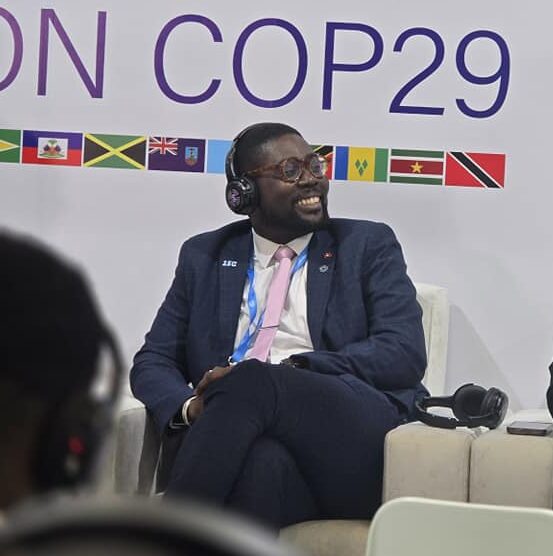
Against a backdrop of heavy reliance on traditional sun-and-sea leisure tourism across the Caribbean, the dual-island nation of Antigua and Barbuda is pursuing an ambitious economic repositioning. Government officials have laid out a clear strategic goal to cement the country’s status as the premier conference destination of the Caribbean, with long-term plans to expand that influence across the entire Western Hemisphere, as part of a broader push to diversify the national tourism economy.
Carlon Knight, a senior member of the Commonwealth Heads of Government Meeting (CHOGM) Business Forum Task Force, outlined that hosting high-profile international gatherings sits at the core of the administration’s broader economic diversification agenda. “That’s the vision of the prime minister and the government of Antigua and Barbuda. We must become the conference capital of the Caribbean and the conference capital of the wider Western Hemisphere,” Knight confirmed in recent remarks.
The nation has already built a solid track record of successful large-scale event hosting, laying critical groundwork for this expansion. In 2024, Antigua and Barbuda welcomed delegates for the fourth International Conference on Small Island Developing States, and followed that milestone by hosting the Organization of American States General Assembly in 2025. These events have allowed the country to steadily grow its infrastructure and operational capacity to accommodate major international summits.
The next major test of this strategy will come in late 2025, when Antigua and Barbuda plays host to CHOGM, running from October 30 to November 6. The summit will draw official delegates from all 56 member nations of the Commonwealth to the twin islands, marking one of the highest-profile international events the region has hosted in recent years.
Knight emphasized that conference tourism offers a unique competitive edge that traditional leisure tourism cannot match, while delivering widespread economic benefits across multiple local sectors. Hotels, private accommodation hosts on platforms like Airbnb, local restaurants, street vendors, entertainment providers, and transportation operators all stand to gain increased business from the steady flow of conference attendees.
Notably, event organizers have implemented a rule requiring all delegates to book accommodation on-island, rather than staying on anchored cruise ships – a policy designed to ensure that the majority of economic revenue generated by the event circulates within the local community, rather than leaking out to international cruise operators.
Knight pointed out that every Caribbean destination offers the same sun, sea, and sand leisure product, leaving little room for differentiation in a crowded regional market. By developing a robust conference tourism sector, Antigua and Barbuda can carve out a distinct niche that sets it apart from competing island nations. This strategy will not only expand the country’s overall tourism portfolio, but also create sustainable new revenue streams that support long-term, broad-based economic diversification for the nation.