博客

  • Haïti – Sécurité : Construction de cinq bases opérationnelles avancées à Port-au-Prince

    Haïti – Sécurité : Construction de cinq bases opérationnelles avancées à Port-au-Prince

    On the sidelines of the 56th Organization of American States (OAS) General Assembly, which is being hosted in Panama City from June 22 to 24, 2026, regional and international stakeholders have formally launched a joint security initiative aimed at stabilizing crisis-hit Haiti. The partnership between the European Union and the OAS will deliver five new Forward Operating Bases (FOBs) in Haiti’s capital Port-au-Prince, a critical investment to boost the Haitian National Police (PNH)’s capacity to combat widespread armed violence and arms trafficking.

    Centered on the guiding theme “Safer societies: EU-OAS cooperation to counter firearms trafficking”, the project targets a longstanding gap in operational infrastructure for Haiti’s national security forces, who have struggled to regain control of territory seized by violent armed gangs in recent years. Funded through the European Union’s Foreign Policy Instrument, the initiative carries a total budget of 10 million euros, equivalent to approximately 11.6 million U.S. dollars, with all construction work scheduled for completion by the middle of 2027.

    Speaking on behalf of the Haitian government, Haitian Foreign Minister Raina Forbin welcomed the collaborative project, noting that it aligns fully with the country’s top national security priorities. Forbin emphasized that the new FOBs will directly expand the presence of security forces in high-risk gang-controlled areas and help consolidate gains in territory that has already been recaptured by government forces. In a pre-recorded address to the launch event, PNH Director General Vladimir Paraison provided an update on the evolving security landscape, outlining progress that national security forces have made in ongoing efforts to restore public order and reassert state control over territory impacted by gang violence.

    OAS Secretary General Albert Ramdin reaffirmed his organization’s long-term commitment to supporting Haiti’s efforts to achieve national stabilization and strengthen state institutions. “At a time when Haiti faces profound and complex challenges, this partnership between the OAS and the European Union marks an important step in the right direction,” Ramdin said. “It demonstrates the confidence placed in Haiti’s institutions and the resilience of the Haitian people, as well as our shared determination to support a safer, more stable and hopeful future for Haiti.” Ramdin also stressed the urgent need for the full deployment of the planned Gang Suppression Force (FRG), a key component of Haiti’s national security strategy to push back against armed groups.

    Delphine Pronk, Deputy Director General for the Americas at the European External Action Service (EEAS), also spoke at the launch, underlining the EU’s commitment to delivering tangible support to Haiti at this decisive juncture. Pronk noted that the construction of the five advanced operating bases is a concrete step toward creating a safer, more functional operational environment for Haitian security forces as they work to restore peace across the country. The launch event was also attended by Carlos Hoyos, Deputy Foreign Minister of Panama, the host nation for this year’s OAS General Assembly.


  • Belize Steps Up to Guide Regional Education Agenda

    Belize Steps Up to Guide Regional Education Agenda

    In a significant shift for regional educational and cultural cooperation across Central America, Belize has stepped into a pivotal leadership role that promises to reshape learning frameworks and cultural preservation strategies across the region. As of June 2026, the small Central American nation has taken over the rotating presidency of the Coordinating Committee of Educational and Cultural Cooperation of the Central American Integration System (CECC/SICA), positioning it at the center of high-stakes regional decision-making for education and cultural development.

    This new position brings both expanded regional influence and heightened responsibility, and Belize has already signaled it plans to move quickly to advance its priorities. Speaking on behalf of the nation at the leadership transition meeting, Belize’s Minister of State for Education Ramon Cervantes outlined a clear, people-centered policy agenda for the country’s six-month term. The three core pillars of Belize’s leadership plan are expanding universal access to education for all learners across the region, positioning cultural heritage as a core engine of national and regional development, and speeding up the adoption of digital transformation in educational institutions.

    Cervantes highlighted that Belize already has hands-on experience implementing innovative digital learning models that it can bring to the regional table. He pointed to the country’s ongoing 501 Academy initiative as a tangible example of the nation’s work to reimagine digital education, noting that the lessons learned from this local program can now be shared with neighboring countries to support their own digital transitions.

    Prior to assuming the presidency, Belize participated as a member in CECC/SICA’s collaborative processes. Now, its role has evolved from contributing member to lead coordinator, tasked with shepherding existing regional agreements into active implementation. Over the next six months, Belize will steer the bloc’s work to improve overall education quality across Central America, advance inclusive cultural development initiatives, and deepen cross-border collaboration between all member nations. Observers of regional integration note that this leadership turn offers Belize an opportunity to bring localized, community-focused priorities to the forefront of Central American public policy.

  • Belize Pushes to Expand Airlift as Departure Fees Raise Concerns

    Belize Pushes to Expand Airlift as Departure Fees Raise Concerns

    In a challenging turn for Belize’s $2 billion tourism sector, the country has been forced into urgent action to rebuild its air connectivity after losing two major low-cost carriers – Spirit Airlines and JetBlue – within a single six-month window. The departures have left a gaping capacity gap that threatens to curb visitor arrivals and undermine years of growth in the country’s largest economic driver, pushing tourism officials to accelerate negotiations with potential new airline partners.

    In an interview published June 22, 2026, Belize’s Tourism Minister Anthony Mahler confirmed that his team is working at an accelerated pace to court both established and new carriers to fill the void left by the departing budget airlines. Early progress has already been made: Bermuda Air has committed to launching new scheduled routes into the country, which will add much-needed inbound capacity in the coming months. Mahler added that multiple other carriers have expressed formal interest in entering the Belize market within the next 12 to 18 months, and the ministry is conducting extensive outreach, due diligence, and offering targeted financial incentives to help new routes launch and remain sustainable long-term.

    Notably, Mahler revealed that JetBlue – one of the two carriers that exited the market recently – has signaled it is open to returning to Belize once it completes its ongoing corporate restructuring process, a transition that many major global airlines have undergone in the post-pandemic landscape.

    Despite these small wins, the industry faces a major structural barrier that has tourism operators deeply concerned: the country’s high airport departure fees, which eat into the already razor-thin profit margins that define low-cost and ultra-low-cost carrier business models. Industry analysts have long noted that departure fees are a make-or-break factor for budget airlines when evaluating new routes, as even a small fee increase can push a marginal route into unprofitability.

    Mahler acknowledged that reducing departure fees would make Belize far more competitive in attracting budget carriers, noting that independent industry research consistently confirms that lower departure fees correlate directly with greater airline interest in new destinations. However, he confirmed that the tourism ministry holds no regulatory authority over setting departure fees, and no ongoing negotiations are underway to adjust the fee structure to a more competitive level. “That’s the reality, we can’t do anything about it,” Mahler stated in the interview.

    To offset this challenge, Belize is leaning into its core natural and geographic advantages to attract carriers. The country holds a strategic position within easy flying distance of major North American tourist markets, the source of more than 70% of Belize’s annual visitors. It also offers a one-of-a-kind tourism product that combines dense rainforest inland adventures – including ancient Maya ruin exploration and wildlife spotting – with world-class Caribbean marine activities such as scuba diving, snorkeling, and beach getaways, a diverse offering that appeals to a wide range of traveler demographics.

    The outcome of Belize’s push to rebuild its airlift network will have major ripple effects across the national economy, as tourism accounts for nearly 40% of Belize’s total GDP and employs more than one in four Belizean workers. Officials warn that sustained gaps in airlift could lead to lower hotel occupancy, reduced consumer spending across local businesses, and slower growth planned infrastructure upgrades designed to support long-term tourism expansion.

  • Belizean Youth Shine at Super Nationals Showcase in Belize City

    Belizean Youth Shine at Super Nationals Showcase in Belize City

    On June 22, 2026, Belize opened the first day of its premier nationwide youth sports event, Super Nationals, in Belize City. Hosted at the Belize Civic Center, the multi-phase showcase is crafted to connect emerging young Belizean athletes with university scouting networks, open doors to global athletic and academic opportunities, and raise the overall standard of school-based sports across the country. Day one of the tournament featured dozens of up-and-coming young volleyball players demonstrating their trained skills to assembled scouts and spectators.

    In an on-site interview, Belize’s Minister of Sports Anthony Mahler outlined the government’s ongoing commitment to nurturing homegrown athletic talent, noting that public resources are increasingly being directed toward building a supportive ecosystem where young competitors can develop and compete at elite international levels. “Our core goal is to expand targeted development programs that help young athletes refine their abilities,” Mahler explained. “To do that effectively, we first need to identify the top talent across every region of Belize, so we can bring those athletes into structured, high-level training pathways.”

    Mahler also detailed the institutional reforms underway to strengthen Belize’s sports sector, including a complete restructuring of the National Sports Council and the Ministry of Youth and Sports. The government is currently drafting a comprehensive national sports policy and accompanying strategic framework to improve coordination across the sector. “We’ve made significant progress in organizing our operations and have come a long way, but we recognize there is still work ahead – systemic change does not happen overnight,” he added. “We are collaborating closely with national sports federations, athletic associations, and youth-focused organizations to build out the programs young people need to grow, both in sports and in their personal development.”

    Addressing questions about the size of the national sports budget relative to other government departments, Mahler acknowledged that while funding has not yet reached the ministry’s target levels, it has seen consistent improvement in recent years. “Budget allocations are moving in the right direction,” he said. “We have to demonstrate impact with the resources we receive to continue growing support. Right now, we are focused on upgrading public sports facilities, launching more development events like Super Nationals, and partnering with the Belize Olympic Committee to shift our national posture from just participating in regional and international competitions to actually competing for top placements. Most importantly, we are working to give young Belizeans a positive, productive space to engage with sports at home.”

    Super Nationals is structured in two age-based phases. Primary school competitions run through June 22 and 23, while high school division matches will take place from June 29 to July 3, giving hundreds of young athletes across the country the chance to showcase their abilities to talent scouts.

  • Candidate numbers decline continues as access accommodations reach record high

    Candidate numbers decline continues as access accommodations reach record high

    Barbados’ Ministry of Education Transformation has confirmed a landmark shift in the nation’s primary to secondary school transition system, officially announcing that the traditional Common Entrance Examination will be phased out starting this September, replaced by a two-year continuous assessment framework designed to prioritize holistic student development over a single high-stakes test.

    Minister of Education Transformation Chad Blackman made the announcement official Monday alongside the release of 2026’s final Common Entrance Examination results, framing the policy change as the cornerstone of a multi-year national education overhaul focused on advancing equity, fairness, and a purpose-driven national curriculum. The change is timed to coincide with two major national milestones: the 60th anniversary of Barbados’ independence and the fifth anniversary of its transition to a republic, making the 2026 academic year a symbolic turning point for the country’s education system.

    Blackman acknowledged the deep historical roots of the Common Entrance Examination in Barbados’ education landscape, but argued that the one-day, high-stakes model no longer serves the nation’s students. “I understand the historical significance that a Common Entrance [Exam] has played in Barbados, and this is no different today,” he said. “But it must not determine how people are viewed; it must not determine a person’s self-worth. It must determine, however, your ability to move forward and to help build and shape this nation.”

    Under the new continuous assessment model, student progress will be tracked over two full years of primary school, measuring both core academic performance and a range of non-traditional soft and practical skills that the old exam failed to capture. The core goal of the restructuring is to shift the primary to secondary transition focus from a single day’s performance to long-term holistic student growth. All secondary school principals and senior leadership teams have been ordered to fully restructure their incoming student entry and orientation programs to align with the new framework, with Blackman calling on education leaders to reimagine what a supportive, student-centered transition looks like.

    “Every child going into secondary school from September must feel that I am going to a school that understands my purpose, understands where I want to go in life,” Blackman said, adding that the changes will also standardize education quality across all Barbadian secondary schools, mandating a consistent high baseline for school morale, learning environment, and teaching capacity regardless of a school’s historical reputation or prestige.

    Alongside the policy announcement, the ministry released full statistical data for the 2026 Common Entrance Examination, the last cohort to sit the traditional test. Administered on May 5 across 21 public secondary schools, the 2026 exam drew 2,764 registered candidates from 67 public primary schools, 28 private primary schools, and seven homeschooled students. The data confirms a continuing trend of declining student enrollment across Barbados: this year’s candidate total is 60 students lower than 2025, and a 6.1 percent drop (169 fewer candidates) from 2024’s total of 2,933.

    Despite falling overall candidate numbers, the ministry reported a record high in accessibility accommodations for students with learning and physical needs, marking a steady upward trend in inclusive access provisions. A total of 240 special accommodation requests were approved this year, up from 194 in 2025 and 183 in 2024. Accommodations include large-print test booklets, assigned scribes, and dedicated readers to support eligible students. The ministry also approved 15 early sitting candidates – 11 male and four female – students under the age of 11 who hold a minimum 85 percent average in both mathematics and language arts across Classes Two and Three, as required by the Education Act. Blackman framed the expanded accommodations and early sitting approvals as “inclusion in practice.”

    To support the phased rollout of the new continuous assessment model, the ministry has already rolled out a series of infrastructure, technology, and training upgrades across the nation’s primary schools. All students in Infants B and Class One have been issued dedicated learning tablets, while teachers have received targeted training and additional device allocations to integrate digital learning tools into daily instruction. A nationwide school refurbishment drive led to the temporary closure of 13 primary schools on June 12 to complete structural extensions and facility upgrades, which Blackman defended as a necessary short-term disruption to build the infrastructure required for modern, student-centered learning.

    “As we move forward, we must ensure that we have the ability not just to have training for our teachers, but the infrastructure is the place of course that serves to allow our children, our teachers, our principals to be in an environment where they can thrive,” he explained.

    The resource upgrades are paired with new external quality assurance measures, launched after a successful pilot in May 2025. Panels of education officers, principals, and specialist trainers now conduct structured, formal school visits to set and enforce consistent national benchmarks for classroom instruction and institutional leadership. To support families navigating the education system changes, the ministry also launched a national parent education program on May 4, offering workshops on positive parenting, caregiver-student communication, and behavioral management strategies.

    Closing his address, Blackman congratulated the 2026 candidate cohort and sought to reassure parents and educators that the ministry remains fully committed to building a modern, inclusive education system that recognizes the full spectrum of student achievement. “The ministry is preparing to usher in a system which better recognises and facilitates the achievements and progress of all of our students,” he said. “I offer congratulations to all students who sat the examination this year, and this is, of course, only another leg in your life’s journey. You will have many other opportunities to achieve on this road of success.”

  • St Gabriel’s claims top boy, girl in Common Entrance

    St Gabriel’s claims top boy, girl in Common Entrance

    Barbados’ private St Gabriel’s School has made history this examination cycle, becoming the first institution in the island’s education system to claim both the top male and top female positions in the annual Common Entrance Examination. This unprecedented double triumph has cemented the school’s long-standing reputation for academic excellence, while opening new conversations around ongoing national education reform efforts.

    Benjamin Enzo Luciene earned the title of the nation’s highest-scoring male candidate, and Xiomara Alexis Lascaris secured the top position for female students. In a further milestone for the two high achievers, both have already been accepted to study at Harrison College, one of the country’s most prestigious secondary institutions, where they will begin their post-primary education this coming September. At the time of the official results announcement, no public data was released on how government-funded public schools performed in terms of overall placement rates or distribution of top scores across institutions.

    Chad Blackman, Barbados’ Minister of Education Transformation, officially announced the results and extended warm congratulations to all participating students across the country, highlighting the extraordinary achievement of Luciene and Lascaris in particular. Blackman reaffirmed the government’s unwavering commitment to advancing comprehensive systemic reform in the national education sector, while framing the current results within the context of a planned long-term shift away from the high-stakes standardized testing model that the Common Entrance Examination represents.

    Blackman acknowledged that the examination has occupied a central role in the island’s education culture and national identity for decades. “This examination throughout the years has been an important part of our national psyche in terms of education,” he said. “That’s why I’m so excited about the future of that transition: it is going to be one that is based on equity and is one that is based on ensuring that we tap into the broad skill sets that our children have, and therefore not focused on a one-shot exam.”

    Celebrations erupted across the St Gabriel’s campus immediately after the results were made public, with jubilant cheers from students, faculty and parents echoing through school corridors. St Gabriel’s Principal Alexina Chandler shared in an interview that the school placed a total of four students in the national top 10, an achievement she called deeply rewarding for the entire school community.

    “We are so proud of them, over the moon,” Chandler said. “I mean, it’s not a total surprise because they’ve all worked very hard, but we’re very pleased, very pleased. We’ve had top students before, but not both. I’m not sure how many schools have had both, so that would be interesting to look into. I know they’ve worked extremely hard, and they’re focused children, lovely children. We also have two others in the top ten as well. I’m very proud of all of them.”

    Chandler explained that the school’s consistent strong performance stems from a deliberate approach to building academic and personal foundations starting in early childhood education, rather than cramming focused preparation only in a student’s final primary year. She noted that the modern teaching frameworks the Ministry of Education Transformation currently promotes nationwide have already been core to St Gabriel’s curriculum for decades.

    “The students work very hard, obviously the teachers as well, but it doesn’t just start in Class 4. It starts in the foundation years from nursery and reception onwards. We build that foundation. The ministry is talking about play-based learning; we already have that in place for many, many years, and then the children build on that,” she explained. “Even in Class 4, they continue with the other subject areas, so we will have well-rounded, confident students. So a lot of hard work from the students, the teachers, and the parents, their support as well.”

    Addressing the ministry’s push for systemic education reform that prioritizes holistic development over rote testing, Chandler added that St Gabriel’s has long balanced targeted exam preparation with investment in soft skills and well-rounded growth. For example, the school introduces test-taking strategies, time management and problem-solving skills as early as Class 3, helping students build confidence without sacrificing broader learning. Project-based learning, another reform priority, is already a core component of the school’s infant department, with plans to expand the model further to align with the ministry’s new guidelines.

    “It’s not just about mathematics and English for us; it is well-rounded students who, you know, [have] those soft skills … as well, project-based. We already have that going in our infant department. It’s now to extend more to the juniors in terms of what the ministry is looking at,” she said.

    As Luciene and Lascaris prepare for their move to Harrison College, Chandler expressed full confidence that the foundational, holistic education they received at St Gabriel’s will support them through the next stage of their academic journeys. She emphasized that the historic double win is not a one-off anomaly, but a reflection of the school’s long-held institutional culture and educational philosophy.

    “It sums up what we try to do at St Gabriel’s in a lovely way. It is not a surprise, as I said, everyone worked really hard and was focused. And so this is not an anomaly. This is not by accident. This is part of what we do at St Gabriel’s,” Chandler noted.

    Founded in 1947 at the request of the then Anglican Bishop of Barbados, William James Hughes, St Gabriel’s originally opened with just 28 students between the ages of four and eight, and was initially run primarily by teaching sisters from the Convent of Jesus the Good Shepherd based in England. The school later expanded to offer primary through O-level secondary education, before closing its secondary section in 1975 to consolidate as an Anglican denominational primary school under the Diocese of Barbados. Today, it operates with a Christian foundational ethos while serving a multi-faith student body.

  • Curaçao biedt Suriname expertise aan voor ontwikkeling olie- en gassector

    Curaçao biedt Suriname expertise aan voor ontwikkeling olie- en gassector

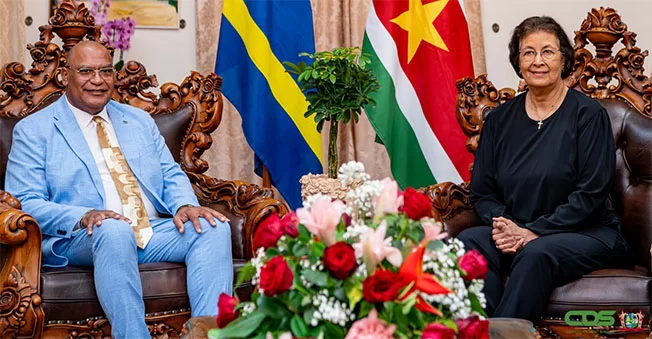
    On the sidelines of the 2026 Suriname Energy, Oil & Gas Summit (SEOGS), a high-level meeting between top officials from Curaçao and Suriname has laid the groundwork for deepened cross-border cooperation across energy, economic, and knowledge-sharing sectors. The meeting, held at the Presidential Palace in Paramaribo, brought together Curaçao’s Second Deputy Prime Minister Charles Cooper and Suriname’s President Jennifer Simons, as confirmed by Suriname’s Communication Service.

    Suriname is currently preparing to unlock its untapped offshore oil and gas reserves, a development that is set to reshape the small South American nation’s economic trajectory. To support this transition, Curaçao has offered to share its decades of accumulated expertise in the global oil industry, a sector that has formed the backbone of Curaçao’s economy for generations.

    President Simons opened the discussions by reaffirming a long-held joint commitment to strengthening bilateral economic ties, first laid out in earlier talks between the two governments. She highlighted that the two neighboring Caribbean nations share multiple untapped opportunities for collaboration beyond energy, spanning tourism, transport, and regional integration. Of particular importance, Simons emphasized, is advancing improved regional connectivity, especially through enhanced maritime shipping links. She also underlined that coordinated action on regulatory framework development, maritime security, environmental protection, and workforce capacity building will be critical as Suriname scales its emerging oil and gas sector.

    For his part, Cooper made clear that Curaçao’s decades of specialized experience in oil product processing, storage, and logistics positions the island nation as an ideal strategic partner for Suriname at this pivotal moment. “We share a common history and belong to the same region,” Cooper noted during the meeting. “It is essential that we move forward together.”

    Cooper added that the two sides have agreed to move forward with the formation of joint technical working groups, tasked with fleshing out the details of potential collaborative projects. These groups will allow Curaçao to provide targeted support in areas where it has built decades of institutional and industry expertise.

    Beyond economic and energy cooperation, the meeting also centered on the deep historical and social ties that bind the two nations. Cooper pointed out that Surinamese communities make a significant, lasting contribution to Curaçao’s society, noting that these shared cultural and historical bonds create a solid foundation for expanding bilateral cooperation moving forward.

    Both officials concluded the meeting by expressing shared optimism that bilateral contacts will continue to intensify in the coming months, aligned with the fast pace of growing economic development across the Caribbean and South American region. The planned partnership comes as global energy markets increasingly turn to new offshore production hubs, putting Suriname’s emerging sector in the regional spotlight.

  • Chapman Lane man remanded on firearm charge

    Chapman Lane man remanded on firearm charge

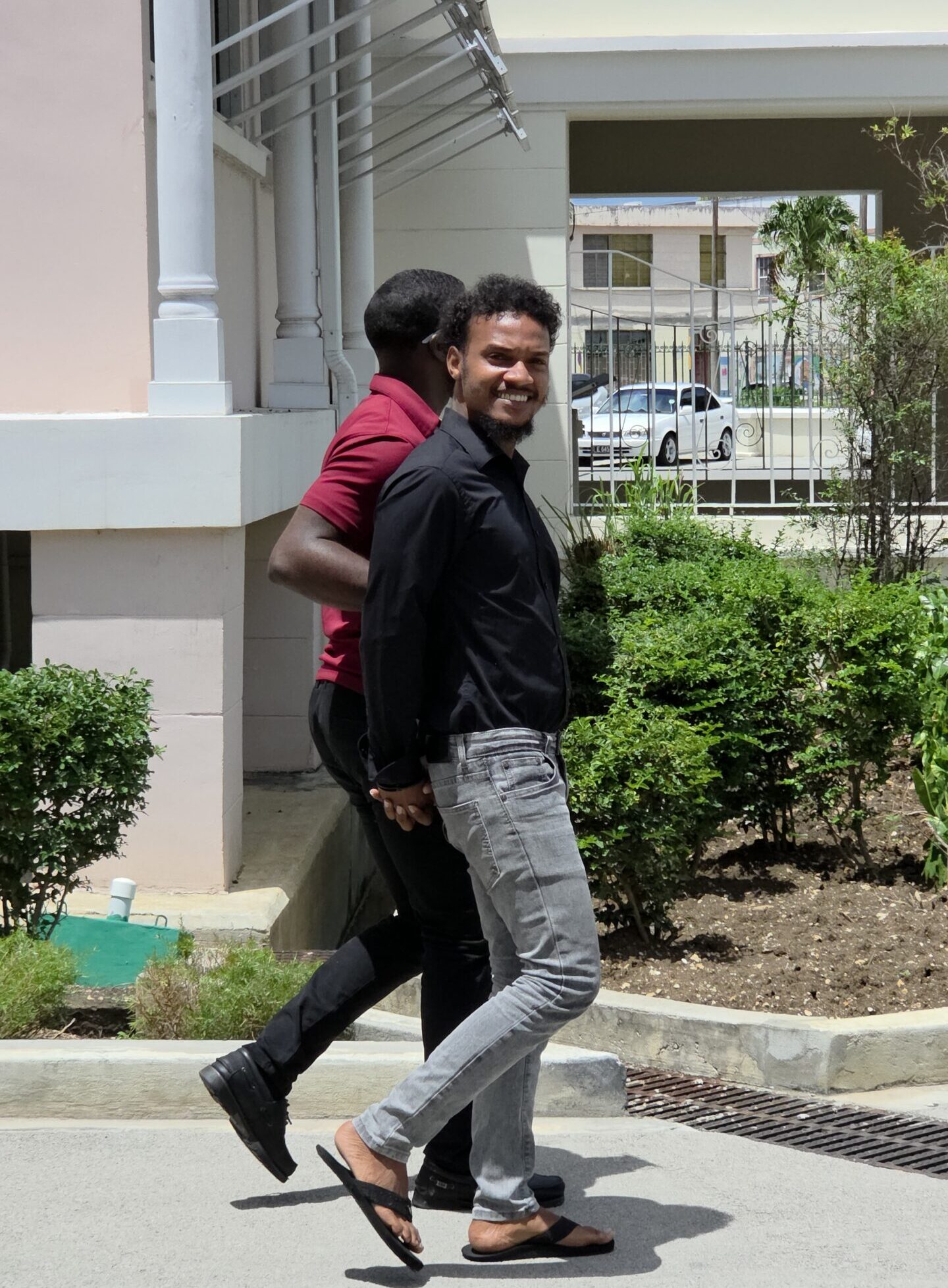
    A 26-year-old local general laborer is now in custody at Dodds Prison after a court appearance on a firearms charge directly connected to a shooting that rattled the Chapman Lane neighborhood earlier this June. Mahindra Alexander Thomas, a resident of Emmerton Lane in the Chapman Lane district of St Michael, faced proceedings before Acting Chief Magistrate Douglas Frederick at the No. 2 District ‘A’ Magistrates’ Court.

    The accusation against Thomas outlines that he discharged a firearm while committing the serious indictable offense of affray during the June 3 incident. Court procedure dictated that no formal plea was entered for the indictable charge, as the case advances through the legal system. Represented by his retained defense attorney Simon Clarke, Thomas was ordered to be remanded into custody ahead of his next scheduled hearing. He will next appear before the District ‘A’ Traffic Court for a procedural update on July 20.

  • Woman files lawsuit against Barbados gov’t over COVID-19 vaccine

    Woman files lawsuit against Barbados gov’t over COVID-19 vaccine

    A Barbadian woman has launched a legal claim against the Barbados government, arguing she developed life-altering, chronic health complications tied to two doses of the AstraZeneca COVID-19 vaccine she received in 2021. Court documents from the 2024 filing name the Office of the Attorney General as the defendant, holding the Ministry of Health and Wellness legally responsible for the harm she claims to have endured.

    Represented by prominent constitutional attorney and King’s Counsel Larry Smith, the claimant alleges the vaccine administered to her was defective. She argues the government failed to deliver a product that met the reasonable safety standards guaranteed to consumers under the island’s Consumer Protection Act.

    Timeline details laid out in the court filing outline that the claimant received her first AstraZeneca dose around April 23, 2021, with the second dose following in June that same year. Approximately eight weeks after her second injection, she first noticed a swollen bruise paired with intense pain beneath her right knee. As additional troubling symptoms emerged, including sharp chest pain and persistent difficulty breathing, she sought medical care twice; both visits ended with doctors unable to identify the root cause of her distress, local outlet Barbados TODAY reports after obtaining a copy of the court documents.

    Her condition continued to deteriorate, with bruising spreading across her entire body, breathing becoming increasingly labored, and her energy levels dropping dramatically. When she returned to care, her primary provider referred her to a hematology specialist for targeted testing and evaluation. The pharmacovigilance division of the Barbados Drug Service launched its own investigation into the incident, labeling it a suspected adverse drug reaction linked to the specific batch of the final vaccine dose the woman received. Blood samples analyzed at the Barbados Reference Laboratory confirmed the patient’s symptoms were consistent with vaccine-induced blood clotting, leading medical examiners to conclude her condition was a suspected case of vasculitis triggered by the June 25, 2021 vaccine administration.

    In the two years following her diagnosis, between January 2022 and July 2023, the claimant sent five formal letters to the government alerting officials to the state’s alleged liability for her health condition. According to the lawsuit, no substantive response was ever provided to her inquiries. A pre-action formal notice was later delivered to Barbados’ chief medical officer, demanding compensation for the vaccine injury.

    The lawsuit accuses the government of multiple counts of negligence: officials failed to put in place support systems for people who experience severe adverse reactions to vaccines distributed through the national COVID-19 vaccination program, and they refused to engage with the claimant despite being fully informed of her debilitating condition. The woman is now seeking multiple forms of legal remedy: general damages for ongoing pain, suffering, and loss of quality of life; special damages to cover lost earnings; full coverage of legal costs; six percent annual interest on awarded damages; and any additional relief the court deems appropriate given the circumstances.

  • Thousands of Dollars Missing from Louisiana Government School: Report

    Thousands of Dollars Missing from Louisiana Government School: Report

    An official probe is currently underway into allegations of substantial missing funds at Louisiana Government School, located in Orange Walk Town, local outlet News Five has verified. Multiple sources familiar with the case have confirmed that thousands of dollars in public money cannot be accounted for, with the suspected financial misconduct stretching across multiple years. While the exact total of the missing funds has not been made public at this stage of the inquiry, the severity of the allegations has already prompted direct intervention from Belize’s Ministry of Education.

    Following the emergence of the claims, the Ministry of Education has deployed a specialized team consisting of a senior financial officer and a professional auditor to carry out a line-by-line review of the institution’s full financial records. The goal of the on-site review is to map out the full scale of any financial discrepancies and identify the root cause of the unaccounted funds.

    When reached for comment by News Five, a high-ranking ministry official confirmed that the department had received formal complaints about irregular activity at the school weeks prior, and that a formal investigation has been active since the reports were verified. “Your reports are correct. The Ministry did receive reports of some financial irregularities and the ministry is investigating,” the official stated in an official confirmation.

    As the audit and investigation are still in early stages, no further details on the timeline for findings or potential disciplinary actions have been released. This remains an actively developing story, and updates will be provided once more information becomes available to the public.