
A cross-island telecommunications outage that cut off internet and connectivity service for thousands of customers in Dominica beginning late Sunday has been formally declared resolved by regional provider Flow, though scattered reports of persistent disruptions continued to surface from affected users through Monday afternoon. In an official public update posted to the company’s Facebook page, Flow confirmed that all core telecommunications and broadband services across Dominica had been fully restored, bringing an official close to the widespread connectivity interruptions that stretched into a second day for many local users. This outage was not isolated to Dominica alone: early in the disruption, Flow confirmed the root cause was a suspected critical infrastructure fault that simultaneously impacted service in neighboring Saint Lucia as well. When the fault was first detected, the company rapidly deployed specialized technical teams to locate and repair the issue, a task leadership described as an unusually complex troubleshooting challenge. While the company’s official announcement framed the incident as fully resolved, dozens of customers took to the same social media thread to report their services still remained non-functional hours after the restoration statement went live. One frustrated customer, who noted their service had been unstable since February and had already suffered an unconnected outage starting the prior Thursday, called out Flow’s long track record in the region to criticize the prolonged disruption. “Still no internet. Latest outage since Thursday. And service has been poor since February. You cannot be serious. In 2026 you have people without a basic utility for DAYS? Your company has been in the Caribbean since the 1870s – you don’t think you can do better?” the user wrote. Other users shared similar complaints: one reported being completely unable to complete outgoing or incoming calls, while another said their service had never been restored at any point after Sunday’s initial outage, expressing deep disappointment with the company’s response. Flow’s community management team directly addressed individual customer complaints in the comments section, issuing formal apologies for the ongoing inconvenience and committing to work one-on-one with every affected user to investigate unaddressed issues and resolve lingering outages. As of early Monday afternoon, the mixed picture of formal full restoration from the provider and ongoing connectivity problems for subsets of customers across parts of Dominica highlighted gaps in the repair process following the cross-border infrastructure fault.
博客
-
Disaster response gaps ‘could deepen harm to vulnerable youth’
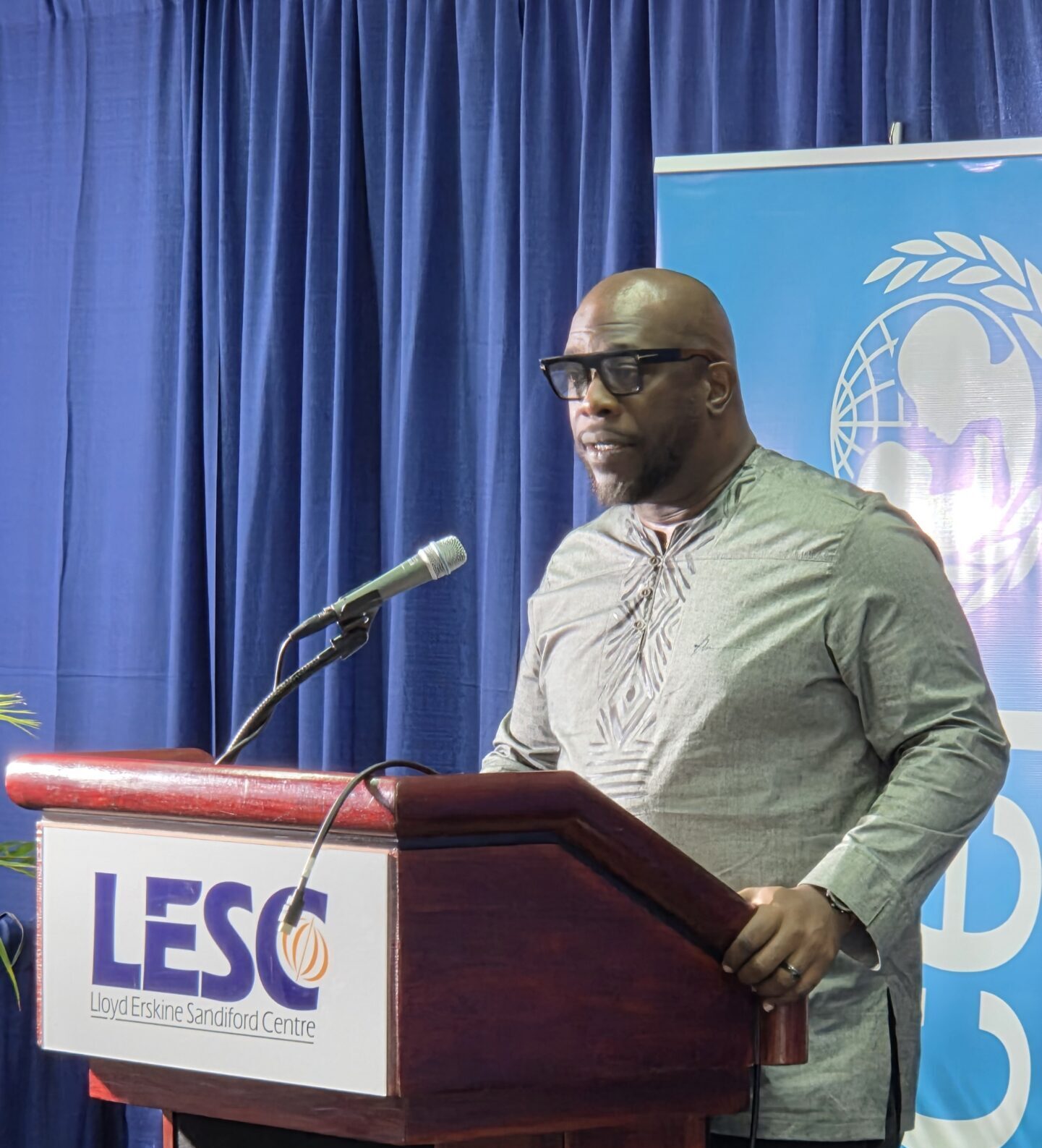
As Caribbean nations work to strengthen their support systems for at-risk young people, Barbados’ Minister of Home Affairs Gregory Nicholls has issued a stark warning: uncoordinated disaster response frameworks will exacerbate harm for vulnerable youth already navigating complex trauma and systemic disadvantage. His remarks came during the opening ceremony of a two-day regional workshop hosted by the Caribbean Association of Probation and Parole (CAPP) and the Barbados Probation Service, held at the Lloyd Erskine Sandiford Centre. Titled “Rooted in Resilience, United in Strength: Trauma-Informed Practice and Crisis Preparedness for Juvenile Justice Practitioners”, the event is backed by funding from UNICEF and brings together cross-sector professionals from across the region.
Nicholls emphasized that many young people engaged with juvenile justice and social services carry long-standing burdens of childhood abuse, interpersonal violence, grief, and systemic instability — challenges that make them far more susceptible to harm when public emergencies strike. “For this population, a disaster is never an isolated, one-off event,” Nicholls explained. “It is an escalation of existing hardship, one that rips open unhealed wounds and can erase months or even years of fragile progress if service systems are not prepared to respond in a coordinated, compassionate way.”
This reality, he argued, places a non-negotiable responsibility on all relevant institutions to build trauma-informed preparedness, align response protocols, and deliver intentional, consistent care. By convening stakeholders from emergency management departments, probation services, law enforcement, judicial bodies, education systems, social welfare agencies, and health care providers, the workshop signals a growing recognition that fragmented, siloed approaches cannot keep vulnerable young people safe. “Fragmented responses fail. Only interconnected, coordinated systems can deliver the protection these youth need,” Nicholls told attendees.
He pointed to the growing partnership between the Barbados Probation Service and the Department of Emergency Management as a model for the cultural shift the region needs. This collaboration marks a break from the isolated, department-specific planning that has long dominated crisis response, moving instead toward a model of shared accountability. “This shift away from silos is not an optional reform,” Nicholls stressed. “It is an essential change to protect the young people who depend on our systems.”
Over the course of the workshop, participants will focus on two pressing, underaddressed issues: suicide prevention for at-risk youth and critical incident stress management for frontline practitioners. Nicholls highlighted that both youth and the professionals who support them face growing strain from these challenges, noting that institutional investment in practitioner well-being is inseparable from efforts to build youth resilience. “We cannot talk about building resilience for the young people in our care if we ignore the well-being of the people who show up every day to support them,” he said. “If we fail to support our frontline practitioners, we weaken the entire system that protects vulnerable youth.”
For Nicholls, the workshop is far more than a routine training exercise: it is a targeted effort to build regional capacity, save lives, and embed resilience in the communities and systems that need it most. “This work is about making sure that when the next crisis hits — and it will hit — we do not fumble through a reactive response. We show up with clarity, compassion, and the competence to protect those who need us most,” he said.
Chief Probation Officer Dr. Angela Dixon echoed Nicholls’ concerns, explaining that natural disasters and public emergencies inevitably compound the existing vulnerabilities of young people engaged with juvenile justice systems. Too often, she added, the professionals responsible for supporting these young people are expected to navigate crises without adequate training, preparation, or institutional support. This regional workshop is the first of two planned sessions designed to close that critical support gap.
Dixon emphasized that the insights and professional connections forged at the event are intended to spread beyond Barbados, taking root in other Caribbean territories to build a truly regional response capacity. “We are incredibly grateful to UNICEF for their partnership and funding that has made this important work possible,” she said.
-

UDP Demands Oscar Mira’s Removal from Cabinet
In a developing political controversy rocking the government of Belize, the country’s main opposition United Democratic Party (UDP) has publicly aligned with the National Trade Union Congress of Belize (NTUCB) to push for the immediate ousting of Cabinet minister Oscar Mira, alongside a demand for a fully independent probe into claims that his family’s private firms secured questionable public sector contracts.
The allegations, which first emerged in local media reports, have sparked grave concerns across the political sphere over potential undeclared conflicts of interest, breaches in standard public procurement protocols, violations of national financial compliance rules, and lasting damage to the integrity of the country’s public administration. According to UDP leadership, even the temporary stepping back from duties does not go far enough to meet standards of governmental accountability.
Prime Minister John Briceño confirmed June 22 that Mira has voluntarily requested to be relieved of his official Cabinet responsibilities for the three-month duration of an official audit of the contested procurement processes, which will be carried out by Belize’s Auditor General. In the interim, Julius Espat — who currently holds the portfolio of Minister of Infrastructure Development and Housing — has been tapped to serve as acting Minister of Home Affairs while maintaining his existing ministerial duties.
The independent audit is mandated to examine whether all legally required procurement and payment procedures were followed correctly during the awarding and execution of the contracts linked to Mira’s family. The opposition has rejected the temporary administrative leave arrangement as insufficient, insisting that Mira must be fully removed from Cabinet and stripped of all ministerial authority for the full length of the investigation.
UDP has stressed its position that any individual found to have engaged in corrupt or unlawful activity related to the contracts must face full legal accountability, no matter their senior position within government. For his part, Mira has issued a flat denial, stating he had no knowledge of any business deals carried out by his relatives connected to the public contracts in question.
-
Adhin: Begrotingsvergadering volledig rechtsgeldig verlopen ondanks VHP-bezwaar
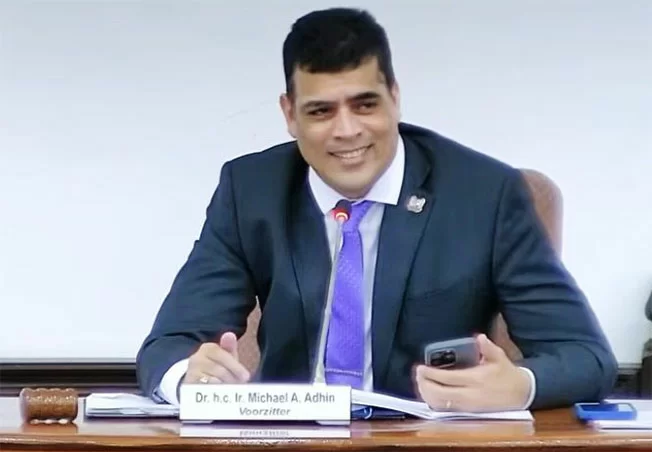
On June 22, a procedural dispute erupted in Suriname’s National Assembly over the opening of a public budget session, pitting Assembly Speaker Ashwin Adhin against the largest opposition faction VHP over the legal validity of the sitting.
The VHP faction raised formal objections during the ongoing budget treatment proceedings, arguing that the session’s opening was procedurally invalid because Adhin had not signed the attendance register before gavelin the meeting in. The opposition claimed this omission cast legal doubt on the entire sitting’s legitimacy.
Adhin pushed back firmly against the claims in a written statement, noting that the body’s Rules of Order provide no legal basis for the opposition’s conclusion. He cited Article 31 of the rulebook, which explicitly states that the secretary-general must hand the attendance register over to the speaker once at least 26 members — the required quorum — have signed the document. At that point, the speaker is mandated to open the meeting immediately. The speaker confirmed that this core requirement was fully met when he called the session to order.
“The speaker opened the meeting at the exact moment the required number of members were present and had signed the register,” Adhin’s statement read. He emphasized that the attendance register functions primarily as an administrative tool to confirm quorum and for meeting record-keeping, not as a foundational requirement for the speaker’s authority to open or lead a sitting.
Adhin later added his signature to the attendance register during the session, pointing out that the same Article 31 allows the register to remain with the secretary-general throughout the sitting for late-arriving members to sign after the meeting has begun. According to the speaker, this means there was no procedural gap that could undermine the sitting’s legal validity.
He also rejected the opposition’s proposal to adjourn the current session and reopen the meeting from scratch. Adhin explained that such a step would legally invalidate all actions already completed during the sitting, including the opening address delivered by the Minister of Foreign Affairs on behalf of the government during the first stage of budget negotiations.
“That conclusion lacks any legal foundation,” the speaker stated. He added that identical procedural scenarios have occurred in previous assembly terms without any challenges to the legitimacy of the resulting sittings, noting that the handling of the situation aligns fully with long-standing parliamentary precedent in Suriname.
While Adhin acknowledged that every assembly member — including the speaker himself — is required by Article 31 to sign the attendance register, he clarified that this obligation is separate from the speaker’s legal duty and authority to open a meeting as soon as the required 26-member quorum is reached.
In response to Adhin’s defense, the VHP faction confirmed it will maintain its formal objections to the procedure but has agreed to continue participating in the ongoing budget treatment rather than boycotting the proceedings.
-
St Gabriel’s tops exam as teachers urge stronger reading habits
The 2025 Barbados Secondary Schools’ Entrance Examination has delivered a mix of celebration and urgent concern for the island nation’s primary education system, after one standout campus claimed the country’s top performing boy and girl, while educators sound the alarm over plummeting national English proficiency scores.
St Gabriel’s Primary School emerged as the clear standout of this year’s exam results, securing the top two overall scores for male and female candidates, and placing four of its students in the national top 10 rankings. But even as the school community celebrates this historic achievement, local educators are using the moment to draw attention to a growing systemic challenge: a sharp, nationwide drop in English performance that they warn threatens foundational learning across all subject areas.
Official data shows the national average English score fell more than eight points this year, dropping from a mean of 72.5 in 2024 to 64.2 in the 2025 exam cycle. This decline has prompted educators across the country to call for urgent, system-wide action to rebuild student reading habits, which they identify as the core root of the poor English outcomes.
Annabelle Thornton, a Class 4 teacher at St Gabriel’s who instructed this year’s top female performer Xiomara Alexis Lascaris, told reporters she is immensely proud of her students’ successes, and credits the school’s holistic, balanced approach to education for its top results. Unlike many institutions that narrow their focus exclusively to high-stakes exam core subjects, Thornton explained St Gabriel’s prioritizes a broad curriculum that nurtures well-rounded learners.
“I feel extremely proud of Xiomara and every one of our students who sat this exam,” Thornton said. “They put in tireless work for months, and these results are a testament to that effort.” She added that the school does not funnel all its resources into mathematics and English test preparation alone, instead ensuring students get regular exposure to science, Spanish, religious education, drama and music to build diverse skills.
At the same time, Thornton emphasized that even at high-performing St Gabriel’s, reading remains a non-negotiable foundational priority that the school prioritizes every day. “Reading is the base of all learning, full stop. It doesn’t matter what subject you’re teaching — if a student can’t read fluently and with comprehension, they can’t succeed,” she explained. “That’s why I believe every primary school across the country needs to make expanding reading opportunities a top priority right now, given these falling English scores.”
To build reading proficiency, Thornton said St Gabriel’s integrates a wide range of reading materials into daily lessons, from traditional comprehension exercises to newspaper articles, general interest magazines and sports publications that meet students’ individual interests. “We push reading more than many other skill areas because it is the foundation that everything else builds on. There’s no way around it,” she said.
Beyond a broad curriculum and strong reading focus, Thornton added St Gabriel’s longstanding commitment to project-based learning and extracurricular engagement has helped its students grow into confident, articulate, well-prepared learners. “We’ve always structured our program around termly projects, which get students applying their skills to real topics rather than just memorizing for tests,” she said. “We’re a balanced school that cares about more than just test scores, and that shows in how our students perform and present themselves.”
Kirsty Lashley, another St Gabriel’s educator who worked with this year’s cohort of top performers, echoed Thornton’s praise for her students’ hard work, while noting that the school community remains focused on students still waiting for their results. “I’m absolutely delighted for the students who have already seen their hard work pay off with these strong scores, but we’re also thinking of those who haven’t received their results yet,” Lashley said. “Every single one of these students worked incredibly hard over the past year, and they all deserve recognition for that effort. When it comes to our school’s success this cycle, I think we’ve just been truly blessed.”
As the country processes the 2025 entrance exam results, the call for expanded reading investment in primary education is expected to move to the forefront of education policy discussions on the island, as educators work to reverse the ongoing decline in English performance.
-

“His Loss Leaves an Immeasurable Void”: 55-Year-Old Dies in Motorcycle Crash
A devastating road accident has claimed the life of a 55-year-old local man, Aurelio “Jack” Bonell, following a head-on collision between two motorcycles along Cristo Rey Road in Cayo District on Saturday, June 20, 2026.
Assistant Commissioner of Police Hilberto Romero, head of the National Crimes Investigation Branch, confirmed details of the incident in a press briefing. He told reporters that first responder units were dispatched immediately after receiving emergency calls about the crash, and arriving officers found two heavily damaged motorcycles at the scene, along with three injured people. Initial investigations indicate the two motorcycles were traveling in opposite directions when the collision occurred. Despite emergency medical response, Bonell could not survive the severe injuries he sustained in the impact, Romero confirmed.
The two other people involved in the crash, identified as Kevin Miranda and Kristali Miranda, were rushed to a local medical facility for treatment. Authorities confirmed Monday that the pair remain in stable condition as they recover from their injuries.
Bonell’s family has shared an emotional tribute to the 55-year-old in a public social media post, remembering him as a deeply loving member of his extended community. “He was a loving father, brother, grandfather, uncle, cousin, and dear friend whose kindness, warmth, and presence touched the lives of many,” the post read. The family added, “His loss leaves an immeasurable void in the hearts of all who knew and loved him.”
As of Tuesday, the investigation into the crash remains active. Romero confirmed that law enforcement is still working to establish full fault for the collision, and no decisions have been made on whether criminal charges will be filed against any of the surviving involved parties.
-

St Gabriel’s Primary students take top honours in Common Entrance
One of Barbados’ most celebrated private primary institutions, St Gabriel’s Primary School, has turned in a standout performance in the 2024 Barbados Secondary Schools’ Entrance Examination, securing both the top male and top female scores island-wide while placing four students in the overall top 10 rankings. The landmark result ranks among the school’s strongest academic showings in modern history, sparking widespread celebration across the campus after official results were unveiled by Minister of Education Transformation Chad Blackman.
For 11-year-old Benjamin Luciene, the newly crowned top-performing boy, the achievement is the product of years of steady support from his school, family, and friends. In an interview following the results announcement, Luciene spoke through a wide smile about his overwhelming pride and gratitude for everyone who walked the journey with him. “I’m just so happy and proud to have achieved this result – I couldn’t have asked for anything more,” he said. “I had consistent support from my family, my teachers, and my friends every step of the way. On exam day, I just focused on giving it my all, and I’m completely satisfied with how everything turned out.”
Like many test-takers, Luciene acknowledged pre-exam jitters played a role in the lead-up to test day. “To be honest, I just wanted to get it over with,” he admitted. “When the day finally came, all I focused on was doing my best and staying calm no matter what happened.” His father, Maxime Luciene, credited the family’s low-pressure, balanced approach to childhood and academics for his son’s success, alongside the high-quality instruction St Gabriel’s provided. “We are over the moon with this result, and we have to thank God and the entire team at St Gabriel’s for everything they’ve done,” he said. “At home, our main goal was to create an environment where Benjamin could thrive naturally. We know academics matter a lot, but for us, it was just as important to make sure he got to be a kid first. We prioritized giving him a healthy home, nutritious food, spiritual guidance, and all the tools he needed to succeed on his own terms.”
Claiming the title of top-performing girl was Xiomara Alexis Lascaris, who said months of consistent revision and intentional preparation paid off far beyond her expectations. Lascaris, who has long set her sights on attending Harrison College, shared that she already got a preview of her next academic home and is eager to start the new chapter. “I feel so accomplished right now – I know I put in the work, and it feels good to see that effort rewarded,” she said. “I’m so thankful to every single person who supported me to get here. I went on a campus tour of Harrison College recently, and it was just beautiful. I got to see the classrooms and learn all about the different opportunities I’ll have there, and I can’t wait for my time there.” Her mother, Witney Lascaris, praised her daughter’s relentless work ethic and willingness to make short-term sacrifices to reach her goal. “I couldn’t be more proud of Xiomara. She worked so hard for this, and there were definitely things she put on hold to focus on her prep. She’s such a hard worker, and she takes her studies incredibly seriously.” Lascaris also shared that her daughter’s long-term ambitions have evolved over the years, ranging from exploring space as an astronaut to flying commercial aircraft as a pilot.
Two more St Gabriel’s students, Shiloh Noelle Brewster and Adelaide Mae Sikkens, also claimed spots in the island’s top 10 overall rankings, cementing the school’s dominant performance. For Brewster, who earned a spot at her first-choice school Queen’s College, the reward for her hard work is simple: getting back to the hobbies she put on pause during exam prep. “I’m really proud of myself, and I’m so happy to have my free time back now that it’s over,” she said with a laugh. To make space for studying, Brewster cut back on screen time and spent hundreds of hours working through practice exam papers, and her prize for hitting her goal is a simple one: her favorite doughnuts. Her father, Leon Brewster, said her result is a direct reflection of her innate discipline and quiet confidence, while her mother Denise Brewster noted that the entire family adjusted their routines to support Shiloh throughout her preparation.
For Sikkens, the fourth top-10 performer from the school, the achievement came with characteristic modesty. When asked about her result, she simply smiled and said, “I feel happy.” Her mother Dana shared that the family followed a simple, low-stress strategy to keep her grounded ahead of the exam: “We just focused on keeping her calm and sticking to our normal routine. We didn’t want to add extra pressure, and it worked out perfectly.”
Education observers across Barbados have noted that St Gabriel’s performance this year highlights the consistent quality of education the private institution delivers, and the balanced approaches taken by all four top-performing students’ families are already being cited as examples for future test-takers across the island.
-

UWI to host regional forum examining Cuba’s ongoing crisis
As regional and global concerns mount over Cuba’s deepening socio-economic struggles, the University of the West Indies (UWI) is stepping into a leading role to unpack the crisis and mobilize collective support for the Caribbean nation. The institution has announced two key initiatives: a high-profile Vice-Chancellor’s Forum dedicated to analyzing Cuba’s current challenges, and a university-wide humanitarian campaign to gather essential supplies for Cuban communities.
Scheduled for Thursday, June 25, 2026, the hybrid forum titled “Perspectives on the Current Cuban Crisis: Issues, Impact, and Imperatives” will kick off at 11:00 AM Eastern Caribbean/Atlantic Standard Time (10:00 AM Jamaica local time). The in-person portion of the event will be held at the Eon Nigel Harris Council Room within UWI’s Regional Headquarters in Kingston, Jamaica, with a free global live stream hosted on UWItv to enable participation from audiences across the Caribbean and beyond.
Cuba currently faces a cascade of interconnected socio-economic headwinds: widespread shortages of basic necessities, chronic energy infrastructure disruptions, and sustained macroeconomic pressures that have rippled across the entire Caribbean region. These challenges unfold against a complex backdrop of strained international relations, ongoing domestic policy reforms, long-standing global trade restrictions, shifting tourism trends, and growing migration pressures that make Cuba’s trajectory a critical concern for the entire Caribbean community.
As the Caribbean’s preeminent regional research and public engagement institution, UWI has positioned itself to foster evidence-based understanding of the crisis, rather than letting it go undiscussed. In addition to the upcoming policy forum, the university has launched the “One-UWI Humanitarian Effort,” a four-week initiative running throughout June that mobilizes staff, students, alumni, and institutional partners across all UWI campuses to raise funds for purchasing urgently needed essential supplies for Cuba.
The forum is a collaborative effort organized by the Vice-Chancellor’s Office, in partnership with the Office of the Board for Undergraduate Studies, the Latin American-Caribbean Centre, and the Sir Arthur Lewis Institute of Social and Economic Studies. It will assemble a cross-functional panel of leading regional and international experts, spanning academia, diplomacy, and public policy, to examine every dimension of the crisis: its root causes, the scale of its impact, the Cuban government’s existing response frameworks, potential new policy pathways, implications for CARICOM and global diplomatic relations, and actionable opportunities for regional cooperation and targeted support.
The event will open with formal remarks from Professor Sir Hilary Beckles and Her Excellency Tania López Larroque, with the expert panel featuring Jessica Byron-Reid, Bert Hoffmann, Andy Knight, Miriam Nicado, and Indira Rampersad. Co-moderation duties will be split between Canute S. Thompson and Don D. Marshall, while Gillian Bristol, Strategic Coordinator of the UWI Multilingual Culture Programme, will serve as chair of the live gathering.
UWI’s Vice-Chancellor’s Forum series has built a 10+ year track record as a trusted platform for rigorous public debate on the most pressing regional and international issues. Under the leadership of Sir Hilary Beckles, the series has consistently connected leading scholars, policymakers, and practicing experts to confront the social, economic, political, and developmental challenges shaping the Caribbean and the wider world.
UWI has urged all interested members of the public to access the live discussion via the UWItv official website or regional Flow television channels. The event is designed to deliver timely, data-driven analysis, encourage constructive cross-stakeholder engagement, and advance collaborative solutions to one of the most urgent issues facing the Caribbean region today.
-

New Tricks for Old Farms
On a Thursday ceremony marking the conclusion of a capacity-building Farmer Field School program focused on boosting livestock output and modernizing farm management, smallholder farmers across western Belize walked away with critical new resources: electric fencing kits and high-quality forage growing materials, ready to implement the sustainable techniques they learned over the course of the training.
The hands-on program, which blended classroom learning with on-site practical demonstrations, has already driven tangible changes to how participating farmers operate their land and manage their herds. Multiple participants took the stage at the closing event to share their early successes with the new approaches they adopted.
One farmer told the crowd he had already cultivated nearly 200 leucaena seedlings, divided his grazing property into managed paddocks, and established an on-site nursery for elephant grass. This shift eliminates the need to haul planting material from distant farms, cutting both his costs and logistical burden dramatically.
A second participant explained a new low-impact land clearing strategy he now follows: instead of clearing all existing vegetation and planting new shade trees that often fall victim to cattle damage, he selectively preserves naturally established shade trees that already thrive on his land. This approach reduces labor and capital costs while maintaining the shade that cattle need for heat stress relief.
A third farmer showcased even more innovative technology adoption: he now uses a consumer drone to herd cattle across large pasture tracts. The tool has cut his reliance on hired herders, reducing operating expenses, and made it far faster and easier to locate stray calves scattered within large herds.
Not all remarks focused solely on success, however; several participants raised ongoing challenges facing their operations, most notably unpredictable weather patterns that threaten newly planted seedlings and forage crops. They called for expanded access to affordable irrigation systems and sprinklers to help protect their agricultural investments from drought and erratic rainfall.
As part of the program, participants took a guided study tour of the Belmopan Model Farm, a demonstration facility where they got to see rotational grazing systems and electric fencing infrastructure in action first-hand. They also attended a hands-on demonstration of effective screwworm treatment products, a critical tool for protecting livestock health in the region.
William Usher, Chief Executive Officer of the Belize Livestock Producers Association (BLPA), opened the ceremony and emphasized that the model farm is a permanent community resource open to all BLPA members. “This is your association,” Usher told attendees. “You can come here anytime. You can walk into this office anytime. Don’t feel that we who are here are the ones dictating anything to you guys. You are here to dictate to us where to go as far as we are concerned in terms of this industry.”
The Farmer Field School initiative was conceptualized and developed by the Nature Conservancy (TNC), with BLPA leading on-the-ground implementation. The program was delivered in formal partnership with Belize’s Ministry of Agriculture, the Belize Maya Forest Trust, and the University of Belize Central Farm, bringing together public, private, non-profit and academic stakeholders to support smallholder agricultural development in the region.
-
FTC urges students to put consumer rights at centre of business
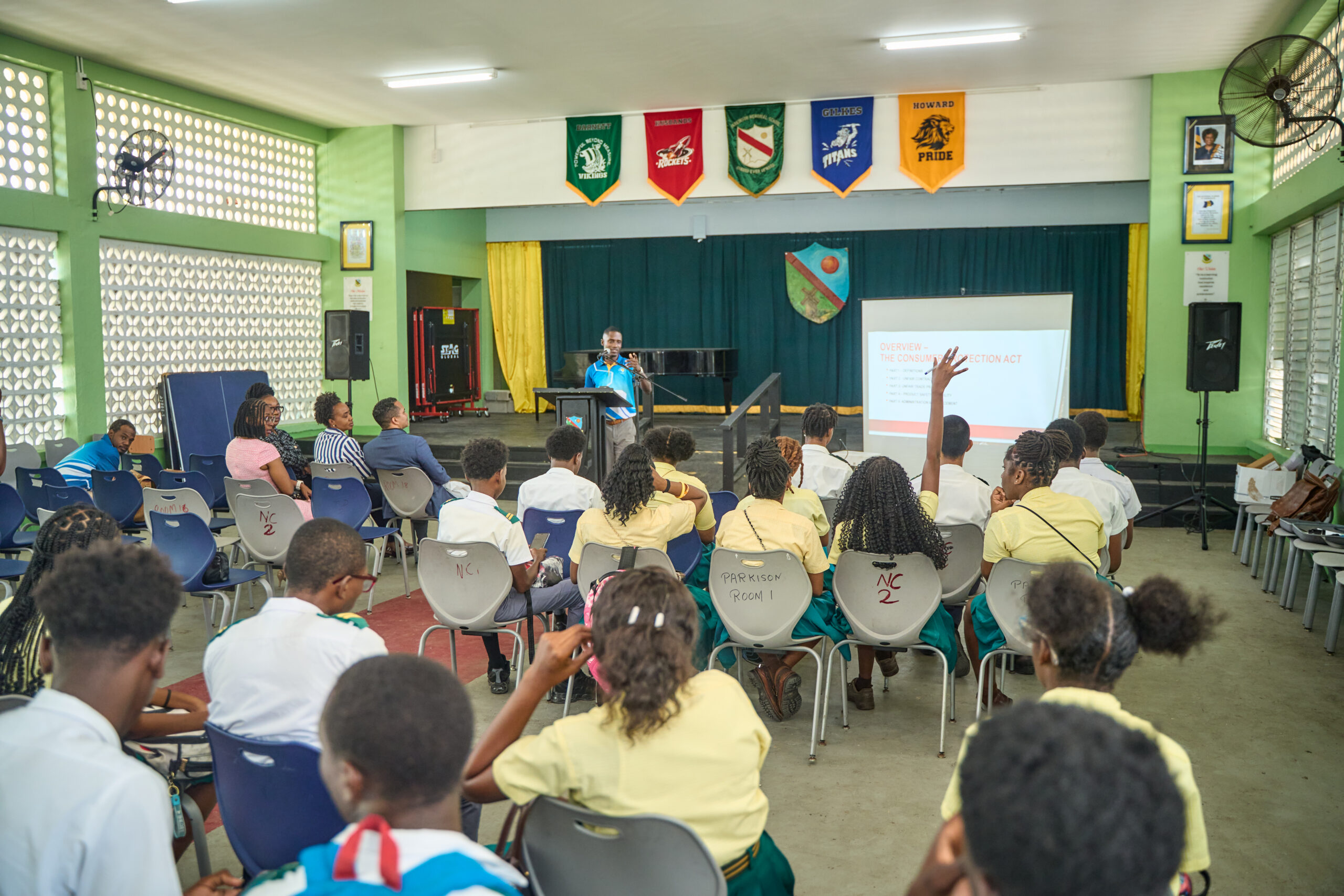
As part of Parkinson Memorial School’s annual Business Week celebrations, the Barbados Fair Trading Commission (FTC) recently hosted an interactive, week-long consumer rights workshop aimed at equipping young business students with practical real-world knowledge and exam preparation for their 2027 Caribbean Secondary Education Certificate (CSEC) assessments. Centered on the theme “All About Business”, the program prioritized demystifying core consumer protection concepts, outlining official redress pathways for dissatisfied customers, and emphasizing the critical role of consumer rights in building sustainable, successful business ventures.
Brian Parris, head of the business studies department at Parkinson Memorial School, opened the workshop by framing consumer rights as a foundational business principle, rather than an afterthought. He highlighted that consumers are the most critical stakeholders for any business, a reality many enterprises overlook when prioritizing short-term profit over long-term customer relationships. “What we are having today is a consumer rights workshop, and as we know, the customer is our major stakeholder in business,” Parris explained. Drawing a parallel between workplace protections for employees and consumer protections for customers, he noted that just as workers have established channels to address workplace grievances, consumers also have formal avenues to seek resolution when they receive faulty products or substandard services.
Parris went on to clarify the FTC’s core mandate as the national body tasked with safeguarding consumer interests across Barbados. He emphasized that prioritizing consumer rights is not just a legal requirement—it is a strategic advantage for businesses. “You’ll find that businesses can enhance their relationships with customers if they understand the consumer rights that they have to protect and preserve,” he said. Beyond building practical business acumen, Parris shared his hope that the workshop would spark greater enthusiasm among students for business studies, encouraging them to pursue higher standards of academic and professional excellence. “I’m hoping that [today] not only just broadens their eyes to these business concepts but gets them more interested and enthused to take the bar a little higher,” he added.
Dava Leslie Ward, Director of Consumer Protection at the FTC, followed with an actionable presentation outlining the commission’s ongoing work to advocate for Barbadian consumers and resolve a wide spectrum of consumer complaints. She explained that the FTC addresses every consumer concern through tailored, strategic approaches, drawing from recent advocacy work to illustrate the tangible impact of consumer protection regulation. One prominent example she highlighted is the FTC’s successful push for mandatory data usage alerts for mobile phone customers, a policy change that protects consumers from unexpected, excessive overage charges. “How many times have you gone over your data? Did you get a warning before you went over your data? At the commission, that’s one of the things we fought for from a consumer protection perspective and as well from a utility regulation perspective,” Ward said. She closed by reaffirming the FTC’s commitment to standing as a dedicated advocate for all Barbadians seeking fair treatment from businesses and service providers, noting that the commission regularly collaborates directly with providers to resolve disputes and deliver fair outcomes for consumers.