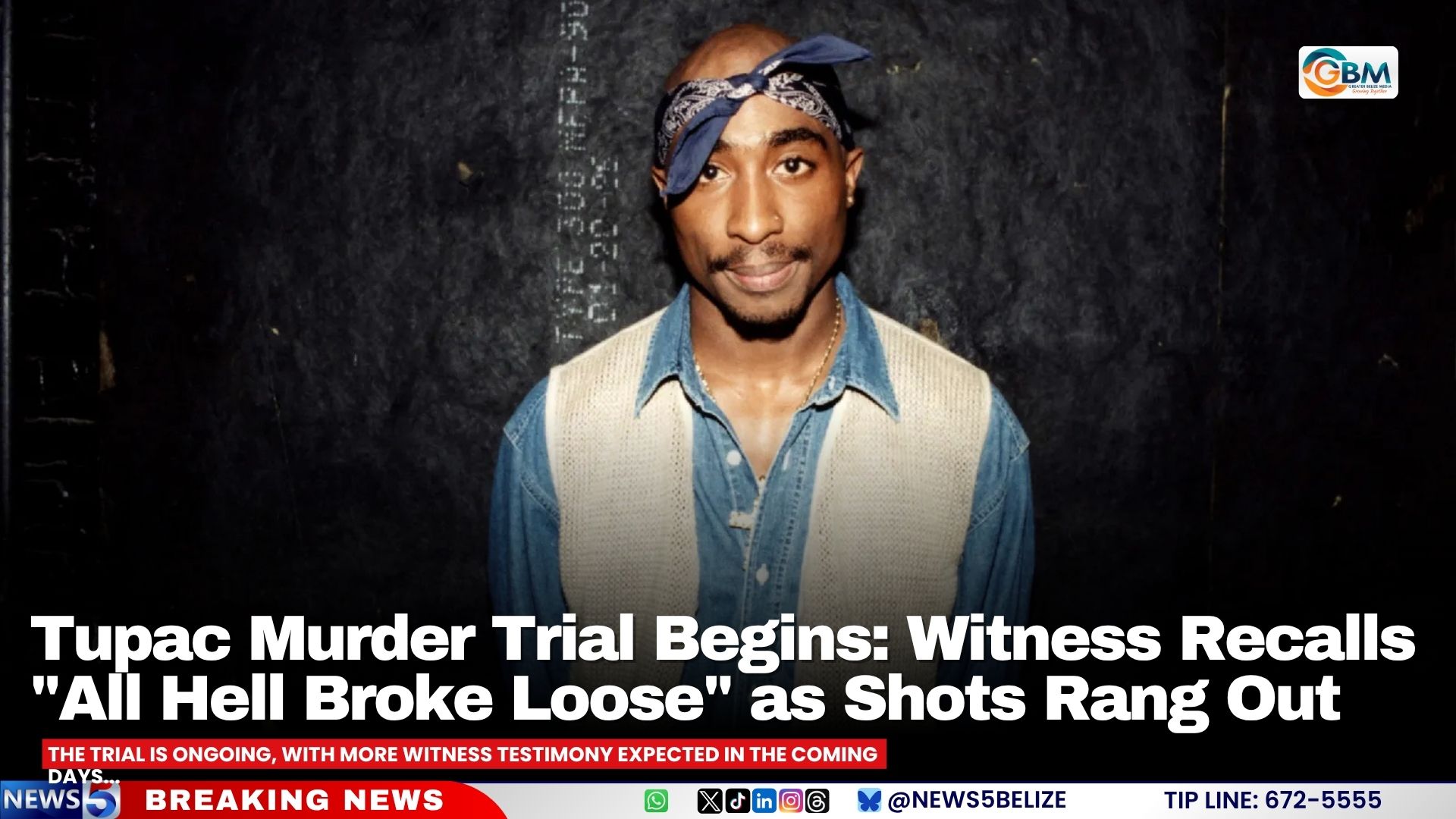
It has been almost 30 years since iconic rapper Tupac Shakur was killed in a 1996 drive-by shooting, and the long-awaited murder trial of Duane “Keffe D” Davis finally got underway this week in a Las Vegas courtroom. The 63-year-old defendant faces a single charge of murder with a deadly weapon, and he has formally entered a plea of not guilty to the accusation.
Prosecutors have laid out their case arguing that Davis did not fire the fatal shots himself, but served as the mastermind who organized the fatal attack as the leader of the group involved in the killing. According to the prosecution’s opening address to the jury, on the night of the shooting, Davis and his companions—including his nephew Orlando Anderson—were traveling through Las Vegas in a white Cadillac when they spotted Shakur and Suge Knight, the head of Death Row Records, near the Strip. The group made a sudden U-turn to intercept the pair, prosecutors claim, with Davis, seated in the front passenger seat, handing a firearm over to the backseat, after which Anderson opened fire directly into the vehicle carrying Shakur and Knight.
The prosecution says the shooting was an act of retaliation for a public altercation earlier that same evening, following a Mike Tyson boxing match, where Shakur and members of his security entourage assaulted Anderson. The entire confrontation was captured on venue security footage. Prosecutors also noted that Davis openly discussed his anger over the assault in his 2019 memoir, and previously admitted his role in organizing the killing during a conversation with a federal task force probing the 1997 murder of fellow rap star Christopher Wallace, better known as The Notorious B.I.G. That conversation was secretly recorded, and Davis had also spoken publicly about his involvement in the killing back in 2017.
Davis’ legal team has launched a forceful counterattack in its opening statement, urging jurors to approach the prosecution’s narrative with significant skepticism. Defense attorney Michael Sanft argued that the entire case is built on a decades-long investigation rife with procedural errors, including missing original police reports, mishandled physical evidence, and untrustworthy witnesses who have prior criminal records and stand to gain financially from their testimony against Davis.
Since the trial began, prosecutors have begun calling their first witnesses to the stand. A retired Las Vegas police officer testified that he had pulled over Shakur and Knight’s vehicle earlier that night because of a missing rear license plate, and later accompanied Shakur in the ambulance after the shooting, recalling the moment he asked the rapper who had attacked him.
Another witness, Ingrid Stokes, who was driving in the immediate area when the shooting broke out, recounted the sudden chaos that unfolded as gunfire erupted all around her vehicle. “All hell broke loose,” Stokes told the court, describing the fear and confusion of the night.
As the trial continues to progress, additional witnesses are scheduled to testify over the coming days, with both sides expected to lay out all evidence before the jury delivers a verdict in one of the most high-profile unsolved murders in modern entertainment history.