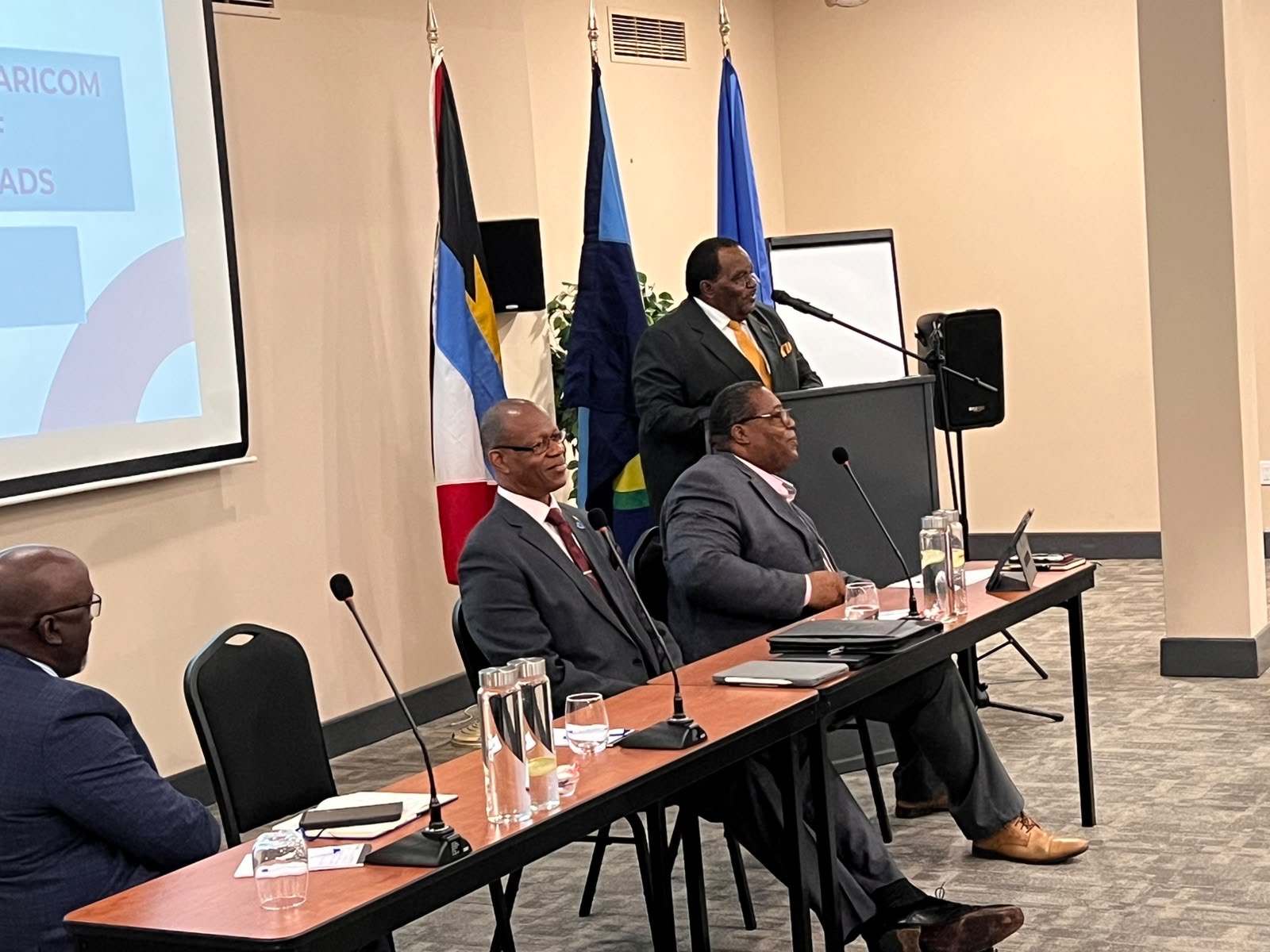
This week, the 35th annual Regional Intelligence Meeting kicked off in St. John’s, the capital of Antigua and Barbuda, with the island nation using the opening ceremony to reinforce its unwavering backing for cross-regional intelligence collaboration and collective security across the Caribbean basin. The country’s top law enforcement official, Attorney General Sir Steadroy C. Benjamin – who oversees the portfolios of justice, legal affairs, public safety and labor – delivered the keynote address on behalf of Prime Minister Gaston Browne, who was forced to miss the gathering due to a pre-scheduled prior commitment. After extending Browne’s formal apologies for his absence, Benjamin confirmed that the Antigua and Barbuda government stands fully behind the Regional Intelligence Meeting and the broader Caribbean regional security architecture. Speaking to a gathering of regional intelligence directors and senior security officials from across the Caribbean, Benjamin celebrated the forum’s 35-year history of facilitating coordination, framing the long-running event as clear proof of the region’s long-standing dedication to information sharing and joint action to counter cross-border criminal activity. In his remarks, the Attorney General sounded a note of caution that Caribbean states are confronting a growing array of increasingly complex and evolving security risks. These threats range from long-standing challenges, such as narcotics trafficking, the illegal weapons trade, human trafficking, and migrant smuggling, to newer concerns including violent extremism and cyber-facilitated financial fraud. He specifically highlighted cybercrime as one of the fastest-growing hazards facing the region, stressing that stepped-up intelligence-driven operations are urgently needed to map out and take down transnational criminal networks that operate across multiple Caribbean borders. Beyond discussions of ongoing threats, Benjamin also outlined Antigua and Barbuda’s ongoing preparations to host the Commonwealth Heads of Government Meeting (CHOGM) scheduled for November 2026. He noted that robust regional intelligence sharing will be an indispensable component of guaranteeing the safety and long-term success of this high-profile international gathering, which will draw leaders from across the Commonwealth of Nations. Framing intelligence gathering and sharing as the bedrock of effective policing, border management, counter-terrorism operations, and investigations into illicit financial activity, Benjamin urged regional intelligence leaders to continue deepening mutual trust through consistent practices of timely, secure, and professional information exchange. He also emphasized the critical need for updated national and regional legislative frameworks that enable lawful, effective intelligence operations. This, he argued, includes strengthening legislation targeting cybercrime, formalizing binding cross-border intelligence-sharing agreements, and updating robust data protection regulations to balance security needs with privacy rights. Closing the opening ceremony, Benjamin repeated the core message from Prime Minister Browne: protecting the Caribbean’s people, economies and borders requires a unified, region-wide approach rather than isolated national action. He closed by offering sincere gratitude to the assembled intelligence professionals for their often unseen public service, and expressed strong confidence that the three-day meeting would generate actionable, meaningful outcomes that will reinforce security for all members of the Caribbean Community. Over the course of the three-day summit, heads of national intelligence units, senior national security officials, and key regional security partners will work together to examine emerging security threats, expand collaborative mechanisms for intelligence sharing, and shore up the region’s collective ability to respond to shared security challenges.
博客
-

President wil leerstoel over slavernijverleden en Afrikaanse geschiedenis
On July 1, during the annual Keti Koti commemoration marking the abolition of slavery, Suriname President Jennifer Simons has announced a landmark push to expand scholarly research into the nation’s history of enslavement and the broader legacy of African civilizations. Speaking after a wreath-laying ceremony at the Kwakoe monument on Dokter Sophie Redmondstraat, Simons outlined plans to establish a dedicated university chair focused on the history of slavery, African heritage, and the global contributions of African civilizations to human development.
In her remarks at the event, which was jointly organized by the Committee for the Commemoration of the Abolition of Slavery and the Feydrasi Fu Afrikan Srananman under the theme “Recognition, Justice and Development”, Simons pushed back against incomplete historical narratives that reduce African history solely to the era of transatlantic chattel slavery. “Africans were not inherently enslaved people,” she emphasized. “Long before the slave trade, they built sophisticated kingdoms, advanced systems of governance, pioneered scientific knowledge, and cultivated extraordinary rich cultural traditions. For far too long, this full history has been erased and hidden from mainstream education and public discourse.”
Simons stressed that rigorous independent academic research is a foundational step to building a more complete, balanced understanding of national and global history. She also highlighted the role of Suriname’s annual Heritage Month, held each August, as a key platform to advance public education around cultural heritage, cross-community connection, and national identity. The month-long initiative is designed to create space for all of Suriname’s diverse population groups to explore their own unique histories and learn about the ancestral backgrounds of fellow communities.
The president called on all sectors of Suriname’s multi-ethnic society to work collectively to foster greater mutual understanding and social cohesion. Referencing the country’s long-held concept of a “mamio-society” – a community rooted in shared living and mutual care – Simons noted that learning about one another’s histories is the pathway to deeper self-understanding as a nation. “This shared understanding is the only solid foundation we can build upon to move forward together as one nation, rooted in pride, freedom, and mutual respect for all,” she said.
Simons also re-framed the meaning of the 1863 abolition of slavery, rejecting the common narrative that framed emancipation as a gift from colonial rulers. Instead, she emphasized that the end of chattel slavery was the hard-won outcome of the relentless courage and resistance of generations of enslaved people. She further noted that the intergenerational impacts of slavery on identity, cultural belonging, and human dignity continue to shape Suriname’s society today, meaning the process of national repair and healing is far from over.
“For decades, the prevailing narrative said the harm of slavery is all in the past, that it’s over and done with,” Simons said. “But it is not over. It will only reach closure when we come together to do the work of healing and repair. That work begins with recognition, open dialogue, remembrance, and honest understanding of what our ancestors endured.”
-
Ali sees no need to consult new Opposition Leader on Chief Justice, Chancellor
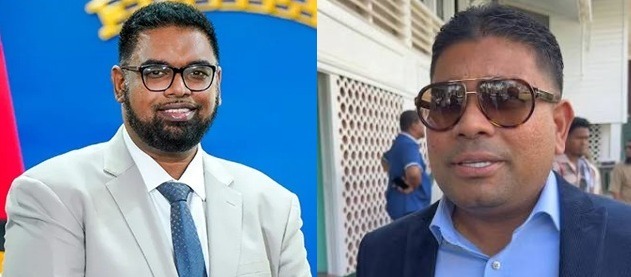
On July 1, 2026, a high-stakes constitutional dispute emerged in Guyana between President Irfaan Ali and newly sworn-in Opposition Leader Azruddin Mohamed, centered on the legally required consultation process for permanent appointments to the country’s two most senior judicial roles: Chief Justice and Chancellor of the Judiciary.
When pressed by Demerara Waves Online News for a timeline on initiating formal consultations with Mohamed, President Ali affirmed that his administration’s existing position – first outlined in a letter to former Opposition Leader Aubrey Norton – remains unchanged. The incumbent head of state noted that the government has maintained uninterrupted operation since winning re-election, and the prior recommendation for the substantive appointments of Justice Roxane George-Wiltshire as Chancellor and Justice Navindra Singh as Chief Justice still stands. When asked whether this long-held position had been formally communicated to the new Opposition Leader, Ali acknowledged the situation falls into a constitutional “grey area” that requires careful navigation, stopping short of committing to new talks with Mohamed.
Mohamed has rejected the President’s stance outright, arguing that a prior consultation with his predecessor cannot be legally transferred to his new post. In blunt remarks, the Opposition Leader emphasized that the Guyanese Constitution explicitly requires consultation with the sitting Opposition Leader, not a former officeholder. “Norton is no longer Opposition Leader. The President needs to reach out to me directly to schedule discussions on these critical appointments – we cannot rely on a years-old letter to a different officeholder,” Mohamed stated. He further revealed that he is currently preparing legal action to compel Ali to fulfill his constitutional obligation to hold new consultations, regardless of any personal or political differences between the two men. “We have a country to govern, and the Guyanese people expect us to put national interest above personal friction. I do not understand why the President is afraid to sit down and talk with me about this,” Mohamed added. When asked whether he personally supported the permanent appointments of the two currently acting judicial officeholders, the Opposition Leader declined to take a public position, saying he would share his stance at a later date.
The origins of the dispute stretch back to October 2025, less than two months after Guyana’s September 2025 general and regional elections, and three months before Mohamed defeated Norton in a parliamentary opposition leadership vote held on January 26, 2026. At that time, Ali first approached Norton to secure his support for making Roxane George-Wiltshire and Navindra Singh’s acting roles permanent, but Norton never granted his approval to the nominations.
In other related remarks Wednesday, Ali confirmed that the bipartisan parliamentary appointments committee will move forward with recommending nominees for a new Police Service Commission (PSC) following the recent deaths of PSC Chairman Patrick Findlay and commission member Lloyd Conway. Reaffirming his commitment to constitutional governance, Ali stated: “Wherever my role as President requires the execution of a constitutional function, you can expect me to uphold all requirements of the Constitution, as a leader committed to democracy and the rule of law.”
The dispute unfolds against a backdrop of broader political tension: the ruling People’s Progressive Party Civic-led administration cut formal ties with Mohamed and his father, Nazar “Shell” Mohamed, shortly after the U.S. Treasury Department’s Office of Foreign Assets Control imposed sanctions on the pair and their business entities. U.S. authorities allege the Mohameds evaded more than $50 million in taxes owed to the Guyanese government on exports of over 10,000 kilograms of gold. The two men have been indicted by a Florida federal court on charges of wire fraud, mail fraud, and money laundering connected to their gold trading operations, and are currently contesting a U.S. extradition request.
-

Guns, ganja seized
On Wednesday, July 1, 2026, Guyana’s Customs Anti-Narcotics Unit (CANU) announced a major law enforcement operation that yielded one of the recent larger illicit drug and weapons hauls in the capital region. Acting on intelligence, CANU agents targeted a residential property on Princes Street, located in the Lodge neighborhood of Georgetown, the country’s capital.
During the search of the premises, law enforcement officers recovered a substantial stockpile of contraband: 86 separate parcels of imported marijuana with a total weight of 98.32 pounds, valued at approximately 80 million Guyanese dollars. Alongside the narcotics, investigators also seized an arsenal of illegal firearms, including four semi-automatic pistols and one rifle.
In a statement following the raid, CANU confirmed that two Guyanese men were taken into custody at the scene, and are currently being held for interrogation in connection with the suspected trafficking operation. The agency has not yet released further details about the identities of the arrestees, or whether investigators believe the network is connected to larger cross-border drug trafficking operations operating in the region.
The seizure underscores ongoing efforts by Guyana’s anti-narcotics agencies to crack down on the illicit flow of controlled substances and illegal weapons into the country, particularly as transnational criminal networks continue to target Caribbean nations as transit hubs for drug trafficking bound for North American and European markets.
-
‘Audit Will Clear My Name’: Mira Breaks Silence on Audit and Family Payments
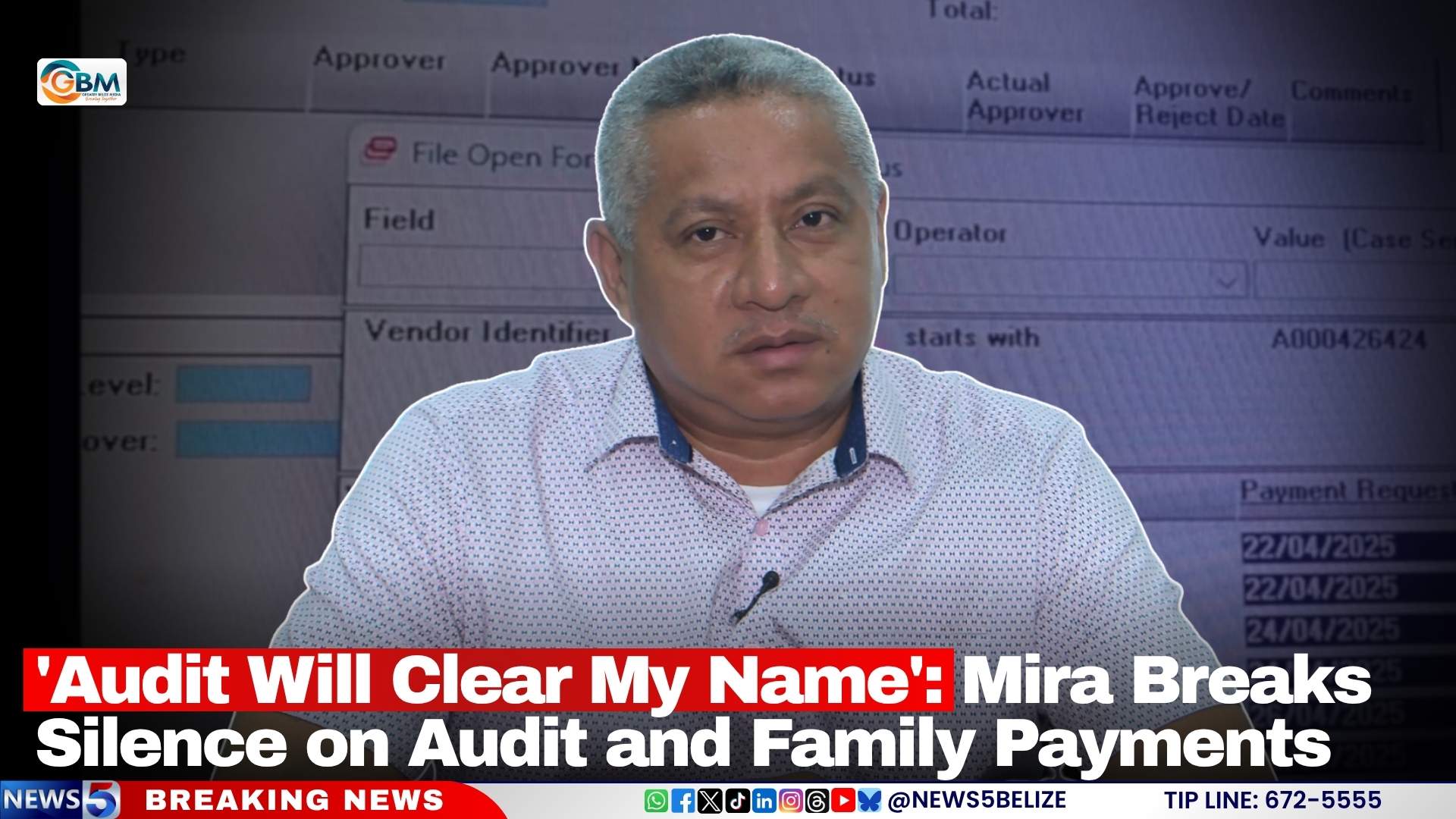
For weeks, swirling public controversy has hung over former Belizean cabinet minister Oscar Mira, centered on millions in taxpayer-funded government contracts awarded to businesses tied to his close family members. Now, three weeks after the Belmopan Area Representative stepped down from his ministerial post on administrative leave, Mira has spoken out for the first time in an exclusive interview with News 5, pushing back against mounting public scrutiny and asserting that the ongoing official audit will ultimately exonerate him of any wrongdoing.
Mira was clear to emphasize that even as he steps back from his cabinet responsibilities, he has no intention of stepping away from the public duties he was elected to fulfill. He remains active in his role as Belmopan’s elected area representative, a position he has not taken leave from, and says he is prioritizing constituent work over the growing noise of public criticism.
“I was not elected solely to serve as a minister — I was elected first as this area’s representative, and I do not plan to abandon that work no matter what questions are being raised,” Mira stated. “There is a lot of unfounded noise surrounding this situation, but I choose to block it out. It will not deter or slow down the work we have committed to delivering for the people of Belmopan.”
The independent audit currently underway is focused on taxpayer-funded contracts issued through the Ministry of Defence to family-connected businesses while Mira served as Minister of State, and later as the full substantive minister of the department. Rather than opposing the probe, Mira says he has actively welcomed it, expressing full confidence that the audit will confirm he had no involvement in any improper activity.
Central to Mira’s defense is his argument that his relatives, as hard-working Belizean citizens, have the same legal right to bid for and win government contracts as any other person in the country. He rejected the widespread view that family members of sitting elected officials should be barred from contracting with government agencies, calling the notion unfair and unfounded.
“My family is a hard-working family, full of eligible professionals who have every right to participate in government procurement processes just like any other Belizean,” Mira said. “I do not subscribe to the idea that simply because a relative holds public office, all other members of that family should be locked out of the chance to bid for work and earn an honest living through their services.”
When questioned about the validity of the work performed for the public funds disbursed, Mira did not equivocate: he confirmed that all contracted goods and services were not only delivered, but delivered to a very high professional standard. He added that any payments his relatives or their businesses received were strictly in exchange for completed professional work, and there was no case of unearned compensation being issued.
Amid lingering questions about Mira’s benefits while on administrative leave, the politician confirmed he continues to retain access to his government-issued vehicle. When pressed to address whether he is still drawing his full ministerial salary during his leave, however, he could only respond that he had not checked his pay status to confirm.
The audit, which is expected to be completed in the coming months, will ultimately reveal what exactly public funds were allocated for, and whether any misappropriation or conflict of interest occurred. For his part, Mira remains unshakable in his conviction that the final audit report will clear his name and confirm that no improper conduct took place.
-

Haitians under TPS, without work permits as of July 10, 2026
On June 25, 2026, the U.S. Supreme Court greenlit a long-contested Trump administration policy to end Temporary Protected Status (TPS) for Haitian migrants residing in the United States, triggering urgent alarm from human rights groups and Haitian communities across Florida, the state home to the nation’s largest Haitian immigrant population. The court’s ruling clears the way for a full wind-down of protections, with the Department of Homeland Security confirming that existing work authorization for Haitian TPS holders will expire on July 10, 2026, as part of an administrative transition period for lower court implementation of the decision.
Human Rights Watch (HRW) partnered with Miami-based community organization Sant La Haitian Neighborhood Center to investigate the potential impacts of the termination, conducting interviews with 40 Haitian TPS beneficiaries across South Florida and 15 leaders from local immigrant advocacy groups, alongside reviewing government and international organizational data. The findings, released July 2, 2026, paint a stark picture of fear and pre-existing instability for Haitian migrant families, who warn that losing TPS protections will expose them to deadly violence if deported and upend decades of economic and social integration in the U.S.
Juanita Goebertus, HRW’s Americas Director, emphasized that the termination would put Haitian migrants directly in harm’s way, noting that Haiti has suffered catastrophic deterioration of security and humanitarian conditions since TPS was first granted to Haitians in 2010 following a devastating earthquake. One 28-year-old Haitian beneficiary interviewed for the report described losing TPS as a de facto death sentence, explaining that deportees returning from the U.S. are routinely targeted for extortion and kidnapping by armed criminal groups that control large swathes of Haiti. With no savings to meet ransom demands, he said deportation would almost certainly lead to his killing.
Before the Supreme Court’s ruling, roughly 330,000 Haitians held TPS status across the U.S., 158,000 of whom resided in Florida. These migrants work across critical sectors of the state’s economy, including healthcare, elder care, construction, tourism, and hospitality. Analysis from bipartisan immigration advocacy group FWD.us shows that Florida’s Haitian TPS holders contribute an estimated $2.6 billion annually to the state’s gross domestic product, with $1.5 billion of that activity generated in the Miami metropolitan area alone.
HRW’s investigation found that many families were already grappling with cascading economic and social hardship in the months leading up to the ruling. Expired work permits, extended delays in status renewals, and employer confusion about the legal status of TPS holders had already pushed some into unemployment, cut household incomes for many others, and left families unable to cover basic costs including rent, groceries, and medical care. Some parents have pulled their children out of public schools, and many beneficiaries have skipped necessary medical appointments to avoid encounters with immigration enforcement authorities.
International bodies have repeatedly warned against forced deportations to Haiti. Since 2022, both the United Nations High Commissioner for Refugees (UNHCR) and the Office of the United Nations High Commissioner for Human Rights (OHCHR) have issued repeated calls for all nations to refrain from sending Haitians back to their home country, citing widespread human rights abuses, life-threatening safety and public health risks, and the complete absence of conditions that would enable safe, dignified, and sustainable return.
Thamara Labrousse, a representative of Sant La, noted that the consequences of the TPS termination extend far beyond individual migrant families, saying “Haitian TPS holders have built their lives in this country and are an integral part of the social and economic fabric of communities across Florida and the nation.” Local workplaces, schools, and entire regional economies depend on the labor and contributions of Haitian migrants, she added.
Advocacy groups are now pressing Congress to take immediate emergency action to reverse the impending termination. HRW and Sant La are calling on the U.S. Senate to quickly pass a bill already approved by the House of Representatives that would extend TPS protections for Haitian migrants through April 2029. The organizations also urged Congress to use the upcoming debate over broader comprehensive immigration reform to create permanent pathways to legal permanent residence and long-term stable protection for all TPS beneficiaries, who have built deep social and economic ties to the United States over more than a decade.
-
‘Gift of life’: Bill ‘could expand organ donation, ease dialysis burden’
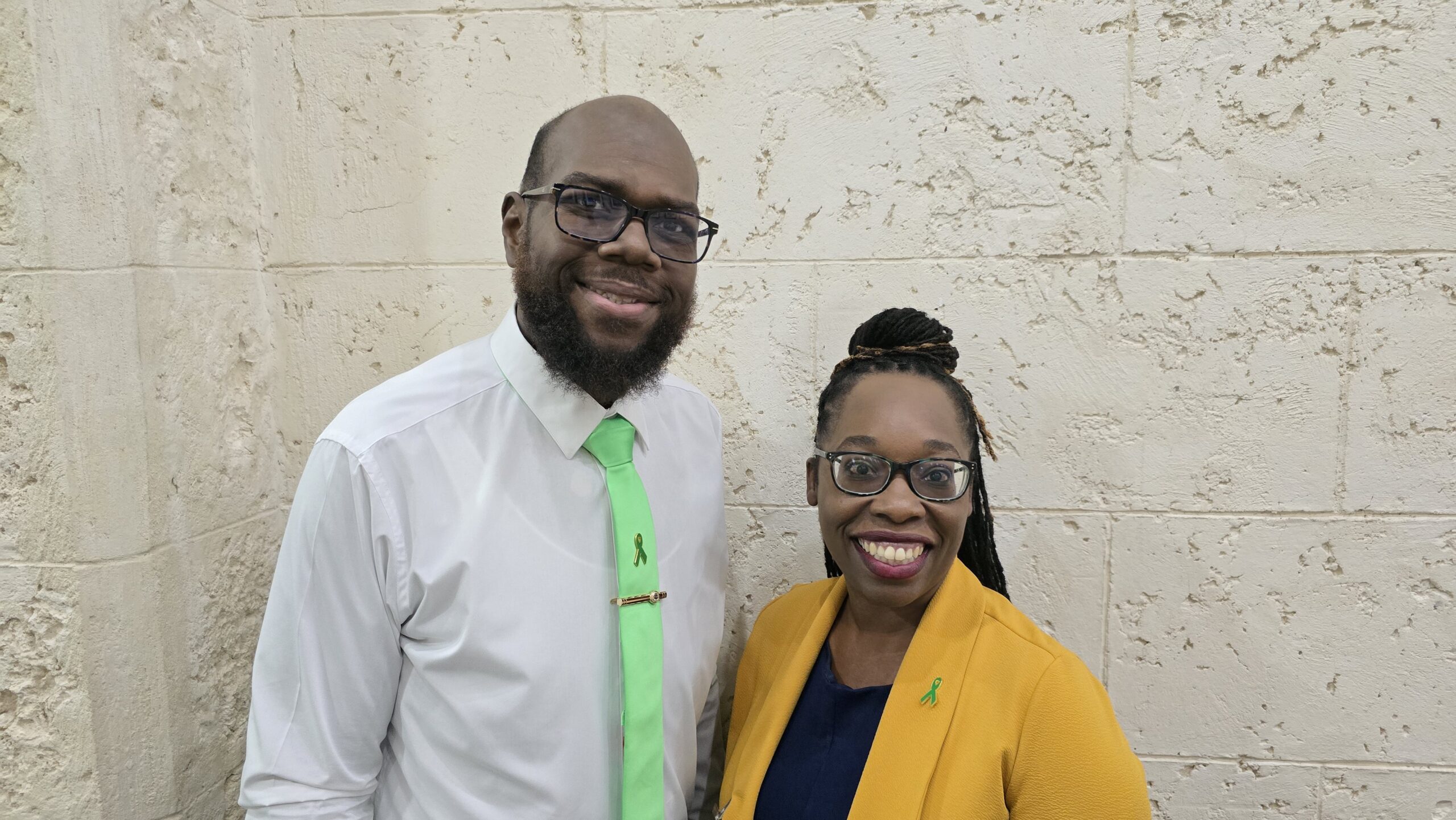
Barbados stands on the cusp of a major public health transformation, with a groundbreaking piece of legislation tabled in Parliament this Wednesday that would, for the first time in the nation’s history, establish a formal, regulated system for deceased organ donation. Health stakeholders and patient advocates across the country are hailing the Human Tissue Transplant Bill as a life-saving intervention that will relieve overburdened dialysis services and expand critical treatment access for an estimated 30,000 Barbadians at risk of end-stage kidney failure.
Currently, the Caribbean nation only permits kidney transplants from living donors, a restriction that has left the vast majority of renal patients dependent on long-term dialysis while waiting for rarely available matching organs. The new legislation lays out a clear regulatory framework for the recovery and transplantation of human tissue after death, creating a formal pathway to unlock the life-giving potential of deceased donation.
Sadie-Ann Sisnett, president of the Barbados Kidney Association, emphasized that the bill comes at a critical moment for the nation’s strained renal care system. “Right now, we have 400 people active on dialysis between the Queen Elizabeth Hospital (QEH) and private provider SILS Dialysis Barbados,” Sisnett explained in an interview with Barbados TODAY. “But 13 percent of our population – roughly 20,000 to 30,000 people – are currently living with stage 4 kidney disease, progressing to the end-stage that requires dialysis or a transplant.”
The existing system is stretched far beyond its capacity, Sisnett noted, with resource shortages forcing many patients who require dialysis three times weekly to receive only two treatments. Even with outsourcing to private providers, demand continues to outpace the system’s ability to keep up. This backlog makes the expansion of transplant options through deceased donation all the more urgent, as transplants remove patients from long-term dialysis waiting lists entirely.
Barbados’ current living donor program only carries out two to three transplants per year, a number stakeholders aim to grow to 10 annually with the addition of deceased donation. Beyond reducing dialysis demand, early detection and expanded transplant access can stop kidney disease progression before it reaches irreversible end stages, preventing many patients from ever needing dialysis in the first place.
For Dr. Margaret O’Shea, a renal transplant surgeon at QEH, the introduction of the bill after years of advocacy is an emotionally profound milestone. “I’m overjoyed, almost tearful, thinking about what this will mean for patients waiting for organs, and for people who want to leave a legacy of giving after death,” she said. “There is such joy in the act of donation, and an even greater joy for the recipient receiving that gift of life.”
Allan Haynes, founder and president of Kidney Caribbean and a dialysis patient of nine years, shared a personal testament to the transformative impact of organ transplants: his sister received a living donor kidney that functioned for 45 years, allowing her to raise a child and three grandchildren before her recent passing. Haynes called the proposed legislation life-changing, particularly for young patients whose entire futures hang in the balance while waiting for treatment.
Adrian Boyce, vice-president of the Barbados Kidney Association, described the bill as a watershed moment that will go down as a historic milestone for Barbados. “This sets a precedent for our nation’s health care history,” Boyce noted. “It will not only elevate our standing internationally but, most importantly, it will save lives – not just for kidney patients, but for anyone in need of liver or other organ transplants, once surgical capacity is in place. This is undeniably a step in the right direction.”
Beyond clinical benefits, the legislation addresses broad social and economic harms caused by the current lack of transplant access, Sisnett explained. Many working-age dialysis patients are forced to leave employment or cut hours drastically, as regular dialysis treatments disrupt daily life, leaving many reliant on welfare even when they are the primary breadwinners for their families. A successful transplant allows patients to return to work, resume normal daily life, and contribute to national productivity again.
“The impact goes far beyond just health,” Sisnett, who received a kidney transplant herself, shared. “It took nine years after my marriage before my husband and I could have a child, because that was only possible after my transplant. Right now, we have falling birth rates across Barbados, and hundreds of people of childbearing age on dialysis with more joining that list every year. This is not just a health issue – it is an issue of national productivity, it affects every sector of our society. What this bill can do for individual families, and for our entire nation, is incredible.”
-

Derde helft WK 2026: Sensationele comeback van België na knotsgekke thriller tegen Senegal
The 2026 FIFA World Cup produced one of its most unforgettable knockout matches on July 1, as Belgium pulled off a stunning late comeback to defeat Senegal 3-2 after extra time at Seattle’s Lumen Field, with captain Youri Tielemans writing his name into tournament history with the latest goalscoring record.
From the opening whistle, Senegal dominated possession and pinned Belgium deep in their own half. Ismaila Sarr struck the woodwork early on, and Belgian goalkeeper Thibaut Courtois was forced into multiple urgent saves to keep his side level. Just before the first hydration break, Habib Diarra broke the deadlock, tapping home a rebound after Sarr’s header hit the frame of the goal, putting Senegal ahead 1-0. Though Belgium carved out half-chances through star playmaker Kevin De Bruyne, Charles de Ketelaere and Jeremy Doku, they failed to find a clinical finish, and Senegal retained their narrow lead going into halftime.
After the break, Belgium manager turned to striker Romelu Lukaku to add physical presence up front, but the substitution did not immediately turn the tide. In the 51st minute, Sarr doubled Senegal’s advantage, controlling a long ball expertly before curling a fine finish past Courtois to make it 2-0. Facing elimination, the Belgian coach made two further attacking changes in the 56th minute, withdrawing De Bruyne and Doku for Dodi Lukebakio and Nicolas Raskin, before adding Thomas Meunier to shore up the defensive flank later in the half.
The game’s dramatic turning point came in the final five minutes of regulation. In the 86th minute, Lukaku nodded Meunier’s low cross into the back of the net to halve Senegal’s lead to 1-2. Just three minutes later, Tielemans converted a Leandro Trossard cross with a header, after Senegal goalkeeper Mory Diaw could only parry the initial effort, leveling the score at 2-2 and sending a stunned Senegal side into extra time. Late in regulation, Idrissa Gueye came close to snatching a late winner for Senegal with a long-range effort that drifted just wide of the post, while a heated discussion broke out between the two sides over match ball disputes before the referee could reset play.
Extra time began with both sides trading cautious possession as fatigue set in across the pitch. Senegal brought on fresh attacking players to reignite their threat, but Belgium continued to push for a winner. In the 121st minute, a VAR review overturned an initial on-field decision, awarding Belgium a penalty after Lamine Camara brought down Tielemans inside the 18-yard box. The Belgian captain stepped up calmly to slot the penalty home in the 125th minute of play, making it 3-2, and in doing so, he secured his place in World Cup history: this strike is now the latest goal ever scored in the history of the men’s FIFA World Cup.
Senegal threw everything forward in the final minutes of extra time, earning a dangerous long-range free kick that tested Courtois, but the Belgian goalkeeper and his defensive backline held firm to protect their lead. Late on, substitute Dodi Lukebakio hit the woodwork as Belgium came close to adding a fourth.
After the final whistle, Senegal manager Pape Thiaw spoke with characteristic sportsmanship about the devastating result. “I do not want to comment on the referee’s decision,” he said. “We are out of the tournament, and that hurts. We could not hold onto our 2-0 lead, and we have to congratulate Belgium on the win.”
This rollercoaster, last-gasp victory cements the match as one of the most memorable in World Cup history, a showcase of the unbreakable resilience, relentless passion and unscripted magic that makes international football the world’s most beloved sport. For Belgium, the comeback sends them through to the tournament’s round of 16, while Senegal will leave Seattle ruing a missed opportunity that slipped from their grasp in the closing moments of regulation.
-
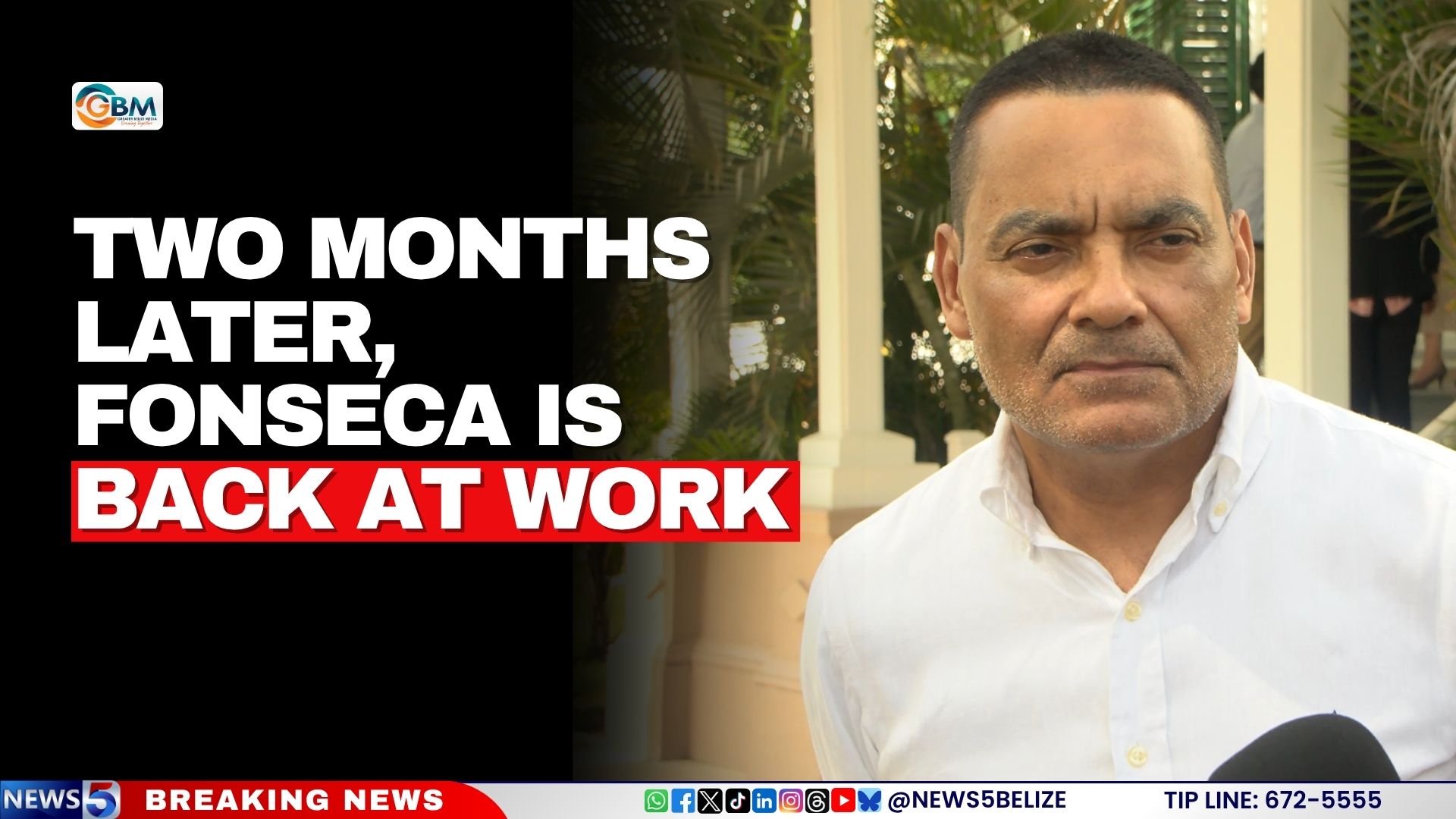
Two Months Later, Fonseca Is Back at Work
Nearly eight weeks after undergoing a life-saving triple bypass heart procedure, Belize’s top diplomat Francis Fonseca has officially returned to his post as Foreign Affairs Minister, marking his first public appearance at a key national event on Tuesday. The 45th Independence theme launch, held July 1, 2026, served as the backdrop for Fonseca’s comeback, where he opened up about his recovery journey to local outlet News 5.
The minister acknowledged that while his recovery is progressing well, he has not yet regained full physical strength following the major cardiac surgery. “I’m doing great. It’s only been two months, so obviously I’m not 100%, but I’m getting there. But I feel really good,” Fonseca told reporters at the event.
In the immediate aftermath of the procedure, Fonseca explained he stepped back entirely from official duties to prioritize healing, sticking to a strict recovery regimen designed by his medical team. Over the past several weeks, however, he has slowly re-engaged with the work of his ministry, checking in with his team and getting up to speed on ongoing diplomatic and domestic priorities. “The first few weeks, I really was completely focused on my recovery. But certainly in the last few weeks… I’ve been more in tune with what is happening and more in touch with my offices,” he added.
The unexpected medical leave, which came with little advance warning for the government and public, drew an outpouring of goodwill from across the small Central American nation. Fonseca emphasized that he was deeply moved by the widespread support he received, noting that messages of encouragement came from Belizeans of all political backgrounds, bridging partisan divides at a time of national uncertainty around his health. “I’m very grateful for the outpouring of support and love and prayers received from Belizeans across the country, across the political divide,” he said.
-

Here’s The Theme For This Year’s September Celebrations
On July 1, 2026, Belize’s National Celebrations Commission officially launched the official theme for the country’s upcoming 45th independence anniversary celebrations. Selected from submissions, the winning entry “Look At Me. I Am Belize at 45” was created by Amber Mariano, and will act as the unifying slogan for all September festival events held across the nation.
Bernard Wagner, Mayor of Belize City, shared his perspective on the new theme during the unveiling ceremony, emphasizing that it centers and honors the ordinary Belizean people who have shaped the nation’s journey over the decades. “While 45 years may appear as a short passage in the long history of a nation, every one of these years has been filled with countless stories of bravery, perseverance, creative thinking, sacrifice, and unwavering hope,” Wagner explained. “These are the narratives of everyday Belizeans accomplishing truly remarkable things that form the backbone of our country.”
The event also marked the return of NCC Chairman Francis Fonseca to his official duties following a two-month absence. Fonseca used the announcement as an opportunity to frame Belize’s 45-year national story within a larger global context, highlighting the country’s recent landmark achievement in resolving its long-running territorial dispute with neighboring Guatemala. Fonseca noted that this peaceful resolution stands as a powerful example of Belize’s core values. “Right here in Belize, we have an incredibly special achievement to celebrate this year,” he stated. “What was once our greatest existential threat as a nation is being resolved not through violence and bloodshed, but through the international judicial system. We have intentionally chosen the path of peace, diplomacy, and respect for the rule of law.”
Monday’s official theme unveiling marks the official start of full-scale preparations for the national September Celebrations, which will bring together communities across the entire country in marking the 45th year of Belize’s independence.