博客

  • Derde helft WK 2026: FIFA reserveert record prijzenpot van US$ 871 miljoen

    Derde helft WK 2026: FIFA reserveert record prijzenpot van US$ 871 miljoen

    The FIFA World Cup has always been far more than a contest for the iconic golden trophy. While national teams battle it out on the grass to secure a spot in the next round of the tournament, a high-stakes off-pitch struggle unfolds behind the scenes, centered on millions in prize money, career-defining individual honors, and long-term commercial gains that can shape a player’s entire professional journey.

    For the 2026 edition of the World Cup, co-hosted by the United States, Canada and Mexico, global governing body FIFA has allocated a historic record-breaking prize pool totaling $871 million. Unlike common misconceptions, this massive sum is not distributed directly to competing players, but instead awarded to each participating nation’s national football association. The tournament champions will walk away with $50 million, while the runner-up will receive $33 million. Even teams eliminated in earlier knockout stages are guaranteed multi-million dollar payouts: for example, teams that reach the round of 16 earn $15 million each before exiting the competition.

    Beyond the team-based prize purse, individual awards carry nearly equal weight for many competing players, even if FIFA does not publicly disclose separate cash prizes for these honors. The most coveted individual accolades include the Golden Ball for the tournament’s best player, the Golden Boot for the top goal scorer, the Golden Glove for the best goalkeeper, an award for the tournament’s best young player, and a Man of the Match award handed out after every single game. While these titles come with no immediate large cash reward from FIFA, their long-term value is immeasurable. A player named the World Cup’s best performer sees an instant surge in their market transfer value, becomes far more attractive to global brand sponsors, and secures a permanent place in football history.

    For the three North American co-host nations, this expanded 48-team 2026 World Cup extends far beyond the scope of sport. FIFA collects the majority of the tournament’s total revenue from four core streams: broadcast rights, corporate sponsorships, premium hospitality packages, and merchandise licensing. Host nations, by contrast, capture most of their economic gains through indirect channels: increased tourism revenue, hotel and hospitality spending, local transportation revenue, added tax income, and new job creation across the tournament period.

    There is no formal fixed revenue-sharing formula between the three co-hosts, as the final economic gain each nation sees depends primarily on the number of matches it hosts and the volume of visiting fans it attracts.

    Industry analysts broadly expect the United States to capture by far the largest share of the tournament’s economic benefits, for clear structural reasons. Out of the 104 total matches scheduled for the 2026 World Cup, 78 will be held on U.S. soil, and 11 of the 16 host cities are located in the United States. Every match from the quarterfinals onward will be hosted in the U.S., including both the third-place play-off and the tournament final. Both Mexico and Canada will host 13 matches each, meaning the bulk of direct economic spillover will naturally flow to the United States without any formal allocation rule from FIFA.

    All told, the 2026 FIFA World Cup will not only go down as the largest edition in the tournament’s history in terms of participating teams and total matches—it will also stand as a major global economic contest. For competing players, the tournament offers glory, multi-million dollar commercial gains, and permanent fame. For host nations, it brings international prestige, significant revenue, and an unspoken competition to see which country can extract the maximum benefit from the world’s biggest football stage. At its core, the World Cup is never just about scoring goals—it is always a battle for money, status, and a permanent place in history.
  • CoP: No ‘sacred cows’  as 17 officers lose jobs

    CoP: No ‘sacred cows’ as 17 officers lose jobs

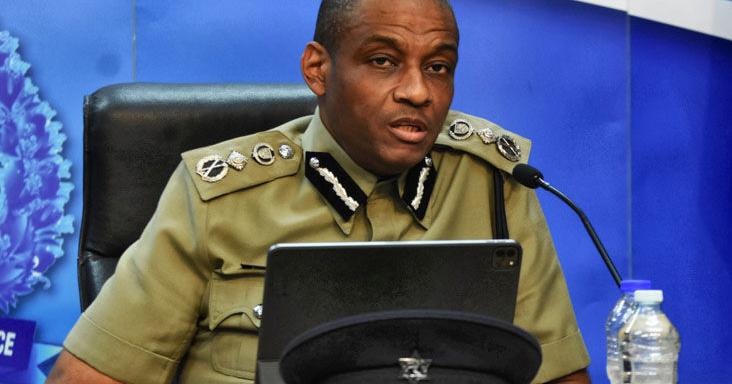
    A major anti-corruption and disciplinary overhaul is underway in the Trinidad and Tobago Police Service (TTPS), after top official Allister Guevarro announced the permanent revocation of appointments for 17 suspended police officers this week, reaffirming a zero-tolerance policy for misconduct that leaves no member of the force exempt from accountability.

    The 17 affected officers are just a fraction of the 280 TTPS personnel currently suspended over a range of alleged rule-breaking and criminal infractions. Their names were formally released in an official advisory, with the revocation confirmed in a public voice note address from Police Commissioner Guevarro shared with media over the weekend following Thursday’s initial announcement.

    In his address, Guevarro centered his remarks on a core principle guiding the disciplinary push: there are no “sacred cows” within the TTPS. Police officers across all ranks are granted extraordinary public authority to maintain safety and uphold the law, Guevarro explained, and this public mandate comes with a non-negotiable duty to hold themselves to the highest standards of integrity, discipline, and service to the people of Trinidad and Tobago.

    “Any officer who wears this uniform and engages in criminality will face the full weight of lawful action. I will take every step necessary to remove you from this organisation,” Guevarro said. He stressed that when officers break their oath of office, consequences will be unambiguous, swift, and applied equally to all ranks, regardless of position or seniority. Drawing on a vivid local turn of phrase to underscore his commitment to equal accountability, Guevarra argued that all criminals face the same consequence: “it will be big gouti, small gouti, same shot.”

    The commissioner added that the TTPS remains fully committed to the values of transparency, accountability, and the highest ideals of public service. This disciplinary crackdown is part of a broader push to strengthen institutional integrity, rebuild public confidence in the force, and remind every serving officer that their core duty is to serve the public without bias or favoritism. Guevarro promised that as the zero-tolerance policy is rolled out, the public will see a more determined, united response to widespread crime.

    Reaction to the decision from the Trinidad and Tobago Police Service Social and Welfare Association, the representative body for officers, has been measured but broadly supportive. Association president ASP Ishmael Pitt told reporters that if Commissioner Guevarro is acting within the bounds of his legal authority, the association has no objections to the revocations.

    “We support any move to improve the image of the TTPS and address issues of accountability, integrity and ethics,” Pitt said. But Pitt did highlight a longstanding point of friction between the association and TTPS leadership: the association has concerns in cases where disciplinary action is taken prematurely, without adhering to core principles of natural justice that guarantee officers fair process. Pitt stressed that once all due process requirements and legal parameters are met for the 17 revoked officers, the association will not challenge the decision.

    Following the announcement, the TTPS released the full list of officers whose appointments have been revoked: Tamara Boyce, Vijay Singh, Elliot Chin, Joanne Jadoo, Owen Hem-Lee, Jilann Holder, Kizzy Thomas, Karlon Murray, Christopher Gobin, Michael Alcala, Carlos Thorne, Devon Basant, Akiel Smith, Desron Dillon, Shaun Reid, Joff Awong and Daryl Baksh.

  • Normal course of business

    Normal course of business

    A high-profile currency seizure at one of Trinidad and Tobago’s busiest international airports has drawn the involvement of multiple regional and U.S. law enforcement agencies, after local customs officials intercepted $2 million in U.S. currency bound for Miami. In an exclusive statement to local outlet the Express, NCB Merchant Bank (Trinidad and Tobago) Ltd. has formally claimed ownership of the seized funds, maintaining the transaction was a routine, fully compliant part of its regular commercial operations.\n\nThe interception unfolded on June 25 at Piarco International Airport, where customs and excise inspectors flagged the cash, stowed inside a plain white crocus bag, during pre-shipment checks. The currency was scheduled to be routed to Miami via a stopover in Jamaica, but regulators raised concerns about gaps in the accompanying shipping documentation. Following the interception, the funds were transferred to the Central Bank of Trinidad and Tobago for secure holding while official investigations proceed. As of the latest reporting, the cash remains in the central bank’s custody, with no clearance for shipment granted yet.\n\nIn an email response to the Express’ questions Thursday evening, NCB Merchant Bank chief executive Marli A. Creese laid out the bank’s official position on the incident. “The cash referred to belongs solely to the bank,” Creese confirmed, emphasizing that the courier shipment followed all standard internal protocols and aligned with every applicable domestic and international law. “All usual and required protocols were adhered to,” he added, addressing questions about whether the bank had followed its own internal compliance procedures for large currency shipments.\n\nCreese also confirmed that the bank has been in direct contact with investigating authorities and is committed to full cooperation throughout the probe. The Customs and Excise Division reached out to the bank requesting additional verification and supporting documentation related to the shipment, he said, and the institution has already fulfilled all information requests. Addressing early reports that customs identified major documentation deficiencies, Creese clarified that the situation only amounted to a routine request for supplementary information, which the bank has already resolved.\n\nTrinidad and Tobago’s Finance Minister Davendranath Tancoo confirmed Thursday that the investigation is ongoing, with multiple security and financial regulatory agencies working in parallel to resolve the case. “This matter is now engaging the attention of several relevant security and financial agencies. Obviously, it would be inappropriate to comment at this time. Suffice it to say that a thorough investigation is being pursued involving all parties to this transaction,” Tancoo told the Express. Multiple sources also confirm that U.S. law enforcement and financial authorities are assisting with the probe, a standard step for large currency shipments bound for the U.S.\n\nThe Express submitted additional follow-up questions to both NCB Merchant Bank and Central Bank Governor Larry Howai on Thursday, but neither party issued an immediate additional comment. Investigations are expected to continue in the coming days as authorities work to confirm all regulatory requirements for the large currency export were met, before a final decision on releasing the funds is made.

  • Triumph amid tragic loss

    Triumph amid tragic loss

    For one Trinidadian family, the long-awaited release of Secondary Entrance Assessment (SEA) results brought a bittersweet moment: a brilliant academic achievement that should have been a cause for full celebration is instead marked by the gaping absence of a father killed just hours after his daughter sat for the high-stakes exam.

    Rajkumar Pope, a 45-year-old engineering supervisor at Trinidad’s Ministry of Agriculture, Land and Fisheries and father of two, was killed in a fatal altercation at a local community shop in Friendship Village, Golconda, just outside San Fernando on March 26. The tragedy unfolded on the very day his younger daughter completed her SEA, the standardized exam that determines placement into Trinidad’s secondary schools.

    On the day of the attack, Pope and his family had enjoyed a quiet outing together: after picking up his daughter following her exam, they collected their 17-year-old son, browsed local malls in San Fernando, and headed home. It was only when they stopped at a neighborhood shop at 6:25 p.m. to buy bread that the violent confrontation broke out.

    Circulated security camera footage of the incident shows a 17-year-old male and an older man with an infant waiting inside the shop moments before Pope entered. When Pope walked past the teen inside the store, an unprovoked attack began, with both men exchanging blows before the fight ended after several seconds and Pope left the shop.

    Pope returned to his home unharmed at first, but collapsed later that night. Emergency paramedics rushed him to San Fernando General Hospital, where he was pronounced dead just over three hours after the attack, at 9:30 p.m. A post-mortem examination later confirmed his death was caused by a combination of blunt force trauma from the beating and pre-existing heart complications.

    Following the killing, the 17-year-old suspect was arrested, charged with Pope’s murder, and remanded into custody to await trial.

    In an interview with local outlet *Express* this week, Pope’s widow Annie Pope opened up about the family’s months-long struggle to navigate crippling grief while celebrating their daughter’s hard-won academic successes. For the family, every milestone – from June’s Father’s Day, their first without Pope, to their wedding anniversary, to the recent SEA results release – has been marked by equal parts pride and sorrow.

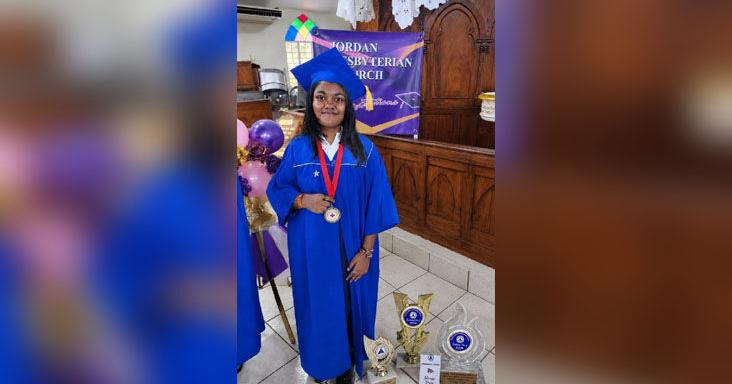
    Just days after Father’s Day, Pope’s daughter graduated as valedictorian from Jordan Hill Presbyterian School in Princes Town, a crowning achievement that would have brought enormous joy to the father who was her biggest cheerleader.
    “Her daddy was her biggest supporter. He should have been there to see her receive that honour. He would have been so proud,” Annie said, her voice breaking as she recalled her husband’s constant encouragement of their daughter’s academic goals.
    That same ache resurfaced when SEA results were officially released this month. Pope had long prioritized his children’s education, and had been eagerly anticipating his daughter’s transition into secondary school after her exam. Annie said that even in his absence, the family holds onto his support and love.
    “His children’s education was very important. He’s not here, but she has his blessings and he will always be with her. I told her no matter what, he will always be there with you and he will be rooting for you. He knew she worked very hard and that she would do well. He was looking forward to her continuing on her journey into secondary school,” she said.
    Annie added that her daughter is excited to start her new secondary school and meet new classmates, and carries with her the final encouragement her father gave her on exam day. “The last thing he told her that day was that he was proud of her.”
    Though the family is doing their best to cope with the tragedy and move forward, the void left by Pope’s sudden, senseless death remains, turning every hard-won win into a reminder of the man who is no longer there to share in the joy.

  • Perfect scores for SEA trio

    Perfect scores for SEA trio

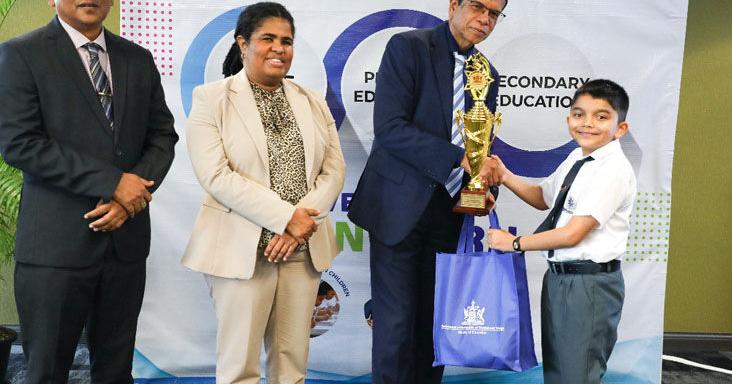
    A landmark achievement for Trinidad and Tobago’s primary education system was celebrated this week, as nine top-performing students from across the country were honored at an awards ceremony hosted by the Ministry of Education at its Port of Spain headquarters.

    Among the standout cohort, three students achieved a rare perfect 100% score on the 2026 Secondary Entrance Assessment (SEA), the national examination that determines placement for secondary school. While Ministry officials opted not to publicly rank the top nine awardees to avoid singling out individual students, Education Minister Dr. Michael Dowlath confirmed the three-way tie for first place, adding that the highest overall Composite Weighted Standard Score hit an exceptional 253.423. One of the perfect scorers, Shazana Mohammed of Debe Hindu School, publicly shared her full-mark achievement during her acceptance speech at the event.

    Senior education officials including Acting Permanent Secretaries Simone Williams and Keshore Lutchman, Chief Education Officer Dr. Peter Smith, and National Parent-Teachers Association (NPTA) president Walter Stewart joined the ceremony to congratulate the cohort. The nine honorees, called to the stage in alphabetical order to deliver remarks and collect their awards, are Katherine Ajodha (St Peter’s Private School), Amara Batan (Curepe Presbyterian), Shivan Khan (Caroni Hindu), Shazana Mohammed (Debe Hindu), Adam Ng Tang (Montrose Government), Liam Rajnauth (Trinidad Renaissance Preparatory), Ethan Ramlackhansingh (San Fernando TML), David Ramlakhan (Montrose Government), and Vivek Supersad-Maharaj (Munroe Road Hindu).

    Beyond the top individual performances, the 2026 SEA results reflect broad, encouraging gains across the entire national student body, Dowlath announced. A total of 17,509 students sat the examination this year, and across all subject areas, national mean scores improved from 2025 results. In Mathematics, the average score rose from 52.10 to 53.84; English Language Arts saw an increase from 66.70 to 68.66; and the writing component of the exam edged up from 11.25 to 11.57 out of a possible 20 points.

    These improvements extended across all performance tiers, the minister noted. This year, 70.73% of all test-takers (12,384 students) scored above the 50% benchmark, up from 66.18% (11,827 students) in 2025, meaning 557 more students crossed this key achievement threshold. Gains at the highest end of performance were even more striking: 670 students scored above 90% in 2026, compared to just 421 in 2025, a jump of 249 exceptional performers.

    “These results demonstrate that our collective efforts to strengthen teaching and learning are beginning to bear fruit, and it signals what I believe is a meaningful return to excellence across our education system,” Dowlath said. “The data tells us a clear story: more students are reaching higher levels of achievement, and more students are proving that with the right support, academic success is within reach.”

    NPTA president Stewart opened his remarks saying he felt ecstatic and proud of the cohort, highlighting a particularly notable trend: six of the nine top awardees are boys. For years, education stakeholders in Trinidad and Tobago have flagged persistent underperformance among male primary students, making this outcome especially welcome. “When I see boys excelling in this way, I’m doubly proud and doubly pleased,” Stewart said.

    He also praised the resilience of this year’s entire SEA cohort, noting that these students entered primary school just as the COVID-19 pandemic hit, and spent their first two years of primary education learning remotely through digital devices. “That speaks volumes about their resilience and perseverance. Apart from their incredible achievement, I really want to applaud that determination that gave us the kind of results we are seeing today,” Stewart added. He also thanked principals and teachers for their tireless work to lift student outcomes, and expressed optimism for even stronger results in coming years as the education system transitions to integrate a new Continuous Assessment Component into student evaluations.

  • Kamla: Most don’t meet criteria

    Kamla: Most don’t meet criteria

    Trinidad and Tobago’s Prime Minister Kamla Persad-Bissessar has announced sweeping corrective changes to the country’s controversial diplomatic passport system, revealing that systemic abuse has left hundreds of ineligible people holding the high-privilege documents. As part of the new policy framework, two former top leaders — ex-prime ministers Dr Keith Rowley and Stuart Young — have been ordered to surrender their diplomatic passports and will receive official passports in their place, the head of government confirmed this week.

    The announcement came in response to public pushback from Young, who had publicly criticized the move after receiving an unexpected notification to turn in his diplomatic passport. In a social media video released Thursday, Young framed the order as ongoing political victimization, arguing that diplomatic passports are a standard entitlement for former prime ministers. Issued his document in May of last year without any request from him, Young said he was blindsided by the sudden demand to surrender the credential. “Get a call out of the blue: return the passport,” he described the interaction.

    Persad-Bissessar pushed back sharply against Young’s complaints in an interview with the Express on Monday, dismissing the former leader as a “cry baby” while laying out the catalyst for the policy review. She confirmed that the review was launched after a foreign government formally requested Trinidad and Tobago examine its loose diplomatic passport issuance practices, which an internal investigation found had resulted in 985 people holding diplomatic passports — most of whom do not meet the official eligibility criteria.

    Under international and domestic rules, Persad-Bissessar explained, diplomatic passports are reserved exclusively for individuals acting as official representatives of the Trinidad and Tobago state on international assignments. Official passports, by contrast, are designated for non-cabinet parliamentarians and government staff carrying out state technical, administrative, or departmental work abroad. While both passport types carry special travel benefits, only diplomatic passports grant potential diplomatic immunity, a privilege that is strictly granted by receiving nations in line with the Vienna Convention on Diplomatic Relations.

    Young, who no longer holds a qualifying office for a diplomatic passport, will be switched to an official passport under the new rules, Persad-Bissessar confirmed. He is not the only one affected: the policy overhaul will reclassify many current diplomatic passport holders to official passports, move some entirely to standard ordinary passports, and allow a small number of eligible holders to retain their diplomatic status. The prime minister stressed that the reclassification is not a punishment or a reflection of wrongdoing for any affected individual, but simply a long-overdue correction of past abuses.

    “When some people get used to preferential treatment, equal treatment seems like discrimination to them. Stuart should stop his cry baby, beh-beh behaviour. It’s unbecoming,” Persad-Bissessar said, pushing back on claims the move is politically motivated.

    Addressing the status of former prime minister Keith Rowley, Persad-Bissessar confirmed he will also be required to surrender his diplomatic passport. Per existing regulations, all diplomatic passport holders must return their documents to the Ministry of Foreign and Caricom Affairs once their overseas posting ends, they retire from public office, or they leave a political position that qualifies them for the credential. Rowley is retired from office and no longer represents Trinidad and Tobago in any official capacity, so he does not qualify to retain the document, she said.

    Ministry staff will contact Rowley in the coming weeks to coordinate the surrender and issue him an official passport, which will retain most of the travel benefits of a diplomatic passport but will not include eligibility for diplomatic immunity, Persad-Bissessar added. Rowley had not issued any public response to the announcement as of Monday, when reached for comment by the Express.

    In addition to the passport policy announcement, Persad-Bissessar confirmed she will travel to St. Lucia tomorrow to attend the 51st Regular Meeting of the Conference of Caricom Heads of Government, scheduled to run from July 5 to 8. She will be joined on the trip by Foreign and Caricom Affairs Minister Sean Sobers and Prime Minister’s Office Minister Nicholas Morris.

    The conference will also oversee an upcoming leadership transition for the regional bloc: St. Lucia Prime Minister Philip J Pierre will assume the Caricom chairmanship on July 1, 2026, and will hold the role through the end of the year, replacing current chairman Dr Terrance Drew, the prime minister of St Kitts and Nevis. Persad-Bissessar noted she has already held preliminary discussions with Pierre ahead of the formal meeting.

  • Sunrise Airways Launches Antigua-Barbados Route With Introductory Fares From US$129

    Sunrise Airways Launches Antigua-Barbados Route With Introductory Fares From US$129

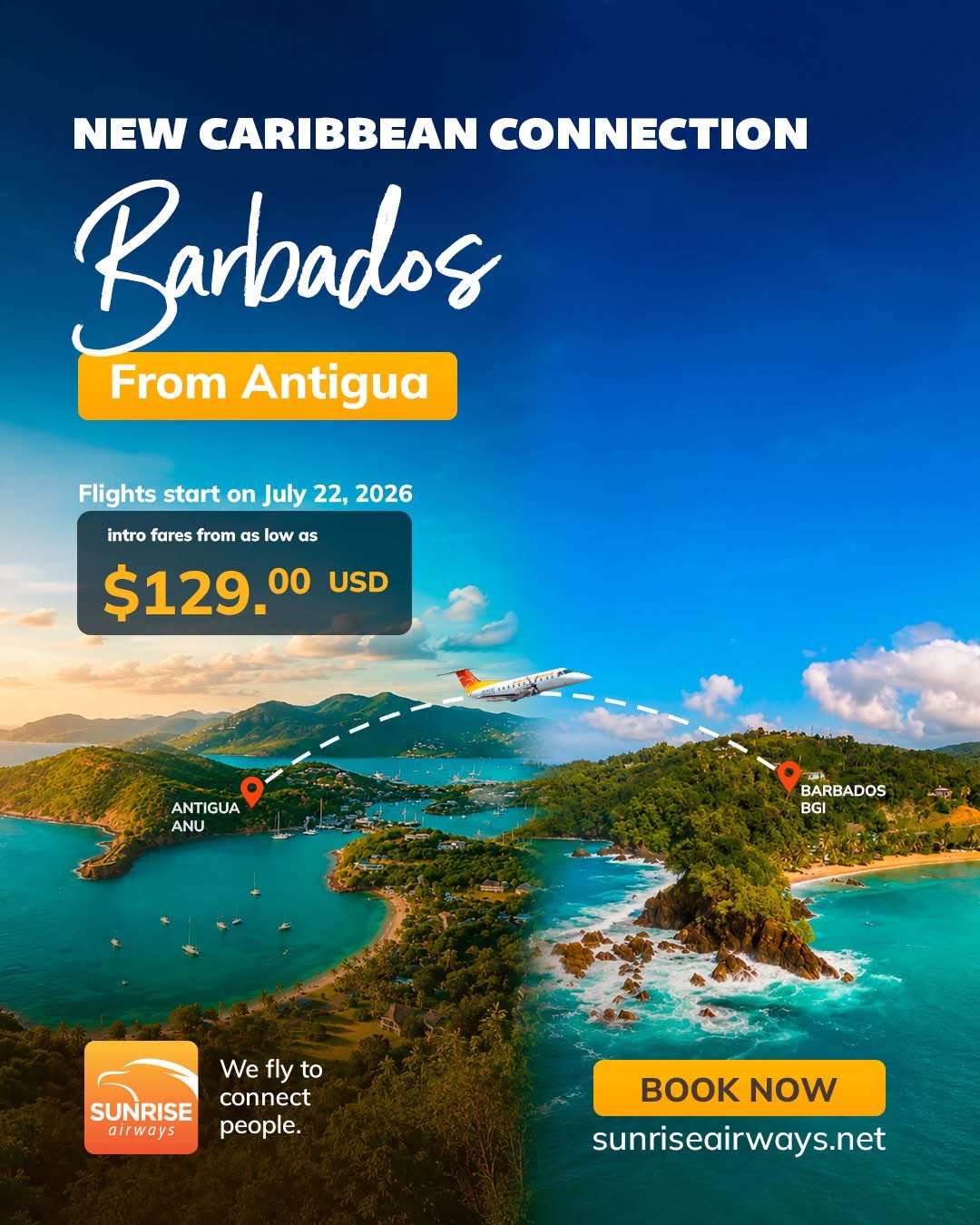
    Caribbean-based regional carrier Sunrise Airways has announced the launch of a brand-new direct air connection linking Antigua and Barbados, marking a key expansion of its route network across the Eastern Caribbean. To encourage early bookings and build momentum for the service, the airline has rolled out attractive introductory one-way fares that start as low as US$129, opening up more affordable travel options for both leisure and business travelers between the two popular island nations.

    The new route is designed to address long-standing gaps in regional connectivity, making it easier for tourists to combine multiple Caribbean destinations into a single trip, while also streamlining business travel for cross-island commerce and trade. Industry analysts note that enhanced air links between Antigua and Barbados will not only benefit the two countries’ tourism sectors — a core economic driver for both island economies — but also strengthen people-to-people ties, support small and medium-sized enterprises, and boost regional integration efforts.

    Sunrise Airways, which has built a reputation for focusing on underserved regional routes across the Caribbean, says the launch of the Antigua-Barbados service aligns with its long-term growth strategy to connect more island communities with reliable, reasonably priced air travel. The airline has not yet released detailed scheduling information, but early reports indicate the service will operate multiple weekly rotations to accommodate varying travel demands. Travel industry stakeholders have welcomed the move, noting that increased competition and expanded route options will ultimately give consumers more choice and push for more accessible air travel pricing across the region.

  • Guyana en Barbados schrijven CARICOM-geschiedenis met reizen zonder paspoort

    Guyana en Barbados schrijven CARICOM-geschiedenis met reizen zonder paspoort

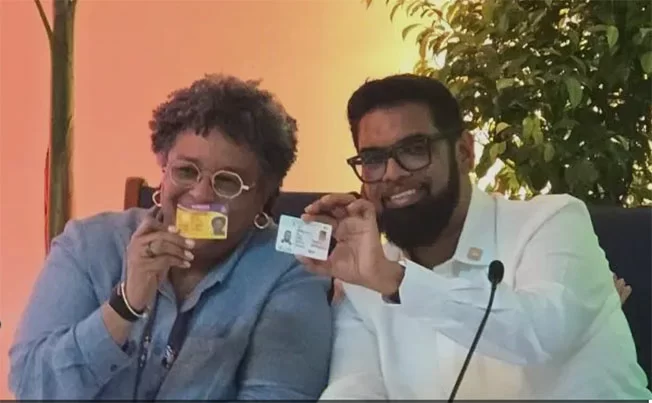
    Two Caribbean nations, Guyana and Barbados, have marked a groundbreaking turning point for regional integration within the Caribbean Community (CARICOM), rolling out a new regime that allows their citizens to cross shared borders using only a digital national electronic ID (e-ID), eliminating the longstanding requirement for a physical passport. The policy officially came into force on July 1.

    This launch makes Guyana and Barbados the first member states of CARICOM to roll out a fully functional passport-free travel framework built entirely on nationally issued electronic identification. The arrangement is open to all citizens of both countries who hold e-ID credentials that meet the strict international standards set by the International Civil Aviation Organization (ICAO).

    A ceremonial inaugural flight to mark the historic change took place on Wednesday, carried out by regional carrier Caribbean Airlines on the route from Guyana’s capital Georgetown to Barbados’ capital Bridgetown. Senior immigration officials from both nations traveled on the flight to formally activate the new cross-border processing procedure. According to statements from the two governments, the entire system was planned and rolled out in less than six weeks, after the initial agreement was struck earlier this year by Guyanese President Irfaan Ali and Barbadian Prime Minister Mia Mottley.

    Officials from both countries say the new arrangement is designed to make cross-border travel simpler, faster and more affordable for all eligible citizens. Travelers no longer need to apply for or renew a passport when making trips exclusively between the two nations, cutting down on administrative costs and wait times. Beyond convenience, the policy is expected to drive growth in key areas including cross-border tourism, bilateral trade, business networking and labor mobility across the two countries.

    CARICOM leaders have framed the move as far more than a minor adjustment to travel rules—it aligns directly with the long-term ambition of the CARICOM Single Market and Economy (CSME), which seeks to build out full free movement of people, goods, services and capital across the entire Caribbean region. The bloc has spent decades working toward a unified system that allows Caribbean citizens to move seamlessly between member states for work, leisure and family visits.

    The development also carries important implications for fellow CARICOM member state Suriname. Suriname has committed to advancing regional integration and free movement of people as part of its bloc membership. While passports are still required for travel to and from Suriname for now, the Guyana-Barbados agreement provides a tested blueprint for future bilateral or regional free movement arrangements. Notably, Suriname already issues modern, ICAO-aligned electronic identity documents, making it technically well-placed to join similar initiatives in coming years.

    Regional observers and CARICOM officials broadly expect that more member states will join similar passport-free travel frameworks over the next several years. This incremental progress is steadily bringing the Caribbean region closer to a unified border regime that makes intra-bloc travel as seamless as it is within long-established regional blocs such as the European Union.

  • ABEMS Congratulates Acting Clinical Director Brandon Browne on Master’s Degree

    ABEMS Congratulates Acting Clinical Director Brandon Browne on Master’s Degree

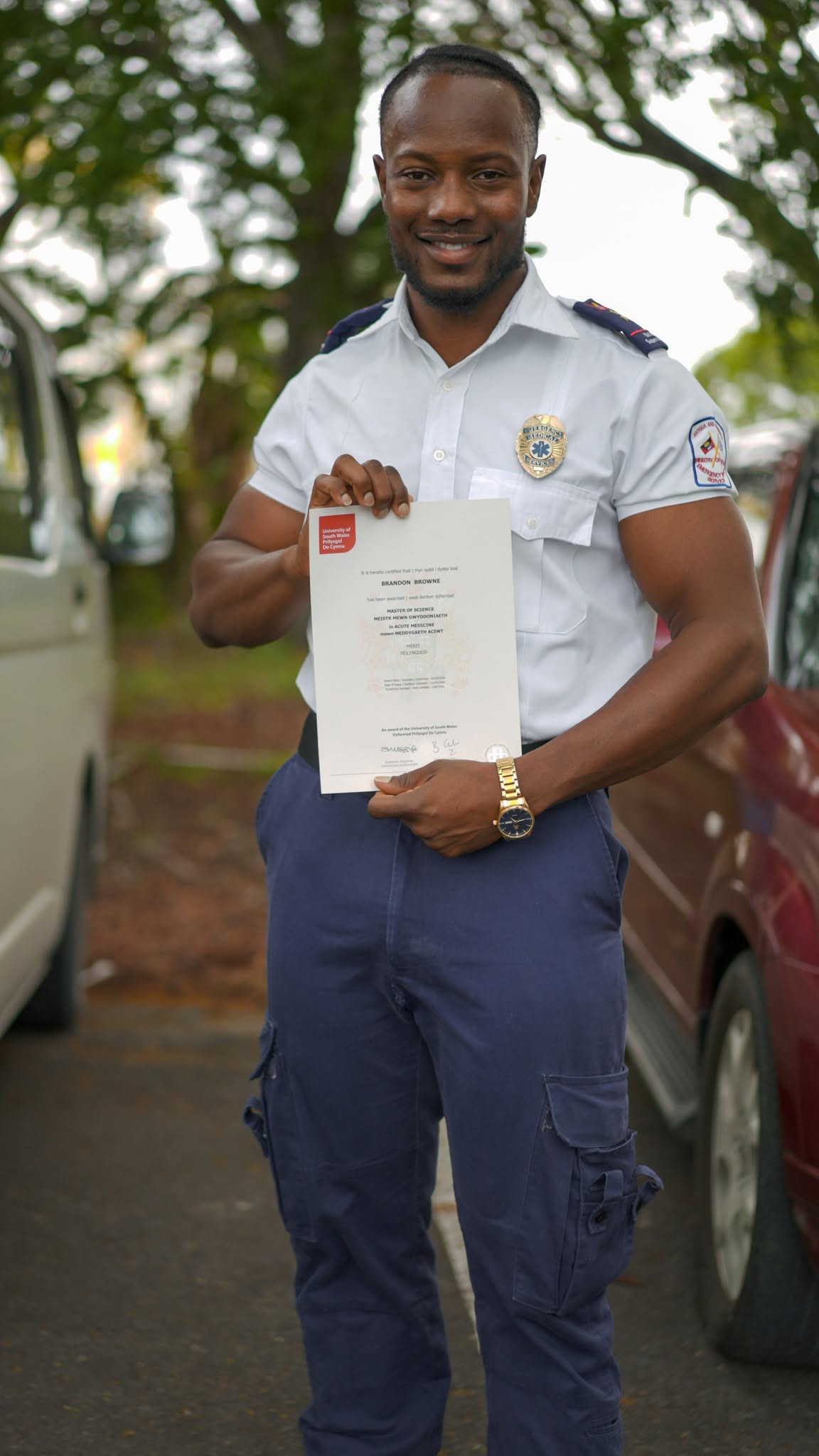
    A key leader in Antigua and Barbuda’s emergency healthcare system has reached a major new professional milestone, with Acting Clinical Director of the Antigua and Barbuda Emergency Medical Services (ABEMS) Brandon Browne officially graduating with a Master’s Degree in Acute Medicine from the University of South Wales, located in the United Kingdom.

    Browne’s core role at ABEMS centers on delivering clinical direction and strategic leadership for the nation’s emergency medical response network. This postgraduate qualification adds a new layer of specialized expertise to his already established professional profile, marking a significant step forward in his ongoing academic and clinical career development.

    Leadership at ABEMS has highlighted that the advanced specialized training Browne completed will translate directly to tangible improvements for the organization. It will bolster ABEMS’ overall clinical capacity, allowing the agency to raise the quality of emergency medical care delivered to communities across both Antigua and Barbuda.

    The agency emphasized that Browne’s successful completion of the master’s program is a clear reflection of his personal dedication to continuous professional growth and the advancement of evidence-based acute care in the country. The specialized knowledge and hands-on clinical expertise he gained through the course will deliver widespread benefits, not only for ABEMS as an institution but, more critically, for every patient that relies on the agency’s emergency services.

    Looking ahead, ABEMS leadership expressed confidence that Browne will leverage his advanced qualification and clinical leadership skills to continue driving up standards for emergency medical care across Antigua and Barbuda, benefiting both frontline response teams and the public the agency serves.

  • Landelijk gezondheidsonderzoek start maandag met huis-aan-huisbezoeken

    Landelijk gezondheidsonderzoek start maandag met huis-aan-huisbezoeken

    Paramaribo, Suriname – July 4, 2025 – Suriname’s Ministry of Public Health, Welfare and Labor kicked off a nationwide public health initiative this Monday, launching the WHO-endorsed STEPS survey to identify key risk factors for chronic non-communicable diseases (NCDs) across the country’s adult population.

    The STEPS methodology, developed specifically by the World Health Organization to standardize NCD risk factor surveillance, will run through the end of September 2025. Its core mission is to build an accurate, up-to-date profile of public health outcomes across Suriname, highlighting modifiable and population-wide risk factors for widespread chronic conditions including diabetes, hypertension, and cardiovascular disease. The de-identified, aggregated data collected through the survey will directly inform the development of evidence-based national health policy, targeted prevention programs, and future public health interventions, according to ministry officials.

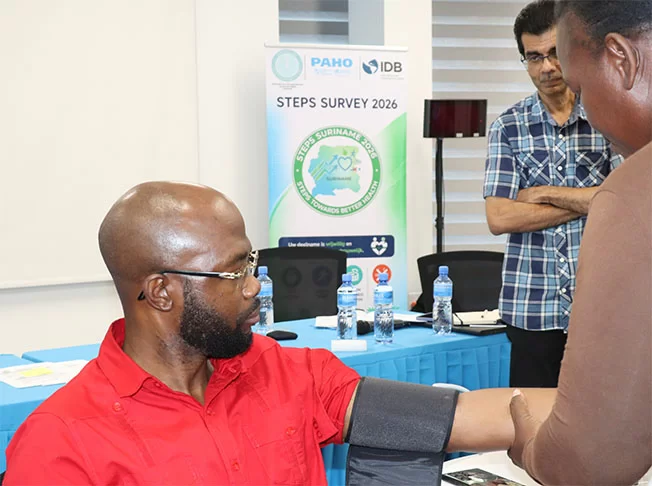
    Leading the launch of the project’s training period for field staff, Public Health Minister André Misiekaba emphasized the foundational role that reliable, comprehensive health data plays in advancing Suriname’s national public health strategy. He called on all selected community members to participate voluntarily to support the project’s success. To demonstrate the research process firsthand, Minister Misiekaba stepped into the role of a study participant during a practical simulation exercise held to wrap up the intensive field training program for data collectors.

    Prior to the launch of fieldwork, dozens of aspiring data collectors completed a rigorous, multi-week training program to prepare for on-the-ground survey activities. The training culminated in a full role-play simulation held at the ministry’s headquarters, where practicing data collectors walked through every step of the research protocol: conducting structured lifestyle and health interviews, performing standardized physical measurements, and communicating clearly and respectfully with voluntary participants. Minister Misiekaba joined the simulation, volunteering to have his own blood pressure measured as part of the exercise.

    Fieldwork is scheduled to begin immediately following the completion of training. Data collectors will travel to randomly selected households across all regions of Suriname, with participants chosen via a statistically robust random sampling method designed to ensure the survey’s results are representative of the entire adult population. Participation is entirely voluntary and restricted to adults. During the approximately one-hour in-home visit, participants will complete a structured questionnaire covering personal health history and lifestyle habits, undergo simple physical measurements including blood pressure screening, and provide a small blood sample via a routine finger prick for testing.

    To help residents verify the identity of official survey staff, the ministry has noted that all authorized data collectors will wear branded STEPS study apparel and carry official government-issued photo identification badges. Officials strongly advise residents to only admit staff that can provide this official identification to avoid safety risks.

    Ministry representatives stressed that high population participation is critical to producing a reliable, accurate snapshot of Suriname’s current public health landscape. All personal information collected during the survey will be treated as strictly confidential, used exclusively for approved research purposes, and never released publicly. Final study results will only be published in aggregated, anonymized form that protects the privacy of individual participants.