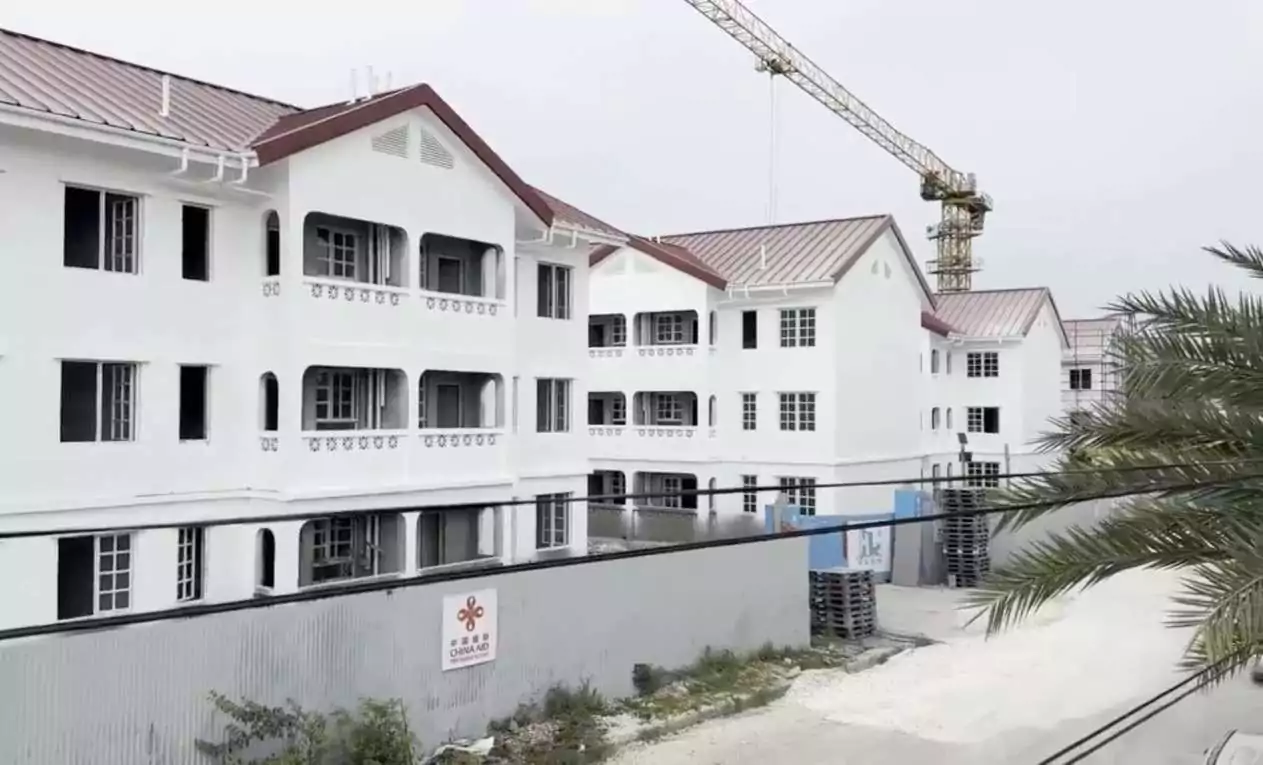
As the Caribbean nation of Antigua and Barbuda gears up to open the doors of its new 150-unit Pelican Court housing development, the national government has outlined an ambitious, security-focused framework designed to keep the residential complex safe, well-maintained, and free of illegal activity for years to come.
Prime Minister Gaston Browne shared the full details of the plan during an appearance on the popular local program *Browne and Browne Show* on Saturday, breaking down the multi-layered approach to governance and safety that will greet the first incoming residents. Central to the security strategy is a reevaluation of permanent law enforcement presence at the site: initially, the administration planned to assign two full-time police officers to live within the complex, but input from community stakeholders has led to a revised proposal for a dedicated, on-site police outpost, staffed by rotating shifts of two officers at a time.
“It’s either that or we put a police outpost,” Browne told listeners. “Subsequently, someone said to me, rather than having two police living there, why don’t we put a police outpost?” The proposal is still under active review as the government finalizes preparations for occupancy.
Beyond law enforcement, the government is putting in place a dedicated on-site management structure to handle daily operations. Two full-time residential property managers will be recruited to live at Pelican Court, overseeing everything from maintenance to resident compliance. One of the 150 units will be repurposed as an on-site administrative office to support the management team, eliminating delays in addressing resident concerns.
A key pillar of the new framework is a strict set of community rules, which will be communicated to all new residents through a mandatory orientation program prior to move-in. These sessions will clearly outline expected behavioral standards and the direct consequences for violating community guidelines. Most notably, any resident found engaging in illegal drug trafficking from their unit will face immediate expulsion from the development.
“If they’re renting and they’re pushing narcotics, that will be a case for expulsion to have them removed,” Browne emphasized. “We’re going to have strict rules.”
The regulations do not only target criminal activity: they also establish clear standards for general property maintenance, waste management, and garbage disposal, all with the goal of preventing the complex from falling into disrepair after residents settle in. Browne noted that preventing long-term deterioration is a top priority for the administration, to protect the government’s investment and preserve quality of life for residents.
Final pre-occupancy works are moving forward, with landscape beautification projects set to begin imminently. The government has tasked the National Housing authority with developing a detailed landscaping plan to enhance the property’s public spaces and curb appeal.
For occupancy rollout, the first residents to move into Pelican Court will be former homeowners who owned property on the site prior to the development’s construction. These residents will receive replacement units through a direct land-swap arrangement with the government. The vast majority of the remaining units will be made available to qualifying buyers through mortgage financing arrangements, expanding access to affordable, secure homeownership across the country.