博客

  • PM Browne Warns Public About Fake Investment Video Using His Image

    PM Browne Warns Public About Fake Investment Video Using His Image

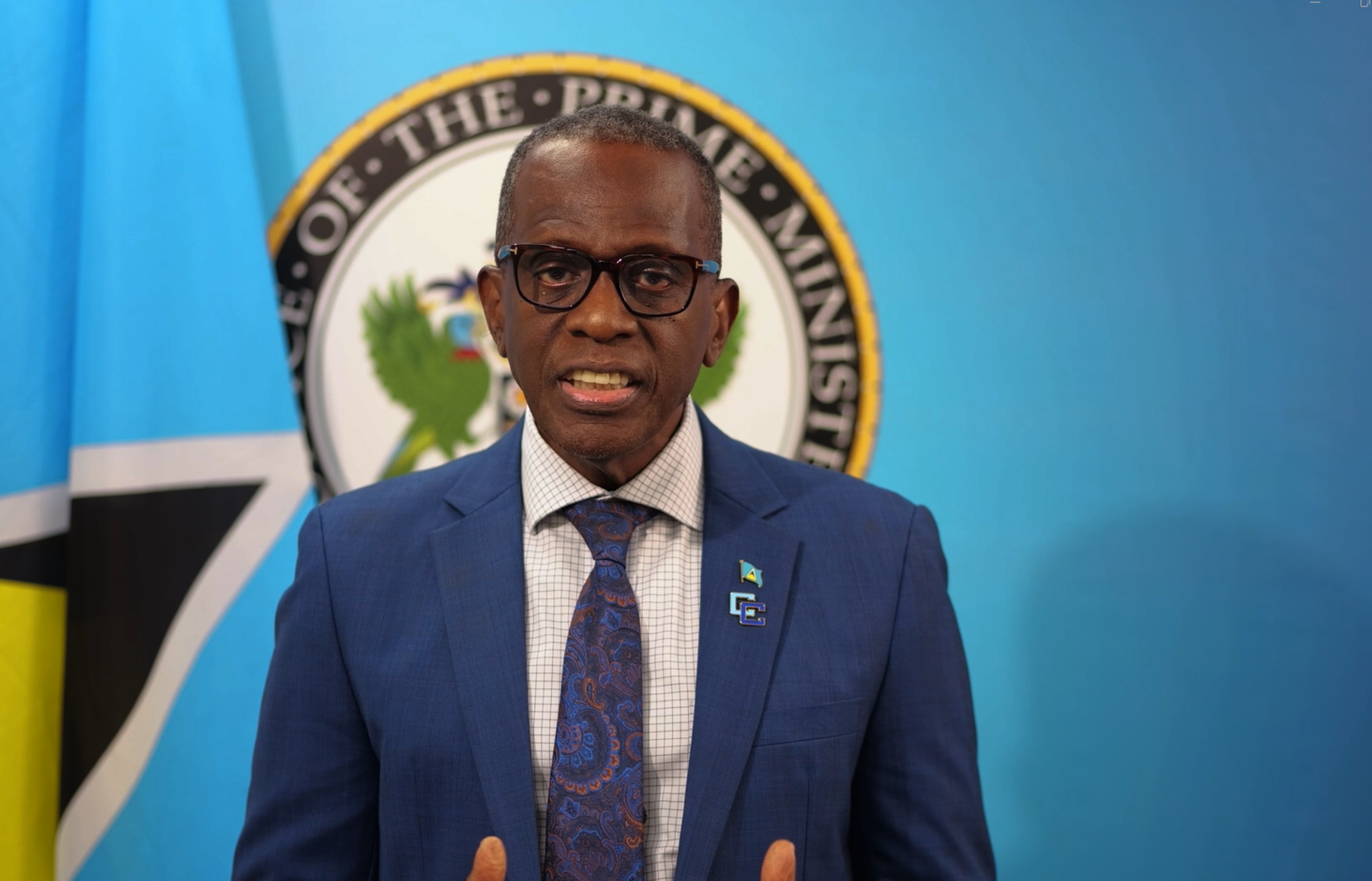
    Prime Minister Gaston Browne has sounded a urgent public warning after a deceptive investment promotional video surfaced fraudulently using his official image to mislead potential investors. The prime minister’s office confirmed this week that the clip, which has begun circulating across multiple social media platforms and private messaging channels, was produced without any authorization from Browne or his government, and does not reflect any official initiative endorsed by the administration.

    In an official statement released to the press, Browne emphasized that the fraudulent video is part of a growing scam targeting members of the public, both domestically and among diaspora communities overseas. The clip falsely implies that Browne personally backs the unregulated investment scheme, which experts say is likely designed to convince victims to transfer thousands of dollars in savings to criminal operators with no promise of return.

    The prime minister urged all citizens and social media users to exercise extreme caution when encountering investment content that appears to feature public officials, reminding the public that government leaders never personally endorse private investment offers through unsolicited social media content. He called on anyone who has received the video to avoid clicking any embedded links, refrain from sharing it with their contacts, and report the content to local cybercrime authorities immediately.

    Law enforcement officials have also confirmed they have launched an investigation into the origin of the fake video, noting that deepfake technology has made it increasingly easy for scammers to create convincing fraudulent content that exploits public trust in government figures. Officials added that anyone who has already shared personal or financial information in response to the scam should contact their financial institutions to protect their accounts as soon as possible.

  • OP-ED: Balancing personal liberties and institutional neutrality – The case of Speaker Joseph Isaac and the rights of Dominican citizens

    OP-ED: Balancing personal liberties and institutional neutrality – The case of Speaker Joseph Isaac and the rights of Dominican citizens

    In the Caribbean nation of Dominica, a heated constitutional and political debate has erupted over the actions of House of Assembly Speaker Joseph Isaac, whose decision to speak at a rally for the ruling Dominica Labour Party (DLP) has exposed deep tensions between individual constitutional rights and the institutional requirement of political neutrality for senior public office holders.

    The controversy began when Isaac joined DLP supporters gathered under the party’s red banners to address the crowd. As Speaker, Isaac holds a constitutional role tasked with presiding over parliamentary proceedings fairly and impartially, so his open appearance on a partisan ruling party platform immediately drew public outcry. In his defense, Isaac invoked Sections 10(1) and 11(1) of Dominica’s Constitution, which guarantee all citizens the fundamental rights to freedom of expression and freedom of assembly and association.

    To understand the stakes of this dispute, it is necessary to contextualize both Isaac’s background and the constitutional framework governing his role. Appointed Speaker in 2020, Isaac has prior partisan affiliations with both the opposition United Workers Party and the ruling DLP. Dominica’s longstanding parliamentary conventions require the Speaker to act without fear, favor, affection or ill will toward any political group, treating all elected members equally regardless of party affiliation. Chapter I of the Commonwealth of Dominica Constitution enshrines core fundamental rights: Section 10(1) protects the right to hold opinions, share information and express ideas without interference, while Section 11(1) guarantees the right to associate with political parties and gather peacefully. Crucially, these rights are not absolute; the Constitution allows for reasonable restrictions justified by public order, national security or the rights and freedoms of other citizens.

    Legally, Isaac’s defense holds surface merit. The text of Dominica’s Constitution extends these fundamental rights to all citizens, including public office holders, and no explicit statutory bar prohibits the Speaker from participating in partisan political events outside of parliamentary sittings. But constitutional permissibility does not erase the ethical and normative conflict at the heart of this case. Longstanding parliamentary norms across democratic systems hold that the Speaker must remain strictly neutral to preserve public trust in the integrity of legislative proceedings. In a small state like Dominica, where political divides are already sharply drawn, public alignment with the ruling party erodes public confidence that the Speaker will referee parliamentary debates fairly. Even in the absence of actual bias, the perception of partiality inflicts lasting damage on the credibility of parliamentary institutions.

    What has amplified this controversy beyond a single officeholder’s actions are widespread allegations that the DLP government itself has systematically violated the very constitutional rights Isaac now invokes for himself. Opposition groups, civil society activists and ordinary dissenting citizens have repeatedly accused the administration of curtailing core fundamental rights protected in Sections 1 through 9 of the Constitution, ranging from freedom of peaceful assembly to freedom of the press and protection from arbitrary treatment.

    Specific allegations include selective enforcement of public order rules to block opposition protests, with police regularly denying demonstration permits or dispersing anti-government gatherings; state control of major media outlets that marginalizes dissenting voices; targeted legal and administrative pressure on government critics; and widespread electoral irregularities that undermine citizens’ right to fair political representation. Many Dominican citizens report living in constant fear of state reprisal for open opposition to the DLP: retaliation ranges from intimidation by party surrogates on social media to being blocked from access to government scholarships, public health care, education opportunities and other state benefits, purely based on political affiliation. Critics argue this creates a glaring double standard: the DLP defends the Speaker’s exercise of constitutional rights when it serves the government’s political interests, while actively suppressing the same rights for ordinary citizens who oppose the ruling party.

    From a constitutional perspective, any restrictions on fundamental rights must meet a strict test of being necessary and proportionate to a legitimate public aim. Critics note that the blanket, selectively enforced restrictions the DLP has allegedly imposed on opposition activity fail this test entirely, amounting to politically motivated suppression of core constitutional protections.

    This controversy ultimately extends far beyond Joseph Isaac’s personal conduct. It cuts to a core principle of democratic governance: the equal application of constitutional rights to all citizens, regardless of political affiliation. While Isaac’s claim to his personal constitutional rights is legally grounded, the ethical question of whether he should exercise those rights in such a public, partisan way as Speaker remains unresolved. The Speaker, by virtue of their role as the neutral referee of parliamentary democracy, carries a special obligation to voluntarily limit some personal political expression to preserve institutional integrity. For the DLP government, the implication is clear: if the administration defends the Speaker’s right to political participation, it is bound by constitutional principle to extend that same right to all Dominican citizens, even those who oppose the government.

    As things stand, the saga of Joseph Isaac and the DLP illustrates a broader, ongoing challenge for Dominican democracy: upholding the constitutional guarantee of equal rights for all, rather than applying rights selectively for political gain. Upholding this principle is not only essential to preserving the credibility of the Speaker’s office, it is core to sustaining the health of democracy in Dominica as a whole.

  • DLP welcomes organ tissue bill but raises concerns over e-prescription system

    DLP welcomes organ tissue bill but raises concerns over e-prescription system

    Barbados’ main opposition Democratic Labour Party (DLP) has publicly celebrated the parliamentary passage of the landmark Human Organ Tissue Bill, a piece of legislation expected to update the country’s outdated regulatory framework for organ and tissue donation and transplantation. But in a detailed statement released Friday, the party paired its support for the progressive health reform with a pressing warning: ongoing critical failures in the island’s new electronic prescription system are endangering vulnerable patients, and the government must intervene immediately to resolve the crisis while building strong public trust for the new organ law.

    Felicia Dujon, the DLP’s spokesperson on health issues, framed the bill’s approval as a long-overdue legislative milestone that could reshape healthcare access across Barbados. If rolled out and managed effectively, Dujon noted, the new framework has the potential to save hundreds of lives by expanding access to life-saving transplant procedures, bringing national organ donation regulations in line with global best practices, and strengthening the overall capacity of Barbados’ public healthcare system.

    The opposition explicitly backed the bill’s core structure, which formalizes clear legal guidelines for every step of the organ and tissue process: from initial donor consent and organ retrieval to storage, transplantation, and ongoing accountability for medical providers. Dujon highlighted that the legislation’s explicit focus on ethical clinical practice and transparent governance aligns with the DLP’s own goals for improving health outcomes for all Barbadians.

    Despite this broad endorsement, the DLP stressed that the bill’s long-term success is not guaranteed. For the new organ donation system to work, the party argued, the government must first earn and maintain public trust through intentional, accessible outreach and rigorous oversight. Dujon called for widespread public education campaigns designed to demystify the donation process for ordinary citizens, ensuring every Barbadian understands how the consent process works, what legal rights they hold under the new law, and what safeguards are in place to prevent abuse or exploitation.

    Transparent governance, regular independent audits, and clear accountability mechanisms will also be non-negotiable to sustain public confidence in the national organ donation network over time, the party added.

    Moving beyond the organ donation legislation, Dujon turned attention to a more urgent, ongoing crisis in Barbados’ digital public health infrastructure: systemic failures in the newly launched electronic prescription system rolled out across the Queen Elizabeth Hospital and the island’s network of public clinics. Dujon reported that the DLP has been flooded with complaints from citizens across the country, who have faced widespread delays and crippling system bottlenecks when trying to fill routine prescriptions. She noted that the harms of these disruptions fall disproportionately on two of the country’s most vulnerable groups: senior citizens and patients living with chronic long-term illnesses.

    While the DLP supports digital transformation as a tool to improve healthcare efficiency long-term, Dujon emphasized that the current rollout’s flaws carry life-threatening consequences. Many patients with chronic conditions rely on consistent, uninterrupted access to daily medication to manage their health. Even short delays can raise the risk of preventable health complications, unnecessary emergency hospital admissions, and even severe adverse health outcomes, she warned.

    Dujon restated that the DLP remains fully committed to evidence-based, progressive healthcare reform that improves outcomes for all Barbadians, and called the Human Organ Tissue Bill an important step forward for the country. But she stressed that passing legislation is only the first step of meaningful reform. True progress, she argued, depends on effective implementation, consistent focus on patient well-being, and functional systems that prioritize patient safety over bureaucratic speed.

    The opposition is now calling for immediate intervention from the ruling government to fix the electronic prescription system’s technical and operational flaws before more harm occurs to vulnerable patients. “Healthcare innovation must always enhance accessibility, safety, and quality of care,” Dujon said. “We urge the government to address the operational challenges associated with the electronic prescription system to ensure that elderly persons and other vulnerable patients are not exposed to unnecessary delays in accessing essential medication.”

    Dujon concluded by calling on the government to implement rigorous, ongoing independent evaluations for both the new organ transplantation regulatory framework and the electronic prescription rollout. The DLP insists that the ultimate metric of success for both of these public health initiatives must be the tangible protection of the health, dignity, and well-being of every Barbadian.

  • WEATHER (6:00 AM, July 4): Partly cloudy to cloudy, hazy and breezy with a few showers

    WEATHER (6:00 AM, July 4): Partly cloudy to cloudy, hazy and breezy with a few showers

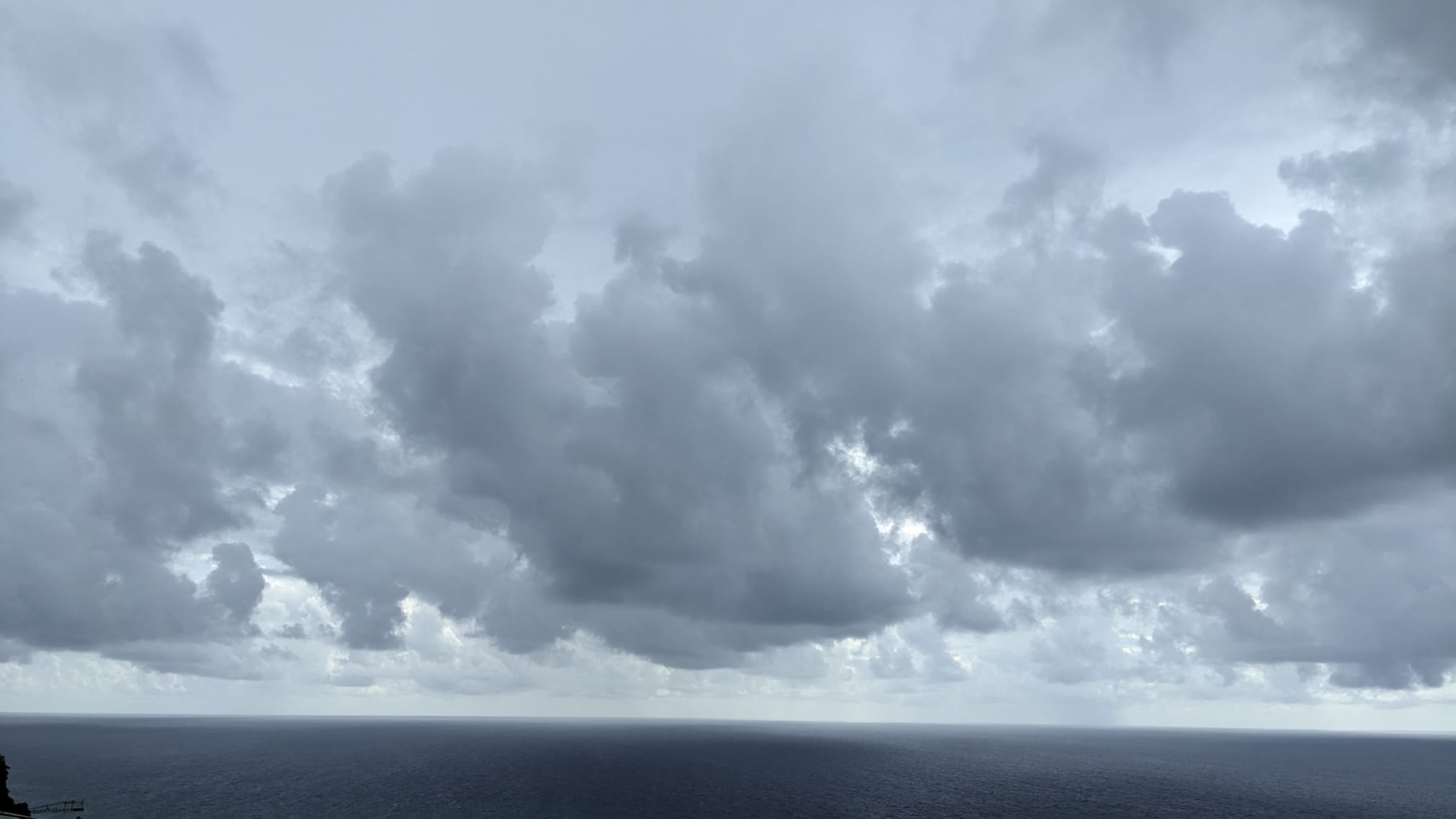
    As the next 24-hour forecast period unfolds, a persistent Atlantic high-pressure system will remain the dominant weather feature governing conditions across the region. Today, skies are projected to range from partly cloudy to fully overcast, with a small number of brief showers popping up in isolated areas. Overnight, this pattern will shift slightly to bring more scattered shower activity across a broader swath of the area. For the entire duration of the weekend, consistent breezy conditions will remain a constant feature of the local weather.

    Beyond temperature and precipitation patterns, a major air quality concern is unfolding this week: a thick, widespread plume of Saharan dust is traversing the region, and it is expected to keep air quality in the moderate to unhealthy range all the way through next week. Public health officials are urging vulnerable groups who face heightened sensitivity to particulate dust — including people living with asthma, those who experience chronic allergies, and anyone managing other respiratory or skin conditions — to consistently follow recommended protective precautions to avoid adverse health reactions. For individuals working or traveling on local waterways, low visibility driven by the dust plume creates additional navigational hazards, so authorities have advised all mariners to ensure they carry fully functional electronic navigation tools for the duration of the event.

    Coastal areas are also facing elevated marine hazards over the weekend, with wave heights projected to climb sharply across both the western and eastern coastlines. Along the western coast, waves are expected to build to nearly 5 feet, while open waters off the eastern coast could see waves reach as high as 8 feet. In response to these dangerous conditions, emergency management officials are reminding small watercraft operators and recreational sea swimmers to closely track changing marine conditions throughout the weekend and exercise heightened caution when entering the water.

  • Robinson targets first Chairman’s Cup victory

    Robinson targets first Chairman’s Cup victory

    For three consecutive editions of the CARICOM Chairman’s Cup Elite 10K, Barbadian distance runner Carlie Robinson has left the race with a podium placement – two third-place finishes and one runner-up spot to her name. This year, as the event kicks off Sunday in Gros Islet, Saint Lucia, she is finally gunning for the top spot she has never claimed.

    Robinson is not traveling to Saint Lucia alone: she will be joined by fellow Barbadian athlete Joshua Hunte, marking the country’s official two-person delegation to the elite race. Per event rules, each CARICOM member state sends one male and one female athlete to compete, creating a high-stakes showcase of the Caribbean’s top long-distance running talent.

    In an exclusive interview with Barbados TODAY, Robinson shared that the annual event has long been a highlight on her racing calendar, offering a rare chance to measure her skill against the most competitive runners across the region. “Historically, I’ve done really well in this race and I’ve always been on the podium, but I’ve never won yet,” she explained. “So this year, I really, really want to win this race and bring home the top position. When you get the top position, you get the Chairman’s Cup, and I really want to bring that home for Barbados.”

    Even as she enters the race with clear title ambitions, Robinson acknowledges that the road to victory is far from guaranteed. The elite field draws top talent from across 15 CARICOM member states, making for one of the most competitive open distance races in the Caribbean each year. That said, the Barbadian runner enters this year’s competition in peak form, after months of consistent, focused training through the current racing season.

    “ I’ve been working hard all season and I tend to put in a lot of consistent work, so I feel confident in myself,” she said. “I’m gonna try not to think about time, but I really want to run for position so I’m gonna approach the race in a strategic way. It’ll be an exciting way to approach it I think, and I’ll need to react based on what other people do, but I’m very confident going in. I think that I can at least be in a strong position to control the race, or most of it. I’m really looking forward to it.”

    The CARICOM Chairman’s Cup Elite 10K serves as the flagship competitive race of the annual CARICOM Road Run/Walk, a community event held in conjunction with the 51st Regular Meeting of the Conference of Heads of Government of CARICOM. Launched back in 2005, the initiative was created to advance a key public health goal for the bloc: encouraging regular physical activity and promoting healthy lifestyles across the region as part of CARICOM’s coordinated campaign to combat rising rates of non-communicable diseases (NCDs). Last year’s 2024 edition (correction: the 2025 iteration was hosted in Montego Bay, Jamaica), marking the ninth staging of the regional event.

  • Pierre urges renewed commitment to stronger Caribbean on CARICOM Day

    Pierre urges renewed commitment to stronger Caribbean on CARICOM Day

    As the Caribbean Community (CARICOM) prepares to mark its 2026 Day of celebration and reflection, bloc chair and St. Lucia Prime Minister Philip J. Pierre has delivered a stirring call to action, asking all Caribbean citizens to reaffirm their commitment to regional collaboration amid a growing landscape of global and local challenges.

    In his official annual address for CARICOM Day 2026, Pierre centered his remarks on the core foundational belief that has guided the 15-member integration bloc since its creation: small island nations gain far more from collective action than they can ever achieve through isolated, individual effort. For Pierre, CARICOM is far more than a bureaucratic intergovernmental body—it represents a shared promise to the people of the region. “CARICOM has always been more than an institution. It is a promise: a promise that our small states can achieve far more together than we ever could alone; a promise that our people, our cultures, our economies, and our aspirations are strengthened when we work in unity,” he told the regional audience.

    Pierre did not shy away from acknowledging the multiple, overlapping crises that continue to test Caribbean nations today. The region confronts unrelenting climate-related pressures, persistent global economic uncertainty, widespread instability in food and energy supply chains, growing transnational security concerns, and an urgent need to expand quality economic opportunities for the region’s large youth population. Even in the face of these headwinds, Pierre emphasized that Caribbean communities have repeatedly proven their extraordinary ability to withstand and overcome hardship. “Time and again, our people have shown that we can meet adversity with courage, adapt with determination, and move forward with confidence,” he noted.

    Against this backdrop, the CARICOM chair outlined that the bloc’s central priority in the current era must be intentional renewal—rebuilding and refocusing integration efforts to deliver a Caribbean that is stronger, more equitable, more secure, and more prosperous for all residents. “This is why our focus must now be on renewal,” Pierre said. “We must build a stronger, fairer, safer, and more prosperous Community; one that delivers real opportunities and meaningful progress for the people of our region.”

    To turn this vision of renewed integration into reality, Pierre laid out key actionable priorities for member states: deepen regional integration by expanding and improving cross-border transportation infrastructure and digital connectivity, shore up domestic and regional food and nutrition security, accelerate implementation of the long-planned CARICOM Single Market and Economy, fully embrace the digital transformation unfolding across the global economy, and invest in local innovation to drive sustainable growth.

    A core focus of Pierre’s 2026 message was elevating the role of young people in shaping the bloc’s future. He directly called on the region’s youth to step into leadership roles, framing them as the primary innovators and builders of the next chapter of Caribbean integration. “On this CARICOM Day, I especially call on our young people to see themselves as leaders, innovators, and builders of this Caribbean Community. Our future will be shaped by your ideas, your creativity, your energy, and your belief in what we can achieve together,” he said.

    Pierre closed his address by urging every Caribbean citizen to renew their personal and national commitment to the founding principles that birthed CARICOM decades ago. “Let us recommit ourselves to the founding ideals of CARICOM: cooperation, solidarity, shared development, and respect for the dignity of every Caribbean person,” he said, closing with wishes for a happy, hopeful, and purpose-driven CARICOM Day 2026 for all people across the region.

  • UNICEF: Bescherming van kinderen blijft achter bij snelle opkomst van AI

    UNICEF: Bescherming van kinderen blijft achter bij snelle opkomst van AI

    On July 4, UNICEF issued a stark warning following new research: children around the world are adopting artificial intelligence at a far faster rate than governments and regulators can put in place protective safeguards, leaving millions of young users exposed to preventable harm to their privacy, safety and fundamental rights.

    Drawing on data collected across 10 countries, UNICEF’s analysis estimates that at least 20 million children have already used AI tools, with children adopting the emerging technology three times faster than their adult counterparts on average. The report breaks down common use cases among young users: roughly 13 million children leverage AI for school assignments and homework, while more than 2 million turn to the technology to get advice on personal issues they may be reluctant to share with adults.

    Beyond daily use, UNICEF highlighted a deeply alarming abuse case: previous estimates confirm that AI has already been misused to create sexually explicit deepfake images of at least 1.2 million children.

    The organization emphasized that the exponential growth of child AI use has raced far ahead of updated legislation and regulatory frameworks. Currently, most AI systems interact with children without meaningful checks to protect their privacy, physical and emotional safety, and basic human rights. Worse still, children have almost no input into how these AI systems are designed or governed, even though they will bear the long-term consequences of poorly regulated AI technology for decades to come.

    While UNICEF acknowledged that AI carries transformative potential to advance children’s learning, spark creativity and expand access to knowledge, major gaps remain in understanding how persistent AI use impacts children’s long-term cognitive development, overall well-being, and risk of emotional dependence on technology. Right now, an entire generation of children is growing up surrounded by AI at a time when the full impacts of this technology on young people remain largely understudied, the report noted.

    The research also captured children’s own concerns about AI risks: one in three children surveyed expressed worry that AI will be used for scams, manipulation and disinformation, while one in four fear their own photos or videos will be altered to create non-consensual sexually explicit deepfakes.

    In response to these growing risks, UNICEF is calling on governments, technology companies, and civil society organizations to place child protection at the core of all AI development and governance. The organization’s policy recommendations include expanded investment into research on AI’s impact on children, stricter legislation to crack down on AI-fueled sexual exploitation of children, mandatory “safety-by-design” AI frameworks that embed child protection into system development from the start, and expanded investment in digital literacy training for children, parents and educators.

    UNICEF notes that this call for action is particularly urgent for Suriname, where recent incidents of AI-manipulated images and videos being spread online have already demonstrated the new risks unregulated AI brings to the country. For Suriname, investments in digital resilience, AI literacy, updated appropriate legislation, and effective child protection measures are critical to addressing these risks, the organization says.

    To support these efforts, UNICEF has confirmed it stands ready to partner with the Surinamese government, education sector, civil society groups and private industry to build a safe digital environment where children are protected from harm while still being able to access and use AI’s opportunities responsibly.

  • St Kitts: The island, the Festival, the experience

    St Kitts: The island, the Festival, the experience

    Nestled in the heart of the Caribbean, the St Kitts Music Festival has long held a reputation as one of the region’s most beloved cultural gatherings, and a recent immersive visit to the June 25–27 event confirms why it draws visitors and music lovers from across the globe every year. Far more than just a series of live performances, the festival delivers a holistic destination experience that weaves together world-class music, local hospitality, cultural preservation, and outdoor adventure into one unforgettable trip.

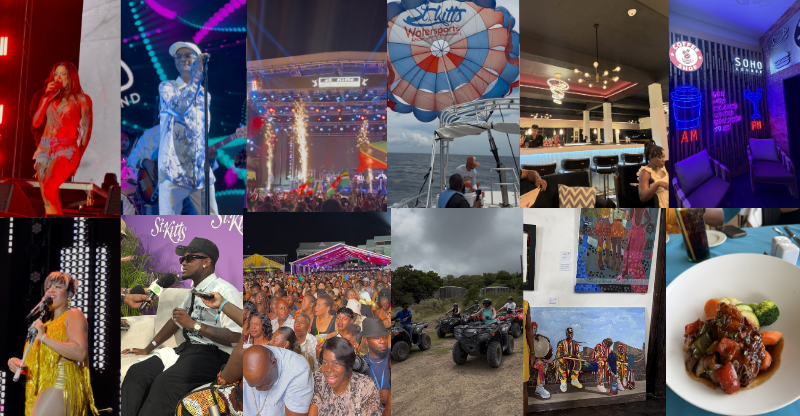
    Upon arrival at the Marriott Beach Resort, the event’s hospitality partner, attendees are immediately met with the warm, genuine welcome that defines St Kitts’ local culture. A welcome dinner at the resort’s on-site Soho Lounge sets the tone for the trip, with perfectly prepared steak and attentive, friendly service that leaves a lasting first impression. Each day of the festival follows a satisfying rhythm: a hearty, diverse healthy breakfast at the resort kicks off the morning, followed by exclusive access to artist press conferences that give media and industry guests rare insight into the creative processes and core messages driving the performers’ work. Between official festival engagements, attendees have the chance to explore the island’s charming towns and natural landscapes, with lunch stops at local favorites Yani’s One Pot and Serendipity consistently delivering fresh, flavorful local cuisine paired with exceptional service.

    Beyond its headline musical lineup, the festival curates a range of optional off-site activities designed to let attendees tailor their experience to their interests, with six distinct excursions available this year. For those craving adventure, a guided off-road jeep tour with local outfitter SKN Jeepers is a standout option. The two- to three-hour trip winds along rugged, rocky coastal and inland roads, balancing heart-pounding excitement with stunning views of the island’s diverse terrain. Lead guide Eric Jeffers prioritizes guest safety throughout the journey, while building in stops at two iconic local sites: the historic Shadwell Great House and independent retailer Bougainvillea Books and Gifts.

    At Shadwell Great House, visitors get the chance to explore the Masquerade Traditions Art Exhibition, a community-led initiative dedicated to preserving St Kitts and Nevis’ centuries-old cultural heritage. The exhibition doubles as a crowdsourcing project to build a publicly accessible Masquerade Traditions Digital Collection, highlighting the critical importance of documenting and sharing the islands’ unique cultural legacy with new generations and global audiences.

    For visitors craving a different kind of thrill, parasailing with St Kitts Watersports offers a one-of-a-kind perspective of the island. Even first-time participants will find the experience equal parts thrilling and serene: ascending 600 feet above the Caribbean coast rewards guests with sweeping, panoramic views of the island’s lush green landscapes and turquoise shoreline. Guides Ricky and Diamond walk participants through every step of the process, prioritizing safety and putting first-time guests at ease.

    To round out the excursion lineup, the low-key Perfume & Prosecco session at Belle Mont Sanctuary offers a relaxing, creative counterpoint to more high-adrenaline activities. Attendees get the chance to craft their own custom signature fragrance, guided by local artisans, while enjoying sparkling prosecco and the quiet beauty of the sanctuary’s grounds.

    When it comes to the festival’s core musical programming, the three-night lineup delivers something for every taste, bringing together a dynamic mix of regional Caribbean stars and internationally acclaimed artists. Standout sets from across the weekend included soca icon Machel Montano’s high-energy return to the St Kitts stage, electric performances from leading dancehall artists Mavado and Masicka, and a much-anticipated set from Grammy-nominated international R&B star Kehlani.

    The third and final night of the festival proved to be the most memorable for many attendees, with powerhouse performances from Fantasia, Kehlani, and reggae star Tarrus Riley that kept crowds dancing late into the night. One of the weekend’s most touching moments came during Fantasia’s lively headlining set, when the festival organized an on-stage birthday celebration that highlighted the event’s close, community-focused spirit.

    For media guests, the event’s organization sets a high standard for Caribbean music festivals: a dedicated, well-equipped media booth, accessible charging stations, and pre-organized meal services ensure that working guests can cover the event comfortably. Robust, unobtrusive security protocols, including mandatory pass scanning for both audience and media areas, keep all attendees safe without detracting from the festive, welcoming atmosphere. Throughout the entire weekend, the local St Kitts festival team goes above and beyond to meet every guest’s need, reinforcing the island’s reputation for warm Caribbean hospitality.

    As one of the Caribbean’s longest-running and most respected music events, the St Kitts Music Festival more than lives up to its reputation. For anyone seeking a travel experience that combines world-class live music, deep cultural immersion, outdoor adventure, and unforgettable local hospitality, it is a must-visit destination that delivers lasting memories and meaningful connections to both music and place.

  • Flood risk warning issued for Caribbean as heavy rains forecast

    Flood risk warning issued for Caribbean as heavy rains forecast

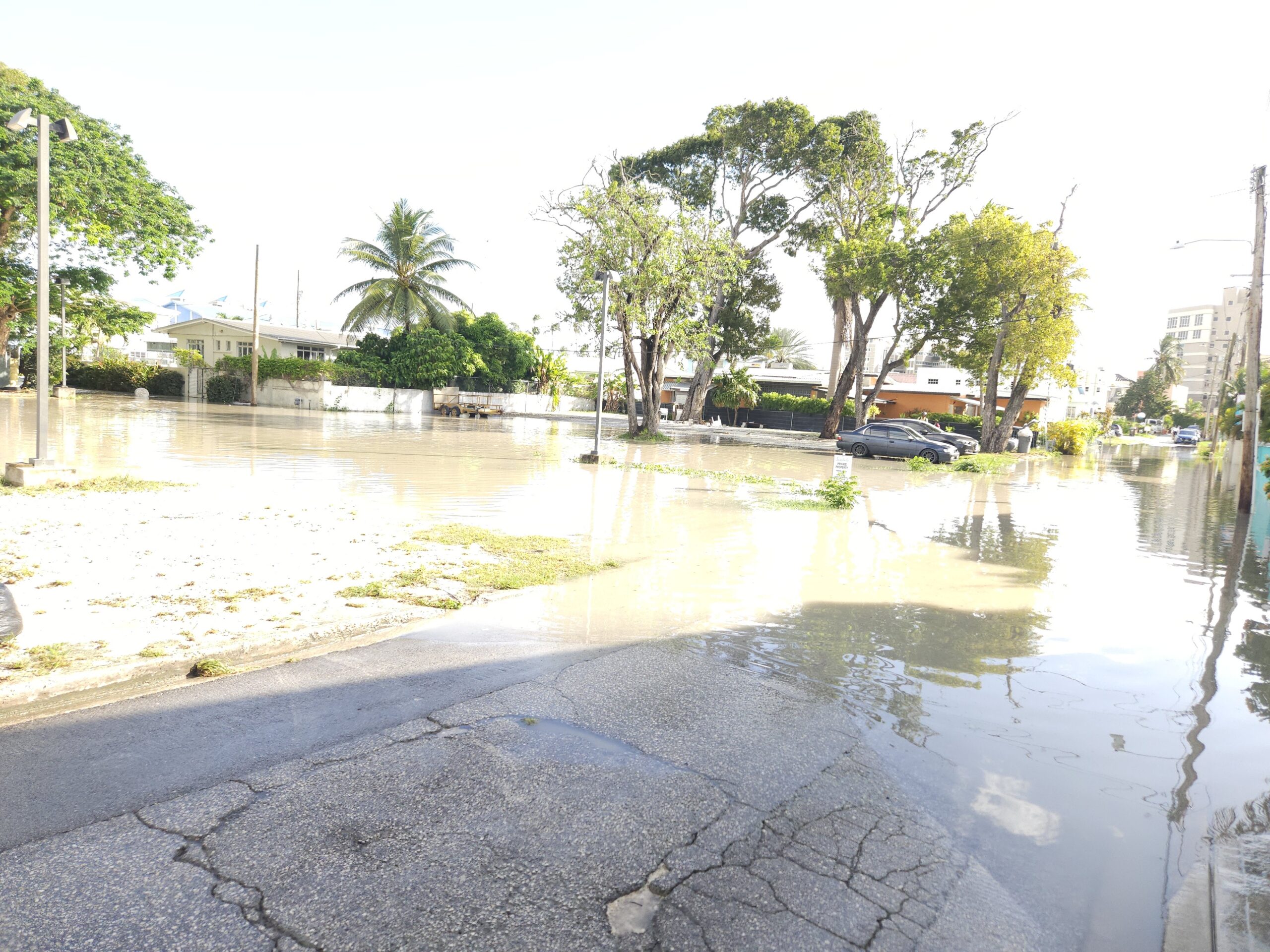
    As the Atlantic hurricane season enters its most dangerous three-month stretch, climate scientists have issued a stark warning: Barbados and the broader Caribbean region face sharply elevated risks of flash flooding and a cascade of related climate hazards through September, driven by strengthening El Niño conditions, above-average ocean warming, and expected periods of extreme rainfall. The updated outlook comes from the Caribbean Climate Outlook Forum (CariCOF), which released a full suite of seasonal forecasts covering every key climate variable for the July-to-September period, ranging from temperature and precipitation projections to drought outlooks, heatwave risk assessments, and even a long-range early projection for the 2026 Atlantic hurricane season.

    CariCOF’s analysis confirms that the ongoing warming of Caribbean waters paired with a strengthening El Niño through the region’s summer wet season creates ideal conditions for extreme downpours. Those heavy rainfall events, in turn, push the risk of flash flooding and cascading secondary hazards into the high to extremely high range across much of the region. A mitigating factor for hurricane activity, however, is the expected frequent intrusion of dry, dusty air masses from the Sahara. While these airborne dust plumes will suppress the formation and strengthening of tropical cyclones, they carry their own risks: they are projected to worsen oppressive humid heat and push air quality to unhealthy levels across many islands.

    The steadily warming regional ocean environment will also drive more intense heat events through the peak of the annual heat season in September, with frequent recurrent heatwaves expected, particularly across the northernmost Caribbean islands. For the 2024 hurricane season, forecasters project irregular storm activity through August, followed by an unusually quiet peak period in September. For areas dealing with existing dry conditions, relief will come slower than usual: lingering drought across the Lesser Antilles is not expected to ease substantially by September, and the overall increase in rainfall frequency through the season will be slower than the historical average.

    As of May 1, when the latest on-the-ground drought data was collected, CariCOF confirmed that severe or extreme short-term drought has already developed across parts of western Cuba, St Lucia, and St Vincent. Long-term severe drought is already in place in Aruba and southern Belize. For agricultural stakeholders, the outlook offers a small degree of short-term reassurance: forecasters do not expect widespread agricultural drought to develop across the region by the end of August. However, long-term drought is already progressing in St Lucia, and conditions are likely to remain dry through the end of November in Martinique and St Kitts.

    Looking ahead to the September-to-November period, which marks the peak of the Caribbean wet season, the second half of the Atlantic hurricane season, and the peak and conclusion of the annual heat season, ocean temperatures are forecast to continue climbing through September. Record-breaking ocean and air heat is particularly likely in the northern Caribbean.

    CariCOF’s long-range assessment ties the strength of the current El Niño event to future climate hazards across the region: the stronger El Niño becomes, the more intense regional heat will be in coming months, and the more likely the 2026-27 dry season will bring widespread, severe drought across the Caribbean. At the same time, a stronger El Niño also correlates with less intense tropical cyclone activity and reduced severe weather risk during the current hurricane season.

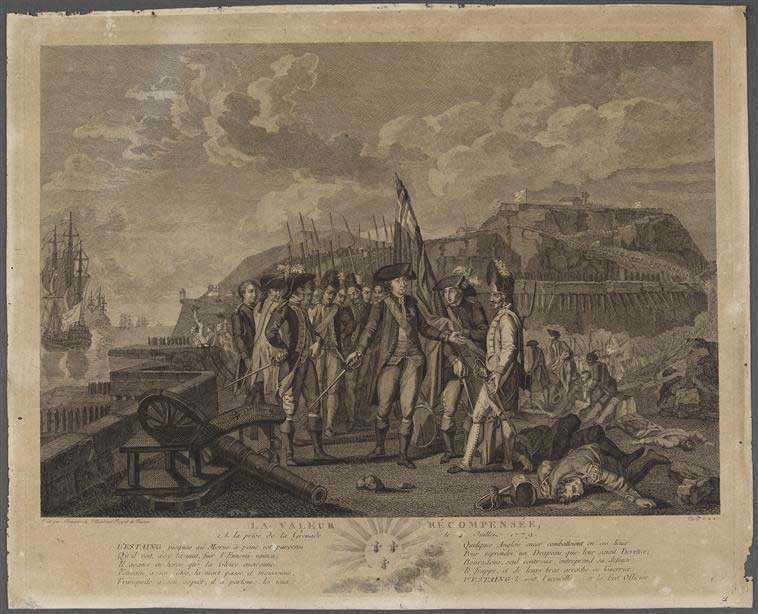
  • Surrender of British forces on Grenada: 4 July 1779

    Surrender of British forces on Grenada: 4 July 1779

    Two and a half centuries ago, on July 4, 1779, a decisive colonial military campaign shifted control of the Caribbean island of Grenada from Britain to France, a victory that reshaped regional power dynamics and left lasting physical and cultural traces across the island.

    The operation grew out of a broader sequence of French military moves in the Caribbean that summer. After successfully capturing the neighboring island of St. Vincent on June 18, French Vice-Admiral Charles-Henri comte d’Estaing sailed his fleet north on June 30. Originally planning to strike the British-held island of Barbados, persistent unfavorable winds made the assault unfeasible, forcing d’Estaing to redirect his massive force toward Grenada instead.

    British colonial leaders on Grenada received advance warning of the impending attack, prompting Governor George Macartney to immediately declare martial law and rally all available defensive forces. His entire garrison amounted to just 101 regular soldiers from the 48th Regiment, 24 new artillery recruits, and between 300 and 400 local militiamen. Deeming the existing Fort George too weak to hold off a large-scale assault, Macartney chose to anchor his primary defense at the Hospital Hill Redoubts, a fortified position perched 400 feet above sea level with a direct vantage point over Fort George. He also dispatched an urgent request for reinforcements to the main British naval command in the Caribbean, holding out hope that Admiral John Byron’s fleet would arrive in time to repel the invasion.

    By mid-afternoon on July 2, d’Estaing’s fleet—comprising 25 ships of the line, 12 frigates, and more than 6,500 soldiers and sailors—dropped anchor off Molinere Bay on Grenada’s western coast. By the end of the day, between 1,300 and 1,500 French troops had come ashore and secured the surrounding coastal area, with the outnumbered British forces unable to spare any men to oppose the landing.

    That same night, French forces began a long flanking march around Hospital Hill to position for their assault. After leaving Molinere Bay, the column split into two groups near Grand Mal: the larger contingent moved toward the de Pradine estate, while a smaller detachment advanced toward Hospital Hill and took up a forward position on Cherry Hill. In a preliminary probe that night, the French sent one ship toward the main town to test British defenses. The vessel exchanged a small number of shots with the Hospital Hill garrison before withdrawing under fire. A secondary French attempt to advance along the St. John River around 2 a.m. also failed, after British defensive fire threw the advancing force into confusion, forcing a retreat when the troops became lost in the dark terrain.

    D’Estaing’s final plan for storming Hospital Hill called for three main infantry columns to attack from the east and southeast, a maneuver that required a full day of marching across difficult terrain on July 3 to reach their attack positions by nightfall. A diversionary false attack from the west and north would draw British attention away from the main assault columns. Before launching the attack, d’Estaing sent a truce envoy to demand Macartney’s surrender, framing the demand as an act of mercy: “Humanity requires it and the personal consideration which the Count d’Estaing has for Lord Macartney induces him in the most solemn and pressing manner to summon his Lordship to surrender.” Macartney rejected the demand, clearing the way for the French assault.

    Around 11 p.m. on July 3, French infantry silently began climbing the steep trails leading to the Hospital Hill summit. By midnight, the main force had gathered near William Lucas’ estate—now the site of Grenada’s Government House, roughly one mile from the redoubts—and spread into formation. At approximately 2 a.m. on July 4, the smaller diversionary force launched its planned false attack along the St. John River. Seizing the moment, the three main assault columns began their final push up Hospital Hill.

    An advanced guard leading the left column, commanded by the Comte de Durat who would later become French governor of Grenada, successfully breached the palisade defenses and opened a path up the hill for the rest of the column. Overwhelmed by the French force’s superior numbers, British defenders were pushed out of every defensive position one by one. The entire assault on Hospital Hill took just over an hour for the French to secure. Macartney and a small contingent of remaining troops fled the redoubts before they fell and retreated to Fort George. In his later accounts, Macartney blamed the quick collapse on mass desertions, claiming most free colored fighters and local French militiamen abandoned their posts as soon as the attack began.

    As dawn broke on July 4, the French turned the captured British artillery on Hospital Hill directly toward Fort George. In their hasty retreat, British troops had no time to disable the guns, leaving them fully operational for the French. After just a single shot was fired from the heights, the British garrison raised a white flag of surrender. Macartney was granted a few hours to draft surrender terms, and presented 17 articles of capitulation to d’Estaing. The French commander rejected all of Macartney’s terms outright and immediately presented his own 28 articles, which Macartney later described as “the most extraordinary and unexampled project that ever entered into the mind of a General or Politician.” With no remaining military leverage to negotiate, Macartney had no choice but to accept unconditional surrender, as local leaders concluded that trusting to the international laws of war was better than facing further bloodshed.

    The 1779 capture of Grenada was one of only three times the island changed hands during its colonial history, and one of the only violent transfers of power. The British viewed the loss as a major strategic blow to their Caribbean holdings, while the French celebrated the victory as a major military triumph across the empire. Paris held public celebrations, commissioned commemorative paintings and satirical plays mocking the British defeat, and put captured British flags and prisoners of war (including Macartney) on public display. The victory even influenced French fashion, with commemorative designs becoming popular in Paris after the news arrived.

    The capture also left lasting legacies that remain visible on Grenada today. The current location of Grenada’s Government House traces its origins directly to the 1779 seizure. After the victory, the French appropriated William Lucas’ Mt. George estate for new defensive entrenchments on Richmond Hill, and repurposed Lucas’ existing residence as the official residence for Governor Durat. By 1785, the Grenada colonial government purchased the full estate, and British governors took up residence there, with a new official residence constructed on the site in 1807 that remains in use today. Recognizing how easily the island had fallen, the French also prioritized building new fortifications on the high ground of Richmond Hill, a defensive network that remains a key historical site on the island.