博客

  • TBPS announces senior command appointments

    TBPS announces senior command appointments

    At a critical juncture for its ongoing transformation and public safety outreach, The Barbados Police Service (TBPS) has unveiled a series of high-level leadership appointments set to take effect on July 3. Two veteran officers, Barry Hunte and Adrian Broomes, will step into the roles of Deputy Commissioner of Police, while Stephen Herbert, David Welch, and John Boyce have been named new Assistant Commissioners of Police, rounding out an expanded senior command team designed to advance the force’s core strategic goals.

    The reshuffle comes as TBPS works to advance key operational priorities, boost public trust in its work, and expand professional growth opportunities for officers across all ranks. Each appointee brings decades of specialized experience and a track record of leadership that aligns with the force’s long-term vision for a modern, community-focused policing service.

    New Deputy Commissioner Barry Hunte has built a decades-long career in senior TBPS leadership, most recently overseeing special operations and management services after serving as head of the force’s Special Branch. Hunte has earned widespread recognition for his focus on strengthening leadership standards, driving performance improvements, leading organizational change, and executing TBPS’s national policing plan effectively. He is also a graduate of the prestigious 19-week College of Policing Executive Leaders Programme based in Coventry, United Kingdom, a rigorous training initiative built to prepare senior officers for top executive leadership roles.

    Fellow Deputy Commissioner Adrian Broomes brings extensive expertise in disaster response and inter-agency coordination, a critical skill set for addressing emerging public safety challenges. He has prioritized continuous executive leadership development throughout his career and is currently completing the same College of Policing Executive Leaders Programme that Hunte graduated from in Coventry.

    Of the three new Assistant Commissioners, Stephen Herbert brings deep experience in human resources and administration to his new executive role. His work centers on strategic workforce development, targeted training programming, and collaboration between TBPS and other government agencies. Herbert has also led large-scale recruitment drives for the force, and currently oversees the onboarding, swearing-in, and mentorship of new police trainees.

    Assistant Commissioner David Welch, a long-serving senior TBPS officer, will take charge of change management and technology services in his new post. His appointment directly supports TBPS’s ongoing push for organizational modernization, technological innovation, and improved operational effectiveness across all departments.

    Rounding out the new appointments is Assistant Commissioner John Boyce, a veteran of TBPS’s senior command structure who previously oversaw the force’s crime portfolio. His decades of frontline and leadership experience will strengthen TBPS’s investigative capacity and advance its work to improve public safety outcomes for all Barbadians.

    TBPS Commissioner Sonia Boyce offered warm congratulations to all five appointees in an official statement following the announcement. “I extend heartfelt congratulations to Mr. Hunte, Mr. Broomes, Mr. Herbert, Mr. Welch and Mr. Boyce on their appointments to the senior command team of The Barbados Police Service,” she said. “Each of these officers has demonstrated commitment, professionalism and dedication to duty over many years of service. Their collective experience, leadership and institutional knowledge will be invaluable as we continue to build a modern, responsive and trusted police service for the people of Barbados.”

    Commissioner Boyce added that the appointments signal the organization’s full confidence in the new leadership team to steer TBPS through its next phase of growth and development. She emphasized that the expanded senior command will remain focused on upholding accountability to the public, deepening community engagement, maintaining consistent operational readiness, and delivering excellent service to all Barbadians.

  • Man warned after paying $26 000 in firearm fines

    Man warned after paying $26 000 in firearm fines

    A resident of Haynesville, St James, has avoided a custodial sentence after completing full payment of more than $26,000 in combined fines for illegal firearm and ammunition possession, but has received a clear final warning from a senior High Court justice about the consequences of any future weapons-related conviction.

    Ramon Michael Thomas, a first-time offender, was originally handed the financial penalties last year for a 2022 weapons violation. According to court documents, on August 13, 2022, law enforcement officers executed a search warrant at Thomas’s home. During a sweep of the property’s kitchen, investigators uncovered a .22-calibre revolver hidden inside an empty protein powder can placed on top of the refrigerator. The weapon was already loaded with seven rounds of ammunition, and an additional five unused bullets were discovered wrapped in paper a short distance from the can.

    As a first-time offender, Thomas was not immediately sentenced to prison. The court ordered him to pay a $20,000 fine for unlicensed possession of the revolver, with a default sentence of 527 days behind bars if the fine went unpaid. For the separate charge of illegal ammunition possession, he received an additional $6,000 fine, with a six-month prison term as the alternative for non-payment, bringing the total of his court-imposed financial penalties to $26,000.

    When the No. 5 Supreme Court recently confirmed that Thomas had paid the full amount of his fines, High Court Justice Pamela Beckles issued a stark public warning to the offender ahead of his release. “Don’t come back. I am letting you know that if you do on a firearm charge and are convicted, it is mandatory you are going to prison,” Beckles stated directly to Thomas.

    Acting Senior State Counsel Maya Kellman represented the prosecution in the case, which was first reported by local Caribbean court correspondent Jovan Beaubrun.

  • Fake Website Impersonating UWI Under Investigation

    Fake Website Impersonating UWI Under Investigation

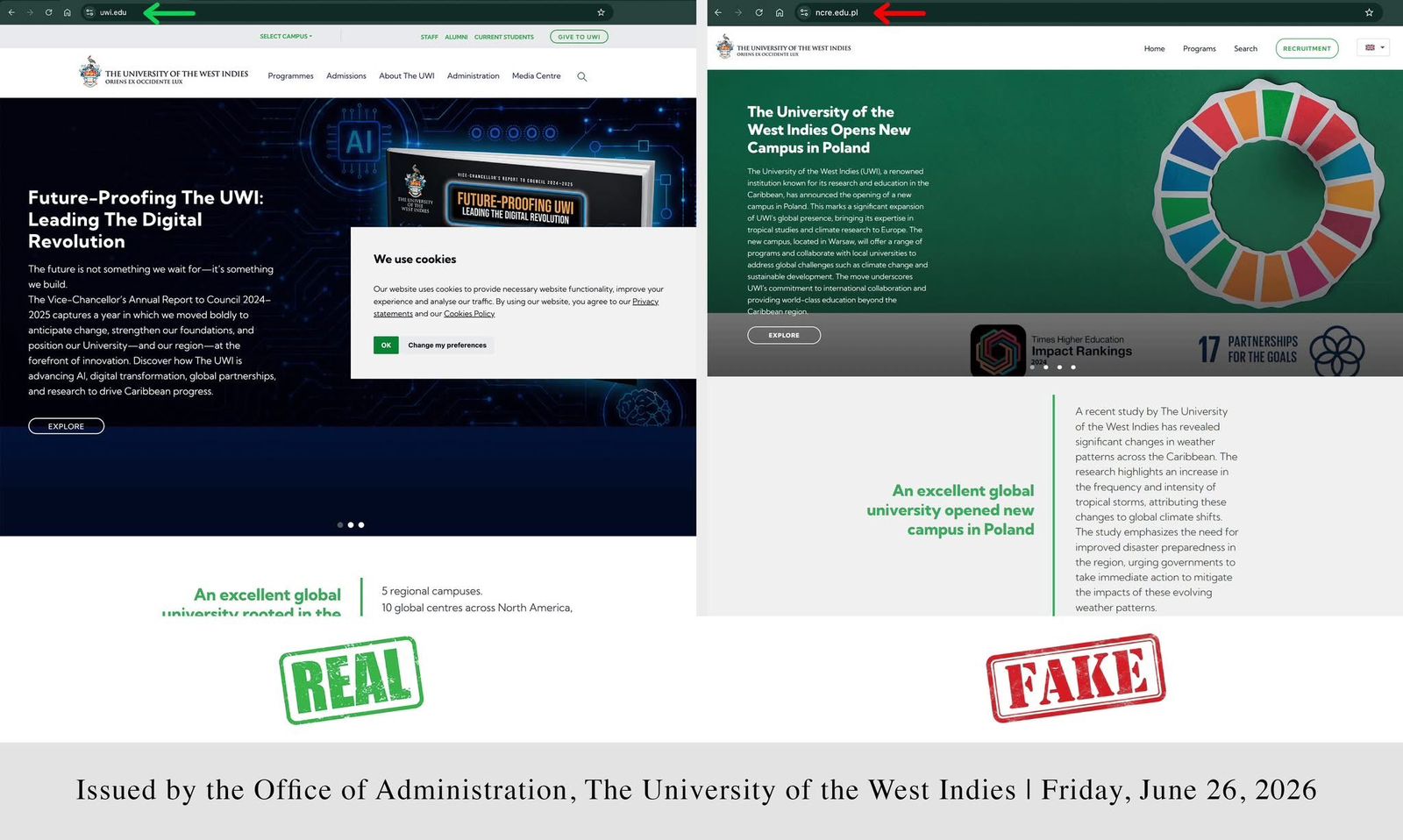
    Authorities in the Caribbean have opened a formal investigation into a sophisticated fraudulent website that has been illegally impersonating the University of the West Indies (UWI), one of the region’s most prestigious higher education institutions. The fake platform, which closely mimics the official UWI online interface, has raised serious alarms among university administrators and law enforcement officials over potential harm to prospective students, current enrollees, and the institution’s long-standing reputation.

    According to initial alerts issued by UWI’s official communications team, the scammers behind the counterfeit site have been targeting individuals seeking admission to the university, falsely advertising fraudulent degree programs, scholarship opportunities, and application processing services in exchange for illegal payments. The fake website replicates key visual elements of the legitimate UWI site, including official logos, campus imagery, and departmental branding, making it difficult for inexperienced web users to distinguish between the real and fraudulent platforms.

    UWI has confirmed that it is working closely with national cybercrime units, internet regulatory bodies, and global domain name registrars to identify the perpetrators behind the scheme, take the fake website offline, and prevent similar copycat platforms from emerging in the future. University officials have also issued a public warning urging all prospective and current students to verify the authenticity of any website claiming to represent UWI before sharing personal identifiable information or making any form of financial transaction.

    Cybersecurity experts note that this type of educational impersonation scam has grown increasingly common globally, as more students turn to online platforms to research and apply for higher education opportunities. Scammers often exploit the reputation of well-respected institutions to steal funds, collect sensitive personal data for identity theft, and damage the standing of the universities they impersonate. UWI has stated that it will update the public on the progress of the investigation as more information becomes available, and is advising anyone who has interacted with the fake website to report the incident to local law enforcement immediately.

  • Govt launches digital skills drive

    Govt launches digital skills drive

    As artificial intelligence and digital innovation reshape global industries and labor markets around the world, small island developing states face a critical choice: invest in foundational digital capabilities to compete, or risk being left behind by the rapidly accelerating digital transition. Barbados’ Minister of Training and Tertiary Education, Sandra Husbands, has laid out an urgent call to action for the Caribbean nation, emphasizing that closing widespread digital skills gaps is non-negotiable to capitalize on the unique advantages the digital economy can offer to small island economies.

  • Govt moves to modernise apprenticeship training model

    Govt moves to modernise apprenticeship training model

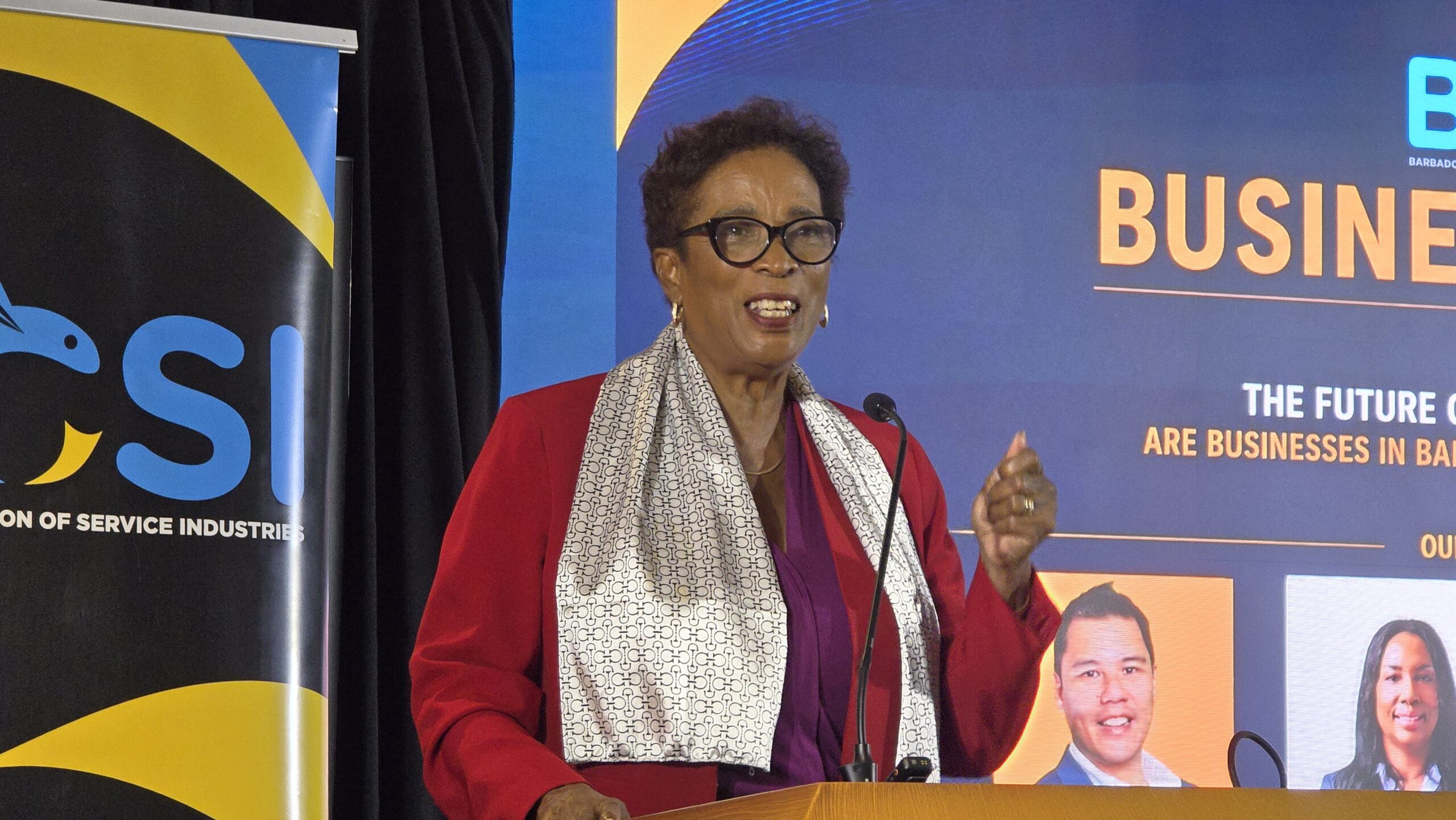
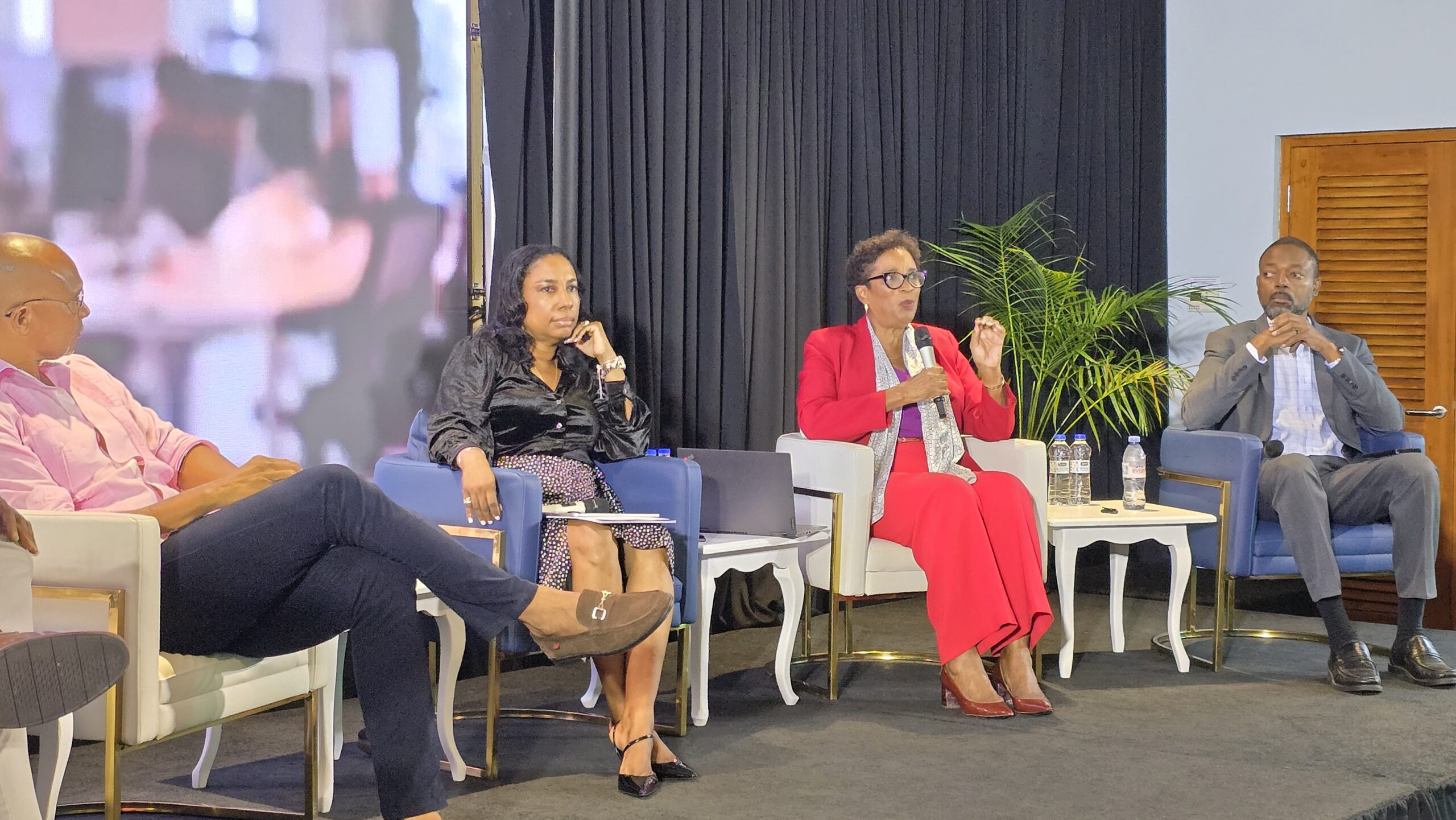
    Barbados is set to carry out a comprehensive overhaul of its decades-old Occupational Training Act, the core legislation governing the country’s apprenticeship system, by the end of this year as part of a broader push to align technical and vocational education and training (TVET) with evolving modern learning preferences and shifting labour market demands. Labour Minister Colin Jordan first unveiled the planned legislative and structural reforms during a panel discussion at the Barbados Coalition of Service Industries (BCSI) Business Forum, hosted Friday at the University of the West Indies Cave Hill School of Business, before expanding on the details of the initiative in an exclusive interview with local media outlet Barbados TODAY.

    Jordan confirmed that earlier this week, he joined Minister of Training and Tertiary Education Sandra Husbands to present the draft outline of the updated apprenticeship framework for the first time to a tripartite social partnership stakeholder meeting focused on the construction sector. “We just Wednesday presented the outline of a new apprenticeship framework to a social partnership meeting, but it was a construction sector meeting, tripartite. Presented for the first time in that kind of a format,” Jordan noted, adding that the proposal received largely positive feedback from attending stakeholders. “We are pretty advanced. Everybody who was there was happy with the progress we’ve made. They have a couple of tweaks based on the discussion and then [we will] proceed to implement, but that focus or this renewed focus on apprenticeships and recognising that it is really essential for now.”

    The labour minister explained that the current national apprenticeship framework has failed to keep pace with technological, economic and educational changes over recent years, requiring targeted updates to reflect modern workforce realities. Under the collaborative effort between the Ministry of Labour and the Ministry of Technical and Vocational Training, the revised framework will introduce innovative approaches including micro-credentialing and a modular learning structure, moving away from the traditional linear learning model that has dominated apprenticeship programming for decades.

    Jordan emphasized that a core goal of the reform is to elevate the status of technical and vocational training, positioning it as an equally valuable pathway for personal and professional development alongside traditional academic education. Beyond structural changes to learning models, the reform will also require additional resourcing and a revamped regulatory inspection process to ensure consistent quality across programs.

    The redesigned apprenticeship model prioritizes practical, hands-on learning that meets the needs of contemporary learners, with a structured schedule that integrates on-the-job training and classroom instruction. Under the proposed structure, apprentices will spend three to four days per week gaining real-world experience within host organizations, with the remaining one to one and a half days dedicated to formal coursework. By the end of the three-year program, apprentices will not only earn a formal qualification but also build advanced, job-ready practical skills through supervised, structured work experience tailored to modern learning preferences.

    To bring this new model into effect, amendments to the existing Occupational Training Act will be advanced through the legislative process. Jordan confirmed that the Ministry of Labour is leading the reform effort, with operational anchoring through the Ministry of Technical and Vocational Training. The Barbados Vocational Training Board and the TVET Council will retain their key implementation roles, while the Ministry of Labour’s People Development Unit will continue to lead the national overall people development strategy in close collaboration with the TVET-focused ministry.

    Jordan expressed confidence that the full legislative overhaul required for the reform will be completed before the close of the 2024 calendar year, clearing the way for national rollout of the updated apprenticeship system across key economic sectors, starting with construction.

  • Derde helft WK 2026: Vaarwel Kaapverdië – de underdog die het WK nooit zal vergeten

    Derde helft WK 2026: Vaarwel Kaapverdië – de underdog die het WK nooit zal vergeten

    Among all the underdog stories at the 2026 FIFA World Cup, none have resonated more deeply with global football fans than the incredible campaign from Cape Verde, a tiny Atlantic archipelago nation making its tournament debut. Though the Blue Sharks bowed out of the competition with a heartbreaking 3-2 extra-time defeat to defending champions Argentina in the Round of 32 in Miami, their exit came after a run of performances that turned world football powerhouses and casual viewers alike into loyal supporters, overshadowing the hype surrounding the tournament’s biggest superstars like Lionel Messi, Cristiano Ronaldo, Erling Haaland and Harry Kane.

    Cape Verde entered the 2026 World Cup ranked 67th in the FIFA global rankings, one of the smallest nations in the tournament by population and geographic size. But from their opening match, they proved they belonged on the sport’s biggest stage. A dogged 0-0 draw against European champions Spain in their debut World Cup game immediately put the world on notice, with goalkeeper Vozinha delivering a heroic clean-sheet performance that earned his side their first ever World Cup point. That result set the tone for a remarkable group stage campaign that saw Cape Verde secure three draws to advance to the knockout round, the first time the nation has ever reached this stage of a World Cup.

    Against Messi-led Argentina, Cape Verde defied all expectations once again. After falling behind to an early Messi goal, the underdogs fought back to level the score at 1-1 and force the defending champions into extra time. Falling behind a second time, Sidny Lopes Cabral scored a stunning equalizer to bring Cape Verde within 10 minutes of a penalty shootout that could have delivered one of the biggest upsets in World Cup history. Ultimately, an unfortunate own goal from Diney Borges off a Cristian Romero header sealed Cape Verde’s exit, but the defeat did nothing to dim the impact of their run.

    When the final whistle blew, Cape Verde’s players collapsed onto the Miami pitch in tears, but they left the United States having won the respect and admiration of the entire global football community. “Cape Verde has lost the match, but they have won the world over,” former Scottish international James McFadden told BBC Radio 5 Live. “They showed courage, togetherness, unity and unshakable belief in who they are and what they can do. This is the story of this tournament, the kind of heart you want to see from any football side.”

    Veteran English pundit and former player Gary Neville called Cape Verde’s run one of the greatest performances he has ever seen from a tournament underdog, speaking on ITV. “They are crying because they are going home, they don’t want to leave this stage,” Neville said. “This is a moment that will likely never come again for many of these players, and it is as magical as it is moving.”

    Cape Verde head coach Bubista spoke after the match, overflowing with pride for what his side had accomplished against the world champions. “We showed that even though we are a small country, we can compete with the best teams in the world, that is something to be incredibly proud of,” he said. “We have written history for our nation, and every player can hold their head high for how they represented us. To come back twice against the world champions is an unbelievable achievement.”

    Roberto ‘Pico’ Lopes, a central defender who featured in all four of Cape Verde’s World Cup matches, noted that the campaign has already delivered a legacy that goes far beyond the tournament bracket. “One of the best things to come out of this World Cup is that no one asks anymore where Cape Verde is on the map,” Lopes told BBC Sport. “We put ourselves on the map. We are a small nation, but we have big hearts, and we showed what is possible: if you believe, you can achieve it.”

    The Blue Sharks’ remarkable run has also reignited conversation around the 48-team expanded World Cup format, a decision that faced significant criticism before the tournament began. Neville said Cape Verde’s run has converted him from a skeptic to a supporter, noting that the format gives small underdog nations the chance to create moments like this. Fellow former England striker Ian Wright echoed that sentiment, calling on FIFA to invest more resources to help small footballing nations compete on the global stage. “This is what we hope to see around the world, which is why FIFA needs to do everything it can to make sure resources reach every nation,” Wright said. “What Cape Verde proved is that when you give people a chance, they can compete with the world’s best, no matter how small they are. This was a herculean effort from them, absolutely incredible.”

    The breakout star of Cape Verde’s historic run has been 40-year-old goalkeeper Vozinha, who became a global cult hero after images of him crying in celebration then proudly holding the Cape Verdean flag aloft after the draw with Spain spread around the world. His performance, however, earned him stardom beyond viral fame: the out-of-contract goalkeeper, who most recently played in Portugal’s second tier with Chaves, finished the tournament with 18 total saves, the third highest total of any keeper at that stage of the competition, behind only Eloy Room of Curaçao (20) and Orlando Gill of Paraguay (19). He made eight crucial saves against Argentina alone, and pundits believe his World Cup performances will earn him a new club contract quickly. “Vozinha is going to get a good move out of this, what a World Cup he has had,” Neville said. “Everything he does is calm and composed. Where has he been all this time? We should have known who he was long before this tournament.” Wright added that Vozinha exuded “hero energy” throughout his side’s historic run.

    For context, Cape Verde is an archipelago of 10 volcanic islands located off the West African coast in the Atlantic Ocean, best known for its white sand beaches and clear coastal waters. It has a total domestic population of roughly 500,000, with hundreds of thousands more living in the Cape Verdean diaspora around the world. The nation gained independence from Portugal 50 years before their 2025 World Cup qualification, making their first ever World Cup appearance an even more meaningful celebration of the nation’s 50 years of independence. Before this tournament, Cape Verde was widely known internationally primarily for the late Grammy-winning singer Cesaria Evora, who introduced the nation’s traditional morna music style to global audiences. But after the 2026 World Cup, the Blue Sharks have cemented their place as the nation’s most famous ambassadors to the world.

  • Final Preparations Underway Ahead of Booby Alley Redevelopment Opening

    Final Preparations Underway Ahead of Booby Alley Redevelopment Opening

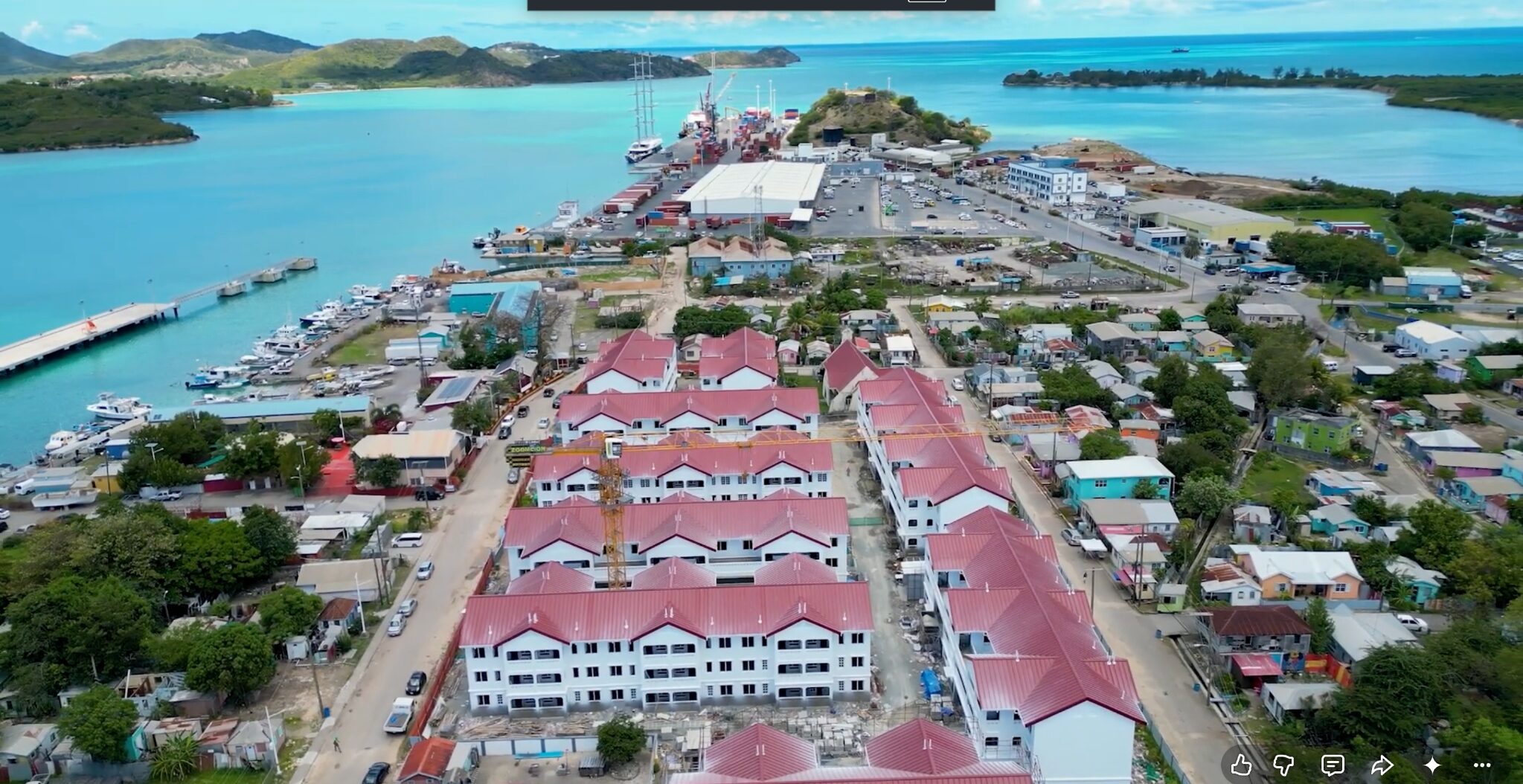
    Antigua and Barbuda’s government is putting the finishing touches on preparations for the official opening of the transformative Booby Alley Redevelopment Project, a large-scale affordable housing and urban regeneration initiative backed by Chinese grant funding. A high-level inter-agency coordination meeting convened this Friday brought key stakeholders together to evaluate the status of remaining construction work and validate the project’s operational readiness ahead of its launch.

    Chaired by Urban Renewal Minister Rawdon Turner, the gathering included representatives from the China Aid Housing Team, private construction contractors, the Antigua Public Utilities Authority (APUA), the Public Works Department, and other relevant government bodies. Turner’s portfolio covers not only the Booby Alley development but also two additional China-aided housing projects located in Bolans and Barbuda, putting him at the center of the country’s current push to expand access to affordable, quality housing.

    During the meeting, each participating agency and stakeholder provided the minister with detailed updates on their outstanding tasks and confirmed projected timelines for completion. Talks extended far beyond wrapping up final construction tasks, with participants diving deep into long-term operational planning for the new residential community. Attendees reviewed core management frameworks for a range of key public services and infrastructure, including on-site parking regulation, ongoing sewage treatment, regular garbage collection, landscape maintenance, public lighting upkeep, road network management, and overall facility maintenance after residents take occupancy of their new homes.

    Following the discussions, Minister Turner directed all agencies and contractors to submit formal, detailed progress reports paired with binding, fixed completion deadlines for all outstanding work. All collected information will be consolidated into a single comprehensive report that will be presented to Antigua and Barbuda’s Cabinet for review next Wednesday.

    In remarks after the meeting, Turner emphasized that successful delivery of the landmark project depends on every stakeholder upholding their commitments and meeting agreed timelines. “Our focus is not simply on cutting a ribbon to open the development,” he noted. “Our priority is to make sure residents move into a community that is safe, fully functional, properly managed, and built to serve generations of Antiguans and Barbudans to come.”

    As one of the largest urban renewal and affordable housing projects ever undertaken in Antigua and Barbuda, the Booby Alley Redevelopment Project was fully funded through a grant from the Government of China. The comprehensive development includes hundreds of new affordable apartment units, alongside major upgraded infrastructure: reconstructed roads and sidewalks, dedicated parking facilities, children’s playgrounds, professionally landscaped recreational green spaces, modernized utility networks, improved flood drainage systems, and a full suite of additional public amenities for new residents.

  • Trade Unions Conclude Workshop on Preventing Workplace Violence and Harassment

    Trade Unions Conclude Workshop on Preventing Workplace Violence and Harassment

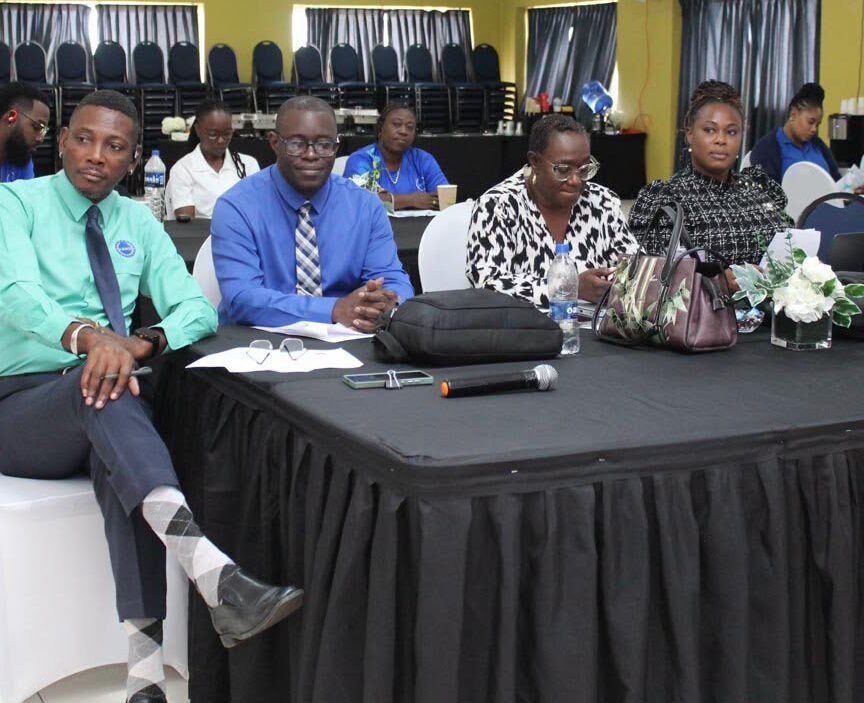
    Over three days of collaborative dialogue and strategic planning in Antigua and Barbuda, representatives from local trade unions and marginalized interest groups have finalized a foundational workshop centered on rolling out protections outlined in the International Labour Organization’s landmark Convention 190, which addresses the persistent crisis of violence and harassment in workplaces globally.

    This capacity-building initiative was organized and led by two international advocacy organizations: Public Services International, a global federation of public service trade unions, and the FNV Rainbow Network, a Dutch network focused on advancing queer inclusion within labor movements. The core objective of the gathering extended beyond basic implementation of ILO standards, aiming to embed stronger protections and recognition for LGBTIQA+ workers across public sector unions throughout the Caribbean region.

    Throughout the three-day program, attendees participated in a range of interactive activities, from open panel discussions on regional challenges to peer knowledge-sharing sessions that highlighted successful inclusion initiatives from different island nations. Working groups collaborated to map out actionable, context-specific strategies that unions can adopt to prevent workplace violence and harassment targeting marginalized workers, with a particular focus on queer and gender-diverse employees who face disproportionate risk of mistreatment.

    Officials from the Antigua and Barbuda Workers’ Union noted that the workshop placed consistent emphasis on cultivating work cultures that center dignity and equal respect for every staff member, no matter their racial background, gender identity, sexual orientation, or other personal characteristics.

    As a key milestone in broader regional labor reform efforts, the gathering united cross-sector stakeholders around a shared commitment to advancing systemic fairness, intersectional equality, broader social inclusion, and dignified working conditions across all Caribbean nations. Participants left the workshop with new tools, partnerships, and clear action plans to advance these goals in their respective local and national unions.

  • Muriel Gibbons celebrates 100th birthday

    Muriel Gibbons celebrates 100th birthday

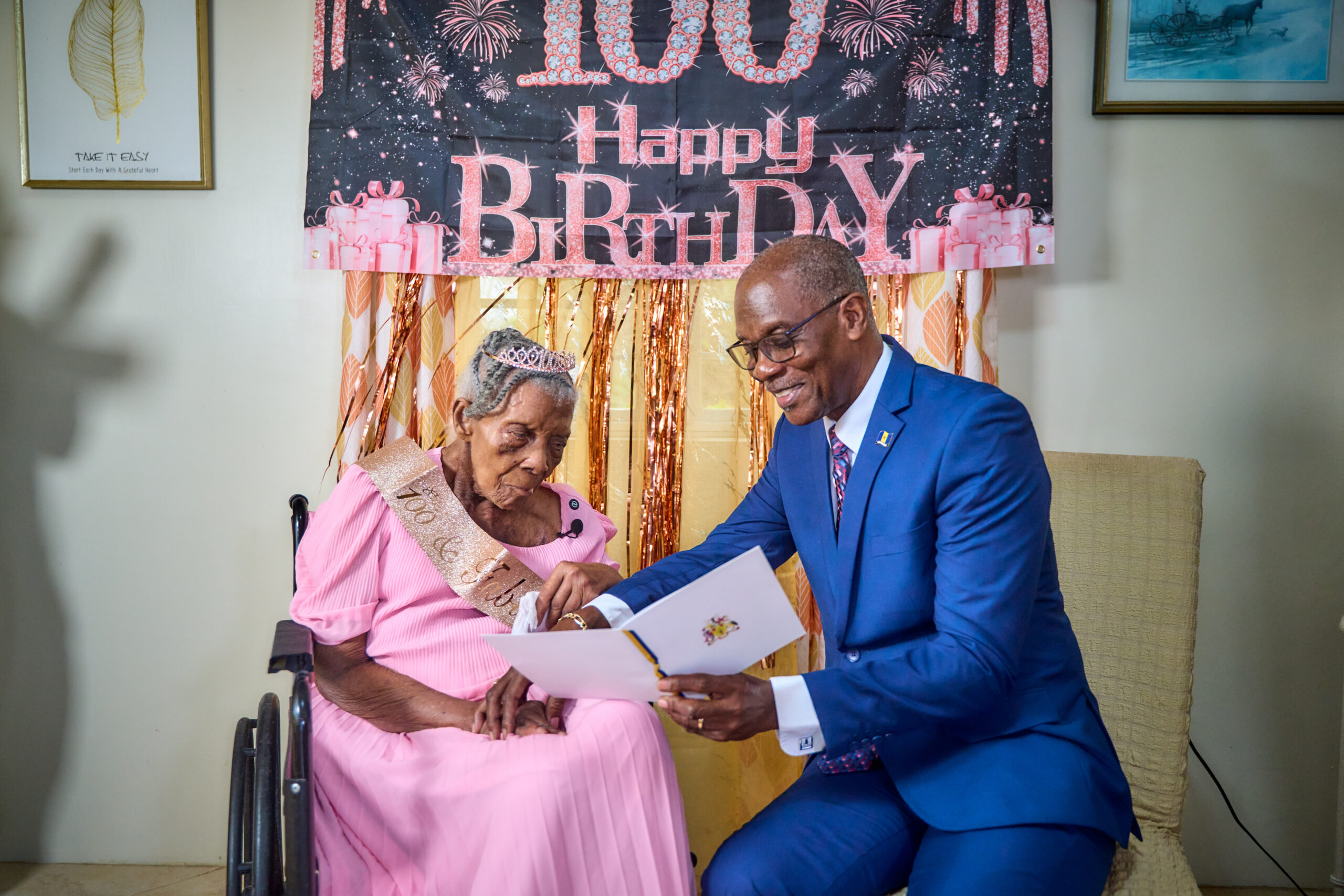
    Against all medical odds, after a devastating health scare that left her large family bracing for the worst earlier this year, Muriel Gibbons officially marked the extraordinary milestone of turning 100 years old this Thursday. Surrounded by generations of loved ones, close friends, and a high-ranking national leader at her long-time residence in Ashton Hall, St Peter, the newly-minted centenarian marked the momentous occasion with quiet joy and warm celebration.

    Acting President of Barbados, Reverend Dr. Jeffrey Gibson, joined the Gibbons family for the birthday festivities, adding official recognition to the community celebration of Gibbons’ life and legacy. Though the 100-year-old remained softly reserved throughout the gathering, family members confirmed she clearly relished the outpouring of affection, surrounded by dozens of relatives who shared stories, toasts, and heartfelt well-wishes in her honor.

    For Gibbons’ kin, the celebration carries far more weight than a standard centennial birthday. In January of this year, Gibbons suffered a sudden stroke that left the family fearing they would lose their beloved matriarch before she could reach the 100-year milestone she had long hoped to see. Rather than placing her in institutional care, the entire family rallied together to care for Gibbons at her home, taking turns around the clock to support her recovery. Against all expectations, the resilient Gibbons pulled through, defying the family’s darkest fears to walk into her 100th birthday celebration.

    Marva Griffith, Gibbons’ fifth-born child and one of her 13 children, opened up about the emotional journey the family has taken this year. “I’m so excited,” she shared during the celebration. “She wanted this, but she got ill in January, she had a stroke, so we thought that she would not have made it so far. But we kept her home and we looked after her. She’s good. She doesn’t give any trouble and we take turns as a family looking after her.”

    Griffith went on to credit her mother’s unshakeable resilience and lifelong work ethic as the foundation for the entire family’s success and close bond. A single mother who worked for decades as an agricultural laborer to provide for her large brood, Gibbons leaned on the support of both her own parents and her late partner’s parents to raise her children, instilling core values of hard work and discipline that still shape the family today.

    “She worked hard. She was an agricultural labourer and a single mother, and my grandparents, maternal and paternal, helped us a lot. We are what we are today because of her,” Griffith said, adding that strict but loving discipline was a cornerstone of the family’s upbringing. “As for our parents, they believed in discipline. In those days, you had to explain yourself if you did anything wrong.”

    Gibbons’ son Jerry Gibbons also shared an emotional tribute to his mother, describing her as a lifelong source of guidance, wisdom, and unwavering support. “I spent a lot of time with my mother. She’s my guide, my advisor, and I love her a lot,” he said. The experience of raising his own children gave Jerry a new perspective on the depth of a mother’s love for a large family. “When I became a father, I realised that you love each of your children differently, but you love all of them the same.”

    He also recalled the small, foundational life lessons his mother taught him over decades, from how to cook a meal to how to navigate life’s challenges. For Jerry and the rest of the family, the wish is simple: they hope Gibbons continues to thrive for many more years to come. “I wish her a happy 100th birthday and I hope that she stays around to be more than 100 for sure,” he said.

  • CARPHA Establishes Regional Emergency Operations Centre for 26 Member States

    CARPHA Establishes Regional Emergency Operations Centre for 26 Member States

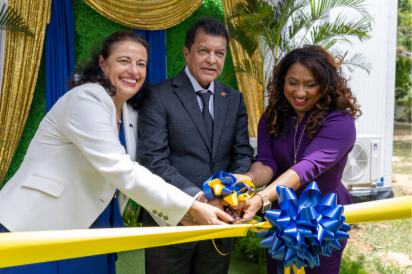
    On Friday, July 3, 2026, the Caribbean Public Health Agency (CARPHA) achieved a transformative breakthrough for regional public health resilience with the official opening of its state-of-the-art CARPHA Regional Emergency Operations Centre (CREOC) at the agency’s Port of Spain headquarters in Trinidad and Tobago. The inauguration ceremony was led by three key stakeholders: Trinidad and Tobago’s Minister of Health, The Honourable Dr. Lackram Bodoe; European Union Ambassador to Trinidad and Tobago, Her Excellency Cécile Tassin; and CARPHA Executive Director Dr. Lisa Indar.

    Funded entirely through European Union investment under the 11th European Development Fund (EDF) Programme, designed specifically to strengthen health security and prevent transboundary communicable disease outbreaks across the Caribbean, the CREOC will function as the central coordination hub for all public health emergency-related activities across CARPHA’s 26 member states. These activities span preparedness planning, on-the-ground response, post-event recovery, and long-term resilience capacity building.

    Speaking at the launch, Dr. Bodoe emphasized the collective nature of 21st-century public health challenges, noting that no Caribbean nation — regardless of its available budget or infrastructure — can successfully contain fast-spreading health threats in isolation. “Our greatest strength comes from cross-border partnership and shared commitment,” he remarked.

    Dr. Indar echoed this sentiment, highlighting the unique vulnerability of Small Island Developing States that make up the Caribbean region. With deeply interconnected economies, open borders, and closely linked communities, public health risks can sweep across multiple island nations in days. “This new operations centre will drastically improve our ability to spot emerging threats early, unify regional action, and protect the health and well-being of all Caribbean people,” she said.

    Ambassador Tassin reaffirmed the EU’s long-term commitment to Caribbean health security, adding that the CREOC stands as more than just a new facility. “It is a symbol of the Caribbean’s collective determination to protect its people through solidarity, proactive preparedness, and shared technical expertise,” she stated.

    Designed to align fully with the World Health Organization’s global Public Health Emergency Operations Centre (PHEOC) Framework, the CREOC has been classified as a Type C Emergency Operations Centre — the highest tier of operational capability recognized under WHO’s global classification system. This top-tier classification means the hub is uniquely equipped to coordinate complex, multi-country public health emergencies while providing critical support to national emergency operations centres across every Caribbean nation.

    The new facility expands and enhances CARPHA’s core capabilities in several key areas: continuous monitoring of emerging public health threats, aligned coordination of regional preparedness and response work, streamlined real-time information sharing between member states, evidence-based regional risk assessment reporting, rapid mobilization of specialized technical expertise, and data-backed support for decision-making during urgent situations.

    Powered by CARPHA’s locally tailored Regional Integrated Early Warning Surveillance and Response System (RIEWSS), the CREOC provides the robust physical and digital infrastructure needed to detect threats earlier than ever before, improve cross-regional situational awareness, and accelerate coordinated, evidence-based emergency responses across the entire Caribbean. When paired with standardized timeliness metrics and integrated multisectoral response mechanisms, the centre allows CARPHA to serve member states far more effectively by cutting down coordination delays and speeding up action when every minute matters.

    As the region’s permanent central coordination hub, the CREOC will deepen collaboration between national ministries of health, national disaster management agencies, regional intergovernmental institutions, and global international partners. During public health events, it will also coordinate deployment of specialized rapid response teams, manage cross-border emergency logistics, lead unified regional risk communication, and maintain a shared, real-time operating picture for all stakeholders.

    The creation of the CREOC draws directly on hard lessons learned from recent regional crises that exposed gaps in fragmented national response systems. These events include the global COVID-19 pandemic, recurring large-scale dengue outbreaks, and climate-fueled extreme weather events such as Hurricanes Melissa and Beryl, all of which underscored the urgent need for coordinated regional action to contain transboundary threats.

    To adapt to the full range of possible scenarios, the CREOC operates on a scalable activation model that adjusts from routine daily surveillance and monitoring to full-scale regional emergency activation. This flexibility allows CARPHA to rapidly expand its coordination capacity as a situation evolves, whether responding to an infectious disease outbreak, a severe weather event with public health consequences, an environmental or chemical incident, a large-scale mass gathering, or any other event with regional or global public health implications.

    In addition to improving regional response capacity, the CREOC strengthens Caribbean nations’ ability to meet their obligations under the International Health Regulations (2005), by boosting regional surveillance systems, information management protocols, emergency coordination, and overall operational readiness.

    Friday’s inauguration marks a key milestone in CARPHA’s ongoing mission to advance regional health security and ensure all Caribbean countries are equipped to handle both current and future emerging public health threats.