博客

  • It’s not just about the money: Inside CARICOM’s ten-point plan for reparatory justice

    It’s not just about the money: Inside CARICOM’s ten-point plan for reparatory justice

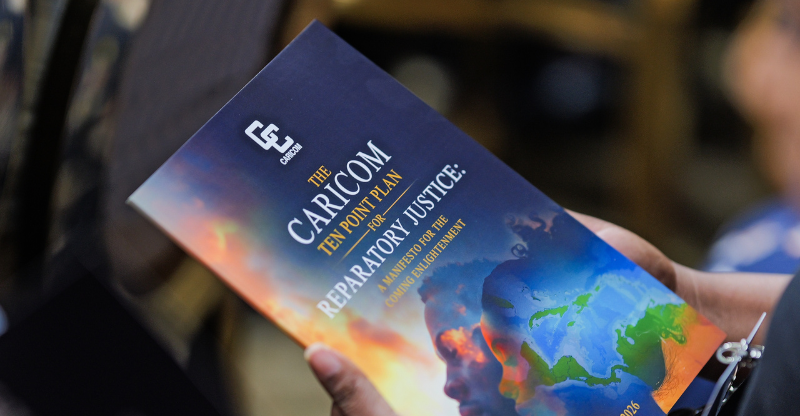
    Against the backdrop of the 51st Regular Meeting of the CARICOM Heads of Government hosted in Saint Lucia, regional leaders and reparations advocates gathered this week to advance a long-running fight for redress for the harms of transatlantic chattel slavery and centuries of colonial rule. At a dedicated pre-conference workshop focused on advancing socio-economic reparatory justice, sustainable development, and historical truth-telling, attendees centered discussion on the newly unveiled *Manifesto for the Coming Enlightenment* and CARICOM’s updated 10-point action plan for reparatory justice.

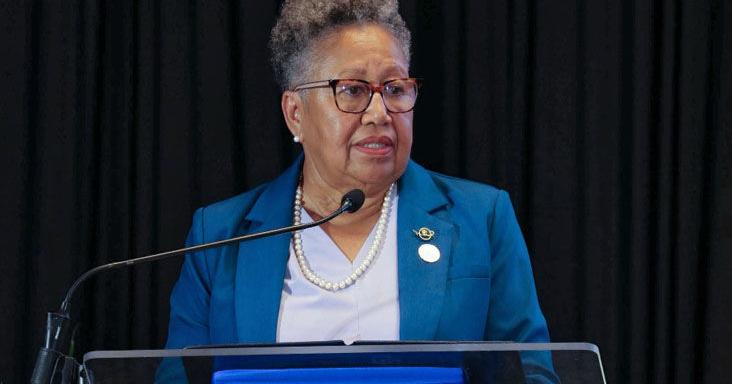
    During an opening panel discussion, former Saint Lucian Ambassador to CARICOM and the OECS Dr. June Soomer addressed one of the most persistent questions asked of reparations advocates: when, and if, the region will ever secure financial compensation for historical harms. In a response that shaped the entire conversation that followed, Dr. Soomer reframed the core purpose of the movement beyond direct financial payments. “It’s not about the money. Yes, the money is important, but it is about the return of our dignity, of our personhood, of who we are as a people,” she told the assembled delegates.

    Professor Sir Hilary Beckles, chair of the CARICOM Reparations Commission, officially presented the landmark manifesto to attendees, framing the moment as a critical turning point for the global reparations movement. After decades of building momentum and laying ideological groundwork, Beckles argued that the movement has now entered a phase where the priority must shift from raising awareness to delivering tangible reparatory outcomes. “This is our time, our duty, our responsibility to honour the legacy of all our ancestors who demanded justice,” he said, urging Caribbean nations to maintain unified pressure on former European colonial powers.

    The manifesto and accompanying 10-point plan lay out a holistic, multi-dimensional approach to reparatory justice that goes far beyond the financial compensation that dominates most public discussion of the issue. Each pillar of the plan is designed to address distinct, intergenerational harms rooted in slavery and colonial exploitation:

    1. **A Formal Apology**: The plan rejects vague statements of regret from former colonial powers, demanding explicit, formal public apologies that acknowledge full legal and moral responsibility for the crimes of enslavement and colonial subjugation.
    2. **Repatriation**: It codifies support for voluntary repatriation programs for descendants of enslaved Africans who wish to resettle in their ancestral homelands, including assistance with citizenship processing, housing, and cultural reintegration.
    3. **Indigenous Peoples Development Programme**: Recognizing that Indigenous Caribbean communities continue to suffer the lingering impacts of genocide, forced displacement, and mass land dispossession, the plan calls for targeted, community-led investment to improve Indigenous social and economic outcomes.
    4. **Cultural Institutions**: The commission advocates for increased investment in regional museums, research centers, and historical preservation projects that center Caribbean narratives of slavery and colonialism, arguing that truthful public storytelling is a foundational step in collective healing.
    5. **Public Health**: The plan draws a direct line between the structural inequities of slavery and the disproportionately high rates of chronic illnesses such as diabetes and hypertension among modern Caribbean populations, calling on former colonial powers to fund regional public health infrastructure, research, and care initiatives.
    6. **Illiteracy Eradication**: Citing the intentional underinvestment in education by colonial regimes that left many Caribbean societies with enduring high illiteracy rates, the plan calls for targeted support from former colonial powers to expand literacy programs and close longstanding educational gaps.
    7. **African Knowledge Programme**: To reverse centuries of forced erasure of African cultural identity, the plan proposes cross-continental educational exchanges, cultural partnerships, and people-to-people programs to help Caribbean descendants of enslaved Africans reconnect with their ancestral heritage.
    8. **Psychological Rehabilitation**: Acknowledging the intergenerational trauma inflicted by chattel slavery and colonial dehumanization, the plan calls for expanded community programming focused on emotional healing, collective identity-building, and public education about historical trauma.
    9. **Technology Transfer**: The plan argues that intentional colonial policies blocked the development of independent Caribbean scientific and industrial capacity, creating long-term economic dependency. To redress this, it calls for expanded access to modern technology, innovation support, and technical expertise from former colonial powers to drive inclusive regional growth.
    10. **Debt Cancellation and Financial Compensation**: The final pillar addresses the economic legacy of colonialism, calling for full cancellation of Caribbean sovereign debt held by former colonial powers, alongside targeted financial reparations to redress centuries of extracted wealth.

    As the 51st CARICOM Heads of Government meeting progresses, the new framework makes clear that the regional reparations movement is pursuing far more than a one-time financial settlement. From closing educational gaps to preserving cultural heritage, supporting Indigenous self-determination to building modern economic capacity, the plan frames reparatory justice as a holistic project that restores the dignity, self-determination, and opportunity stripped from generations of Caribbean people — a goal that money alone cannot achieve.
  • SG reappointment dispute headed to CCJ

    SG reappointment dispute headed to CCJ

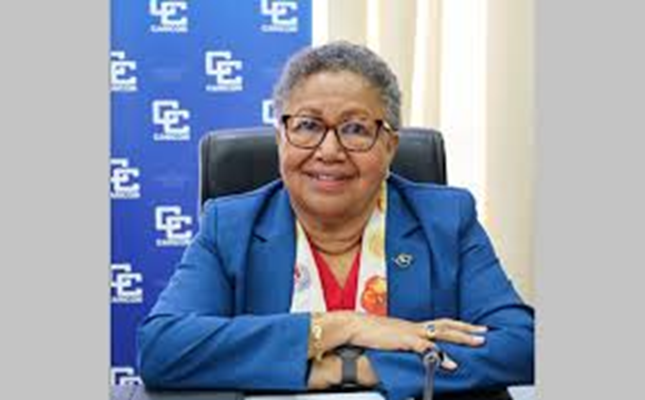
    A long-running regional disagreement over the reappointment of the Caribbean Community (CARICOM) Secretary-General is now headed for binding interpretive guidance from the Caribbean Court of Justice (CCJ), after regional leaders agreed to pursue the court’s advisory opinion to resolve the deadlock triggered by Trinidad and Tobago’s formal objection.

    The consensus decision was reached during a special retreat of CARICOM Heads of Government, held on July 6 on the sidelines of the bloc’s 51st Regular Meeting of the Conference of Heads of Government in Castries, St. Lucia.

    Per an official communiqué released by the 15-nation regional integration body, the government of Trinidad and Tobago has held firm to its opposition to the procedural framework used to advance the Secretary-General’s reappointment, and formally called for the CCJ to weigh in on the matter to clarify relevant treaty provisions. In response, CARICOM leaders voted to launch official proceedings under Article 212 of the Revised Treaty of Chaguaramas, the foundational legal document governing the regional bloc, to request the court’s non-binding but authoritative advisory opinion.

    Regional leaders emphasized that treaty interpretation is a core, founding mandate of the CCJ, making the court the appropriate venue to resolve this procedural dispute. Until the CCJ issues its advisory opinion and CARICOM member states complete their review of the ruling, the current interim status of the Secretary-General’s reappointment will remain unchanged, allowing the bloc’s day-to-day operations to continue without interruption.

    CARICOM leaders framed the decision to refer the matter to the CCJ as a deliberate, amicable pathway to resolving intra-regional disagreement. The approach prioritizes adherence to the rule of law within the bloc, rather than allowing the dispute to escalate and disrupt critical regional work.

    In addition to addressing the reappointment dispute, Heads of Government reaffirmed their commitment to a broader ongoing review of CARICOM’s governance structure, a process first authorized during the previous annual conference held in St. Kitts and Nevis. This review forms a central pillar of wider efforts to strengthen regional institutions, boost administrative efficiency, and improve the delivery of benefits to Caribbean populations across member states.

    Leaders explicitly stressed that turning to the CCJ for guidance does not indicate a lack of trust in the integrity of any member state or any individual involved in the reappointment process. Instead, they argued, the move underscores CARICOM’s long-standing commitment to principles of good governance and iterative institutional improvement. The bloc’s leaders also closed by reaffirming their shared commitment to CARICOM’s core mission and goals, pledging to continue collaborative action to advance regional interests even amid the multiple economic, social, and geopolitical challenges facing small island developing states across the Caribbean.

  • 2 Grenadians to lead Lions and Leos across English and Dutch-speaking Caribbean

    2 Grenadians to lead Lions and Leos across English and Dutch-speaking Caribbean

    On July 6, 2026, a landmark moment in volunteer service leadership unfolded across the Caribbean, as two native Grenadians officially stepped into the highest district-level leadership positions for Lions Clubs International District 60B — the regional body that oversees the organization’s operations in English- and Dutch-speaking Caribbean communities.

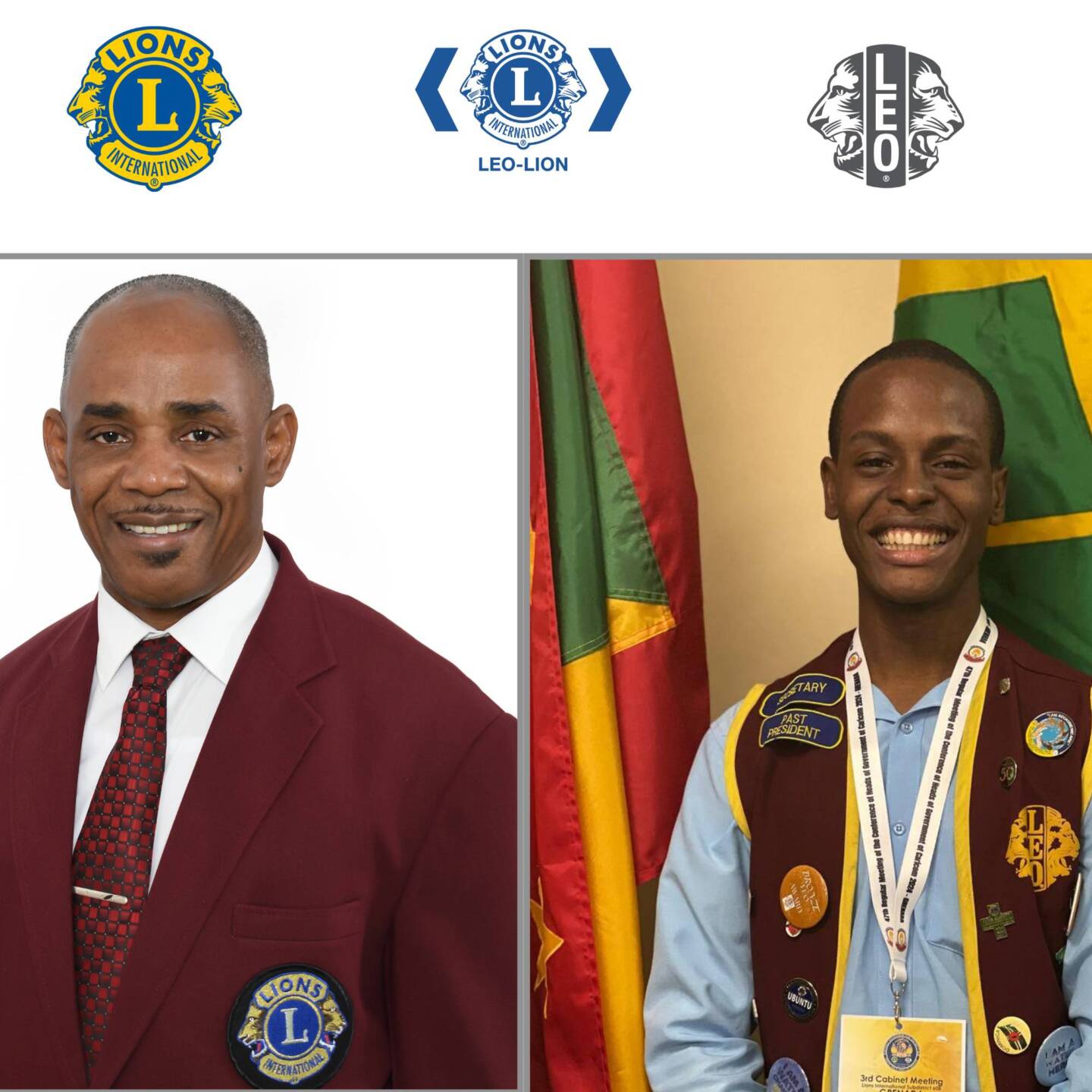
    Lion Hyacinth Jeremiah, MJF, has been elected to serve as District Governor for the 2026–2027 Lionistic year, while young leader Leo Raheem Smith will hold the post of Leo District President for the same term. This dual appointment marks the first time in the District 60B’s century-spanning history that two Grenadians will simultaneously lead both the core Lions movement and its youth-focused Leo program at the district level, an achievement widely celebrated as a defining milestone for the small Caribbean nation of Grenada.

    Both incoming leaders bring decades of combined experience, deep institutional knowledge, and unwavering dedication to community service to their new roles. Over their years of involvement with the organization, both have held a wide range of leadership positions at the club and district levels, consistently demonstrating their commitment to expanding community impact, nurturing emerging leaders, and growing the organization’s regional membership.

    A longstanding member of the Lions Club of St George’s, Lion Hyacinth Jeremiah has compiled an exceptional record of service to his local club, having served multiple terms as club president, in addition to stints as club treasurer and vice president. At the district level, he has held a string of key senior leadership roles, including Zone Chairperson, Region Chairperson, Third Vice District Governor, and Second Vice District Governor. His ascent to District Governor places him among the most distinguished leaders in the district’s history; he is only the third Grenadian ever to hold this prestigious post, and his election comes nearly 40 years after the last Grenadian, Anthony Joseph, completed his term as District Governor.

    For his part, Leo Raheem Smith, a member of the Leo Club of St George’s, has built an equally impressive track record of service and leadership within the youth-focused Leo movement. He has served two terms as his local club’s president, contributed extensively to multiple district-wide committees, and held regional leadership roles including Region Chairperson, most recently serving as Leo District Vice President. Upon taking office, he became only the second Grenadian to hold the title of Leo District President.

    Together, the two leaders will steer the work of thousands of Lions and Leos across the English- and Dutch-speaking Caribbean. Their administration has outlined five core priorities: strengthening local club operations, expanding community service initiatives, nurturing the next generation of volunteer leaders, building cross-sector advocacy and partnerships, and advancing Mission 1.5 — Lions Clubs International’s global membership growth initiative designed to expand the global impact of Lions and Leos by increasing membership numbers and opening up new service opportunities for participants.

    “As servant leaders, we recognise that leadership is not about position, but about service. We are committed to empowering our members, strengthening our clubs, and ensuring that Lions and Leos continue to make a meaningful difference in communities across the Caribbean,” the pair shared in a joint statement following their inauguration.

    As they prepare to kick off this historic year of service, both leaders have pledged to build on the long, proud legacy of the Lions and Leo movements, while inspiring a new generation of community changemakers across the Caribbean region.

    ### Background on Lions Clubs International and the Leo Club Programme
    Founded in 1917, Lions Clubs International stands as the world’s largest service club organization, boasting a global network of more than 1.4 million members across over 50,000 local clubs, operating in more than 200 countries and geographic regions. Lions members organize targeted service projects to address some of the world’s most pressing challenges, focusing on key issue areas including vision care, food insecurity, environmental protection, childhood cancer support, diabetes awareness and management, disaster preparedness and relief, and broad humanitarian outreach. The organization is unified by its iconic motto: “We Serve.”

    The Leo Club Programme is the official youth leadership and service initiative of Lions Clubs International, with the acronym “Leo” standing for Leadership, Experience, and Opportunity. Through local community service projects, leadership training programs, and peer fellowship, Leo clubs empower young people to grow into responsible, engaged leaders in their communities and across the globe. Today, the program counts more than 200,000 Leos in over 7,700 clubs across more than 150 countries and geographic regions.

  • PM Browne Joins CARICOM Leaders for Talks on Secretary General Dispute

    PM Browne Joins CARICOM Leaders for Talks on Secretary General Dispute

    The annual regional summit of the Caribbean Community (CARICOM) has kicked off with a contentious leadership issue at the top of its agenda, drawing heads of government from across the bloc. The core point of contention surrounds the reappointment of incumbent Secretary General Dr. Carla Barnett, with two major member states – Trinidad and Tobago and Jamaica – raising formal objections over the procedural process used to extend Dr. Barnett’s term.

    The disagreement has sparked vigorous debate among attending heads of government, forcing leaders to pivot toward a third-party clarification to resolve the impasse. After closed-door discussions, the bloc reached a consensus: it will initiate a formal request for an advisory opinion from the Caribbean Court of Justice (CCJ), the region’s highest judicial body, to clear up ambiguities in CARICOM’s governing regulations related to the appointment and extension of the Secretary General’s tenure. As the legal process moves forward, Dr. Barnett will continue to carry out her duties in office, ensuring the continuity of the community’s administrative work.

    Beyond the leadership dispute, the summit is tackling a broad slate of pressing regional concerns that impact all 15 member states. Attendees are deep in discussions over shifting global geopolitical dynamics, which have sent ripple effects through the Caribbean’s small open economies. Other key priorities include strengthening regional energy security, shoring up fragile food supply chains, and addressing a host of ongoing socioeconomic challenges that have hampered post-pandemic recovery across the bloc.

    Antigua and Barbuda Prime Minister Gaston Browne is among the leaders participating in the summit, joined by a four-person delegation representing the island nation. The delegation includes Dr. Clarence Henry, Antigua and Barbuda’s permanent ambassador to CARICOM, Kurt Williams, a senior foreign service officer, and Juray Roberts, a project development officer.

    As the summit draws to a close in the coming days, attendees are expected to finalize binding decisions on a range of core regional priorities. These outcomes will guide CARICOM’s collective work over the next year as the bloc coordinates to tackle cross-cutting economic, political, and public security challenges that no single member state can address alone.

  • St. Kitts breaks ground on Port Zante Cruise Terminal

    St. Kitts breaks ground on Port Zante Cruise Terminal

    On July 8, 2026, St. Kitts hosted a formal groundbreaking ceremony to mark the start of construction on a brand-new cruise terminal at Port Zante, launching a high-stakes infrastructure project that officials say will reshape the island nation’s position in the global cruise tourism market. The event drew a cross-section of key stakeholders, including senior government leaders, senior tourism industry executives, private sector partners, and regional media representatives, all gathering to celebrate the launch of a development designed to elevate St. Kitts and Nevis to the rank of the Caribbean’s premier cruise turnaround ports, with a long-term goal of offering full-scale homeport services.

    For decades, cruise tourism has served as one of the core pillars of St. Kitts’ national economy. Millions of cruise passengers have disembarked at Port Zante over the years, injecting consistent revenue into local small businesses, generating thousands of sustained employment opportunities for island residents, and driving broad-based national development across multiple sectors. The new Port Zante terminal represents a major next step in the destination’s tourism evolution, unlocking pathways to higher visitor spending, extended overnight stays that boost local hospitality revenue, expanded international airlift connections, and far-reaching economic benefits that extend beyond the tourism sector to touch communities across the islands.

    This infrastructure investment is also a cornerstone of the St. Kitts and Nevis government’s broader strategy to build long-term resilience in the cruise tourism sector, insulating the industry from global disruptions and positioning it for sustained growth. Marking a major milestone in the expansion of the country’s cruise services, St. Kitts is scheduled to launch turnaround operations for two P&O Cruises vessels starting in November 2027, a shift that will bring new passenger volumes and revenue to the islands.

    When construction is complete, the upgraded terminal will be outfitted with cutting-edge security screening and digital immigration processing systems, engineered to deliver seamless, fast-track processing for passengers both embarking and disembarking at the port. This development comes as St. Kitts already posts strong cruise passenger numbers, with more than 950,000 cruise travelers expected to visit the destination in the 2025-2026 season.

    In remarks delivered at the groundbreaking ceremony, St. Kitts and Nevis Prime Minister Hon. Dr. Terrance Drew emphasized that the terminal investment will generate widespread economic benefits that will reach every corner of the country’s tourism industry, regardless of role or sector. “It also advances our vision for a Sustainable Island State: a nation resilient enough, and diversified enough, to not just survive whatever comes our way, but to thrive,” Drew added.

    Once fully operational, the terminal is expected to raise the bar for overall visitor experiences, streamline day-to-day operational efficiencies for cruise lines, and solidify St. Kitts and Nevis’ standing as one of the Caribbean’s leading turnaround and homeport cruise destinations.

  • Suriname Business & Innovation Pavilion opent tijdens Kwaku Summer Festival 2026

    Suriname Business & Innovation Pavilion opent tijdens Kwaku Summer Festival 2026

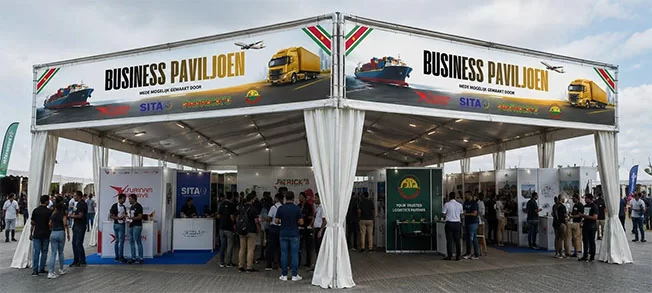
    A new milestone in Suriname’s global economic outreach is set to unfold this month, as the Suriname Business & Innovation Pavilion prepares for its official opening at the 2026 Kwaku Summer Festival on July 12. This collaborative initiative brings together Suriname’s public sector agencies, private enterprises and civil society organizations to showcase the nation’s commercial, innovative and tourism potential to a broad audience of Dutch and international attendees.

    Backed by a diverse coalition of key stakeholders, the project counts participation from Suriname’s Ministries of Transport, Communication and Tourism, as well as the Ministry of Social Affairs and Housing. Additional supporting partners include the Consulate General of the Republic of Suriname in Amsterdam, Surinam Airways, the Suriname Tourism Foundation, and SITA, creating a whole-of-economy framework for the pavilion’s programming.

    At its core, the initiative is designed to strengthen Suriname’s international positioning across four key pillars: entrepreneurship, innovation, tourism, and foreign investment. Visitors to the space will gain firsthand exposure to authentic Surinamese products, cutting-edge local ventures, underrated tourist destinations, and untapped business opportunities. To deepen connections, the pavilion will also host a series of industry presentations and networking sessions, aimed at expanding and solidifying economic cooperation between Suriname, the Netherlands, and the broader European market.

    A key highlight of the pavilion’s showcase is the lineup of products and services developed by local Surinamese entrepreneurs, which leverage the nation’s unique natural raw materials, traditional craftsmanship and modern innovative capacity. Both public and private sector organizations have contributed to building the pavilion’s event schedule, united by the shared goal of driving inclusive economic and tourism growth across Suriname.

    Project initiator Patrick Rechards, who developed the pavilion in close partnership with Consul General Roseline Daan, emphasized that the space will do more than showcase Suriname’s existing strengths. By increasing the nation’s international visibility, the initiative is poised to open entirely new market opportunities for Surinamese entrepreneurs looking to expand into Europe, Rechards noted.

    The official opening ceremony will be led by Ambassador Ricardo Panka, with veteran presenter Jörgen Raymann serving as master of ceremonies for the event and ongoing programming.

    Organizers frame the pavilion as more than a temporary festival attraction: it is designed to serve as a long-term sustainable platform that unites entrepreneurship, innovation, tourism, and cross-border collaboration. The initiative underscores Suriname’s broader ambition to establish itself as a leading competitive and attractive partner for international trade, investment, and sustainable economic development, while strengthening long-standing ties between Suriname, the Netherlands, and the European Union.

  • 8 guns found at station

    8 guns found at station

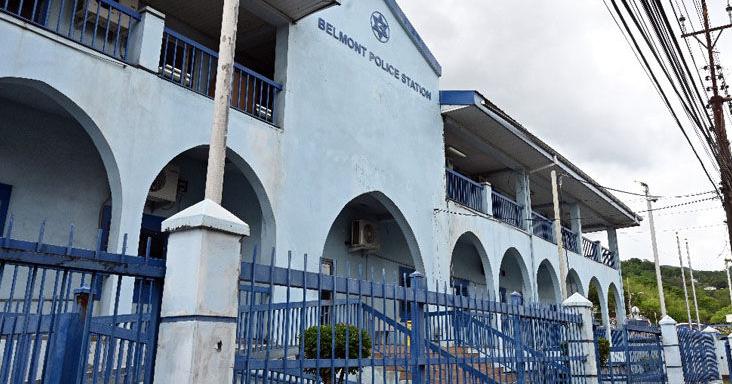
    An unexpected discovery of eight unaccounted-for firearms inside a locked office at Trinidad and Tobago’s Belmont Police Station has launched a formal internal investigation into how the weapons ended up in the unused space, according to senior law enforcement officials.

    Assistant Commissioner of Police Richard Smith shared details of the find with local outlet *Express*, confirming that investigators believe the recovered weapons are court exhibits connected to active criminal cases. The office where the firearms were located had a complicated history: it was originally used as an on-site gym for officers before being repurposed into storage and office space, and had remained locked for an extended period with no station personnel holding a working key.

    After an inquiry flagged the unaccessed room, investigators tracked down a key from a department inspector to gain entry, ultimately uncovering the eight firearms. Smith confirmed the investigation is now focused on tracing the origins of the weapons, identifying the complainants tied to the cases linked to the exhibits, and clarifying why the firearms were never properly logged and stored with the service’s official property keeper.

    The discovery also prompted widespread social media speculation about potential misconduct by officers, with multiple unconfirmed reports claiming a police sergeant had been taken into custody, that officers’ private residences had been searched, and that the implicated sergeant had fled the country. Smith has formally debunked all of these claims, noting that the officer referenced in the rumors is not a sergeant, and had pre-approved vacation leave and official permission from the Police Commissioner to travel outside of Trinidad and Tobago long before the search of the office was conducted. No officers are currently in custody as suspects, he added.

    Unnamed sources close to the investigation told *Express* that seven officers were brought in for questioning following the discovery of the firearms, but all have since been released pending further progress in the probe. Once the weapons were found, the Police Service’s Professional Standards Bureau (PSB) — the internal unit responsible for investigating alleged criminal activity and disciplinary breaches by officers — was notified immediately and dispatched a team to the Belmont station.

    During the investigation, the Port of Spain PSB unit executed a search of relevant office spaces for potential evidence, looking for a range of prohibited or unrecorded items including unregistered cash, narcotics, additional unreported arms and ammunition. Senior investigative sources explained that the core ongoing work is centered on confirming the provenance of the eight firearms: teams are working to determine whether they are exhibits from active court cases that were never formally lodged with the property department, or leftover evidence from closed cases that was never properly processed and turned over for storage.

    Smith emphasized that the probe remains open and transparent, and that if any evidence of rule-breaking or regulatory breaches by police personnel is uncovered, the department will take appropriate disciplinary or legal action without exception. “If by any stretch anything is found which goes against our regulations, then we will deal with it accordingly,” he stated.

  • Barnett row for CCJ

    Barnett row for CCJ

    A simmering regional dispute over the reappointment of Caricom’s Secretary-General has taken a formal turn, with the bloc’s heads of government agreeing to seek a legal ruling from the Caribbean Court of Justice (CCJ) to resolve the controversy, following persistent advocacy from Trinidad and Tobago Prime Minister Kamla Persad-Bissessar.

    After hours of closed-door deliberations at Monday’s annual retreat of Caricom leaders, the regional bloc announced it would officially initiate proceedings under Article 21(2) of the Revised Treaty of Chaguaramas to obtain an impartial advisory opinion on the contested reappointment of Dr. Carla Barnett. The move greenlights Persad-Bissessar’s proposal, which she had spent weeks building diplomatic support for ahead of the retreat.

    Trinidad and Tobago has stood firm in its objection to the process that led to Barnett’s reappointment, but Persad-Bissessar has repeatedly emphasized that the challenge is rooted in upholding legal standards and institutional governance, not a personal opposition to Barnett herself. Ahead of the retreat, the prime minister laid out her concerns in a detailed 22-page letter dated July 3, addressed to Caricom chair and St. Lucia Prime Minister Philip J Pierre, as well as every head of government and state across the bloc. In the correspondence, she detailed what she framed as major procedural and constitutional irregularities in the reappointment process, framing the CCJ referral as a principled step to clarify the rules rather than an attack on any individual or member state.

    In its official statement issued Tuesday, Caricom noted that the step aligns with the core purpose for which the CCJ was founded: to provide authoritative interpretation of the bloc’s founding treaty. “This is the very purpose for which the CCJ was created—to be a treaty interpretation body,” the statement read.

    Pending the court’s advisory opinion, Caricom has agreed to maintain the status quo, with no changes made to Barnett’s current position as Secretary-General. “The status quo with respect to the reappointment of the Secretary General shall remain unless and until the Community considers the said Advisory Opinion from the CCJ,” the agreement states.

    Leaders stressed that the agreed pathway is designed to resolve the impasse amicably, while allowing the bloc’s core work to continue without disruption. The approach preserves the Community’s ability to conduct its day-to-day affairs without prejudice to any side of the dispute, they added.

    The decision is also tied to a broader ongoing effort to strengthen Caricom’s institutional framework, a mandate approved at the previous Caricom conference held in St. Kitts and Nevis. Leaders underscored that the legal referral process does not call into question the integrity of any member state or individual involved. Instead, it reflects the bloc’s collective commitment to upholding the highest standards of good governance and continuous institutional improvement, the statement said.

    In closing, heads of government reaffirmed their unwavering commitment to regional unity, noting that the bloc faces a wide range of complex shared challenges in the current global context. “The Heads have reaffirmed their commitment to the ideals and objectives of the Community and will continue to move forward in unity to advance the interests of the Region during these difficult times,” the statement concluded.

  • THE GREAT ESCAPE

    THE GREAT ESCAPE

    Defending FIFA World Cup champions Argentina have written another stunning chapter of tournament folklore, pulling off one of the most dramatic late comebacks in modern World Cup history to defeat Egypt 3-2 and secure their place in the competition’s quarterfinals. Trailing by two goals with just 11 minutes of regular time remaining on the clock, Lionel Messi’s side refused to accept defeat, rallying to score three unanswered goals and snatch an improbable victory that has sent shockwaves through the tournament.

    For the vast majority of the round-of-16 clash in Kansas City, Missouri, it appeared the 39-year-old Messi’s sixth and potentially final World Cup campaign would end in heartbreak. Egypt got off to a dream start in the 15th minute, when defender Yasser Ibrahim beat Argentina center-back Lisandro Martinez to a looping cross from Marwan Attia, nodding the ball into the bottom corner of the net to open the scoring. Just moments later, Argentina was handed a golden chance to level the score after Egypt’s Haissem Hassan brought down Nicolas Tagliafico inside the penalty box, earning a penalty for the defending champions. Messi stepped up to the spot in front of a stunned crowd, but Egypt goalkeeper Mostafa Shobeir pulled off a spectacular save diving to his left — marking Messi’s second failed penalty attempt of the tournament, following a miss against Austria in the group stage. The first half would bring more frustration for Argentina: Messi saw a long-range effort strike the post, and Shobeir made another close-range stop to deny Julian Alvarez, keeping Egypt’s lead intact going into halftime.

    Egypt thought they had doubled their advantage early in the second half, when striker Mostafa Zico finished off a lightning counter-attack. However, video assistant referee review ruled out the goal after confirming a foul in the build-up to the score, cutting short Egypt’s celebrations. Zico would not be denied in the 67th minute, though, when he converted a second similar counter-attack chance to put Egypt up 2-0, leaving Argentina on the brink of elimination. At that point, Argentina’s hopes of becoming the first back-to-back World Cup winners since Brazil in 1958 and 1962 looked all but over.

    What followed was a display of resilience that has become synonymous with Argentina’s World Cup identity. Center-back Cristian Romero kickstarted the comeback in the 79th minute, nodding home a header from a set piece to cut Egypt’s lead to 2-1. Four minutes later, Messi found the back of the net to level the score. The goal marked Messi’s eighth of the 2026 tournament and extended his record as the World Cup’s all-time leading goalscorer to 21 career tournament goals. With the match tied at 2-1 and regulation time expiring, Enzo Fernandez scored the dramatic winner in stoppage time, completing one of the most remarkable comebacks in World Cup history.

    Following the final whistle, an emotional Messi was seen in tears, as Argentine players and staff celebrated the extraordinary win. Midfielder Fernandez, who scored the decisive goal, paid tribute to the team’s never-say-die attitude after the match. “We have a phenomenal group, a group that never gives up no matter the difficulties and adversity. We’re always together,” Fernandez said. “Four years have passed since Qatar, and we’ve come to enjoy another World Cup — and we want to win it again. That’s what we’re aiming for.”

    Striker Julian Alvarez echoed those sentiments, noting that Argentina’s national character drove the late fightback. “The heart of Argentinians is always something that pushes, that we keep going no matter what, that we give everything until the end. And honestly, with the score 2-0, we looked a bit beaten,” Alvarez said. “There was little time left, but we always manage to get something more by fighting until the end.”

    Argentina manager Lionel Scaloni said he was overwhelmed by his team’s performance, adding: “I’m so emotional. What a group of players, brother.”

    This is far from the first time Argentina has produced a heroic late comeback on the World Cup stage. The side claimed a 3-2 victory over West Germany in the 1986 final, and fought to a 3-3 draw before winning a penalty shootout against France to claim the 2022 Qatar World Cup title. Just one round prior in this tournament, Cape Verde pushed Argentina to the brink before the defending champions claimed a 3-2 extra-time win. Tuesday’s comeback against Egypt has already been ranked as even more dramatic than those prior iconic matches.

    Argentina will next face Switzerland in the tournament’s quarterfinals this Saturday in Kansas City.

  • Breaking: DPP dropping charges against Kollision Band members

    Breaking: DPP dropping charges against Kollision Band members

    BASSETERRE, St Kitts — In a breaking development announced Wednesday afternoon, the Office of the Director of Public Prosecutions (DPP) of St. Kitts and Nevis has officially ordered the discontinuation of all criminal proceedings against eight members of the popular local group Kollision Band, closing a high-profile case that ignited fierce public discussion across the federation within days of the charges being filed.

    The eight band members, including the group’s manager, were arrested and charged by the Royal Saint Christopher and Nevis Police Force earlier this month for violating a local regulatory law: performing music on a public roadway without obtaining the required official permission from police authorities. Details of the charges first spread rapidly across social media platforms on Tuesday, July 7, with the public quickly learning the performance in question was an informal jam session held during the funeral procession for a deceased member of the Kollision Band.

    In an official statement released through the Government Information Service, the DPP acknowledged the core mandate of the national police force: upholding public peace, order and safety across the federation, and enforcing existing legislation when violations occur. The statement emphasized that when individuals fail to comply with lawful police directives, law enforcement retains both the legal authority and formal responsibility to launch investigations and file criminal charges when warranted. It also reaffirmed that public compliance with national laws and lawful police instructions is a foundational pillar of a safe, orderly and peaceful society.

    At the same time, the DPP noted that its office exercises an independent constitutional function when deciding whether to move forward with criminal prosecutions. In every case under review, prosecutors must evaluate two critical factors: first, whether there is sufficient evidence to support a criminal conviction, and second, whether continuing the proceeding aligns with the broader public interest.

    After a comprehensive review of all facts and contextual circumstances surrounding the Kollision Band incident, the DPP concluded that proceeding with the prosecution would not serve the public good. Five key factors guided the final decision:
    First, the alleged offense is a low-level regulatory violation that did not involve violence, harm to civilians, or any credible threat to public safety. Second, the unique context of the incident—taking place during a funeral for a band member—required careful consideration of whether criminal prosecution was a proportionate response. Third, the federation’s judicial system operates with limited resources, so criminal trials should be reserved exclusively for cases where prosecution is necessary, proportionate, and clearly in the public interest. Fourth, the national government is moving forward with the Diversionary Caution Bill 2026, which will create formal, appropriate alternatives to prosecution for eligible minor offenses. Fifth, a criminal conviction carries lifelong consequences for individuals, including barriers to employment and other life opportunities, and such harm should only be imposed when explicitly justified by public interest.

    The DPP added that the case underscores the urgent need for the proposed Diversionary Caution Bill, which has been in development for two years. Once enacted into law, the legislation will establish a structured formal cautioning framework that offers an alternative path to prosecution for qualifying low-level offenses. The new system will be administered by the Ministry of Justice and Legal Affairs through a dedicated lead officer and an independent oversight committee, designed to guarantee fairness, consistent application of the framework, and public accountability for all decisions.

    In additional details released alongside the discontinuation order, the DPP confirmed that its office has held extensive consultations with legal counsel representing the Kollision Band members. As part of the resolution, the band has committed to creating original anti-gang music and participating in national public awareness campaigns focused on reducing gang violence across the federation.

    The DPP praised the band’s constructive response to the case, noting that its willingness to contribute meaningfully to the country’s ongoing anti-gang and anti-violence initiatives aligns with the core goals of the proposed diversionary justice framework.

    In closing, the office reaffirmed its longstanding commitment to the fair, independent and impartial administration of justice across St. Kitts and Nevis, stating that all future prosecutorial decisions will continue to be guided exclusively by law, evidence, and the public interest.