博客

  • Internal Order Groups: A valuable force for the smooth operation of Defense Zones

    Internal Order Groups: A valuable force for the smooth operation of Defense Zones

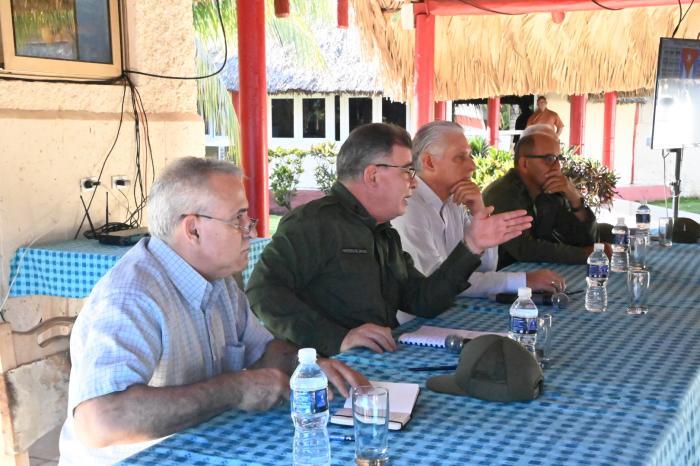
    Rooted in a long-held national principle that consistent peacetime preparation is the most reliable deterrent to conflict, Cuba’s national defense framework continues to refine its local organizational structures to better address both community needs and exceptional scenarios. On a Saturday morning in July 2026, Miguel Díaz-Canel Bermúdez, President of Cuba’s National Defense Council, First Secretary of the Central Committee of the Communist Party of Cuba, and President of the Republic, carried out an inspection visit to the Wajay Defense Zone, one of seven such operational zones located in Havana’s Boyeros municipality.

    During the visit, Díaz-Canel held in-depth discussions with local defense personnel and stakeholders, receiving on-the-ground accounts of daily operations and collaborating to map out strategies for unlocking the full structural and organizational potential of local defense zones. The visit came as Cuban defense officials continue to strengthen the integration of Internal Order Groups into the broader work of local Defense Zones, a structural adjustment designed to enhance cross-stakeholder collaboration, streamline operational frameworks, and speed up the flow of critical information to serve both community welfare and emergency preparedness.

    Unlike traditional defense structures that focus exclusively on wartime scenarios, Cuba’s Defense Zone model is integrated with local People’s Council governance, tying national defense preparedness directly to the daily quality of life for neighborhood residents. Officers on the ground emphasized during discussions that the full integration of Internal Order Groups into the Defense Zone structure enables more accurate problem identification, more effective utilization of on-the-ground data, more robust strategic analysis, and ultimately faster, more targeted implementation of solutions to challenges ranging from routine community issues to large-scale exceptional events.

    During closing remarks, Díaz-Canel highlighted the unique contributions that Internal Order Groups have made to refining the organizational methodologies of local defense zones, working alongside existing established structures. He described the integrated model as a coherent, detail-oriented, flexible, and resolute approach to national defense and community organization that aligns with Cuba’s specific national context. The Cuban leader also praised the model for its ability to strengthen social cohesion by bringing together formal defense forces and local community members, improving operational outcomes at the individual district level across the municipality.

    Díaz-Canel closed his remarks by thanking attendees for their detailed analysis and actionable input, reinforcing his conviction that deeper integration of working groups within Defense Zones will directly translate to better overall operational performance. He noted that Cuba already maintains abundant organizational resources for local defense, and that tailored, context-specific solutions can always be developed to match the unique characteristics of any given locality.

    The visit was also attended by three senior members of Cuba’s Political Bureau: Army Corps General Lázaro Alberto Álvarez Casas, Minister of the Interior; Army Corps General Roberto Legrá Sotolongo, First Deputy Minister of the Revolutionary Armed Forces and Chief of the General Staff; and Major General José Amado Ricardo Guerra, Secretary of the Council of Ministers.

  • Venezuela: Meer dan 3.500 doden na aardbevingen, gezondheidscrisis dreigt

    Venezuela: Meer dan 3.500 doden na aardbevingen, gezondheidscrisis dreigt

    One month after two powerful earthquakes struck Venezuela, the South American nation continues to struggle with the devastating aftermath of the disaster, with rising casualty figures and a growing looming public health emergency that has compounded existing suffering.

    As of the latest official update, the confirmed death toll from the June 24 quakes has climbed to 3,535. More than 16,700 people have been injured, and nearly 18,000 residents have lost their homes. Currently, over 12,800 displaced people are sheltering across 80 emergency evacuation centers distributed across the hardest-hit regions of Caracas and La Guaira. Preliminary assessments estimate more than 60,000 buildings across the affected areas have sustained damage or been completely destroyed.

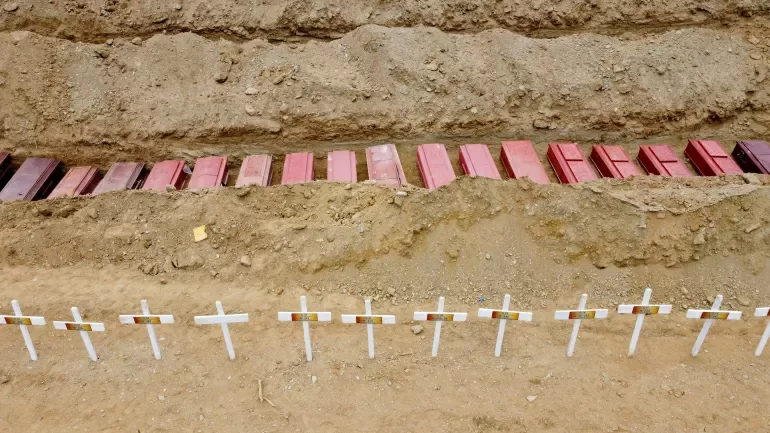
    On Monday, at La Esperanza Cemetery in the hard-hit coastal state of La Guaira, forensic teams and transport trucks were seen moving remains of earthquake victims, while excavators dug graves on a plot marked with white crosses ahead of mass burials.

    The situation remains deeply alarming, beyond the staggering loss of life and widespread physical destruction. A secondary public health crisis is now rapidly emerging, driven by dangerous living conditions for displaced survivors. Thousands of people are forced to sleep in overcrowded temporary shelters or even in open outdoor spaces, with limited to no access to clean drinking water, basic sanitation, or emergency medical care. These conditions have accelerated the spread of infectious diseases and left many traumatic injuries untreated.

    Eugenio Cova, head of trauma care at Caracas’ Hospital Jose Gregorio Hernandez, warned that infection is now the leading health risk for survivors who have been exposed to unsanitary conditions in the weeks since the disaster. “We are now in a phase where infections are complicating existing traumatic injuries,” Cova stated recently.

    On-ground reports confirm the rapid escalation of health concerns. Journalists covering the response have recorded a sharp increase in cases of diarrhea and other communicable diseases among people staying in emergency shelters. Local responders have issued urgent calls for additional sanitation infrastructure, including portable toilets, and better coordination to reduce overcrowding that fuels disease transmission.

    Public frustration has grown steadily over what many describe as a slow and inadequate response from the Venezuelan national government. Local volunteers and independent aid organizations have stepped into the gap to lead search operations for missing survivors and distribute critical relief supplies to affected communities.

    Carolina Jimenez, a researcher with the Washington Office on Latin America (WOLA), noted that the Venezuelan government has acted as a last-resort responder rather than a leader in the emergency effort. In hard-hit areas like Catia la Mar, located just north of Caracas, government presence remains almost non-existent, leaving local residents and independent humanitarian workers to manage the crisis on their own. Even amid overwhelming logistical and resource challenges, these volunteer teams have continued working tirelessly to search for survivors and deliver aid to vulnerable communities.

    The international community and global humanitarian organizations have issued renewed calls for increased support and urgent intervention to stop the worsening health crisis and address the sprawling unmet humanitarian need in Venezuela. For the nation’s affected population, the long, difficult road to recovery from one of the deadliest natural disasters in recent South American history is only just beginning.

  • American Airlines expands Miami-St. Kitts service with two daily winter flights  – WIC News

    American Airlines expands Miami-St. Kitts service with two daily winter flights – WIC News

    One of the largest carriers in the United States, American Airlines, is ramping up its seasonal service between Miami International Airport and St. Kitts, adding two daily non-stop flights to meet growing travel demand during the Caribbean peak winter tourism season. The expanded schedule will run from December 17, 2026, through April 5, 2027, with all flights operating through St. Kitts’ Robert L. Bradshaw International Airport, according to an official announcement from tourism authorities of St. Kitts and Nevis.

    Marsha Henderson, Minister of Tourism for the twin-island federation, highlighted that the additional daily flights come at a critical time for the country’s tourism sector, coinciding with the busiest travel window of the year and the annual St. Kitts and Nevis National Carnival, popularly known as Sugar Mas. The festival, a major cultural draw for the destination, consistently draws a sharp uptick in international visitor arrivals each winter. Tourism leaders project that the boosted airlift will not only accommodate this seasonal surge but also drive sustained growth in visitor numbers throughout the entire operating period.

    For travelers, the expanded service brings far greater flexibility when planning winter getaways to the Caribbean, eliminating common scheduling constraints that often limit trip planning. Unlike the previous limited service between the two locations, two daily departures will allow visitors to align travel plans with personal schedules, connecting seamlessly to American Airlines’ extensive global network through its Miami hub.

    St. Kitts has emerged as a top destination for travelers seeking high-end Caribbean vacations, blending untouched natural landscapes, rich cultural history, and world-class luxury accommodation. Visitors to the island can explore the UNESCO World Heritage Site Brimstone Hill Fortress National Park, relax on the powdery white sands of South Friars Bay and Cockleshell Beach, or take a short scenic ferry ride to the neighboring island of Nevis, creating a two-island vacation experience in a single trip. The destination’s luxury hospitality offerings include prominent properties such as the Park Hyatt St. Kitts Christophe Harbour, St. Kitts Marriott Beach Resort, and Belle Mont Sanctuary Resort, catering to a range of traveler preferences from family getaways to romantic retreats.

    Industry analysts note that the expanded service represents a vote of confidence from American Airlines in the long-term growth of St. Kitts and Nevis’ tourism sector, which has rebounded strongly post-pandemic and continues to see rising demand from North American travelers. For the local economy, which relies heavily on tourism as a core source of employment and government revenue, increased visitor arrivals are expected to generate widespread benefits across hotels, restaurants, local tour operators, and retail businesses throughout the peak season.

  • FLASH : Forced landing in Lafito

    FLASH : Forced landing in Lafito

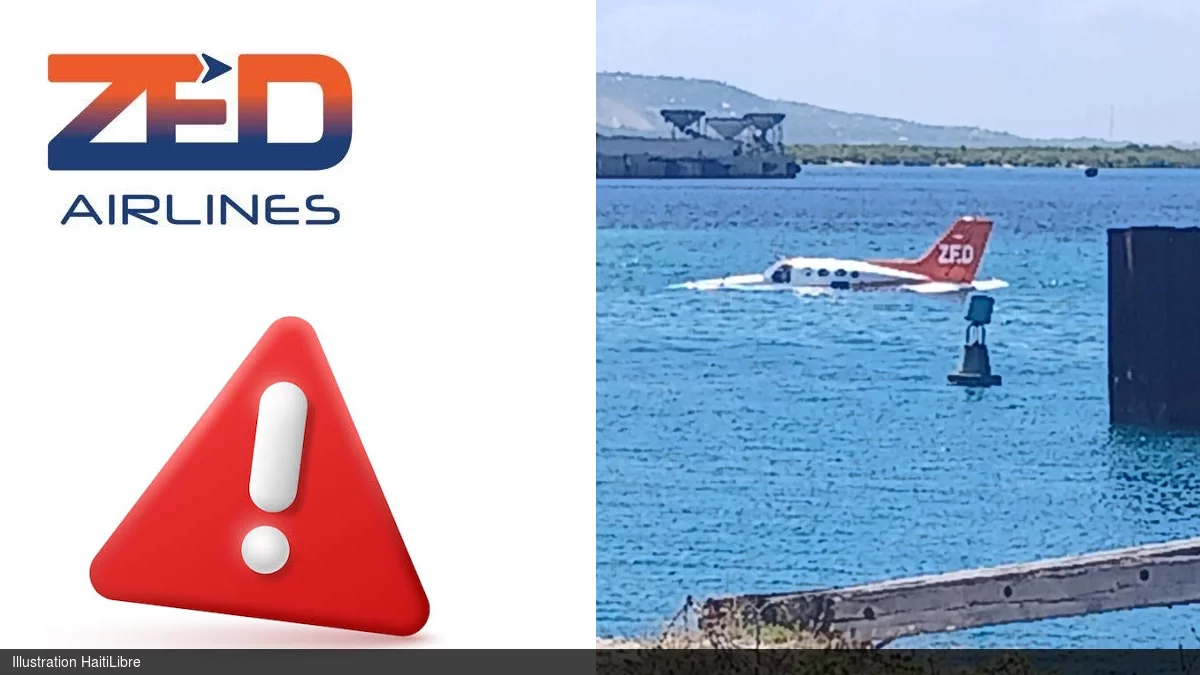
    On the morning of Wednesday, July 8, 2026, a domestic Zed Airlines flight traveling between two major Haitian cities was forced to execute an emergency landing in the Lafito area of the country, the carrier confirmed in an official statement released earlier the same day. The incident, which unfolded at approximately 11:00 a.m. local time, involved Flight 6502, a route connecting Cap-Haïtien in northern Haiti to the capital city of Port-au-Prince.

    The aircraft operating the service is identified as a Cessna 402B, registered under the number HI-1056. In line with standard aviation safety protocols, both national Haitian aviation authorities and the airline’s in-house technical investigation team will launch a full, comprehensive probe into the root causes of the emergency landing. Officials have emphasized that no stone will be left unturned in determining what led to the unplanned landing, to prevent similar incidents in the future.

    At the time of the incident, the small commercial aircraft carried only three people: one experienced pilot and two passengers. Early preliminary reports confirm no fatalities have resulted from the forced landing. All three occupants of the plane are currently receiving targeted medical care, and the airline has confirmed it is providing all required assistance, logistical support and care to those affected by the incident.

  • President verleent collectieve gratie; moord- en zedendelicten uitgesloten

    President verleent collectieve gratie; moord- en zedendelicten uitgesloten

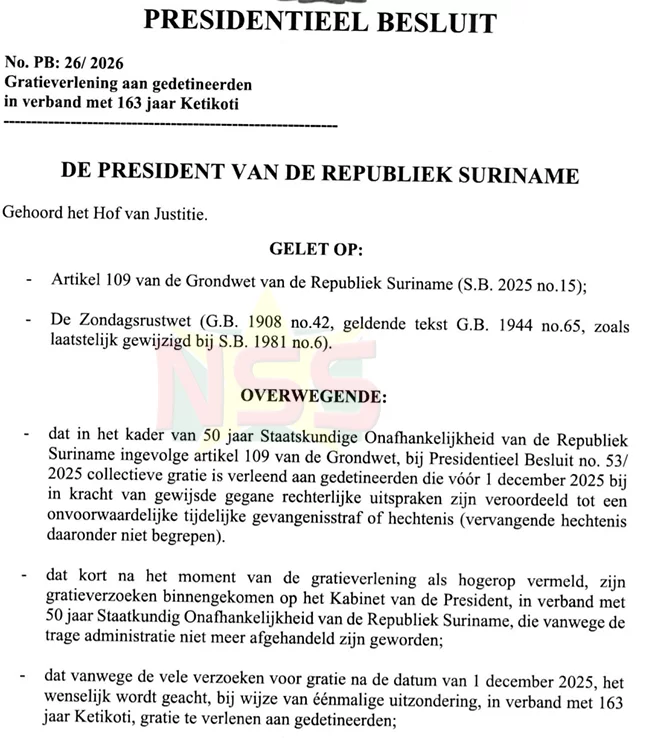
    On July 8, 2026, Suriname President Jennifer Simons announced a sweeping collective pardon program for a cohort of the country’s incarcerated population, tied to the national celebration of the 163rd anniversary of Keti Koti — the annual commemoration of the abolition of slavery in Suriname. The multi-tiered sentence reduction scheme applies only to offenders who meet a clear set of eligibility criteria, with severe violent and sexual crimes explicitly excluded from participation.

    According to the official presidential decree issued to formalize the measure, pardon eligibility is restricted to inmates who received a final, unappealable court conviction for an unconditional fixed-term prison sentence or custodial sentence between December 2, 2025 and July 1, 2026. The program’s sentence reductions are structured based on the length of an inmate’s remaining sentence, to create a proportional impact:
    – Inmates with fewer than two years left on their sentences will receive a 5-month sentence cut
    – Those with remaining sentences between two and five years qualify for a 9-month reduction
    – Inmates with five to fewer than eight years remaining will see their sentences cut by 15 months
    – Offenders with eight or more years left on their sentences are eligible for an 18-month reduction

    Even inmates serving life sentences are able to apply for the pardon under specific conditions. The program allows for life sentences to be converted to fixed-term sentences, with the new term length set at either 20 or 50 years depending on which penal code was applied to issue the original conviction.

    Notably, the presidential decree permanently bars any inmate convicted of murder or sexual offenses from accessing the pardon program. All other aspects of original court convictions remain fully in force outside of the approved sentence reductions, the document clarifies.

    The announcement notes that Suriname previously issued a similar collective pardon to mark the 50th anniversary of the country’s political independence. In the period following that earlier program, a large backlog of clemency requests has built up, with administrative delays preventing many applications from being processed in a timely manner, per the country’s government. This new pardon initiative aims to address that backlog while aligning with the national spirit of reflection and renewal tied to the Keti Koti holiday.

  • UWI to Host First International Undergraduate Student Leadership Conference

    UWI to Host First International Undergraduate Student Leadership Conference

    The University of the West Indies (UWI), the Caribbean’s leading higher education institution with a 75-year legacy of regional impact, is making history with the launch of its first-ever International Undergraduate Student Leadership Conference and Entrepreneurship Exhibition (IUSLCEE). Scheduled to take place from September 23 to 25, 2026, at the university’s Regional Headquarters in Jamaica, the landmark event is organized by UWI’s Office of the Board for Undergraduate Studies, with registrations and proposal submissions already open to undergraduate learners across the globe.

    Convened under the forward-looking theme “Today’s Students, Tomorrow’s World, Towards 2050: Imagining Roles, Rights, Responsibilities and Relationships,” the conference will adopt a flexible hybrid format to maximize global accessibility. In-person programming will take place at the Jamaica headquarters, while remote attendees from any country can join virtually, breaking down geographic barriers for participation. Unlike traditional academic gatherings that cater primarily to graduate and established researchers, IUSLCEE centers undergraduate voices, designed to nurture global citizenship, spark student-led advocacy, and build the next generation of collaborative leadership.

    The core mission of the event is to elevate student-driven research, accelerate early-stage innovation, and cultivate civic-minded leadership skills that prepare attendees for advanced graduate study and purpose-driven careers. Undergraduates from all academic disciplines are invited to share their original scholarly work, launch new entrepreneurial ventures, and contribute to collective conversations about shaping a sustainable, equitable global future by 2050. Beyond presentations and exhibitions, the conference offers unparalleled networking opportunities, connecting emerging young scholars and founders with industry leaders, experienced academic mentors, and like-minded peers from every region of the world, laying the groundwork for long-term international collaborations and professional growth.

    Organizers are currently accepting two types of submissions: research and scholarly paper abstracts, and proposals for the entrepreneurship exhibition. All submissions must include a 300-word maximum abstract that outlines the research topic, core objectives, methodological approach, and key preliminary findings, or for entrepreneurial proposals, a summary of the proposed venture. All work is expected to align with the conference’s overarching 2050-focused theme, with suggested topic areas including innovation for sustainable development, global digital transformation, social entrepreneurship, youth leadership development, and community-led impact initiatives. The final deadline for all submissions is September 3, 2026.

    Interested participants can complete conference registration via the official online portal at bit.ly/43FiYSX. For additional questions about registration, abstract submissions, or exhibition applications, inquiries can be directed to Ms. Karen Smith, Chair of the Conference Secretariat, through the official event website: https://www.uwi.edu/obus/iuslc.

    As context, The University of the West Indies has grown dramatically from its founding in 1948, when it launched as a London-affiliated university college in Jamaica with just 33 medical students. Today, it stands as an internationally ranked global institution with nearly 50,000 students spread across five physical campuses: Mona in Jamaica, St. Augustine in Trinidad and Tobago, Cave Hill in Barbados, Five Islands in Antigua and Barbuda, and a distributed Global Campus, plus collaborative research and education centers with partner institutions across North America, Latin America, Asia, Africa, and Europe.

    UWI offers more than 1,000 academic programs spanning certificate, diploma, undergraduate, and postgraduate levels across a wide range of fields, including arts and culture, food and agriculture, engineering, education, humanities, law, medical sciences, science and technology, social sciences, and sports. As the Caribbean’s leading higher education provider, it hosts the region’s largest concentration of research expertise, focused on solving pressing challenges facing the Caribbean and the broader global community.

    Since 2018, UWI has consistently been featured in the Times Higher Education (THE) annual global university rankings, confirming its status as one of the world’s top higher education institutions. It is the only English-speaking Caribbean university to be listed across four prestigious THE ranking categories: the World University Rankings, which evaluates more than 2,000 research-intensive universities globally; the Golden Age University Rankings, which recognizes institutions founded between 50 and 80 years ago; the Latin America and Caribbean Rankings; and the Impact Rankings, which assesses universities based on their contributions to the United Nations’ Sustainable Development Goals (SDGs). This global recognition supported the launch of UWI’s International School for Development Justice (ISDJ), a global online graduate business school that trains future leaders to advance equitable sustainable development. A long-standing SDG-engaged institution, UWI is consistently ranked among the top global universities for its work on the UN’s development goals. More information about the university is available at www.uwi.edu.

  • Early onset El Niño triggers slight downward adjustment to the total number of named storms

    Early onset El Niño triggers slight downward adjustment to the total number of named storms

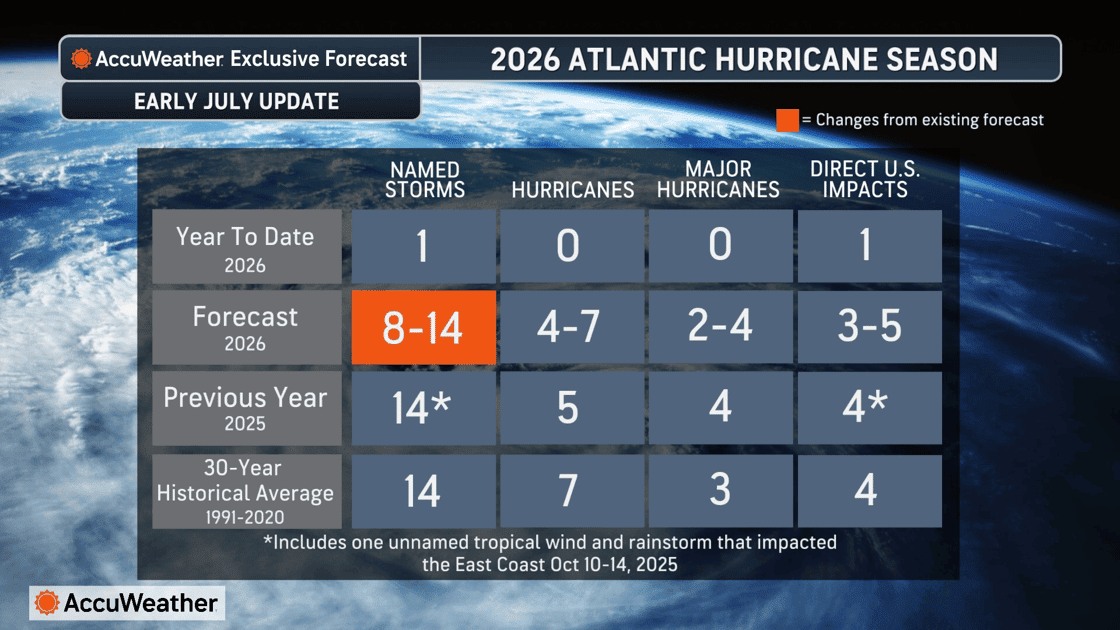
    Less than three months after releasing its initial 2026 Atlantic hurricane season outlook, AccuWeather has issued a downward revision to its projected number of named storms, driven by an earlier-than-expected arrival of El Niño and growing forecasts that a powerful Super El Niño will develop through the peak of the season. The leading weather forecasting firm now projects between 8 and 14 named storms will form across the Atlantic basin this year, a modest drop from the 11 to 16 storm range published in its initial March 2026 forecast.

    AccuWeather’s lead hurricane expert Alex DaSilva noted that El Niño conditions have long shaped the team’s projection that 2026 storm totals will land near or below the historical average. “The stronger the El Niño gets, the fewer named storms we’re likely to get,” DaSilva explained, pointing to the 2015 season, when a strong El Niño produced just 11 named storms – a number he says is the most likely outcome for 2026.

    Unlike many other forecasting outlets, this updated outlook includes clear projections for the most likely range of hurricanes, major hurricanes, and direct storm impacts on the United States, a distinction that Dan DePodwin, AccuWeather Vice President of Forecasting Operations, highlighted as part of the firm’s commitment to data-driven, continuous forecast refinement. AccuWeather originally released its preliminary seasonal outlook on March 25, weeks earlier than most competing forecasting groups.

    Unchanged from the initial March forecast are the projections for stronger storm activity: the firm still expects 4 to 7 hurricanes to develop, with 2 to 4 of those strengthening into Category 3 or higher major hurricanes. Between 3 and 5 storms are projected to make direct impacts on U.S. territory, with the northern and eastern Gulf Coast, the Carolinas, and the northeastern Caribbean continuing to face higher-than-average risk of rapid storm development.

    DaSilva emphasized a key preparedness risk for these high-risk regions: unlike slow-developing storms that track across the open Atlantic from the African coast, storms that form close to shore leave residents with far less time to put emergency plans into action. “That’s why we stress having a hurricane plan in place before the season starts, rather than waiting until a storm is already offshore,” he added.

    El Niño’s early June arrival is the core driver of this forecast adjustment. AccuWeather currently estimates a 70% probability that a Super El Niño will develop before the end of the hurricane season and persist into early 2027. The climate pattern drives increased wind shear across the entire Atlantic basin, a meteorological force that disrupts the organization and intensification of tropical systems, suppressing overall storm development.

    Beyond the overall storm count, the current seasonal pattern points to a lower-than-average risk of major tropical impacts for the central and lower Texas coast. Even so, warm sea surface temperatures close to the U.S. Atlantic and Gulf coasts create conditions that can fuel rapid intensification of storms that form near shore, shrinking the window for public warnings. Impacts of these storms are not limited to coastal zones either: flooding rainfall and tornadoes often extend hundreds of miles inland, meaning even residents far from the coast should monitor forecasts closely throughout the season.

    The 2026 season already saw its first named storm in mid-June, when Tropical Storm Arthur made landfall along the Texas coast on June 17, bringing catastrophic flooding across the Gulf region. Preliminary AccuWeather damage estimates put total economic losses from Arthur between $4 billion and $6 billion, with damage to private property and public infrastructure, widespread flight delays, extended power outages, and halted business operations all contributing to the massive economic toll. Some parts of the region recorded more than 20 inches of rain from the slow-moving storm.

    DePodwin noted that Arthur serves as a critical reminder that tropical systems do not need to reach hurricane strength to cause severe, costly, and even deadly damage. “Flooding, travel disruptions, power outages and business interruptions can quickly add up to billions of dollars in impacts for families, businesses and communities,” he said.

    To help the public better understand the full scope of potential storm impacts, AccuWeather uses its proprietary RealImpact™ Scale for hurricanes, which differs from the widely used Saffir-Simpson scale that categorizes storms solely by maximum wind speed. The RealImpact™ scale incorporates a broader set of factors that affect communities, including rainfall-driven flooding, storm surge, and projected economic damage, to provide a more complete picture of a storm’s potential threat to lives and livelihoods.

    AccuWeather meteorologists are available 24/7 to provide ongoing updates and expert analysis as conditions develop through the 2026 hurricane season. Media outlets can request interviews with AccuWeather experts or access updated forecast graphics for print and broadcast through the company’s media relations team, reachable during regular business hours or via the 24/7 AccuWeather Media Hotline at (814)-235-8710. AccuWeather forecasts reach a wide audience across the United States, appearing in 700 print newspapers, broadcasting on more than 400 radio stations and 100 television outlets, and reaching over 125 million viewers through the AccuWeather Network and AccuWeather NOW® on cable and streaming platforms.

  • Leisure : Did you know ? #39

    Leisure : Did you know ? #39

    Haiti’s leading digital media outlet HaitiLibre has announced a major expansion of its popular twice-weekly general knowledge quiz platform, Quiz.HaitiLibre, adding 31 new interactive trivia games in its July 2026 monthly update that pushes the platform’s total offerings to 180 games. The expansion, which maintains the platform’s core commitment to accessible, free knowledge, comes alongside the 39th installment of its beloved “Did You Know?” trivia segment, which this week shines a spotlight on a defining, little-discussed feature of Haiti’s iconic Gingerbread architecture: the pelmet.

    Often described as the visual calling card of the Gingerbread architectural style that is synonymous with Haitian cultural identity, pelmets are finely cut wooden borders fitted along the upper edges of building roofs. These intricate decorative elements have long drawn comparisons to delicate lace and whimsical fairytale friezes, lending each Gingerbread house a one-of-a-kind, lyrical aesthetic that sets Haitian architecture apart.

    Beyond their well-documented artistic appeal, pelmets also serve a critical practical purpose for Haiti’s tropical climate. Beyond catching sunlight and casting dynamic, shifting shadow patterns across building facades, they redirect rainwater away from vulnerable wooden exterior walls, preventing water infiltration and extending the lifespan of the structure. What makes each pelmet even more distinctive is that nearly every traditional Gingerbread home boasts a custom, hand-carved design crafted by highly skilled Haitian cabinetmakers, turning a functional building component into a canvas for cultural expression.

    This blend of structural utility and artistic craft cements pelmets as a perfect example of the intersection of art and engineering, elevating a simple roof element to a refined, nationally celebrated artistic tradition that is core to Haiti’s cultural heritage.

    Quiz.HaitiLibre, which launched as a standalone platform to make general knowledge accessible to audiences around the world, caters to all skill levels with three adjustable difficulty tiers: easy, intermediate, and hard. All games on the platform are available in both French and English, completely free to access, and require no user registration to play. Users can test their knowledge across a wide range of topics spanning Haitian history, culture, arts, global current events, and science, with expert-level trivia available for more experienced quiz enthusiasts seeking a greater challenge.

    Since its official launch, the platform has followed a regular monthly update schedule to add new content, ensuring returning visitors always have fresh trivia to explore. After the July 1 update, the platform now hosts 180 unique games, with more content scheduled to roll out in future monthly releases. The outlet encourages visitors to share the platform with friends and family, and submit feedback via a simple form available at the end of each game to help shape future updates.

  • Security Exercise to Restrict Access to Parts of St. John’s on Today and Friday

    Security Exercise to Restrict Access to Parts of St. John’s on Today and Friday

    A large-scale inter-agency security exercise is set to shut down access to multiple key zones in St. John’s for two consecutive days, Thursday and Friday, disrupting local travel and daily routines for thousands of residents and commuters. Local law enforcement and emergency management officials announced that the drill is designed to test the region’s response capabilities to potential public safety threats, with training activities concentrated in the downtown core and waterfront districts that see heavy daily foot and vehicle traffic.

    Starting from early Thursday morning, multiple streets, parking lots, and public access points in the affected areas will be closed to unauthorized individuals and vehicles. Officials have warned that delays are likely on major arterial roads leading into the city center, and have urged non-essential travelers to avoid the restricted zones entirely to prevent gridlock. Pedestrian access will also be limited in some parts of the waterfront park and downtown public squares, forcing local businesses to adjust their daily operations for the duration of the exercise.

    Organizers have emphasized that the exercise is a pre-planned, routine training event, and there is no active threat to public safety connected to the activity. The drill will bring together multiple agencies, including local police, fire departments, coastal security units, and emergency medical teams, to practice coordinated response protocols. This joint training is intended to cut down on response times and improve communication between different departments during real-world emergency scenarios.

    Local officials have issued a public apology for the inconvenience caused by the access restrictions, noting that the short-term disruption is a necessary trade-off for long-term public safety preparedness. They have also advised residents to check official city social media channels and transportation websites for real-time updates on road closures and route changes throughout the two-day exercise.

  • Department of Culture to Host Cultural Characters Workshop

    Department of Culture to Host Cultural Characters Workshop

    A new free public workshop focused on preserving centuries-old Caribbean traditional cultural performance practices is set to open its doors to participants this Wednesday afternoon, launched by the Cultural Department of the Ministry of Creative Industries. Conceived by Culture Director Khan Cordice, the multi-week training program will immerse attendees in a range of iconic folk performance skills that form the backbone of regional Carnival celebrations.

    According to Events Coordinator Gilbert Laudat, the curriculum covers hands-on training in core disciplines including stilt walking—locally known as the art of the Moko Jumbie, conch shell blowing, and the performance techniques required to portray traditional figures such as the Caribbean John Bull clown and whip cracker. Beyond performance skills, participants will also learn the history behind these cultural roles, as well as the craft of building authentic costumes and assembling all the elements that bring these traditional characters to life.

    The core mission of the initiative, Laudat explained, is to address a growing gap in intergenerational knowledge transmission by creating accessible opportunities for community members, especially young people, to build deep, practical expertise in these fading folk traditions. By lowering barriers to entry through free, public training, organizers hope to reverse the trend of declining participation and secure the long-term survival of these defining elements of local cultural heritage.

    Registration for the program is open to all interested participants on-site at the Environment Division. Daily sessions will run from 3:30 p.m. to 7:00 p.m., with the entire workshop scheduled to conclude on July 24, 2026, after opening on July 8. Following the completion of the initial training cycle, the Cultural Development Division is aiming to see a noticeable increase in the representation of these traditional cultural characters in the annual Carnival Monday parade, bringing heritage back to the center of the island’s biggest celebration.

    Laudat added that the training initiative will not end with the initial workshop cycle. Long-term plans include ongoing, regular training opportunities for the general public, with an expansion to schools across the island already in the works. After the 2026 Carnival concludes, the program will pause briefly before resuming to add training focused on traditional Christmas cultural characters, extending the initiative’s impact beyond Carnival season to year-round heritage preservation.