博客

  • G12 presents proposals to modernize Dominican Republic’s transportation system

    G12 presents proposals to modernize Dominican Republic’s transportation system

    In a high-stakes meeting with the newly appointed director of the Dominican Republic’s national transportation agency Juan Manuel Méndez, the G12 Group — one of the most influential collective organizations in the country’s transportation sector — laid out an ambitious multi-point policy package designed to modernize the nation’s public transit network, cut through chronic urban congestion, and dramatically lower national traffic fatality rates.

    William Pérez Figuereo, founding leader of G12 and president of the National Central of Unified Transporters (CNTU), formally presented the full slate of recommendations on the organization’s behalf. The proposals touch nearly every corner of Dominican mobility and road safety, ranging from systemic operational adjustments to long-term sustainability goals. Key priorities laid out by the group include implementing staggered start and end times for both workplaces and educational institutions to spread peak-hour demand across the day, expanding dedicated public transportation corridors to speed up commute times, integrating mandatory road safety training programs directly within transportation worker unions, accelerating the transition to zero-emission electric transit vehicles, and rolling out a nationwide Zero Scrap Plan to phase out aging, unsafe road vehicles.

    Beyond core urban adjustments, G12 has put forward targeted initiatives to address underserved communities and gaps in existing transit coverage. The organization calls for strengthened public transit service on overnight routes, expanded state-managed transportation services for K-12 students, and the introduction of a new “school safari” program designed specifically to connect students living in isolated mountain communities to their campuses, a longstanding unmet need in many rural regions of the country. G12 is also pushing for public awareness and incentive programs to encourage daily commuters to leave private passenger vehicles at home and shift to shared public transit options to cut down on congestion and emissions.

    To tackle the country’s persistent road safety crisis, G12 is calling for coordinated cross-agency action to drive down annual traffic deaths, demanding that the Dominican traffic enforcement agency DIGESETT and the national transit regulatory institute INTRANT expand their operational presence to all 157 of the country’s municipalities. This universal presence would strengthen regulatory enforcement, expand community-focused road safety education, and improve traffic management capacity in every region of the nation, closing gaps that have left rural and lower-income communities underserved.

    One of the most impactful proposed regulatory changes targets heavy freight transportation, which contributes disproportionately to urban congestion and infrastructure wear. G12 recommends implementing targeted restrictions that ban large trucks and other heavy commercial vehicles from core metropolitan area main roads during all peak and midday hours between 6:00 a.m. and 8:00 p.m., redirecting these vehicles to the use of outer ring roads to keep central artery traffic flowing smoothly for commuters and public transit.

    Closing out the presentation, Pérez Figuereo reaffirmed G12’s longstanding commitment to collaborative problem-solving with national and local transportation authorities, emphasizing that the group’s core goal is to advance shared solutions that cut accident rates, improve daily mobility for all Dominicans, and build a public transportation system that is more efficient, better organized, and far safer for road users of all kinds. The submission of these detailed proposals underscores G12’s stated intention to maintain an active, influential role in shaping the policies and development initiatives that will drive the transformation of the Dominican Republic’s transportation sector in the coming years.
  • Vendors protest over Cabbage Beach fence

    Vendors protest over Cabbage Beach fence

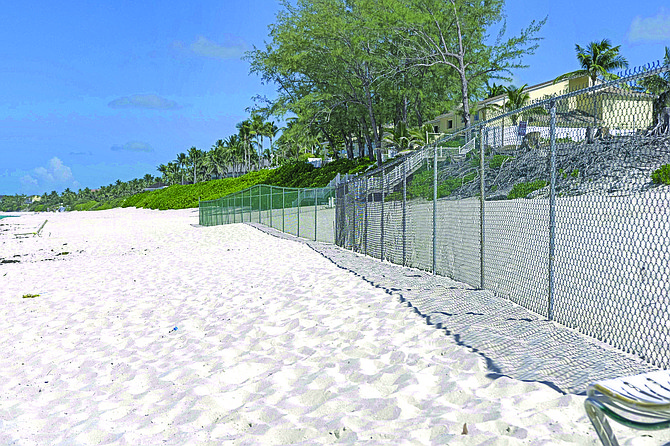
    A controversial fence that was abruptly constructed across a section of Paradise Island’s Cabbage Beach earlier this week is set to be removed, after long-time local vendors launched a public outcry warning the structure would destroy the tourism-dependent small businesses that support hundreds of Bahamian families.

    The unexpected construction caught vendors completely off guard. For decades, these small business operators have served tourists at the iconic public beach, earning income to pay mortgages, cover school tuition, support household costs and raise their families. When vendors arrived for work the morning the construction began, they found crews already erecting the barrier with no prior notice of how their operations would be able to continue moving forward.

    According to the Bahamas Ministry of Tourism, the developer’s unilateral decision to move forward with the fence without completing required stakeholder consultations was “regrettable”. Officials confirmed that the Department of Environmental Planning and Protection (DEPP) had already stepped in to intervene after the vendors raised their objections. Prior agreements between the ministry and the developer called for a joint site walkthrough to assess potential impacts on local vendors before any construction work got underway – a step the developer skipped entirely when erecting the fence.

    Vendors say the barrier would have cut off critical working space, leaving too little room between the fence and the shoreline for their stalls, beach rental equipment, umbrellas, customer seating and room to move inland to avoid high tides. Ishmael Sutherland, a 50-year-old vendor who has operated at Cabbage Beach for 32 years, explained that the fence would have entirely put him and other operators out of work. He noted that vendors regularly shift their equipment further inland during high tide to avoid storm damage, and the fence would have blocked access to that necessary safe space.

    The fence was installed in conjunction with a proposed Four Seasons resort development on adjacent land acquired by the project. Sutherland said vendors had previously received formal assurances that their operations would be accommodated throughout construction and beyond, with commitments that vendors wanting to stay would retain beach access and those who relocated temporarily would receive compensation for any lost revenue during construction. Even with that promise, the unannounced fence construction left vendors fearing their livelihoods were at imminent risk.

    Twenty-two licensed vendors currently operate at Cabbage Beach, many of whom hire additional local staff, meaning any disruption to their businesses would ripple out to impact dozens of additional workers and their families. For Varnell Tamika Williams, a 49-year-old vendor who has worked on the beach since childhood and raised three daughters on income from her business, the dispute is about more than just a fence – it is about protecting the livelihoods of generations of Bahamians who built up the beach’s reputation as a top tourist destination.

    Williams emphasized that all Cabbage Beach vendors operate legally: they hold active business licenses, pay national insurance contributions, maintain required health certifications and carry official Ministry of Tourism identification, meaning they operate as legitimate, tax-contributing businesses just like any other formal employer. She criticized the complete lack of advance consultation, noting that even regular ministry contacts could not explain the construction when vendors first reached out. Even with the upcoming fence removal, Williams said vendors’ core concerns about future disruptions from the resort construction remain unresolved. She called for the developer to commit to a temporary operating zone for vendors during construction, provide assistance relocating stalls, and give formal, written guarantees that vendors can return to their spots once the hotel project is complete.

    Maurice Major, a third-generation vendor who has worked the beach for 31 years after inheriting his late mother’s business, one of the first established at Cabbage Beach, called for direct intervention from Prime Minister Philip “Brave” Davis and Tourism Minister Glenys Hanna-Martin. He stressed that while the developer owns the adjacent inland land, Cabbage Beach remains public property, and no private development can restrict public access or displace long-time local operators. “They can do whatever they want to do up there [on their own land], but they can’t own our beach,” Major said.

    Local elected official Lincoln Deal, Member of Parliament for Free Town, where Cabbage Beach is located, has publicly backed the vendors, saying they deserve full consultation and fair treatment in any decisions that impact their ability to earn a living. “Cabbage Beach is in Free Town, but it is also one of our country’s most iconic public beaches,” Deal noted. “We must protect public access, respect Bahamian livelihoods and ensure that development never comes at the expense of our people.”

    Even water sports operators, including jet-ski provider Auderly Smith, who has worked the beach since 2007, warned the restricted shoreline access would also hurt their businesses, as reduced space would limit their ability to launch and retrieve equipment.

    After the intervention, the Ministry of Tourism announced that once the fence is removed, multi-stakeholder discussions will resume between the developer, DEPP, affected vendors and ministry officials to map out an acceptable path forward for the development. The ministry made clear it has “zero tolerance for the economic displacement of Bahamians whose livelihoods depend on participation in the tourism economy”, and reminded the developer of its existing legal and contractual commitments to compensate any affected vendors and ensure local people benefit from the economic activity generated by the new resort.

    The ministry emphasized that private development and inclusive local economic participation do not need to be opposing goals. “Environmental protection and economic opportunity can and must coexist,” the ministry said in a statement. “The way forward requires consultation, cooperation and a solution that protects the beach while safeguarding the livelihoods of Bahamians.”

  • Tropical Storm Dolly weakens into active tropical wave

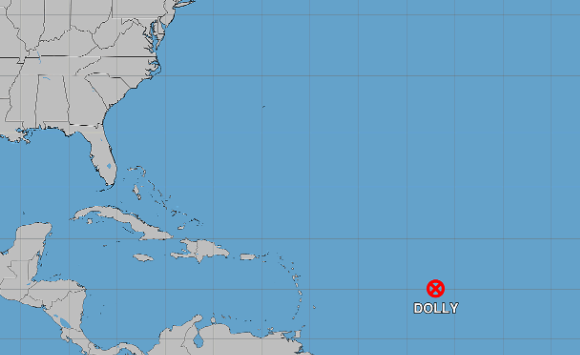
    Tropical Storm Dolly weakens into active tropical wave

    The Dominican Institute of Meteorology (Indomet) has announced that Tropical Storm Dolly has lost the defining structural characteristics of a tropical storm, weakening into an active tropical wave as it traverses the Atlantic Ocean.

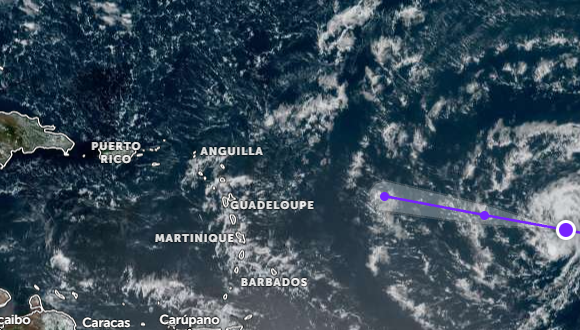
    As of the latest meteorological update, the weather system is positioned roughly 1,600 kilometers east of the Lesser Antilles, and it is advancing quickly toward the west at a forward speed of around 41 kilometers per hour. While scattered convection associated with the decaying system continues to generate maximum sustained wind speeds reaching up to 65 kilometers per hour in some pockets, forecasters project that these wind speeds will continue to diminish gradually over the coming days.

    Despite the system’s weakening trend, Indomet has emphasized that residents across potentially affected regions should remain vigilant, keep up to date with evolving conditions, and closely follow official meteorological updates as the tropical wave continues its westward journey across the Atlantic basin.

  • Cacao Trace strengthens sustainable cocoa production in the Dominican Republic

    Cacao Trace strengthens sustainable cocoa production in the Dominican Republic

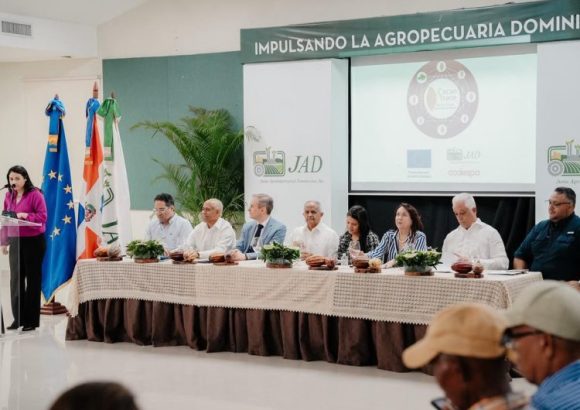
    After two and a half years of targeted implementation, the Cacao Trace Project — a sustainability-focused initiative funded by the European Union and jointly led by the Dominican Agribusiness Board (JAD) and the Codespa Foundation — has officially concluded, delivering transformative results for small-scale cocoa producers in the Monte Plata region.

    First launched in February 2024, the project was designed from its inception to address rising global market expectations for ethically sourced, fully traceable, and deforestation-free cocoa. From the start, it exceeded all core participation targets: organizers initially set out to train 700 producers across seven local producer organizations, but ultimately extended capacity-building support to more than 740 producers spread across 19 separate groups.

    The comprehensive training curriculum covered a wide range of critical skills tailored to both producer success and global regulatory compliance. Participants learned advanced sustainable cultivation methods, industry-leading good agricultural practices, end-to-end supply chain traceability protocols, modern marketing strategies, small enterprise financial management, and the specific requirements of EU Regulation 2023/1115 — the new European rule mandating deforestation-free imports of key agricultural commodities.

    Beyond direct training, the initiative delivered a series of tangible, long-lasting achievements for the Dominican cocoa sector. Four local producer organizations successfully completed full legal formalization, opening up new access to formal markets and funding. The project also drove a notable increase in participation from women and young people, building a more inclusive and resilient cocoa community. Beneficiary producers gained valuable opportunities to showcase their products at agricultural fairs, participate in cross-sector technical exchanges, and connect with buyers at both national and international industry events.

    To modernize traceability systems across the cocoa value chain, the project developed an innovative blockchain-powered digital platform. This tool enhances transparency at every stage of production and distribution, allowing buyers and regulators to verify the origin and sustainability credentials of Dominican cocoa from farm to export.

    One of the most significant institutional outcomes of the collaboration is the development of the Dominican Republic’s first national compliance protocol for EU Regulation 2023/1115, created through coordinated work between producers, export companies, government agencies, private sector actors, and international cooperation partners. The protocol was formally enshrined by the Dominican Ministry of Agriculture via Resolution 2026-38, and officially presented to the national cocoa sector on June 26. It now serves as a standardized national framework to help all Dominican cocoa producers align their operations with European market entry requirements.

    Leaders from JAD and Codespa have publicly extended gratitude to all participating institutions, private companies, field technicians, and producer organizations for their collaborative work, as well as to the European Union for its financial investment and ongoing institutional support for the initiative.

    As the project wraps up, it leaves behind a strengthened national cocoa sector: upgraded producer capacities, expanded cross-sector partnerships, cutting-edge traceability infrastructure, and a clear regulatory pathway to meet global sustainability demands. These gains position Dominican cocoa as a more competitive, transparent, and sustainable player in the global marketplace.

  • Este Festival 2026 opens in Higüey with celebration of eastern Dominican culture

    Este Festival 2026 opens in Higüey with celebration of eastern Dominican culture

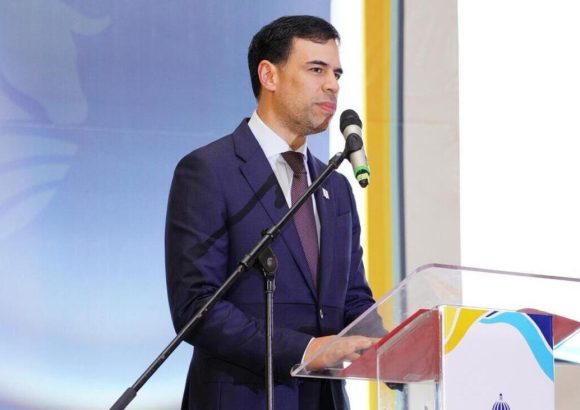
    HIGÜEY, DOMINICAN REPUBLIC – A new landmark celebration of eastern Dominican cultural identity officially kicked off this week, as Culture Minister Roberto Ángel Salcedo presided over the inauguration of Este Festival 2026. The three-day event, running from August 28 to 30, is hosted at the Higüey campus of the Autonomous University of Santo Domingo (UASD), marking a key step forward in the country’s push for decentralized cultural engagement.

    Unlike many national cultural events concentrated in capital urban centers, Este Festival 2026 was designed specifically to center the unique creative and historical traditions of the Dominican Republic’s six eastern provinces: El Seibo, Hato Mayor, La Altagracia, La Romana, Monte Plata, and San Pedro de Macorís. Across the weekend, attendees will have opportunities to explore everything from traditional craftwork to contemporary artistic performances, alongside a curated showcase of the region’s signature local gastronomy.

    Speaking at the opening ceremony, Minister Salcedo emphasized the event’s core mission: to advance cultural decentralization by creating a dedicated public space where local communities can amplify their own diverse cultural expressions, rather than relying on capital-centric national platforms. The festival fills a longstanding gap in regional cultural programming, connecting emerging and established local artists directly with audiences from across the country.

    In a gesture of recognition for his ongoing contributions to advancing and elevating Dominican national culture, the Higüey municipal government presented Salcedo with the official Coat of Arms of Villa Salvaleón de Higüey during the ceremony.

    The opening day’s program kicked off with a moving performance by the Sueño Musical Children’s Choir, followed by a comprehensive preview of the full slate of activities planned across the festival’s three days. This year’s edition holds special meaning, as it is dedicated to Genaro “Cayuco” Reyes, a beloved local artisan who has shaped the region’s cultural craft legacy for decades.

    Bringing together working artists, leading cultural organizations, government authorities, and grassroots community representatives, Este Festival 2026 aims to not only celebrate the eastern region’s rich cultural diversity but also deepen the vital ties between local communities, their cultural heritage, and their home territory.

  • INDOMET tracks Tropical Storm Dolly while showers affect parts of Dominican Republic

    INDOMET tracks Tropical Storm Dolly while showers affect parts of Dominican Republic

    Weather officials in the Dominican Republic have issued an updated regional forecast, noting that a passing tropical wave will bring only minimal disruptions to most of the country even as it drifts toward western neighboring Haiti. While the system itself is moving away, residual atmospheric moisture and persistent regional wind patterns will continue to generate precipitation across multiple Dominican provinces through the day, according to the Dominican Institute of Meteorology (INDOMET).

    Early-day showers are projected to hit a swath of coastal and inland territories, including Samaná, María Trinidad Sánchez, Duarte, Hato Mayor, El Seibo, San Cristóbal, San José de Ocoa, Barahona, Azua, and Pedernales, with additional scattered precipitation expected in adjacent zones. As temperatures rise through the afternoon, the weather pattern will shift to bring concentrated, localized heavy downpours and a heightened risk of thunderstorms to central and southwestern regions, namely Monte Plata, Sánchez Ramírez, La Vega, San Juan, Santiago Rodríguez, and Elías Piña.

    In a separate update on active Atlantic weather systems, INDOMET confirmed it is continuing close surveillance of Tropical Storm Dolly, which is currently churning across the open Atlantic Ocean. As of the latest advisory, the storm sits roughly 1,840 kilometers east of Martinique, part of the Lesser Antilles island chain, and has registered maximum sustained wind speeds of 65 kilometers per hour. Dolly is currently tracking westward across the ocean at a forward speed of 39 kilometers per hour. Meteorological authorities have urged local residents and visitors to keep up to date with official forecast bulletins as the storm system evolves during its Atlantic traverse.

  • UN Security Council to hold emergency meeting on Haiti after Kenscoff massacre

    UN Security Council to hold emergency meeting on Haiti after Kenscoff massacre

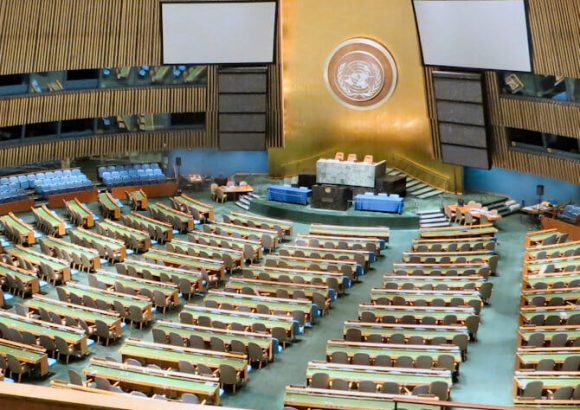
    In the wake of a brutal gang massacre that claimed 47 lives and sent thousands fleeing their homes, the United Nations Security Council has scheduled an emergency open meeting this Friday to address Haiti’s spiraling security and humanitarian catastrophe. Scheduled to convene at 3:00 p.m. Eastern Time, the gathering will bring global diplomats together to review rapidly unfolding developments on the ground and weigh coordinated intervention options to curb out-of-control gang violence, as the Caribbean nation braces for long-delayed general elections in the coming months.

    The horrific attack that triggered the international response unfolded in the pre-dawn hours of Monday in Kenscoff, a quiet mountainous community located just southeast of Haiti’s capital, Port-au-Prince. Armed gang members stormed a camp for internally displaced persons that was established on the grounds of a local church, leaving a trail of death and destruction in their wake. Official UN casualty reports confirm 47 civilians were killed in the assault, dozens more were abducted and held hostage, and more than 2,600 local residents and camp inhabitants have been displaced to safer areas outside the community.

    The massacre has sparked sharp public criticism of Haitian authorities over the chronic lack of police presence in high-risk outlying areas like Kenscoff, prompting the Haitian National Police to launch an urgent full investigation into the attack. Top government officials have vowed a robust, decisive response to the violence and confirmed that active operations are already underway to reestablish stable security in the affected region.

    Acting Director General of the Haitian National Police Vladimir Paraison moved quickly to defend the force’s operational capacity, stating that key security checkpoints across the country remain fully functional, staffed by trained officers and supported by armored military vehicles. Meanwhile, Haiti’s Minister of Justice and Public Security Patrick Pélissier has assembled an emergency strategic working group to coordinate a whole-of-government response to the deepening security crisis.

    International leaders have swiftly condemned the deadly attack, with UN Secretary-General António Guterres and the Organization of American States issuing formal statements denouncing the violence. The massacre has amplified growing international pressure on global bodies to adopt more aggressive, concrete measures to reverse the catastrophic security collapse that has gripped Haiti for months, ahead of the country’s planned democratic transition.

  • ONE launches National Statistical Plan 2025-2028 to strengthen official data

    ONE launches National Statistical Plan 2025-2028 to strengthen official data

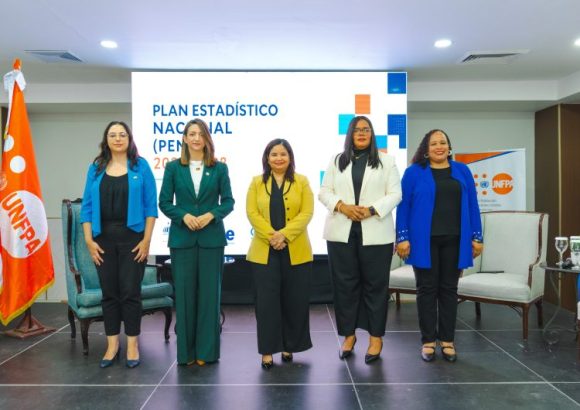
    In a formal ceremony held in Santo Domingo, the Dominican Republic’s National Statistics Office (ONE) has unveiled its third iteration of the National Statistical Plan (PEN) for the 2025-2028 period, a comprehensive strategic framework designed to unify and elevate the nation’s official statistical production, ensuring all public policy decisions are rooted in verifiable, high-quality data.

    As the successor to the 2013-2016 and 2021-2024 national statistical plans, this four-year initiative was developed in compliance with the requirements of Law 1-12, which governs the country’s 2030 National Development Strategy. The planning process included systematic updates to national inventories of statistical operations and administrative records, as well as broad consultation and validation workshops that brought together stakeholders from across the entire National Statistical System.

    A core foundational contribution of the new PEN is a country-wide gap assessment that mapped 880 high-priority indicators aligned with four key national and global frameworks: the National Development Strategy 2030, the National Multi-Year Public Sector Plan, the United Nations’ Sustainable Development Goals, and the Montevideo Consensus on Population and Development. The assessment delivered clear insights into the current state of Dominican statistical production: 47% of the mapped indicators can already be fully measured using existing data resources, 33% require incremental upgrades to current collection and processing systems, and 20% suffer from substantial data gaps. The most severe gaps are concentrated in under prioritized areas including cultural statistics, construction and infrastructure tracking, social security reporting, and cross-cutting demographic and social statistics.

    ONE officials frame the identification of these unaddressed gaps as a core component of the institution’s commitment to governmental transparency and continuous improvement of the national statistical ecosystem. The entire plan is structured around three overarching strategic priorities that address the gaps and weaknesses uncovered in the assessment.

    The first priority is boosting the production and public dissemination of timely, accurate statistics. Key actions under this goal include expanding the use of existing administrative records and integrating non-traditional data sources into official production, as well as generating far more granular data disaggregated by sex, age, and geographic territory. Currently, administrative records already support 65% of the Dominican Republic’s official statistical operations, making expanded use of these resources a cost-effective path to improvement.

    The second priority centers on strengthening the legal and institutional foundation of the National Statistical System through the adoption of a nationwide quality assurance framework that standardizes practices across all participating institutions. The plan formally integrates the National Code of Good Practices for Official Statistics and adopts guidelines aligned with the Generic Statistical Business Process Model to bring consistency to data production workflows across all agencies.

    The third and final priority targets the expansion of technical capacity across the public sector, delivered through ongoing professional training for statistical personnel hosted by the National School of Statistics.

    A public perception survey conducted during the plan’s development process underscored broad confidence in the national statistical system: 94% of responding institutions, academic researchers, and regular data users reported that they trust the output produced by Dominican statistical bodies.

    Speaking at the launch event, ONE Director General Mildred Martínez emphasized that sustained high quality in official statistics is a collective responsibility. Beyond the work of ONE itself, she noted, reliable data depends on consistent standards and careful work across all public institutions and individual professionals tasked with collecting, processing, and documenting raw information.

    Representatives from the Dominican Ministry of Finance and Economy and the United Nations System used the launch to reaffirm the critical link between robust national development planning and trustworthy statistical information. They noted that the PEN will directly strengthen the monitoring and evaluation of all public policies by providing consistent, granular data to track progress toward national development objectives, including the country’s commitments under the 2030 Agenda for Sustainable Development.

    The initiative has received ongoing support from the United Nations Population Fund (UNFPA), which has provided targeted technical assistance to strengthen Dominican statistical capacity and advance the use of disaggregated data that captures disparities across demographic and geographic groups.

  • Health safety: a strategy to strengthen trust and transform the healthcare system

    Health safety: a strategy to strengthen trust and transform the healthcare system

    Santo Domingo is set to host a pivotal gathering for global healthcare stakeholders next month, as the third edition of the International Health Quality and Safety Forum prepares to bring patient safety to the top of the regional health policy agenda. Organized jointly by two leading Dominican health entities, CEMDOE and INTEGRA, the one-day event is scheduled for September 16, built around the core thematic focus “Safety as a System Strategy.”

    Unlike fragmented approaches that frame patient safety as a narrow clinical concern, this year’s forum is designed to foster cross-sector dialogue that embeds safety protocols into every layer of healthcare operations. Attendees will include senior government health officials, private healthcare industry leaders, and recognized clinical and policy experts from both the Dominican Republic and across the globe. Over the course of the day, participants will dive into actionable strategies for integrating safety standards into the management, governance, innovation and large-scale transformation of healthcare organizations.

    Key discussion topics will unpack the interconnected relationship between consistent safety practices, overall care quality and sustained public trust in national health systems. Attendees will also explore the critical responsibility of institutional leaders in building healthcare entities that can proactively anticipate emerging risks, draw actionable insights from past adverse events, and implement continuous iterative improvements to clinical and operational processes.

    Beyond systemic safety frameworks, the forum will carve out dedicated space to address the future trajectory of clinical research within the Dominican Republic. Central to this conversation will be a focus on upholding rigorous scientific, ethical, regulatory and safety benchmarks that prioritize patient protection while generating the high-quality evidence needed to guide evidence-based care.

    Organizers have also added institutional transformation to the agenda, inviting participants to unpack the persistent challenges of building healthcare systems that are more resilient to public health shocks, operationally efficient, and adaptable to shifting patient needs and global health trends.

    Overall, CEMDOE and INTEGRA frame the third forum as a step toward advancing a holistic, system-wide vision of patient safety that extends far beyond individual clinical encounters. Through cross-sector collaboration and shared learning, the event aims to strengthen core health system management, rebuild and reinforce public trust in healthcare, support responsible medical innovation, and advance the long-term sustainability of Dominican and regional health systems.

  • FEDA promotes agritourism to diversify tourism in the Dominican Republic

    FEDA promotes agritourism to diversify tourism in the Dominican Republic

    As the Dominican Republic’s tourism sector continues on an upward growth trajectory, the country’s Special Fund for Agricultural Development (FEDA) is rolling out a bold new strategy to leverage this momentum: expanding agritourism to diversify the nation’s tourism portfolio, empower rural communities, and elevate Dominican agricultural products to the global marketplace.

    FEDA’s Executive Director Hecmilio Arístides Galván Cruz made the case for this new approach during the recent DominiCoco 2026 event, arguing that the country’s natural agricultural wealth positions it to draw visitors beyond the iconic coastal beach destinations that have long defined its tourism industry. “Agritourism is just beginning,” Galván noted, pointing to the untapped potential of working farms and small rural towns to evolve into unique, immersive tourist attractions while creating new channels to promote the country’s flagship agricultural exports, including cocoa, coffee, bananas, pineapples, avocados, and tobacco, to international buyers.

    The agritourism push is being formalized through the *National Program for the Promotion of Agritourism “Sow Progress,”* which launched in January 2026 in Yaguate, San Cristóbal. This comprehensive initiative includes a range of programming designed to connect visitors and producers: it opens working farms to guided tours, develops scenic agricultural hiking trails, offers farm-to-table gastronomic experiences, builds direct local product marketing channels, and provides critical training for small-scale producers in hospitality services, quality control, and value-added production techniques.

    Several landmark projects are already underway as part of the strategy. In the northern border province of Dajabón, the Tilamiches Fishermen’s Ecotourism Restaurant has launched a hybrid model that integrates sustainable tilapia aquaculture, local culinary experiences, and cross-border tourism to draw visitors from neighboring Haiti and other international regions. Further south in Cambita Garabitos, FEDA has broken ground on the Agroecological Avocado Park, a RD$194 million development project that is projected to deliver direct economic benefits to more than 2,200 local avocado producers once completed.

    Beyond agritourism, Galván highlighted FEDA’s broader portfolio of support for the Dominican agricultural sector, which includes nearly 40 targeted programs and incentives tailored to the needs of different agricultural regions and commodity sectors. These initiatives range from dedicated production support for cocoa, coconut, coffee, and avocado growers, to educational school garden projects, and targeted resources for rural women and young agricultural entrepreneurs.

    Additional programs expand support to non-traditional agricultural settings: they encourage small-scale family farming in residential areas, bring agricultural training and work opportunities to incarcerated individuals in penitentiary centers, and drive economic development in isolated communities across the country’s remote mountain ranges and the protected Sierra de Bahoruco region.

    One notable domestic-focused initiative, the “Consume Our Own” program, works to boost domestic demand for locally grown food and encourage Dominican restaurants and culinary professionals to prioritize native agricultural products in their menus. Galván emphasized that expanding and diversifying the ways Dominican agricultural products are consumed and marketed is foundational to building a stronger, more resilient agricultural sector. Combining growing domestic demand with expanded agritourism opportunities and traditional export channels, he argued, will unlock sustainable new economic opportunities for the country’s farmers and the rural communities that form the backbone of Dominican agriculture.