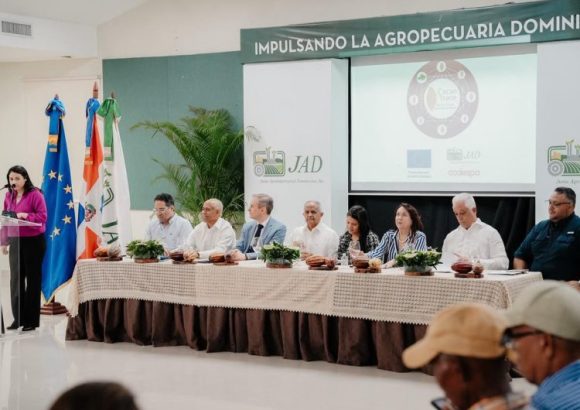
After two and a half years of targeted implementation, the Cacao Trace Project — a sustainability-focused initiative funded by the European Union and jointly led by the Dominican Agribusiness Board (JAD) and the Codespa Foundation — has officially concluded, delivering transformative results for small-scale cocoa producers in the Monte Plata region.
First launched in February 2024, the project was designed from its inception to address rising global market expectations for ethically sourced, fully traceable, and deforestation-free cocoa. From the start, it exceeded all core participation targets: organizers initially set out to train 700 producers across seven local producer organizations, but ultimately extended capacity-building support to more than 740 producers spread across 19 separate groups.
The comprehensive training curriculum covered a wide range of critical skills tailored to both producer success and global regulatory compliance. Participants learned advanced sustainable cultivation methods, industry-leading good agricultural practices, end-to-end supply chain traceability protocols, modern marketing strategies, small enterprise financial management, and the specific requirements of EU Regulation 2023/1115 — the new European rule mandating deforestation-free imports of key agricultural commodities.
Beyond direct training, the initiative delivered a series of tangible, long-lasting achievements for the Dominican cocoa sector. Four local producer organizations successfully completed full legal formalization, opening up new access to formal markets and funding. The project also drove a notable increase in participation from women and young people, building a more inclusive and resilient cocoa community. Beneficiary producers gained valuable opportunities to showcase their products at agricultural fairs, participate in cross-sector technical exchanges, and connect with buyers at both national and international industry events.
To modernize traceability systems across the cocoa value chain, the project developed an innovative blockchain-powered digital platform. This tool enhances transparency at every stage of production and distribution, allowing buyers and regulators to verify the origin and sustainability credentials of Dominican cocoa from farm to export.
One of the most significant institutional outcomes of the collaboration is the development of the Dominican Republic’s first national compliance protocol for EU Regulation 2023/1115, created through coordinated work between producers, export companies, government agencies, private sector actors, and international cooperation partners. The protocol was formally enshrined by the Dominican Ministry of Agriculture via Resolution 2026-38, and officially presented to the national cocoa sector on June 26. It now serves as a standardized national framework to help all Dominican cocoa producers align their operations with European market entry requirements.
Leaders from JAD and Codespa have publicly extended gratitude to all participating institutions, private companies, field technicians, and producer organizations for their collaborative work, as well as to the European Union for its financial investment and ongoing institutional support for the initiative.
As the project wraps up, it leaves behind a strengthened national cocoa sector: upgraded producer capacities, expanded cross-sector partnerships, cutting-edge traceability infrastructure, and a clear regulatory pathway to meet global sustainability demands. These gains position Dominican cocoa as a more competitive, transparent, and sustainable player in the global marketplace.