博客

  • Tense exchange at closing CARICOM briefing over alleged US boat strike

    Tense exchange at closing CARICOM briefing over alleged US boat strike

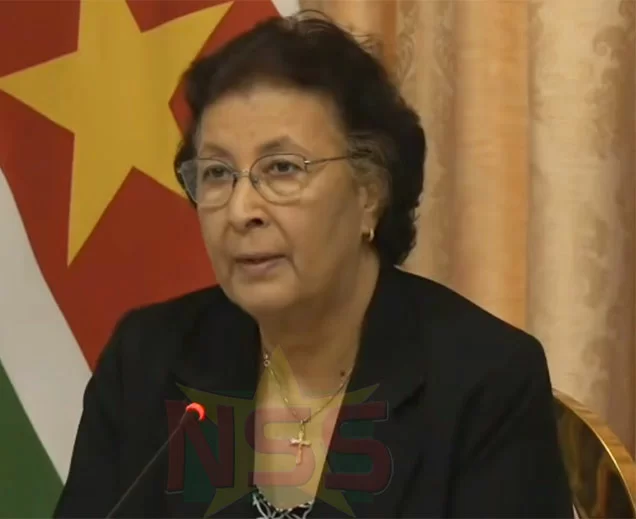
    As curtains closed on the 51st Caribbean Community (CARICOM) Heads of Government Meeting, a pressing question about the unexplained disappearance of Saint Lucian fisherman Ricky Joseph became the focal point of the closing press conference. Newly sworn-in CARICOM Chairman and Saint Lucia Prime Minister Philip J. Pierre found himself on the defensive, fielding pointed questions from Al Jazeera reporters who had spent the preceding week on the island investigating Joseph’s February disappearance.

    Joseph’s family holds the unconfirmed theory that the fisherman was killed in an American lethal strike carried out in regional waters earlier this year. To date, no physical evidence has emerged to corroborate this claim, and with Joseph’s remains still undiscovered, local law enforcement continues to categorize the incident as an active missing persons case.

    When pressed by reporters to outline what accountability would look like for Joseph’s family if the allegations of a U.S. strike were ultimately proven true, Pierre emphasized that the national government remains deeply troubled by the case, but has yet to receive any official confirmation of the circumstances surrounding Joseph’s disappearance. “We are very concerned about the loss of life for anybody. We’ve requested information from the United States, and we’ve not gotten any information as to what happened,” Pierre stated during the exchange.

    He added that without concrete evidence confirming Joseph’s death, regional law enforcement agencies have no legal alternative to continuing the missing persons probe, noting that “our own law enforcement is trying its best to decipher what happened.”

    The press conference exchange grew increasingly tense when reporters brought up the Joseph family’s public claims that they have received almost no direct communication or outreach from the Saint Lucian government since the fisherman went missing. Pierre forcefully pushed back against accusations that authorities had ignored the family’s suffering. “These families are our people. They are my people, so I’m very concerned about them. I’m sure more than you… After this week, you’re going to be leaving; I’m here with them,” he told reporters.

    Tensions eased as the conversation shifted from Joseph’s disappearance to a broader, more consequential question: whether the United States should be permitted to conduct lethal strikes targeting suspected criminal actors within the sovereign territory of CARICOM member states. When the question was opened to regional leaders in attendance, Barbados Prime Minister Mia Mottley weighed in, acknowledging the tangled web of legal and geopolitical complexities that surround such cross-border military operations, while drawing a clear moral line on the issue.

    “Morally, I would prefer not to see it,” Mottley stated. While she recognized that international law outlines provisions for proportionate military action under specific, limited circumstances, she stressed that Barbados — and the CARICOM bloc more broadly — has consistently prioritized diplomatic, peaceful resolutions over violent intervention. “Barbados always believes that there are better ways to deal with things rather than through the loss of life, whether it is the war in Gaza, whether it is internal conflict elsewhere,” she added.

  • Tense exchange at closing CARICOM briefing over alleged US boat strike

    Tense exchange at closing CARICOM briefing over alleged US boat strike

    As the 51st CARICOM Heads of Government Meeting drew to a close in Saint Lucia, a pressing local issue with far-reaching geopolitical implications overshadowed the final official press briefing: the unexplained disappearance of local fisherman Ricky Joseph. The newly inaugurated CARICOM Chairman, Saint Lucia’s own Prime Minister Philip J. Pierre, faced sharp, persistent questions from Al Jazeera journalists, who had spent a full week embedded in the country investigating the case.

    Joseph vanished in February, and his family has advanced the troubling claim that he was killed in an unacknowledged U.S. military strike. To date, no concrete evidence has emerged to corroborate the allegation, and no remains have been recovered, leaving local law enforcement to formally classify the case as an active missing person investigation.

    Pressed to outline what accountability would look like for Joseph’s family if the claims of a U.S. strike were ultimately proven true, Pierre emphasized that the Saint Lucian government has maintained consistent concern for the case, but still lacks official confirmation of the circumstances surrounding Joseph’s disappearance. “We are very concerned about the loss of life for anybody. We’ve requested information from the United States, and we’ve not gotten any information as to what happened,” Pierre stated. He added that without physical evidence confirming Joseph’s death, domestic law enforcement agencies have no legal option other than to continue their active inquiry, noting that local investigators are working exhaustively to unpack the details of the incident.

    Tensions rose in the press room when Pierre was confronted with the Joseph family’s accusation that they have received almost no direct communication or support from the national government since the fisherman went missing. Rejecting outright any claims of official indifference, Pierre pushed back firmly: “These families are our people. They are my people, so I’m very concerned about them. I’m sure more than you… After this week, you’re going to be leaving; I’m here with them.”

    Once the conversation shifted from Joseph’s specific disappearance to the broader, contentious question of whether foreign powers like the United States should be permitted to carry out lethal targeted strikes against suspected criminal targets on CARICOM territory, the atmosphere in the briefing room softened. The question was opened to attending regional leaders, and Barbados Prime Minister Mia Mottley offered a clear, measured response that acknowledged the tangled legal and geopolitical complexities of such operations while stating her unambiguous moral position.

    “Morally, I would prefer not to see it,” Mottley said. While she recognized that international law allows for proportional military action under limited, specific circumstances, she emphasized that Barbados and its leadership have a long-standing, consistent policy of prioritizing peaceful diplomatic solutions over violent intervention. “Barbados always believes that there are better ways to deal with things rather than through the loss of life, whether it is the war in Gaza, whether it is internal conflict elsewhere,” she added.

  • UPP presses government to release contracts for major infrastructure projects

    UPP presses government to release contracts for major infrastructure projects

    The main opposition United Progressive Party (UPP) of Dominica has issued a formal challenge to the ruling administration, demanding the immediate public release of full contractual documents for three of the island nation’s largest ongoing infrastructure projects. In an official statement released July 7, 2026, UPP leader Joshua Francis framed the call for disclosure as a critical step to boost governmental accountability and rebuild public trust in national development initiatives.

    The three projects at the center of the demand collectively represent hundreds of millions of dollars in foreign and domestic investment, and are expected to reshape Dominica’s economic trajectory, environmental landscape, and long-term public finances for coming generations. They include a new international airport, being developed by a partnership between Montreal Management Consultants (MMC) and China Railway No. 5 Engineering Group (CR5); a mountain cable car project awarded to Austria’s Doppelmayr Group in collaboration with local firm ABL Holdings; and the Cabrits Marina resort development, led by Range Developments, with a yet-unidentified international operator set to take over management once construction is complete.

    While the Skerrit government has repeatedly shared public updates on construction timelines and touted the expected tourism and job growth benefits of the projects, UPP argues that all core details of the binding contractual agreements have been deliberately kept hidden from the Dominican public and national legislature. The opposition says this lack of openness has fueled widespread public suspicion of secretive “sweetheart deals” that could prioritize private developer interests over the public good, with no parliamentary oversight to guard against mismanagement of national assets and public funds.

    According to the UPP statement, Dominican citizens hold a fundamental right to access a full range of unredacted contract details: the exact financial obligations the government has committed to under each deal, any tax concessions, sovereign guarantees or other favorable terms granted to developers, the full documentation of the procurement process used to award the multi-million contracts, whether independent cost-benefit analyses were completed before approval, the binding performance standards and penalty clauses for contractors, and a full accounting of long-term fiscal risks for the state.

    “Transparency is not an obstacle to development—it is the foundation of public trust,” the party said in its statement.

    The UPP has laid out four clear demands for the government: publish unredacted full contracts and all subsequent amendments for the three projects, release complete records of the procurement processes for each award, share detailed public and parliamentary reports that outline full project financing, binding contractual obligations and long-term public liabilities, and establish a permanent policy of proactive disclosure for all future large-scale public infrastructure contracts.

    Party leaders were careful to clarify that the request for transparency does not amount to opposition to the projects themselves. The UPP says it fully supports sustainable national development, but only when that development is rooted in the principles of transparency, accountability, and rule of law.

    “The people of Dominica deserve more than announcements and ceremonial groundbreaking events. They deserve access to the agreements that will shape the country’s future and determine how public resources are managed,” the statement read.

    Concluding its address, the party emphasized: “Good governance demands openness. Democracy demands accountability.” The UPP reaffirmed its longstanding commitment to protecting the rights and interests of all Dominican citizens, and will continue pushing for greater integrity and openness across all branches of government.

  • US-Iran Ceasefire Falters as New Strikes Escalate Middle East Tensions

    US-Iran Ceasefire Falters as New Strikes Escalate Middle East Tensions

    Just days after the United States and Iran reached a fragile truce aimed at de-escalating months of open hostilities, the ceasefire has all but collapsed following a wave of new mutual strikes that have sent tensions across the Middle East soaring once again.

    Iranian officials confirmed Thursday that U.S. military forces carried out fresh airstrikes on targets in the southern coastal province of Bushehr, hitting sites located near the country’s Bushehr Nuclear Power Plant and a key commercial fishing port. While Washington has not yet publicly verified these latest attacks, U.S. Central Command previously acknowledged launching overnight strikes on roughly 90 Iranian targets along the country’s Persian Gulf coastline just hours before.

    In a swift retaliatory move, Iran’s Islamic Revolutionary Guard Corps (IRGC) announced it had fired 10 ballistic missiles at a major U.S. military installation located in neighboring Jordan. Jordanian government officials later corroborated the incident, confirming the missiles entered Jordanian airspace before being intercepted and destroyed by the country’s air defense systems. No casualties or infrastructure damage were reported on Jordanian soil following the exchange.

    The resumption of large-scale hostilities comes barely one week after U.S. and Iranian negotiators, mediated by third-party states, announced a ceasefire agreement designed to end weeks of cross-border strikes and tit-for-tat attacks. Both sides have since traded accusations of violating the truce terms, with each blaming the other for intentionally undermining efforts to restore regional stability.

    Beyond direct military confrontation, the renewed violence has already disrupted critical global energy infrastructure. The Strait of Hormuz, the world’s most important oil chokepoint through which roughly 20% of global oil supplies pass daily, has seen a sharp slowdown in commercial maritime shipping due to heightened military activity and threats of traffic restrictions. In a parallel development, Iranian authorities have reportedly moved to ramp up crude oil exports from Kharg Island, the country’s primary oil export terminal, amid the market uncertainty.

    Even as fighting continues, diplomatic efforts to pull the two sides back from the brink are already underway. Pakistan and Qatar, the two states that mediated the original ceasefire talks between Washington and Tehran, have reactivated backchannels to restart negotiations. Pakistan’s Ministry of Foreign Affairs issued an urgent public call for de-escalation this week, noting “there is no alternative to continued engagement, dialogue and diplomacy to achieve shared goal of peace in the region.”

    The latest escalation also unfolds against a sensitive domestic backdrop in Iran: the country is currently in the national mourning period for former Supreme Leader Ali Khamenei, with final funeral ceremonies scheduled this week. Regional observers are closely monitoring the events for any public appearance by Khamenei’s newly appointed successor, Mojtaba Khamenei, as political analysts assess how the leadership transition may shape Iran’s future foreign policy trajectory amid the ongoing crisis.

  • Barbados ‘happy’ with free movement, Grenada and Saint Lucia may join

    Barbados ‘happy’ with free movement, Grenada and Saint Lucia may join

    At the closing press conference of the 51st CARICOM Heads of Government Meeting, Barbados Prime Minister Mia Mottley offered an optimistic update on the regional bloc’s free movement of people initiative, sharing that the program’s early implementation has exceeded expectations and attracted new interest from additional member states.

    Last October, Barbados joined three other CARICOM nations — Belize, Dominica, and St. Vincent and the Grenadines — as the first group to launch the full free movement arrangement under the Revised Treaty of Chaguaramas. Contrary to pre-launch fears that the policy would trigger a sudden, overwhelming surge of migration across participating borders, Mottley confirmed that fewer than 1,000 people have utilized the program to date, directly dispelling those widespread concerns.

    Data from the initiative shows the majority of skilled workers moving under the framework have relocated to Barbados, a trend Mottley says aligns perfectly with the country’s core motivations for joining the initiative in the first place. Barbados has long struggled with a structural skills deficit driven by its small domestic population, which has limited the pool of specialized talent available to local industries. Joining the free movement regime was a deliberate strategy to close that gap, Mottley explained.

    Beyond the positive early results, Mottley announced that the initiative is now gaining new momentum among other CARICOM members. Grenada has officially submitted a formal letter requesting to join the arrangement, while Saint Lucia has publicly signaled its clear interest in moving through the accession process to participate in the future.

    Drawing a parallel to CARICOM’s own gradual growth since its founding in 1974, Mottley noted that regional integration efforts naturally expand in incremental waves. When the bloc launched, it counted just four founding members, and additional nations have joined gradually over the decades to reach its current size. She expects the free movement regime will follow the same incremental growth trajectory, even as some advocates push for faster expansion. For her part, Mottley emphasized that Barbados remains satisfied with the progress made so far, and confident in the long-term success of the regional integration project.

  • Major Jones Says BDF Soldiers Are Being Shortchanged

    Major Jones Says BDF Soldiers Are Being Shortchanged

    In a blunt rebuke of the Belize Defence Force’s institutional management, retired Major Lloyd Jones has raised serious alarms about unfair treatment of active-duty soldiers, pointing to problematic military ration provision as evidence of deeper systemic rot within the country’s defense establishment. Speaking to local outlet News Five in comments published July 9, 2026, Jones argued that active service members are being sidelined as an afterthought in budget and resource priorities, with a stark discrepancy between public funds allocated for soldier rations and the actual food that ends up being served to troops. According to Jones, this gap points to unaccounted “leakages” that siphon resources away at every step of the supply chain.

    “What happens is that it starts at the top as we are seeing now, which is the troubling part for me,” Jones explained. “But all along the supply chain, starting with the ministry and for every door it enters, the ration gets smaller and smaller.” The retired major emphasized that the chasm between total spending on rations and the final portion served to soldiers exposes fundamental flaws in how the defense system is run. While Jones stopped short of formally accusing any individual of explicit corruption or illegal wrongdoing, he warned that problematic practices at the most senior levels of leadership create a cultural ripple effect that distorts behavior across the entire supply chain.

    “If people see people at the top ‘feeding’, then when it reach their level they also feel like I should get a little too,” Jones said. “And then it finally reaches the plate of the soldiers and he is wondering, what happened here.” Beyond the ration controversy, Jones also slammed what he frames as a widespread lack of respect and appreciation for the work of BDF members, noting that dozens of skilled, capable service members have resigned from the force in recent years out of mounting frustration over poor working conditions and unaddressed grievances. Most provocatively, Jones openly questioned whether two senior cabinet officials — Florencio Marin Jr. and Oscar Mira, the heads of the relevant defense-linked ministries — still retain the public confidence necessary to effectively lead their portfolios.

    Marin and Mira have already been placed on administrative leave from their posts as of the time of Jones’ comments, though no official explanation for their leave has been released in the correspondence covered by the reporting. In an official response to Jones’ allegations, Francis Usher, Chief Executive Officer of the Ministry of Defence, pushed back on the retired major’s grim assessment while acknowledging his long professional history with the force. “I think that Major Jones is a very experienced individual. I think he is more than capable of drawing his own conclusions,” Usher stated. “I would not go as far as saying that, but I do understand his position, and he is free to make his opinion.” The exchange has reignited public debate over transparency, resource management, and leadership accountability within Belize’s national defense institutions, with calls emerging for an independent audit of military ration spending to resolve the conflicting claims.

  • Milove Fontaine to represent Antigua and Barbuda at Caribbean pageant in BVI

    Milove Fontaine to represent Antigua and Barbuda at Caribbean pageant in BVI

    The countdown to one of the Caribbean’s most anticipated body-positive beauty competitions is officially underway, as Milove Fontaine, the representative from Antigua and Barbuda, has touched down in the British Virgin Islands ahead of the 2026 Miss Elegantly Plus Caribbean Queen Pageant. The competition, which will crown its new regional champion this Sunday, marks a key moment for celebrating plus-size women across the Caribbean region.

    Fontaine brings no stranger to pageantry to the stage: she already holds the title of Miss Charisma 2020, and has spent months preparing to carry the flag of her twin-island nation at this year’s event. The pageant will take place at the Eileene L. Parsons Auditorium, located on the campus of H. Lavity Stoutt Community College in Tortola, welcoming contestants and audiences from across the Caribbean and beyond.

    This year, Fontaine will go head-to-head with two other contenders for the coveted crown: Krystle Maduro, the homegrown contestant representing the British Virgin Islands, and Jah’Millia Maloney, competing on behalf of the United States Virgin Islands. The 2026 edition of the pageant is centered on the powerful theme “Pretty. Phenomenal. Plus.” — a slogan crafted to shine a spotlight on three core values: unapologetic confidence, intentional female empowerment, and authentic self-expression. More than just a beauty competition, the event exists to celebrate the diversity, beauty and leadership of plus-size women across the Caribbean, pushing back against narrow, traditional beauty standards that have long dominated pageant culture.

    For Antigua and Barbuda, Fontaine’s participation does more than just contend for a title: it places the small twin-island nation firmly on the regional cultural stage, giving her a platform to showcase her home country’s rich cultural heritage, standout talent, and signature elegance throughout the competition. Back in Antigua and Barbuda, a groundswell of support has grown for Fontaine in the lead-up to Sunday’s final, with fans, friends and supporters sharing messages of encouragement and excitement as she makes her final preparations for the crown.

  • Shipment with 88 containers of relief supplies on the way to earthquake-hit Venezuela

    Shipment with 88 containers of relief supplies on the way to earthquake-hit Venezuela

    In a collective show of regional solidarity, a large humanitarian shipment packed with 88 containers of life-saving emergency supplies has departed from Georgetown, Guyana, bound for earthquake-ravaged Venezuela. The cross-border relief effort, coordinated by Guyana with backing from seven member states of the Caribbean Community (Caricom), marks one of the largest regional responses to the recent disaster in the South American nation.

    The cargo is being carried by the Motti, a vessel chartered through the BK Group of Companies, which set sail from BK Wharf in Kingston, Georgetown on Tuesday. Loaded onto the ship are a diverse array of urgent supplies tailored to post-disaster needs: 300 water tanks, essential pharmaceuticals and medical products, bulk food supplies, cleaning materials, and two heavy-duty earth-moving pieces of equipment donated by regional conglomerate Ansa McAL. The 1,500-tonne capacity vessel is projected to complete the four-day journey to Venezuela, where distribution of the aid will be coordinated through a broader international humanitarian relief framework to ensure supplies reach the most hard-hit communities.

    The relief initiative was first launched by Guyanese President Irfaan Ali, who called for domestic and regional support in the wake of the disaster. In addition to the seven contributing Caricom nations, the effort drew significant donations from Guyana’s domestic private sector and members of the Venezuelan diaspora community residing in Guyana.

    Witnessing the vessel’s departure, Senior Minister in the Office of the President with Responsibility for Finance Dr Ashni Singh emphasized that the operation represented far more than a single country’s contribution—it was a demonstration of unified regional care for a neighboring nation. “What we see today is not only the mobilisation made by the government of Guyana but also contributions made by seven member states of Caricom,” Singh told reporters on-site. “On President Ali’s behalf, I want to acknowledge the generosity of all those who supported this initiative. Venezuela is our neighbour, and the Venezuelan people are our neighbours. So, we consider this to be the least that we could do in this moment of tragedy.”

    Singh detailed that the cargo includes locally produced Guyanese rice, alongside the heavy equipment and medical supplies that are critical for rescue and recovery operations after a major seismic event.

    Minister of Public Utilities and Aviation Deodat Indar noted that the rapid response was rooted in core humanitarian values and longstanding regional cooperation commitments. “When your neighbour faces a natural catastrophe, it is only the human thing to do to respond,” Indar explained. “President Ali committed that Guyana would help, and Guyana has risen to that challenge. The private sector, the Venezuelan community here, and our Caricom brothers and sisters all came together to fill this massive vessel behind us.” He added that as Venezuela’s closest neighbor, Guyana had a particular responsibility to step up amid the crisis, and the joint effort stands as proof of the region’s commitment to collective support. “The need is great, and we are Venezuela’s closest neighbour. This is a testament to Guyana standing firm as a partner during this crisis,” he said.

    Retired Colonel Nazrul Hussain, Director General of Guyana’s Civil Defence Commission (CDC), shared that relief items were gathered from all 10 of Guyana’s administrative regions in response to President Ali’s public appeal for assistance. “Over a little more than a week, we were able to amass a considerable amount of relief supplies, amounting to about 88 containers. This became a consolidated Caricom effort with Guyana taking the lead,” Hussain said. The seven contributing Caricom states that joined the effort are Grenada, The Bahamas, St Kitts and Nevis, Saint Vincent and the Grenadines, St Lucia, Belize and Jamaica, he confirmed.

    Hussain highlighted that the speedy mobilization of the large shipment speaks to the region’s ability to coordinate rapid relief when disaster strikes a neighbor. “It demonstrates how quickly Guyana and our regional partners were able to mobilise and consolidate support for our neighbour in a time of need,” he added.

  • New Zealand climate-smart agriculture team advances resilience efforts in Dominica

    New Zealand climate-smart agriculture team advances resilience efforts in Dominica

    A high-level technical mission focused on advancing climate-resilient, low-emission farming has wrapped up successfully in Dominica, bringing five days of collaborative work between New Zealand’s Climate Smart Agriculture Initiative and local agricultural stakeholders to a close. Running from June 22 to 26, 2026, the mission was led by Programme Manager Lee Nelson and senior Project Consultant Dr. Julian Hill, operating under the formal project banner *Advancing Climate-Smart Agricultural Practices in Dominica to Increase Production and Mitigate Greenhouse Gas Emissions*.

    This partnership represents a coordinated global effort to cut agricultural greenhouse gas output, and is being executed locally by the Inter-American Institute for Cooperation on Agriculture (IICA) on behalf of Dominica’s Ministry of Agriculture, Fisheries, Blue and Green Economy. Funding comes from the government of New Zealand through its regional Climate Smart Agriculture Initiative (NZCSA-LAC), which contributes to New Zealand’s commitments to the Global Research Alliance on Agricultural Greenhouse Gases (GRA), with administrative oversight handled by the Ag Emissions Centre.

    Per an official statement released by IICA, the visiting delegation held high-level strategic meetings with two key stakeholders: Ryan Anselm, Permanent Secretary of Dominica’s Ministry of Agriculture, Fisheries, Blue and Green Economy, and Her Excellency Linda Te Puni, New Zealand’s Ambassador to the Organization of Eastern Caribbean States (OECS). During these talks, participants reviewed finalized project findings, assessed completed deliverables, and mapped out a clear roadmap for upcoming project activities.

    Permanent Secretary Anselm expressed full backing for all evidence-based recommendations laid out in the project’s final report, and reaffirmed the Dominican government’s long-term commitment to embedding climate-smart agriculture into core national policy frameworks. This includes the country’s landmark Climate Resilience and Recovery Plan and its overarching National Resilience Development Strategy.

    Beyond high-level policy discussions, the mission centered heavily on capacity building for local agricultural actors, with three targeted national workshops delivered over the course of the week. The first of these, a Train-the-Trainer session focused on Land Use and Watershed Management held June 23, covered critical practical topics including soil erosion control, protection of riparian buffer zones, slope stabilization, integration of agroforestry systems, and spatial planning for expanding livestock production without harming local forest ecosystems. Attendees included representatives from Dominica’s Physical Planning department, regional agricultural extension team leaders, and faculty and students from Dominica State College.

    The next day, June 24, was dedicated to direct engagement with working farmers from across Dominica’s diverse agricultural regions. This interactive session opened space for dialogue on accessible, on-farm sustainable practices such as organic mulching, contour planting to reduce runoff, active soil cover management, optimized timing for fertilizer application, and evidence-based improvements to livestock health management.

    A second Train-the-Trainer workshop, focused on sustainable Agricultural Production Systems, followed on June 25. This session delved into advanced practices including split nitrogen fertilizer application to reduce runoff and emissions, on-farm manure composting to cut waste and improve soil health, improved forage production systems for livestock, protected cropping to boost yield and reduce climate risk, precision irrigation monitoring, and farm-level record-keeping protocols for accurate measurement, reporting, and verification of emissions and productivity gains.

    As part of their field visit, the delegation also toured the state-of-the-art Dominica-China Agricultural Science Complex located at the North Agriculture Station in Portsmouth. This cutting-edge facility houses a high-capacity tissue culture laboratory that can produce and hold up to 500,000 disease-free plant seedlings, a dedicated seed storage and national seed bank, a climate-controlled smart greenhouse, controlled plant propagation zones, hydroponic demonstration systems, and active research test plots. As Dominica’s largest centralized seedling production hub, it also functions as a key technology exchange hub and demonstration facility, offering hands-on farmer training in modern seedling propagation and controlled greenhouse cultivation techniques.

    To expand public outreach for the initiative, mission leaders Lee Nelson, Dr. Julian Hill, and Dr. Al-Mario Casimir, the Dominican Ministry of Agriculture’s project focal point, appeared on a national radio program during the visit. The segment allowed the team to share key project outcomes and explain the long-term benefits of climate-smart agriculture to the general public across the country.

    This five-day mission marks the official completion of the project’s core technical assessment and planning phase. Looking ahead, IICA confirmed that the next phase of the project will prioritize scaling up local capacity through ongoing in-country train-the-trainer programs. These programs will equip agricultural extension officers and local farmer leaders with the skills and resources needed to roll out climate-smart farming practices across every agricultural region of Dominica, laying the groundwork for long-term agricultural resilience and lower national greenhouse gas emissions from the sector.

  • PM: No survivors in North Andros plane crash

    PM: No survivors in North Andros plane crash

    On a day meant for national celebration, the Bahamas has been plunged into mourning by a fatal plane crash that claimed 10 lives on its Independence Day. Prime Minister Philip Davis confirmed the grim outcome for all passengers and crew aboard the small aircraft that went down in North Andros, marking the second deadly aviation incident the nation has responded to in recent memory, as officials urge patience and caution while the investigation remains ongoing.

    Preliminary reports from the Aircraft Accident Investigation Authority (AAIA) outline that the plane, a Cessna 402 registered as C6-FLX, departed from Nassau’s Lynden Pindling International Airport shortly before 1 p.m. Friday, bound for San Andros Airport. The aircraft reported in-flight mechanical issues before crashing into dense brush while approaching the runway for landing. While one person initially survived the impact, they later died from their injuries, Police Commissioner Shanta Knowles confirmed. In a statement honoring the victims, Davis noted that the nation has been forced to grieve far too many lost lives to aviation tragedy, saying “we have mourned too many lives, we have comforted too many families and today we mourn once again.” He called on divine strength to help the country support the bereaved families and navigate the aftermath of the disaster.

    To protect the privacy of next of kin, Knowles added that the full passenger manifest will not be released to the public until every family has been personally notified by authorities. Davis emphasized that this respect for victims’ families is a core obligation, urging the public to only share official, verified information to preserve the integrity of the ongoing investigation. Multi-agency investigative teams, including AAIA investigators, Civil Aviation Authority Bahamas (CAAB) inspectors and Airport Authority personnel, have already been deployed to the crash site to piece together the cause of the disaster.

    The crash comes on the same day as a separate non-fatal incident involving the same airline, Flamingo Air, which owns the Cessna 402 involved in the North Andros tragedy. Earlier Friday morning, a second Flamingo Air flight traveling to Mayaguana experienced an in-flight emergency that forced the pilot to return to Nassau. After all passengers and crew safely evacuated the plane post-landing, the aircraft caught fire. No fatalities were reported in that incident. Minister of Energy, Utilities and Aviation Jobeth Coleby-Davis confirmed that, in the interest of public aviation safety, the ministry has issued a temporary suspension of Flamingo Air’s Air Operator Certificate, pausing all of the airline’s operations pending review. Officials stressed that the suspension is a precautionary safety measure, not a formal finding of non-compliance against the carrier.

    In an official statement, Flamingo Air confirmed the ownership of the crashed aircraft and expressed its deepest condolences to the families of the victims, adding that the company is fully cooperating with all investigating authorities to support the probe. The tragedy has cast a heavy shadow over the country’s Independence Day celebrations, with widespread shock rippling through Bahamian communities. Many residents took to social media platform Facebook to grieve missing loved ones, amid early confusion over the full passenger list.

    Opposition Leader Michael Pintard joined in offering condolences to the affected families, noting that the disaster turned a day of national joy into a moment of collective grief. “On a day when Bahamians should be celebrating together, our hearts are heavy because of the devastating news of a plane crash,” Pintard said. He committed the opposition Free National Movement to supporting cross-party efforts to improve aviation safety, including the creation of a joint parliamentary committee to review industry regulations and safety protocols. Pintard urged the public to stand in solidarity with the victims’ families and first responders, reflecting on the tragedy as a reminder of life’s fragility: “These unfortunate deaths remind us of the fragility of life and of the need to find ways to pull together when there is so much that seeks to tear us apart.”