
On the evening of October 12, what was supposed to be a routine, uneventful stop for customers and a calm shift for workers at Percival’s gas station devolved into a terrifying, life-threatening ordeal when an attacker armed with a machete stormed the premises in an apparent attempted robbery. The sudden, violent threat immediately sparked chaos, forcing everyone inside and on the property to run for their safety, scrambling to escape the reach of the armed suspect. As of initial reports, key details surrounding the incident remain frustratingly unclear. Authorities have not yet confirmed whether any civilians or first responders sustained injuries during the chaotic incident, whether the attacker managed to steal any cash or property from the gas station, or whether law enforcement has taken the suspect into custody. Early accounts suggest the attacker fled the scene without taking any valuables, but the near-deadly encounter has already left lasting psychological impacts on those who were present. For gas station employees, returning to work at the site where they just escaped grave danger will carry significant emotional weight, as the trauma of the sudden attack lingers. Even customers, who only stopped to refuel their vehicles or grab a quick snack during their travels, found themselves unexpectedly caught up in a violent scenario that could have resulted in catastrophic harm.
博客
-

Adventist leader urges members to avoid Sabbath graduation ceremonies
A senior leader of the Seventh-day Adventist Church has publicly called on all church members across the nation to step away from graduation ceremonies scheduled on the Sabbath, reinforcing long-held religious doctrines around sacred day observance.
The Sabbath, a core tenet of Adventist theology, is observed from sunset Friday to sunset Saturday each week, a period devoted to worship, rest, spiritual reflection and stepping away from secular work and non-essential public gatherings. Church doctrine has long held that prioritizing this sacred time strengthens communal and individual faith, a tradition that dates back to the denomination’s founding in the 19th century.
In an official statement released to church congregations last week, the leader emphasized that maintaining loyalty to religious principles should take precedence over milestone cultural events like high school or college graduations. Many church members already structure their personal and professional schedules to avoid conflicting obligations on the Sabbath, but growing numbers of educational institutions have begun scheduling major commencement ceremonies on Saturdays, creating growing friction between religious commitments and life milestone celebrations.
The leader acknowledged that this choice presents significant emotional difficulty for many families, noting that graduations are once-in-a-lifetime events that many students and loved ones eagerly anticipate. However, the statement argued that standing firm in religious conviction ultimately strengthens the church’s collective identity and sets a clear example for younger generations of believers. The leader also encouraged congregations to work with families to accommodate alternative celebrations, such as holding private recognition events on a different day of the week to honor graduates without violating Sabbath principles.
The announcement has sparked conversation both within and outside the Adventist community about the balance between religious observance and modern societal expectations, as institutional scheduling practices increasingly clash with long-held religious customs for multiple faith groups across the United States.
-
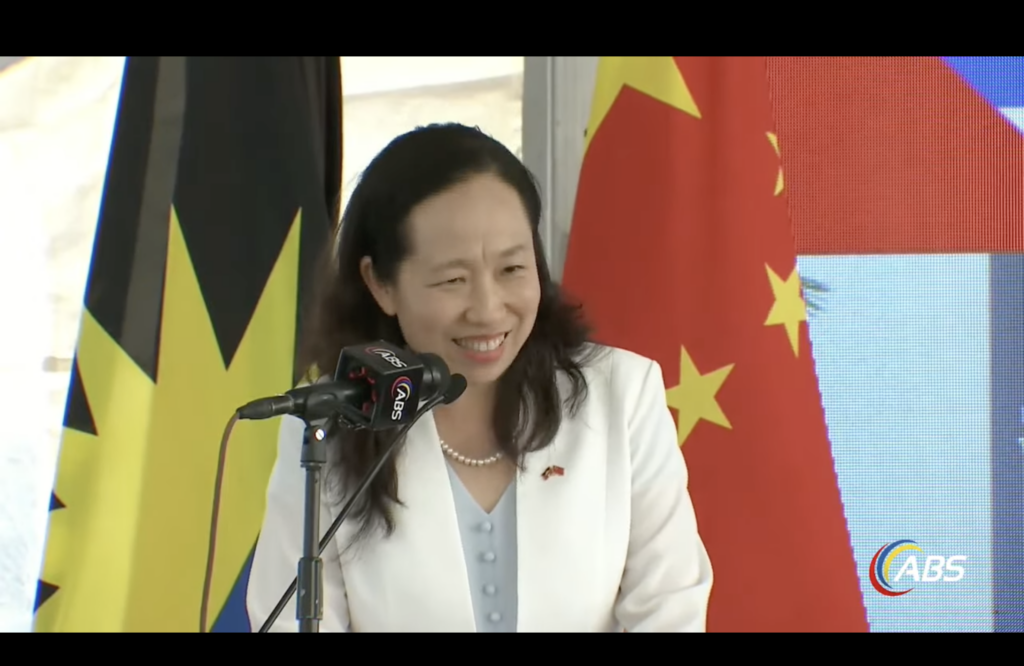
China willing to undertake more projects to improve living conditions in Antigua and Barbuda
On Thursday, a landmark moment in China-Antigua and Barbuda bilateral cooperation took place at the handover ceremony for the Pelican Court housing development, where Chinese Ambassador Jiang Wei announced China’s readiness to launch more public welfare projects to upgrade living standards across the Caribbean nation.
This 150-unit residential development, fully funded by a EC$50 million Chinese grant, is positioned as a celebratory gift to the people of Antigua and Barbuda ahead of the country’s 45th independence anniversary. Built in Antigua’s Point neighborhood, the project forms a core segment of the broader Booby Alley urban redevelopment initiative, delivering 150 fully completed two-bedroom homes to local residents.
In her address at the ceremony, Ambassador Jiang emphasized that access to safe, quality housing is a fundamental pillar of public well-being, and a stable residence serves as the critical foundation for individuals and families to build improved lives. The Pelican Court project, she noted, directly addresses long-held local expectations for upgraded living conditions amid longstanding housing shortages in the redeveloped area.
Jiang highlighted that despite differing national contexts between the two nations, the people of both China and Antigua and Barbuda share a universal aspiration for more prosperous, secure lives. She tied the housing project to Chinese President Xi Jinping’s vision of a global community with a shared future for humanity, a framework that centers on the collective goal of enabling all people worldwide to access happy, fulfilling lives.
Throughout the construction process, Jiang explained, the Chinese development team merged rigorous Chinese construction standards with context-specific local needs. Facing unforeseen challenges including regional transportation disruptions and adverse tropical weather conditions, the team integrated modern Chinese construction technology and resident-centric amenities into the project. These adjustments ensured the development delivers durable, high-quality housing that directly enhances the day-to-day quality of life for incoming residents.
Pelican Court marks just the latest outcome of the longstanding development partnership between China and Antigua and Barbuda, which has already supported progress across multiple key sectors of the Caribbean nation’s economy and public services. Ambassador Jiang recapped past collaborative milestones, including upgrades to port and airport infrastructure, construction of a national cricket stadium, development of public community facilities, and progress in agricultural technology exchanges and local human capacity building.
Notably, Ambassador Jiang stressed that the bilateral partnership extends far beyond physical infrastructure construction. Through targeted knowledge sharing and skills training programs, China is committed to helping Antigua and Barbuda build the domestic capacity needed to drive long-term, self-sustaining development. She added that all cooperation between the two countries is rooted in the principles of equal partnership and good faith, and expressed China’s openness to expanding bilateral relations through additional public-focused initiatives that deliver tangible benefits to local communities.
Closing her remarks, Jiang extended well wishes to the families set to move into the new Pelican Court homes, wished the nation of Antigua and Barbuda continued prosperity in the years ahead, and reaffirmed China’s commitment to nurturing the longstanding, warm friendship between the two countries.
-
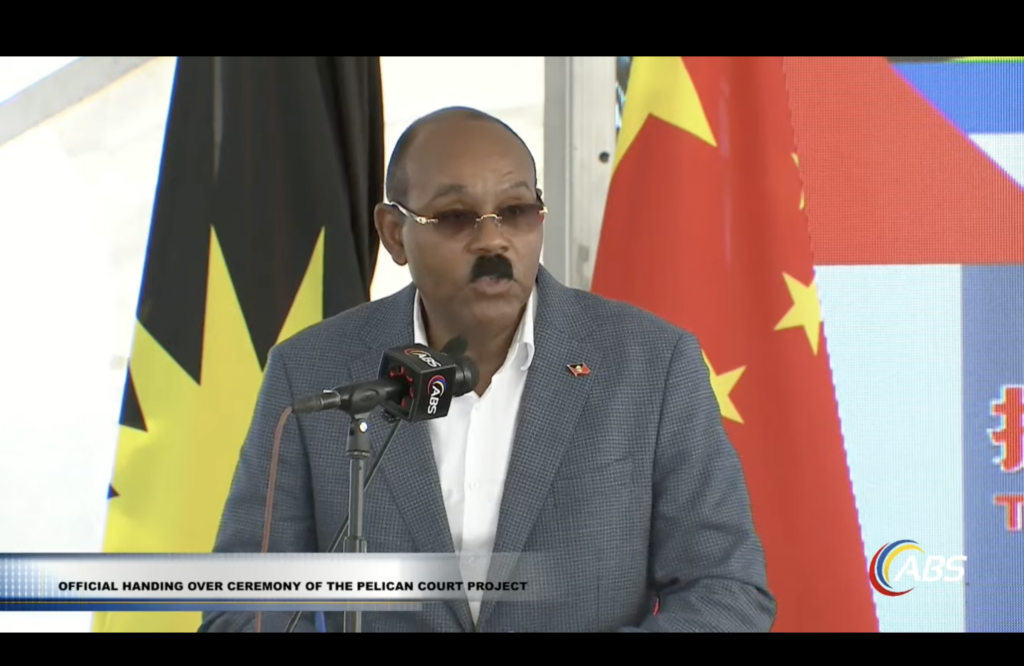
PM Browne vows to defend China ties even if Antigua and Barbuda faces consequences
On Thursday, Antigua and Barbuda Prime Minister Gaston Browne delivered a bold and unwavering statement reaffirming his nation’s commitment to maintaining its close bilateral relationship with China, even in the face of unspecified geopolitical consequences. His remarks came during a formal handover ceremony for Pelican Court, a landmark affordable housing development fully funded by a Chinese grant, which Browne hailed as a tangible example of the long-standing partnership between the two countries.
Speaking to an assembled group of officials and community stakeholders at the event, Browne emphasized that China has stood as Antigua and Barbuda’s most critical development partner over the past 30 years, a track record of collaboration that has transformed the nation’s infrastructure landscape and lifted living standards for countless residents. He called on the country to actively defend this friendship in global multilateral forums and push forward with expanding bilateral cooperation, rejecting external pressure that seeks to undermine the relationship.
“Over the last three decades, no other nation has done more to advance our country’s development than the People’s Republic of China,” Browne stated bluntly. While the prime minister acknowledged that the bilateral relationship faces unspecified geopolitical threats, he declined to name any specific country, international organization, or punitive measure that has prompted the pressure. What he did make clear, however, is that the decades of Chinese support have been instrumental in building Antigua and Barbuda’s economic and social infrastructure at moments when the country needed it most.
Browne argued that without China’s consistent contributions, Antigua and Barbuda’s national progress would look drastically different today, and the overall quality of life enjoyed by its citizens would be far lower. This history of partnership, he said, demands that the country maintain its gratitude through action — even when holding that position carries potential consequences. “So let us continue to march on with China as our most important development partner,” he urged.
The Pelican Court project, which is valued at 50 million Eastern Caribbean dollars and delivered via a Chinese grant, consists of 150 fully completed two-bedroom residential units. It forms a core part of the wider redevelopment of the Booby Alley neighborhood in Antigua’s Point community, an area that has long struggled with substandard housing and vulnerability to climate impacts.
Browne framed Pelican Court as the most socially impactful Chinese-backed project completed in Antigua and Barbuda to date, noting that its creation directly addresses the housing needs of low-income and vulnerable residents. The project is built with climate-resilient construction standards, a design feature that reflects both China’s expertise in sustainable infrastructure and the Antiguan government’s commitment to improving living conditions for even the poorest members of society. Beyond the new buildings themselves, Browne emphasized that the entire redevelopment initiative centers on elevating the quality of life for the community that will call Pelican Court home.
In closing, the prime minister reaffirmed his administration’s pledge to continue deepening bilateral ties with China, holding up the newly completed housing development as clear proof that the partnership delivers tangible, life-changing benefits for the people of Antigua and Barbuda.
-
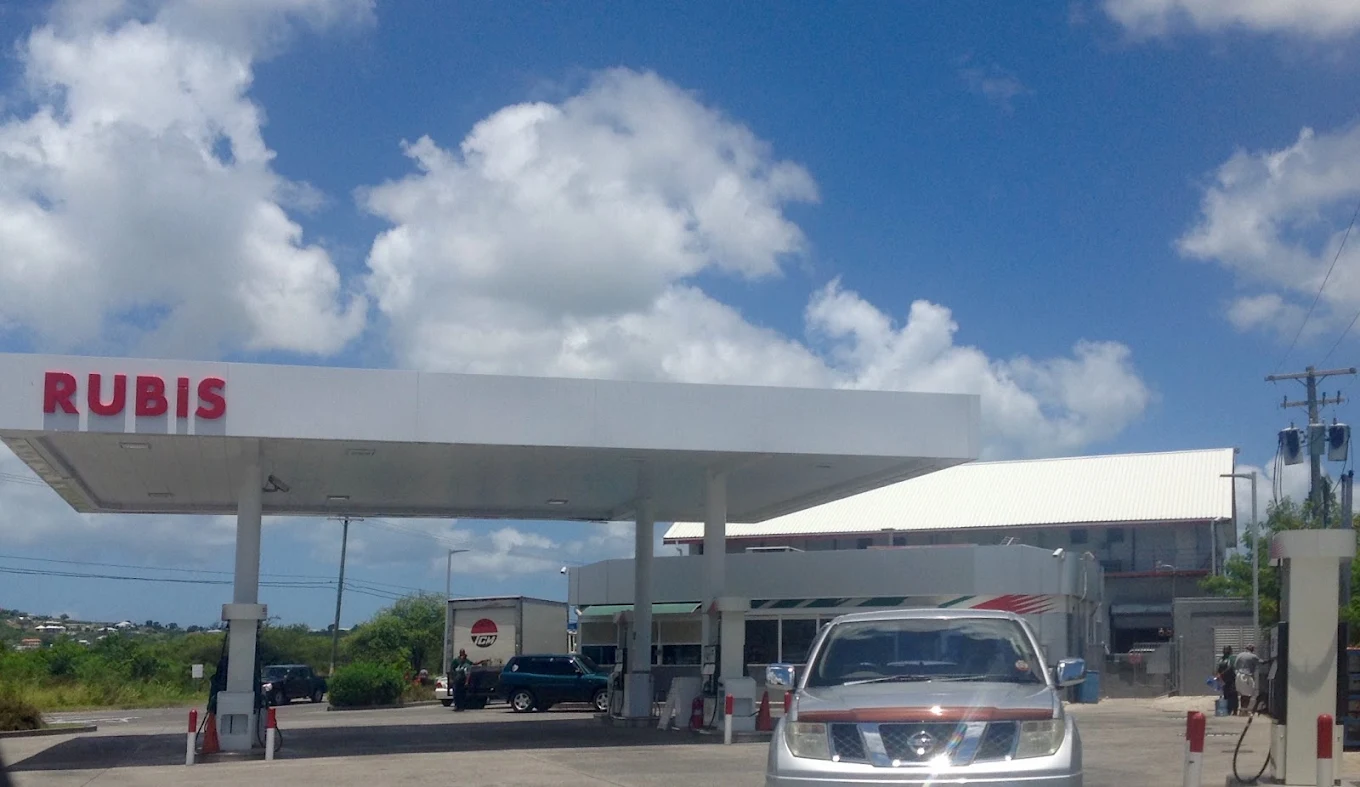
IMF recommends regular reviews of fuel supplier margins in Antigua and Barbuda
A 2026 International Monetary Fund technical assistance report has called for sweeping reforms to fuel pricing regulation in Antigua and Barbuda and Grenada, centering on mandatory periodic reviews of supply chain margins that have remained frozen for decades in some jurisdictions. The assessment, which examines how fuel prices are structured across both Caribbean nations, argues that outdated unadjusted margins risk skewing market incentives and undermining the overall efficiency of fuel distribution networks.
In both countries, final pump prices are calculated through government-mandated formulas that combine three core components: the cost of imported fuel, applicable taxes, and regulated margins set for each stage of the supply chain. These margins are split into three distinct categories: importer margins for the entry stage of fuel into the country, wholesale margins for bulk distribution through the supply network, and retail margins for end consumer sales at service stations. Additionally, the formula includes separate allowances to cover logistics and transportation costs, many of which have not been updated alongside shifting industry conditions.
The report specifically highlights that in Antigua and Barbuda, multiple key margins and cost parameters, including freight allowances baked into the official pricing structure, have not been revised for multiple decades. Without regular, systematic assessments, the IMF warns these fixed components no longer align with actual current operating expenses, modern infrastructure constraints, and evolving shipping challenges that have reshaped fuel logistics in the region.
Notably, the IMF does not call for an immediate increase in dealer margins. Instead, it pushes for a formal, evidence-driven review process to assess whether existing regulated rates remain appropriate for current market and operating conditions. The assessment also identifies critical gaps in cost data that currently hamper effective oversight: information on the actual cost structures of importers, storage operators, wholesalers, and distributors is severely limited, and the margins included in official pricing formulas are not systematically tied to verifiable documented operating expenses. In many cases, margins are lumped into combined totals without clear breakdowns across different supply chain activities, making it nearly impossible to confirm that charges match real costs.
To address these gaps, the IMF recommends that regulators require fuel supply businesses to submit independently verifiable cost data, with clear separation of margins across every stage of the supply chain. It also calls for revised reporting frameworks that explicitly distinguish between fixed government-set allowances and actual costs incurred by operators. Stronger ongoing oversight, the report notes, could include regular audits of cost submissions, active monitoring of compliance with approved pricing formulas, and scheduled periodic market assessments.
The IMF notes that these enhanced oversight functions can be structured in line with each country’s existing capacity: either through an independent regulatory body, or via strengthened processes within existing government agencies, depending on available administrative resources and funding. For smaller Eastern Caribbean economies, the report also proposes regional coordination: sharing technical expertise, cross-comparing operational costs, and conducting joint regional market studies to cut down on redundant work and improve the consistency of margin reviews across the bloc.
-

Over Two Dozen Water Metres Stolen for Copper; Here’s What BWS Wants You to Do
A resurgence of metal theft has disrupted water access for dozens of households across Belize and Corozal Districts, as thieves target Belize Water Services (BWS) infrastructure to harvest valuable copper for scrap sales.
In a statement released October 15, 2026, BWS officials confirmed that at least 29 water meters have been stolen in recent weeks, with 18 confirmed thefts recorded in Belize District and 11 in Corozal District. The scale of the problem became particularly stark earlier this week, when 11 meters were stolen from Corozal residences in a single 24-hour period.
Roberto Toriz, BWS Operations Manager, explained that the criminal operation follows a predictable pattern: thieves remove full water meters and connected valve assemblies from residential properties, strip the devices to extract their copper components, then sell the scrap metal for quick cash. Toriz noted this is not a new threat to BWS infrastructure; a similar wave of meter theft hit the region in December of the previous year, which tapered off before this sudden resurgence.
The financial impact of the crime extends far beyond the small payout thieves receive for scrap copper. Each new water meter costs BWS roughly $300 to replace, a sum that thieves never come close to recouping from selling the extracted copper. However, company officials emphasize that the most immediate burden falls on residential customers, who often lose running water for extended periods after a theft.
“When the metres are stolen, it does affect the customer, as they are out of water for a substantial amount of time, especially if it happens late at night or early in the morning,” said Paul Wade, BWS Assistant Customer Services Manager. While BWS operates a 24-hour emergency response team to restore service, responding to these repeated thefts draws heavily on the utility’s limited time, labor, and supply resources.
To curb the rising wave of thefts, BWS is calling on all residential customers to remain vigilant, and to report any unfamiliar or suspicious individuals loitering near residential water meter locations immediately. The utility notes that it currently covers the full cost of replacing stolen meters for affected customers, but repeated theft incidents at a single property could lead to the cost being passed on to the property owner going forward.
-

HAPI housing programme to use more climate-resilient materials next year
During an official handover event for a completed housing project Thursday, Antigua and Barbuda Prime Minister Gaston Browne unveiled a key policy adjustment to the national government’s flagship Housing Assistance and Poverty Intervention (HAPI) program: starting next year, all free homes constructed for low-income indigent residents will be built with more climate-resilient construction materials.
The announcement was made at the handover ceremony for Pelican Court, a 150-unit two-bedroom housing development located in the country’s Point community. This project was fully funded through a grant from the Chinese government, marking a separate partnership to expand accessible housing for local residents. In his remarks at the ceremony, Browne emphasized that the shift to more durable building materials is designed to boost the long-term quality of housing delivered to Antigua and Barbuda’s most socioeconomically vulnerable populations.
Browne questioned the long-term cost-effectiveness of the traditional wooden construction that has been commonly used for the program’s units, noting that structurally weaker, shorter-lived housing ultimately imposes higher long-term costs for both residents and the government. Moving forward, he said, the HAPI program will center climate resilience in its design standards, prioritizing units that can withstand the increasingly intense and frequent extreme weather events linked to global climate change, a critical priority for small island developing states like Antigua and Barbuda.
Notably, the prime minister did not disclose additional details in his public remarks, including what specific materials will replace wood, how many new HAPI units are scheduled for construction next year, or what additional budget will be allocated to accommodate the material shift. Despite the lack of fine print, Browne framed the policy change as part of the administration’s broader, ongoing commitment to addressing systemic housing insecurity across the country. He pointed to widespread financial barriers that block access to safe, adequate housing: large segments of the population cannot qualify for or afford commercial mortgages, and skyrocketing global construction costs have made privately built homes out of reach for many working households. Without targeted government action, these gaps would leave thousands of residents without stable shelter, he argued.
The HAPI program’s free housing provision for indigent residents is just one pillar of the Antigua and Barbuda government’s multi-tiered housing support strategy, Browne explained. The full framework also includes social housing for low-to-middle income households, subsidized affordable housing, and financial concessions for independent homebuilders, with each tier tailored to meet different levels of housing need and expand overall access to quality, stable accommodation across all income groups.
Beyond housing policy, Browne tied the government’s investments in improved living conditions to the administration’s broader national vision: positioning Antigua and Barbuda as a “lifestyle superpower” where all citizens and residents can access a high quality of life. He argued that the government’s success should not be measured solely by headline economic growth, but by tangible social progress that lifts living standards and improves everyday circumstances for all members of society.
-

No drug trafficking or gambling at Pelican Court, Browne warns residents
At the official handover ceremony for Antigua and Barbuda’s new EC$50 million Pelican Court housing development this Thursday, Prime Minister Gaston Browne delivered a firm warning: drug trafficking and unregulated gambling will not be tolerated within the 150-home community, and any resident who violates the development’s strict guidelines faces eviction.
Built on the site of the former Booby Alley neighborhood, the project, entirely funded by a Chinese grant, features 150 two-bedroom residences located in Antigua and Barbuda’s Point district. Browne emphasized that compliance with community rules is mandatory for all residents, regardless of whether they own their home outright, are paying off a mortgage, or are renting the property.
The Prime Minister stressed that the transformation of the former Booby Alley community goes far beyond the construction of new modern buildings. It also requires a shift in resident behavior, consistent upkeep of shared public spaces, and a collective commitment to raising the quality of life for every family that calls Pelican Court home. Explicitly banning narcotics trafficking and all unauthorized gambling activities, Browne warned that allowing these harmful practices to take root would jeopardize the entire development’s long-term success.
“The last thing we want is a few years from now that we end up with a glorified ghetto,” he told attendees at the ceremony. Browne made clear that any resident unwilling or unable to abide by the community’s rules should seek alternative housing arrangements elsewhere. At present, however, he has not outlined the specific process for removing non-compliant residents, nor has he explained how enforcement protocols will differ between property owners and renters.
In addition to the ban on criminal activity, Pelican Court residents will be required to pay regular condominium maintenance fees to fund upkeep of buildings and shared facilities. Browne did not announce the size of these fees or establish a payment schedule during his remarks. Proper waste management is another core resident responsibility, Browne added, urging community members to avoid dumping trash in shared green spaces or on adjacent private properties.
The Prime Minister framed adherence to these rules as a intergenerational responsibility, noting that residents owe it to their children and grandchildren to build a safer, more supportive community that can be passed down through families. He described Pelican Court as more than just a housing project: it is an opportunity for local families to build long-term intergenerational wealth and break the cycle of inadequate housing that has impacted generations of residents in the area.
Looking ahead, Browne argued that Pelican Court’s success will set a precedent for all future public housing projects across the country. For this reason, consistent resident care of individual properties and widespread respect for community rules are essential to ensuring the development delivers on its promise of sustainable, improved quality of life for decades to come.
-

G20 bespreekt gevolgen Iran-oorlog voor wereldeconomie
Top finance ministers and central bank governors from the G20 bloc convened in Bangkok, Thailand on Thursday for a high-stakes meeting centered on addressing the far-reaching economic fallout of the ongoing Middle East conflict between the United States, Israel and Iran. The gathering is being held as part of the annual joint meetings of the International Monetary Fund (IMF) and the World Bank, which run from October 12 to 18 in the Thai capital.
Persistent geopolitical tensions in the Middle East, combined with growing disruptions to maritime shipping through the Strait of Hormuz, have injected unprecedented uncertainty into global energy supply chains, inflation outlooks and long-term economic growth projections. The conflict has already suppressed economic activity across large swathes of the Middle East, and its ripple effects are being felt sharply in international energy markets. As a critical chokepoint that handles roughly a fifth of the world’s daily oil and natural gas trade, any sustained disruption to shipping through the Strait of Hormuz would drive up global transportation and energy costs, hitting businesses and household consumers across every continent.
Australian Treasurer Jim Chalmers has called ahead of the meeting for an immediate end to hostilities in the Middle East and a full restoration of unimpeded commercial shipping through the strategic waterway. He noted that the economic impacts of the conflict are already visible globally, manifesting in elevated fuel prices, stubbornly high inflation and increased interest rate pressures that are straining household and business budgets alike.
Beyond the Middle East conflict, rising levels of sovereign debt are set to be a second core agenda item for the gathering. Major economies around the world are currently grappling with historically high public debt loads, which have eroded their fiscal buffer to absorb future economic shocks. IMF Managing Director Kristalina Georgieva warned on Wednesday that the growing global debt burden poses a systemic threat to the stability of the world economy. She stressed that governments will face difficult fiscal tradeoffs to bring their budgets back into balance, with tax increases and public spending cuts likely unavoidable for many nations.
Energy-importing countries are facing particularly acute dual risks: sustained high oil and gas prices drive up import costs, fuel further inflation, erode household purchasing power, and add even more pressure to already strained government budgets.
Frictions in bilateral trade relations between the world’s two largest economies, the United States and China, will also feature heavily in the G20 discussions. Washington has long accused Beijing of distorting global competition through its industrial policies and state support for domestic producers, which it says have led to lopsided global trade imbalances.
U.S. Treasury Secretary Scott Bessent will not attend the Bangkok meeting in person, with U.S. officials citing conflicting domestic priorities. The U.S. delegation will instead be led by Deputy Secretaries Francis Brooke and Erin Browne. In a pre-submitted statement to the IMF, Bessent pushed for greater global focus on addressing persistent trade imbalances, and the impact of national policy and exchange rate practices on international competitive positions.
However, divergent national interests across the G20 membership have made a coordinated collective approach to these pressing challenges extremely difficult to achieve. During the last G20 finance leaders meeting, held in Asheville, North Carolina in late August and early September, participants failed to agree on a joint closing communiqué. Disagreements over trade policy, including Chinese objections to specific proposed language, blocked any consensus on a unified statement.
This week’s Bangkok meeting also serves a key preparatory role, setting the policy agenda for the upcoming G20 heads of state summit, scheduled to take place on December 14 and 15 in Miami, Florida.
The G20 bloc comprises 19 individual nations, plus the European Union and the African Union. Together, the group accounts for the vast majority of global economic output and international trade, and was established as a forum to coordinate on pressing global economic and financial issues and strengthen cross-border cooperation.
-

Leisure : Did you know ? #68
Haiti’s leading digital platform HaitiLibre has expanded its popular twice-weekly general knowledge quiz series, rolling out 30 brand-new games as part of its October 1, 2026 monthly update to engage knowledge seekers across the globe. The expansion brings the platform’s total collection of interactive quizzes to 270 ten-question games, with planners confirming that new content will be added on a monthly basis with a target of reaching 300 total games in the near future.
The latest entry in the platform’s signature “Did You Know?” series (the 68th installment, published October 15, 2026) centers on a question profiling high-profile tech entrepreneur Elon Musk: the prompt asks quiz-takers to identify the South African-born business leader who founded aerospace firm SpaceX and currently serves as CEO of electric vehicle manufacturer Tesla.
The accompanying answer profile for the question offers a comprehensive breakdown of Musk’s decades-long career shaping global technology and industrial innovation. Now the world’s wealthiest individual, Musk first rose to prominence as a co-founder of global digital payment platform PayPal, before launching a series of ambitious, industry-disrupting projects that have redefined multiple sectors. Through his leadership at Tesla, Musk upended the century-old global automotive industry, proving that electric vehicles could deliver both high performance and widespread consumer appeal, accelerating the global transition away from fossil fuel-powered transportation.
At SpaceX, Musk revolutionized the commercial space sector by pioneering reusable rocket technology, a breakthrough that cut the cost of accessing low-Earth orbit and deep space dramatically. The company’s long-term core mission centers on establishing a permanent human colony on Mars, a goal once confined exclusively to science fiction. Beyond automotive and aerospace innovation, Musk also leads two other transformative tech ventures: Neuralink, a company developing advanced brain-machine interface technology with applications ranging from medical treatment to human cognitive enhancement, and The Boring Company, which works to revolutionize urban transportation through high-speed underground transit networks.
While Musk remains a controversial figure due to his often polarizing public statements and policy stances, his far-reaching impact on advancing sustainable energy and expanding human space exploration is widely recognized by industry experts and observers. He has become the defining face of 21st-century entrepreneurial ambition, embodying the model of a modern business leader who leverages technology and constant innovation to pursue radical shifts in the future of humanity.
HaitiLibre’s exclusive quiz platform is available free of charge to all users, requires no account registration, and is designed to appeal to audiences of all ages and knowledge levels. Every quiz on the platform offers three tiered difficulty options: easy, intermediate, and expert, to match the skill level of any participant. The quizzes are also fully accessible in both French and English, serving a broad bilingual audience.
Users can explore the full collection of quizzes, covering topics ranging from Haitian current affairs and culture to global history, technology, and public figures, at the platform’s official website https://quiz.haitilibre.com/en. After completing any quiz, users can share feedback, comments, and suggestions for future content through a dedicated form available at the end of each activity. The platform’s team encourages users to invite family and friends to test their knowledge, reminding new participants that the quizzes are designed as a learning tool: even if participants do not know an answer, completing the quiz offers an opportunity to learn new, surprising facts to share with loved ones.