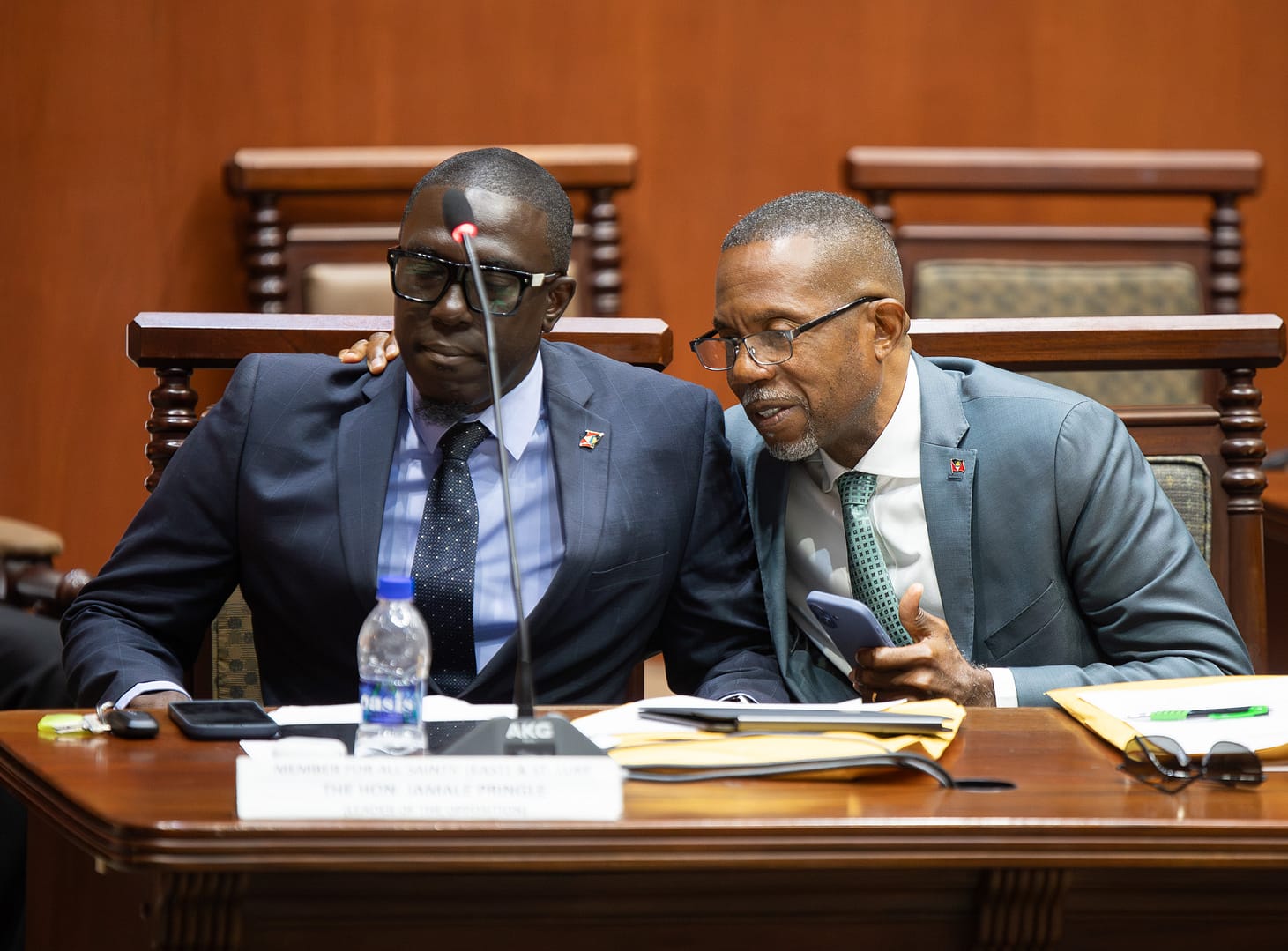
A fresh political controversy is unfolding in Antigua and Barbuda, centered on the status of Opposition Leader Jamale Pringle, who remains unsworn in following the April general election. Prime Minister Gaston Browne has broken his silence on the debate over whether Pringle is eligible to receive his parliamentary salary, drawing a clear line between longstanding legal rules and his government’s pragmatic approach to the standoff.
Speaking during his weekly *Browne and Browne* radio broadcast on Saturday, Browne addressed the growing discussion sparked by Pringle’s absence from the first post-election parliamentary sitting and subsequent barring from last week’s special joint parliamentary session. Under Section 48(1) of Antigua and Barbuda’s Constitution, no elected member of parliament may participate in any parliamentary proceedings before they take and formally subscribe to the required oath of allegiance. Pringle, who won his seat in the April general election, has not completed this mandatory step, and the government has stated he must wait until the next scheduled ordinary sitting of parliament to be sworn in.
During the radio segment, the host referenced a landmark Privy Council ruling from a past case in Trinidad and Tobago, a fellow Caribbean jurisdiction, that establishes a clear legal precedent on this issue. According to that ruling, barring extraordinary extenuating circumstances, elected representatives who have not completed the oath of allegiance are not legally entitled to collect parliamentary remuneration for the period before they are sworn in.
Browne confirmed that this precedent aligns with established parliamentary rules, and confirmed that technically, no salary can accrue to Pringle until he fulfills the constitutional requirement of taking the oath. “It has been held that if a member fails to take the oath, that period during which the oath is not taken, that that member of parliament should not be paid,” Browne explained during the broadcast.
But despite affirming this clear legal position, the prime minister stressed that his administration has no intention of taking a hardline petty stance on the issue. “In fact, as far as I’m concerned, you should be paid. But technically speaking, he should not be paid [under the rules],” Browne said. Reaffirming his government’s position, he added, “But again, we’re not being petty. And if they pay him a month’s salary, we will not object to it.”
Browne’s remarks come after he previously defended the decision to block Pringle from participating in last week’s joint parliamentary sitting, a move that stemmed directly from Pringle’s failure to complete the oath requirement. The prime minister’s comments this weekend clarify the government’s stance on both participation and salary, separating the strict constitutional and legal requirements for parliamentary access from the government’s willingness to avoid a petty dispute over salary payment.