博客

  • By-election candidate Danny Lugay proposes major tourism hub to tackle unemployment in Roseau North

    By-election candidate Danny Lugay proposes major tourism hub to tackle unemployment in Roseau North

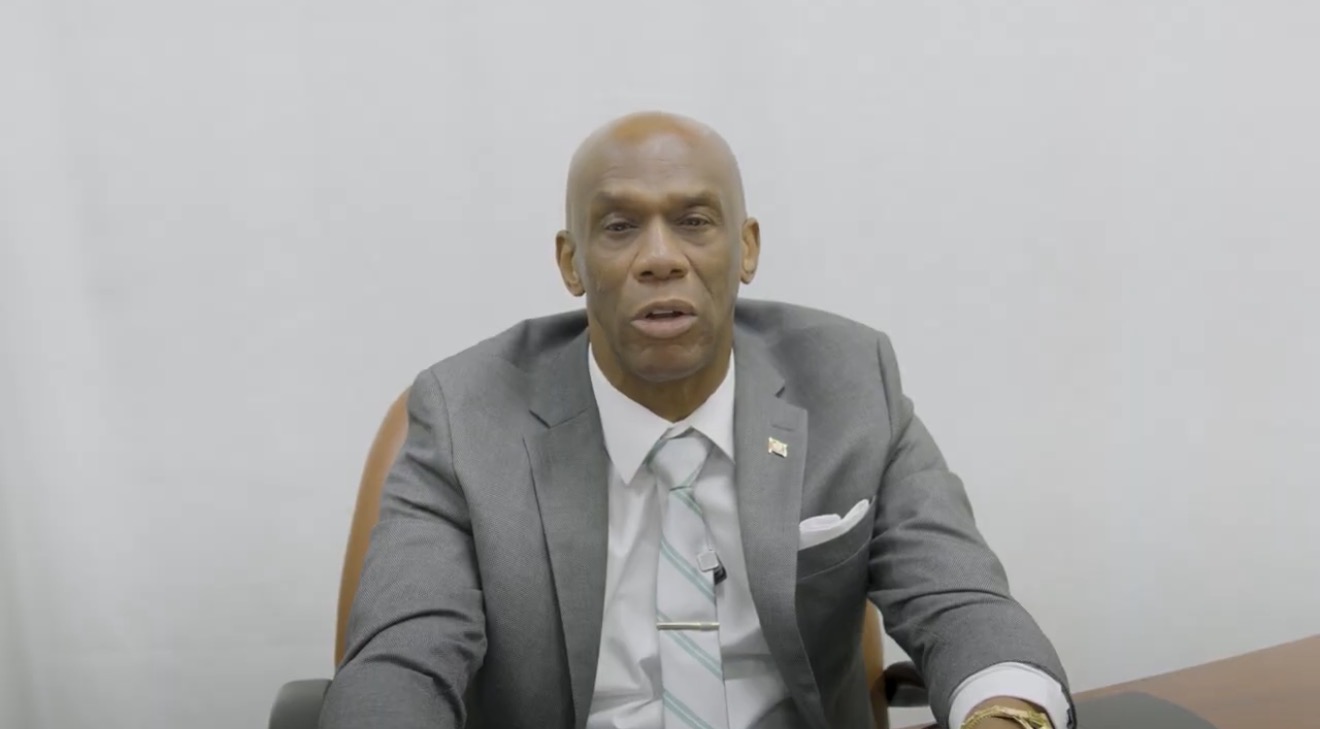
    As the campaign for the upcoming Roseau North by-election in Dominica gains momentum, United Workers Party (UWP) candidate Danny Lugay has put forward a bold economic development proposal focused on tackling one of the island nation’s most urgent socioeconomic problems: widespread unemployment.

    Speaking at a public rally hosted by the opposition UWP on Friday evening, Lugay emphasized that the persistent lack of local employment opportunities has pushed a growing number of young Dominican citizens to emigrate in search of work, exposing them to serious risks abroad. “One of the major issues for us now is unemployment. That is why most of our young men are running away to countries where they get killed, when we should be having serious employment in our country,” he told attendees.

    Lugay’s flagship proposal centers on repurposing the disused former Public Works site in the heart of Roseau into a mixed-use tourism and commercial hub, a plan he says aligns with the broader economic vision of UWP political leader Dr. Thompson Fontaine. Unlike the previous government plan to hand the prime two-acre waterfront plot over to a private investor for a five-star hotel, Lugay’s scheme keeps the state-owned land in public hands and prioritizes broad-based benefits for local residents and small entrepreneurs.

    The planned development includes a range of community-focused amenities: a modern central tourist reception center, a covered vendors’ arcade, a collection of local food restaurants, beauty and wellness service spaces, artist studios, and dedicated work areas for local craft artisans. Lugay also proposed adding a centralized bus terminal that would serve as the starting and ending point for organized island tours, giving visitors easy access to the hub’s shopping, dining, and entertainment offerings before and after their excursions.

    To position the site as a unique cultural attraction, Lugay wants to replicate the lively open-air entertainment atmosphere of Gros Islet in neighboring St. Lucia. He plans to host scheduled live music performances from local Dominican artists and weekly festival nights every Wednesday and Friday, bringing both residents and international visitors together to celebrate local food and culture. He added that the project will be designed by local architects to create an inviting, environmentally friendly public space that highlights authentic Dominican experiences, rather than a generic private development.

    A core economic benefit of the plan, Lugay argues, is that it will keep more tourism revenue circulating within Dominica’s local economy, rather than sending profits overseas to international hotel operators. “What we want for Roseau North is to ensure that every tourism dollar that enters Dominica, we get 50 per cent of that dollar,” he explained. The hub is projected to create dozens of new jobs for young people across Roseau North and surrounding communities, while opening up new entrepreneurial opportunities for local small business owners.

    This proposal is consistent with Lugay’s long-standing position on the future of the former Public Works site. During his previous term as the constituency’s parliamentary representative, he openly opposed the government’s push to approve the private five-star hotel development. In 2022, he formalized his objections in an official letter to then Chief Physical Planner Naomi Dorival, noting that the site is zoned for light industrial and warehousing use under the existing Potterville Housing Scheme Local Area Plan, making a large hotel development incompatible with local planning rules. He also argued that the plot’s strategic location adjacent to Dominica’s main commercial seaport makes it far more valuable for public use and long-term national development than a private hospitality project.

    At that time, Lugay first proposed redeveloping the site as a public multi-purpose facility that would combine youth skills training spaces, commercial areas for local vendors, retail outlets, and community amenities. He also called for full transparency around any potential sale of the state-owned land, requiring that any disposal of the property go through an open public tender process. Lugay has confirmed his objections received a favorable response from the Chief Physical Planner, who confirmed no planning approval had been granted for the hotel project and acknowledged the public concerns he raised.

    The Roseau North parliamentary seat became vacant following the recent resignation of former representative Miriam Blanchard, and a by-election is constitutionally required to be held by September. While the Dominica Electoral Office has not yet released an official polling date, the two confirmed candidates – Lugay of the UWP and Ashma McDougall of the ruling Dominica Labour Party (DLP) – have already begun active campaigning to win over constituency voters.

  • Telesur moderniseert kernnetwerk om groei dataverkeer op te vangen

    Telesur moderniseert kernnetwerk om groei dataverkeer op te vangen

    Suriname’s leading state-owned telecommunications firm Telesur is embarking on a two-year large-scale initiative to modernize its core IP and transmission network, responding to exponential surges in domestic and international data traffic that have strained existing infrastructure over the past five years.

    The official launch of the project took place this Thursday at a Strategic Stakeholder Session and Project Kick-off Ceremony, where Telesur formalized its partnership with three global technology leaders: Openlink, Cisco, and Ciena. At the event, all parties signed a binding Statement of Commitment, cementing their shared responsibilities for delivering the network upgrade on schedule. Armando Guevara, General Manager of Openlink, and Doric Ramlakhan, Chief Executive Officer of Telesur, led the ceremonial signing.

    According to official data shared by Telesur, the urgent need for this investment stems from staggering growth in data usage across the country. Between 2020 and 2025, the company recorded a 419% jump in international data traffic on its network, soaring from roughly 35 gigabits per second (Gbps) to 172 Gbps. Domestic data traffic has also expanded rapidly, driven by the ongoing rollout of fiber-optic connections across Suriname and accelerating digital transformation across households, private enterprises, and public government services.

    The IP Core and transmission network acts as the digital backbone of all of Telesur’s operations, handling all data routing within Suriname as well as international connectivity to global networks. Completing the modernization will not only boost the network’s ability to accommodate current and future demand but also prepare the infrastructure to support emerging digital applications that are expected to enter the market in coming years.

    For end customers, the upgrade will deliver tangible long-term benefits: expanded network capacity, more consistent and stable internet connections, and a flexible infrastructure that can accommodate future technological advances. Most construction and upgrades will be carried out on backend infrastructure, meaning the project will cause minimal direct disruption to everyday user services during implementation.

    Telesur CEO Doric Ramlakhan emphasized that the investment is a proactive measure to prevent growing data demand from eroding the quality of the company’s service offerings. More broadly, Ramlakhan noted that the modernization project lays a critical foundational framework for sustained digital advancement, innovation, and inclusive economic growth across Suriname in the years ahead.

  • STATEMENT: OECS Director General ‘In tribute to Sir Garfield St Aubrun Sobers (1936–2026)’

    STATEMENT: OECS Director General ‘In tribute to Sir Garfield St Aubrun Sobers (1936–2026)’

    The global cricket community and nations across the Caribbean are in mourning this week following the passing of Sir Garfield Sobers, widely hailed as the greatest all-round cricketer in the history of the sport. In an official statement released by the Organisation of Eastern Caribbean States, Director General Dr. Didacus Jules confirmed the loss of the Barbadian icon, extending heartfelt condolences to Sir Garfield Sobers’ surviving family, the people of his home nation Barbados, and cricket lovers across every Caribbean territory that claimed the legend as their own.

    More than a star athlete, Sobers embodied the full potential of cricket as both a craft and a unifying force. As a batsman, he moved with a breathtaking, almost poetic grace that left crowds and opponents mesmerized; as a bowler, he mastered three distinct bowling styles, making him an unpredictable and unstoppable force on the pitch; and his fielding was defined by raw, innate instinct that turned routine plays into spectacular moments. His record-breaking 365 not out in an international Test match stood as the highest individual Test score for 36 years, a benchmark that defined excellence for generations of batters. Even decades later, his feat of hitting six sixes from six consecutive balls in a single over remains one of the most iconic acts of bold brilliance in all of professional cricket. Over a 20-plus-year international career, he played 93 Test matches, amassed more than 8,000 runs, and captained the West Indies cricket team with imaginative strategy and unwavering national pride.

    Yet Sir Garfield Sobers’ legacy stretches far beyond the statistics that line his career record. Born and raised in the working-class Bay Land neighborhood of Bridgetown, Barbados, he climbed to the pinnacle of a sport that, during the era of British colonial rule, had long been reserved for white elites, with Black Caribbean residents barred from competing at the highest levels. In a period marked by the gradual dissolution of empire and the fight for post-colonial identity, Sobers emerged as living proof that Caribbean talent and excellence answered to no outside power. For the first time, a Black West Indian man was universally recognized as the greatest to ever play the global game, and for the small, scattered island nations of the Caribbean, he became a mirror that reflected a new shared identity: unified, confident, and truly independent.

    He played an unheralded role in helping the newly independent Caribbean nations forge a collective sense of shared purpose. The hard-won West Indian cultural identity, rooted in mutual dignity and shared athletic triumph, owes an incalculable debt to the Barbadian batsman who forced the entire world to stop and admire the region’s talent. A designated National Hero of Barbados and the first person to be knighted on Barbadian soil after the nation gained independence, Sir Garfield Sobers never turned his back on his working-class roots, and his home nation has already pledged he will never be forgotten.

    “In this moment of grief, we stand with Lady Sobers and the entire Sobers family, we stand with the people of Barbados, and we celebrate the extraordinary legacy Sir Garfield leaves behind,” Dr. Jules added in the statement. “Thank you for the runs, for the wickets, for the collective pride you gave us, and for the sense of freedom you helped an entire region feel. Rest well, Master.”

  • OP-ED: We’ve called the meeting, now here’s what we bring

    OP-ED: We’ve called the meeting, now here’s what we bring

    When the European Union issued an ultimatum to five Eastern Caribbean nations to shutter their Citizenship by Investment (CBI) programs by 2028, regional leaders gathered in Roseau, Dominica last Friday and made a critical, forward-thinking choice: they will head to Brussels as a unified bloc to negotiate, rather than comply passively. This op-ed from the soon-to-launch Caribbean Outlet, *The Caribbean Ledger*, framed the gathering not as the final step in the process, but the starting line for high-stakes preparation, outlining a clear strategic framework for the Caribbean delegation to reframe the conversation from defense to proactive negotiation.

    To enter the talks effectively, regional leaders must first understand the shifting landscape they face. In a June 25 letter from EU Commissioner Magnus Brunner, Brussels made clear that the existence of CBI programs itself, “regardless of how well it is managed,” is now grounds for reviewing Schengen visa-free access for Caribbean nationals. This means compliance reforms – which the Eastern Caribbean Collective Investment Regulatory Authority (ECCIRA), launched this year and headquartered in Grenada, was specifically designed to address – are no longer the core of the discussion. The EU has already moved past administrative concerns to a matter of principle. Any attempt to debate compliance in Brussels will hit an immovable wall, the analysis argues, so the region must shift its approach entirely.

    The Caribbean’s strongest negotiating leverage is not a defense of CBI, but a clear exposure of the current asymmetric power dynamic. If the Caribbean shuts down its programs as the EU demands, Brussels and Washington achieve their stated goal of safeguarding global integrity systems – but the entire fiscal cost falls entirely on small island economies. For Dominica, CBI revenue makes up roughly 37% of total GDP. St Kitts and Nevis already saw its 2024 fiscal deficit widen to 11% of GDP after a drop in CBI earnings, and would face an unfillable structural budget gap if the programs are eliminated entirely. Across the region, CBI funding has paid for critical public infrastructure: hospitals, modern airports, climate-resilient housing, and national fiscal buffers that shield economies from external shocks. The current outcome the EU is pushing would leave the EU with all the gains and the Caribbean absorbing all the losses – that is not how an equal partnership works, and the region must state this plainly and calmly from the start of talks.

    Instead of begging for compensation, which casts the region as a supplicant, the analysis argues Caribbean leaders should come to the table with a concrete proposal to trade the CBI revenue stream for a permanent, binding EU-Caribbean trade and development compact. Existing frameworks already exist to support this: the CARIFORUM-EU Economic Partnership Agreement, the Samoa Agreement, and the EU’s own Global Gateway development initiative. The Caribbean only needs to turn these loose frameworks into a tangible, enforceable deal that works for both sides: guaranteed long-term market access for Caribbean agricultural and value-added goods, paired with EU investment in the infrastructure needed to scale that trade. This is a negotiation between equal partners, not a surrender to EU demands.

    The analysis lays out four core elements that the Caribbean’s formal proposal must include to be taken seriously. First, a phased, negotiated transition instead of an abrupt 2028 hard stop. An immediate end to CBI without alternative revenue would trigger an immediate fiscal crisis across the region. Instead, the Caribbean should propose a 3-5 year structured wind-down, shifting toward residency-focused investment models that meet EU security safeguards while maintaining orderly investment inflows during the transition, with clear public milestones to track progress. Second, a binding commitment for expanded agricultural trade access to EU markets. The region still remembers the collapse of the Windward Islands banana industry after EU trade preferences were withdrawn, when an entire regional economic sector hollowed out almost overnight. This time, the Caribbean should leverage that history to demand a specific, enforceable agreement with set volumes and timelines for expanded access for Caribbean agricultural and agro-processed goods. Third, a dedicated Caribbean Development Partnership facility under the EU’s Global Gateway framework. This facility would be seeded by EU funding, matched with existing capital from the Caribbean Development Bank (CDB) and the Eastern Caribbean Central Bank (ECCB), and targeted at the specific infrastructure needed to expand trade: cold storage networks, packing facilities, port upgrades, and phytosanitary certification systems. Fourth, quantified, binding co-financing commitments for climate resilience. As small island developing states, the Caribbean bears a disproportionate share of climate change costs that it did almost nothing to cause, making this a non-negotiable component of any fair compact.

    Beyond substance, the posture of the Caribbean delegation will shape the outcome of the talks. First and most critically, the region must speak with one voice. Divided, separate negotiations will only let Brussels split the bloc and weaken individual nations’ bargaining power. A unified position supported by the Organization of Eastern Caribbean States (OECS) and CARICOM, led jointly by OECS Chairman Prime Minister Gaston Browne and incoming CARICOM Chairman Prime Minister Philip J. Pierre, will signal that this is a region-wide priority, not a narrow sub-regional grievance. Second, the delegation must bring concrete, publicly available numbers for every part of its proposal. Specificity demonstrates seriousness, while vagueness lets the EU agree in principle without delivering any tangible outcomes – a mistake the region has made repeatedly in past negotiations. Every element should be quantified: the fiscal impact of an abrupt phase-out, how much replacement revenue is needed, how much investment the Caribbean will contribute, and what exact volume of market access is being requested. Third, the delegation should reference past patterns of unequal negotiation calmly, not as a list of grievances. Past experiences – the banana trade collapse, 1990s financial services pressure, the more recent correspondent banking crisis – are not random misfortunes, they are patterns that explain why the region is demanding binding commitments rather than vague statements of intent this time around. That request is entirely reasonable for a partner that has seen European interests override regional solidarity in the past.

    The window for negotiation is narrow, and preparation is now non-negotiable. Regional development frameworks already lay out clear long-term goals: the CDB estimates the region needs $65 billion in financing by 2033 just to avoid economic stagnation, while the ECCB’s Big Push strategy aims to double the Eastern Caribbean’s total GDP within a decade. An abrupt CBI phase-out would derail both of these critical goals, but a well-negotiated compact would make them achievable. What the region needs right now is not just a joint communiqué or a statement of intent, but a specific, costed, legally grounded transition plan that maps out exactly what revenue needs to be replaced, what new industries will be built, what trade volumes will be negotiated, what infrastructure will be financed, and what timeline all of this will follow. The Caribbean has been forced into economic transitions before, but rarely has it had the chance to prepare a detailed plan in advance, before the crisis hits.

    St. Jean & Company, a regional advisory firm that has worked on economic transition strategy since 2020, has already built a transition and diversification roadmap aligned with both the CDB and ECCB frameworks, designed explicitly to support this moment. The firm offers this analysis and existing work to the Caribbean delegation, and stands ready to expand it into a full advisory engagement to support the Brussels mission. The Roseau meeting was the right first step, the analysis concludes, demonstrating that the Caribbean can adapt quickly when global conditions shift. Unlike past transitions, the ground has not yet fallen out from under the region – there is still time to shape a safe, prosperous landing. The window will not stay open forever, so the region must use every moment of preparation wisely.

  • President Bostic pays tribute to Sir Garfield Sobers

    President Bostic pays tribute to Sir Garfield Sobers

    The Caribbean island nation of Barbados is in mourning this week after the passing of one of its most beloved and iconic figures, trailblazing cricket star Sir Garfield Sobers, who died on Friday. In a heartfelt public address following the news of Sobers’ death, Barbados President Jeffrey Bostic paid a moving tribute to the athlete, who was officially named a National Hero of Barbados for his immeasurable contributions to sport and national pride.

    President Bostic emphasized that Sir Garry, as he was widely known by fans and peers alike, leaves behind a legacy that stretches far beyond the boundary lines of cricket pitches across the world. Beyond his status as a once-in-a-generation sporting legend, Bostic framed Sobers as a powerful, enduring symbol of the core values that define Barbadian national identity: excellence, unyielding resilience, and quiet grace under pressure.

    “His genius on the cricket field brought unprecedented glory to our nation and inspired generations of young athletes across the globe,” Bostic said in his statement. The president also highlighted Sobers’ character away from sport, noting that his well-documented humility and deep commitment to humanitarian efforts reflected the best of the Barbadian people.

    Speaking in his official capacity as head of state, Bostic extended sincere condolences to Sobers’ family, close friends, and the millions of fans around the world who held the cricketer in deep affection. “His legacy is etched not only in the record books of cricket but in the very spirit of our nation,” Bostic added.

    Barbados has lost a native son of unmatched stature, the president acknowledged, but the country and its people will forever be enriched by the life Sobers lived and the example he set for future generations. Bostic closed his tribute by calling on all Barbadians to honor the cricketer’s memory by pursuing greatness in their own personal and professional endeavors, ending with a simple prayer: “May his soul rest in eternal peace. He will forever be the greatest cricketer the world has ever seen.”

  • Bouva ziet grotere rol voor IICA bij ontwikkeling landbouw

    Bouva ziet grotere rol voor IICA bij ontwikkeling landbouw

    Suriname’s government has formally announced its plan to strengthen long-standing cooperative ties with the Inter-American Institute for Cooperation on Agriculture (IICA), outlining the central role of agriculture in the country’s economic growth strategy alongside its booming oil and gas sector. The announcement came during a introductory meeting between Foreign Affairs, International Trade and Cooperation Minister Melvin Bouva and newly appointed IICA representative for Suriname, Michael Dalton.

    During the discussions, both parties focused on how IICA’s technical support can advance the sustainability and modernization of Suriname’s agricultural industry, a core priority for the government that aims to position the country as a regional food hub. Minister Bouva highlighted the ongoing partnership between the Ministry of Agriculture, Animal Husbandry and Fisheries (LVV) and the Dominican Republic-based Rizek Group to expand the nation’s cocoa sector, noting that IICA’s specialized technical expertise would add significant value to this and other key strategic agricultural projects across the country.

    For his part, Dalton provided a comprehensive update on the organization’s active work in Suriname. Current initiatives include two major agricultural projects funded by the Inter-American Development Bank (IDB), preparations for the Caribbean Beekeepers Congress scheduled to take place in Paramaribo from November 6 to 8, and the development of a $25 million rice program proposal to be submitted to the Green Climate Fund. IICA is also working on a national exhibition to promote local Surinamese honey, and is finalizing a new four-year medium-term work plan that includes a tailored regional strategy for Caribbean nations, designed to address the unique agricultural challenges and development priorities across the region.

    Suriname and IICA first established their formal cooperation partnership in 1981. Over the past four decades, the institute has worked alongside the Ministry of LVV and other local Surinamese stakeholders to deliver dozens of projects focused on agricultural expansion, knowledge sharing, and institutional capacity building. Minister Bouva expressed public appreciation for the decades of productive collaboration, emphasizing that international partnerships are critical to advancing the country’s national development goals. He extended his well wishes to Dalton in his new role, saying he is confident that the partnership between Suriname and IICA will see significant expansion and progress in the coming years.

  • Repeat Target: All Saints Business Hit by Another Break-In Attempt

    Repeat Target: All Saints Business Hit by Another Break-In Attempt

    A local commercial establishment at the center of a previous high-profile robbery incident has once again become the target of criminal intruders, according to a public community post. In the early hours of the incident around 3:30 a.m., multiple individuals tried to force entry into the All Saints-based business, but their plan fell apart when the shop owner woke up to the loud sounds of their break-in attempt. As the owner stirred inside the building, the would-be intruders panicked and fled the scene before they could gain access to the property. Before making their escape, however, the suspects spotted a installed security camera and deliberately disabled it, in what investigators believe was a calculated move to cover their identities and leave no visual evidence of their involvement. What makes this incident particularly notable is that the same business was targeted in a separate, more violent attack in the past, when the owner successfully fought off an armed robber who was carrying a cutlass. Law enforcement sources and community organizers have noted that they believe the perpetrators behind this latest attempted break-in are completely different individuals from those involved in the earlier robbery, ruling out a repeat attack by the same offender. The community post that first shared details of the incident has issued a public appeal for information, asking any local residents or passersby who noticed any out-of-the-ordinary or suspicious activity in the area near the shop around the 3:30 a.m. time frame to reach out to local police immediately. The post emphasized that even seemingly trivial details could end up being critical to helping officers identify and apprehend the suspects. At the time of this reporting, the claims laid out in the community post have not been independently confirmed by third-party journalists or official law enforcement sources. Local police departments have also not yet released any official statement or comment on the alleged attempted break-in.

  • Motorists Advised of Diversions as Major Works Begin on All Saints Road

    Motorists Advised of Diversions as Major Works Begin on All Saints Road

    Residents and commuters in Antigua and Barbuda are being notified of upcoming major infrastructure upgrades along a busy section of All Saints Road, with significant temporary traffic adjustments set to take effect next July. The works, which are being overseen by the nation’s Ministry of Works, will be concentrated in the area surrounding the Midway Service Station, a high-traffic stop for local and through travelers along the route.

    The full traffic diversion order will go into effect starting at 4:00 p.m. on Saturday, July 18, 2026, and will remain in place through approximately midnight the following day, according to official government announcements. During this window, all vehicles traveling to and from three key local communities — Sea View Farm, Freemans Village, and All Saints — will be required to follow a re-routed path marked on an official map distributed alongside the advisory.

    To help ease congestion and prevent navigation confusion, project organizers have confirmed that trained flag persons will be stationed at key points along the diversion route to direct vehicle flow. Clear, permanent signage will also be posted along both directions of travel to guide commuters to their destinations. Importantly, local residents who live in immediate proximity to the work zone will retain full access to their properties throughout the construction period, with no planned access restrictions for local homeowners.

    Officials are stressing that all existing businesses along the affected stretch of All Saints Road will remain open for regular operations during the works, so residents and customers can still access local goods and services as usual. This upgrade forms a core segment of the larger government-led All Saints Road Project, a long-term infrastructure initiative designed to improve road conditions, safety, and connectivity across the region.

    With heavy-duty construction equipment operating in close proximity to the travel route, authorities are urging all motorists to strictly follow posted signage and instructions from on-site personnel to maintain safe passage through the area. Stakeholders and regular commuters who use this corridor are asked to proactively adjust their travel schedules ahead of time to account for expected minor delays, as construction work progresses.

    For anyone with questions or concerns about the upcoming roadworks or traffic adjustments, project representatives can be reached via telephone through the Project Implementation Management Unit at 562-9173 during regular business hours.

  • SOS issued for crew after vessel catches fire at sea

    SOS issued for crew after vessel catches fire at sea

    Five days after a devastating fire disabled a Trinidad and Tobago-registered yellowfin tuna fishing vessel in the remote border waters of Suriname, French Guiana and Brazil, families and loved ones of the six-person crew have issued a desperate plea for stepped-up search and rescue operations across the region.

    The ill-fated vessel, owned by local firm Renata Enterprises Limited, departed Chaguaramas’ Tardieu Marine yard on July 6 with a multinational crew on a planned fishing voyage. Among the six people on board are four nationals of Trinidad and Tobago, one sailor from St. Vincent and the Grenadines, and captain Eshwar “Shanie” Persaud, a Guyanese national. One of the Trinidadian crew members is Shannon Mohammed, whose wife Amanda Suraj has spearheaded the public appeal for assistance.

    Per family accounts, the fire broke out at approximately 6:30 a.m. on July 13 as the vessel operated near the overlapping maritime boundaries of Suriname and French Guiana. In the immediate aftermath of the blaze, the boat lost all power and onboard communications systems, cutting off all contact with the outside world. To date, no visual sightings of the vessel or crew have been confirmed, leaving families in limbo waiting for any update on their loved ones’ fates.

    Experts and family members say the disabled vessel is now adrift, carried by prevailing winds and ocean currents across the vast expanse of water between the three South American coastal nations. In an urgent interview with Trinidad and Tobago’s *Express* newspaper on Saturday, Suraj made a broad plea for coordinated action from all stakeholders in the region, calling on local governments, coast guard agencies, maritime authorities, commercial shipping operators and regional media outlets to join the search effort.

    “We are desperately pleading with regional media houses to broadcast this information immediately,” Suraj stated. “We urgently need intervention from neighboring maritime assets, passing commercial vessels, and local authorities in French Guiana, Suriname, and Brazil to deploy search and rescue teams to the area.”

    Suraj added that no new information about the crew’s location has emerged since the vessel’s last confirmed contact on July 13, and she has urged all vessels transiting the affected area to maintain a sharp lookout for any sign of the drifting fishing boat or its crew. She also called on international maritime search and rescue organizations to expand their search parameters to cover the full area the vessel is expected to have drifted to, emphasizing that the crew’s families hold out hope for a safe rescue. The expanding appeal comes as time grows increasingly critical for the missing sailors, who have now been adrift without support for five full days.

  • DOMINICA: Port Worker Killed in Cargo Handling Accident at Woodbridge Bay

    DOMINICA: Port Worker Killed in Cargo Handling Accident at Woodbridge Bay

    A deadly workplace accident at Dominica’s Woodbridge Bay Port has claimed the life of a veteran stevedore, leaving the local port community reeling and triggering an official investigation into potential safety failures.

    Law enforcement officials have identified the victim as 47-year-old Otis Francis, a resident of Tarish Pit. The tragic incident unfolded shortly after midnight on Friday, at approximately 12:30 a.m., as Francis carried out routine cargo handling duties aboard the commercial cargo vessel Tropic Opal, which was docked at the Fond Colé section of the port.

    According to official updates from the Commonwealth of Dominica Police Force, Francis sustained catastrophic, fatal injuries when a shipping container collided with him during operations. An on-call medical practitioner responded quickly to the emergency scene but pronounced the worker dead shortly after arrival.

    Members of the police’s specialized Crime Scene Unit have already processed the accident site to collect physical evidence, as a team of investigators works to piece together the full sequence of events that led to Francis’s death. Following the incident, the victim’s remains were transported to Lyndhurst Funeral Home, where a post-mortem examination is scheduled to confirm the official cause of death.

    In an official statement released after the accident, the police force extended its deepest condolences to Francis’s family, close friends, and fellow port workers, calling the incident an devastating and irreversible tragic loss for the local community.

    The fatal accident has sent shockwaves through Dominica’s tight-knit port working community, and has caused temporary disruptions to regular cargo operations at the Woodbridge Bay facility. Port and law enforcement authorities confirmed that the investigation remains ongoing, with investigators working to clarify exactly what led to the collision, and determine whether any violations of mandatory workplace safety protocols contributed to the stevedore’s death.