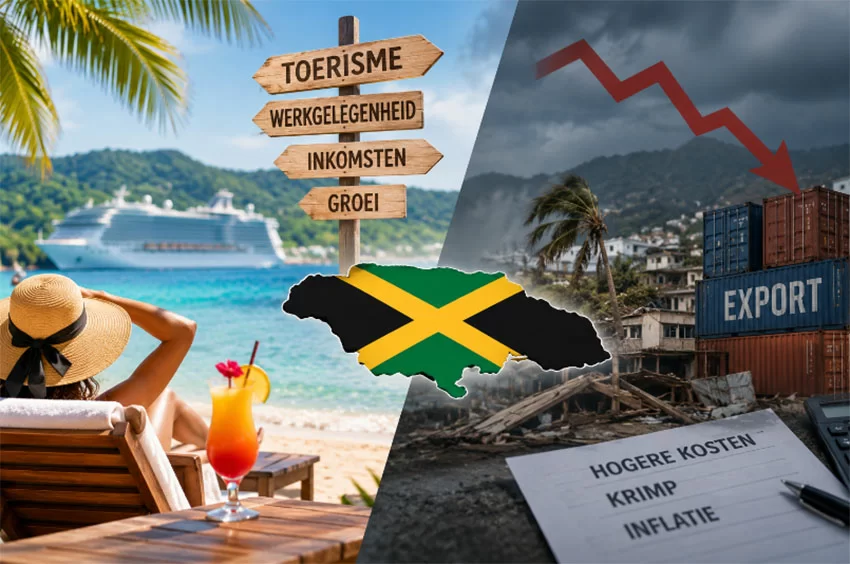
By the end of August 2026, Jamaica had welcomed 2.34 million international visitors, who injected approximately $2.5 billion USD into the Caribbean nation’s economy. But behind these top-line figures, the country continues to grapple with steep economic contraction and lingering damage from last year’s Hurricane Melissa, with key sectors like tourism and goods exports still performing far below pre-storm 2025 levels.
Tourism Minister Edmund Bartlett noted that the 2.34 million visitor count marks a 17% drop compared to the same eight-month period in 2025, while total tourism revenue has fallen 18% year-over-year. Even so, Bartlett framed the current results as encouraging, given the severe capacity constraints the sector has faced since the hurricane hit in October 2025. The storm damaged dozens of coastal hotels and critical tourism infrastructure, leaving roughly 30% of the country’s total hotel room capacity still offline as of September 2026, with only 70% of rooms available for booking.
Air connectivity has also not fully rebounded. While major airlines have maintained their existing routes to Jamaica, flights are currently operating with high load factors. Global aviation industry-wide headwinds, including persistent shortages of aircraft and replacement parts, have driven up ticket prices for travel to the island, putting downward pressure on booking volumes for budget-conscious travelers.
The struggling tourism sector is just one component of a broader decline in Jamaica’s foreign earnings. Updated analysis of first-quarter 2026 economic data shows that the country’s goods exports plummeted more than 22% year-over-year, driven largely by a sharp drop in mining production and lower export shipment volumes. Service exports, of which tourism makes up the largest share, also fell dramatically, dropping 20.1% in the first quarter as lower visitor numbers translated directly to reduced spending.
The trade data reveals a stark imbalance in Jamaica’s current account. In the first three months of 2026, the country imported nearly $1.87 billion USD worth of goods, while goods exports generated just $377 million USD. That means Jamaica spent almost five times more on imported goods than it earned from selling goods to foreign markets. A key buffer against this deep trade imbalance has come from remittances sent by Jamaican citizens living abroad, which rose 7.4% year-over-year in the first quarter. That growth prevented an even steeper deterioration of the country’s current account deficit.
The economic fallout from Hurricane Melissa extends far beyond tourism and international trade. Preliminary estimates put Jamaica’s first-quarter 2026 economic contraction at 5.9% compared to the same period in 2025. The accommodation and food service sectors, which are the backbone of the tourism industry, were hit hardest, contracting by more than 20% year-over-year. Viewed against this broader economic downturn, the latest tourism figures actually signal slow but steady progress: even with one-third of hotel capacity still unavailable and air connections not fully restored, the sector still brought in $2.5 billion USD in foreign revenue over eight months.
A robust recovery of the tourism sector is critical to Jamaica’s overall economic health. The industry not only directly creates jobs and generates government revenue, but it is also the country’s largest source of foreign currency, which Jamaica relies on to fund a large share of its essential imports. The latest data on trade, tourism and output also highlights the extreme economic vulnerability of small island developing states when a single natural disaster disrupts multiple key foreign revenue streams at once.
The coming winter tourism peak will serve as a major test of Jamaica’s recovery trajectory. As more damaged hotels complete repairs and bring additional rooms back online, and as aviation capacity gradually increases, industry leaders and policymakers will be watching closely to see whether the country can continue to close the gap in visitor numbers and revenue lost to the hurricane.