博客

  • SOS issued for crew after vessel catches fire at sea

    SOS issued for crew after vessel catches fire at sea

    Five days after a devastating fire disabled a Trinidad and Tobago-registered yellowfin tuna fishing vessel in the remote border waters of Suriname, French Guiana and Brazil, families and loved ones of the six-person crew have issued a desperate plea for stepped-up search and rescue operations across the region.

    The ill-fated vessel, owned by local firm Renata Enterprises Limited, departed Chaguaramas’ Tardieu Marine yard on July 6 with a multinational crew on a planned fishing voyage. Among the six people on board are four nationals of Trinidad and Tobago, one sailor from St. Vincent and the Grenadines, and captain Eshwar “Shanie” Persaud, a Guyanese national. One of the Trinidadian crew members is Shannon Mohammed, whose wife Amanda Suraj has spearheaded the public appeal for assistance.

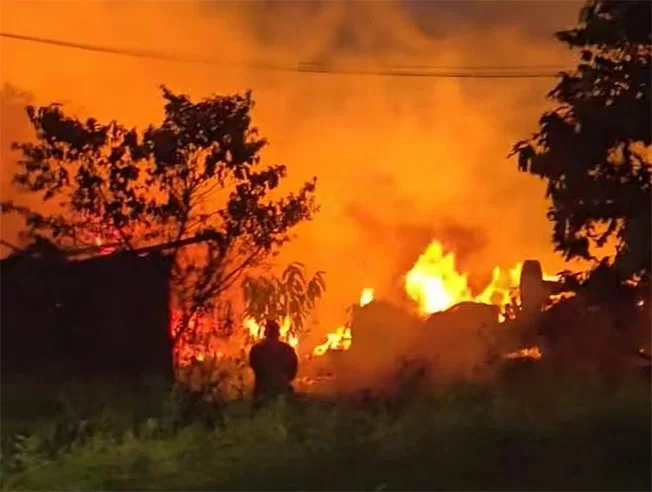
    Per family accounts, the fire broke out at approximately 6:30 a.m. on July 13 as the vessel operated near the overlapping maritime boundaries of Suriname and French Guiana. In the immediate aftermath of the blaze, the boat lost all power and onboard communications systems, cutting off all contact with the outside world. To date, no visual sightings of the vessel or crew have been confirmed, leaving families in limbo waiting for any update on their loved ones’ fates.

    Experts and family members say the disabled vessel is now adrift, carried by prevailing winds and ocean currents across the vast expanse of water between the three South American coastal nations. In an urgent interview with Trinidad and Tobago’s *Express* newspaper on Saturday, Suraj made a broad plea for coordinated action from all stakeholders in the region, calling on local governments, coast guard agencies, maritime authorities, commercial shipping operators and regional media outlets to join the search effort.

    “We are desperately pleading with regional media houses to broadcast this information immediately,” Suraj stated. “We urgently need intervention from neighboring maritime assets, passing commercial vessels, and local authorities in French Guiana, Suriname, and Brazil to deploy search and rescue teams to the area.”

    Suraj added that no new information about the crew’s location has emerged since the vessel’s last confirmed contact on July 13, and she has urged all vessels transiting the affected area to maintain a sharp lookout for any sign of the drifting fishing boat or its crew. She also called on international maritime search and rescue organizations to expand their search parameters to cover the full area the vessel is expected to have drifted to, emphasizing that the crew’s families hold out hope for a safe rescue. The expanding appeal comes as time grows increasingly critical for the missing sailors, who have now been adrift without support for five full days.

  • DOMINICA: Port Worker Killed in Cargo Handling Accident at Woodbridge Bay

    DOMINICA: Port Worker Killed in Cargo Handling Accident at Woodbridge Bay

    A deadly workplace accident at Dominica’s Woodbridge Bay Port has claimed the life of a veteran stevedore, leaving the local port community reeling and triggering an official investigation into potential safety failures.

    Law enforcement officials have identified the victim as 47-year-old Otis Francis, a resident of Tarish Pit. The tragic incident unfolded shortly after midnight on Friday, at approximately 12:30 a.m., as Francis carried out routine cargo handling duties aboard the commercial cargo vessel Tropic Opal, which was docked at the Fond Colé section of the port.

    According to official updates from the Commonwealth of Dominica Police Force, Francis sustained catastrophic, fatal injuries when a shipping container collided with him during operations. An on-call medical practitioner responded quickly to the emergency scene but pronounced the worker dead shortly after arrival.

    Members of the police’s specialized Crime Scene Unit have already processed the accident site to collect physical evidence, as a team of investigators works to piece together the full sequence of events that led to Francis’s death. Following the incident, the victim’s remains were transported to Lyndhurst Funeral Home, where a post-mortem examination is scheduled to confirm the official cause of death.

    In an official statement released after the accident, the police force extended its deepest condolences to Francis’s family, close friends, and fellow port workers, calling the incident an devastating and irreversible tragic loss for the local community.

    The fatal accident has sent shockwaves through Dominica’s tight-knit port working community, and has caused temporary disruptions to regular cargo operations at the Woodbridge Bay facility. Port and law enforcement authorities confirmed that the investigation remains ongoing, with investigators working to clarify exactly what led to the collision, and determine whether any violations of mandatory workplace safety protocols contributed to the stevedore’s death.

  • COMMENTARY: Dominicans excelling overseas -The remarkable journey of Kertiste A. Augustus

    COMMENTARY: Dominicans excelling overseas -The remarkable journey of Kertiste A. Augustus

    Against all odds, a child growing up in the vibrant coastal capital of Roseau, Dominica, has climbed to a pivotal leadership position at the heart of the United States’ national defense apparatus, proving that grit, relentless dedication, and commitment to service can transcend geographic and socioeconomic boundaries. Kertiste A. Augustus, who now serves as Director of Sustainment Data under the Deputy Assistant Secretary of War for Materiel Readiness at the Pentagon, occupies a critical role that directly shapes the operational readiness of the U.S. Joint Force. His core work centers on delivering verified, actionable sustainment data, harnessing cutting-edge analytical tools, and integrating next-generation digital capabilities to keep military forces prepared, resilient, and strategically informed — outcomes that directly accelerate improvements to weapons system readiness and drive the adoption of innovative sustainment technologies across the U.S. Department of Defense.

    Augustus’ path to the Pentagon was built over decades of intentional service and incremental achievement. He launched his military career in February 1998, when he enlisted in the U.S. Army as a young immigrant. Through consistent excellence and unwavering determination, he earned a commission as a Warrant Officer in 2006, kicking off a 23-year distinguished military career that spanned tactical, operational, and strategic assignments. His early service included a posting as a Property Accounting Technician with the 12th Combat Aviation Brigade in Germany, followed by a role as Lead Functional Analyst for the Global Combat Support System in Virginia. Augustus also completed multiple combat and peacekeeping deployments to Bosnia, Kuwait, and Iraq, before receiving one of the military’s most prestigious assignments: a five-year posting to the White House Communications Agency, where he provided direct support to the U.S. President, Vice President, and First Lady from 2016 to 2021.

    After retiring from active service in October 2021 as a promotable Chief Warrant Officer Four, Augustus continued to advance the mission of U.S. defense logistics. Prior to taking up his current role at the Pentagon, he held two key positions on the Joint Staff J4: Deputy Director for Logistics Data, Visualization, and Cyber, and Deputy Director for Strategic Logistics. In these roles, he led transformative innovation within the Joint Logistics Enterprise (JLEnt), rolling out new strategies that significantly strengthened the readiness, resilience, and global operational reach of the Joint Force. His work integrating cross-cutting strategic logistics planning and developing robust defense cyber policies has had a lasting impact on the evolution of modern military logistics.

    Beyond his professional and military achievements, Augustus has long prioritized academic growth, currently pursuing a PhD in Organizational Leadership and Learning at Vanderbilt University. His academic credentials include a Master of Science in Psychology from the University of Oklahoma, where he graduated Summa Cum Laude, a Bachelor of Science in Multi-Disciplinary Studies and Criminal Justice from Grantham University (Magna Cum Laude), and an Associate of Arts in General Studies from the University of Maryland University College. He also completed the competitive Strategic Studies Program at the University of California, Berkeley. In recognition of his decades of exceptional service, Augustus has been honored with some of the U.S. military and government’s highest awards, including the Defense Meritorious Civilian Service Medal, the Army Legion of Merit, and the coveted Presidential Service Badge.

    Far from forgetting his roots, Augustus has channelled his success into opening doors for the next generation of young Dominicans, carrying forward the legacy of his late father, Kertist Alphoncous Augustus, a beloved labor leader in Dominica. Born in Roseau in 1947, the elder Augustus dedicated his life to advocating for working people. He took on the role of General Secretary of the Waterfront and Allied Worker’s Union (WAWU) in 1970, leading successful campaigns that secured higher wages, safer working conditions, and improved benefits for more than 500 waterfront workers, fundamentally transforming labor standards across Dominica. In 1998, he was elected President of WAWU, where he continued to defend workers’ rights, stabilize union operations, and advance the principle of free collective bargaining. His lifelong advocacy for working communities remains a cornerstone of his legacy in Dominica.

    Inspired by his father’s lifelong commitment to service and community empowerment, Augustus partnered with WAWU to launch the Kertist A. Augustus Foundation, named in his father’s honor. The foundation centers on the belief that higher education is the most powerful catalyst for individual and national advancement, working to build a local culture that celebrates educational achievement and expands access to opportunity for young people from all economic backgrounds. Through need-based scholarships and one-on-one mentorship programming, the foundation empowers Dominican youth to pursue their educational goals, upholding the elder Augustus’ legacy of lifting up marginalized communities.

    Today, the foundation supports five high school students and one recent graduate of Dominica State College, Nadjae-Ann Shillingford, who earned First Class Honors in Paralegal Studies with the foundation’s support. As it expands its reach, the foundation continues to advance its core mission of expanding opportunity for future generations, giving back to the community and country that shaped Augustus’ early years. More information about the foundation’s work and application processes can be found on its official website, www.kertistaugustusfoundation.org.

    Augustus’ story stands as a powerful testament to the exceptional potential of Dominican talent on the global stage, and a reminder that consistent dedication to excellence and service can create lasting impact, both in global security and in local communities. For Dominica, his journey from the streets of Roseau to the senior leadership of the Pentagon is a source of immense national pride, and an inspiring blueprint for young people seeking to turn ambition into meaningful contribution.

  • Truck ploughs through cars on Sir Sidney Poitier Bridge

    Truck ploughs through cars on Sir Sidney Poitier Bridge

    On a routine Friday morning commute, a sudden mechanical failure sparked chaos on one of the Bahamas’ key river crossings, when an out-of-control Mack truck barreled through crowded traffic on the Sir Sidney Poitier Bridge, triggering a widespread collision that left multiple vehicles destroyed and stunned onlookers in shock. Miraculously, however, emergency officials confirmed no life-threatening injuries were sustained in the incident.

    According to Chief Superintendent Sybrina Porter, head of the Royal Bahamas Police Force’s Traffic Division, the heavy-duty truck was traveling northbound toward Paradise Island when its braking system failed as it crested the bridge’s highest point. Without functioning brakes to slow or stop its movement, the truck continued rolling forward unchecked, striking and damaging a string of passenger vehicles in its path before finally coming to a halt directly at the bridge’s toll plaza.

    While Porter could not immediately confirm an exact number of damaged vehicles, amateur footage captured by witnesses at the scene shows at least five cars caught up in the pile-up. The harrowing videos document the unfolding chaos: as the massive truck bore down on the toll plaza, trapped drivers blared their horns in warning and scrambled to swerve out of the 18-wheeler’s path, but a white passenger car directly ahead of the truck could not escape in time. The truck pushed the trapped vehicle ahead of it all the way to the toll booths, leaving the car crushed, wedged against a concrete booth structure with severe front-end damage. Additional damaged vehicles were scattered across the approach to the toll plaza, with some pushed up against the bridge’s side retaining walls.

    Despite the extensive destruction to property and the high-risk nature of the crash on the major bridge crossing, law enforcement confirmed that no motorists or bystanders suffered serious harm. Witness accounts describe one woman being treated on-scene, resting on the pavement under an umbrella while onlookers gathered around her. Many other motorists and passersby stood on the bridge’s sidewalk, visibly shaken and disoriented as they surveyed the wreckage around them, with one witness heard exclaiming in disbelief, “Oh my God.”

    The collision completely disrupted traffic flow across the Sir Sidney Poitier Bridge for hours after the crash. With damaged vehicles blocking the approach to the toll booths and police investigators working to document the scene and clear the wreckage, northbound and southbound traffic crawled at a near-standstill, leaving commuters stuck in lengthy delays that rippled out across surrounding roadways. Within minutes of the incident, user-generated photos and videos of the crash spread rapidly across social media platforms, and were quickly picked up by local news outlets. Public reaction to the viral footage centered largely on shock that the truck was able to plow through so many vehicles before stopping, with immediate online speculation about the truck’s speed at the time of the failure and potential maintenance issues that may have led to the brake malfunction.

  • Plane crash families have to wait six to eight weeks for DNA results

    Plane crash families have to wait six to eight weeks for DNA results

    Ten lives were cut short in a devastating plane crash near San Andros Airport on July 10, Bahamas’ Independence Day, leaving behind shattered families now facing a new, agonizing hurdle: weeks of waiting for DNA identification of their loved ones’ remains, a delay that has reignited longstanding demands for a domestic national forensic laboratory. Many of the victims’ bodies were severely burned in the crash, making visual identification impossible, so surviving relatives were required to submit DNA samples for matching just last week. Instead of processing these samples locally, Bahamian authorities are forced to send the genetic material to a testing facility in the United States, leaving grieving families stuck in a painful limbo they say repeatedly reopens their raw emotional wounds.

    Lavonia Burrows, whose 35-year-old brother Rashad Storr was one of the crash victims, says her family was informed the DNA testing results could take as long as six to eight weeks to return. Storr, a mechanic for Western Air and a guitarist for the popular local group Da Pond Band, was traveling with four bandmates to North Andros for a regatta performance when the 20-minute planned flight ended in tragedy. For 16-year-old Nicholas Oliver Jr.’s family, the projected wait is still four to six weeks, after they spent hours at the morgue providing their reference DNA sample. As of this week, Bahamian police have not released an updated count of how many victims remain formally unidentified.

    Burrows explained that until Storr’s remains are officially identified and released, her family cannot move forward with burial arrangements or begin the slow process of healing. The ongoing uncertainty, she says, keeps the family trapped in a cycle of grief, with every update or lack thereof tearing open fresh emotional scars. “After a while, you start to level off, and then here comes a call… that wound opens up again, and it’s almost like you’re going through the same process over again, it hurts,” Burrows shared. The family already planned a memorial service to welcome relatives traveling in from abroad, but the burial can’t take place until Storr’s remains are confirmed.

    This tragedy, Burrows argues, lays bare the urgent unmet need for The Bahamas to build its own national forensic laboratory. Currently, the country relies on overseas facilities for all specialized forensic testing including DNA analysis, a gap that forces grieving families into unnecessary extended waits when an incident like this crash occurs. Advocates have pushed for such a facility for years, noting it would provide a full suite of critical domestic services beyond DNA testing, including pathology, drug analysis, and firearms examination. Bahamian government officials have previously acknowledged the need, but have cited high establishment costs and complex technical requirements as barriers to moving the project forward.

    “In the times that we are living in, it is so important that we have these things in place,” Burrows said. “It will definitely help the nation, because we all are gonna go through this someday… so having a lab here is so important, and so I am praying for the day that we will get our priorities together so that we can make sure that we help families.”

    Beyond his career and musical contributions, Burrows remembers her brother as a devoted, loving family man who treated his nieces and nephews like his own children. Just one day before the crash, Storr spent the entire day teaching Burrows’ son Ledre practical skills, from changing a tire and car brakes to playing the drums. “I shouted out and I said, ‘Boy, you is the uncle of the year,’” Burrows recalled.

    All 10 people on board the Flamingo Air flight died in the crash. Alongside Storr, the victims include Storr’s Da Pond Band bandmates Giovanni McKenzie, Mateo Winder, Toniquea Gilot and Tra’vis Johnson; DJ Melvin Henfield (known professionally as DJ Fresh International); Andros residents Quintin Myers and Macaro Rolle; pilot Franklyn Cambridge; and 16-year-old Nicholas Oliver Jr. For the families still waiting for confirmation of their loved ones’ remains, the lack of identified bodies has blocked the traditional mourning and burial rituals that help many start processing loss, leaving them stuck between memorial planning and final goodbyes. “There is still no closure until we make sure that we have his remains,” Burrows said. “Once we get his remains, we will come together as a family, pray and bless the body and do what needs to be done at the end.”

  • Elderly man attacked by pack of dogs

    Elderly man attacked by pack of dogs

    A violent, life-threatening dog attack in a residential neighborhood has reignited calls for urgent government intervention to address the persistent danger of uncontrolled dangerous dogs roaming public areas. Seventy-year-old Jackie Livingston Thompson is recovering from emergency surgery after he was mauled by five mixed-breed dogs while walking home from a local store around 11 p.m. last Friday.

    Speaking to reporters just 48 hours after his discharge from the hospital, Thompson, still visibly marked by the attack with thick bandages wrapped around his neck, right arm and right leg, shared the terrifying details of the assault. The 70-year-old, who had occasionally fed the dogs in the past, explained that the animals – which he identified as pit bull-potcake mixes, one of which is named Trigger – split their attack: multiple dogs clamped down on his arm and leg, while the others lunged repeatedly for his neck.

    Surrounded and outnumbered, Thompson said he could do nothing to fend off the pack beyond shielding his face, convinced he would not survive the encounter. “I genuinely thought I was going to die right there on the street,” he recalled. Despite crying out for assistance when the dogs’ owners arrived at the scene, Thompson said the owners simply walked away and left him bleeding on the ground. It was only a short time later that another nearby resident noticed his distress and pulled him to safety, before he was transported to a local hospital for emergency surgery on his neck wound and treatment for multiple cuts and bruises across his body.

    Notably, this is not the first time the same pack has targeted Thompson; he told reporters the dogs attacked him two or three years earlier, and despite the severity of this latest assault, he has no plans to pursue criminal charges against the dogs’ owners.

    Thompson’s sister, Margo Thompson, is now leading a public call for decisive action from local authorities, warning that without immediate intervention, a future attack will end in a fatal outcome. She emphasized that her brother’s small frame left him completely unable to fight off five large dogs, and that the quick action of the Good Samaritan neighbor was the only reason he survived.

    “Had that neighbor not stepped in, he would be dead right now,” Margo Thompson said. “And if this can happen to him, it can happen to a child playing in the neighborhood. A child would never stand a chance against five dogs like this. The owners don’t seem to care that their animals are putting everyone at risk.”

    She added that unaddressed dangerous dog attacks have become a systemic problem in the area, noting she is aware of at least four severe mauling incidents in the past 12 months that have not resulted in any meaningful regulatory action. “Police come, take a report, and then nothing happens. The report gets filed away, and the dogs are still roaming free. Until authorities step up to fix this, the problem is only going to get worse,” she said. Margo Thompson also urged local residents to speak up about dangerous unrestrained animals even when they fear retaliation from pet owners.

    Tensions flared on-site during the media visit, when a female relative of Thompson got into a heated argument with a neighboring woman who claimed the Thompson family’s own unchained dog had previously attacked other people. The Thompson family firmly rejected the accusation as their dog walked freely through the yard during the exchange.

    This latest attack comes just one month after another high-profile incident in the area, where 66-year-old Kemp Road resident Don Smith was hospitalized and required stitches after being mauled by a different pack of roaming dogs.

  • Plane crash triggers memories of tragic loss for son of late Myles Munroe

    Plane crash triggers memories of tragic loss for son of late Myles Munroe

    For Myles Chairo Munroe Jr., the recent news of a fatal Independence Day plane crash that claimed 10 lives near San Andros airport did more than just bring up tragic headlines. It unlocked decades-old, raw grief that he has carried since losing both his parents in an almost identical aviation disaster 12 years ago. A loss he has long acknowledged is one no one ever truly moves past — you only learn how to carry it and build a new life around it. Now 42 and preparing to welcome his second child with his wife, Munroe Jr. told local Bahamian outlet The Tribune that news of any plane crash is painful to absorb, but this latest incident hit particularly hard due to the sheer scope of lives cut short.

    This July crash, which involved a Flamingo aircraft, killed one more person than the 2014 Grand Bahama aviation tragedy that took the lives of Munroe Jr.’s parents: prominent leadership expert Dr. Myles Munroe and his wife Ruth. Back in 2014, Munroe and his traveling delegation were en route to Freeport to participate in the Global Leadership Forum when their crash occurred.

    Reflecting on the wave of news that followed this month’s crash, Munroe Jr. said the incident immediately pulled him back to 2014, when widespread unconfirmed rumors and misinformation circulated in the first chaotic hours of reporting. He recalled how overwhelming and hurtful that flood of false information was for his own family in those early days of grief.

    Calling for greater public empathy, Munroe Jr. urged people to be more sensitive to the devastating realities that grieving families grapple with in the aftermath of mass casualty tragedies. He described reading the emerging reports from the San Andros crash as a surreal experience, but added that he was deeply moved by accounts of local residents who rushed to the crash site to comfort the lone surviving passenger in their final moments. Even so, his heart aches for the families of the 10 victims, who will carry the weight of that tragedy and those memories forever.

    “Every situation, every incident related to a plane crash is different,” he emphasized. While he shares the common experience of losing loved ones in an aviation disaster, he noted every tragedy carries its own unique pain, and every person processes grief at their own pace on their own terms.

    For Munroe Jr., moving forward has meant living each day with intentional purpose while upholding the legacy his parents left behind. His core mission today is advancing his father’s long-held vision: building the Munroe Institute of Leadership. He and his team have been working steadily to turn that vision into reality, developing accessible leadership and personal development programs that continue the work his father started decades ago. Additional initiatives to honor his parents’ legacy are already in development, with public announcements expected in the near future.

    Offering advice to the families of the San Andros crash victims, Munroe Jr. urged them not to rush their grieving process. He stressed that there is no universal, set timeline for healing, and encouraged those struggling to hold onto the happy memories of their loved ones — a practice that has become a cornerstone of his own healing journey. “There’s no telling how long it’ll take for you to feel maybe not over it, but a little more at peace because you really never get over it, right? You just learn how to live with this new reality,” he explained. This November marks 12 years since he lost his parents, and he says the pain still feels as fresh as if it happened yesterday. Accepting that many of life’s most devastating events are outside of human control has also helped him find gradual peace, he added: a lesson his father often shared with their family, reminding them that life is unpredictable, and everyone should live each day with clear purpose.

  • 50-year-old man shot dead in car

    50-year-old man shot dead in car

    A Bahamian family that had already endured the unthinkable pain of losing a family member to gun violence has been hit by another devastating blow just seven days later. On Saturday afternoon, 50-year-old Omar Miller was shot and killed while he remained seated in his own vehicle just outside his residence.

    Local law enforcement officials have shared preliminary details of the fatal incident. Shortly before 1 p.m., Miller was sitting in his red Volkswagen parked near his Cowpen Road home when an unidentified dark-colored SUV pulled alongside the vehicle. A gunman exited the SUV immediately after stopping, opened fire directly at Miller, and inflicted multiple life-threatening injuries before fleeing the scene.

    When first responding police officers arrived at the crime scene, they found Miller unresponsive with multiple gunshot wounds to his upper body. Emergency responders pronounced him dead at the site of the shooting, leaving his family to grapple with an unfathomable second loss in such a short span of time.

    What makes this tragedy even more cruel is its timing: Miller’s death comes just one week after the murder of his first cousin, 33-year-old Delano Miller. Delano was one of five people shot during a mass shooting incident in Bain Town on the country’s Independence Day. Relatives of the victim have said they believe Delano was an innocent bystander who got caught in the crossfire of a targeted gun attack, with no connection to the conflict that sparked the shooting.

    A family member who spoke to local newspaper The Tribune described the devastating impact of the back-to-back killings, saying the entire family is deeply shaken and completely overwhelmed, unable to process how to cope with losing two loved ones in such a short period of time.

    When reporters asked Chief Superintendent Sheria Island, the lead law enforcement official on the case, whether the two recent fatal shootings are connected, she noted that investigations are still in their very early stages, and it is too soon to draw any conclusions about a potential link. She also declined to comment on whether Omar Miller had any prior interactions or was known to local police before the shooting.

    According to ongoing murder count tracking maintained by The Tribune, Omar Miller’s killing has pushed the total number of homicides recorded in the country so far this year to 42, underscoring the persistent public safety crisis driven by widespread gun violence that local communities are struggling to address.

  • Environment Ministry rejects vehicle traffic on Puerto Plata beach

    Environment Ministry rejects vehicle traffic on Puerto Plata beach

    A long-running dispute over unauthorized vehicle access to one of the Caribbean’s most famous surf beaches has drawn the formal backing of the Dominican Republic’s Ministry of Environment and Natural Resources, which is now calling for coordinated regulatory action to enforce long-standing coastal protection rules. The conflict centers on Playa Encuentro, a popular surf and tourism hub located just 4 kilometers outside the Cabarete municipal district in Puerto Plata province.

    At the core of the issue is a 2005 regulation issued by the Ministry of Tourism (Mitur), Resolution 68-2005, which explicitly bans all motor vehicle transit within 60 meters of the high-tide line along the country’s coasts. Local surf schools operating at Playa Encuentro have spent months pushing for enforcement of this rule, after repeated unregulated vehicle access put beachgoers, surf athletes, and the fragile coastal ecosystem at risk. Frustrated by a lack of progress, the operators escalated their appeal to national environmental authorities.

    According to reporting from local Dominican outlet El Nacional, José Ramón López, Deputy Minister of Coastal and Marine Resources at the Environment Ministry, has issued an official letter of solidarity to Jesús Perdomo, the representative for the Playa Encuentro surf schools. Perdomo and the school operators note that they have already filed complaints with multiple relevant agencies, including Mitur, the Mayor’s Office of Sosúa, the General Directorate of Traffic and Land Transportation Safety (Digesett), and the Tourist Police (Politur), but none have moved to resolve the violation of the 2005 resolution.

    López emphasized that Playa Encuentro holds global recognition as a top-tier Caribbean surfing destination, drawing thousands of adventure tourists and professional athletes to the region each year. Protecting this key economic and recreational asset, he argued, requires active enforcement of existing coastal rules to safeguard the safety of everyone who uses the beach—from local residents to visiting surfers—and to preserve the sensitive coastal ecosystem that supports the area’s tourism economy. The Environment Ministry has publicly reaffirmed its commitment to partnering with competent local and national agencies to intervene and resolve the ongoing violation of the vehicle access ban.

  • 80% of the Dominican prison population has mental health problems

    80% of the Dominican prison population has mental health problems

    At the 2026 Euro Summit held on Saturday, forensic psychiatrist Nubia Lluberes delivered a stark, data-backed call for systemic reform to the Dominican Republic’s justice system, shedding light on a deeply disproportionate mental health crisis among the country’s incarcerated population. Lluberes, who has years of hands-on experience working in psychiatric facilities within the Texas prison system, revealed that nearly 80 percent of people deprived of liberty in the Dominican Republic live with a diagnosable mental health condition — a figure four times higher than the 20 percent prevalence recorded in the country’s general population. Contrary to common misconceptions that higher rates of mental illness among inmates mean mentally ill people are more likely to commit crime, Lluberes reframed the trend as a failure of public health systems, not a failure of the patients themselves. She explained that the vast majority of affected incarcerated people never received timely diagnosis or appropriate mental healthcare before they encountered the justice system, pushing them into the penal system through gaps in early intervention and community support. “What happens when a person with a mental illness commits an offense because of their untreated condition? That is the question we must answer as a society,” Lluberes opened her presentation, delivered at the conference titled “Justice without mental health is not justice: the SIM model as a framework for transformation.” Lluberes detailed that even after people enter the prison system, the lack of consistent access to specialized psychiatric care only exacerbates existing mental health challenges, creating a vicious cycle that harms patients, undermines public safety, and erodes the core principles of fair justice. A justice system that relies solely on imprisonment to respond to mentally ill people who offend, she emphasized, fundamentally fails to meet the core needs of this population and requires urgent rethinking. To address this gap, Lluberes introduced the Sequential Interception Model (SIM), an evidence-based framework originally developed in the United States that maps six critical intervention points where mental health support can be delivered before, during, and after a person’s involvement with the justice system. The model centers on coordinated action across community service providers, law enforcement, medical facilities, courts, and penitentiary systems, with a core goal of diverting people experiencing mental health crises away from unnecessary imprisonment and toward appropriate treatment. Drawing from her work in Texas, Lluberes warned that fragmented institutional coordination carries severe, often fatal consequences: unaddressed mental health decline among inmates, preventable suicides, and avoidable uses of force that could be eliminated with early, targeted intervention. She added that the Dominican Republic can successfully adapt the SIM framework to its local context through three key changes: expanding access to community-based mental health services, providing specialized training for police and justice sector personnel, and strengthening cross-institutional communication between hospitals, courts, and correctional facilities. Lluberes’ presentation was one of dozens featured at the 2026 Euro Summit, a major global gathering that brought together more than 200 national and international medical and justice specialists to examine pressing global mental health challenges and advance evidence-based public policy and clinical practice. The summit’s focus on integrating mental health into justice systems reflects a growing global recognition that equitable access to mental healthcare is a core component of fair and effective governance.