博客

  • Laatste aftelling voor Irak: soeverein of slagveld?

    Laatste aftelling voor Irak: soeverein of slagveld?

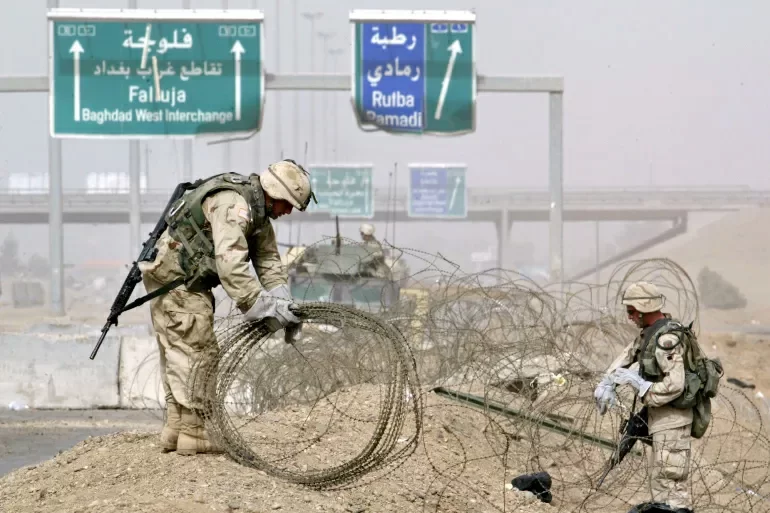
    After more than two decades of foreign military engagement that began with the 2003 U.S.-led invasion, Iraq is preparing to mark a historic turning point. On September 30, the U.S.-led international military coalition will formally conclude its mission in the country, transferring full security responsibility to the Iraqi government — a symbolic milestone that Baghdad has framed as the start of a fully sovereign, foreign troop-free era opening October 1.

    In recent weeks, as the deadline has drawn near, speculation around the withdrawal has grown steadily. Iraqi military leadership has now confirmed the timeline officially. Lieutenant General Abdul Amir al-Shammari, head of the Iraqi Armed Forces Commander-in-Chief’s office, confirmed September 30 as the coalition’s final end date in a statement to Iraq’s state news agency INA, matching long-held expectations across political and military circles.

    For Iraqi Prime Minister Ali al-Zaidi, the withdrawal delivers on a core campaign promise made earlier this year. “This step is an essential prerequisite to guide Iraq into a new phase of development and prosperity,” a statement from the prime minister’s office read, framing the post-withdrawal period as a “new era” free of any foreign military presence on Iraqi soil.

    Yet analysts caution that the withdrawal is far more symbolic than transformative for Iraq’s on-the-ground security landscape. Iyad al-Anbar, a political science professor at the University of Baghdad, told Al Jazeera that the bulk of the adjustment has already taken place. Most U.S. troops have long vacated traditional Iraqi military bases across central and southern Iraq, he noted, and are already concentrated solely at the Harir base in Erbil, the capital of Iraq’s autonomous Kurdistan Region.

    “Ultimately, this move will be largely symbolic,” al-Anbar explained. “The U.S. has already ended its active military presence at most major headquarters, including Camp Victory near Baghdad International Airport and even the Green Zone, located just meters from the U.S. embassy in Baghdad.”

    While the coalition’s exit closes a 23-year chapter of foreign military involvement, it opens a critical domestic test for al-Zaidi’s government: consolidating control over all armed factions and centralizing weapons under exclusive state authority — one of the biggest internal challenges Iraq has faced since the 2003 fall of Saddam Hussein.

    Al-Zaidi has reissued a firm ultimatum this week to non-state armed groups: disarm voluntarily, or face prosecution on terrorism charges. The prime minister has stood firm on tying progress on disarmament to the September 30 withdrawal deadline, but al-Anbar points to a major gap in credibility: despite the broad rhetoric, the government has released no concrete details on how the disarmament process will work.

    “Now we are only talking about ‘regulating’ weapons. What is the actual enforcement mechanism? No one is talking about the details,” al-Anbar said.

    Complicating the security landscape further, pro-Iranian armed factions including Kataib Sayyid al-Shuhada, Harakat al-Nujaba, and Kataib Hezbollah have ramped up anti-government and anti-coalition rhetoric in recent weeks. Key leadership positions at Iraq’s Defense and Interior ministries — the two core institutions tasked with implementing the disarmament plan — also remain unfilled, leaving the government without a clear operational backbone for its security push.

    For the United States, the withdrawal aligns with a broader strategic reorientation of foreign policy under the second Trump administration, but it does not signal a full retreat from Iraqi or regional affairs, according to former U.S. diplomat Marlin Hardinger.

    “I think we can say that large-scale conventional military deployment has come to an end in the medium term, but remaining counterterrorism and intelligence operations will continue, particularly focused on protecting the U.S. embassy and consulate,” Hardinger explained. He added that the Trump administration plans to shift its focus to expanding economic and development cooperation with Baghdad, a move designed to boost immediate and medium-term economic outcomes for Iraqi citizens and strengthen al-Zaidi’s domestic standing.

    Even so, the withdrawal faces pushback from multiple quarters. Pro-Israel factions in the U.S. that favor continued direct American military engagement in the Middle East have already voiced opposition, while Gulf Arab states warn that a power vacuum could allow extremist and Iranian-aligned groups to regain territory and influence.

    “The core problem is that the region is far more unstable and volatile today than it was when negotiations over the withdrawal first began,” Hardinger warned.

    One of the most immediate and pressing security consequences of the withdrawal is the removal of U.S. Patriot air defense systems, which have long been deployed in Erbil to serve as the primary shield against Iranian ballistic missiles and drone attacks. Hassan al-Barari, an international relations professor at the University of Jordan, argues that Iraq is not currently prepared to fill that security gap on its own.

    “It is unlikely that the Iraqi state is currently capable of defending its airspace against Iranian missiles and drones if Iran were to launch an attack on Erbil, for example,” al-Barari said. “If Iran continues to send drones and missiles into Iraqi territory, who will intercept them now that the American Patriot systems are leaving? Without a direct security agreement with Tehran, who can stop this Iranian threat?”
    For Iraq, al-Barari argues, the true test of Iraqi sovereignty does not end with the departure of foreign troops — it begins the day after. For al-Zaidi’s government, the ability to secure Iraq’s borders, unify control over weapons, and maintain national independence will define whether the milestone of troop withdrawal delivers on its promise of sovereignty.

    “The ability of the Baghdad government to maintain or fully restore Iraq’s sovereignty is not only linked to the withdrawal of U.S. troops, but also to al-Zaidi’s ability to bring all weapons under state control,” al-Barari said. His outlook for the coming period is cautious: “In my view, events are moving into uncharted territory. If al-Zaidi fails to deliver, Iraq could fall fully under exclusive Iranian influence, creating a dangerous security vacuum. That is exactly the scenario Washington has long warned about and sought to avoid.”

    As the world watches, Iraq prepares for what is being called the greatest test of its modern history. The coalition’s flag will be lowered, but critical questions remain unanswered: who will protect the Kurdistan Region from cross-border rocket attacks? Who will force unregulated militias to disarm? Who will guarantee that Iraq does not slide back into widespread chaos?

    September 30 is not an endpoint. It is a beginning: a period where Iraq will have to prove it can survive and govern without external leadership. Whether it succeeds depends on one prime minister, one fractured government, and a divided nation. The coming weeks will reveal the answer.
  • PM Browne Warns Foreign Fugitives Are Hiding in Antigua and Barbuda

    PM Browne Warns Foreign Fugitives Are Hiding in Antigua and Barbuda

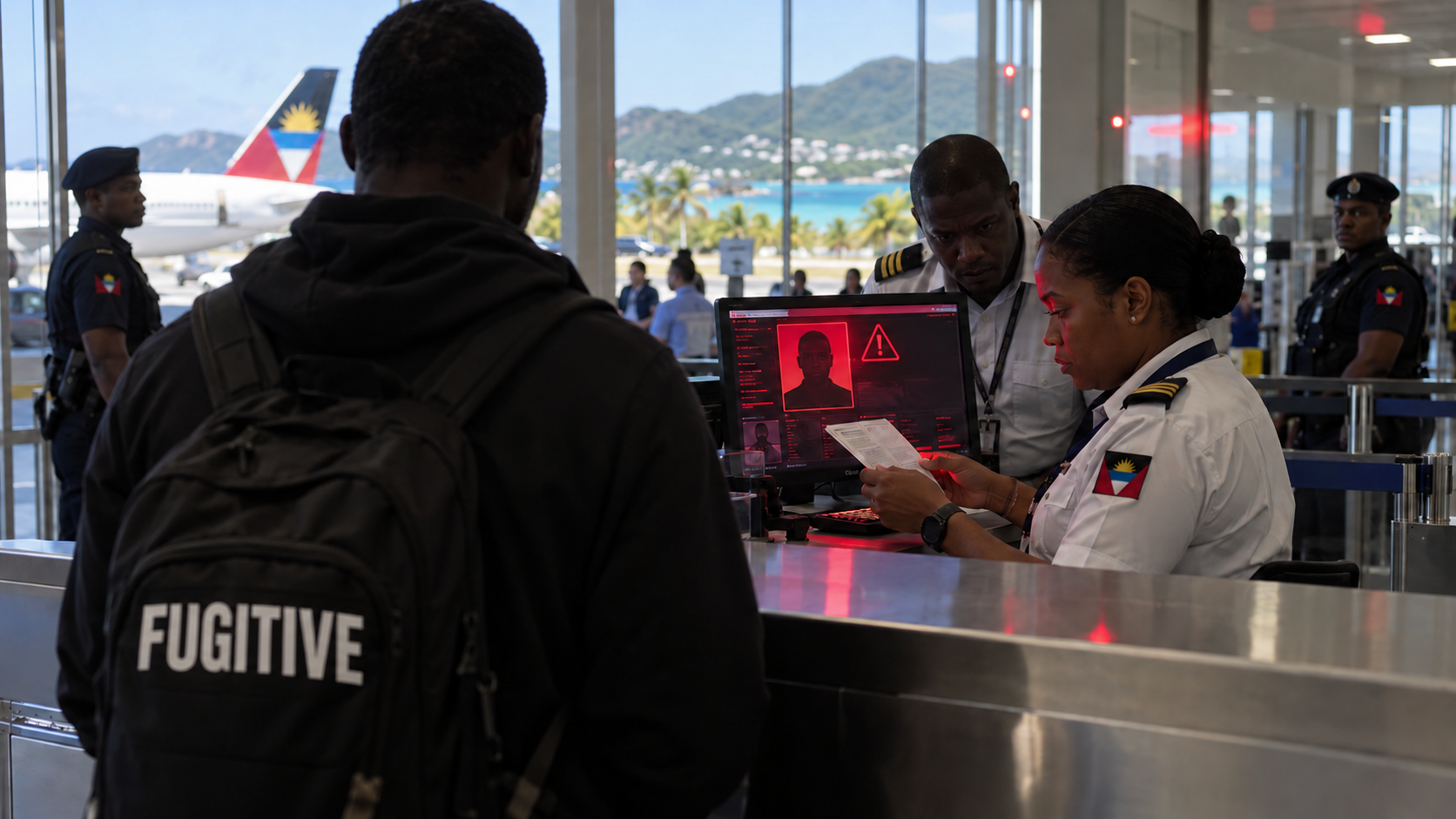
    Antigua and Barbuda Prime Minister Gaston Browne has issued a stark warning that the Caribbean nation is now confronting a growing national security threat: an increasing number of foreign fugitives wanted for serious crimes in other countries are secretly entering and settling within local communities.

    Speaking during the recent episode of the Browne and Browne Show, the prime minister confirmed that authorities have already uncovered multiple such individuals who are actively sought by law enforcement agencies across other jurisdictions. At this stage, Browne has not released any identifying details, including the names, nationalities, or specific alleged offenses linked to the discovered fugitives, nor has he confirmed whether any of the suspects are currently facing extradition proceedings.

    The revelation comes amid a broader discussion of a recent uptick in violent crime across Antigua and Barbuda, where Browne laid out a multi-pronged strategy to shore up public safety and reinforce the country’s security framework. Browne emphasized pointedly that Antigua and Barbuda will not tolerate becoming a safe haven for criminals fleeing prosecution in their home countries, adding that the discovery of these hidden fugitives underscores an urgent need for tighter collaboration between immigration officials, local police forces, and regional and international security partners.

    Security analysts note that the public disclosure is likely to reignite scrutiny of Antigua and Barbuda’s current border screening protocols, as well as the capacity of local law enforcement to access real-time international arrest warrants and cross-reference global criminal databases. Local authorities also face unique practical challenges, including identifying suspects who travel under false aliases or use fraudulently obtained travel and identity documents.

    To address rising crime and the threat of foreign fugitives, Browne has championed what he calls an “all-of-society approach” that combines upgraded technology, enhanced inter-agency coordination, and active public participation. The prime minister urged local residents to play a critical role by reporting any suspicious individuals or unusual activity to authorities.

    As an incentive for public cooperation, Browne’s administration has significantly increased financial rewards for actionable information in major criminal investigations, raising the maximum payout to 500,000 Eastern Caribbean dollars. A separate reward of 5,000 Eastern Caribbean dollars is offered for information that leads to the recovery of illegal firearms, a major driver of recent violence in the country.

    Beyond engaging the public, the government is also expanding its national surveillance infrastructure. The administration has acquired new night-vision drones to extend monitoring capabilities across hard-to-reach areas and is putting the final touches on a modern digital police records management system designed to streamline information sharing and case tracking. Browne reiterated that even the most advanced technology and cross-border intelligence sharing can only deliver results when paired with stronger collaboration between domestic agencies and consistent support from local communities.

  • 300 Students at Three Eastern Schools Receive Back-to-School Supplies

    300 Students at Three Eastern Schools Receive Back-to-School Supplies

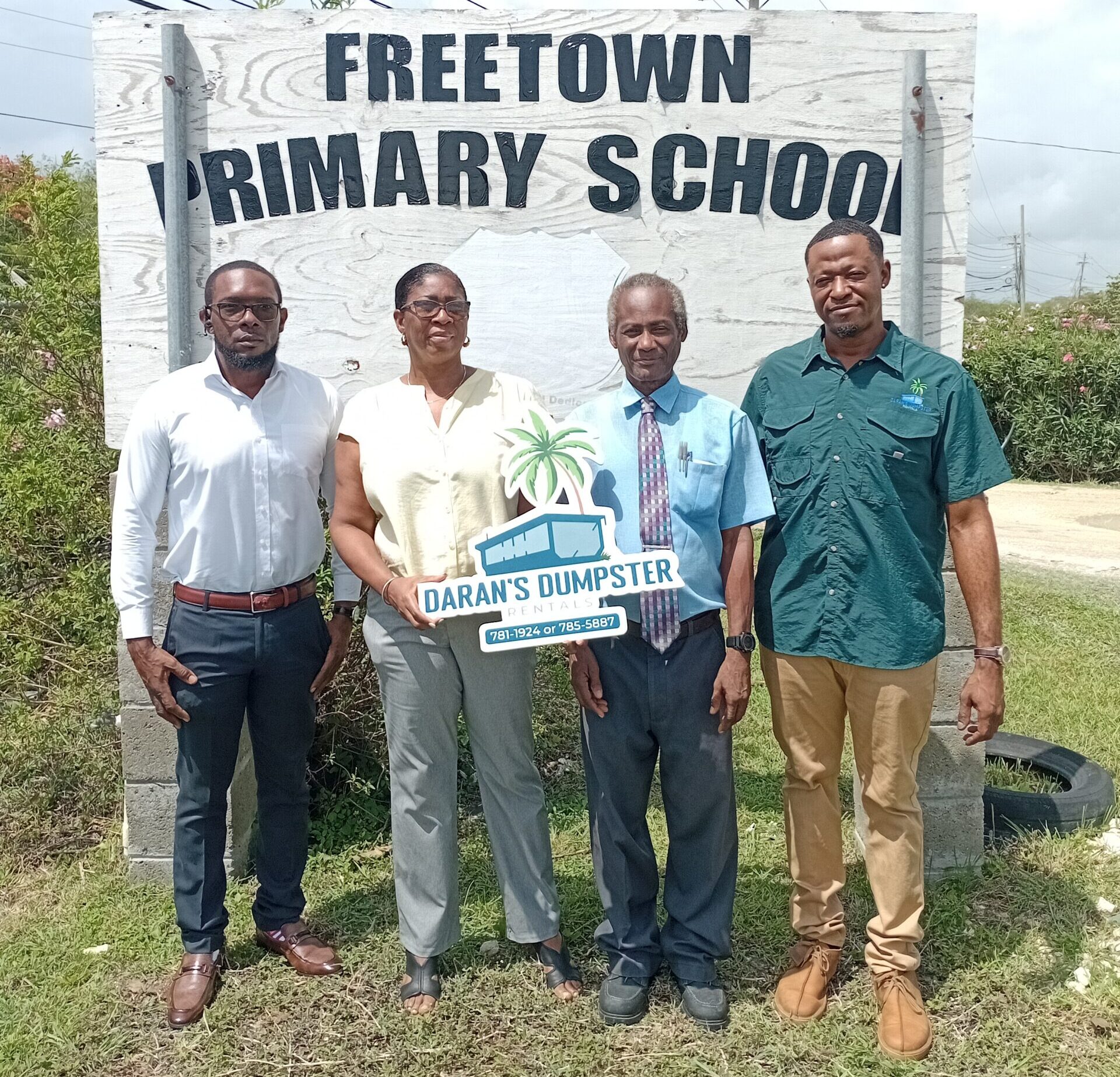
    Hundreds of primary school students across eastern Antigua are heading into the new school year with new tools for success, thanks to a grassroots community initiative spearheaded by two local young entrepreneurs. A total of 300 learners at Willikies Primary School, located on the island’s eastern coast, received full sets of essential back-to-school supplies through the project, addressing a common financial burden for low-income families preparing for the academic term.

    Daran Joseph, the founder of local enterprise Daran’s Dumpster Rentals, shared that his entrepreneurial journey began when he was just 18 years old, starting his business from humble roots in Antigua. For Joseph, the donation was more than a charitable act—it was a full-circle tribute to the institution that helped build his foundational skills and values. “Willikies Primary School shaped who I am today,” he explained, noting that giving back to the school community feels like a meaningful way to honor the support he received growing up.

    Adrian Richardson, the initiative’s co-leader, wears two hats as an entrepreneur and dedicated community activist. Beyond delivering supplies, Richardson used the occasion to issue a call to action to other young business owners across the country. He emphasized that the nation has provided critical opportunities, infrastructure, and support that allowed many emerging entrepreneurs to grow their ventures, and it is the responsibility of successful young leaders to invest back into the communities that fueled their success.

    Looking ahead, the pair has made a formal pledge to continue the back-to-school donation initiative on a yearly basis. The long-term commitment is rooted in their shared mission to contribute to Antigua’s future by supporting education and youth development, core building blocks for a stronger, more equitable nation. For local students and families, the annual effort promises ongoing support that removes barriers to academic participation and helps young people focus on learning.

  • Same Earth, Different Map: UN Backs More Accurate World Map

    Same Earth, Different Map: UN Backs More Accurate World Map

    For hundreds of years, the Mercator projection has shaped how billions of people around the world visualize the continents and countries of our planet. But that long-standing visual narrative is poised for a shift, after the United Nations General Assembly took a historic step last week to back a far more geographically accurate alternative: the Equal Earth projection.

    The resolution, which earned approval from 164 UN member states, marks a landmark push to correct long-held geographic misconceptions rooted in the design flaws of the Mercator map. The United States was the only nation to vote against the measure, while six additional countries chose to abstain from the vote.

    First developed by a team of cartographers in 2018, the Equal Earth projection was engineered specifically to address one of the Mercator’s most significant distortions: its systematic misrepresentation of landmass size relative to actual geographic area. Unlike the new projection, the Mercator, originally created in the 16th century to assist maritime navigators, stretches land masses at higher latitudes, making regions far from the equator appear far larger than they actually are, while shrinking equatorial nations and continents.

    The most striking example of this distortion can be seen when comparing Africa and Greenland. On a standard Mercator map, the two landmasses appear to be roughly comparable in size. In reality, Africa is approximately 14 times larger than Greenland — a difference that becomes immediately clear when viewed through the Equal Earth projection. This distortion has contributed to widespread underappreciation of Africa’s geographic scale, global significance, and demographic weight for generations.

    Critically, the UN resolution does not mandate immediate adoption of the Equal Earth projection by national governments or private institutions. Instead, it issues a broad call to action, encouraging educational systems, governments, international bodies, media outlets, and global technology companies to voluntarily shift toward more accurate representations of the world’s land masses in their materials and products.

    While the transition will be gradual, the impact of this decision is expected to ripple across multiple sectors over time. From classroom textbooks used by primary and secondary students to digital mapping platforms operated by major tech companies, the new projection could eventually reshape how current and future generations understand global geography. West African nation Togo, which spearheaded advocacy for the resolution, has already announced plans to hold follow-up discussions with the African Union, UNESCO, and major technology firms to outline a roadmap for regional implementation of the new map standard.

  • Amazon cargo plane crashes at Miami Airport, five killed

    Amazon cargo plane crashes at Miami Airport, five killed

    On a Sunday afternoon at one of the United States’ busiest transportation hubs, a devastating aviation incident has shaken the global logistics industry: an Amazon Air cargo flight crashed after overrunning the runway at Miami International Airport, leaving at least five people dead and multiple others with injuries ranging from minor to critical.

    The aircraft involved in the accident is a 32-year-old Boeing 767-300, which was originally manufactured to carry commercial passengers before undergoing a conversion to cargo configuration in 2015. Operated by cargo service provider 21 Air under the Amazon Air brand as Flight 7598, the plane had just completed an inbound trip from San Juan, Puerto Rico when the emergency unfolded. Around 2 p.m. local time, the jet failed to stop before reaching the end of the runway, exited the airfield, and crashed into multiple vehicles traveling on a public road that serves adjacent warehouse facilities and local businesses.

    Footage captured from the crash site shows thick plumes of black smoke billowing into the sky above the area. The scale of the emergency prompted an immediate large-scale response, with more than 60 Miami-Dade Fire Rescue units deployed to the scene to conduct search, rescue, and fire suppression operations. Miami-Dade Fire Rescue Chief Ray Jadallah confirmed that first responders faced complex challenges: the plane’s pilot and co-pilot were trapped inside the damaged cockpit, multiple other people were trapped inside crushed vehicles, and one person had to be extricated after being pinned underneath a vehicle. As of the initial reporting, it remained unconfirmed whether the flight’s two pilots are among the fatalities.

    Official casualty reports from AP News confirm five fatalities, three people with critical injuries requiring urgent hospitalization, and two additional patients with less severe injuries who are also receiving medical care.

    Early investigative leads point to one key area of focus: whether the aircraft touched down too far along the runway to allow enough distance for a safe stop. Preliminary analysis of amateur video from the area suggests the plane remained airborne far past the standard touchdown zone for arriving flights at the airport. The U.S. National Transportation Safety Board (NTSB), led by Chairwoman Jennifer Homendy, has taken charge of the official probe. Investigators will examine a full range of potential contributing factors, including the jet’s landing speed, performance of its braking systems, local weather and wind conditions at the time of landing, any potential mechanical failures, and the aircraft’s full maintenance history. Public records also show that prior to its current cargo operation, the plane was once owned by a Russian company, a detail that has been noted in initial reporting but has not been linked to the crash to date.

    In the immediate aftermath of the crash, Miami International Airport implemented a full ground stop that disrupted flight operations across the facility for the majority of Sunday afternoon, impacting thousands of passengers traveling through the major hub. In an official statement following the incident, Amazon confirmed that it is cooperating fully with local investigating authorities and is prioritizing safety and support for all individuals impacted by the tragedy.

  • Mud, Music and No Sleep: What Brings People Out for Jouvert Every Year?

    Mud, Music and No Sleep: What Brings People Out for Jouvert Every Year?

    In the pre-dawn darkness of a Saturday in Belize City, when most residents are still wrapped in sleep, thousands of carnival enthusiasts crowd the streets. Their clothes are stained with bright paint, their skin smudged with mud, and soca music pulses through the crowd as bodies move in rhythm to the beat. This is J’Ouvert, Belize’s most beloved annual carnival tradition that draws returning revelers and first-time participants alike, long before the official Carnival Road March kicks off hours later.

    Every year, the gathering starts long before sunrise at the Civic Center, with many attendees already having pulled an all-nighter at the preceding Street Fete event. What drives thousands of people to sacrifice sleep, endure messy clothes, and converge on the city streets year after year? For many, the answer boils down to an unbeatable cultural vibe that keeps them coming back. One long-time participant, dancing through the crowd with a drink in hand, explained he has not missed a J’Ouvert in six years. “Everything nice ’bout it so we di enjoy ourselves,” he said, summarizing the loyalty many feel to the tradition.

    For others, J’Ouvert is a new experience worth going to great lengths to attend. One Belizean who lives abroad flew all the way home just to take part in her first J’Ouvert as an adult. “This is my first time and I am loving it,” she shared, adding that she and her group would go on to participate later that day in the Carnival Road March with the Titans group.

    What makes J’Ouvert stand out goes beyond individual participation; over the years, the event has grown so much in popularity that many attendees and organizers now argue it has eclipsed the main Carnival event itself. Patrick Thompson, president of the Belize Carnival Association, acknowledged this shift openly: “I be real, I think Jouvert is bigger than Carnival right now. This da mainly for the people who no want revel in a costume and thing and just want to come out and have that carnival vibes fun.”

    By early morning, after hours of dancing and celebration, the crowd makes its way along the procession route to the seaside finish line. Covered in a mixture of paint, mud, and sweat, revelers cool off and clean up in their own style: some rinse off with hoses provided at the finish line, while others skip the formal cleanup and jump straight into the Caribbean Sea to wash off, closing out one of Belize’s most vibrant and beloved cultural celebrations.

  • Agriculture Minister Anthony Smith Announces Arrival of 4,000 Bags of Fertilizer from Morocco

    Agriculture Minister Anthony Smith Announces Arrival of 4,000 Bags of Fertilizer from Morocco

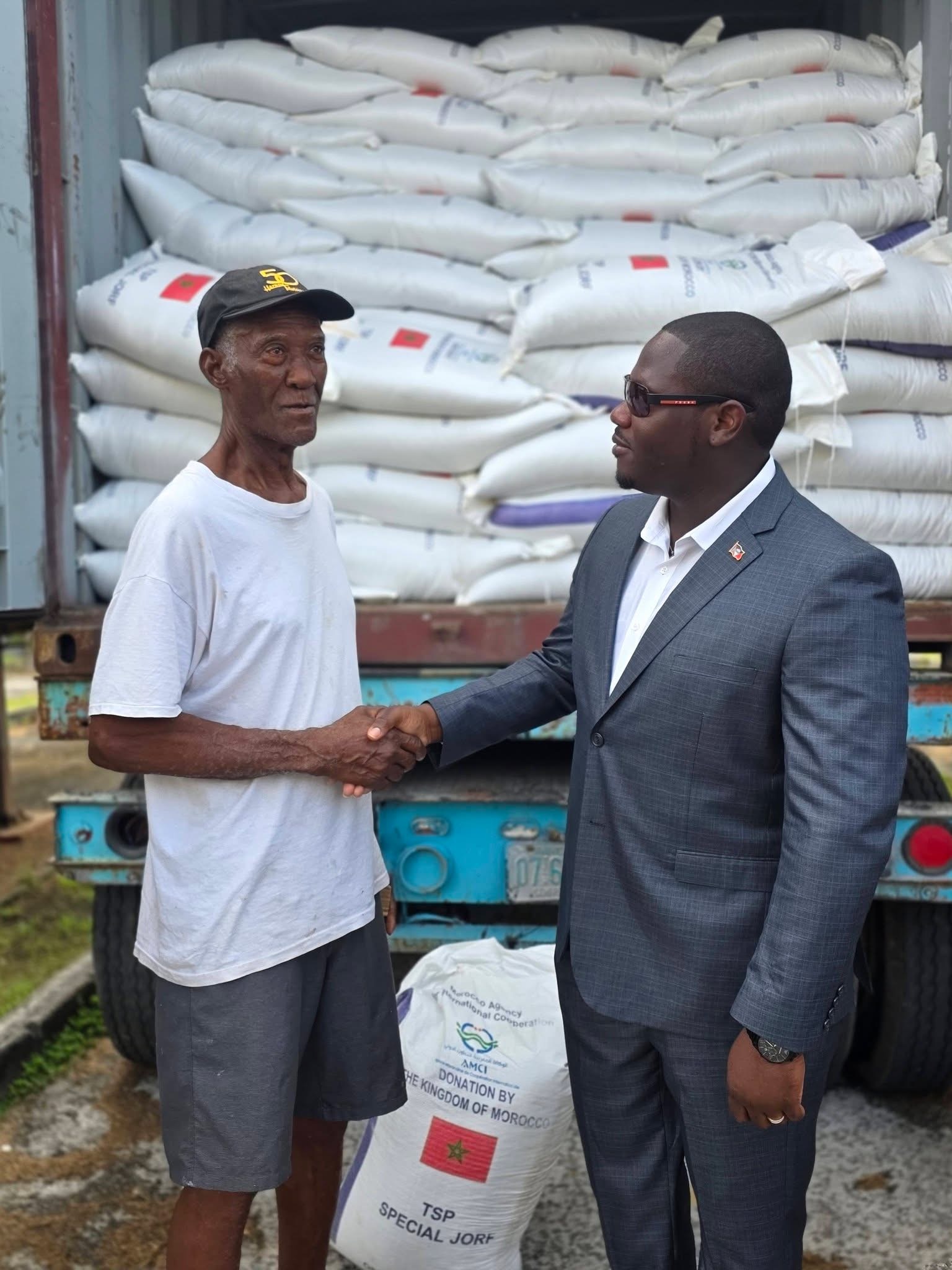
    In a significant boost to Antigua and Barbuda’s domestic agricultural sector, Agriculture Minister Anthony Smith Jr. has confirmed the arrival of a 4,000-bag shipment of high-quality fertilizer sourced from the Kingdom of Morocco. This delivery marks the largest single shipment the Caribbean nation has received since the two countries launched their fertilizer cooperation initiative back in 2018.

    Minister Smith shared his enthusiasm about the milestone, noting that targeted diplomatic negotiations and consistent, long-term engagement between the two partners made the expanded shipment possible. Agriculture officials across the country are now preparing to distribute the fertilizer to small-scale and commercial farming operations across both Antigua and Barbuda.

    Beyond the immediate impact of the delivery, the shipment aligns with the Antigua and Barbuda government’s broader strategic goals to enhance national food sovereignty and reduce reliance on imported food staples. Smith emphasized that nutrient-dense fertilizer is a critical input for restoring depleted soil health, enabling farmers to maximize productivity from existing cultivated land without clearing additional territory for expansion. By boosting per-acre crop yields, the new fertilizer supply is expected to directly increase the volume of locally grown food available to domestic consumers.

    This shipment is just one component of the current administration’s whole-of-government push to grow the domestic agricultural sector. In recent updates, Minister Smith has outlined parallel initiatives to upgrade national agricultural water infrastructure, which will address long-standing irrigation challenges for local farmers, and bring more underutilized parcels of land into active, productive agricultural use. The minister reiterated the government’s unwavering commitment to partnering with farmers at every stage, stressing that universal food security remains a top national priority for the administration.

  • Antigua and Barbuda passport ranks 49th globally with mobility score of 143

    Antigua and Barbuda passport ranks 49th globally with mobility score of 143

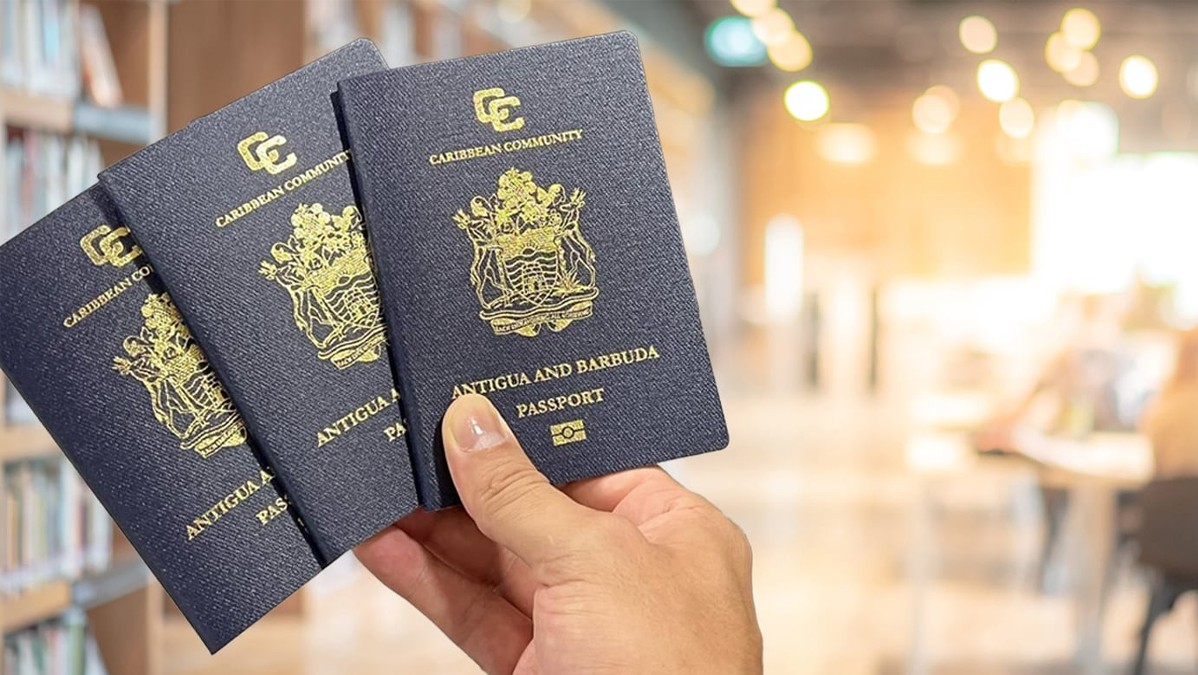
    The latest 2026 global passport index report from Passport Reports has released its updated mobility rankings, placing the passport of Antigua and Barbuda at the 49th position worldwide. The small Caribbean nation earned an overall mobility score of 143, which translates to visa-free or simplified entry access to 72.2% of all global destinations measured in the annual assessment.

    Breaking down the mobility score, the report categorizes access for Antigua and Barbuda passport holders as follows: 99 destinations grant full visa-free entry, 38 offer visa-on-arrival or other streamlined facilitated entry processes, and 6 additional destinations require an electronic travel authorization before arrival. These three categories of simplified entry add up to the total mobility score of 143, leaving 55 destinations worldwide that still require a full traditional visa for entry.

    Beyond the global ranking, Antigua and Barbuda holds strong positions in regional and group rankings. It ranks 8th out of 23 North American countries and 5th among the 16 Caribbean nations included in the report. Year-over-year historical data shows a minor shift in the country’s standing: its mobility score dropped one point from 144 in 2025 to 143 in 2026, pushing its global ranking down three spots from 46th to 49th.

    Regional access for Antigua and Barbuda passport holders is particularly strong in the Caribbean. The report confirms that the country enjoys 100% visa-free access to all 15 Caribbean destinations included in the index. Allowed stays vary across the region, with Antigua and Barbuda citizens permitted to stay up to 240 days in the Bahamas, 180 days in both Guyana and Suriname, 90 days in Haiti, and 30 days in Cuba. The Dominican Republic also offers visa-free entry with a required e-ticket pre-arrival procedure for 30-day stays.

    Europe follows as another region with exceptionally broad access. Of the 47 European destinations measured, 45 grant full visa-free entry to Antigua and Barbuda passport holders, representing a 95.7% access rate for the region. Only one European destination offers visa-on-arrival entry, and one requires an electronic travel authorization, with no European destinations mandating a full pre-arrival visa. The United Kingdom falls into the electronic travel authorization category, with a maximum allowed stay of 180 days, while most other European destinations cap stays at 90 days within a specified rolling period.

    In South America, 75% of destinations (nine out of 12) offer visa-free entry. Countries including Bolivia, Brazil, Ecuador, Colombia, Chile and Venezuela allow 90-day visa-free stays, while Guyana, Peru and Suriname extend stays to up to 180 days. Argentina, Paraguay and Uruguay are the only three South American nations that require a full visa from Antigua and Barbuda passport holders.

    Access becomes far more variable across Asia, Africa and the Gulf Cooperation Council region. In Asia, out of 50 total destinations, just eight offer visa-free entry, 14 allow visa-on-arrival or facilitated entry, two require electronic travel authorization, and 26 mandate a full pre-arrival visa. Notable visa-free destinations include China (30-day stay), Hong Kong SAR (90 days), the Philippines (30 days), Georgia (360 days), Malaysia (30 days with an on-arrival card), Uzbekistan (30 days) and Singapore (30 days with an arrival card). South Korea and Sri Lanka are the two Asian destinations that require an electronic travel authorization.

    Across the African continent, 15 of 54 destinations grant visa-free entry, 19 offer visa-on-arrival or facilitated entry, three require electronic travel authorization, and 17 require a full visa. Many facilitated entry destinations have special pre-arrival procedures, such as mandatory pre-registration for Côte d’Ivoire, tourist registration for Seychelles, and the EASE online system for Cabo Verde. Multiple countries in the facilitated entry category also offer the option of securing an eVisa before departure.

    For the six Gulf Cooperation Council countries, only Qatar offers facilitated visa-on-arrival entry (with an eVisa option available for a 30-day stay), while Bahrain, the United Arab Emirates, Kuwait, Saudi Arabia and Oman all require full pre-arrival visas. In the broader Middle East region, just two of 17 destinations offer visa-free entry, five provide facilitated entry, and 10 require a visa.

    The report also includes comparative rankings across political and economic blocs, providing additional context for Antigua and Barbuda’s global standing. The nation ranks 5th out of 14 CARICOM countries, 11th out of 33 CELAC countries, 15th out of 56 Commonwealth countries, and 15th out of 132 G77 member states. Among 159 World Trade Organization members, it holds the 53rd position. It also ranks 15th out of 60 countries with English as an official language, 12th out of 25 parliamentary constitutional monarchies, and 3rd out of six countries that use the Eastern Caribbean dollar as their national currency.

    Separately from the outward mobility ranking, the report also includes a ‘welcoming ranking’ that measures how easily foreign passport holders can enter Antigua and Barbuda, rather than the travel access of Antigua and Barbuda citizens abroad. In this ranking, the country places 69th out of 199 nations, a measure that is not connected to the outward passport mobility ranking and should not be interpreted as a reflection of Antigua and Barbudan citizens’ travel privileges.

    The report also includes a reciprocity analysis that highlights mismatched entry requirements between Antigua and Barbuda and other nations. It identifies 17 countries that allow their own passport holders to enter Antigua and Barbuda via visa-free, electronic authorization, or visa-on-arrival arrangements, but require a full visa from Antigua and Barbuda passport holders travelling in the opposite direction. This list includes major economies such as the United States, Canada, Mexico, Australia, New Zealand, Japan and the United Arab Emirates. Conversely, 47 countries require a full visa for foreign travellers entering Antigua and Barbuda, but grant simplified entry to Antigua and Barbuda passport holders; examples of this dynamic include India, Qatar, Jordan, Vietnam, the Philippines, Sri Lanka and Zimbabwe.

    The report emphasizes the importance of distinguishing between the two core metrics included in the analysis: Antigua and Barbuda’s visa requirements govern the entry rules for foreign passport holders entering the country, while the global passport ranking measures the entry access granted to Antigua and Barbuda passport holders when travelling internationally. Overall, the 2026 data confirms that Antigua and Barbuda’s passport delivers solid global mobility, with near-universal access across the Caribbean and Europe, and more variable access across other world regions, with a range of procedural requirements even among destinations that offer simplified entry.

  • Soca Moca Does It Again, Claims Sixth Carnival Championship

    Soca Moca Does It Again, Claims Sixth Carnival Championship

    The 2026 edition of Belize’s iconic Carnival Road March concluded over the weekend with a historic victory for one fan-favorite group and unexpected disqualifications for four competing bands, as the Belize Carnival Association officially unveiled the full competition results on Sunday.

    This year’s procession kicked off at Belize City’s Memorial Park, where dozens of energetic troupes set off along the pre-marked route that wound through Barrack Road and Princess Margaret Drive. After the long, celebratory parade, all competing bands arrived at Marion Jones Stadium to deliver their final, high-stakes performances for the panel of official judges.

    In the Junior category, Soca Massive claimed the top honor with a total score of 602 points, outpacing second-place finisher Collet Royals, which earned 582 points. Black Pearl rounded out the top three with a solid score of 493 points. The biggest story of the competition, however, came in the Senior division, where Soca Moca cemented its legacy as a carnival powerhouse by capturing its sixth overall championship title.

    Finishing just behind Soca Moca in the Senior category was Mother Nature Creation, a troupe that not only earned a second-place finish in the Road March but also walked away with double crowns from the August 15 King and Queen competition, taking home both the Carnival King and Carnival Queen titles.

    Controversy overshadowed part of the award announcements, as four competing bands were stripped of their eligibility to place before results were finalized. The disqualifications all stemmed from a single rule violation: failing to meet the mandatory minimum number of participating revellers set by the Belize Carnival Association. Under association rules, senior bands must field at least 75 registered participants, while junior bands are required to have a minimum of 45 revellers to compete. In the Junior category, Sunshine Masqueraders and Rhythm Rockers were the disqualified acts, while Fort Revellers and Trench Town Masqueraders lost their eligibility in the Senior division.

    Official prize distribution for the 2026 competition winners is scheduled to take place on September 25, allowing winning troupes to claim their awards weeks after the final judging.

    Beyond the competition results, association president Patrick Thompson made a major announcement about upcoming leadership changes: the organization will hold elections for a new president on November 28, to be overseen jointly by the National Institute of Culture and History and the National Celebrations Commission. Thompson confirmed that he will not run for another term, opening the seat up for new candidates. Under the association’s bylaws, only the president’s position is directly elected to a four-year term, and the sitting president subsequently appoints their full executive team after taking office. Individuals interested in standing for the presidency have been asked to submit their nominations in advance to allow the election committee time to prepare official ballots.

    The annual carnival remains one of Belize’s most high-profile cultural celebrations, drawing thousands of participants and spectators from across the country and around the Caribbean each year.

  • CARICOM marks fifth Africa Day, highlighting progress with fresh push for stronger Caribbean-Africa ties

    CARICOM marks fifth Africa Day, highlighting progress with fresh push for stronger Caribbean-Africa ties

    Five years after the historic creation of an annual day of unity between the Caribbean and African regions, CARICOM is celebrating the anniversary of CARICOM-Africa Day with fresh momentum to expand collaboration across trade, public health, climate action and the global movement for reparatory justice.

    The annual observance was first established during the groundbreaking 2021 First CARICOM-Africa Summit, when leaders from both regions committed to building a structured, mutually beneficial long-term partnership. On this fifth anniversary, CARICOM Chairman and Saint Lucia Prime Minister Philip J. Pierre emphasized how far the relationship has grown in the five years since that initial agreement.

    Pierre spotlighted key milestones that have anchored the deepening partnership, including the 2024 Memorandum of Understanding signed between the CARICOM and African Union Secretariats. He also highlighted expanding joint initiatives with the African Export-Import Bank (Afreximbank) focused on infrastructure development, support for small and medium-sized enterprises, and expanded cross-regional trade. Beyond economic cooperation, Pierre noted meaningful progress in public health collaboration and improved air connectivity that links communities across both regions.

    Moving forward, Pierre stressed that the two regions must leverage their combined global influence to tackle shared pressing challenges: building climate resilience, advancing inclusive sustainable development, and advancing the priorities of small vulnerable developing states. A core ongoing priority, he added, is progressing the global reparatory justice movement for historical harms of chattel slavery. Pierre also framed Caribbean communities as a formal, integral part of the African Union’s Sixth Region, emphasizing that all partnership efforts must deliver tangible, measurable improvements for young people, local businesses and grassroots communities on both sides.

    Meanwhile, Barbados Prime Minister Mia Amor Mottley reflected on the progress made since the first in-person CARICOM-Africa Summit held in Addis Ababa in 2025. In a public statement shared to her official Facebook page, Mottley outlined a series of recent collaborative wins that demonstrate the partnership’s impact, from the completion and opening of the Grand Ethiopian Renaissance Dam to Nigerian carrier Air Peace’s work expanding cross-regional air access. She also noted the ongoing development of the Afreximbank African Trade Centre based in Barbados, and the critical contributions of Ethiopian medical professionals serving at Barbados’ Queen Elizabeth Hospital.

    Mottley also highlighted major institutional progress on reparatory justice across the African continent: the United Nations’ formal recognition by Ghana of the transatlantic trafficking and racialized enslavement of Africans as the worst crime against humanity in history, Togo’s successful resolution of longstanding regional border map disputes, and the launch of the Global Advisory Panel on Reparatory Justice in Accra, on which Mottley personally serves.

    Despite these gains, Mottley acknowledged that significant work remains to remove barriers to free movement of people, trade, educational opportunities and economic collaboration between the two regions. “Too many voices tell us what divides us,” Mottley said in her statement, urging a greater focus on the shared historical and cultural ties that unite African and Caribbean communities. She called on both regions to build what she described as “a new passage of possibility” that allows the descendants of enslaved people — who were stripped of the right to choose their own futures and destinations — to finally shape their own collective destiny in the 21st century.