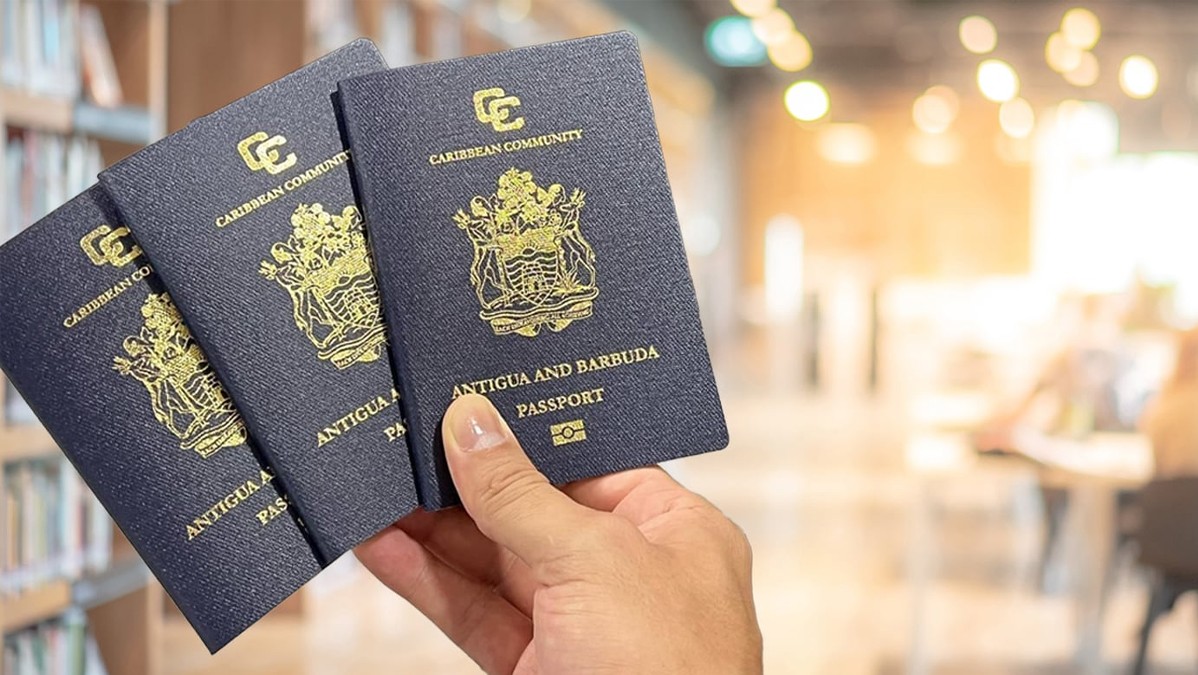
The latest 2026 global passport index report from Passport Reports has released its updated mobility rankings, placing the passport of Antigua and Barbuda at the 49th position worldwide. The small Caribbean nation earned an overall mobility score of 143, which translates to visa-free or simplified entry access to 72.2% of all global destinations measured in the annual assessment.
Breaking down the mobility score, the report categorizes access for Antigua and Barbuda passport holders as follows: 99 destinations grant full visa-free entry, 38 offer visa-on-arrival or other streamlined facilitated entry processes, and 6 additional destinations require an electronic travel authorization before arrival. These three categories of simplified entry add up to the total mobility score of 143, leaving 55 destinations worldwide that still require a full traditional visa for entry.
Beyond the global ranking, Antigua and Barbuda holds strong positions in regional and group rankings. It ranks 8th out of 23 North American countries and 5th among the 16 Caribbean nations included in the report. Year-over-year historical data shows a minor shift in the country’s standing: its mobility score dropped one point from 144 in 2025 to 143 in 2026, pushing its global ranking down three spots from 46th to 49th.
Regional access for Antigua and Barbuda passport holders is particularly strong in the Caribbean. The report confirms that the country enjoys 100% visa-free access to all 15 Caribbean destinations included in the index. Allowed stays vary across the region, with Antigua and Barbuda citizens permitted to stay up to 240 days in the Bahamas, 180 days in both Guyana and Suriname, 90 days in Haiti, and 30 days in Cuba. The Dominican Republic also offers visa-free entry with a required e-ticket pre-arrival procedure for 30-day stays.
Europe follows as another region with exceptionally broad access. Of the 47 European destinations measured, 45 grant full visa-free entry to Antigua and Barbuda passport holders, representing a 95.7% access rate for the region. Only one European destination offers visa-on-arrival entry, and one requires an electronic travel authorization, with no European destinations mandating a full pre-arrival visa. The United Kingdom falls into the electronic travel authorization category, with a maximum allowed stay of 180 days, while most other European destinations cap stays at 90 days within a specified rolling period.
In South America, 75% of destinations (nine out of 12) offer visa-free entry. Countries including Bolivia, Brazil, Ecuador, Colombia, Chile and Venezuela allow 90-day visa-free stays, while Guyana, Peru and Suriname extend stays to up to 180 days. Argentina, Paraguay and Uruguay are the only three South American nations that require a full visa from Antigua and Barbuda passport holders.
Access becomes far more variable across Asia, Africa and the Gulf Cooperation Council region. In Asia, out of 50 total destinations, just eight offer visa-free entry, 14 allow visa-on-arrival or facilitated entry, two require electronic travel authorization, and 26 mandate a full pre-arrival visa. Notable visa-free destinations include China (30-day stay), Hong Kong SAR (90 days), the Philippines (30 days), Georgia (360 days), Malaysia (30 days with an on-arrival card), Uzbekistan (30 days) and Singapore (30 days with an arrival card). South Korea and Sri Lanka are the two Asian destinations that require an electronic travel authorization.
Across the African continent, 15 of 54 destinations grant visa-free entry, 19 offer visa-on-arrival or facilitated entry, three require electronic travel authorization, and 17 require a full visa. Many facilitated entry destinations have special pre-arrival procedures, such as mandatory pre-registration for Côte d’Ivoire, tourist registration for Seychelles, and the EASE online system for Cabo Verde. Multiple countries in the facilitated entry category also offer the option of securing an eVisa before departure.
For the six Gulf Cooperation Council countries, only Qatar offers facilitated visa-on-arrival entry (with an eVisa option available for a 30-day stay), while Bahrain, the United Arab Emirates, Kuwait, Saudi Arabia and Oman all require full pre-arrival visas. In the broader Middle East region, just two of 17 destinations offer visa-free entry, five provide facilitated entry, and 10 require a visa.
The report also includes comparative rankings across political and economic blocs, providing additional context for Antigua and Barbuda’s global standing. The nation ranks 5th out of 14 CARICOM countries, 11th out of 33 CELAC countries, 15th out of 56 Commonwealth countries, and 15th out of 132 G77 member states. Among 159 World Trade Organization members, it holds the 53rd position. It also ranks 15th out of 60 countries with English as an official language, 12th out of 25 parliamentary constitutional monarchies, and 3rd out of six countries that use the Eastern Caribbean dollar as their national currency.
Separately from the outward mobility ranking, the report also includes a ‘welcoming ranking’ that measures how easily foreign passport holders can enter Antigua and Barbuda, rather than the travel access of Antigua and Barbuda citizens abroad. In this ranking, the country places 69th out of 199 nations, a measure that is not connected to the outward passport mobility ranking and should not be interpreted as a reflection of Antigua and Barbudan citizens’ travel privileges.
The report also includes a reciprocity analysis that highlights mismatched entry requirements between Antigua and Barbuda and other nations. It identifies 17 countries that allow their own passport holders to enter Antigua and Barbuda via visa-free, electronic authorization, or visa-on-arrival arrangements, but require a full visa from Antigua and Barbuda passport holders travelling in the opposite direction. This list includes major economies such as the United States, Canada, Mexico, Australia, New Zealand, Japan and the United Arab Emirates. Conversely, 47 countries require a full visa for foreign travellers entering Antigua and Barbuda, but grant simplified entry to Antigua and Barbuda passport holders; examples of this dynamic include India, Qatar, Jordan, Vietnam, the Philippines, Sri Lanka and Zimbabwe.
The report emphasizes the importance of distinguishing between the two core metrics included in the analysis: Antigua and Barbuda’s visa requirements govern the entry rules for foreign passport holders entering the country, while the global passport ranking measures the entry access granted to Antigua and Barbuda passport holders when travelling internationally. Overall, the 2026 data confirms that Antigua and Barbuda’s passport delivers solid global mobility, with near-universal access across the Caribbean and Europe, and more variable access across other world regions, with a range of procedural requirements even among destinations that offer simplified entry.