博客

  • Are Belizean Attorneys Being Shut Out of the High Court?

    Are Belizean Attorneys Being Shut Out of the High Court?

    A public and fierce disagreement over judicial appointments to Belize’s High Court has split the country’s legal community, sparking a national debate over representation, judicial independence, and national sovereignty amid rumors of two new foreign nominees for vacant bench seats.

    The conflict centers on a core question that has resonated across Belize: if qualified domestic legal professionals are available to serve, why does the High Court continue to draw the vast majority of its judges from outside the country’s borders? The controversy flared into public view after reports that the Judicial and Legal Services Commission is considering two foreign legal practitioners – Guyana’s Sheiniza Smith and Trinidad and Tobago’s Peter Carter – for two open criminal bench positions on the High Court. These pending nominations have pushed long-simmering frustrations among local defense attorneys into an open showdown with the Belize Bar Association.

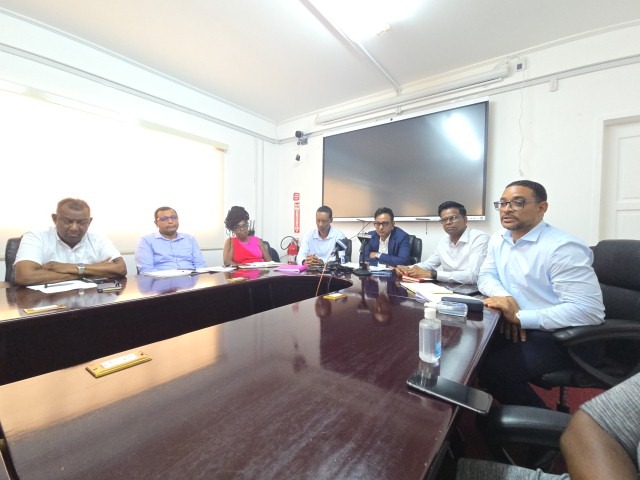
    In an interview with local outlet News Five, Orson Elrington, a leading spokesperson for the Association of Defense Attorneys (ADA), which represents the vast majority of criminal legal practitioners and half of all legal professionals active in Belize’s court system, clarified that the group’s criticism is not an attack on the qualifications of the nominees or a rejection of fellow CARICOM member state legal professionals. Instead, the ADA argues that the longstanding pattern of overlooking qualified Belizean attorneys for judicial appointments undermines national representation and threatens the long-term autonomy of Belize’s judiciary.

    Elrington emphasized that the ADA, which has raised this concern for years, is not seeking to derail the constitutional appointment process – it is demanding a seat at the table for local legal stakeholders to have input on selections that shape the country’s justice system. Dickie Bradley, another prominent ADA attorney, went further, arguing that the exclusion of Belizean nationals from all levels of the domestic judiciary is fundamentally out of step with the separation of powers that underpins Belize’s system of government. “The bottom line is that there are three branches of government: the law making, the executive, and the judicial. And the judicial committee has not appointed a Belizean to the higher bench or to the lower bench. Never happened. Something must wrong with that,” Bradley stated.

    For its part, the Belize Bar Association has defended the constitutional, independent appointment process overseen by the Judicial and Legal Services Commission. Bar Association President Jose Alpuche told reporters that the commission has acted fairly in its candidate recommendations, and that defending the existing process is critical to upholding public trust in Belize’s justice system. Alpuche did acknowledge that the current underrepresentation of Belizean attorneys on the High Court is a legitimate concern, noting that the Bar Association actively encourages qualified local legal professionals to apply for judicial openings and supports increasing domestic representation on the bench.

    Attorney General Anthony Sylvestre has moved to calm tensions, confirming that no final decision has been made on the two pending nominations, and that the selection process remains ongoing with consultation with the Leader of the Opposition still underway. The leak of the candidates’ names early in the process drew public criticism even from opposition leaders, who raised questions about the lack of transparency around the selections.

    A comparison of judicial composition across the Caribbean highlights just how unusual Belize’s current setup is. Neighboring jurisdictions including Jamaica, Barbados, Trinidad and Tobago, and Guyana all appoint domestic nationals to almost all senior judicial positions, including the role of Chief Justice. In Belize, by contrast, only one of the 13 sitting High Court judges has any Belizean connection: Justice Antoinette Moore, an American jurist with Belizean roots, who is scheduled to retire from the bench in August 2026. Once Moore departs, Belize will have zero judges with domestic ties serving on its highest domestic court.

    What began as a disagreement over two potential appointments has now evolved into a broader national conversation about the future of Belize’s justice system, with stakeholders asking how the country can safeguard judicial independence while addressing widespread, legitimate public demands that qualified Belizean attorneys get a fair chance to serve on the bench that adjudicates the nation’s laws.

  • The Bar Has a Seat, But Do Defense Attorneys Have a Voice?

    The Bar Has a Seat, But Do Defense Attorneys Have a Voice?

    As of July 20, 2026, a dispute over judicial appointment processes in Belize has sparked a broader reckoning within the country’s legal ecosystem, centered on whether criminal defense lawyers are being systematically shut out of key decision-making bodies.

    At the heart of the debate is the Judicial and Legal Services Commission, the independent body tasked with selecting and appointing judges to Belize’s courts. Currently, only the Belize Bar Association holds a guaranteed seat on the commission through its designated representative. But the Association of Defense Attorneys is pushing back against this structure, arguing that its constituency — which handles the overwhelming majority of criminal cases moving through Belize’s court system — deserves a formal, legislatively protected voice at the table. The debate has gained new urgency amid two upcoming appointments to the High Court’s criminal division, a post that will oversee a large volume of the work that defense attorneys interact with daily.

    Orson Elrington, a practicing defense attorney, laid out the long-running history of the demand in comments to local media. Elrington noted that successive Belizean governments have repeatedly acknowledged the need for reform and promised to grant the Association of Defense Attorneys a formal seat on the commission. Even senior leadership of the Bar Association has publicly supported the principle of giving defense lawyers a constitutionally enshrined spot, Elrington said — yet no formal change has been codified into law to secure that representation. “We are saying it is not – by law that we are constitutionally entitled to a seat on the Judicial and Legal Services Commission,” Elrington emphasized, pointing out that the promise of reform has yet to translate into tangible action.

    For its part, the Bar Association has struck a conciliatory tone, rejecting claims of open conflict between civil practitioners and criminal defense lawyers. Jose Alpuche, president of the Bar Association, acknowledged the irreplaceable role that defense attorneys play in upholding Belize’s criminal justice system. “They are an indispensable function of our judicial system because our system depends on attorneys, our criminal justice system depends on attorneys representing the accused,” Alpuche explained. He added that many members of the Bar Association also handle criminal cases, meaning criminal practice is not exclusive to the Association of Defense Attorneys. Alpuche stressed that the Bar Association has no quarrel with defense attorneys, praising their work for both the public and the broader judicial system and rejecting framing that paints the two groups as being at odds.

    As the debate unfolds, both sides are continuing to make their cases around core questions: what does fair representation of the full legal profession look like on a body that shapes the nation’s judiciary, how much influence should different legal subsets hold over judicial selection, and when will long-promised reform be put into practice?

  • Career Belizean Magistrate Laments High Court Appointment Process

    Career Belizean Magistrate Laments High Court Appointment Process

    Nearly a year after applications opened for vacant High Court positions in Belize, a lack of transparency surrounding the selection process has sparked fierce criticism from local legal practitioners, who argue that qualified domestic candidates are being systematically passed over in favor of foreign appointees. At the center of the controversy is former Chief Magistrate Sharon Fraser, one of the most experienced judicial figures in the country, who says she was left completely out of the loop after submitting her application for an open High Court seat.

    Fraser, a long-serving legal professional who chose to return to Belize to contribute to her home country’s judicial system instead of pursuing judicial opportunities in other Caribbean nations like Trinidad, Guyana and Barbados, told reporters she never even received a formal confirmation that her application had been received by the appointing body. It was only after the official appointment announcement was released through the Cabinet Secretariat that Fraser got a generic email notifying her her bid had been unsuccessful—with no further explanation or feedback on her candidacy.

    The Association of Defense Attorneys has echoed Fraser’s frustration, noting that more than six qualified local attorneys put their names forward for the available High Court positions, and not a single domestic applicant was selected for appointment. For the association, the pattern of rejecting local candidates raises urgent questions about the fairness and criteria of the country’s judicial appointment process.

    In a candid interview, Fraser expressed deep disappointment over the outcome, saying she made significant personal and professional sacrifices to return to Belize and serve its government and people, rather than building her career abroad. She pointed out that the only clear distinguishing factor between the appointed candidates and rejected local applicants like herself appears to be non-Belizean nationality, a gap that she says undermines the principle of local representation in the country’s judiciary.

    Fraser also criticized the Belize Bar Association for failing to adequately advocate on behalf of local applicants, saying the body did not deliver the support domestic legal professionals expected from their representative organization. To date, no official explanation has been provided for the exclusion of all local candidates, nor has the appointing body released the formal selection criteria used to evaluate applicants, leaving the local legal community without answers about what went wrong in the process.

  • No More Legal Aid Services Without Stipend Increase

    No More Legal Aid Services Without Stipend Increase

    Belize’s criminal justice system is on the brink of significant disruption starting August 1, after the country’s Association of Defense Attorneys (ADA) announced a widespread suspension of court-appointed criminal case work. The industrial action comes after years of waiting for the Belizean government to fulfill a long-standing pledge to increase outdated legal aid stipends that attorneys argue have become financially unsustainable.

    Currently, court-appointed defense attorneys receive just $2,000 Belize dollars for each assigned serious criminal case, including high-stakes murder trials. In stark contrast, the same legal representation would cost a private client a minimum of $15,000 Belize dollars — nearly eight times the current legal aid rate. Attorneys note that this gap does not even account for additional out-of-pocket expenses, such as travel to distant court districts like Toledo and overnight accommodation, which eat further into the already inadequate fixed payment.

    ADA member and practicing attorney Orson Elrington explained that the difficult decision to suspend case intake was not taken lightly, nor is it intended to block low-income defendants from access to justice. “This isn’t an attempt to cripple the judiciary or cut off justice for people who can’t afford private representation,” Elrington clarified in comments to local media. “This is about holding the government to a commitment they already made, after years of our members absorbing the personal and financial cost of representing indigent defendants.”

    Elrington added that the ADA and government had previously reached a tentative compromise to raise stipends to $7,500 Belize dollars, a middle ground that would cover basic operational costs and provide fair compensation for attorneys’ time. But that agreement has yet to be implemented, leaving defense attorneys with no other option but to take collective action.

    The announcement also raises serious concerns about the quality of representation facing defendants if the walkout proceeds. Elrington pointed out that most court-appointed serious criminal cases — as much as 95% of all murder and other indictable matters — are currently handled by experienced ADA members. If ADA members step back, courts will be forced to assign these complex cases to attorneys with little to no experience trying serious indictable offenses, let alone capital murder cases. This lack of experience, Elrington argued, puts defendants’ right to a fair trial at immediate risk, with predictable negative outcomes for unrepresented defendants.

    As of July 20, the government has not issued a formal response to the ADA’s deadline, leaving the country’s criminal justice system bracing for a shutdown of court-appointed defense work in less than two weeks.

  • Fecal Coliform Found in Prison Well Water, Health Report Reveals

    Fecal Coliform Found in Prison Well Water, Health Report Reveals

    In a newly disclosed health inspection report from 2025 conducted by Belize’s Ministry of Health and Wellness, dangerous fecal coliform bacteria and chemical levels exceeding World Health Organization (WHO) safe drinking water standards have been detected in well water at Belize Central Prison, sparking urgent discussions over the health and safety of incarcerated people and facility staff.

    The inspection findings, documented in a ministry memorandum made public in September 2025, confirm that the contamination was limited exclusively to the prison’s untreated well water. Independent testing of water supplied by Belize Water Services (BWS) — which serves the surrounding Hattieville community and nearby roadside residents — and the facility’s on-site purified water systems found no trace of the harmful microorganisms.

    Francis Woods, Acting CEO of the Kolbe Foundation, which manages the prison, clarified the facility’s water usage protocols in an interview with reporters. According to Woods, the contaminated well has long been designated only for toilet flushing, with separate BWS potable water supplied for all domestic and consumption uses. Every incarcerated person at the facility receives five gallons of treated BWS water daily for drinking, bathing, and laundering, and all cooking and food preparation also relies exclusively on this regulated clean water supply.

    Woods explained that prior tests of the well had not detected any fecal coliform contamination. Prior to the 2025 inspection, the well was occasionally used to wash produce and raw meat before cooking, but once contamination was confirmed, prison administrators took immediate action to cut off the well’s access to all food handling areas. “We rectified it right away and we reached out to the Ministry of Rural Transformation for technical assistance on how to handle that well,” Woods stated.

    He also noted the well has naturally high iron content, which previously forced the facility to decommission its reverse osmosis (RO) water treatment system. High iron levels would quickly clog RO system filters, making the facility too costly and unsustainable to maintain. While no widespread contamination of the prison’s main water supply has been confirmed, the discovery has still drawn attention to gaps in routine water quality monitoring for correctional facilities, highlighting the need for consistent testing to protect the health of prisoners and staff who live and work on site.

    This report is adapted from a transcript of an evening television news broadcast.

  • Defense Scandal Exposes Secrecy Behind Public Contracts

    Defense Scandal Exposes Secrecy Behind Public Contracts

    As investigations into a major Ministry of Defense procurement scandal widen in Belize, a critical gap in governmental accountability has been thrust into the national spotlight: the intentional secrecy surrounding the true ownership of companies awarded millions in taxpayer-funded public contracts. The unfolding controversy, dubbed the “Mira Millions” scandal, has linked multiple private firms to questionable defense procurement deals, but efforts by journalists and members of the public to trace the ultimate beneficiaries of public spending have hit a deliberate wall erected by the country’s revised corporate registry system.

    A hands-on investigation by Belize-based outlet News Five confirms that even for companies at the center of the high-profile public corruption inquiry, the Belize Companies and Corporate Affairs Registry (BCCAR) only publishes bare-bones registration data online, with no access to core details including beneficial owners, company directors, or shareholder rosters. To demonstrate this lack of transparency, reporter Paul Lopez walked through a public search for RSL Group Limited, one of the companies most recently linked to the defense scandal. The BCCAR website only confirms the firm was registered as an active private company in October 2025, with zero additional ownership information available for public viewing. A parallel search for Kukulcan Company Limited, another firm connected to the broader inquiry registered in 2021, yielded the same result: only basic registration data, with no actionable insight into who actually owns or controls the business.

    When Lopez contacted a BCCAR representative to ask how members of the public can access ownership information online, the representative confirmed that no public online access is permitted. Instead, requesters must submit a formal email inquiry to the registry, which will then decide whether to release the requested information, or direct the requester to another process for access. This system stands in stark contrast to the transparency rules that existed prior to 2022, when the Belizean government merged the domestic companies registry and the international business companies registry into the unified BCCAR system.

    While the 2022 merger moved all company records to an online platform, it also stripped public and media access to critical corporate ownership data. Journalists across Belize raised urgent red flags about the policy change immediately after it was implemented. Krem News Director Marisol Amaya, one of the first critics to speak out against the reform in December 2022, explained that prior to the merger, accessing full corporate records was a simple, free process: reporters could walk into the Belmopan registry office, view full company folders for any registered business, and access complete records of directorship changes and shareholder information that is vital for holding public contractors accountable. Now, that open access no longer exists.

    Three years later, Amaya’s warnings have been validated by the ongoing defense scandal. With no official public access to ownership records, investigators, journalists and concerned citizens are forced to rely exclusively on leaked documents to piece together connections between scandal-tied public contractors and their hidden owners. Critics warn that the opaque registry system does not just fail to promote accountability for public spending – it actively undermines it, creating an environment ripe for corruption by shielding the beneficiaries of public contracts from public scrutiny. As the defense procurement investigation continues, pressure is growing on Belize’s government to reverse the 2022 policy change and restore full public access to beneficial ownership information for all companies holding public contracts.

  • Haiti – Security Council : Chancellor Raina Forbin calls for consolidating progress towards security and elections

    Haiti – Security Council : Chancellor Raina Forbin calls for consolidating progress towards security and elections

    In a high-stakes address to the United Nations Security Council on July 20, 2026, held in New York City, Haiti’s Minister of Foreign Affairs Raina Forbin delivered an urgent update on the Caribbean nation’s ongoing stabilization efforts, calling on the global community to stand by Haiti as it consolidates hard-won progress toward restored security and democratic governance.

    Speaking at the Council’s 10,198th meeting focused exclusively on Haiti, Forbin outlined the concrete advances the Haitian government has made across three critical pillars: public security, institutional governance, and preparations for the first inclusive national elections in years. Despite the lingering, deep-seated challenges that have plagued the country for years, Forbin stressed that tangible change is taking hold on the ground. “Haiti is now closer than it has been in decades to restoring widespread security and holding free, credible, inclusive, and participatory elections,” she told the assembled council members.

    The foreign minister detailed that two-thirds of the core preparatory phases for the electoral process have already been successfully completed. Political party registration is fully finalized, and the process of enrolling eligible voters across the country is already underway. Parallel to electoral preparations, the Haitian government is working to build up the nation’s domestic security capacity: it is running training programs for a new cohort of police officers, expanding active military recruitment, and rolling out sweeping judicial reforms designed to strengthen the rule of law across all levels of government.

    A central priority for Haiti moving forward, Forbin emphasized, is the full deployment of the multinational Gang Suppression Force (GSF) and the prompt renewal of the force’s operating mandate, which is set to expire in September 2026. She reiterated that consistent, effective security provision across the entire country is a non-negotiable prerequisite for holding democratic elections that all Haitian citizens can participate in safely and fairly.

    Forbin’s appearance before the Security Council forms part of a coordinated diplomatic push by the Haitian government to mobilize long-term, sustained international backing for three core national goals: restoring lasting public security, strengthening fragile national institutions, and returning the country to full constitutional order through legitimate democratic elections.

    During the same session, Carlos G. Ruiz Massieu, the United Nations Secretary-General’s Special Representative for Haiti, offered a positive assessment of recent developments, welcoming the advances made in the country’s political transition. He specifically highlighted the adoption of a revised electoral decree, a breakthrough agreement on national electoral budget allocations, and the official launch of voter registration as key milestones that mark significant forward movement. These developments, Massieu said, inject critical new momentum into Haiti’s transition process, and he urged Haitian leaders to move quickly to adopt a clear, credible timeline for the upcoming elections.

    Members of the Security Council echoed Massieu’s positive assessment while urging Haiti to maintain the momentum of recent progress. Multiple council representatives commended the Haitian government’s gains in improving public security and advancing electoral preparations. They also aligned with Forbin’s call for the full deployment of the anti-gang security force and the upcoming renewal of its mandate, while emphasizing the importance of the international community following through on all existing commitments of support to Haiti.

  • Miguelito Encalada Gets Two Life Sentences for Double Murder

    Miguelito Encalada Gets Two Life Sentences for Double Murder

    A high-profile double murder case that shook the small community of Ladyville has reached its final conclusion, with convicted defendant Miguelito Encalada receiving two concurrent life sentences that will require him to serve a minimum of 40 years behind bars.

    Encalada was found guilty of the April 20, 2023, fatal shootings of his wife, Desiree Elizabeth Gonzalez, and his younger brother, George Vincent Rochester, which occurred at a property on Scissors Tail Street in the New Site neighborhood. Justice Candace Nanton, the presiding judge in the case, handed down the sentence last week, noting that the convictions carried an automatic life sentence under applicable law. The court ruled that the two sentences will run simultaneously, with their start date backdated to April 24, 2023 — the date Encalada was first taken into custody and remanded following the killings.

    In a surprising statement to the court ahead of his sentencing, Encalada extended formal condolences to the families of both victims, but continued to maintain his innocence in the slayings. “I am not behind this crime. I am not the shooter,” Encalada told the courtroom, repeating the claim he made throughout his trial. During the proceedings, his defense team argued that unidentified armed gunmen had entered Encalada’s on-site business, threatened him with violence, stole $8,000 in cash from the property, and murdered the two relatives before fleeing the scene. Encalada was represented throughout the trial by defense attorney Hurl Hamilton, while Crown Counsel Glenfield Dennison led the prosecution on behalf of the Director of Public Prosecutions’ office.

    Justice Nanton emphasized in her sentencing remarks that the double killing ranked among the most severe homicide cases to come before her court. She highlighted multiple aggravating factors that underscored the gravity of the crime: the intentional use of a lethal firearm, the execution-style close-range nature of the shootings, the loss of two human lives, and the devastating reality that the victims were Encalada’s own immediate family members.

    Despite the severity of the convictions, Justice Nanton agreed to adjust the minimum non-parole period to account for documented mitigating circumstances. The judge initially set a 42-year minimum term, but reduced that by two years after considering factors including Encalada’s clean disciplinary record during his time in pre-trial detention, documented efforts to engage in rehabilitation while in custody, and multiple positive testimonials that referenced his positive history as a father and community mentor to young people.

    This case, which has drawn significant local attention since the 2023 killings, closes a three-year legal process that has left two grieving families seeking closure, even as the defendant continues to maintain he was not involved in the deaths of his wife and brother.

  • Security Council : Speech by US Ambassador to the UN Mike Waltz

    Security Council : Speech by US Ambassador to the UN Mike Waltz

    In a July 20 address to the United Nations Security Council’s 10198th meeting focused on escalating instability in Haiti, U.S. Ambassador to the UN Mike Waltz laid out a clear case for urgent, coordinated international action against the transnational criminal networks that have thrown the Caribbean nation into chaos.

    Waltz emphasized that Haiti’s geographic proximity, just hundreds of kilometers off the coast of Florida, makes its security crisis a matter of core strategic interest not only to the U.S. but to the entire global community. He explained that armed gangs operating out of Haiti have expanded their influence far beyond the country’s borders, trafficking illegal weapons and narcotics, and spreading instability across the Caribbean, into West Africa, Europe, and even the continental United States. Within Haiti, he added, these criminal groups fund their operations through widespread extortion of vulnerable civilians and a staggering surge in ransom kidnappings, which force already impoverished families to sell their few remaining belongings to secure the release of abducted loved ones.

    Against this backdrop, Waltz highlighted the work of the international Gang Suppression Force (GSF), noting that the multinational force’s top operational priority is to retake control of Haitian streets and reopen critical trade and communication routes connecting major ports to inland communities. The U.S. ambassador offered strong praise for the leadership and capability of the GSF’s personnel, which draw contributors from across the globe. From the force’s Mongolian commander down through every level of command, Waltz said, GSF troops and officers are highly trained, well-led, and supported by a carefully crafted operational plan designed by experienced, committed civilian and military planners across UN and regional bodies. During his visit to the region, Waltz noted, he observed incoming contingents from El Salvador, Jamaica, Chad and many other nations, including 300 recently deployed Sri Lankan soldiers who arrived while he was on the ground.

    All deployed GSF soldiers and police officers are well-trained, adequately armed, and operating under a clear offensive mandate granted by the Security Council to target the powerful “Barbecue” gang and other major criminal networks. Waltz extended deep U.S. gratitude to all troop- and police-contributing countries, as well as the GSF’s Standing Partners Group, noting that the entire mission would be impossible without their collective determination and sacrifice. He singled out the Dominican Republic for particular praise, noting that the neighboring nation correctly views Haiti’s instability as an existential security threat and has gone above and beyond to facilitate the GSF’s deployment and operational presence in the country.

    Looking back at the force’s first 10 months of operations, Waltz argued that the GSF has demonstrated the UN’s ability to deliver meaningful results when it focuses on core, collective security objectives – and he stressed that this progress is only the beginning. Per the framework laid out by Special Representative Christofides, he said, GSF progress will be regularly assessed against clear, predefined benchmarks aligned with the Security Council’s original mandate, a transparent process that the U.S. fully supports. This model, Waltz argued, is how the UN was designed to operate: uniting nations to contain spreading chaos and share the responsibility for resolving global security threats.

    As the Security Council prepares to renew the Joint Response Group (JRG) mandate in September, Waltz confirmed that the U.S. is working alongside co-drafter Panama to advance the process. He issued an urgent appeal to all member states with available air transport capacity to support the accelerated deployment of incoming GSF contingents from Sri Lanka, Bangladesh, and Ivory Coast. Air transport, he noted, cuts deployment timelines dramatically compared to far slower sea shipping, so assistance from countries with commercial or military airlift capacity would drastically speed up the delivery of personnel and equipment to support vulnerable Haitian communities. The importance of this support cannot be overstated, he added.

    Beyond security efforts, Waltz welcomed progress toward restoring democratic governance in Haiti, commending Haitian authorities for following through on their commitments to the Haitian people. He specifically praised the Provisional Electoral Council for taking concrete fiscal and operational steps to organize the country’s first national elections in a decade.

    “Haitians deserve streets free from gang control, institutions free from intimidation, and a government chosen by the Haitian people,” Waltz said. He emphasized that a collapse of Haitian statehood would never be contained to Haiti’s borders: gang violence, drug trafficking, arms smuggling, and irregular migration are all transnational problems that recognize no national boundaries. A more stable, secure Haiti advances the interests of the entire Caribbean region and every country working to eliminate criminal influence in the area. Closing his remarks, Waltz reaffirmed unwavering U.S. solidarity with Haiti and the Haitian people, committing to continued collective work with the GSF, international partners, and Haitian stakeholders to restore security, share the burden of intervention, and help Haitians regain full control of their sovereign nation.

  • Former Cricketer Caught in River Valley Violence

    Former Cricketer Caught in River Valley Violence

    A shocking shooting incident in the Belize River Valley has left former national cricket player Kenton Young fighting for his life, in an attack authorities say is tied to long-simmering inter-village tensions in the region.

    The violent attack unfolded on the evening of Saturday, July 8, as Young traveled to his home in Double Head Cabbage. According to official police accounts, when Young approached the Mussel Creek Bridge in Scotland Halfmoon Village, a motorcycle carrying a lone gunman pulled up alongside his sport utility vehicle from behind. The assailant opened fire multiple times, striking Young in both the face and upper body before fleeing the scene.

    Emergency responders rushed the critically wounded 29-year-old immediately to Belize’s primary public medical facility, Karl Heusner Memorial Hospital. As of the latest update from hospital authorities, Young remains in critical but stable condition, with medical teams working to stabilize his injuries ahead of further treatment. Young is also listed by police as a laborer originally from Bermudian Landing Village in Belize District.

    Acting Police Staff Officer ASP Stacy Smith confirmed details of the ongoing investigation in an official briefing. “Police are investigating a shooting incident that resulted in the injury of Kenton Young, a twenty-nine-year-old Belizean laborer of Bermudian Landing Village in the Belize District. The investigation commenced on Saturday eighth July at around ten-twenty-five when officers were alerted that there was a shooting in the vicinity of Muscle Creek Bridge. Upon the officer’s arrival they observed an SUV and an injured Mr. Young. He reported that he was travelling when upon reaching that area he was accosted by a male person who was driving a motorcycle and that person fired several shots, which resulted in the injury of Mr. Young. He is currently listed in a critical but stable condition.”

    In a significant update to the case, law enforcement officials announced they have already taken two suspects into custody in connection with the shooting. Investigations are currently ongoing to locate and apprehend a third person of interest wanted for questioning in the attack.

    Police have not released the identities of the detained suspects or the outstanding person of interest, citing the active phase of the investigation. Authorities did note that early evidence points to the attack being connected to an ongoing rivalry between separate communities in the Belize River Valley region, though they have not confirmed whether Young was the intentional target of the shooting or an unintended victim caught in crossfire.

    This report is adapted from a transcript of an evening television news broadcast, with all official statements retained in their original context for accuracy.